



The Sudanese Red Sea is well off the beaten track for most Wetpixies, but the wrecks and reefs are relatively undisturbed compared to the northern, Egyptian, dive sites and the wildlife is more abundant, if still shy of divers.
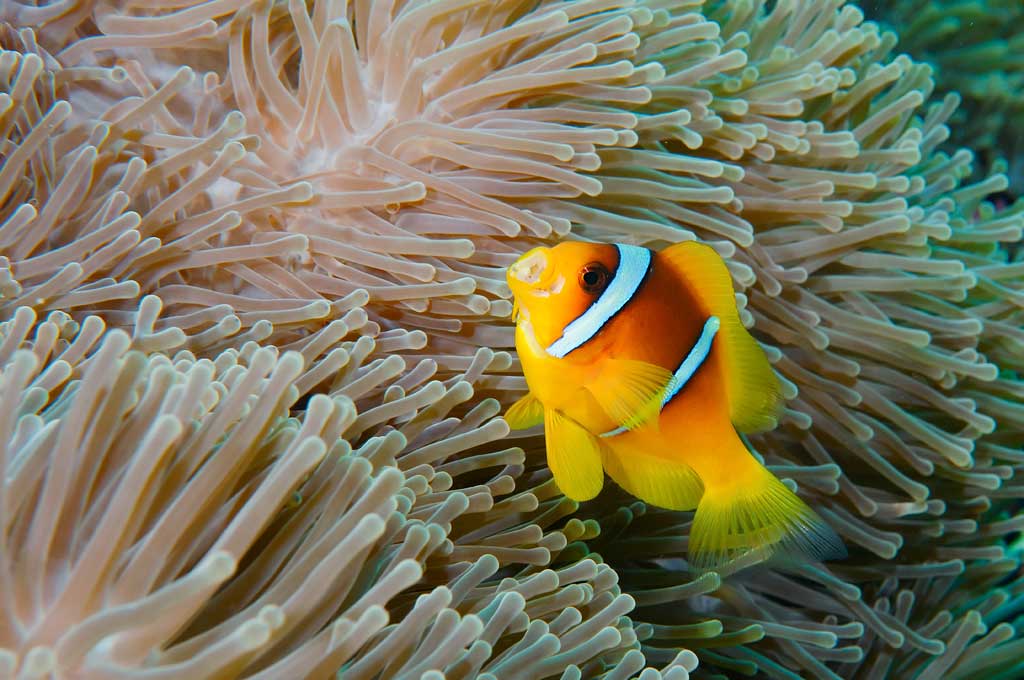
Despite political unrest in the Middle East with, no doubt, more to come, this is a safe trip: we even had a New Yorker on board!
The Royal Evolution leaves Port Ghaleb, an Egyptian resort close by Marsa Alam airport (but not particularly close to Marsa Alam) for the long trek south. Most guests will spend a night in the hotel at one end of the trip or the other. Royal Evolution is a large, steel hulled dive cruiser and one of the beamiest dive boats that I have travelled on. It's very important that she is comfortable because the trip can be rough and, after a handful of dives on reefs at the border, Sudanese regulations insist that the boat travels without stopping to complete customs checks in Port Sudan: more than a day's sailing under the best of conditions and the main pain inflicted on diving guests. There's little to do except eat and soak up the sun as the water warms mile by mile under the keel; the food is good, and a secret store of salad can sustain two weeks' meals.
We had a brief delay in Port Sudan as refuelling was complicated by the unavailability of the local administration to turn up for their facilitation fee and so arrived at the wreck of the Umbria for a twilight, then a night dive.
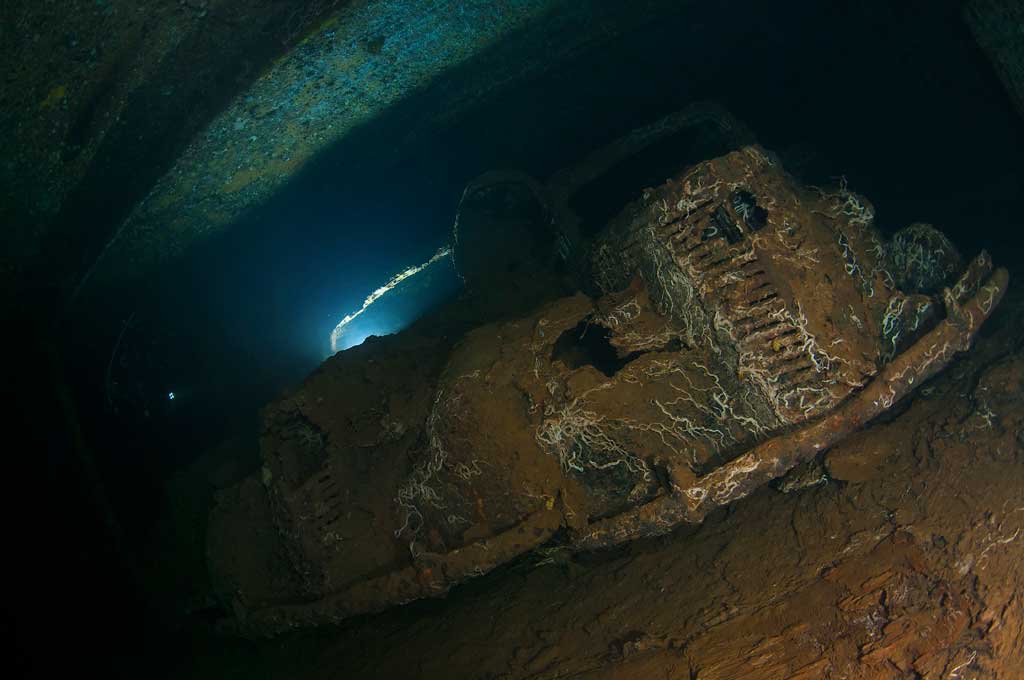
The Umbria was scuttled by the Italian crew to avoid the attentions of the Royal Navy as Italy joined the Axis in 1940. No-one has dared to disturb the thousands of bombs and shells that sit inside the holds a mile or two from a major port. As well as ammunition there are cars, aircraft parts, thousands of wine bottles and the startling, white, enamelled pizza ovens of the galley, little disturbed from the first exploration by Hans Hass in 1948.
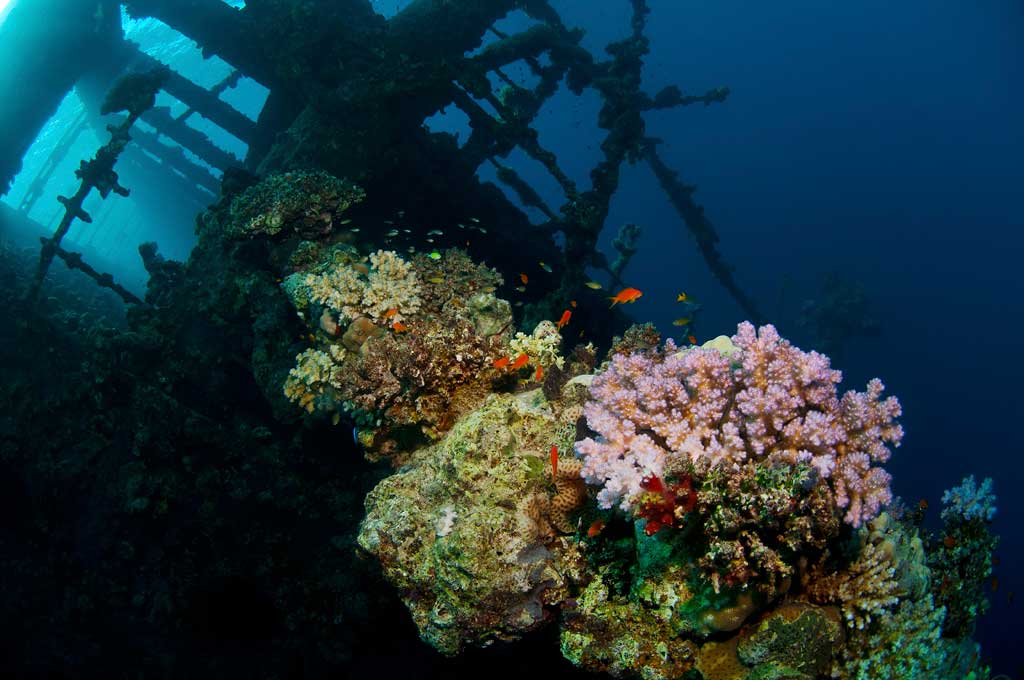
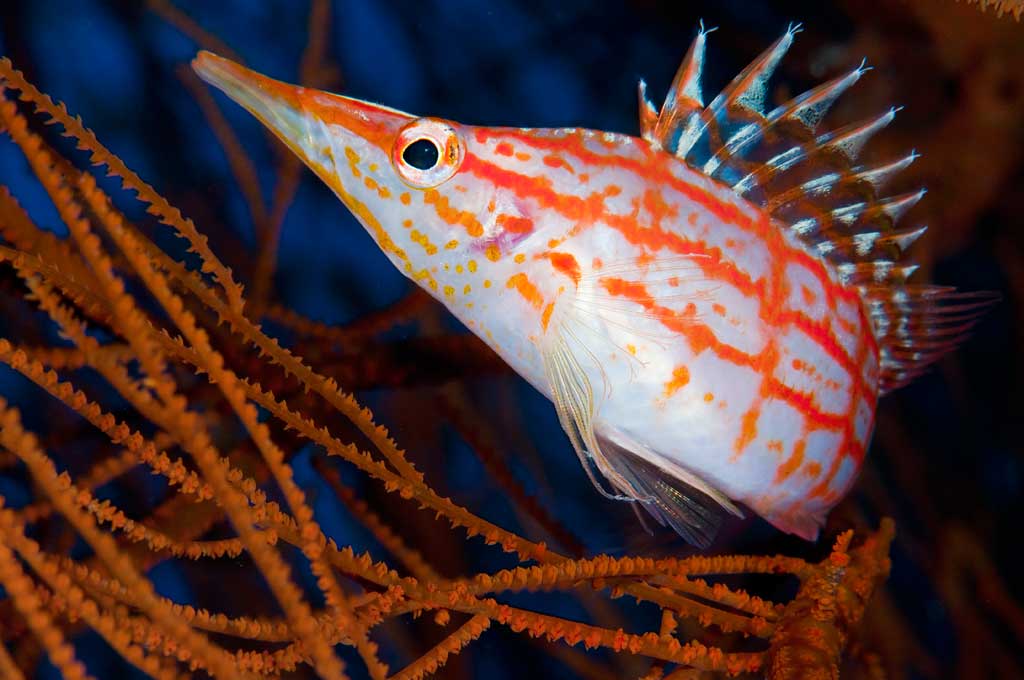
After exploring this rather classy lady of the sea we move north to Sanganeb, a large reef or diminutive atoll crowned by a lighthouse for over a hundred years. The southern plateau is famously home to a colony of long-nose hawkfish in several, rather deep, black coral bushes, the deeper, northern plateau to sharks and bumphead parrotfish, grazing the reef flat like buffalo.
Five days in to the trip we move north again, to Sha'ab Rumi, its southern tip haunted by sharks and it's western wall breached by dynamite in the construction of Jacques Cousteau's Conshelf II. The life and history that has built up at Sha'ab Rumi more than justify resting the engines for two or three days, lowering the Zodiacs and exercising their outboards.
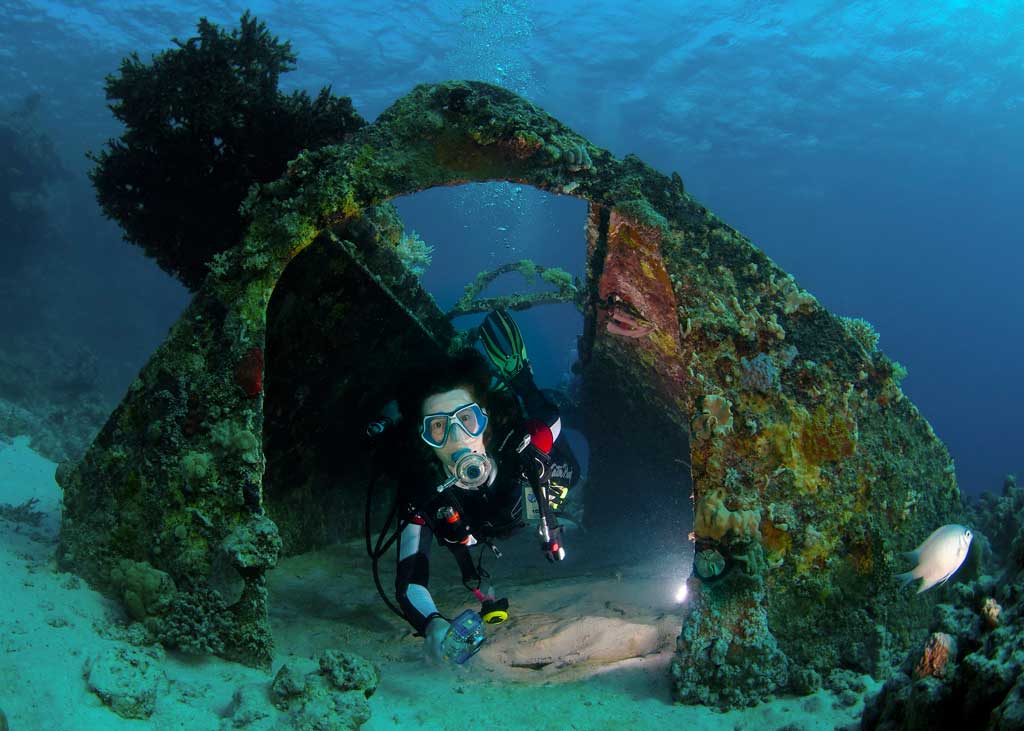
Our next stop on the return north is Sha'ab Suedi, where the Blau Belt tipped its cargo of Toyota trucks and pickups over the reef in mirky circumstances. Sadly the once beautiful corals lining the passage through the reef are badly affected by coral bleaching.
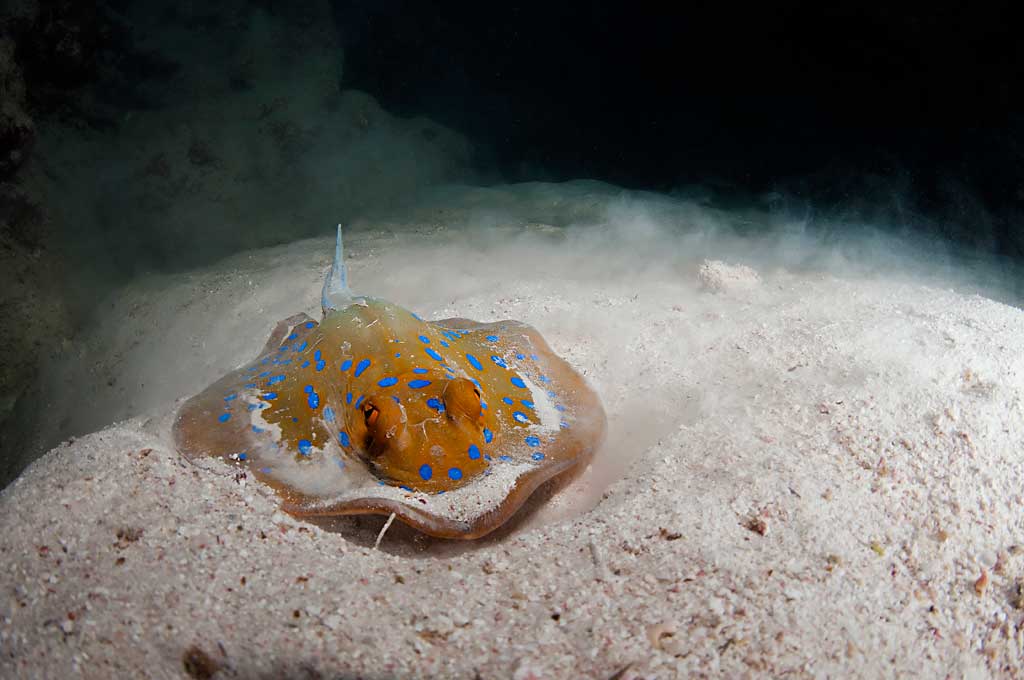
Well into the second week we encounter the smaller, prettier reefs that precede Angarosh reef, the "mother of sharks". The reef walls are spectacular, but the sharks are not to keen on divers and keep their distance. The blue-spotted stingrays, however are everywhere...
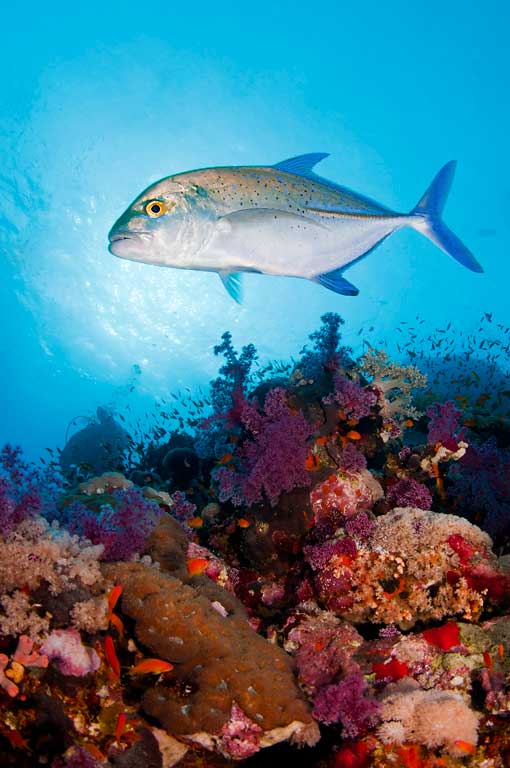
The smaller reefs are patrolled by barracuda and trevallies in large shoals; anemones and soft corals line the coral slopes.
We end two weeks' with the coral caves and tunnels of St John's reef, once more in Egyptian waters. We head for the peculiarities of Egyptian customs, and later the even greater peculiarities of Egyptian airports' check-in, but it was all worth the trouble. Wasn't it?
More:
Tim




