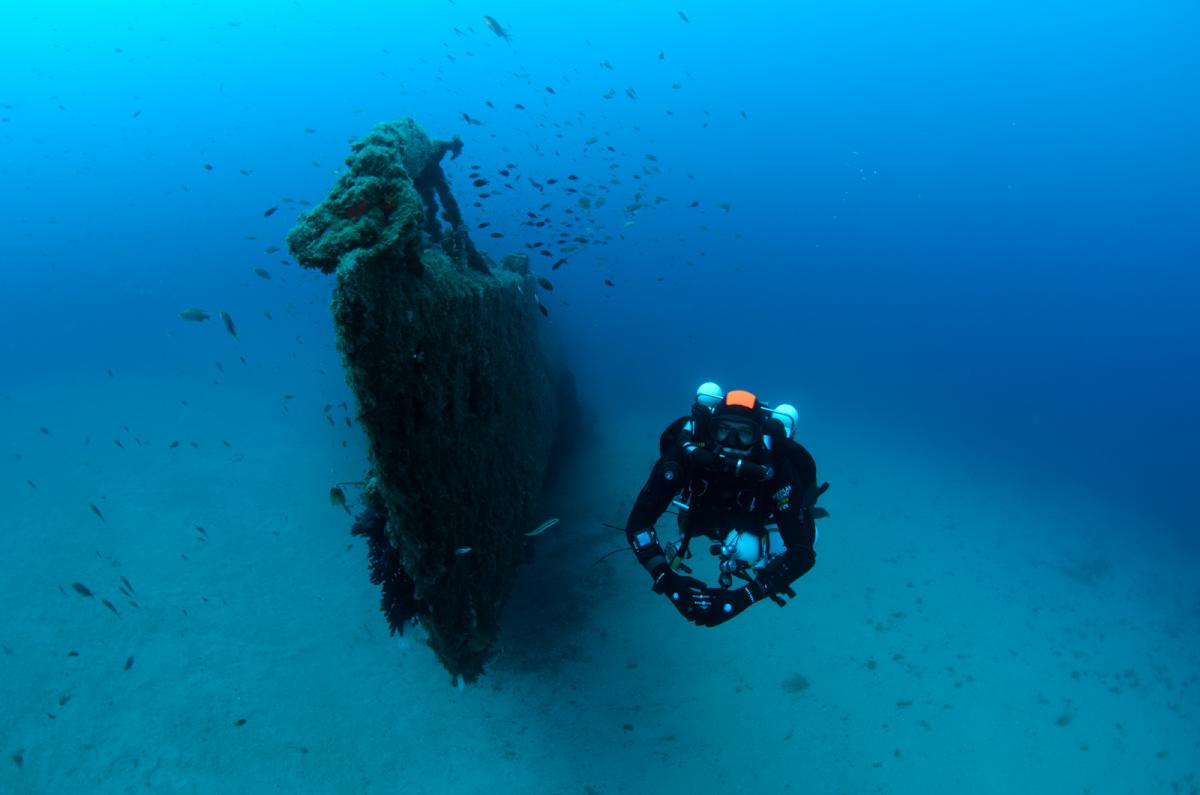
Any of the NEX or micro 4/3 cameras can be great underwater but if you shoot strobes and a focus light they are not all that much smaller than a DSLR rig by the time you have the arms and batteries and chargers etc.
Bill
Good point, but it's at least easier to pack, lighter to carry, and I could also consider trading my Inon Z240s for smaller strobes.
Thanks Steve! Indeed that was very informative, I had missed this article.
I've gone with the OM-D with the 12-50 lens, Nauticam housing, and a pair of Inon S2000 strobes. I don't (yet) have a true wide angle so no additional port to carry. The whole setup fits very neatly in a normal size backpack so is relatively light and compact for travel.
OM-D without question. These are the hottest threads on this forum for a good reason. And yes, it is much smaller that a dslr housing. If you want a single all-around rig, get the Nauty housing with the 12-50 port and gear. A perfect rig for a short travel trip where you want to travel light.
Image quality is equal to APS-C DSLRs (except maybe the 24mp ones for resolution) and high ISO performance is outstanding.
That's the kind of benefits I'm interested in!
So looks like the Olympus OM-D is very popular, and from Backscatter's review I can understand some of the reasons.
However I see there are some nez Olympus PEN cameras being released, with same sensor as the OM-D, and probably cheaper+lighter. So what would be the drawback of those PEN against the OM-D? Lower number of controls, ie lower ergonomics? One possible advantage I see is the absence of the OM-D's hump, which might mean smaller housings? So smaller housing vs lower controls, what's more important?
I see good comments on IQ for the OM-D (very good, stunning...), but is it very good compared to point&shoot, or really at par with APS-C DSLRs? I must say it was a pain when I've downgraded from my Nikon D3 to my D7000, I'm hoping there is no really visible downgrade from D7000 to mirorless.
Also, I imagine no one has reviewed yet the newer NEX cameras (NEX-6) for instance, which still come with a bigger sensor than 4/3 systems, but a reasonable 16 Mpix (I'm afraid 24 Mpix is a bit too much on APS-C), and apparently some major progress on AF performance.
Also, Backscatter's article doesn't mention the Panasonic mirorless cameras, so I assume they focused on the best cameras in both Olympus+Panasonic lineups, since they share same lenses?
Last, but certainly not least, of my questions: are there some mirorless housings with which you can use a 3rd party vaccum testing system? Now that I'm used with my hugycheck, I couldn't live without it...