The GoPro heating up has nothing to do causing any fogging. In fact, it heating up during the dive will actually work against fogging by raising the air temp some inside the housing.
Fogging all comes about from the air inside the housing cooling to the point it where it hits its dew point temp. The more moisture in the air, the higher it's dew point temp. So, you want the driest air inside the housing possible with the lowest dew point. The key is the air is dry enough so the dew point is lower than the coldest water temp you will experience during the dive. Then you will have no fog.
The easiest way to do this is to load the camera in a cool and dry environment (i.e. in A/C )and not on the deck of the boat. If you must open it on the boat deck, you could try to put it in a clear bag to close it and blow some air from your second stage into the bag just before you close the housing. Scuba air is less than 10% humidity, so the dew point will be very low. Just be very careful not to blow any water that may be on the reg into the housing or bag.
-Brian
Camera heating up is also one of the reason for fogging, because temperature difference is what trigger the dew point.
Water moisture in gas form in air aka humidity has a limit to how much air can hold that water in gas phase, before it has to give it out in liquid form which is the fogging we know or rain in extreme case of high water moisture storage. Hotter air can hold more water moisture. Per 1 cubic meter of air at 30C at 100% RH can hold as much as 30.4 grams of water or 30.4 cc of fresh water or 600 drops, eye drop size in gas form. In contrast, a 20C ambient air at 100% RH can only hold 17.3 cc of water or grams in gas form. This is the simple reason if in Bali your car air-cond is very cool at 24C average and you wear Sunglass and sitting in front where the air cond vent is powerful, open the door when arrived in Tulamben......woosh, foggy glass you get the moment you step out of your car in mid hot sun.....within 5 seconds. The hot humid air which touches the cool sunglass can not avoid releasing its gas form water moisture to become liquid/fog......that is gas law, no way around it. Do any LOB on a good vessel with 23C cool non-stop air cond running for our rooms. Place a DSLR in the room for 3 hours, run to stern of the LOB vessel with that camera to take picture of friends loading the zodiac, foggy lens guaranteed.
In the topics at 90% humidity at 30C ambient, all one need to do is get in the water which is 2 degrees cooler and when the lens of the housing has come to the same temperature of the water, even without hot air generated from camera operation in the housing, the dew point is already reached for the air near the housing lens innner side for plastic housing. Aluminum housing is better in this case as the port lens is never faster to be cooled by surrounding water as the alu housing material. So housing lens fogging is hard to occur on alu housing. Polycarbonate vs glass, glass gets cooler faster and more so for thin 1.xx mm GoPro housing lens, compared to 2.5mm polycarbonate housing material the GoPro uses.
It is all about temperature difference and how wet the air is to begin with.
When camera in operation and air in housing gets hot, even the humidity is the same as the minute the camera was placed in the housing, the temperature spread gets higher and it will be easier/faster to trigger the fogging.
Use dewpoint calculator to see, it is easy.
http://www.decatur.de/javascript/dew/
Enter 30C ambient. 90% RH +-1
You will get 28.18C as "fogging temperature".
For plastic housing so small like GoPro, what I do is simple.
Get a 1-2 liter clear see-thru plastic bag.
Place GoPro and housing opened up, in the plastic bag.
Flatten plastic bag to remove all wet ambient air.
Inject dry air from scuba tank into plastic bag till plastic bag expand like baloon. Tie with rubber band.
Allow 5 minutes to generate expedited drying of moisture attached to seal of housing and all components of the camera.
Dump air out a bit, close camera housing while still in plastic bag.
DONE - One just place the driest air available for scuba divers in camera housing, beating any air cond air which at best is 40% RH in the tropics.
Scuba tank air, if dive operator is anal on quality and more so when they have Bauer Securus sensor, that is a minimum of -55C dew point or well under 1% RH ( -55C DP Temp = 0.05% RH actually ) or equal to European EN12021 breathing air standard. -55C dew point temperature is filter life expired limit under EN12021.
However, there are many places in Asia where air standard is so poor, expect 10 to 20% RH and some drops of water in scuba tank...ha ha ha.
David is right, even metal hold water moisture, let alone flexible seal on camera housing.
If ones operate a NIST certified/traceable -80C dewpoint sensor, one will be amazed that copper tube is a "wet" metal.
Plastic is VERY WET. Seals are WET WET WET.
Desscicant and dry scuba tank air is a potent combination for reliable non fogging on micro sized camera housing like a GoPro with minimalist air-space.
Dessicant is cure, scuba tank dry air is preventive.
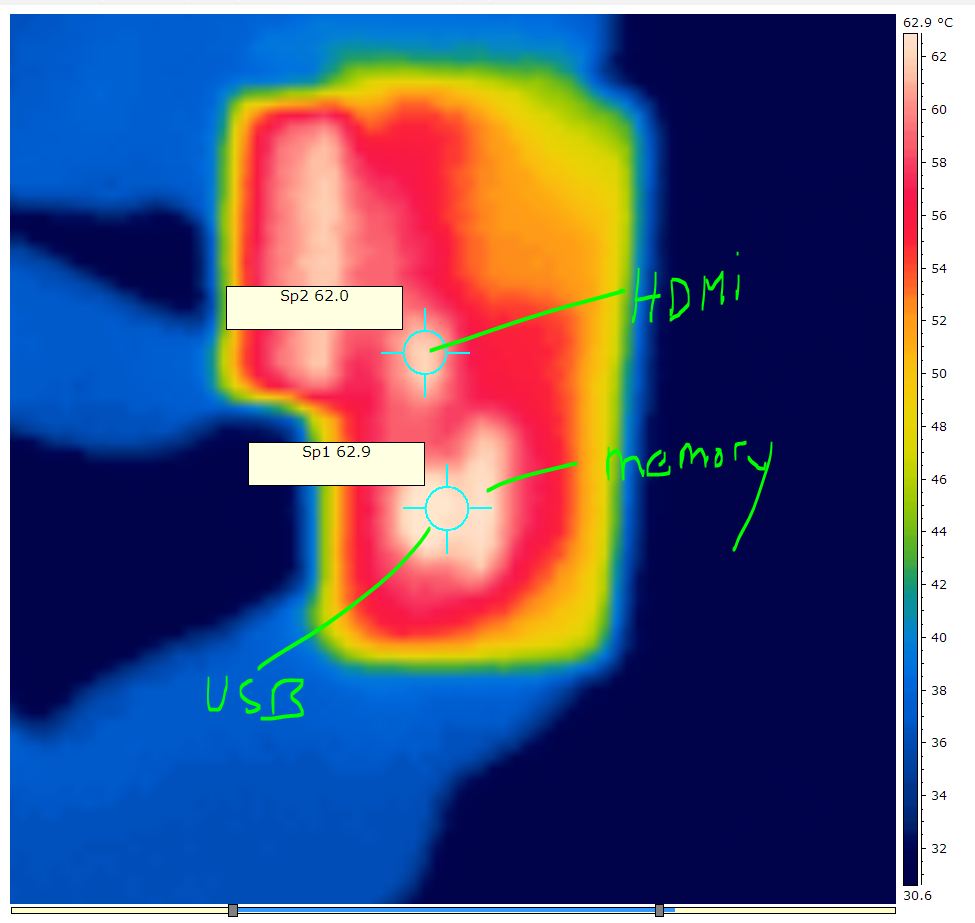
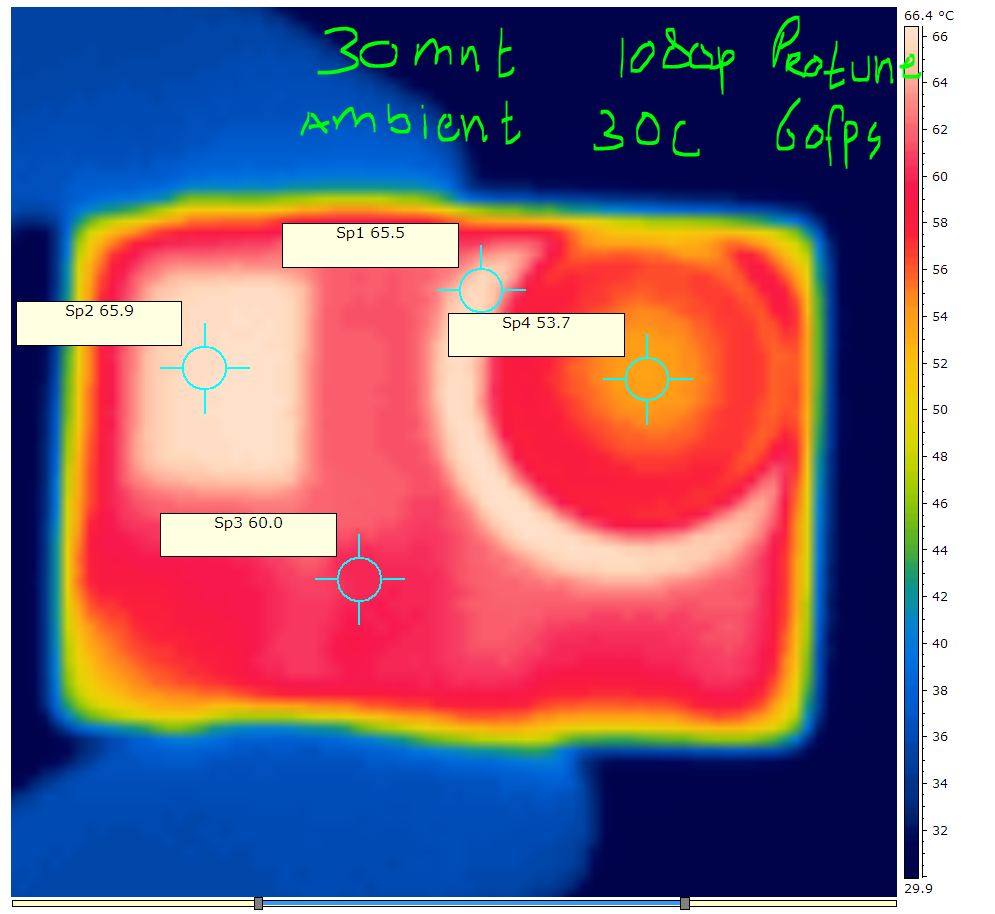
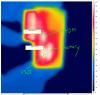
HD3 Black under highest data bit recording in Protune 46mbps, will have temperature rise of 25C or starting at 30C and be 55C in just 13 minutes in open air without a housing, imagine when one uses the housing. GoPro HD3 or even HD2 is a "hot" camera, but it does not overheat as fast as Sony NEX7 in 1080p 50fps.
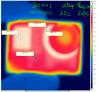
Attached is a test of HD3 Black, 1080p 60fps Protune 46mbs for 30 minutes.
All in Celcius, taken with a FLIR/EXTECH i5 thermal camera.
65.5C is the lens metal perimeter which is also the heat radiator of the CMOS sensor.
HD3 Black when using Protune is crazy hot and is more prone to fogging than any other GoPro lower grade version.
In desperate condition where I do not have time or the plastic bag, I spray scuba tank air to housing with camera inside it, 2cm open door and close it. Not the best but not too bad. I then use two of GoPro HD3 Black and use them alternatively, let one cool.
The more often one use the GoPro camera, the heat it generated will dry some part of the camera itself, it will be less fogging prone than a virgin brand new camera, given that the storage is in the housing and the housing remain closed while in storage and been exposed to dry scuba tank air often.
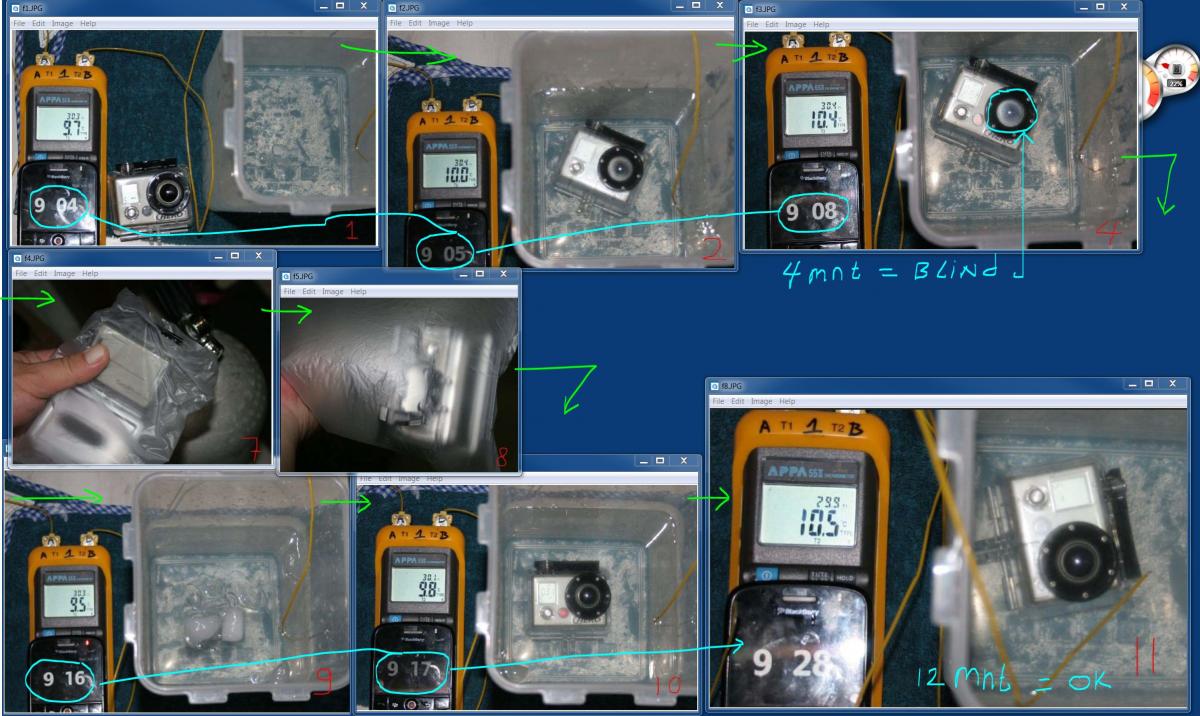
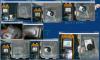
The fogging test, attached. Done on GoPro HD1 some years ago.
TEST 1 - Ambient air 30C ( see smaller digit on temperature meter ). Cool water to 10C ( larger digit ) with ice. Close camera housing with ambient wet air of at least 80% RH, typical tropical country. Fogging blind within 4 minutes camera recording.
TEST 2 - Use scuba tank air to inject and dry camera+housing, minimum -55C DP dryness of air but total water moisture removal is perhaps only as good as Zero Celcius dewpoint at best, but more than enough. 12 minutes camera recording no issue. Even 2 hours recording is not an issue as fresh water coldest temp is never below zero Celcius or no more than -2C for salt water of typical 35,000PPM salt.
Have fun guys....n safe diving.




 Now we have another use for it.