



yeah. .my wife is happy now the cameras are cleared from our dinner table
AND you can eat the fruit!
Photo / Video Showcase / Archived topic
Started by albert kok ·
Read-only discussion
yeah. .my wife is happy now the cameras are cleared from our dinner table
AND you can eat the fruit!
Yes. I will! By the way, for more technical specifications of the Panasonic 8 mm lense, especially for UW purposes, see:
http://www.uwphotographyguide.com/panasonic-8mm-fisheye-review
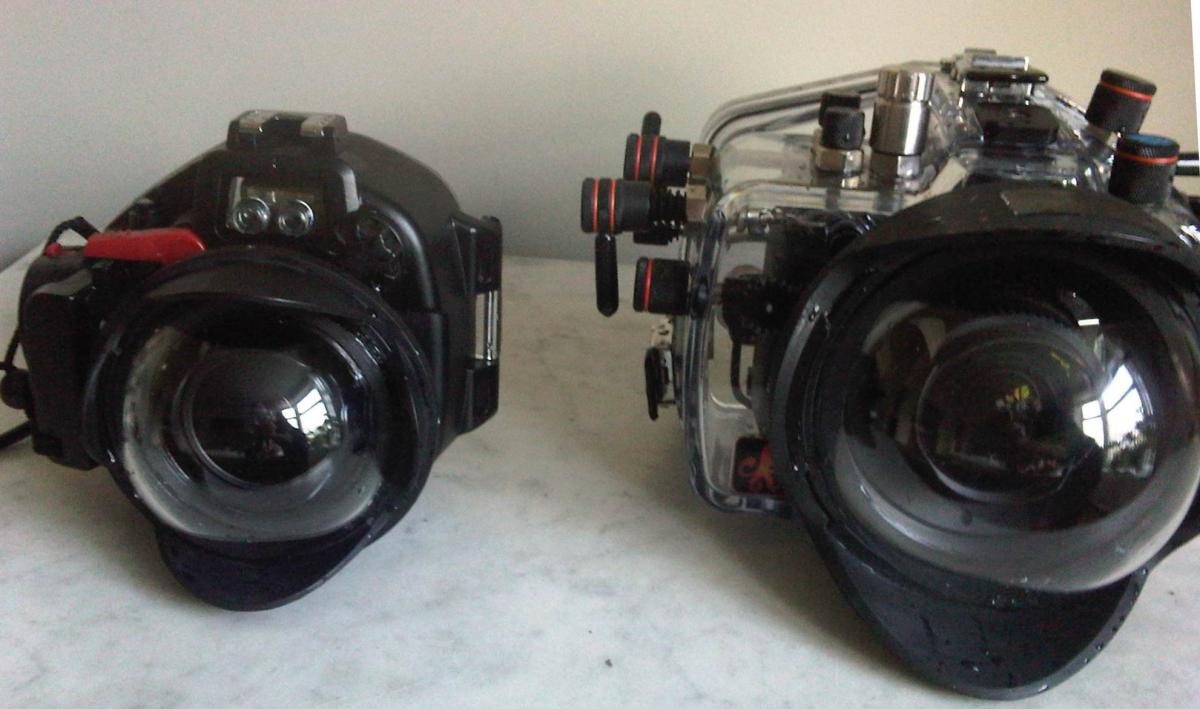
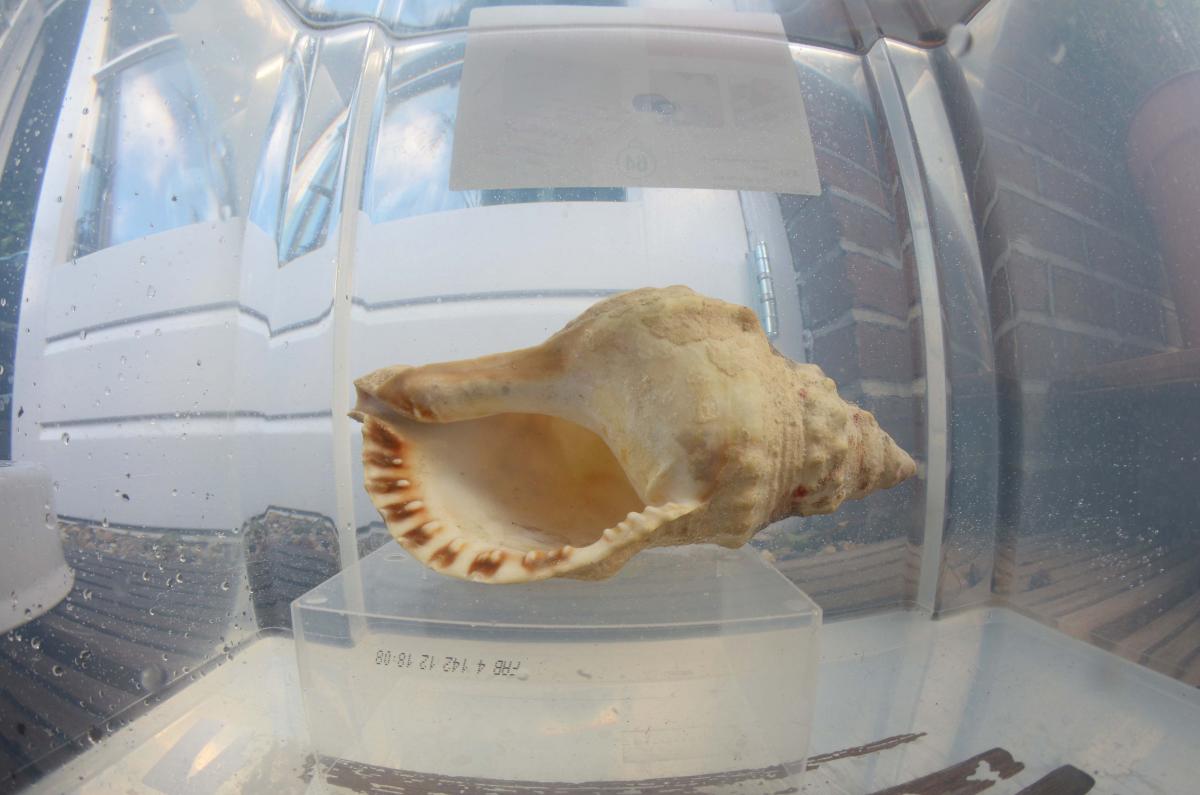
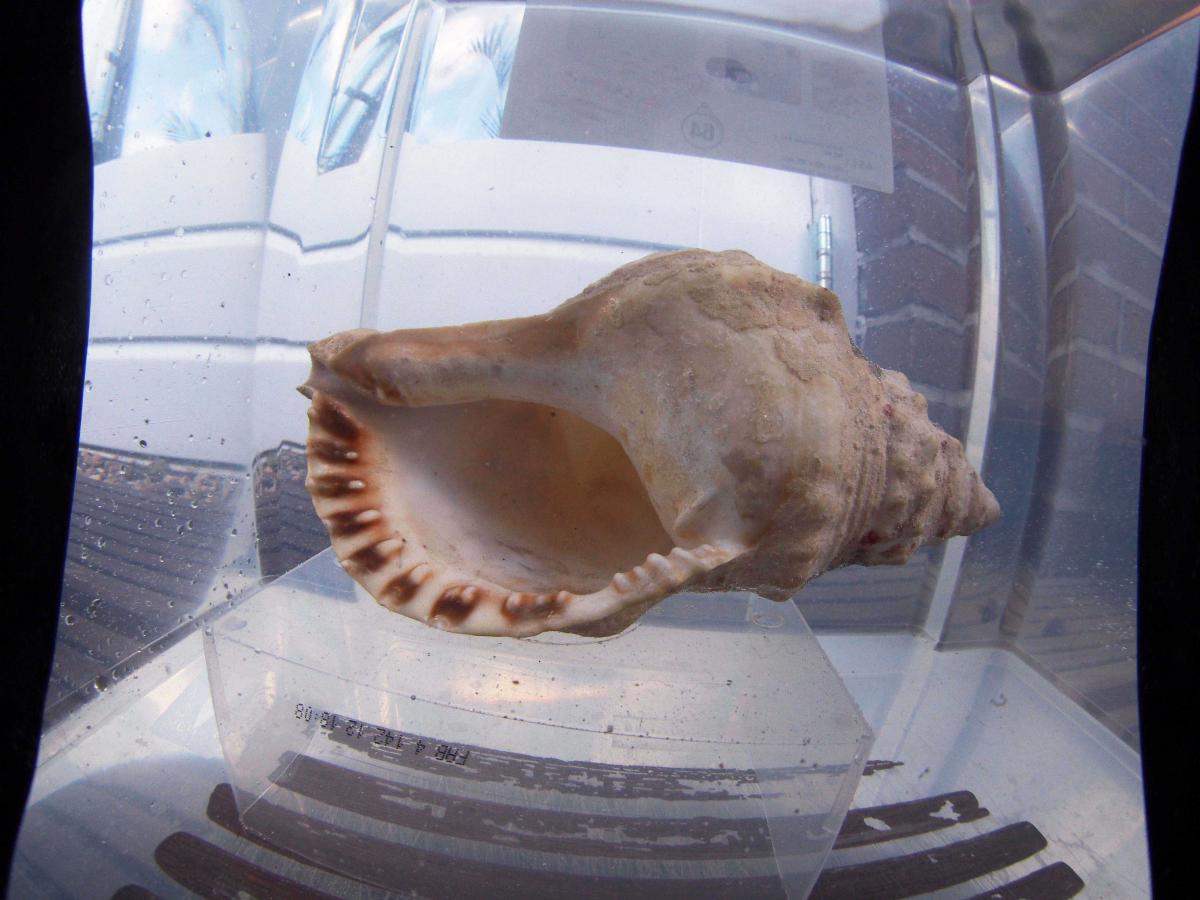
Hi back again with some new underwater tests! Not in open water (yet), but in a large transparent plastic container filled with fresh water. This created the visual impression that my target, a conch, was floating freely in the water. This time I had packed the camera's in their respective housings. Nikon D7000 in an ikellte housing with 5 inch Precision dome (see right) and Olympus in a PT EP10 housing with a 4 inch Precision dome (see left). Tokina again set at 10mm and Pana 8 mm. Shutter speed 1/40, aperture F4, ISO 400, Single focusing point. Distance between the front of the domes to the conch was 10 cm. But because of the smaller size of the Olympus dome the Pana lens was around 2 cm closer to the object, which explains the slightly larger image.
Hi Albert
Yeah, I understand why you went to 12mm, but 11mm is closer. 11*1.5 = 16.5. 8*2 = 16. 12mm is effectively 18mm full frame and you can see the focal length looks different between the two lenses in your photos. I'm a picky devil ain't I?
But the difference in focal length is probably not the biggest factor. When comparing between two different crop sensors, you must adjust the aperture. If you don't the field of view and thus the focus will be different.
From: http://www.cambridgeincolour.com/tutorials/digital-camera-sensor-size.htm
"As sensor size increases, the depth of field will decrease for a given aperture (when filling the frame with a subject of the same size and distance)."
By using the same aperture on both lenses, you are allowing the 8mm Panny to have a wider field of view and that likely will improve sharpness of the image. Also, since you are using JPEG, I can see in the first photo a bit of a "halo" on the edge of the banana which to me means it's slightly over sharpened. Did it come straight out of the camera like that?
Anyway, I don't mean to harsh on your methodology, I'm just being a pain because I'm interested in your results
I own both a D7000 and an Olympus OMD, but I don't have the Panasonic 8mm lens yet. I will say on my Tokina 10-17 the sweet spot seems to be right at F8 and 10mm, but that's because I have AF tuned it to be sharpest at 10mm. Zoom lenses are always a bit of a compromise.
Cheers!
JP
Hi Albert
Yeah, I understand why you went to 12mm, but 11mm is closer. 11*1.5 = 16.5. 8*2 = 16. 12mm is effectively 18mm full frame and you can see the focal length looks different between the two lenses in your photos. I'm a picky devil ain't I?
But the difference in focal length is probably not the biggest factor. When comparing between two different crop sensors, you must adjust the aperture. If you don't the field of view and thus the focus will be different.
From: http://www.cambridgeincolour.com/tutorials/digital-camera-sensor-size.htm
"As sensor size increases, the depth of field will decrease for a given aperture (when filling the frame with a subject of the same size and distance)."
By using the same aperture on both lenses, you are allowing the 8mm Panny to have a wider field of view and that likely will improve sharpness of the image. Also, since you are using JPEG, I can see in the first photo a bit of a "halo" on the edge of the banana which to me means it's slightly over sharpened. Did it come straight out of the camera like that?
Anyway, I don't mean to harsh on your methodology, I'm just being a pain because I'm interested in your results
Cheers!
JP
Hi JP
Perhaps a somewhat late reaction to your comment on the smaller sensor size enhancing the sharpness of the Pana shots. I think that overall, the topside results showed only small differences in sharpness of foreground and backgound objects between the Pana and Tok pictures, at identical apertures. I assumed this was because the crop factor (1.3) multiplied with the smaller focal length of the Pana lens created almost equivalent focal lengths, and consequenty identical field sizes (or: angles of view) of the Pana and Tok images. Hope I was right ..
A note of depth of field and sensor size.
its interesting to calculate the dept of field of the two camera/lens combos with the DOF calculator I found on Internet
http://www.dofmaster.com/dofjs.html
Focal length 10 mm for the Nikon lense and 8 mm for the Oly lense, same aperture F8, and distance to subject 15 cm. Total DOF was 7.07 cm for the Nikon/Tok and 8.6 cm for the Oly/Pana combo.
When you insert in the calculator arbitrary identical focal lengths (12 mm), and apertures (F8) at 20 cm distance, total DOF becomes larger for Nikon (8.74 cm) than for Oly (6.42). This means that with identical apertures and focal lengths the bigger sensor of Nikon yields a larger not smaller DOF than the smaller sensor of Oly. It also suggests that the greater DOF of the Oly/Pana combo (with real focal lenghts) must have resulted from the smaller focal length of the Pana lense. But it must be kept in mind that these DOF differences can be easily changed by selecting slightly different subject distances: for instance selecting 13 cm instead of 15 cm brings the DOF of Oly/Pan down from 8.6 cm to 6.28 cm. The same holds for selecting a different aperture: a larger aperture for Oly/Pan of 5.6 will also bring down the DOF considerably from 8,6 tot 5.86 cm.
Cheers A
Hi JP
Perhaps a somewhat late reaction to your comment on the smaller sensor size enhancing the sharpness of the Pana shots. I think that overall, the topside results showed only small differences in sharpness of foreground and backgound objects between the Pana and Tok pictures, at identical apertures. I assumed this was because the crop factor (1.3) multiplied with the smaller focal length of the Pana lens created almost equivalent focal lengths, and consequenty identical field sizes (or: angles of view) of the Pana and Tok images. Hope I was right ..
A note of depth of field and sensor size.
its interesting to calculate the dept of field of the two camera/lens combos with the DOF calculator I found on Internet
http://www.dofmaster.com/dofjs.html
Focal length 10 mm for the Nikon lense and 8 mm for the Oly lense, same aperture F8, and distance to subject 15 cm. About the same values I used for my topside pictures shown earlier. Total DOF was 7.07 cm for the Nikon/Tok and 8.6 cm for the Oly/Pana combo.
When you insert in the calculator arbitrary identical focal lengths (12 mm), and apertures (F8) at 20 cm distance, total DOF becomes larger for Nikon (8.74 cm) than for Oly (6.42). This means that with identical apertures and focal lengths the bigger sensor of Nikon yields a larger not smaller DOF than the smaller sensor of Oly. It also suggests that the greater DOF of the Oly/Pana combo (with real focal lenghts) must have resulted from the smaller focal length (= the extreme wide angle) of the Pana lense. But it must be kept in mind that these DOF differences can be easily changed by selecting slightly different subject distances: for instance selecting 13 cm instead of 15 cm brings the DOF of Oly down from 8.6 cm to 6.28 cm. The same holds for aperture: a larger aperture for Oly/Pan of 5.6 will also bring down the DOF considerably from 8,6 tot 5.86 cm.
Cheers A
Back to reality
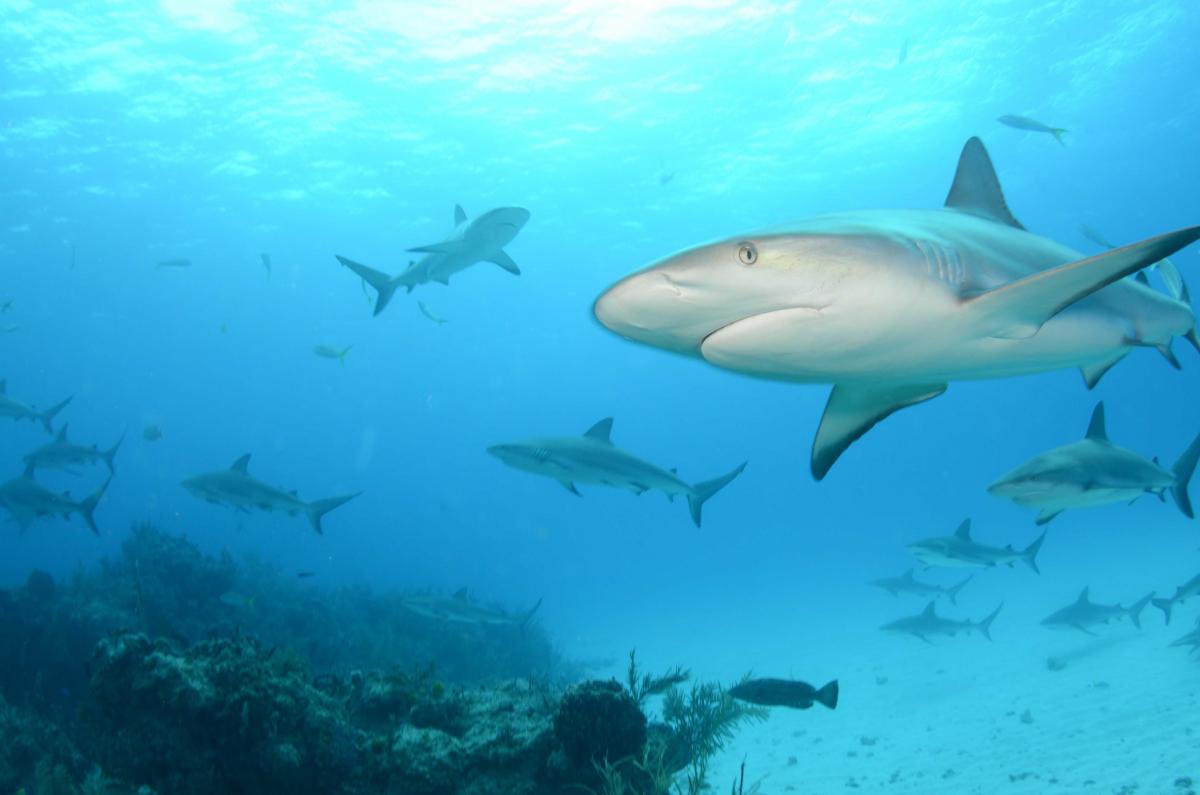
A somewhat limited DOF of of Nikon/Tok for small and very close subjects should not present a big problem for UW photographers working in UW conditions with blue water and larger objects a bit further away. Here I have an example of Nikon D7000 and Tok set at 12mm, with the 5 inch dome lense and a small aperture (f11). In this uncropped picture the shark on the foreground (at around 1 meter) is crisp, although it is moving a bit too fast for my 1/50 shutter speed. The limited visibility and the slight blur of the sharks on the background (at around 2-3 meters) only increase the suggestion of depth. According to the DOF calculator (set at 12 mm focal distance, 1 m subject distance and f11 aperture) total DOF would be infinite.
The second picture below is taken in the same conditions, but now with Tok set at 10mm, F11, 1/50. Shark at 1 meter and divers below at around 5 meters. Next month I hope to show you some pictures taken with Oly/Pana and the 4 inch dome taken in similar conditions.

Not quiet similar conditions, but here are some shots taken last week with the Oly/Pan combo and a 4 mm Precision dome in the Red Sea. No sharks this time (not with this combo) but some reef scenes. I was rather pleased with the quality of the pictures. With many divers around you are almost certain to get most of them in your image with this super wide lense. So some cropping is unavoidable. But even the cropped versions shown here looked pretty sharp.
https://www.flickr.com/photos/fttpwwwflickrcomalbert/15205360024/
https://www.flickr.com/photos/fttpwwwflickrcomalbert/15641378628/
https://www.flickr.com/photos/fttpwwwflickrcomalbert/15641923478/
this was taken with natural light and a filter no crop..
https://www.flickr.com/photos/fttpwwwflickrcomalbert/15648469819/
Not quiet similar conditions, but here are some shots taken last week with the Oly/Pan combo and a 4 inch Precision dome in the Red Sea. No sharks this time (not with this combo) but some reef scenes. I was rather pleased with the quality of the pictures. With many divers around you are almost certain to get most of them in your image with this super wide lense. So some cropping is unavoidable. But even the cropped versions shown here looked pretty sharp.
https://www.flickr.com/photos/fttpwwwflickrcomalbert/15205360024/
https://www.flickr.com/photos/fttpwwwflickrcomalbert/15641378628/
https://www.flickr.com/photos/fttpwwwflickrcomalbert/15641923478/
this was taken with natural light and a filter no crop..
https://www.flickr.com/photos/fttpwwwflickrcomalbert/15648469819/
Here is recent shot taken on Bimini with the same Oly/Pan combo, natural light and filter. Nice colours I think. But details of the sharks head would probably have been sharper with a flash. The head of the shark moved pretty fast..
https://www.flickr.com/photos/fttpwwwflickrcomalbert/15889550904/
I liked this shot taken by Henley Spiers with a Oly/Pan 8mm combo and flash, confirming in my opinion the nice CFWA quality of this system.
https://www.facebook.com/photo.php?fbid=10100851880767842&set=gm.10152777218171017&type=1

Terms of Use Privacy Policy Guidelines We have placed cookies on your device to help make this website better. You can adjust your cookie settings, otherwise we'll assume you're okay to continue.

A worldwide community for underwater imaging.
