Skip to content

Photography Gear and Technique / Archived topic

Nikonos RS 20-35mm Lens Converted for Nikon Digital

Started by Yellowmon ·

  • 26Posts
  • 26Replies

Read-only discussion

Nikonos RS 20-35mm Lens Converted for Nikon Digital

26 posts
  1. Has anyone seen results of the Nikonos RS 20-35mm Zoom lens converted to use for the Nikon D800/D810 digital cameras? Seacam offers a conversion which could make this 22 year old lens useful once again and I am wondering if anyone has seen results.


    I had the 13mm converted earlier this year and have been blown away by the performance of the lens, even with wide apertures and low light.


    Anyone?


    Thank you!

  2. Yes, the the Nikonos RS 13mm works brilliantly on Seacam for Nikon D800 and D810. I had the Nikonos RS 13mm conversion done by Seacam USA last year and have been using the lens extensively the past several shoots.


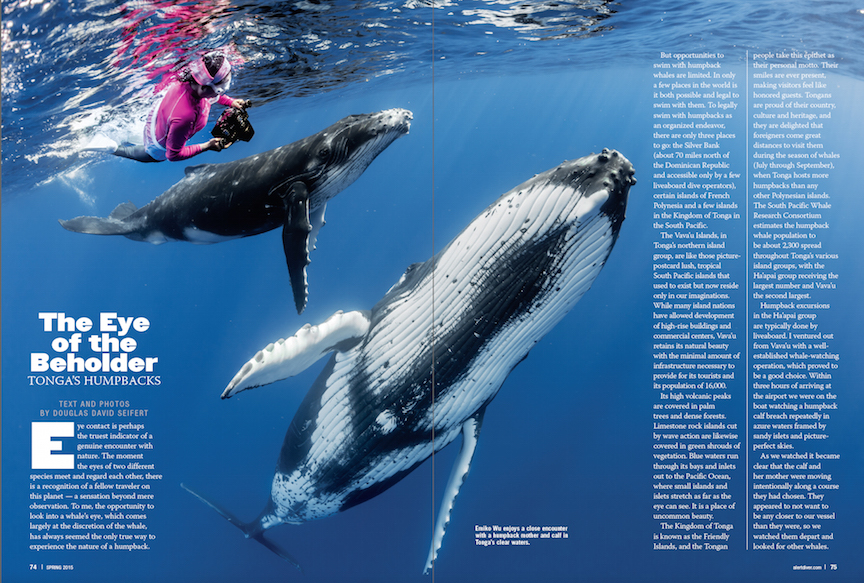
    As a matter of fact, this double page spread in the current issue of DAN Alert Diver was made using this lens.

    But to my knowledge, Nautical does not have a conversion for the Nikonos RS 13mm lens.. The port adapter you mention is for use with the Nikonos 15mm lens, which is a very different lens. It is extremely sharp but will be ALL manual focus, ALL manual aperture and it is used on the SONY A7 full frame cameras or NEX cropped sensor cameras.
    I also have this lens and housing in my arsenal and it works quite well. I plan to use it in the coming months for "smaller" wide angle subjects, such as sea lions and small sharks.

    post-2022-0-69641500-1432248614_thumb.jpg

  3. There seems to be a post missing in the conversation above?


    The 20-35mm can be converted, but I don't know if it can be in the same way at the Seacam conversion for the 13mm (by cutting it in half and turning it into a lens and optical port). I know people have used it with an adaptor on housings - but that is not possible on all housings because the zoom gear hits some housings.


    Furthermore, I was very interested in using my 20-35mm again, until it was pointed out to me that it is actually a 27-47mm - which is a range that is not that wide, nor that troublesome behind a dome. So I feel the return is not worth getting my 20-35mm lens converted.


    This has led me down the optical port route for rectilinear wide angles - which I am finding is giving me the same level of image quality advantage over a dome port as the RS 13mm does.

    Although this is still work in progress and I am yet to get all the lenses working that I want. But if and when I do, it will give me the same optical advantage of RS lenses, with any land lens. I know that Nauticam are also working on developing such a port - but also just as a proof on concept at this stage.


    Alex

  4. Hi Alex


    Here are the missing posts -- not certain why it wasn't posted.


    ianmarsh


    Hi

    i am interested in this approach also...thinking 13mm on D800.

    Can you tell me what housing you are using?

    I am thinking Nauticam with Nauticam/Seacam port adapter? Any thoughts on how this would work?

    Thanks

    ian


    Sorry

    I wasn't clear. I have the Nikonos 15mm with adapter for Nauticam A7

    What I mean is Seacam conversion of the lens with a Seacam to Nauticam port adapter so the Port portion (front glass) can be fitted to a Nauticam housing instead of a Seacam housing, which is what I assume you are using?

    ian

    Yellowmon


    Not at all. The lens is split into two pieces. The old and refurbished lens mounts directly to the camera. The old dome is re-tooled to go to the Seacam housing. The Nautical adapter would be a gamble at best. But really this is a very specific technical question you should aim at Nautical or Stephen Frink, the Seacam distributor is the USA, for absolute clarification.

    I would not want to be responsible for flooding caused by third party solutions.

    I am using Seacam for my Nikon products. I am using Nautical for the Sony A7 camera. Its a pain to travel with but thats the way it works.

    [MOD EDIT: reformatted by AM]

    Edited by Alex_Mustard
  5. Alex, all good points. However, I do not think that a 27 - 47 lens is all that bad a tool in the toolbox. I have enjoyed using the 24 - 70 for many images in the past but it is extremely heavy to travel with and requires a lot of extension and bigger dome than this re-design, so Harald's compact solution does seem a bit tidier. I have been following your progress with an external optical port with great interest and have high hopes that a manufacturer will partner with you to make this corrector available to a wider audience.


    Until that time, and in the interest of nostalgia and frugality, the notion of adapting the existing 20 year old "20-35 Zoom" is tempting. I was simply hoping one of the Wetpixel audience has actual digital images from a conversion to share with those of us curious but sitting on the fence before making a substantial investment in having the lens adapted by Seacam.

  6. Sorry all


    That missing post was mine..It was sent as a PM as it was off topic of the thread


    ian

  7. I do not think that a 27 - 47 lens is all that bad a tool in the toolbox. I have enjoyed using the 24 - 70 for many images in the past but it is extremely heavy to travel with and requires a lot of extension and bigger dome than this re-design, so Harald's compact solution does seem a bit tidier.


    Until that time, and in the interest of nostalgia and frugality, the notion of adapting the existing 20 year old "20-35 Zoom" is tempting. I was simply hoping one of the Wetpixel audience has actual digital images from a conversion to share with those of us curious but sitting on the fence before making a substantial investment in having the lens adapted by Seacam.


    People have converted them. So I also look forward to hearing from them. I am sure you will produce some excellent stuff with the 20-35mm if you adapt it.


    I am not sure if the design is the same as the 13mm to allow it to be easily cut in half. But that would be very neat if possible, with a small front element and easy to make the zoom work on a gear I suspect.


    Rumours are that Nikon will launch a new 24-70mm soon (I don’t have any insider info, just rumour).


    Alex

  8. Yes, crossed fingers on all counts, Dr. M. One of our colleagues in Hawaii had his 28mm RS lens adapted for digital but I barely used that lens back in the film days so not so interested to resurrect it now. I do have the Rene Aumann 18mm, which is I think a true Nikon 18 inside his own dome. But I think the cost of converting that would exceed the cost of a used 18mm in the marketplace...

  9. Ask at Seacam headquarters (office@seacam.com). They have already converted some 20-35mm and they have some samples taken in the wild. I have seen them and I do not see the 20-35mm as the most interesting lens to convert, not only because of the field of view. The main reason is the long minimum focus distance (0,38cm).

  10. Thank you!

  11. Harald called the 20-35mm conversions Seacam has done "very successful" in an email to me. While he's unlikely to say anything else, I would bet that they have done a very polished job. Not seen any myself yet, was hoping that someone might have one at the CMAS World Champs at the weekend, but we judges were kept in a separate hotel to the competitors, so didn't get to see.


    It is a long time since I have used the 20-35mm. Jordi did you use it when you shot film last year? But the is pretty long (physically) so I suspect the minimum focus is not as limiting as it sounds - probably only 15cm or so from the front of the lens - as a guess.


    Alex

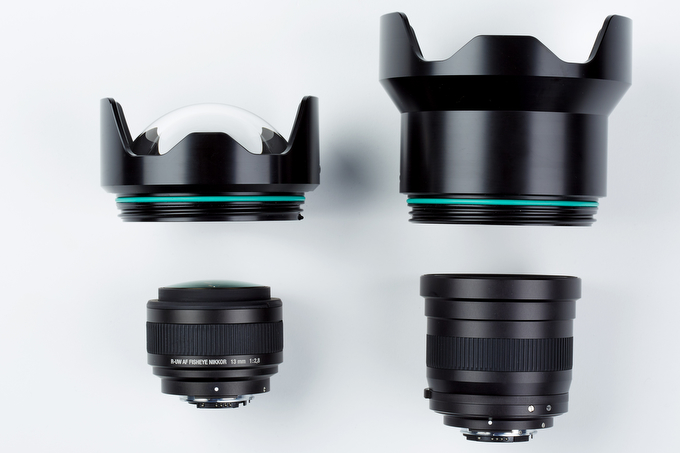
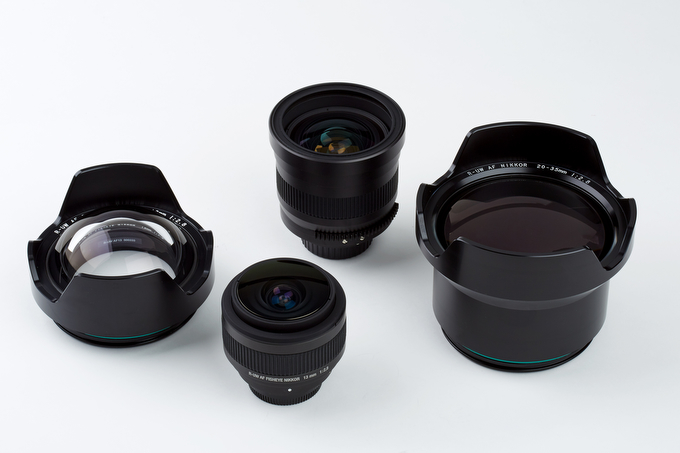
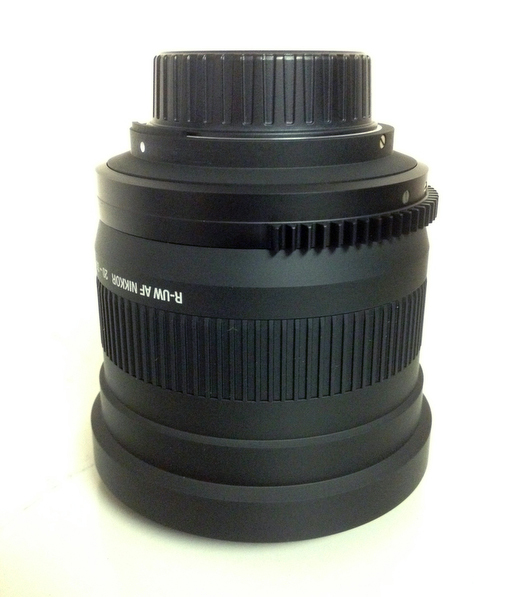
  12. Here are some photos of the 20-35mm RS lens conversion for Nikon cameras in SEACAM housings. As with the RS 13mm lens (also shown here) you will have to own the lens and your SEACAM representative

    can send to Austria for conversion. They will then return to you the following:


    post-630-0-09804600-1432907618_thumb.jpg

    13mm and 20-35mm


    post-630-0-56892700-1432907720_thumb.jpg

    13mm and 20-35mm


    post-630-0-09471700-1432907796_thumb.jpg

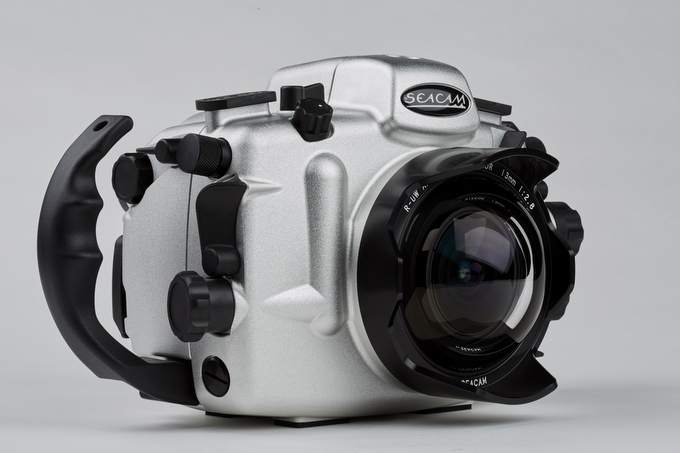
    13mm RS mounted on SEACAM housing


    post-630-0-03932200-1432908198_thumb.jpg

    20-35 showing integrated zoom gear

    Edited by StephenFrink
  13. Hi Stephan,


    do you now if the 13mm will work with a teleconverter?

  14. Hi Stephan,


    do you now if the 13mm will work with a teleconverter?

    This today from Harald Hordosch, manufacturer of SEACAM products:


    "I am sure it will work also with a converter. Due to our construction any converter can be used and the port can be extended by a simple PVL which fits the converter. "


    PVL is the port extension, the smallest of which is 20mm and are available in 5mm incremental lengths. So, depending on size of teleconverter, a port extension can be added to allow use of RS13 on SEACAM housing with the dedicated dome.

    Edited by StephenFrink
  15. Hello all.  I know this is an older thread and I apologize if this is a rehash but I’d like to know if there is any updated critique on the SEACAM 20-35 conversion.  I recently acquired and subsequently used my 13mm conversion/SEACAM D850 housing on a shoot.  I was quite pleased with the lens/port system performance (Harald’s conversion is a work of art) and the dramatically reduced footprint (no more superdome).  This said, I dread using my 16-35mm kit behind the 70mm extension/superdome when longer reach and/or less angle of view is needed as it is like dragging a 5 gallon bucket around underwater.  So I was hoping someone might provide updated critique on the performance of the 20-35mm conversion.  Or, better yet, a comparison of the conversion and the 16-35mm kit.  In this a older thread Stephen Frink provided side by side images of the 13 and 20-35 conversions and it is clear the 20-35 conversion is considerably smaller than the extension plus superdome required for the 16-35mm kit.  It would seem that there is a volume savings (perhaps weigh too?) as well, assuming one could leave the superdome at home if not needed for a shoot.  Thank you and regards, Mark

  16. I have the Seacam converted 20-35 RS lens. The first thing you need to know is that the focal length needs to be multiplied by 1.33 to compare to lenses designed for use in air. The second is that the minimum focus distance is not all that great - I recall it is 0.38m. About a foot or so of working distance. It is best used with larger subjects in superb visibility such as sharks in a non-baited situation. Shot it using a D3X and found it to be sharp out to the edges. Due to the small volume it is quite negative, even more so back in the RS days (1990s).

  17. Thank you Tom, very helpful information.  Decisions, decisions...

  18. I think that the Nauticam WACP-1 is a much better solution than the 20-35mm, apart from being bigger and heavier in air (although lighter underwater). I still own a 20-35mm from my RS, but I have never been tempted to get it converted. 

    I do think that RS lenses will start dropping in value soon, though. As Nikon users switch to Z bodies that can't use these lenses. 

  19. Thanks Alex.  In the trade space between volume, weight and performance, I was hoping to find an elegant solution in the 20-35mm for mid-angle/midrange shooting for travel. 

  20. 6 hours ago, mark.b.hatter said:

    Thanks Alex.  In the trade space between volume, weight and performance, I was hoping to find an elegant solution in the 20-35mm for mid-angle/midrange shooting for travel. 

    When I used it most successfully recently (i.e. on digital, I was deciding between using it or the 60mm with a dome port (re. a recent post by Alex M) on a given dive day (trips to Niihau Island from Kauai Island). The 20-35 is just a bit wider. The 60 rig would be more travel friendly and a bit more versatile (especially if one also brought along a flat port).

Account

Navigation

Search

Search

Configure browser push notifications

Chrome (Android)
  1. Tap the lock icon next to the address bar.
  2. Tap Permissions → Notifications.
  3. Adjust your preference.
Chrome (Desktop)
  1. Click the padlock icon in the address bar.
  2. Select Site settings.
  3. Find Notifications and adjust your preference.