



Maybe I need a new pair of glasses, but I cannot find any infos about the new vacuum pump on Miso's website; same for the price.
Could someone help, please?
Jock
Photography Gear and Technique / Archived topic
Started by Interceptor121 ·
Read-only discussion
Maybe I need a new pair of glasses, but I cannot find any infos about the new vacuum pump on Miso's website; same for the price.
Could someone help, please?
Jock
Hi jock,
Just mail him, I did and got his reply in the same day. As the guys said, the costumer service is superb
As I've posted before, I think the Sentinel is terrific.
I do struggle though with the idea of an electric pump. What's the point? It only takes a dozen or so pumps with the hand pump, it's not hard - and why add electric pumps and a battery? Just more potential things to go wrong. Or am I being an old geezer and missing something?
I have few questions.
Is it normal that with hand pump I need maybe 5-6 times to pump the housing? I read in manual that it should be something like 20 times.
What will happen when the protective cap will got leak or I just forgot to install it ??? Is the red valve/membrane will keep vacuum/water sealing when it will got water pressure from outside??
How long this system can operate on one battery ?? I want to estimate how many batteries I need for 1 week trip with 3h diving per day.
Hi Tomek
Depending if the housing is empty or has the camera inside and also if it has the macro port or the big wideangle dome port attached, it will need different number of pumping to get the green light. It is physics. After getting the green light steady, pump once more (when the internal pressure is too close to the limit to turn orange, it might give you false alarms, as was said before on this or similar topic)
Never go diving without the protective cap. When ever you take out the pump, always put the protective cap before doing anything else to avoid to forget to put it.
Regarding the battery life, if you have one new battery, it should be enough for the full week of diving. But always have with you spare batteries (1 or 2). Sometimes the newbattery is not really new or fully charged or is faulty. And in that case you can save the rest of the dives. When the battery is low power, it might give you false alarms (also als states on some posts on the forum)
BR
Pedro Alves
Miso advised new battery good for 100 hours.
Thank You Pedro for detailed answer.
For the first time I did many strokes, and lamp was green/red changing. Then I checked again the system and after that it is just few times needed to get green. so I started to think what I really did ... most probably I fixed the small air leak 
This green light is really very healthfull for my mind
I found only one mistake in my configuration. I have housing with two o-rings. So in the case when I pumped the system very well then it is difficult to open it. The vaccum which is created between the o-rings will keep the back door quite strongly
Being paranoid, I always hold the protective cap in the palm of one hand when I remove the cap for any reason. It is marginally awkward to pump but it ensures that I replace the cap as soon as I am finished pressurizing the housing.
They can roll away very easy.
Buy a spare!
Reply to Great White (Okuma) above:
My backup for the Leak Sentinel electric pump is one spare 9V battery, after two years no problem.
I have used the Leak Sentinel electric vacuum pump for about 3 years, and no longer carry a hand pump, just a spare 9 V battery.
A spare cap for the Leak Sentinel is also an excellent idea.
The Vivid Leak Sentinel V5 is now available in a shorty version, which fits nicely on my Nauticam NA500 housing, as does the standard size V5.
One can close the housing and pump a vacuum the night before, turn off the Sentinel to save the battery, turn it on in the morning and be ready to dive without worry.
The Leak Sentinel can be used together with the built in Nauticam leak and vacuum detectors, or by itself. I find the Nauticam light to be too big and bright; it can be masked partially with plastic tape, or not turned on.
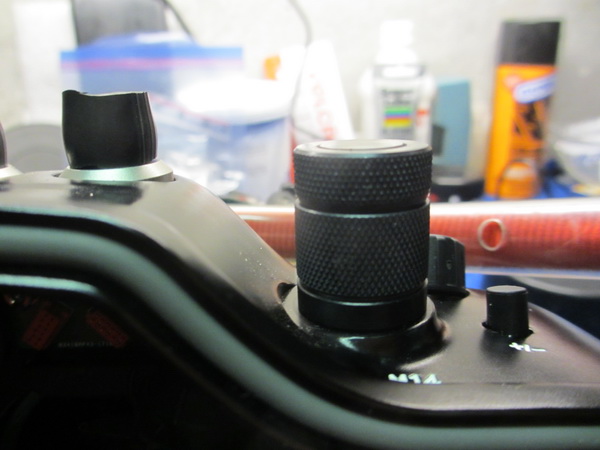
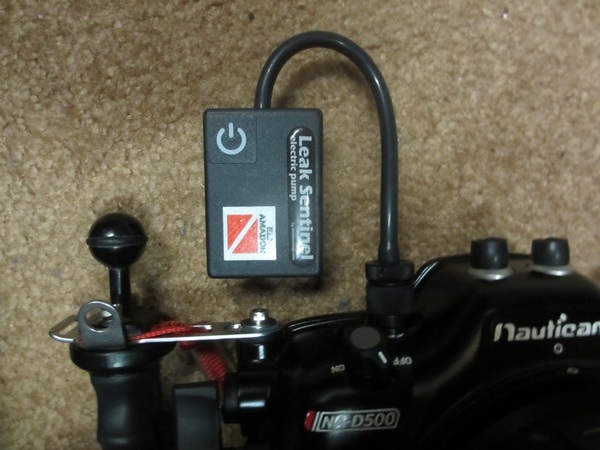
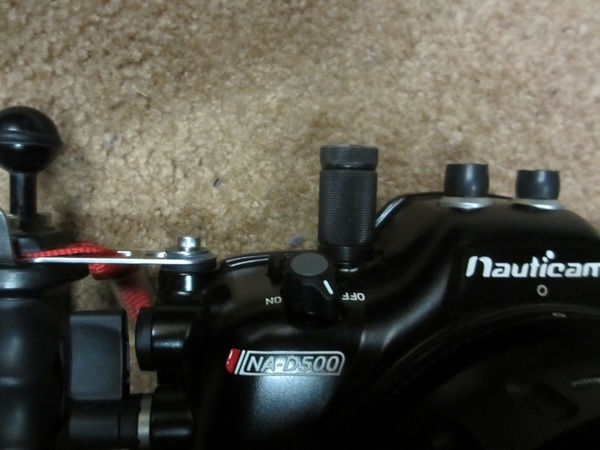
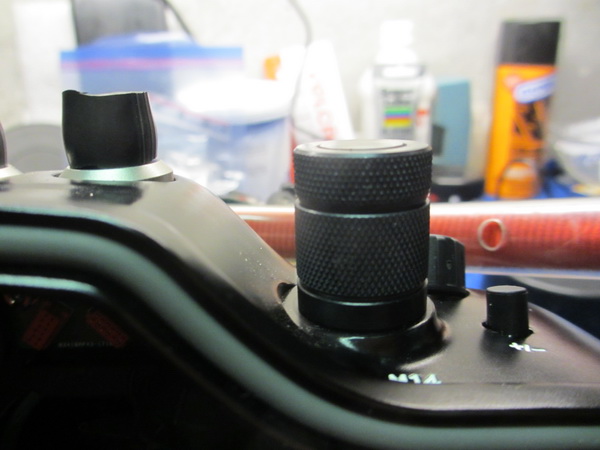
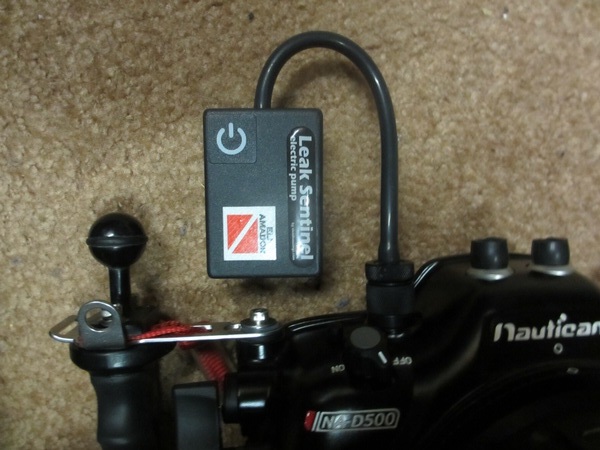
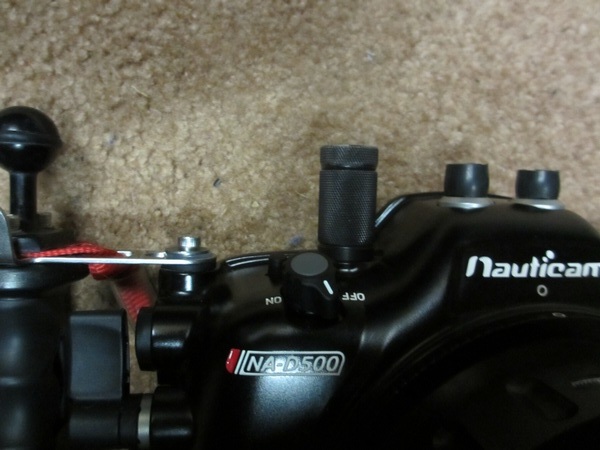
Reply to Great White's question:
I did but no longer do I carry a hand pump as backup, just two 9V batteries.
I watch the pump On time, keep it under one minute. No problems thus far.

Terms of Use Privacy Policy Guidelines We have placed cookies on your device to help make this website better. You can adjust your cookie settings, otherwise we'll assume you're okay to continue.

A worldwide community for underwater imaging.
