I should perhaps re emphasize my statement.
The manufacturer said that selling 50 housings is considered a success, not that they only sell 50 housings. There will probably be some models of camera that they sell a lot more housings (and some that they sell less).
But, suffice to say, if you were to approach any camera manufacturer and suggest that 50 camera sales is a success, they would probably disagree 
Photography Gear and Technique / Archived topic
The Perfect Underwater Camera
Started by adamhanlon ·
- 103Posts
- 103Replies
Read-only discussion
The Perfect Underwater Camera
103 posts
-
-
3 hours ago, Alex_Mustard said:
Yes, that is what Nikon currently make.
Does not allow focusing with widely used lenses such as Nikon 16mm fisheye, Sigma 15mm fisheye, Nikon 28-70mm (the lens the WACP-1 was designed around), Nikonos 13mm fisheyes (many people’s dream optic).
I don’t think it would be that difficult for a company to make an adaptor with the AF motor and screw drive used by these lenses - assuming the circuitry in the Z cameras send signals through the connectors to control it. For underwater shooting - I think most of us would accept even a quite slow AF with these wide angle lenses, to be able to use them. If the camera doesn’t send the right signals, then maybe even a powered focus like the Nikonos RS had, could be used.
Alex
Nikon claims to support *Full AF/AE supported when using
FX or DX AF-S Type G/D/E,
AF-P type G/E, AF-I type D lenses and
AF-S/AF-I Teleconverters.
AF performance tests show no difference in focus speed when used on an F mount body vs the Z 9 with FTZ.
The AF Fisheye-Nikkor 16mm f/2.8D is included in a list of supported lenses. That doesn't mean D lenses that have been discontinued and/or replaced by newer versions won't work. For example, I have a Nikon AF-S NIKKOR 600mm f/4G ED VR that is not listed because a newer E FL version is available but it has been confirmed to work flawlessly. It is expected many 3rd party F mount lenses will be supported via future firmware updates.
These lenses will also be able to use the Z 9 in-body VR.
-
56 minutes ago, GeorgeH said:
The AF Fisheye-Nikkor 16mm f/2.8D is included in a list of supported lenses.
Nikon's adapters do not provide autofocus to AF-D (screw drive) lenses like the 16mm fisheye.
5 hours ago, Alex_Mustard said:Yes, that is what Nikon currently make.
Does not allow focusing with widely used lenses such as Nikon 16mm fisheye, Sigma 15mm fisheye, Nikon 28-70mm (the lens the WACP-1 was designed around), Nikonos 13mm fisheyes (many people’s dream optic).
I don’t think it would be that difficult for a company to make an adaptor with the AF motor and screw drive used by these lenses - assuming the circuitry in the Z cameras send signals through the connectors to control it. For underwater shooting - I think most of us would accept even a quite slow AF with these wide angle lenses, to be able to use them. If the camera doesn’t send the right signals, then maybe even a powered focus like the Nikonos RS had, could be used.
Alex
It's possible to adapt some of these lenses to mirrorless by using adapters from Techart, Megadap, Fotodiox, etc that focus by moving the whole lens forward/backward. I have adapted the Nikonos 13mm to Sony mirrorless using the Techart adapter. The autofocus works pretty well, with the bonus that the lens focuses closer than it does on a Nikon DSLR. The main challenge is that the aperture is manual, so a system to control aperture must be devised. And ideally it should allow focusing with the aperture wide open (for highest accuracy) and then quickly stop down to the selected shooting aperture. I have made such a system for my setup, though it is a little clunky. Anyway, it is currently possible, but yeah, a screw drive adapter would make it quite a bit easier. Hopefully we get that at some point.
-
1 hour ago, Isaac Szabo said:
Nikon's adapters do not provide autofocus to AF-D (screw drive) lenses like the 16mm fisheye.
It's possible to adapt some of these lenses to mirrorless by using adapters from Techart, Megadap, Fotodiox, etc that focus by moving the whole lens forward/backward. I have adapted the Nikonos 13mm to Sony mirrorless using the Techart adapter. The autofocus works pretty well, with the bonus that the lens focuses closer than it does on a Nikon DSLR. The main challenge is that the aperture is manual, so a system to control aperture must be devised. And ideally it should allow focusing with the aperture wide open (for highest accuracy) and then quickly stop down to the selected shooting aperture. I have made such a system for my setup, though it is a little clunky. Anyway, it is currently possible, but yeah, a screw drive adapter would make it quite a bit easier. Hopefully we get that at some point.
Thanks. I'm beginning to get a better understanding of which lenses are supported and how they are supported.
This article helped but I can't vouch for its accuracy. I wasn't aware some 3rd party lenses already worked even though I don't think Nikon officially claims they will. It is early in the product life cycle, perhaps Z versions will be announced.
https://photographylife.com/nikon-ftz-adapter-lens-compatibility
-
9 hours ago, adamhanlon said:
I should perhaps re emphasize my statement.
The manufacturer said that selling 50 housings is considered a success, not that they only sell 50 housings. There will probably be some models of camera that they sell a lot more housings (and some that they sell less).
But, suffice to say, if you were to approach any camera manufacturer and suggest that 50 camera sales is a success, they would probably disagreeI suspect you are correct Adam and the number of housings needed to be successful probably varies from vendor to vendor. I think Nauticam for example seems to developed very good processes to allow them quickly and efficiently go from camera in hand to new housing and are able to produce a wider range of housings as a result.
-
6 hours ago, Isaac Szabo said:
Nikon's adapters do not provide autofocus to AF-D (screw drive) lenses like the 16mm fisheye.
It's possible to adapt some of these lenses to mirrorless by using adapters from Techart, Megadap, Fotodiox, etc that focus by moving the whole lens forward/backward. I have adapted the Nikonos 13mm to Sony mirrorless using the Techart adapter. The autofocus works pretty well, with the bonus that the lens focuses closer than it does on a Nikon DSLR. The main challenge is that the aperture is manual, so a system to control aperture must be devised. And ideally it should allow focusing with the aperture wide open (for highest accuracy) and then quickly stop down to the selected shooting aperture. I have made such a system for my setup, though it is a little clunky. Anyway, it is currently possible, but yeah, a screw drive adapter would make it quite a bit easier. Hopefully we get that at some point.
It is likely that other solutions might be more efficient way of achieving this. There is already a Techart adapter to use Sony - E mount lenses on Nikon Z which is a lot simpler thing to do than to build a motor into an adapter.
Maybe the solution will be to use the the SONY 28-60 or 28-70 lenses on Nikon Z bodies with WACP - you could do that now.
-
18 hours ago, ChrisRoss said:
It is likely that other solutions might be more efficient way of achieving this. There is already a Techart adapter to use Sony - E mount lenses on Nikon Z which is a lot simpler thing to do than to build a motor into an adapter.
Maybe the solution will be to use the the SONY 28-60 or 28-70 lenses on Nikon Z bodies with WACP - you could do that now.
I'm talking about using the Nikonos 13mm on a mirrorless body. How is any of this relevant to that?
-
2 hours ago, Isaac Szabo said:
I'm talking about using the Nikonos 13mm on a mirrorless body. How is any of this relevant to that?
Responding to the lack of screw drive for AF-D lenses on Nikon Z and subsequent lack of AF - probably should have edited the quote box down.
-
I admit I was completely unaware of the screw drive problem because I never used old Nikon lens but I see that on the net is full of posts about this (and desperate people).
Two opposite opinions from the net:
QuoteYes, it's possible but if Nikon wanted to include that in the FTZ they could have done it before. There is plenty space in the FTZ, but they decided not to. It would have also required a modification for the aperture control, but it would have been possible to do it technically.
Other users say it's possible because Sony made exactly this kind of adapter for its lens:
So maybe in the future...
-
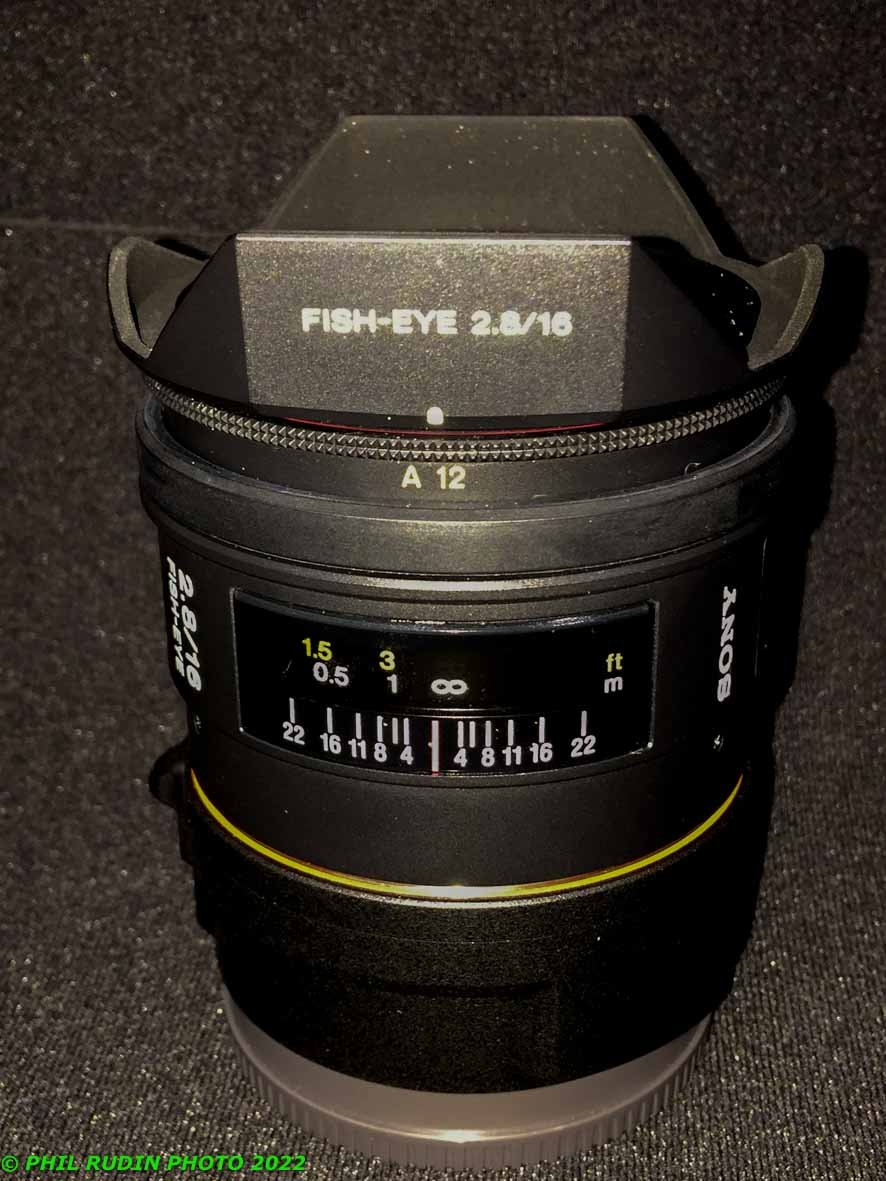
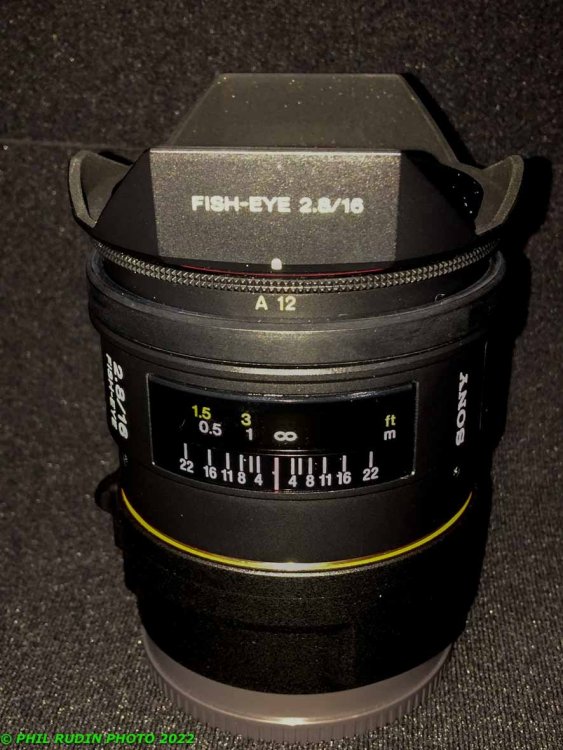
A much better example is the Sony LA-EA5 lens adapter for Sony-A lenses. Much smaller and lighter. The photo is mounted to the Sony 16mm F/2.8 fisheye with three built-in filters. This is a screw drive lens and adapter.
-
The 10.5mm is an AFS lens but uses screw-drive for the AF. There is no nomenclature specific to screw drive AF in spite of the Alphabet Soup nomenclature of Nikkor lenses!
I suspect that Nikon has replacements for the D500 and D850 on the drawing board but these may never get introduced due to production capacity limitations. One thing that could go into these hypothetical cameras is live view AF comparable to what is in the Z9 (and of course the sensors to do this). I believe the "killer app" feature of mirrorless is subject recognition with size (mainly the back focus distance; but mount diameter as well in the case of Nikon) secondary. Folks have gone bonkers with eye AF that Sony introduced a while back. This has morphed into a greater range of subjects and may be the subject for future development, maybe even the possibility of training ones camera to recognize a specific subject. This requires greater computational ability - keep in mind that CPUs continue to grow in capability....
-
Eye focus is an interesting development.
I must confess that with D500/D850, I have no problem getting them to focus where I want them to, be that on an eye or elsewhere...
Is it a gimmick? -
5 hours ago, adamhanlon said:
Eye focus is an interesting development.
I must confess that with D500/D850, I have no problem getting them to focus where I want them to, be that on an eye or elsewhere...
Is it a gimmick?I don’t think it is a gimmick and I’m about to find out. I just received an email from NPS my Z 9 has shipped and I only ordered it on February 3rd.
If using strobes and small apertures with deep depth of field and slow moving subjects it might not be important but it wouldn’t hurt. If shooting birds in flight or fast-moving animals with long glass, fast shutter speeds and very shallow depth of field it could be useful. I was reading a discussion about equestrian photographers wondering if they should use Animal or People subject detection and which subjects’ eye would be more important to focus on.
As a sports shooter I’ve wondered how it would work for American Football and Hockey due to the helmet’s players wear, sometimes with visors. Football (Soccer), baseball and basketball might be useful. I haven’t had an issue grabbing focus without it and am curious to find out if it is useful for my style of shooting. Hopefully the Nikon Deep Learning algorithm marketing message is backed up with performance. Lots of owners are happy with it.
-
Perhaps I should qualify again...
Underwater we deal with (relatively) slow moving subjects. I have never needed eye focus topside, but don't really shoot enough on land to comment in any meaningful (or knowledgable) way.
With conventional dome ports, aperture and depth of field are limited by the dome: lens combination, rather than exposure per se. I would agree that with water contact optics, this is much less of an issue, but the available lens options for mirrorless limit options with these too! -
5 hours ago, adamhanlon said:
Perhaps I should qualify again...
Underwater we deal with (relatively) slow moving subjects. I have never needed eye focus topside, but don't really shoot enough on land to comment in any meaningful (or knowledgable) way.
With conventional dome ports, aperture and depth of field are limited by the dome: lens combination, rather than exposure per se. I would agree that with water contact optics, this is much less of an issue, but the available lens options for mirrorless limit options with these too!I have relied on AF for most of my salmon UWP. They move fast when doing interesting behavior such as spawning and fighting. Most of my rejected oof images are do to the subject moving out of the AF rectangle - to the left or right of it.
-
Hi Adam,
Regarding water contact optics for mirrorless cameras you may want to look at the Nauticam port charts for Sony FF cameras. The Sony FE 24mm F/2.8 G works with WWL-C 130 degrees, WACP-1 works with the 28-60 and 28-70 with full zoom through from 130 degrees also with Sigma 24-70 and Tamron 28-75 without full zoom through. WACP-2 works with Sony 24-70 F/4 and F/2.8, Sigma 24-70 F/2.8 without full zoom through, also with Sony FE 14mm F/1.8 at 140 degrees, Sony 16-35 F/2.8 and F/4 have full zoom through, Sony 24mm F/1.4 at 130 degrees, Sigma 14-24 zoom 115-98 degrees, Tamron 17-28 F/2.8 123-89 degrees and WWL-1/B works with 28-60 full zoom, 28 F/2 at 130 degrees and Sony 35 F/2.8 at 109 degrees.
Bottom line is that Sony has has more options for water contact optics than Canon or Nikon DSLR's and for sure more than R and Z mirrorless cameras
-
@Phil Rudin
I'm aware of those options for Sony, hence my point about "the available lens options for mirrorless limit options" rather than stating there are no options!
But, in terms of the options presented, I have yet to see an image produced with WWL with any full frame camera that I am happy with the corner sharpness. Note that "I" am happy with, others many well disagree about this. I do not consider the WWLs as viable options for use with full frame cameras.
WACP-1 is a good option and I am not really that bothered about zoom through. I plan to use this as a wide angle lens! The results with the Sony 24mm are really nice.
The size, weight and expense of WACP-2 make this very specialized, and indeed it works beautifully with the Nikon Z 14-30 too.
My point here is that I can currently see no advantage in using mirrorless for underwater use. Returning to my original post, I am seeking the wish list for the "perfect underwater camera," and I stated that it would be a cropped sensor SLR, albeit with more MP than is likely to ever be available!
One of the reasons for doing so, is that this avoids the optical compromises of full frame SLR/mirrorless. It would also retain the separate phase detect sensor that in my experience remains the best way to achieve accurate fast AF underwater.
@Tom_Kline
If only they would sit still I find AF is more accurate than my eyes and I don't even have manual focus gears on my lenses. The only time I limit autofocus is in extreme darkness, and this is do by pre-focusing and then not touching the AF-ON button while shooting.
I actually use 3D Continuous AF a lot. This leverages the speed and accuracy of the phase detect and the tracking algorithmic functions of the on-chip AF. In my experience, it is almost magical. The first time I took the D500 underwater, I did a month in Indo, and was hoping to cull out my usual 20-25% of images that were out of focus in my first pass cull. It was a nightmare, as they were (nearly) all in focus.
Ultimately, we are all going to end up using mirrorless, because the camera manufacturers want us to. It is in their interests to sell us a whole new set of lenses etc. However, until there is a sufficient choice of lenses available for underwater use, I can see no advantage (and lots of disadvantages) in switching over.
The good news is that SLR bodies and lenses are now cheap and are still readily available! -
I have done the pre-focusing thing as well in the dark but then a subject of different size will show up...
I have not used the 3D AF. With Canon I have used what is nicknamed the ring of fire, which is auto point selection of all the AF points but only in S mode in spite of Canon's suggestion this is for static subjects. Their auto point in AFC is more like 3D in that one has to start with an AF point on the subject which is not possible for me (remote control shooting without looking through the VF). I use release priority so one has to get a feel for how fast this works to start the AF earlier enough via remote control. Nikon has something like this since the D4 which is what I have been using with both the D4S and D800. I have tried this in both AFS and AFC but use AFC for the most part. I used the D2X for quite a few years and for that I chose the row of AF points run horizontally. Nikon dropped this but something similar is back with the D6.
-
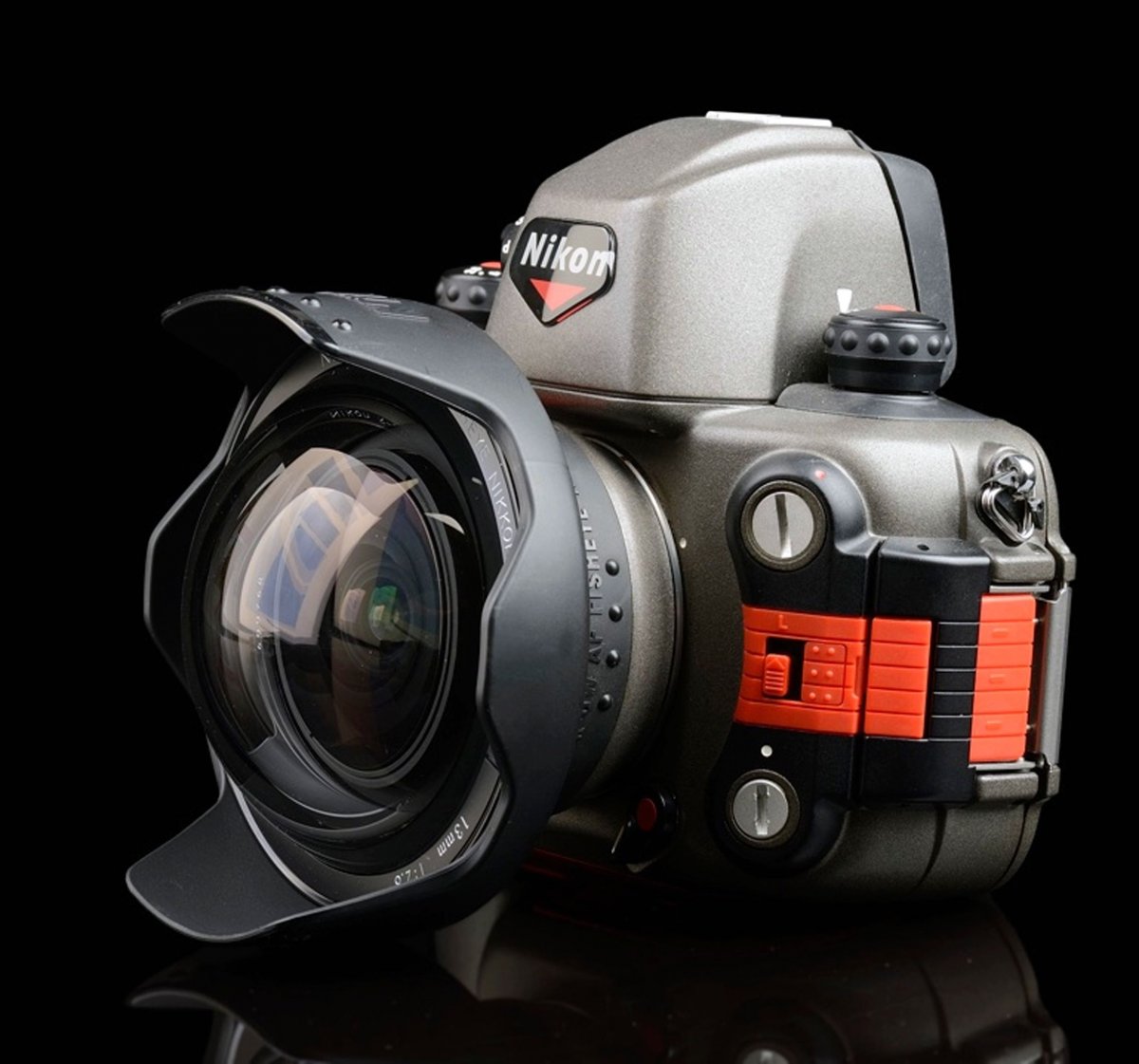
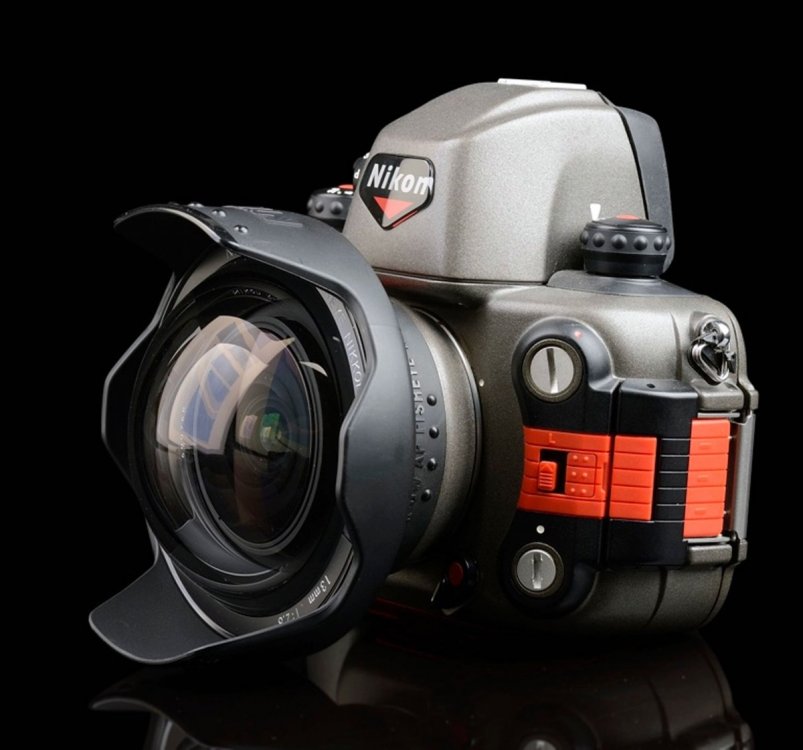
I understand your reluctance to move to mirrorless Adam, I felt the same way about moving from my Nikonos RS that I used for fifteen years to digital. In fact my first digital camera was used only for crime scene photography in my past life.
On the subject of the Nikonos RS my dream underwater camera would be a Nikonos RS style mirrorless body with noting but water contact optics like the 13mm fisheye. I would opt for a very large EVF that could be articulated from 180 to 45 degrees by flipping a lever underwater. I would hope for a FF stacked or global sensor in the 45-60MP range that would allow sync speeds in the 1/500th or higher range without needing an HSS enabled flash.
As long as I am creating a fantasy camera I would like the sensor to be 4/3 say 36 X 27mm rather than 36 X 24mm. To me the 4/3 format has always offered more flexibility than 3/2 both for film and digital.
In addition to the fisheye I would be happy with a WACP-1 sized lens with a max AOV in the 140 range and a lens with a large dome for splits. Macros in the 50-60mm range and 90-100 range that got to 2:1 would also be nice.
The Sony A1, Nikon Z9 and Canon R3 with the respective Nauticam housings sell between $11040.00 (A1) and $13233.00 (R3) US so a price point in the $10,000.00 to $13,000.00 range would seem about where this dream camera would be priced. Fiber optic TTL and/or manual flash trigger built-in, at least 10 FPS, quality video specs, high speed AF to Adam's standards, lenses with corner sharpness at f/8 to Adam's standards, dual CF Express card slots, powerful battery life and I am sure much more tech not yet thought of.
Anyone interested in re-defining this classic camera.
P.S. It has been my experience that no such thing as a perfect camera has ever existed, everything in photography is a trade-off.
-
Phil such a camera would be more than way cool though I would not mind if the VF articulated all the way to 90 degrees (or 0 degrees depending on your reference) so that one could look straight down through it as well as at 45 and horizontally.