



Skip to content

Photography Gear and Technique / Archived topic

Wide angle options for Sony A7RIV freediver

Started by Francesca ·

  • 21Posts
  • 21Replies

Read-only discussion

Wide angle options for Sony A7RIV freediver

21 posts
  1. Hello

    I am a snorkeller/freediver, usually diving to depths of about 7m, looking to photograph kelp forests. I have Sony A7R IV and am looking for a housing and wide angle lens.

    I was planning on purchasing an Isotta housing, as I like how small and light (relatively speaking) these are.

    I originally had planned to purchase the 16-35mm f4 with a 6.5" dome. However, I'm now beginning to wonder if this is going to be OK. I wondered if anyone else has any experience of using the 16-35mm with a smaller dome? I understand corner sharpness will be better with a larger dome, so I could get the 8 or 9" dome, but I'm just a bit concerned about how difficult it might be to manoeuvre in the water. However, I'm not planning on going super deep, so would be prepared to sacrifice some manoeuvrability for better image quality.

    Something else I have considered is the Nauticam WWL-1B with either the Sony 28mm prime or 28-60mm - although I'm not sure this would be compatible with the Isotta housing, but I could go with a Nauticam housing if this lens option would be the best in terms of image quality and manoeuvrability?

    I'm not sure if there are any options I have missed? I have thought about fish eye as this would allow me a smaller dome, but because I am shooting kelp forests, I'm not keen on the barrel distortion, so would prefer a rectilinear lens.

    I wondered if anyone can offer any advice on which wide angle option might work best for my needs?

    Thank you very much in advance,

    Francesca
  2. A 6.5" dome will have quite soft corners on a 16mm lens - I expect it would be quite noticeable on a frame full of kelp. 

    A dome large enough for for a 16mm - a 230mm dome is a lot larger than it seems and a lot to push through the water.  If you have a nearby UW photo store it would be good to physically see one.

    On the WWL, you can use Nauticam ports on Isotta housings by changing out the lug ring.  I believe the extensions required are the same.  You can't use the ports from the Nauticam-Sony port charts though as Nauticam uses N100 ports with Sony, while Isotta housing are N120.  This is the lug ring you would need:  http://www.divervision.com/seaandsea-bayonet-port-ring-for-seaandsea-nx-ports-90011.html

    To use the 28-60 you need a Nauticam 45 port in N120.  You may need to get a custom zoom gear - you could talk to Isotta about this and they may be able to help or you could contact deepshots in the UK to see if they can make a gear for you.  The advantage of the Nauticam port is you can use the Nauticam bayonet system to attach the WWL.  You may need to remove the lens once UW to clear any air bubbles clinging to the lens and the bayonet system makes this easier.

    I would recommend contacting Isotta to talk about this option and confirm the fit for these items and you would need to confirm the availability of a zoom gear before committing.  Isotta is reported to be quite responsive to queries.

  3. Thanks for your advice and help Chris, I really appreciate it!

    I will get in touch with Isotta to see what's possible in terms of the 28-60. But thanks for the information re the ports, that's been very helpful. 

  4. Hi Francesca, 

    I also freedive in 2-10m depth photographing kelp forests with ambient light, I don't have experience with the gear you mentioned but can give you advice based on my choices. I started with a crop sensor 7D in a surf housing with a 10-18mm lens (16-28mm equivalent) with a 6 inch dome. Corners were pretty poor even though the dome was specifically for the lens. I then switched to a Sony a6400 in a Seafrogs housing and 8 inch dome with the same Canon 10-18mm, corners and overall sharpness were far better. I don't find the additional dome size to be a problem when diving, it's of course a bit of a drag but entirely worth it for the improved image quality!

    Edited by RjbSA
  5. 6 hours ago, Francesca said:

    Thanks for your advice and help Chris, I really appreciate it!

    I will get in touch with Isotta to see what's possible in terms of the 28-60. But thanks for the information re the ports, that's been very helpful. 


    A few factors to take into account when building a setup dedicated for freediving (also valid for scuba, but even more so here)

    • What buoyancy are you looking for? Positive/Neutral/Negative? From what I remember, to give you some examples
      • A7 system Nauticam+28-60+WWL-1 (Floating collar included)  is ~600g negative
      • A7 system Nauticam + Batis 18mm + 8.5" dome is positive (300g?)
      • Any floaters you'll add will be a big drag
      • If you need to drop your system, would you want your system to float or go at the bottom ? If it floats up, your buddy can get it while you recover
    • How much clutter is there in your system?
      • Particularly with kelp forests where entanglement risk is elevated, you don't want a housing that could get stuck and you with it..
    • How streamlined is the system
      • Pushing a big housing underwater is very constraining and you'd be surprised how quickly you feel that CO2 build up with a big dome !


    I don't have my rig with me here to provide you with buoyancy numbers (I have Batis18mm,16-35, fisheye, wwl1) but once I do, I can let you know or answer any specific questions. Personally, I prefer a positively buyoyant setup when freediving (8.5"" dome + batis 18mm lens) as I can let it float next to me while I recover/prepare for a dive. And on the way up, it takes me less effort.

    Check out Phil's magazine which has a ton of info (uwpmag.com)

    Thanks

    Edited by waterpixel
  6. 4 hours ago, RjbSA said:

    Hi Francesca, 

    I also freedive in 2-10m depth photographing kelp forests with ambient light, I don't have experience with the gear you mentioned but can give you advice based on my choices. I started with a crop sensor 7D in a surf housing with a 10-18mm lens (16-28mm equivalent) with a 6 inch dome. Corners were pretty poor even though the dome was specifically for the lens. I then switched to a Sony a6400 in a Seafrogs housing and 8 inch dome with the same Canon 10-18mm, corners and overall sharpness were far better. I don't find the additional dome size to be a problem when diving, it's of course a bit of a drag but entirely worth it for the improved image quality!

    Thank you so much for your feedback - this has really confirmed my suspicions that it's better to go with a larger dome rather than smaller. And I agree with you, I think improved image quality is worth the drag!

  7. 51 minutes ago, waterpixel said:


    A few factors to take into account when building a setup dedicated for freediving (also valid for scuba, but even more so here)

    • What buoyancy are you looking for? Positive/Neutral/Negative? From what I remember, to give you some examples
      • A7 system Nauticam+28-60+WWL-1 (Floating collar included)  is ~600g negative
      • A7 system Nauticam + Batis 18mm + 8.5" dome is positive (300g?)
      • Any floaters you'll add will be a big drag
      • If you need to drop your system, would you want your system to float or go at the bottom ? If it floats up, your buddy can get it while you recover
    • How much clutter is there in your system?
      • Particularly with kelp forests where entanglement risk is elevated, you don't want a housing that could get stuck and you with it..
    • How streamlined is the system
      • Pushing a big housing underwater is very constraining and you'd be surprised how quickly you feel that CO2 build up with a big dome !


    I don't have my rig with me here to provide you with buoyancy numbers (I have Batis18mm,16-35, fisheye, wwl1) but once I do, I can let you know or answer any specific questions. Personally, I prefer a positively buyoyant setup when freediving (8.5"" dome + batis 18mm lens) as I can let it float next to me while I recover/prepare for a dive. And on the way up, it takes me less effort.

    Check out Phil's magazine which has a ton of info (uwpmag.com)

    Thanks

    Really appreciate these pointers. Thank you.

    Like you, I do prefer a positively bouyant setup, as it's easier for the breathe up, so that's something to think about with the Nauticam and WWL-1 lens - I didn't realise it was quite so negative even with the collar. But I also really like being streamlined, and it's going to be difficult to move an 8" dome through the water if I go with that option. So I guess neither option is 100% ideal, it's a case of choosing heavier/more streamlined (Nauticam+WWL), or lighter/less streamlined (Isotta+dome)!

    Are you happy with the results - image quality wise - with all your Sony setups?

  8. Regarding your lens choices I prefer the new Sony FE PZ 16-35mm F/4 over the older 16-35mm Zeiss branded F/4. If you are buying used you will have no problem finding the older lens. The new lens will power zoom (no gear required) with the new A7 IV (33MP) and the A-1 with older models including the A7r IV you will need a gear. At this time Marelux has the only gear for that lens.

    With WWL-1/1B Isotta only has a flat macro port for the Sony FE 28mm F/2 (reviewed in back issues at uwpmag.com) 

    Nauticam has flat ports for the 28mm and the Sony FE 28-60mm, these are both N-100 ports.

    Marelux has a standard (5") port and gear for the FE 28-60 which works with WWL-1B.

    For Isotta you would need a custom zoom gear for 28-60 and a custom port or port adapter.

    My recommendation for any of the wide rectilinear lenses for Sony full frame would be a 230mm port but all three manufactures have port and extension configurations for 180mm ports, my second choice and Isotta has the smaller dome choice. 


  9. 10 hours ago, waterpixel said:


    A few factors to take into account when building a setup dedicated for freediving (also valid for scuba, but even more so here)

    • What buoyancy are you looking for? Positive/Neutral/Negative? From what I remember, to give you some examples
      • A7 system Nauticam+28-60+WWL-1 (Floating collar included)  is ~600g negative
      • A7 system Nauticam + Batis 18mm + 8.5" dome is positive (300g?)
      • Any floaters you'll add will be a big drag
      • If you need to drop your system, would you want your system to float or go at the bottom ? If it floats up, your buddy can get it while you recover
    • How much clutter is there in your system?
      • Particularly with kelp forests where entanglement risk is elevated, you don't want a housing that could get stuck and you with it..
    • How streamlined is the system
      • Pushing a big housing underwater is very constraining and you'd be surprised how quickly you feel that CO2 build up with a big dome !


    I don't have my rig with me here to provide you with buoyancy numbers (I have Batis18mm,16-35, fisheye, wwl1) but once I do, I can let you know or answer any specific questions. Personally, I prefer a positively buyoyant setup when freediving (8.5"" dome + batis 18mm lens) as I can let it float next to me while I recover/prepare for a dive. And on the way up, it takes me less effort.

    Check out Phil's magazine which has a ton of info (uwpmag.com)

    Thanks

    Also I would note that the 8.5" dome is the acrylic dome which would be positive,  230mm glass domes are probably neutral to negative.  One problem with the acrylic domes is the buoyancy is in front so they try to twist up.

    On the UW weights the WWL-1B with buoyancy collar is 120gr negative underwater and they quote 300 gr -ve for the camera and housing in water.  The Isotta is lighter in air but may possibly be heavier in water as it's more compact they don't quote and UW weight.  You could probably make the system slightly positive with a single CF float arm, which would be more streamlined I think than a dome with its shade.  Placing the buoyancy above the camera also means it's not going to try to twist and you could tuck the float in close to the WWL collar to reduce cross sectional area.

  10. https://www.thingiverse.com/thing:4586545

    Something like this works well to trim a rig that is positively buoyant from the front. What you can also do is attach a small weight with straps (shearwater straps are perfect as they clip on and are stretchable) around the port extension before the dome.

  11. 7 hours ago, ChrisRoss said:

      You could probably make the system slightly positive with a single CF float arm, which would be more streamlined I think than a dome with its shade.  Placing the buoyancy above the camera also means it's not going to try to twist and you could tuck the float in close to the WWL collar to reduce cross sectional area.

    This post shows how you would mount the float arm - ignore the snoot on top, I'm talking about the Black carbon fiber float arm with the blue collar.  Placing it in that position will help with the stream lining and you cold probably move it down to sit on top of the lens port to get it tucked in closer.

    Edited by ChrisRoss
  12. I use the Sony 20/1.8 with good enough results (corner acceptability will depend on your fastidiousness). Its a great all round lens. I use it with a 200mm dome and its fine.

  13. Thanks everyone for all the tips on buoyancy, both with the WWL and the dome, these are all very helpful. 

    I think the best thing for me to do is probably go to my nearest UW store and try out the 8inch dome. It's encouraging to hear others manage to use it for freediving without too much of a problem, and it seems like it will definitely offer better image-quality.

    Thank you for mentioning about the 18mm Zeiss Batis lens - I had not even considered this, but I love the quality of the Zeiss lenses and the idea of a prime (not having to worry about zooming/zoom gears) is something to think about. 

    It's a shame there's no support for the WWL lens + 28-60mm lens beyond Nauticam and maybe Marelux. I have contacted Isotta to see what's possible and am waiting to hear from them.

  14. 24 minutes ago, Francesca said:

    Thank you for mentioning about the 18mm Zeiss Batis lens - I had not even considered this, but I love the quality of the Zeiss lenses and the idea of a prime (not having to worry about zooming/zoom gears) is something to think about.  

    https://www.uwpmag.com/?p=uwp-back-issues&issue=92

    Phil reviewed it here FYI

  15. The Zeiss Batis 18mm is a solid lens for U/W work. At the time of my review I was using the excellent Zen Underwater 200mm dome port.

    Sadly this port has been discontinued in favor of the Zen 230mm, also excellent. 

    More recently I have reviewed the Rokinon/Samyang 18mm with the Zen 230mm port. For the price the Rokinon gave very decent results.

    I also like the 18mm and 24mm for splits of people.

  16. 20 hours ago, ChrisRoss said:

    Also I would note that the 8.5" dome is the acrylic dome which would be positive,  230mm glass domes are probably neutral to negative.  One problem with the acrylic domes is the buoyancy is in front so they try to twist up.

    With a light lens like the Zeiss Batis (330g), even the 180mm glass dome ends up being positive and suffering from the same issues as the acrylic dome (tendency to twist up). I imagine that the 230mm glass dome is even worse because of all that additional air it holds.


  17. 9 hours ago, Francesca said:


    I think the best thing for me to do is probably go to my nearest UW store and try out the 8inch dome. It's encouraging to hear others manage to use it for freediving without too much of a problem, and it seems like it will definitely offer better image-quality.

    Thank you for mentioning about the 18mm Zeiss Batis lens - I had not even considered this, but I love the quality of the Zeiss lenses and the idea of a prime (not having to worry about zooming/zoom gears) is something to think about. 

    It's a shame there's no support for the WWL lens + 28-60mm lens beyond Nauticam and maybe Marelux. I have contacted Isotta to see what's possible and am waiting to hear from them.

    An 8" dome is probably a little small for a 16mm lens on full frame, once you zoom in to around 18-20mm range the corners will improve.   Keep in mind too that the acceptable corners in a 230mm dome and  at 16mm are achieved at f11-16 range.  This is precisely why optics like the WWL were developed.

    The way to get acceptable corners with rectilinear lenses in a reasonable sized dome is to zoom in to something like 20mm, but that is really not that wide for underwater work or to use a smaller sensor.  For example the 8-18 panasonic or 7-14 olympus (16-36 , 14-28 equivalent) lenses work just fine in a 170mm dome and only need stopping down to f8.   You can just about buy an Olympus EM-1 MkIII body for the price difference between a  A7R-IV housing and the Olympus housing and the ports are cheaper and the lenses significantly cheaper as well.  A Sony APS-C housing is similarly cheaper and the 10-18 lens is an option.

  18. 19 hours ago, ChrisRoss said:

    An 8" dome is probably a little small for a 16mm lens on full frame, once you zoom in to around 18-20mm range the corners will improve.   Keep in mind too that the acceptable corners in a 230mm dome and  at 16mm are achieved at f11-16 range.  This is precisely why optics like the WWL were developed.

    The way to get acceptable corners with rectilinear lenses in a reasonable sized dome is to zoom in to something like 20mm, but that is really not that wide for underwater work or to use a smaller sensor.  For example the 8-18 panasonic or 7-14 olympus (16-36 , 14-28 equivalent) lenses work just fine in a 170mm dome and only need stopping down to f8.   You can just about buy an Olympus EM-1 MkIII body for the price difference between a  A7R-IV housing and the Olympus housing and the ports are cheaper and the lenses significantly cheaper as well.  A Sony APS-C housing is similarly cheaper and the 10-18 lens is an option.

    Thank you. I have been going through Phil's reviews in UWP (a great resource) and it seems like ultimately even if I were to get the 230mm dome for whichever rectilinear lens, 18mm or 16-35mm, the WWL would still give the best results. I might be able to work around the negative buoyancy using the tips you mentioned. And ultimately if this is going to work best, I might end up going with Nauticam rather than Isotta to allow me to use the 28-60 without needing custom zoom gears etc. I'm going to go to a shop where I can check this combination out as well as the 230mm dome.

    I do understand that APC-C probably makes more sense, but I have my A7R IV principally for landscape photography and love it. I don't really want to carry two bodies or systems. Unfortunately I'm one of those people who wants to do land and underwater photography and it seems like whatever works best on land is not so brilliant underwater, whilst the equipment you disregard on land turns out to be perfect for underwater! 

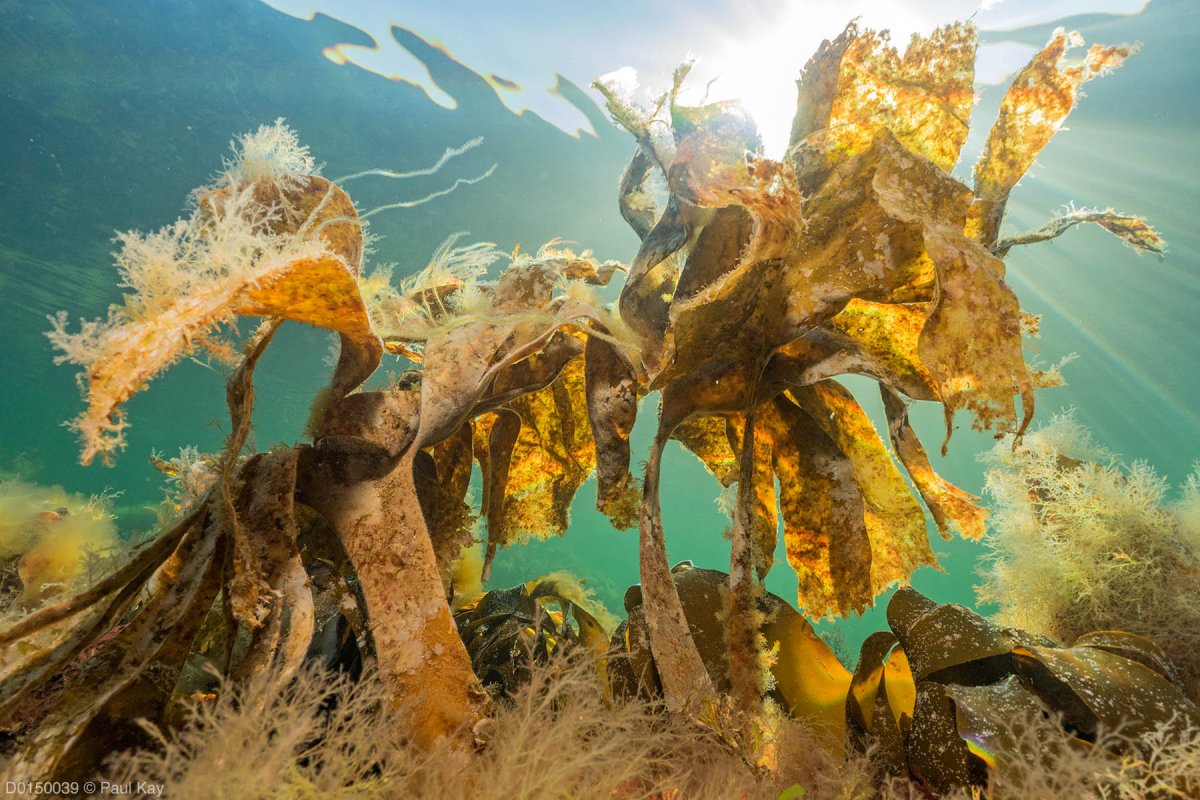
  19. One from yesterday in about 2m of water. Sony A7 series with 20/1.8 behind a 200mm dome.

    1971439571_D0150039PaulKay.thumb.jpg.b38f5f1bf37e543d676fdffdc42f929c.jpg

  20. 14 hours ago, Paul Kay said:

    One from yesterday in about 2m of water. Sony A7 series with 20/1.8 behind a 200mm dome.

    Oh wow, those conditions look nice! Thank you for sharing - this fits with Chris' explanation that a 200mm dome works best with the slightly longer 20mm focal length.

Ultralight Control Systems

Account

Navigation

Search

Search

Configure browser push notifications

Chrome (Android)
  1. Tap the lock icon next to the address bar.
  2. Tap Permissions → Notifications.
  3. Adjust your preference.
Chrome (Desktop)
  1. Click the padlock icon in the address bar.
  2. Select Site settings.
  3. Find Notifications and adjust your preference.

