Skip to content

Photography Gear and Technique / Archived topic

Nauticam WACP-C test shots

Started by gcachon ·

  • 34Posts
  • 34Replies

Read-only discussion

Nauticam WACP-C test shots

34 posts
  1. I have been taking pool test shots to understand the performance of the Nauticam WACP-C. I figure these tests might be useful to others. 

    The test images are available at https://www.dropbox.com/sh/wc8u0jvg0ns2o8k/AABy8geIDmsE4XBXV0ac9ODKa?dl=0

    Test setup: objects in the pool are aligned horizontally in the same vertical plane; ambient light; WACP-C images are with a Canon R5, EF 28-70mm f3.5-4.5 ii, images taken at 28mm; other images are with a Canon 7Dii Tokina 10-17mm in a 100mm dome, images taken at 13mm (which I think has about the same field of view as the 28mm on the WACP-C); files are not cropped (i.e., original out of the camera); all focused on the center object; all taken from approximately the same distance and angle of view (to the best of my ability); all were taken RAW, uploaded to Lightroom classic, downloaded as jpg; the only post processing was a slight adjustment to exposure so that the images have about the same histogram. (I varied the shutter speed and aperture accordingly while taking the shots, but the ambient light changed, which is why some exposure adjustment was needed).

    My conclusions from the test regarding the WACP-C with the EF 28-70mm are:

    • Center sharpness is so-so at f5.6, ok at f8, and good at f11 or f14.
    • Corner sharpness is terrible at f5.6, not good at f8, tolerable at f11 and f14.
    • The Tokina 10-17 does better in the corners, even at F9. 
    • WACP-C sharpness in the center is better than the Tokina, but of course, the R5 is used with the WACP-C (45MP) and the Tokina with the 7Dii (20MP). 
    • I was under the impression that the WACP-C produced "near rectilinear" view. To me, this isn't rectilinear at all. The distortion is similar to the Tokina. 

    If I were only shooting wide (100+ degree field of view), then I would say the 7Dii with the Tokina 10-17 has some significant advantages over the WACP-C, such as better corner sharpness, lighter and much more compact. The center sharpness with the R5 is better, but it is possible that the Tokina 10-17 with the new R7 could do nearly as well there too. 

    What the WACP-C can do that the Tokina cannot, is give a narrower field of view (the 70mm end of the EF28-70). This is very helpful when you just can't get so close to the subject. 

    I managed to upload one image to the post (The WACP-C 28mm f11). If you have an interest in the others, then hopefully you can access them through the dropbox link above. 
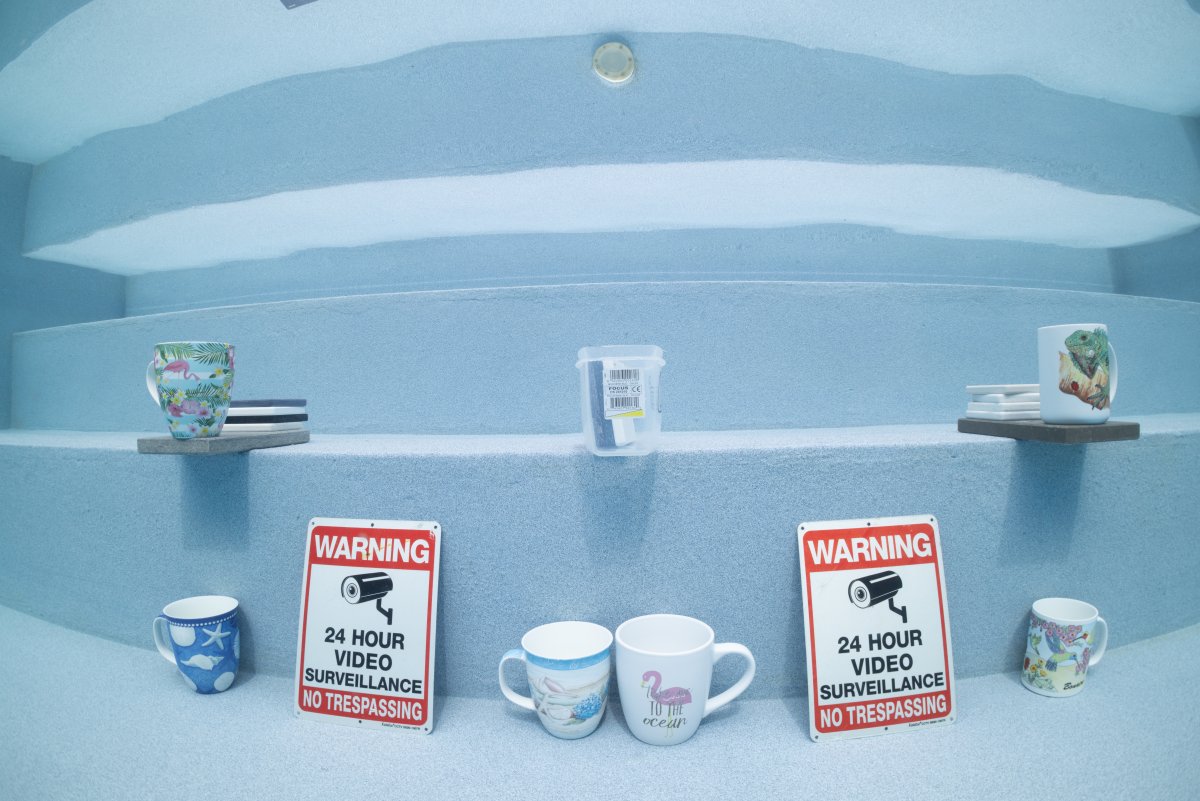
     

    wacp-c 28mm f11.jpg

  2. Thanks for testing this

    This is overall consistent with my results comparing the WWL-1 to the canon 8-15mm on my GH5M2 body

    The 8-15mm is always sharper but that is because the lens is sharper than the 14-42mm lens behind the WWL-1


    In the corners the difference is a bit less than in the center but overall the 8-15mm goes a long way

    I think in your case the 28-70mm is not an amazing lens and the WACP-C only corrects additional water defect it does not make the lens sharper

    For me using a WACP/WWL solution when you have a Tokina 10-17mmm or canon 8-15mm on a APSC body is non sense nothing to gain at all.

    For full frame of course you have no other options unless you use the Tokina 10-17mm or the canon 8-15mm with a TC

    It would be interesting to test the 8-15mm with 1.4tc vs the WACP-C on full frame

    With the two lenses above and using adapter I see little benefit for any WACP on MFT and APSC 

    For the WWL-1 you have the benefit that you can remove the lens which is not a small one if you shoot video

    Edited by Interceptor121
  3. I think issue might be the Sony EF 28-70mm. Its allready known that this is one of the worst zoom lenes Sony offers. Maybe the SEL28-60 might increase the image quality. 

    The distortion is quite strong but was already mentioned in other disussions so we have the options to geht a kinda fisheye lens with new optics or to use a classic dome port. 

  4. I think issue might be the Sony EF 28-70mm. Its allready known that this is one of the worst zoom lenes Sony offers. Maybe the SEL28-60 might increase the image quality. 

    The distortion is quite strong but was already mentioned in other disussions so we have the options to geht a kinda fisheye lens with new optics or to use a classic dome port. 

    He is using a canon RF it’s not a Sony


    Sent from my iPhone using Tapatalk
  5. Sorry my bad. In this case just ignore my statement.  

  6. This is an admirable effort, but there are several issues leading to inaccurate conclusions. Here are two big ones:

    Firstly the WACP-C shots are backfocused (noticeable at f/5.6, f/8, and f/11). The step behind the subject is in focus while the subject is out of focus. For an accurate comparison you would need to make sure both sets of images are focused on the same thing.

    Secondly for an accurate comparison the two sets of images must be at the same resolution. In this case when I downsize the WACP-C images to the lower resolution of the 10-17mm images the WACP-C images are sharper.

    I'll also note that the 10-17mm f/9 image was shot at 10mm, not 13mm.

    I point these things out not to discourage you but rather to hopefully help you achieve more meaningful results in the future. I do appreciate you sharing this with the community. Too often people give opinions on which optic is sharper than another without even trying to present any real evidence.

  7. 6 hours ago, Interceptor121 said:

    I think in your case the 28-70mm is not an amazing lens and the WACP-C only corrects additional water defect it does not make the lens sharper

    Nauticam gives three lens options: the EF 28-70, EF 28-80ii, EF 28-80v. I purchased several copies of the EF 28-80ii and EF 28-80v (and EF 28-80iv by accident). Above water the 28-80 versions focus faster and quieter than the 28-70, but they are not as sharp. Agreed that the EF 28-70 is not super sharp - my EF 24-70L f4 blows it away. So at least according to Nauticam's port chart, the EF28-70 is the best option. And agreed that the WACP-C can't make the lens behind it sharper, just not degrade its quality underwater as much as a dome port. But I still wonder if a modern lens behind a dome port loses out to a very old lens behind the WACP-C. Several reviews suggest so. But if the benchmark is a 7Dii with a Tokina 10-17, then the incremental improvement of the WACP-C seems minimal in the center and worse in the corners. (That said, I never place my subject in the corners underwater, so corner sharpness is probably overrated relative to say landscape photography.)   

  8. 17 minutes ago, Isaac Szabo said:

    Firstly the WACP-C shots are backfocused (noticeable at f/5.6, f/8, and f/11). The step behind the subject is in focus while the subject is out of focus. For an accurate comparison you would need to make sure both sets of images are focused on the same thing.

    Secondly for an accurate comparison the two sets of images must be at the same resolution. In this case when I downsize the WACP-C images to the lower resolution of the 10-17mm images the WACP-C images are sharper.

    I'll also note that the 10-17mm f/9 image was shot at 10mm, not 13mm.

    Thanks for the feedback! Very helpful.. some responses below..  

    Last one first - sorry, I posted the wrong file. I now (I hope) have posted the correct Tokina 10-17 f/9 image shot at 13mm. 

    First one second - not sure about the focus issue. In all cases I had the camera set to spot focus and I focused on the the sticker on the Cressi googles plastic container. Ironically, the sticker that has "focus" written on it. If the cameras are back focusing, then that would indeed be an issue that is unrelated to the lens. However, in all of the images it does seem that the center sticker is in focus. 

    Second one last - Agreed that the higher mp of the R5 gives it an advantage. I think that advantage helps in the center. But if the higher MP of the R5 looks worse in the corner, then downsampling shouldn't improve that, right? I am not sure the correct way to downsample, but I did save a version of the R5 file to the size of the 7Dii/Tokina file. Also, to the extent that the R5/WACP-C needs to live at f/11 - f/14, it can handle the required ISO much better than the 7Dii. 

    If there are any other issues, please let me know. Note, my goal here is merely to understand the capabilities of the systems. 

  9. This is an admirable effort, but there are several issues leading to inaccurate conclusions. Here are two big ones:
    Firstly the WACP-C shots are backfocused (noticeable at f/5.6, f/8, and f/11). The step behind the subject is in focus while the subject is out of focus. For an accurate comparison you would need to make sure both sets of images are focused on the same thing.
    Secondly for an accurate comparison the two sets of images must be at the same resolution. In this case when I downsize the WACP-C images to the lower resolution of the 10-17mm images the WACP-C images are sharper.
    I'll also note that the 10-17mm f/9 image was shot at 10mm, not 13mm.
    I point these things out not to discourage you but rather to hopefully help you achieve more meaningful results in the future. I do appreciate you sharing this with the community. Too often people give opinions on which optic is sharper than another without even trying to present any real evidence.

    No the focus is always on the same step on the back the one with the small box perhaps the choice of target is not the best
    What happens here is that at close range the wacp simply has less depth of field
    So the lens may be sharp at f/5.6 but only when focussed far away
    At close range you have to stop down the lens there is no advantage over a fisheye zoom lens however the f/11 tokina shot still looks better than the f/14 wacp shot


    Sent from my iPhone using Tapatalk
  10. Thanks for the feedback! Very helpful.. some responses below..  
    Last one first - sorry, I posted the wrong file. I now (I hope) have posted the correct Tokina 10-17 f/9 image shot at 13mm. 
    First one second - not sure about the focus issue. In all cases I had the camera set to spot focus and I focused on the the sticker on the Cressi googles plastic container. Ironically, the sticker that has "focus" written on it. If the cameras are back focusing, then that would indeed be an issue that is unrelated to the lens. However, in all of the images it does seem that the center sticker is in focus. 
    Second one last - Agreed that the higher mp of the R5 gives it an advantage. I think that advantage helps in the center. But if the higher MP of the R5 looks worse in the corner, then downsampling shouldn't improve that, right? I am not sure the correct way to downsample, but I did save a version of the R5 file to the size of the 7Dii/Tokina file. Also, to the extent that the R5/WACP-C needs to live at f/11 - f/14, it can handle the required ISO much better than the 7Dii. 
    If there are any other issues, please let me know. Note, my goal here is merely to understand the capabilities of the systems. 

    As per my answer the wacp shots simply have less depth of field the subject at close range requires the lens to be stopped down
    Yet your f/14 shot WACP doesn’t look any better than the tokina f/9 shot…
    The benefit of the WACP are for shots that are not at close range where you have more depth of field


    Sent from my iPhone using Tapatalk
  11. You might want to try focusing on something closer in the frame then re composing or move the focus point.  The depth of field is greater behind the subject than in front so focusing closer might pull the corners in if is a depth of field issue.

  12. No problem @gcachon! Happy to help.

    I’m not saying that you didn’t have the camera set to focus on the subject. What I’m saying is that in the actual images the subject is out of focus and the background is in focus. It is immediately clear to me when viewing the images at 100%. But if some people are having a hard time seeing it, here is the WACP-C f/5.6 image with a focus peaking effect applied: 

    wacp-c%2028mm%20f5%20focus%20peaking.jpg

    Obviously, the focus plane is behind the subject, rendering the sharpness comparison invalid. You would have to do more testing to figure out if backfocus is a consistent problem with the WACP-C setup, but if it is then that would be a strike against it. Either way, you cannot make a valid comparison of the sharpness of the two setups unless they are actually focused on the same thing.

    I didn’t say higher resolution was an advantage (there are both pros and cons). It's just to accurately compare the sharpness of two setups the images must be viewed at 100% at the same resolution. You can downsize the R5 images to the 7D MKII resolution in Photoshop by navigating to Image > Image Size and setting the width to 5472 pixels (and the height to 3650 if it doesn’t do it automatically). And just to be clear, you wouldn’t normally want to downsize your R5 images – it’s just for the sake of an accurate comparison in this specific situation. 

  13. No problem [mention=60169]gcachon[/mention]! Happy to help.
    I’m not saying that you didn’t have the camera set to focus on the subject. What I’m saying is that in the actual images the subject is out of focus and the background is in focus. It is immediately clear to me when viewing the images at 100%. But if some people are having a hard time seeing it, here is the WACP-C f/5.6 image with a focus peaking effect applied: 
    wacp-c%2028mm%20f5%20focus%20peaking.jpg
    Obviously, the focus plane is behind the subject, rendering the sharpness comparison invalid. You would have to do more testing to figure out if backfocus is a consistent problem with the WACP-C setup, but if it is then that would be a strike against it. Either way, you cannot make a valid comparison of the sharpness of the two setups unless they are actually focused on the same thing.
    I didn’t say higher resolution was an advantage (there are both pros and cons). It's just to accurately compare the sharpness of two setups the images must be viewed at 100% at the same resolution. You can downsize the R5 images to the 7D MKII resolution in Photoshop by navigating to Image > Image Size and setting the width to 5472 pixels (and the height to 3650 if it doesn’t do it automatically). And just to be clear, you wouldn’t normally want to downsize your R5 images – it’s just for the sake of an accurate comparison in this specific situation. 

    Ignore the f5.6 f/8 look at the f/14 even that one is weaker than the f/11 shot
    The wacp has to produce an equivalent shot to the 13mm tokina shot but it doesn’t
    The 5.6 8 shots would never be useful at close range unless it was shooting a flat target which he isn’t and besides a flat target in real life doesn’t exist
    The idea that the wacp has an edge benefit on rectilinear lenses doesn’t mean it has any advantage on a fisheye lens it can’t be as the effect is similar
    Hence on cropped sensor where you have a fisheye zoom there is no use case which you knew before this pseudo test


    Sent from my iPhone using Tapatalk
  14. 2 hours ago, gcachon said:

    Nauticam gives three lens options: the EF 28-70, EF 28-80ii, EF 28-80v. I purchased several copies of the EF 28-80ii and EF 28-80v (and EF 28-80iv by accident). Above water the 28-80 versions focus faster and quieter than the 28-70, but they are not as sharp. Agreed that the EF 28-70 is not super sharp - my EF 24-70L f4 blows it away. So at least according to Nauticam's port chart, the EF28-70 is the best option. And agreed that the WACP-C can't make the lens behind it sharper, just not degrade its quality underwater as much as a dome port. But I still wonder if a modern lens behind a dome port loses out to a very old lens behind the WACP-C. Several reviews suggest so. But if the benchmark is a 7Dii with a Tokina 10-17, then the incremental improvement of the WACP-C seems minimal in the center and worse in the corners. (That said, I never place my subject in the corners underwater, so corner sharpness is probably overrated relative to say landscape photography.)   

    The WACP replicates a fisheye effect there is no evidence to suggest it would beat a native fisheye zoom lens in fact the opposite

  15. For gcachon and others reading this thread, note that I have a rule of never engaging Massimo (otherwise I would not be able to tolerate this forum). So don't take my lack of responses to his posts as an indication that I agree with anything he says. I'm confident in my assessment, but if some people disagree, that's fine. I'm just here to help and have zero interest in getting into arguments. 

  16. For gcachon and others reading this thread, note that I have a rule of never engaging Massimo (otherwise I would not be able to tolerate this forum). So don't take my lack of responses to his posts as an indication that I agree with anything he says. I'm confident in my assessment, but if some people disagree, that's fine. I'm just here to help and have zero interest in getting into arguments. 

    Your assessment of the images at wider aperture is irrelevant a bit like the post of the op which is not comparing apples with apples

    The WACP lens at f/5.6 f/8 f/11 will not produce the same edges of the Tokina because it is not designed to

    Ignore all those shots and look at the f/14 one vs the f/9 (almost equivalent aperture he missed f/10) once they are scaled at the same resolution. The shots are correctly focussed on the mask box though they are not at the same height and you can see that the WACP does not bear any benefit

    And why would it be the case anyway? It is advertised to be 'better in the edges than a rectilinear lens' however as shown from this image the lens is far from rectilinear it has fisheye distortion in abundance

    Those optics simply fill a gap when a fisheye zoom does not exist. When a fisheye zoom does exist the bring no benefits whatsoever, they are more bulky, they don't focus in air and at the end are considerably more expensive 

    I would not know why on earth anyone that has a working copy of a tokina 10-17mm on crop that is lighter and has a wider focal range would even bother looking to a WACP solution

    However someone looking to use a tokina 10-17 with tc on full frame (awful combination) should look at WACP solution instead. Would be curious to see a comparison with the canon 8-15mm with TC 1.4 actually vs WACP

    Edited by Interceptor121
  17. 14 hours ago, Isaac Szabo said:

    Obviously, the focus plane is behind the subject, rendering the sharpness comparison invalid. You would have to do more testing to figure out if backfocus is a consistent problem with the WACP-C setup, but if it is then that would be a strike against it. Either way, you cannot make a valid comparison of the sharpness of the two setups unless they are actually focused on the same thing.

    Interesting! For me the sharpness test is still valid because I want the subject that I focus on to be in focus, not something 30cm behind it. In other words, how sharp will the pictures that I actually take be. But this is a very useful comment because now I will do some more tests specifically on this issue. 

  18. 14 hours ago, ChrisRoss said:

    You might want to try focusing on something closer in the frame then re composing or move the focus point.  The depth of field is greater behind the subject than in front so focusing closer might pull the corners in if is a depth of field issue.

    While that might work, I don't want to have to rely on that technique, especially with subjects that move (turtles, rays, eels, etc.) Also, it isn't clear to me that would fix the corners. Even on land, the 28-70 is not great in the corners at 28mm. Plus, I don't know how the focal plane bends for this lens - it might bend forward or backward with this lens. If backward, your approach would help. If forward, then it would make it even worse. Fortunately, I am not so picky about sharp corners. I just don't want them to be so blurry that they become a distraction to the overall image. 

  19. 14 hours ago, Interceptor121 said:

    And why would it be the case anyway? It is advertised to be 'better in the edges than a rectilinear lens' however as shown from this image the lens is far from rectilinear it has fisheye distortion in abundance

    Those optics simply fill a gap when a fisheye zoom does not exist. When a fisheye zoom does exist the bring no benefits whatsoever, they are more bulky, they don't focus in air and at the end are considerably more expensive 

    I would not know why on earth anyone that has a working copy of a tokina 10-17mm on crop that is lighter and has a wider focal range would even bother looking to a WACP solution

    Agreed on the distortion. 

    The WACP-C gives more flexibility in terms of field of view, if your preferences lean more towards the narrow end rather than the fisheye ultra wide (weitwinkel) end. Yes, the Tokina 10-17 will focus on the dome, so even with a wide FOV you can always get closer, except when that isn't possible given the subject.  

    Edited by gcachon
  20. 15 hours ago, Interceptor121 said:

    What happens here is that at close range the wacp simply has less depth of field
    So the lens may be sharp at f/5.6 but only when focussed far away
    At close range you have to stop down the lens...

    It may be the case that the WACP produces sharp corners at f/5.6 for subjects far away. However, those don't tend to be the subjects that I get to shoot. The subject positioning in this pool test replicates a primary use scenario of me. Hence the interest in what aperture I need to use.  

Account

Navigation

Search

Search

Configure browser push notifications

Chrome (Android)
  1. Tap the lock icon next to the address bar.
  2. Tap Permissions → Notifications.
  3. Adjust your preference.
Chrome (Desktop)
  1. Click the padlock icon in the address bar.
  2. Select Site settings.
  3. Find Notifications and adjust your preference.