



Skip to content

Photography Gear and Technique / Archived topic

Sony + WACP vs. Domes

Started by BobbyV ·

  • 16Posts
  • 16Replies

Read-only discussion

Sony + WACP vs. Domes

16 posts
  1. Hello all, 

    I'm in the process of upgrading my UW kit and was looking for some advice about ultra-wide (weitwinkel) to mid-range options. I've read several of Alex Mustard and Phil Rudin's (and others) reviews on here and have decided to build a kit around the A7RV with Nauticam housing. Based on a lot of reading, I've summarized the info I've collected from different sources on different UWA and mid-range options, but I would appreciate any feedback on my assessment of user feedback: 

    WWL-1B or WAPC-C with Sony 28-60

    Pros - Good IQ overall including corner sharpness exceeding dome ports, smaller than a 230mm dome port, ability to utilize wider apertures without compromising corner sharpness. Relative kit size is compact. Versatile zoom range. 

    Cons - Price, limited lens compatibility, lens is not "pro-grade". Split shots are not possible with WAPC-C.

    My biggest hold back to this option is the 28-60 lens, because by itself it seems just "OK". But clearly the results from this kit have nonetheless been impressive. 

    WAPC-1 with Tamron 28-75, Sony 20-70 F/4?, Sigma 28-70 F/2.8?

    I put a question mark after the last two lenses, because they are not in Nauticam's port chart and I haven't found any other info on compatibility here or elsewhere (yet). Based on the feedback of others it seems that the 20-70 and 28-70 might collide with the back of the WAPC-1 rear element limiting zoom range, but the zoom range with the Tamron still seems like a respectable 130-90 degrees so maybe these could be decent options? If anyone has tested these lenses, I'd greatly appreciate any feedback. 

    Pros - Best expected image quality, WACP-1 seems compatible with more lenses.

    Cons - Questional compatibility, lack of full zoom through, substantially larger kit, split shots are not possible with WAPC-1,  Price $$$

    230mm Dome with Sony 20-70 F/4, Sony 16-35 PZ + S&S Correction Lens

    Pros - Capable of shooting split shots. Depending on the choice the dome is cheaper than water contact optics

    Cons - Weaker image quality in the corners. Need to stop down lenses to improve corners. 230mm dome is challenging to travel and dive with, narrower angle of view on UWA


    Please let me know if I've summed this up adequately or if there are other considerations you might add. Thank you.

    Edited by BobbyV
  2. Another option which you haven't included is a fisheye lens, your primary options being Canon 8-15mm (circular fisheye at 8mm, diagonal 180 degrees at 15mm), Canon 8-15mm + 1.4x teleconverter (180 degree diagonal at 11mm, with zooming to 15mm narrowing it down), or Sigma 15mm. This can be used either in a compact dome for CFWA or in a big dome for reefscapes and splits.

    Both WWL and WACP will give you significant amounts of barrel distortion, much like a fisheye lens. A 16-35mm and other non-fisheye lenses will keep straight lines straight, which may or may not be important. This has been linked here numerous times, but bears repeating - a Nauticam Thailand post comparing 28-60mm with WWL-1, WACP-C and WACP-1 and a 16-35mm in a 230mm dome: https://web.facebook.com/NauticamThailand/posts/pfbid02Rx7a3XcKJzRSHnjVT9bx5G7XPVNBmVY1GpuxP24QNRqHCAAKpC6c4hbvWWYwvzn7l?_rdc=1&_rdr

  3. The WWL and fisheyes are not really interchangeable with 16-35 rectilinears in a big dome and all suit different subjects better.  Reef scenics and CFWA are probably best served by a fisheye setup which would also be smaller and lighter.  You can also do CFWA with a WWL/WACP.    Other uses might be big animals, sharks etc

    Rectilinears suffer from being behind a dome.  The original premise of the WWL/WACP series was that a kit type lens behind these wet optics could out perform a top line ultra wide (weitwinkel) rectilinear behind a dome as the dome optics degrades the image somewhat.  People tend to use rectilnears for wrecks where you might wt straight lines not to distort and shier big animals like sharks that you can't get close enough to with a fisheye. 

    You need to be careful comparing focal lengths, Nauticam quotes diagonal field of view, but you don't normally place subjects across the diagonal and a better way is to look at what field you get on the horizontal axis. .  Fisheyes and WWL/WACP stretch the view in the corners much more so than the horizontal and vertical axis. 

    The tamron 28-75 you mention with the WACP zooms to 45 mm which is nominally a 16mm lens field of view in rectilinear terms however the wide end is 130 deg on the diagonal or 10mm rectilinear equivalent.  However the horizontal axis is actually much closer to a 14mm lens field of view.  The zoom ratio is 45/28 or 1.6x so the the horizontal coverage is equivalent to 14-22.5mm lens

    Compare this to a Canon 8-15 with 1.4x this gives a 180 deg diagonal and about 144 deg horizontal full frame fisheye view at 11mm zoom on the main lens which is 15.4 mm focal length and zooms to about 15 x 1.4 = 21mm focal length as a fisheye .  This about equivalent to a 26mm rectilinear lens.  SO the 8-15 plus 1.4x gives significantly more zoom range than the 28-75 plus WACP and is significantly wider at min zoom. 

    SO in summary the subjects you want to shoot are your best way to choose which lens suits you best. 

  4. Hello all, 
    I'm in the process of upgrading my UW kit and was looking for some advice about ultra-wide (weitwinkel) (weitwinkel) (weitwinkel) to mid-range options. I've read several of Alex Mustard and Phil Rudin's (and others) reviews on here and have decided to build a kit around the A7RV with Nauticam housing. Based on a lot of reading, I've summarized the info I've collected from different sources on different UWA and mid-range options, but I would appreciate any feedback on my assessment of user feedback: 
    WWL-1B or WAPC-C with Sony 28-60
    Pros - Good IQ overall including corner sharpness exceeding dome ports, smaller than a 230mm dome port, ability to utilize wider apertures without compromising corner sharpness. Relative kit size is compact. Versatile zoom range. 
    Cons - Price, limited lens compatibility, lens is not "pro-grade". Split shots are not possible with WAPC-C.
    My biggest hold back to this option is the 28-60 lens, because by itself it seems just "OK". But clearly the results from this kit have nonetheless been impressive. 
    WAPC-1 with Tamron 28-75, Sony 20-70 F/4?, Sigma 28-70 F/2.8?
    I put a question mark after the last two lenses, because they are not in Nauticam's port chart and I haven't found any other info on compatibility here or elsewhere (yet). Based on the feedback of others it seems that the 20-70 and 28-70 might collide with the back of the WAPC-1 rear element limiting zoom range, but the zoom range with the Tamron still seems like a respectable 130-90 degrees so maybe these could be decent options? If anyone has tested these lenses, I'd greatly appreciate any feedback. 
    Pros - Best expected image quality, WACP-1 seems compatible with more lenses.
    Cons - Questional compatibility, lack of full zoom through, substantially larger kit, split shots are not possible with WAPC-1,  Price $$$
    230mm Dome with Sony 20-70 F/4, Sony 16-35 PZ + S&S Correction Lens
    Pros - Capable of shooting split shots. Depending on the choice the dome is cheaper than water contact optics
    Cons - Weaker image quality in the corners. Need to stop down lenses to improve corners. 230mm dome is challenging to travel and dive with, narrower angle of view on UWA
     
    Please let me know if I've summed this up adequately or if there are other considerations you might add. Thank you.

    The 20-70mm is not super wide am not sure why you put in the same range
    A better comparison is a 14-24mm lens (which personally I would not recommend)
    Like you I would like to see some images shot with the tamron 28-75mm and as you say the sony 28-60 is an ok not amazing lens
    The 28-60mm is also a lens that doesn’t focus particularly close and the image with the wwl-1 suffers when you are really close up t gets better as the wet lens gets bigger but you need to ask if you really want to combine that lens with a much more expensive water contact lens
    Generally lenses up to 130 diagonal are good for shots that are close but not super close and as the lens can zoom also for stuff at 1-2 meters but you don’t get that close distance you get with a wider fisheye so this is not the only wide lens you will need
    Finally on the corner well i took some shots with my rectilinear lens last week and if I look at the same magnification I don’t see the superior performance it is mostly that the fisheye is wider and edges are compressed however when you look at the horizontal axis even the 8-15mm is not super sharp let alone the wwl-1
    Choose your lenses based on your subjects not based on how the edge looks. Nothing interesting is at the edges and if you shoot carefully you can hide any problems
    New high resolution cameras are not designed to shoot at f/16 the resolution drops already at f/11 and the main issue of rectilinear lenses is that you are so far away you need a lot of strobe power edges are the last of your concerns if they are really dark


    Sent from my iPhone using Tapatalk
  5. Hi all, thanks so much for the responses thus far. These are great insights, and have me thinking more carefully about my approach. A couple points I'd like to make based on some of the responses are below:

    Quote

    SO in summary the subjects you want to shoot are your best way to choose which lens suits you best. 

    I've used a pretty basic UW setup for years (RX100 III) but my reason for upgrading is to have a more versatile kit with generally better IQ and leverage the A7RV I use topside. The A7RV kit seems like it should be a big leap. In terms of subjects, I'm interested in at least covering the following to start with - 1. ultra wide (weitwinkel) macro, 2. Reefscapes, and 3. Fish portraits, 4. People. I'll also plan to have a macro port for macros. So I guess you could say I'm looking for a versatile setup but also appreciate simplicity, and minimizing weight for long-distance travel. I don't mind the distortion of a fisheye or water contact lens, but I would like to do split shots from time to time, so even if I got one of the WAPC's, I might still be interested in having a fisheye/dome or similar for splits.

    Quote

    The 20-70mm is not super wide am not sure why you put in the same range 

    My interest in that lens is for possible use with the WACP-1 (if it works and provides decent coverage) as an alternative to the 28-60, or as a mid-range zoom option for fish portraits paired with a 16-35 or 12-24 behind a 230mm dome. It's also got good close focus specs for pseudo macro. And generally just a better topside lens prospect for my use case.

    I get the sense that the WACP-C + 28-60 is the more versatile option out of the bunch (for a typical setup on a dive) with the least amount of compromises, but I could be wrong. 

  6. Hi all, thanks so much for the responses thus far. These are great insights, and have me thinking more carefully about my approach. A couple points I'd like to make based on some of the responses are below:

    SO in summary the subjects you want to shoot are your best way to choose which lens suits you best. 
    I've used a pretty basic UW setup for years (RX100 III) but my reason for upgrading is to have a more versatile kit with generally better IQ and leverage the A7RV I use topside. The A7RV kit seems like it should be a big leap. In terms of subjects, I'm interested in at least covering the following to start with - 1. ultra wide (weitwinkel) (weitwinkel) macro, 2. Reefscapes, and 3. Fish portraits, 4. People. I'll also plan to have a macro port for macros. So I guess you could say I'm looking for a versatile setup but also appreciate simplicity, and minimizing weight for long-distance travel. I don't mind the distortion of a fisheye or water contact lens, but I would like to do split shots from time to time, so even if I got one of the WAPC's, I might still be interested in having a fisheye/dome or similar for splits.
    The 20-70mm is not super wide am not sure why you put in the same range 
    My interest in that lens is for possible use with the WACP-1 (if it works and provides decent coverage) as an alternative to the 28-60, or as a mid-range zoom option for fish portraits paired with a 16-35 or 12-24 behind a 230mm dome. It's also got good close focus specs for pseudo macro. And generally just a better topside lens prospect for my use case.
    I get the sense that the WACP-C + 28-60 is the more versatile option out of the bunch (for a typical setup on a dive) with the least amount of compromises, but I could be wrong. 

    WACP are designed for 28mm lens it will need to zoom until them if ever is compatible


    Sent from my iPhone using Tapatalk
  7. Quote

    WACP are designed for 28mm lens it will need to zoom until them if ever is compatible 

    Indeed, but if it it covers a decent range before the lens hits the element, it would seem that lens or one of the Sigma/Tamron 28-70 type lenses would surpass the 28-60/WWL-1B/WAPC-C optically. Though the significant size and cost increase of the WAPC-1 then becomes a factor. 

  8. WACP are designed for 28mm lens it will need to zoom until them if ever is compatible 

    Indeed, but if it it covers a decent range before the lens hits the element, it would seem that lens or one of the Sigma/Tamron 28-70 type lenses would surpass the 28-60/WWL-1B/WAPC-C optically. Though the significant size and cost increase of the WAPC-1 then becomes a factor. 


    It is difficult to generalise

    The tamron and sigma lenses are way better than the Sony 28-60

    But the sony moves very little when zooming and is closer to the maximum extension at 28mm

    When the other lenses are at 28mm they will be further back this plays a role hence we need to see the pictures!


    Sent from my iPhone using Tapatalk

  9. The very negative assessment of the use of the 28-60 in underwater use actually only comes from Massimo here in the forum. Even MTF charts could not change that.
    The 28-60 and the WACP work pretty perfectly together. I'm afraid the other variants can't visibly differentiate themselves from this combination.

  10. 4 hours ago, fruehaufsteher2 said:

    The very negative assessment of the use of the 28-60 in underwater use actually only comes from Massimo here in the forum. Even MTF charts could not change that.
    The 28-60 and the WACP work pretty perfectly together. I'm afraid the other variants can't visibly differentiate themselves from this combination.

    MTF charts confirm the resolution on the edges of the lens is very low

    Consider that the charts work at 30 and 10 lpmm you are talking about vertical resolution equivalent to 480 pixels and not even for the lens...sorry I do not get too excited about it

    Edited by Interceptor121
  11. FWIW, I reached out to Nauticam about them testing the 20-70G, and it's not a priority for them to test at this stage. I assume it's the same story for the Sigma 28-70 DG DN Contemporary or the Tamron 28-75 G2 lenses. I could have easily missed something, but I haven't seen any samples with any of these lenses, with domes or with the WAPC-1, for example. 

    At the end of the day, I'm leaning 28-60 WAPC-C as the general sentiment seems to be that it'll outperform rectilinear lenses behind domes not to mention the 5 to 10 pound weight loss of going with that option vs the WAPC-1, and general versatility as a single lens kit. That and it is tried and true with full compatibility. 

    If the combination of one of the larger optics with the WAPC-1 offered a significant leap in IQ, I could be swayed, not to mention the fixed aperture which helps for things like video. But being the guinea pig is not in the cards for me :blush: It's unfortunate because the 20-70 is a lens I already have, but picking up a used 28-60 would be a drop in the bucket in the grand scheme of things. 
    Edited by BobbyV
  12. The sigma 28-70mm extends too much and in the end is not an amazing lens
    The tamron 28-75 G2 instead is a great lens it has good characteristics and I will test it myself
    The zoom gear from G1 is not compatible as the G2 is thicker


    Sent from my iPhone using Tapatalk

  13. On 3/24/2023 at 6:51 AM, BobbyV said:

    FWIW, I reached out to Nauticam about them testing the 20-70G, and it's not a priority for them to test at this stage. I assume it's the same story for the Sigma 28-70 DG DN Contemporary or the Tamron 28-75 G2 lenses. I could have easily missed something, but I haven't seen any samples with any of these lenses, with domes or with the WAPC-1, for example. 

    At the end of the day, I'm leaning 28-60 WAPC-C as the general sentiment seems to be that it'll outperform rectilinear lenses behind domes not to mention the 5 to 10 pound weight loss of going with that option vs the WAPC-1, and general versatility as a single lens kit. That and it is tried and true with full compatibility. 

    If the combination of one of the larger optics with the WAPC-1 offered a significant leap in IQ, I could be swayed, not to mention the fixed aperture which helps for things like video. But being the guinea pig is not in the cards for me :blush: It's unfortunate because the 20-70 is a lens I already have, but picking up a used 28-60 would be a drop in the bucket in the grand scheme of things. 
    I’ve heard comments here to the effect that the 28-60 doesn’t have good performance. I think this may be due to its rather lowly place as a slow and inexpensive kit lens in the pantheon of the great G and GM lenses. I don’t agree with this position. The main flaw in the 28-60 is a significant amount of barrel distortion on the wide end. But the barrel distortion is very linear, which makes it easy to correct in post. At the apertures we’re normally using underwater (f/8 and smaller), it’s quite a sharp lens indeed. I reached for it last week to shoot some photos of San Benedicto Island with the A1, and I found it to be shockingly good for what it is. It’s really a good performer, barrel distorsión on the wide end notwithstanding. It should have alot of potential for good performance at small apertures behind the WAPC.

    Edited by jplaurel
  14. 39 minutes ago, jplaurel said:

    I’ve heard comments here to the effect that the 28-60 doesn’t have good performance. I think this may be due to its rather lowly place as a slow and inexpensive kit lens in the pantheon of the great G and GM lenses. I don’t agree with this position. The main flaw in the 28-60 is a significant amount of barrel distortion and some chromatic fringing on the wide end. But at the apertures we’re normally using underwater (f/8 and smaller), it’s quite a sharp lens indeed. I reached for it last week to shoot some photos of San Benedicto Island with the A1, and I found it to be shockingly good for what it is. It’s really a good performer, barrel distorsión on the wide end notwithstanding. It should have alot of potential for good performance at small apertures behind the WAPC.

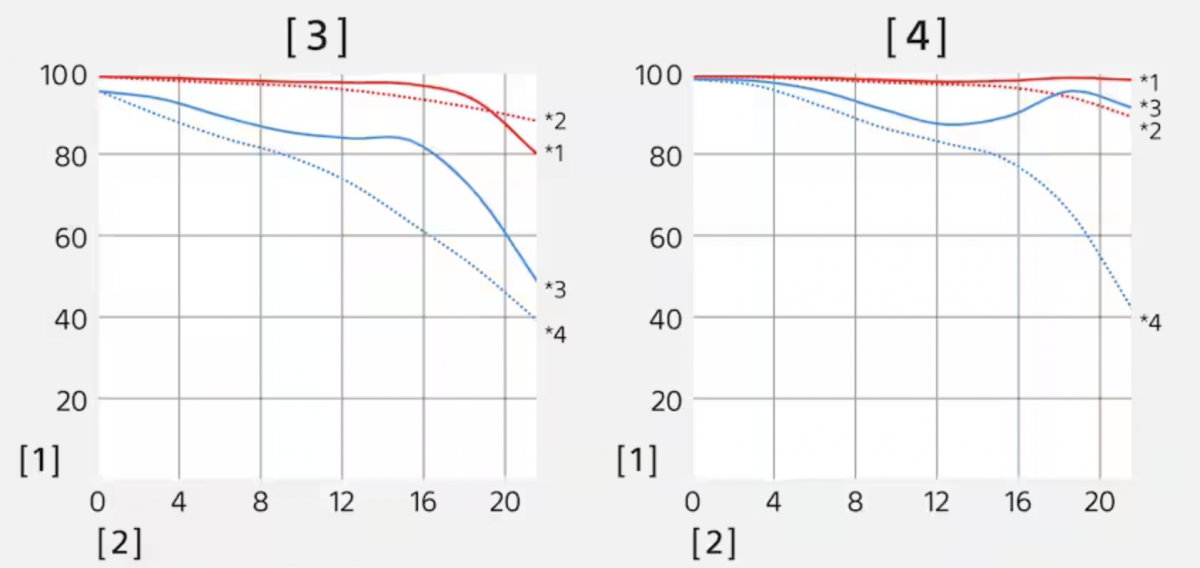
    The issue with the 28-60mm is that the lens does not improve even at f/8

    This is obvious from Sony own MTF data. Look at the data point 4 of the [3] f/2.8 chart at 28mm vs the [4] f/8 at 28mm chart

    Refes to this explanation from Nikon on how to read the chart

    https://www.nikonusa.com/en/learn-and-explore/a/products-and-innovation/what-is-a-lens-mtf-chart-how-do-i-read-it.html

    MTF charts reference 10 and 30 lpmm which to the standars of high megapixel count is very low. Decency level for a full frame camera is typically 40 lpmm.

    904627882_Screenshot2023-04-02at05_37_59.thumb.png.31023789c235771cba9d1abae908daa4.png

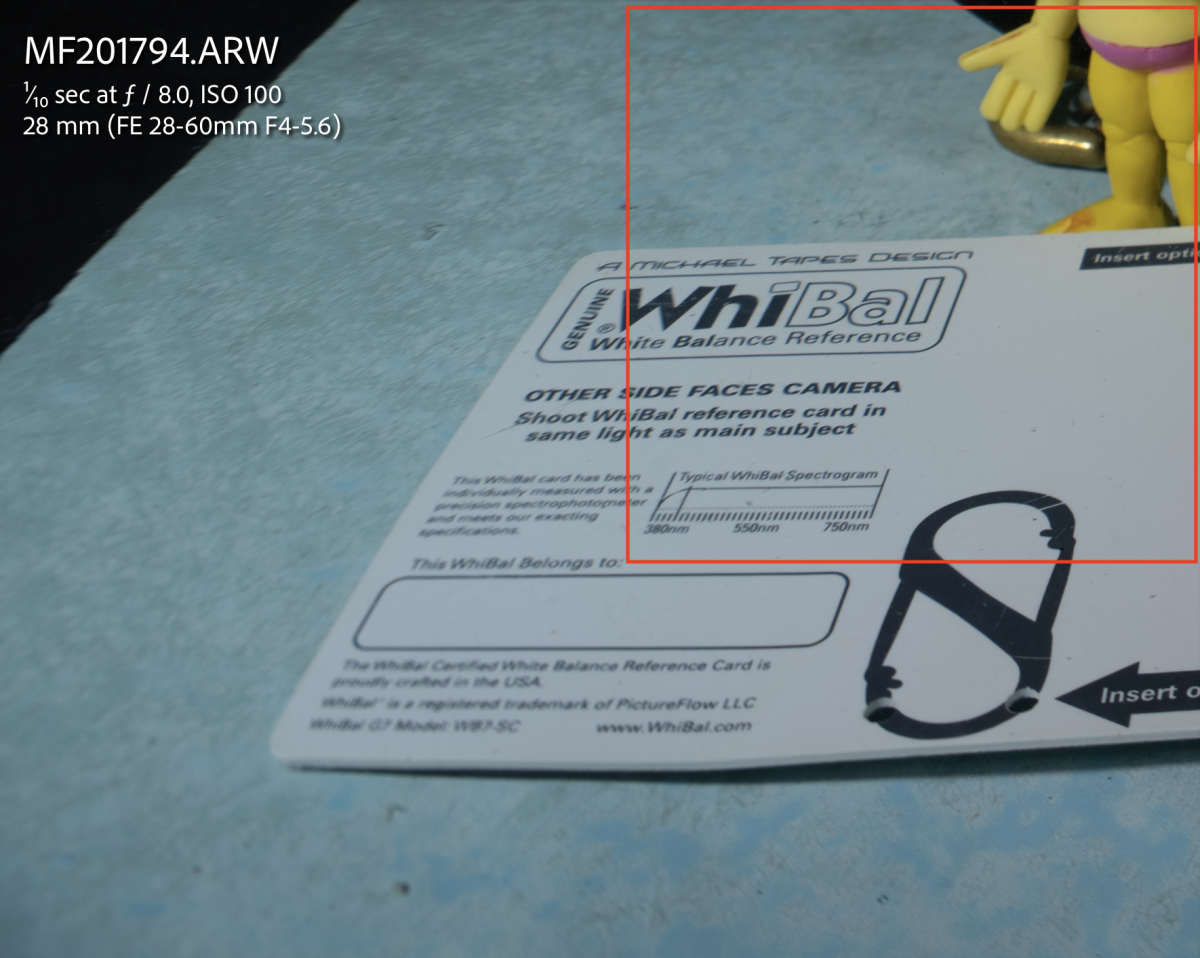
    At f/2/8 the lens is soft at the edges and this shows as field of curvature

    https://www.dpreview.com/articles/1351719699/roger-cicala-field-curvature-for-fun-and-profit

    When you stop down the lens only the sagittal lines improves substantially, the meridional line still has a drop after 16mm 

    As the sagittal and meridional lines differ you have astigmatism at the edges of the frame while you have somewhat resolved the field of curvature at least in part

    This underwater image explains the issue the red box is within 17mm from centre note how just outside the box the text is much more blurry

    2047296081_Screenshot2023-04-02at05_51_25.thumb.png.7a3bffca76acd6aeb946a5de606956f3.png

    I was talking just few days ago with @Alex_Mustard for him the 28-60mm when coupled with the WACP-1 is adequate for any type of professional use he does and I guess this is because you need to consider what else is out there and there is not much

    However this does not mean the 28-60mm suddenly became a good lens, it is simply a small form factor lens that fits well with underwater optics where small size matters and very large lens make your adapter monster size


    Edited by Interceptor121
  15. Quite a good lens, even looking at resolution charts

    No new information is added

    In fact those charts don’t even have sagittal vs meridional so in fact they have less information than sony charts

    Averages don’t say everything


    Sent from my iPhone using Tapatalk

Kraken Sports

Account

Navigation

Search

Search

Configure browser push notifications

Chrome (Android)
  1. Tap the lock icon next to the address bar.
  2. Tap Permissions → Notifications.
  3. Adjust your preference.
Chrome (Desktop)
  1. Click the padlock icon in the address bar.
  2. Select Site settings.
  3. Find Notifications and adjust your preference.
