



Skip to content

Photography Gear and Technique / Archived topic

Float arm options for Sony WACP-C rig

Started by BobbyV ·

  • 38Posts
  • 38Replies

Read-only discussion

Float arm options for Sony WACP-C rig

38 posts
  1. Hi all, I have a new full-frame Sony rig that I'm trying to dial in the buoyancy with. I'm used to using smaller cameras where buoyancy isn't that big of a deal and generally a newbie with the larger rig, so I could use some advice. I've done a lot of the reading here on WP and other resources, and followed guidance to weigh the rig in a water-filled trash bucket using a luggage scale. As-is, the in water weight is 1 kg, and the system weight in air is 10 kg.

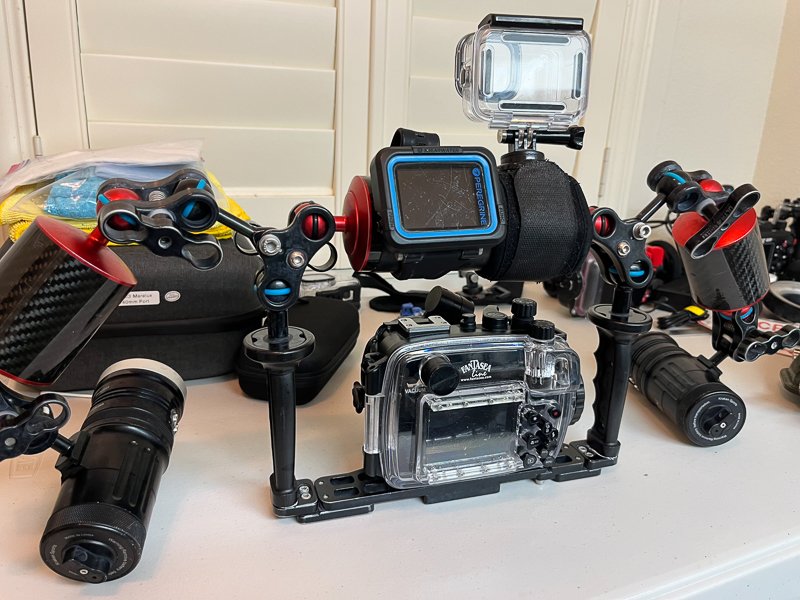
    The system already has two 70X200 float arms (320 grams each), but I am currently considering either two more standard float arms, or the Kraken/Weefine adjustable float arms which can be flooded if necessary (which, as I understand it, may be advantageous for lens and port changes). The Kraken arms come in 385 and 520 gram sizes, so it would seem to me that the 385 size would be slightly negative which may not be a bad thing, but the 520 size would likely make it possible to achieve neutral buoyancy (but may need to be flooded each time?). I am curious if anyone has any ideas about what they would choose in this case, and why. Appreciate the help
    Edited by BobbyV
  2. 12 minutes ago, BobbyV said:

    but may need to be flooded each time?

    They don't drain when taken out of water, so once you've dialed in neutral buoyancy, you're good for a series of dives. When you take your rig apart for a post-trip soak, unscrew the caps, drain them, rinse the insides and let them dry. Note, by the way, that the 520g arms weigh 450g in air when empty, so they add substantial weight to your rig when out of water - potentially up to about a kilo each.

  3. You might try mounting a 70x200 cross bar (I use nauticam multiclamps on the housing handle balls), and another 70x200 on each arm.  That should add 320x3=.96 kg, which gets you close to neutral.

    I've gone through this exercise with several kits and the crossbar has worked well for me.  As an added bonus, the crossbar is also a handy spot to mount a wrist computer.

    One observation I've had is the more buoyancy you add to the arms, the more difficult it is to tilt the housing forward, as the buoyancy on the arms tries to torque the kit back to level.  

    Edited by JayceeB — Added trim.
  4. This forum is amazing. thank you all for the responses thus far. 

    I do like the idea of the center mounted computer to minimize task loading

  5. One other stupid/semi related question in response to @Barmaglot is there any limit to how much weight shackles on the ball clamps can typically hold when carrying topside with a lanyard?  I thought about opening another thread for this but thought I might as well try and ask. It seems like a potential failure point but maybe it's not that likely as I think it is. I'm wondering if it's better to simply mount the lanyard to the attachment points on the housing instead (which I imagine means lifting the rig farther out of the water so deck hand can reach it)

  6. 37 minutes ago, JayceeB said:

    You might try mounting a 70x200 cross bar (I use nauticam multiclamps on the housing handle balls), and another 70x200 on each arm.  That should add 320x3=.96 kg, which gets you close to neutral.

    I've gone through this exercise with several kits and the crossbar has worked well for me.  As an added bonus, the crossbar is also a handy spot to mount a wrist computer.

    One observation I've had is the more buoyancy you add to the arms, the more difficult it is to tilt the housing forward, as the buoyancy on the arms tries to torque the kit back to level.  

    Here's a photo of my wife's kit with the cross bar and multi-clamps.  I've used triple clamps as well, but prefer the multi-clamps as your crossbar remains rigid when adjusting the arms.


    IMG-4767.jpg

  7. 22 minutes ago, BobbyV said:

    One other stupid/semi related question in response to @Barmaglot is there any limit to how much weight shackles on the ball clamps can typically hold when carrying topside with a lanyard?  I thought about opening another thread for this but thought I might as well try and ask. It seems like a potential failure point but maybe it's not that likely as I think it is. I'm wondering if it's better to simply mount the lanyard to the attachment points on the housing instead (which I imagine means lifting the rig farther out of the water so deck hand can reach it)

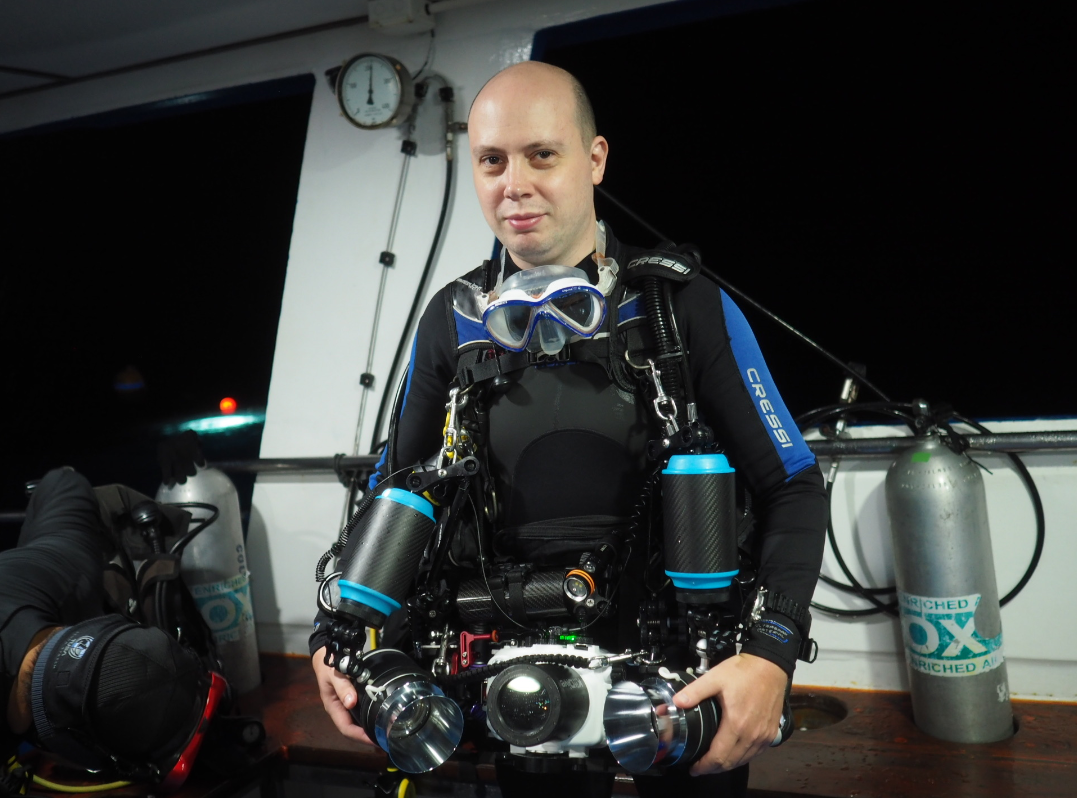
    My rig weighs ~10kg dry; I clip it to my chest D-rings using bolt snaps attached to clamps for hands-free water entrance/exit, haven't had any issues so far.

    image.thumb.png.f4a0c2eae2139f6cebf8ee46e19c91ca.png

    Edited by Barmaglot
  8. 5 minutes ago, Barmaglot said:

    My rig weighs ~10kg dry; I clip it to my chest D-rings using bolt snaps attached to clamps for hands-free water entrance/exit, haven't had any issues so far.

    image.thumb.png.f4a0c2eae2139f6cebf8ee46e19c91ca.png

    I use a similar setup for shore diving.  I like the redundancy so if one shackle fails your rig doesn't hit ground.  For boat diving, i use a traditional lanyard setup hooked near the housing ball mounts to avoid failure points on clamps and arms.  The downside of hooking the lanyard low, is the kit tends to tip forward when the deckhand lifts the camera up. 

  9. Thanks all. Greatly appreciate the advice of the bolt snaps for shore entries vs lanyard and the photos are super helpful.  

    For the floats, I'm leaning towards combining the two ideas I've heard above. Using the smaller of the two WeeFine/Kraken floats on the arms (320g) and a smaller non-adjustable center float. This should put me more or less neutral and also give me some ability to trim if needed for lens changes and also be able to mount the dive computer. 

    Edited by BobbyV
  10. I have done extensive study back in the day

    With the WACP-C or WWL-1 and included float collar I just use a combination of jumbo floats and normal floats from stix

    You can get 2 kg lift filling arm segments and I prefer them to buoyancy arms because their dry weight is less which makes them easy to check in

  11. 9 hours ago, BobbyV said:

    Hi all, I have a new full-frame Sony rig that I'm trying to dial in the buoyancy with. I'm used to using smaller cameras where buoyancy isn't that big of a deal and generally a newbie with the larger rig, so I could use some advice. I've done a lot of the reading here on WP and other resources, and followed guidance to weigh the rig in a water-filled trash bucket using a luggage scale. As-is, the in water weight is 1 kg, and the system weight in air is 10 kg.

    The system already has two 70X200 float arms (320 grams each), but I am currently considering either two more standard float arms, or the Kraken/Weefine adjustable float arms which can be flooded if necessary (which, as I understand it, may be advantageous for lens and port changes). The Kraken arms come in 385 and 520 gram sizes, so it would seem to me that the 385 size would be slightly negative which may not be a bad thing, but the 520 size would likely make it possible to achieve neutral buoyancy (but may need to be flooded each time?). I am curious if anyone has any ideas about what they would choose in this case, and why. Appreciate the help
    So the weight in water without any float arms is about 1.6 then?  One option would be two mega float arms from INON at 650 grams each together with a plain arm,  that would leave you with a rig that was approximately 300 gram negative.  If you are using bigger diameter float arms like this connect them together with long clamps.  The long clamps allow you fold the arms closer together which can help in getting strobes in close.  Keep the 320 gram floats for using with a macro port for example. 

    I use the small mega float with a standard arm on my rig and the middle clamp of the arms is a Nauticam long clamp with shackle.  I attach my lanyard for boat dives to the shackles of this middle clamp.  The items are here:

    http://www.inon.jp/products/armsystem/arm.html

    https://www.backscatter.com/Nauticam-Multi-Purpose-MP-Clamp-with-Shackle-LON

    You definitely don't want a rig that is positive, slightly negative is much more stable.

    Edited by ChrisRoss
  12. For what it's worth I decided to go with a 50x250 center mounted float (240 grams) and the two adjustable kraken floats (320/each). I figure the center float will be a great place for my sola video light, dive computer, and maybe a GoPro. I'll share some photos when I have it all together. 

  13. Just my 2 cents:

    I've used the adjustable float arms for a few months and then sold them. I didn't like them when there was a substantial amount of water in the arms, I didn't like the bulk (one of my main issues tbh, did not get the strobes close to the macro lens), and I didn't like the salt residues inside (more of a mental thing...). If they would offer them very small, for lets say adjusting max. 100g per arm, I'd probably buy them again for on the fly fine tuning. Some of my issues might not be relevant for wideangle setups.

    I've switched to cheap aluminium arms from Aliexpress and adding floats similar to the Stix floats. Overall realitvely cheap, I've once tested out how much floats I need for which lens/port combination and that was it (so I now have a list, e.g. for the Sony 10-18 in the 7" domeport I use two times two long arms, the inner arms each have 3 small floats). If I ever have the need, I can change the length of the strobes arms while keeping the buoyancy (might just need a slight reduction as shorter arms have less weight, so in the above case I might need 2.5 small floats per side, no big deal, you can cut them with a sharp knife for finetuning). Since I got a good price on the floats I bought enough arms that, for my diving at home or when traveling by car, I have separate arms already setup for all lens/port combos. When flying and already maxing out my weight, I pick less arms and simply change the number of floats when chaning lenses. Takes about 5 minutes for two arms once you have the necessary routine. Bonus: even if you accidentally step on the floats, doesn't matter, they cannot break.

  14. WACP-C set up (original lens with no float collar)


    img_6140.jpg


  15. @Interceptor121 is this 2x the SF-01? 
    You are more often under water… are you happy with them? 
    I think they have less weight in water than other flashes. 

  16. Not sure what SF-01 is
    I use twin Sea and Sea YS-D2J latest generation
    I am aware people have had issues with this strobe series but the quality of light is great and the ergonomics perfect also with gloves or in the dark.


    Sent from my iPhone using Tapatalk


  17. No not those
    Mine are 40 grams negative in water almost zero with the sleeve on
    For now there hasn’t been a requirement for aluminum strobes
    My arm configuration is pretty much identical whatever port I have so don’t need to touch it once assembled


    Sent from my iPhone using Tapatalk
  18. There are some good tips in this youtube video.  It's 'video-centric', but much of the content is applicable to stills photography too.


  19. @Interceptor121 I see you have the neoprene covers for the strobes. Is there any functional benefit of those other than keeping the strobes a little more protected?

Account

Navigation

Search

Search

Configure browser push notifications

Chrome (Android)
  1. Tap the lock icon next to the address bar.
  2. Tap Permissions → Notifications.
  3. Adjust your preference.
Chrome (Desktop)
  1. Click the padlock icon in the address bar.
  2. Select Site settings.
  3. Find Notifications and adjust your preference.

