Everything posted by bghazzal
-
Hello all, This is a shot in the dark, but I'm interested in sourcing an Inon Dome Lens Unit II for use with my UWL-H100 lens. http://www.inon.jp/customer/discontinued/lens/domelensunit2_uwl100/top.html If anyone has one lying around gathering dust, please get in touch! Cheers! Ben
-
.JPG.183b4c0c873ecf07f7b510f870469499.JPG) My old stomping grounds - really miss that monster-pack of longnose emperors, trevallies and more... Brings back great memories, thanks. (as a side-note, Richelieu Rock is actually in the Surin Islands, and part of the Mu Ko Surin National Park, rather than the Similans). cheers
My old stomping grounds - really miss that monster-pack of longnose emperors, trevallies and more... Brings back great memories, thanks. (as a side-note, Richelieu Rock is actually in the Surin Islands, and part of the Mu Ko Surin National Park, rather than the Similans). cheers -
I do too, and generally use the custom equalizer to cut off high-frequencies (which don't usually fare too well under recompression) - also make sure nothing in the red, and adjust volume accordingly (unless you're going for a take-it-to-11 heavymetal indiecore edit)
-
Very interesting, thanks. the Inon lens is a little different from the AOI/Backscatter models, if I'm not mistaken? I recently shot something with the GoPro7 and AOI lens and really happy with the corners. I'd say the background starts losing focus about 5m in rather murky conditions in Okinawa: https://www.youtube.com/watch?v=7cXdJGjeMKw But if I compare this to an vid without the lens, there's not much difference in this regard: https://youtu.be/OMFi4DTTuCA (this is also in one of Palau's murkier sites, Grassland/Sandy Paradise) However, corners/sharpness are really night and day with the lens. Issue is this is not not a true comparison - despite being on the same camera with the same settings, the Palau clip was shot in 2.7K linear and the more recent one with the AOI lens is in 4K Wide (my old laptop cannot handle GoPro 4K's HEVC codecs, so I need to work in proxies in FCPX to edit - time consuming, so when I was working in diving I just shot in 2.7K to avoid the issue). Regarding the fov, without the lens, I prefered linear to wide - the wide lens changed thant of course, as it both corrects the corners and improves the general forground sharpness, with a low MFD. Anyway, this is really interesting. I really look forward to seeing some more GoPro11 + AOI footage, as well as other combinations, especially the DJI models. p.s. that's the resident school of jacks at Blue Corner, right?
-
Tricky question as I have astigmatism on land (which is mitigated underwater, not sure what mecanism is at play), but lately I've been using the strongest I could find, which for a while was +3.5, but I recently found and bought some +5 for testing. I think +5 is the limit for plastic glass lenses, and it might be a little too much. I started with +2, but overall I would recommend to get a stronger strength than what you would use on land. It's really helpful for seeing the camera screen more clearly and also spotting macro critters. I'd say the stronger you go, them closer it is to using a magnifying glass (which is great for spotting), so it's a slightly different experience. What I really like about this system compared to more fixed option is that you can adjust the position of the readers. I put take them out of a pocket (important have a way to clip them to you when not in use, I use a light plastic clip so there's no weight when wearing them) and place them at them bottom of the mask when I'm swimming around or spotting, so I can just switch between regular "wide angle" vision and the magnified one. However when I'm actually shooting a subject and staying focused on that, I move them up to the middle of the mask, right in front of my eyes. cheers
-
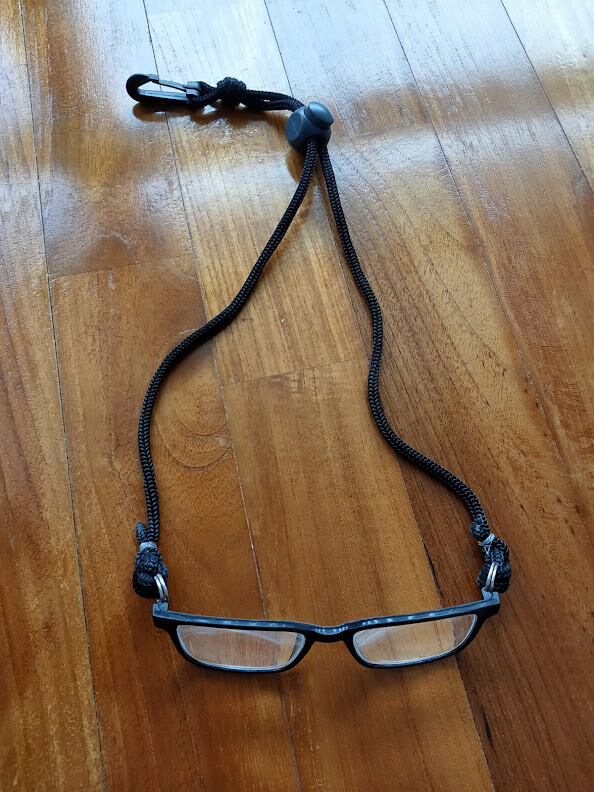
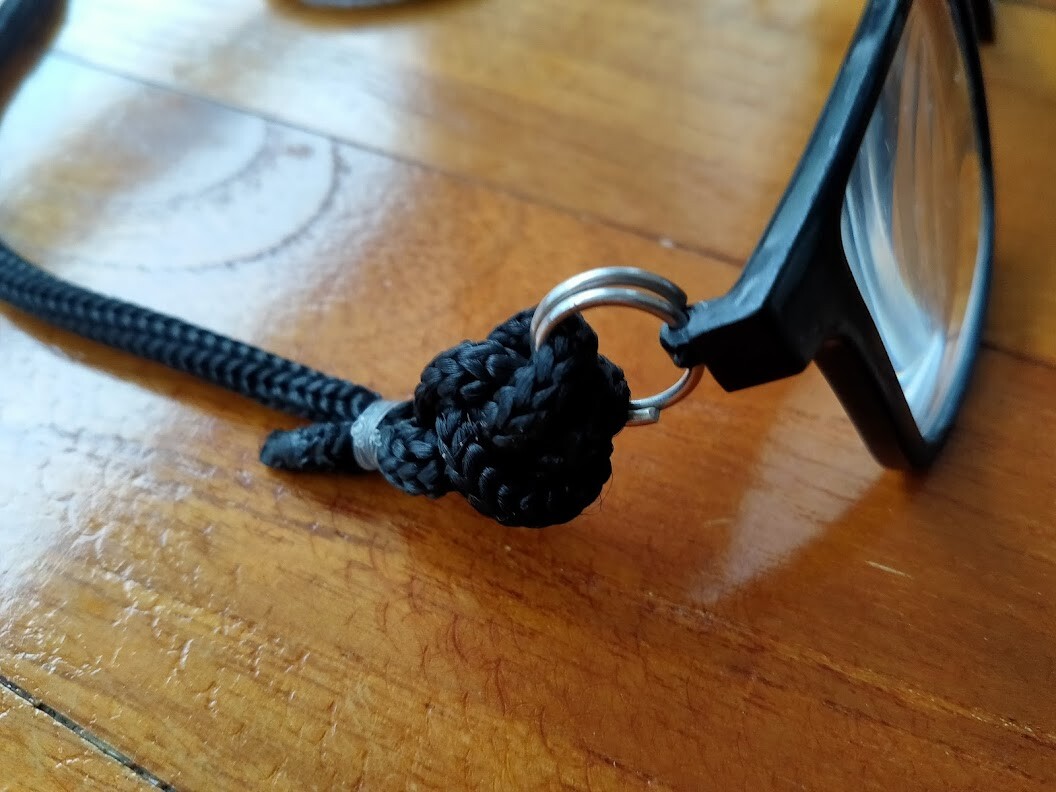
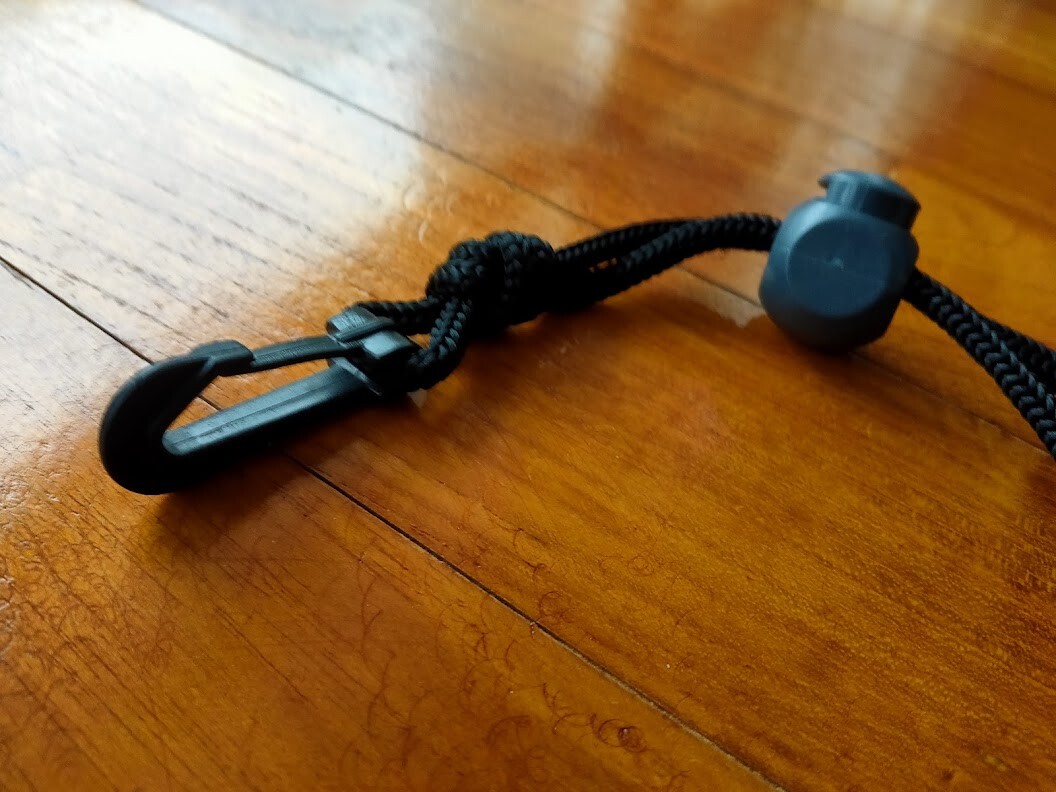
I saw / posted these above last January when they showed up - There's no real reason they shouldn't work. However, there's no real reason to not DIY them either, especially if you have access to cheap, powerful plastic readers. They just work great, and it will be a more flexible solution. I happen to be in the wonderful land of Daiso 100-yen stores, so can pick up readers up to +5 for 100 yen (+10 yen tax). I then DIY it (remove the temples, attach landyard), and no real reason to do otherwise. My current homegrown model looks like this these days: cheers!
-
Thanks so much for the kind words, Maria! It was such a lovely encounter — really enjoyed it 😊 As for the GoPro: I’ve been rowing,against the no-filter-needed tide since the GoPro4 days... Personally, I find that pairing a well-designed filter — like the late, great UR-Pro SW Cyan — with a locked white balance (WB "native," which locks it and offers a wider spectrum than Rec.709 used in other modes) and the “flat” color profile (minimal camera adjustments) yields the best results in ambient light, if you’re planning to do post-production work. The thinking is: while you can't white balance manually at depth on these cameras, you can still re-balance the footage afterward by setting the white point in post — and that’s when the image really comes to life. Sure, you lose about 1.5 stops of light with the filter, but it still helps a lot, as having a filtered, warmer base-image (and this is also where the filter's design / curve is important) reduces how much you have to stretch the color channels to restore colour balance in editing, making for a more natural, balanced and pleasing final result in most cases. In my experience, it beats letting the camera struggle to figure things out on its own underwater at typical diving depths. I actually expanded on this in a thread here: https://waterpixels.net/forums/topic/1380-shooting-action-cams-with-a-red-filter-in-flat-profile-and-manually-white-balancing-in-post-production/ It’s definitely more hands-on, and not in line with the current auto-everything trend — but for those willing to put in the extra bit of work, I think the payoff is worth it, to get the best these cameras have to offer! Cheers!
-
As a follow-up, here is the fluorofilter in the water, on the GoPro7: Frankly, conditions were really not ideal to test the filter gel, with cloudy murky (but still slightly blueish) water and a depth ranging between 2 to 5 meters... So yes, this was clearly in the no-filter zone, but the "deeper" shots, on the sand, didn't require as much as a stretch to re-white balance in post (which does affect the highlights when working in post), and show the filter's potential a little better. Yest despite all this, end results are quite ok. This clip was shot in 4K 60fps, wide fov, with the AOI UWL-03 wide lens, which corrects corner deformation, and also does seem to increase sharpness on close up shots. So yes, promising - I need to confirm these observations on a ̶n̶o̶r̶m̶a̶l̶ ̶ deeper dive, and also with a side to side UR-Pro + Fluoro test, but the Rosco seems to be the one I was looking for. It would also be great to test this on one of the more recent camera models, see what we can get out 10bit colour ( 🤩 ) in post, but on the right track, I'd say. cheers ben
-
Thanks Craig! It was a fun watch - spent 15 minutes with the snakes - a lot going on under rocks that I didn't put in the clip - at some point another male tried his luck but got chased away... fun times 😄
-
Thanks! Yes, the filter seems to be the Chosen One - I'm also really happy with the AOI wide lens, really solved the corner issues, and closeups do seem sharper than before, really a game changer for action cams! Beach diving here has a lot of potential, but is a little complicated by parking and/or water access issues... Can you park close enough to the entry point to lug your gear, and can the point be accessed without too much of a trek on sharp rocks, not to mention tide/depth issues. But it's just a learning process and I'm definitely not complaining 😄
-
Hello all, I'm finally getting back in the water, and here's a little clip I shot in Okinawa on my aging GoPro7, with the AOI UWL-03 wide lens and a Rosco filter, in 4K 60fps. Water might still be a modest 23°C, but spring is here and ❤️ is in the air... Courting Ijima's turtlehead sea snakes (Emydocephalus ijimae) at Gorilla Chop, Okinawa main island, Japan To get into kitchen stuff - we are on an UW imaging forum after all - this is my second dive after a long moving-to-Japan-in-winter-life-stuff hiatus, and also I'm testing a brand new drysuit, so didn't bring my faithful Lumix LX10. But I did carry my old GoPro 7, mounted with the AOI UWL03 wide lens and a filter-gel inside the housing, with the idea of testing what is one of the most promising replacements for the illustrious UR-Pro Cyan. Alas, conditions were really not ideal to test the filter gel, with cloudy murky - if slightly blueish - water and a slightly ridiculous depth ranging between 2 to 5 meters... So yes, clearly in the no-filter zone, but it is what it is, as ruthless lawmaker Mr Murphy always says... The "deeper" shots, on the sand, didn't require as much as a stretch to re-white balance in post (which does affect the highlights), and show the filter's potential a little better. I need to confirm these observations on a ̶n̶o̶r̶m̶a̶l̶ ̶ deeper dive, with a side to side test, but the Rosco seems to be the one I was looking for 🤞 Cheers and happy bubbles! Ben
-
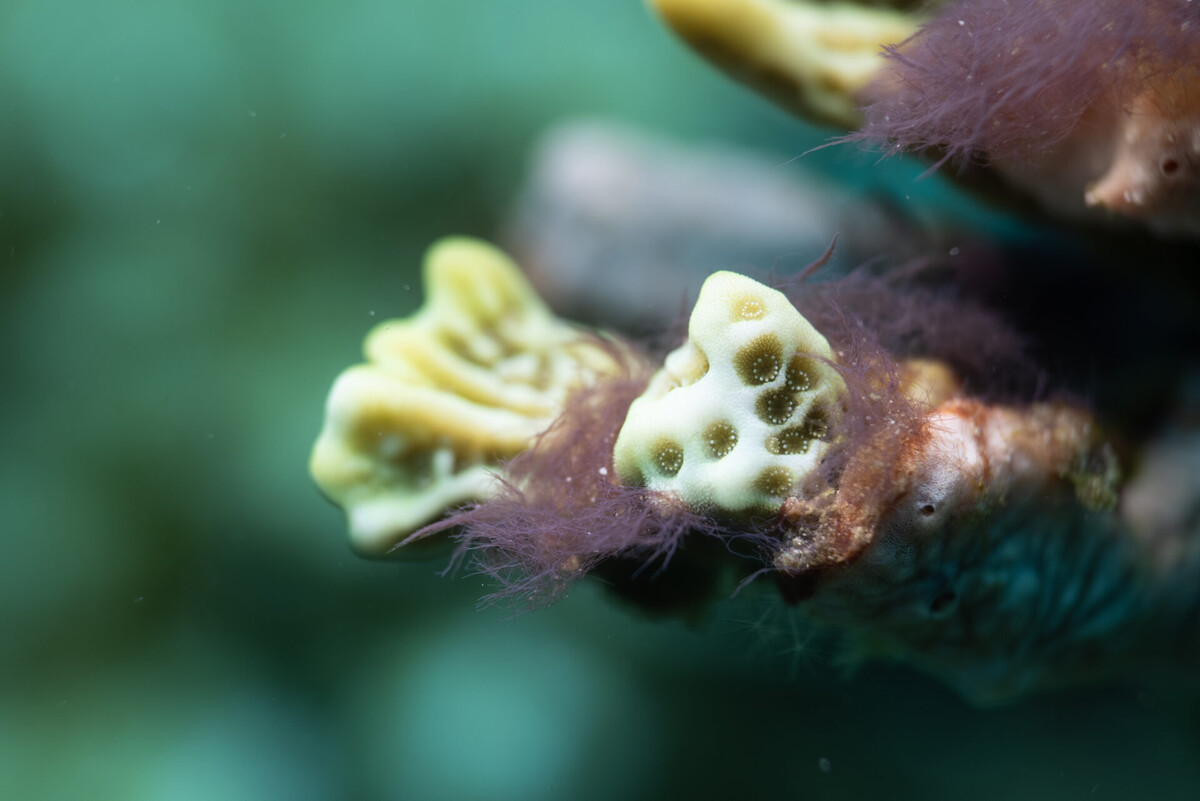
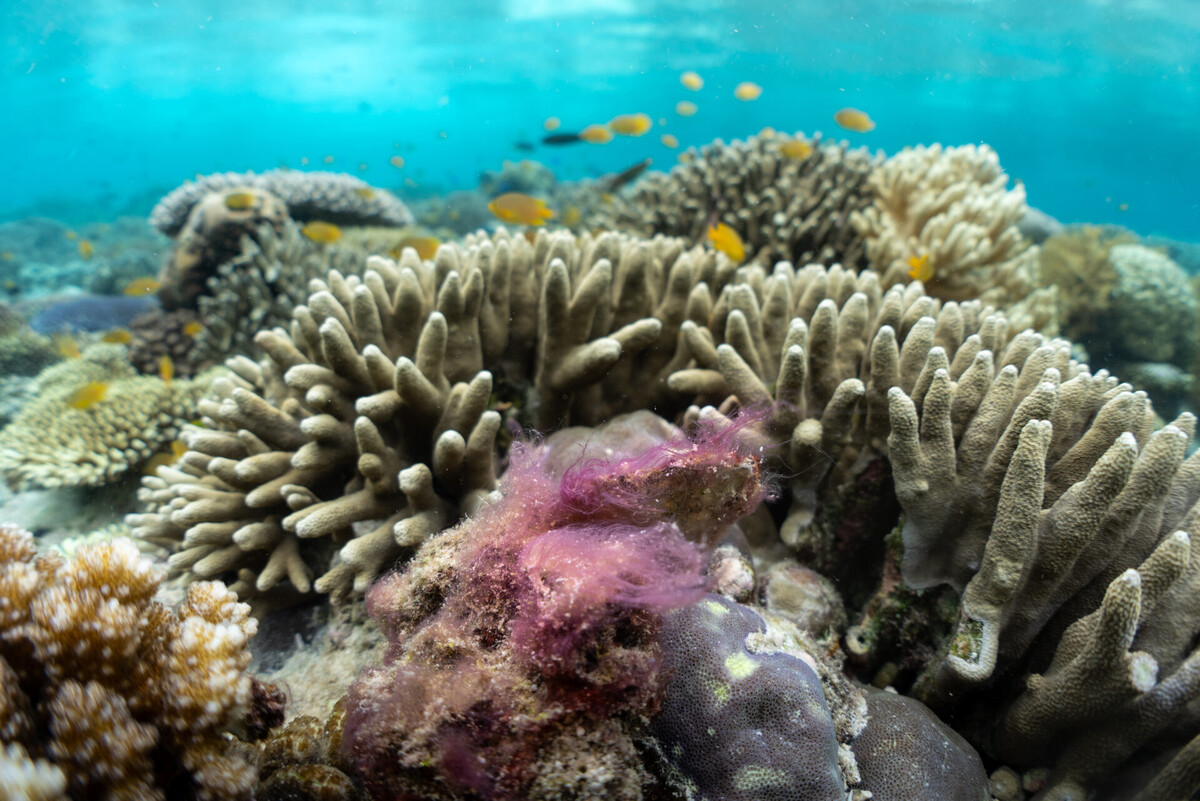
eI am not aware of any scientific papers on coral bleaching in Raja other than the study from Indo-Ocean project, Lauren Sparks. They speculate that a major increase in cyanobacteria linked to human sewage. As tourism increases and toilets move ever closer to the water, the filtration of sewage by the soil is greatly decreased. Here's an article published in Oceanographic on tracking rising cyonabacteria levels in Raja4's Arborek island: https://waterpixels.net/forums/topic/2353-article-trouble-in-paradise-rising-cyanobacteria-levels-in-raja-ampat/
-
On a related note: Deep Sea ReporterTourism Threatens to Destroy Coral Reefs in Raja Ampat -...In the heart of Raja Ampat is the small island village of Arborek, home to the NGO Barefoot Conservation. The team at Barefoot Conservation has been monitoring the reefs around the island, collecti... https://waterpixels.net/forums/topic/2180-raja-ampat-coral-bleaching-2024-caught-in-the-confluence-video-by-dr-phil-dustan/ https://waterpixels.net/forums/topic/2335-article-more-than-80-of-the-worlds-reefs-hit-by-bleaching-after-worst-global-event-on-record/
-
This is an article on rising cyanobacteria levels in Raja Ampat, (Indonesia), following the monitoring work done by the Barefoot Conservation team on Arborek island. Trouble in paradise: In the biodiversity oasis of Raja Ampat, cyanobacteria poses a serious threat to the region's abundant coral reefs. Is tourism to be blamed? https://oceanographicmagazine.com/features/cyanobacteria-in-raja-ampat/ Extracts: Together with Dr Josie Chandler, the head of science at the NGO I manage, we started monitoring the presence of the microorganisms. Chandler is a marine biologist who specialises in coral reef ecology, with her most recent research focused on crown-of-thorns starfish populations in Australia. “I had not heard of cyanobacteria covering coral reefs to this extent before, so as soon as Erika mentioned the issue I jumped into a rabbit hole of papers and studies to learn as much as possible about what is happening. Turns out, this is serious.” (...) “The problem is not sunscreen or breakage of corals by irresponsible divers, but without question the major issue is the increase in human sewage. Sanitation systems here are basic pit toilets, which meet the needs of small local populations without harming groundwater or marine ecosystems. However, the surge in tourism has overwhelmed these systems. The issue is accelerated by new beachside toilets near the shore, reducing the longer travel through soil before reaching the reef – the biological breakdown. The discharge of untreated sewage from liveaboard boats intensifies the challenge,” “Liveaboard operators have a lot to answer for, because their solutions for this problem are much more straightforward than island-based operations. Of course, this would come at a cost, but ultimately the cost of losing Raja Ampat reefs would be a lot more expensive. The livelihoods of local communities depend upon these reefs. Strict regulations need to be put in place,” says Chandler. She manages the team of on-site scientists remotely but has come to Raja Ampat to see what is happening with her own eyes. Under her leadership, cyanobacteria blooms have been monitored around Arborek Island for almost two years, and various photogrammetry projects 3D-map nearby reefs to observe bleaching in collaboration with the National Oceanic and Atmospheric Administration, an American scientific and regulatory agency. “The problem with cyanobacteria is that stopping the blooms is a huge task. It demands all stakeholders – villagers, resorts, liveaboards, and homestays – to come together, as new ways to offload sewage need to be put in place. But it has to be done if we want to keep the coral reefs alive,” says Chandler. “The real worry lies with the fact that bleached reefs’ chances to recover are minimal once smothered by cyanobacteria, and the cyanobacterial blooms are only getting bigger and more frequent.” Installing bio tanks – wastewater treatment systems that use microorganisms to break down sewage – across Raja Ampat and on liveaboards could be a critical first step. However, Arborek’s low-lying geography presents a challenge: high tides cause septic tanks to float up, complicating their installation. But the stakes are high. “It would be heartbreaking to see the most biodiverse reefs in the world succumb under the weight of preventable anthropological stressors like wastewater and overtourism,” says Chandler. Since 2022, Gress and Chandler have sent multiple alerts to the government and BLUD, accompanied by data collected over many months clearly showing the increase and impact of cyanobacteria. Their appeals have been rebuffed.
-
International Coral Reef Initiative page on the subject: https://icriforum.org/4gbe-2025/ The most intense global coral bleaching event on record is still ongoing, according to scientists. One year on from the official declaration of the fourth global coral bleaching event by the International Coral Reef Initiative (ICRI), bleaching alerts continue to develop across the world.
-
For what it's worth, I just screw the Inon UCL-165 directly on my housing's M67 threaded port, no spacer, but I'm guessing this might depend on the port/lens used. Inon has a compatibility chart here: http://www.inon.jp/products/lens/ucl165m67/compatibility.html , but it's old and lens info is a little tricky to spot.
-
Let’s see how these new regulations play out in practice. If enforcement is anything like it was in the Similan (Koh Bon, Koh Tachai) and Surin (Richelieu Rock)National Parks, well—I wouldn’t hold my breath... The new rules about snorkeling zones are interesting too: snorkelers are now supposed to stick to areas where there's at least two metres of water above the coral, to avoid disturbing the reef. Sounds good on paper. Let’s see if operators actually drop people into those areas—and whether the breadcrumb buffets are finally off the reef fish menu...
-
NOOA Current Global Bleaching: Status Update & Data Submission - Updated: April 21, 2025 https://www.coralreefwatch.noaa.gov/satellite/research/coral_bleaching_report.php On April 15, 2024, NOAA (in partnership with the International Coral Reef Initiative) confirmed the world is in the midst of its 4th global coral bleaching event. From 1 January 2023 to 20 April 2025, bleaching-level heat stress has impacted 83.7% of the world’s coral reef area and mass coral bleaching has been documented in at least 83 countries and territories. The ongoing global coral bleaching event is the biggest to date. The previous record was during the 3rd global coral bleaching event, which occurred from 2014-2017, when 68.2% of the world's reef area experienced bleaching-level heat stress. The 1st and 2nd global coral bleaching events occurred in 1998 and 2010, respectively. Animation of NOAA CRW's Daily 5km Bleaching Alert Area Maximum product, for the period January 1, 2023 - April 20, 2025
-
Sad news, but predictable as humanity continues to offer micro-solutions to macro-problems... https://www.theguardian.com/environment/2025/apr/23/coral-reef-bleaching-worst-global-event-on-record The world’s coral reefs have been pushed into “uncharted territory” by the worst global bleaching event on record that has now hit more than 80% of the planet’s reefs, scientists have warned. Reefs in at least 82 countries and territories have been exposed to enough heat to turn corals white since the global event started in January 2023, the latest data from the US government’s Coral Reef Watch shows. (...) The 84% of reefs exposed to bleaching-level heat in this ongoing fourth event compares with 68% during the third event, which lasted from 2014 to 2017, 37% in 2010 and 21% in the first event in 1998. Even reefs considered by scientists to be refuges from the ocean’s rising levels of heat have been bleached, Dr Derek Manzello, the director of Coral Reef Watch, said. “The fact that so many reef areas have been impacted, including purported thermal refugia like Raja Ampat and the Gulf of Eilat, suggests that ocean warming has reached a level where there is no longer any safe harbour from coral bleaching and its ramifications,” he said.
-
Late November should be ok for Okinawa (it normally gets rough, with northern winds blowing in December), but even with island hopping, 14-18 days of travel is too long for the area I think (unless you're planning on combining this with non-diving land travel). November is a shoulder month, it should also be just the start of rainy season in many places in Indonesia, including Bali, which can affect diving but could still be ok, however northern Indonesia should be a safe bet.
-
Hi there, I didn't really chime in because you were mostly asking about stills, but for if you're also interested in video there's info you might be interested in this thread here: https://waterpixels.net/forums/topic/1414-ur-pro-filters-info/ But for video, my focus was not so much on the Magic as the now gone, yet legendary UR-Pro Cyan filter (spoiler alert, the closest candidate is a Rosco Fluorofilter, now also off the shelves due do LED lights). Another solid option is the Keldan Spectrum, as discussed. Otherwise Dreisfish's amazing WeP thread listed above has been transfered over here to Waterpixels for posterity and future discussions: https://waterpixels.net/forums/topic/1413-red-filters-and-blue-ambient-light-filters-for-mixed-light-shooting cheers! ben
-
Hello all, This video by Dr. Phil Dustan was posted on the Bird's Head Seascape network, and I thought some might be interested. Continuing coverage of the Raja Ampat Coral Bleaching Event: "Caught in the Confluence of Global Warming and Ecotourism". In October 2024, a marine heatwave struck the iconic coral reefs of Raja Ampat. Corals in the Dampier Straits experienced severe bleaching and mortality, fueled by increasing levels of sewage from rapidly expanding ecotourism. Unless the sewage threat is eliminated, the World’s richest reefs and the economy they support will collapse. ***** It's good to see sewage/waste water finally mentioned so clearly. Development-related run-off, silting and pollution have been an issue on house-reefs for a while in certain areas. On a personal note, I remember seeing the change betwen 2014 and 2017 (which was my last visit to Central RajaAmpat / Dampier Strait), with house-reefs being seriously affected in the Mansuar (Besar and Kecil/Kri) area. 2016-2015 was a massive turning point, with lots of homestays built in the area which once only hosted Max Ammer's Kri-Eco and Sorido resorts, and very fast. Trees near the shoreline were cut, structrues were built (there was even a plan to build a pool at some point...) and in only a few months you could see silting and algae growth in the shallow "house-reefs" around the island, linked to run-off from from rainwater no longer held by the treeline and also waste water from the new infrastructures (notably showers and toilets)... Coral colonies in the area are/were believed to have evolved to better withstand heat-stress (not sure where the research on the subject is at now), but combined with stress from infrastructure and activity development, it's quite a lot. Add to that snorkeler/diver damage (seeing an overweighted "discover-scuba diver" smash a table coral in front of my eyes at Yenbuba, or the growing effect of fin-kicks-and-chill on the often current-swept top of a site like Blue Magic come to mind...) to the now unavoidable global emission-related emergency (difficult to reach Raja Ampat without flying to Sorong from somewhere, unfortunately...), trash, plastic, oil and the rest (no, let's not talk about that cruise-ship smashing into the reef at Crossover...) and there are a lot of reasons to be worried for what is still often marketed as "The Last Paradise©" It's something that also struck me in less remote areas like Bali's booming Amed for instance, where over-construction and associated waste-water is rapidly killing of what is left of the reef in the area. What was that saying about being in traffic or being traffic again? 😐 cheers ben
-
On a strongly related note, here is a review of Tom Hanks-narrated nature series The Americas, with similar issues brought up (anthropomorphism, climate denial, etc.) https://www.theguardian.com/tv-and-radio/2025/mar/02/the-americas-review-tom-hanks-beautiful-new-nature-series-pretends-the-climate-crisis-doesnt-exist
-
Hi Val, I hope you'll get answers from Inon tripod users, but to the risk of derailing this thread, if you're also considering alternatives, there are plenty of DIY solutions for adapting a tripod or - even better if you ask me since the extra leg means less negative buoyancy required for stability -a quadripod system to a Nauticam Flexitray. This is the system I use for macro video, and I find it very flexible angle wise and haven't felt the need for a ball-head type solution for angles (slider is another story though...) - you can also check out footage I shot with the quadripod here When it comes to DIY options (which is as simple as finding a solution to attach to 5" flat ball arms perpendicular to the legs of your tray), you can check out this rich thread here: And since you mentioned shooting macro in current I'll add that based on experience, current and macro, especially supermacro video don't really go well together. Your footage will be stable, sure - especially with a quadripod solution - but the critters will not, and for supermacro they will be swinging out of focus. This is also true for surge - for macro video, more than camera stability critter stability is more the issue IMO. And when they are staying in focus long enough to get a sequence (a critter on the bottom for instance), current generally doesn't make them look the best... Current influences behaviour since they're usually resisting, or, more frequently than not, hiding to resist the current - it can be interesting at times, but more often than not for macro video it's quite meh... Best of luck with the Inon cheers ben
-
I've had, like probably almost all passengers, issues with Lions/Wings - also had an Air Asia flight cancelled when I was in Raja Ampat in 2015, when internet reception meant hoping your Telkomsel card worked at the end of the jetty, that took quite a bit of work... Back to your issue, it might not make sense anymore, but maybe it might be possible to look into Manado-Sorong Garuda options instead, eventually cancelling the Lion air leg? More expensive and might not have the ideal timetable, but usually less cancelations/changes than Lion, especially for slightly more remote areas with less traffic. I don't know if it's still up and running, but a few years back there was also a Garuda Makassar-Sorong night flight that would land in Sorong at 6am, usually enough to catch the ferry to Waisai for instance - took that quite a few times best of luck