Chris Ross
Super Moderators
-
Joined
-
Last visited
-
Currently
Viewing Topic: Moving from Sony 16-35 + 180mm dome to 28-60 + WWL-1B — experiences? -
Country
Australia
Everything posted by Chris Ross
-
I just put up a new post with my thoughts and some sample images from this week's diving.
-
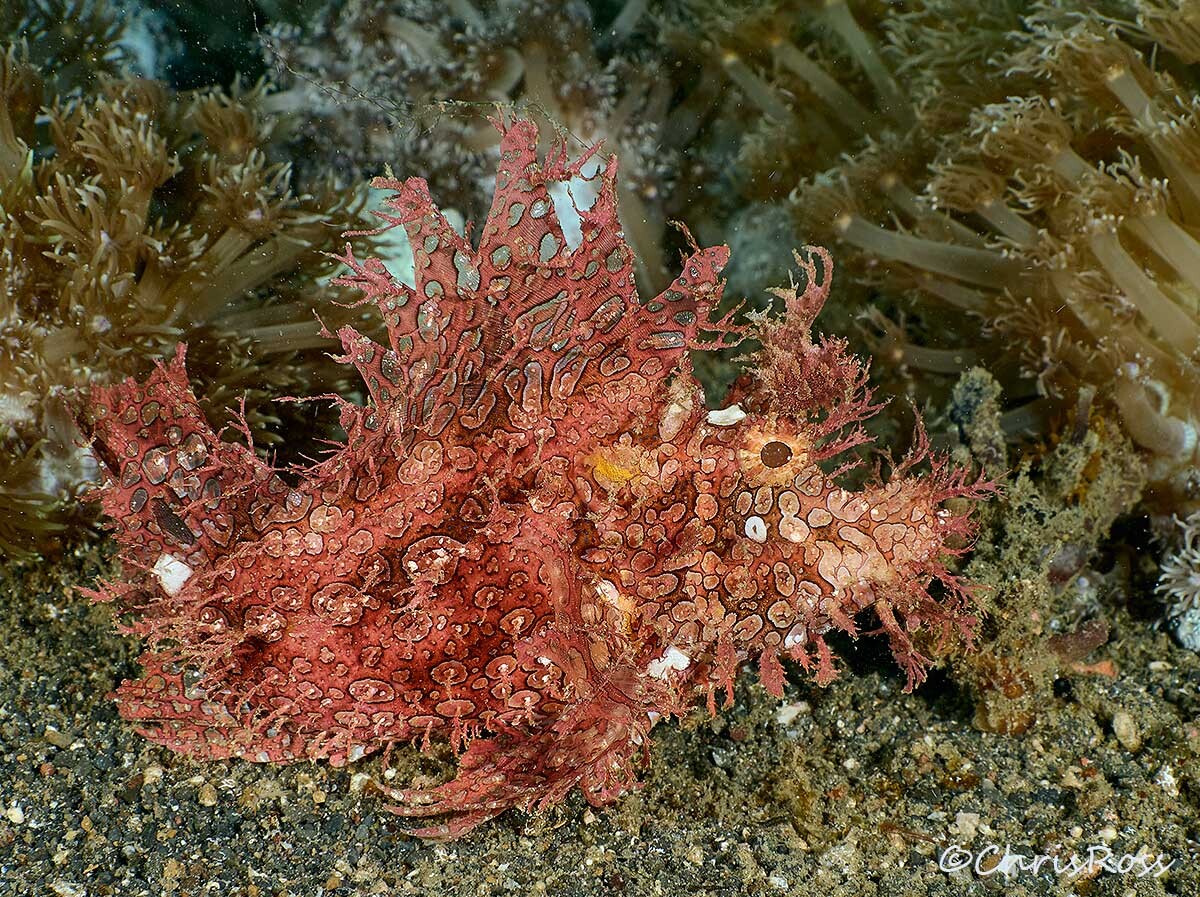
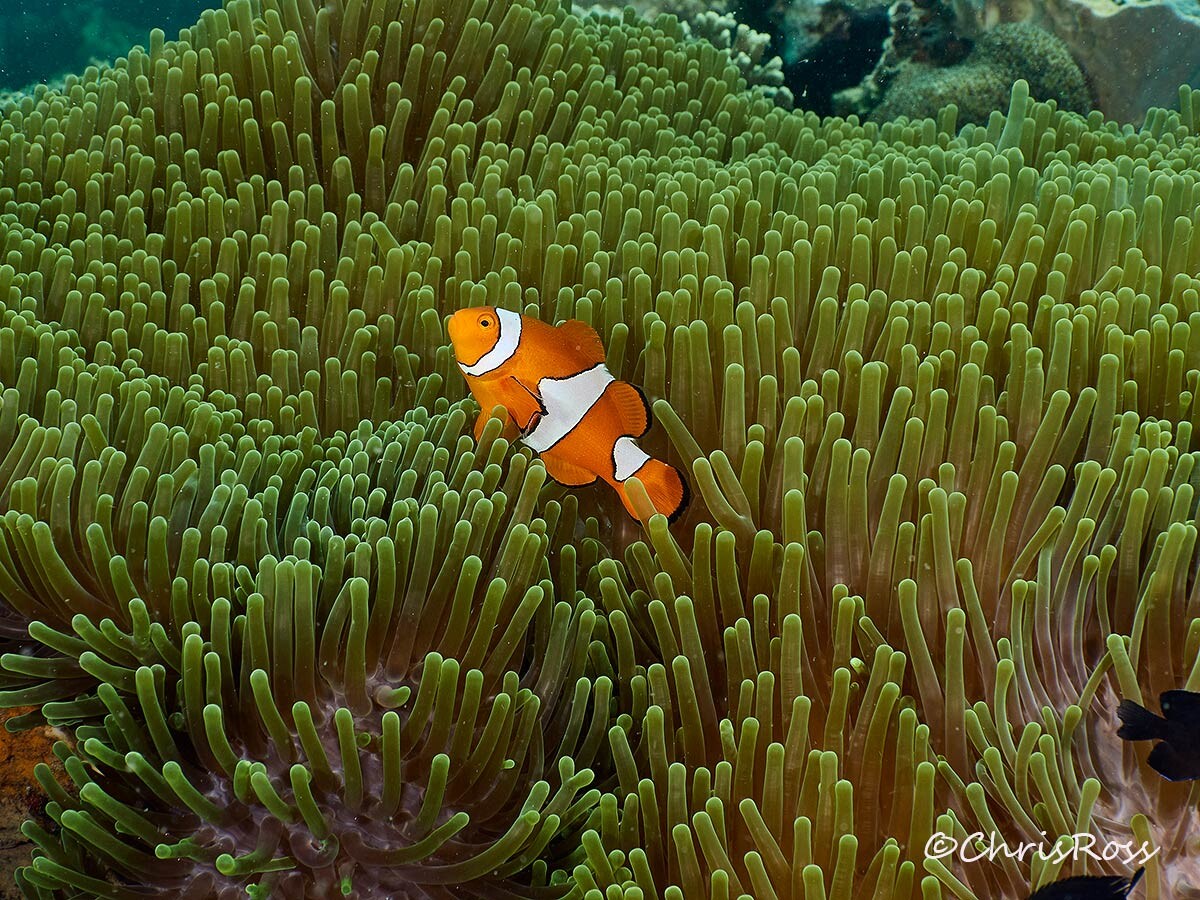
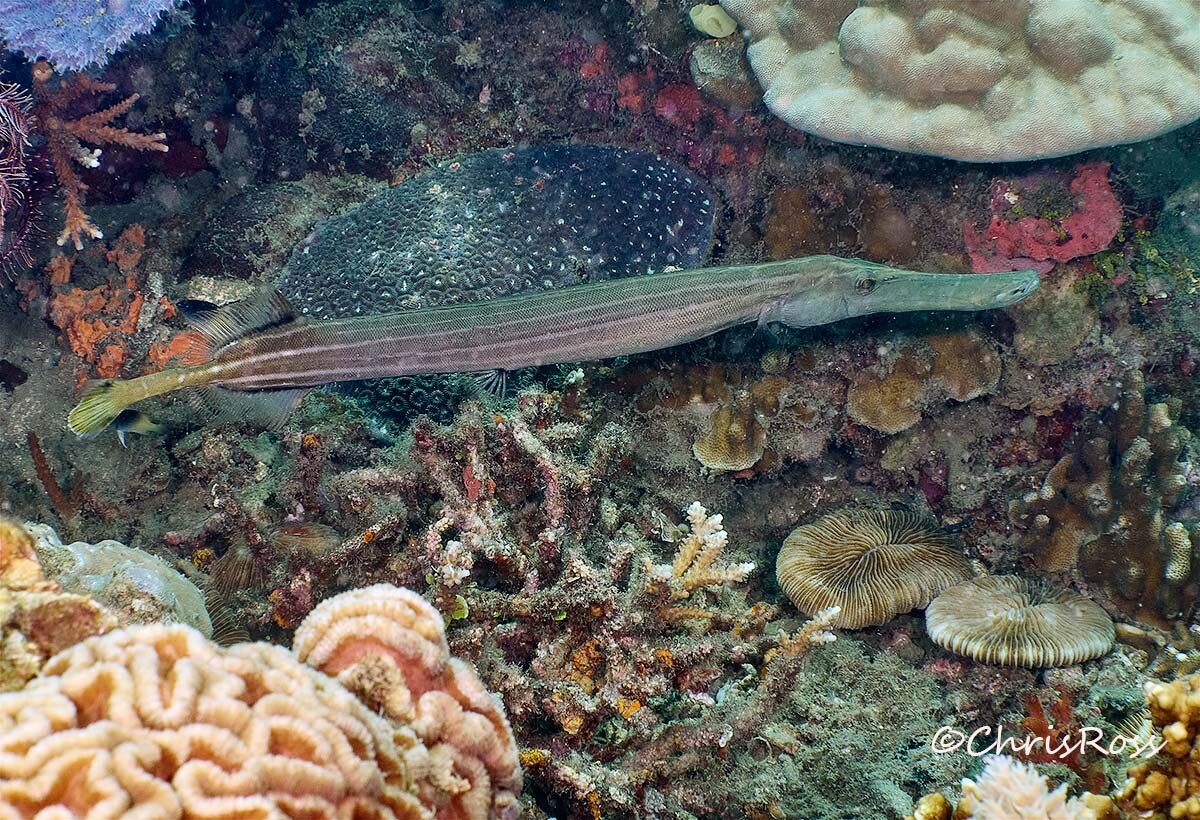
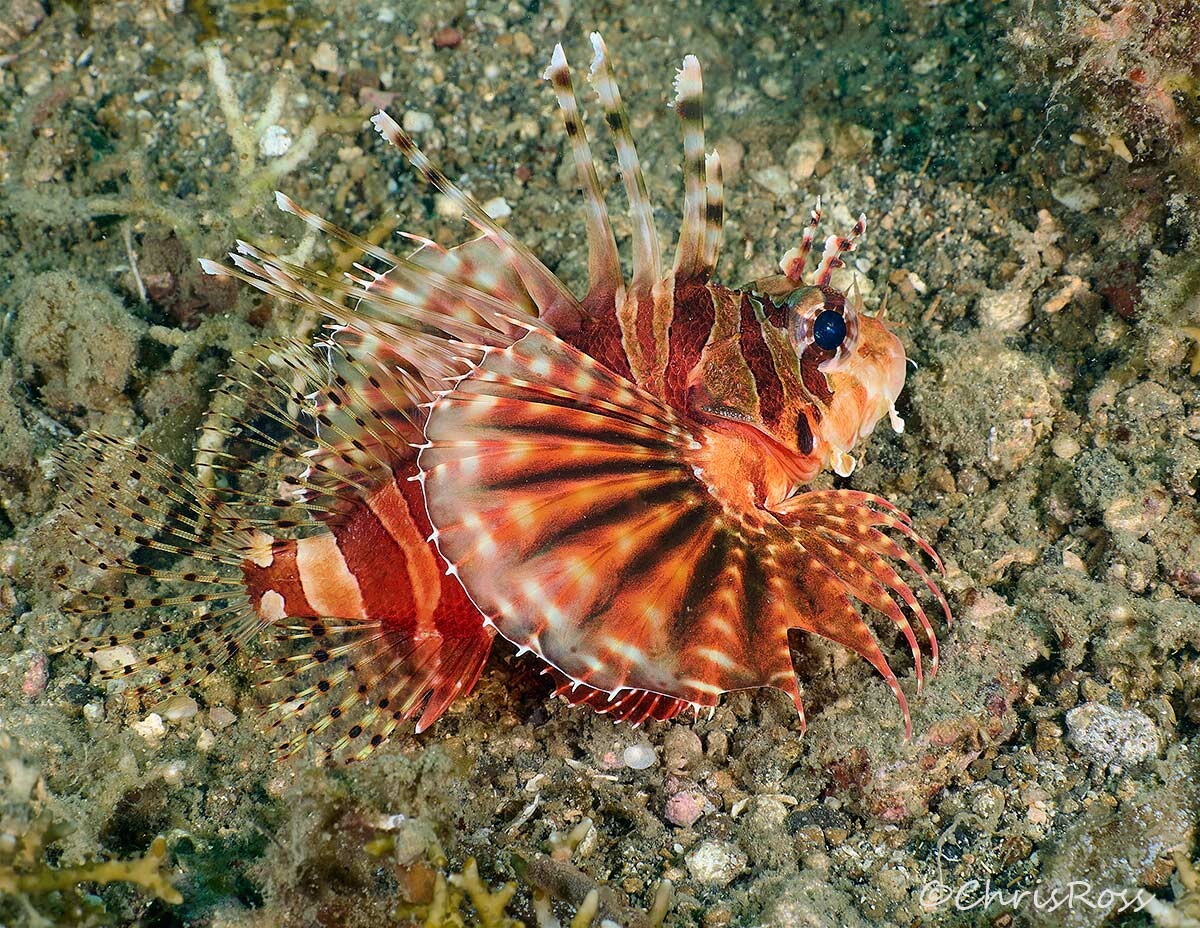
Starting a new thread to do a quick review of using the MFO-3 with the Olympus 60mm macro. The 60mm is commonly used on m43 setups as the usual macro lens, it's quite sharp and AF is quite good on later bodies but it's a bit on the long side at 120mm FF equivalent, so larger subjects require backing up a lot with a lot of extra water in the way along with all the particles to make backscatter. The MFO3 reduces the field from that of a 60mm lens to about 37 mm focal length increasing diagonal field from 20 to 33 degrees. I used it for the first time in Lembeh Strait this week, popping it on to shoot things like Lionfish, anemone fish and other larger subjects like big cuttlefish. The extra field of view is significant and allows you to shoot these subjects with a lot less water between you and the subject. I found the field to be quite sharp into the corners when reviewing on my laptop and the subject really was very sharp. AF was pretty snappy as well. In Lembeh where you might be shown a tiny emperor shrimp followed immediately by a 200mm long scorpion fish or cuttlefish it was really very useful, in fact I'd say it was indispensable. I carried in a pocket on a pair of cargo shorts complete with bayonet mount and found it easy to get out but a bit trickier to get back in with one hand. I took the supplied neoprene pouch on the boat and after rinsing stored it in there to stop it drying out. some examples: Weedy Rhinopia - slight crop: A False clown anemone fish, I would normally crop and get in closer but this shows the sharpness across the frame: A Trumpetfish which was about 500mm long : A zebra lionfish, cropped slightly: Hopefully this gives some idea what the lens can do. The only real downside is the bulk of the lens, it a big lump but easy to use with bayonet mount. The pics were chosen to show the versatility I found. Lens supplied by Scubapix, the Australian Nauticam distributor it was from the first batch imported. I paid for the lens my myself. Let me know if you have any questions, hope the review is useful for those considering it.
-
i have the lens not the port, i expect it will work just as well on any lens that works with it.
-
yes, watch this space, I'm diving with it all this week, I'll post something when I get time in the dive schedule. Performs quite well so far.
-
Everyone has their own price points they are willing to pay, for me personally, I've been using PS for 25 years+ and apart from RAW converter updates I can do most of the tricks that Adobe introduces with the tools I have in my version. I recall that their updates were getting progressively less compelling and they in fact held back things like support for high res monitors until after they introduced the subscription model, lots of people swore off them on the forums I frequented back then. Of course not everyone has that skill set and if they choose to subscribe, it's up to them entirely. For me I only ever used PS, never lightroom, apparently it's getting closer now but from talking to people the PS tools area easier to use than LR. For me exercising those skills makes me feel like the photo is more my creation - or something like that. Not disparaging anyone who chooses to subscribe, just letting people know what is possible without all the AI tools etc.
-
Thanks all, went to a physical store and tried out the cargo shorts, they go over the top of your suit. The big pockets hold the MFO-3 with the bayonet adapter on easily. I'm going to give them a go. The thigh pocket also fitted but the edge of the lens caught on the inside part of the closure clip. This is them: https://www.wilderness.net.au/Scubapro-Hybrid-Pockets-Shorts.html?srsltid=AfmBOorUA5DI_eTaKJuYI9pvj7mJ160dzx8Pus3gFdTRJs6X439kqPJ5 They might be a little short for the LSD. The MFO 3 is a big lump - 90mm OD at the top and 120mm long, so not a typical diopter. The bayonet adapter is 95mm diameter.
-
Nice work on all of them, those wolf eels look great, the SE Australian reefs are suffering from urchin overun as well, they eat all the kelp. The warm current coming down from up north has gotten stronger and allows them to spread south. They are starting an industry to harvest them which promise to keep them in check.
-
It's still a good skill to have and I can do it without subscribing to Adobe. I use the tools like this a lot to cleanup focus stacks so get a fair bit of practice.
-
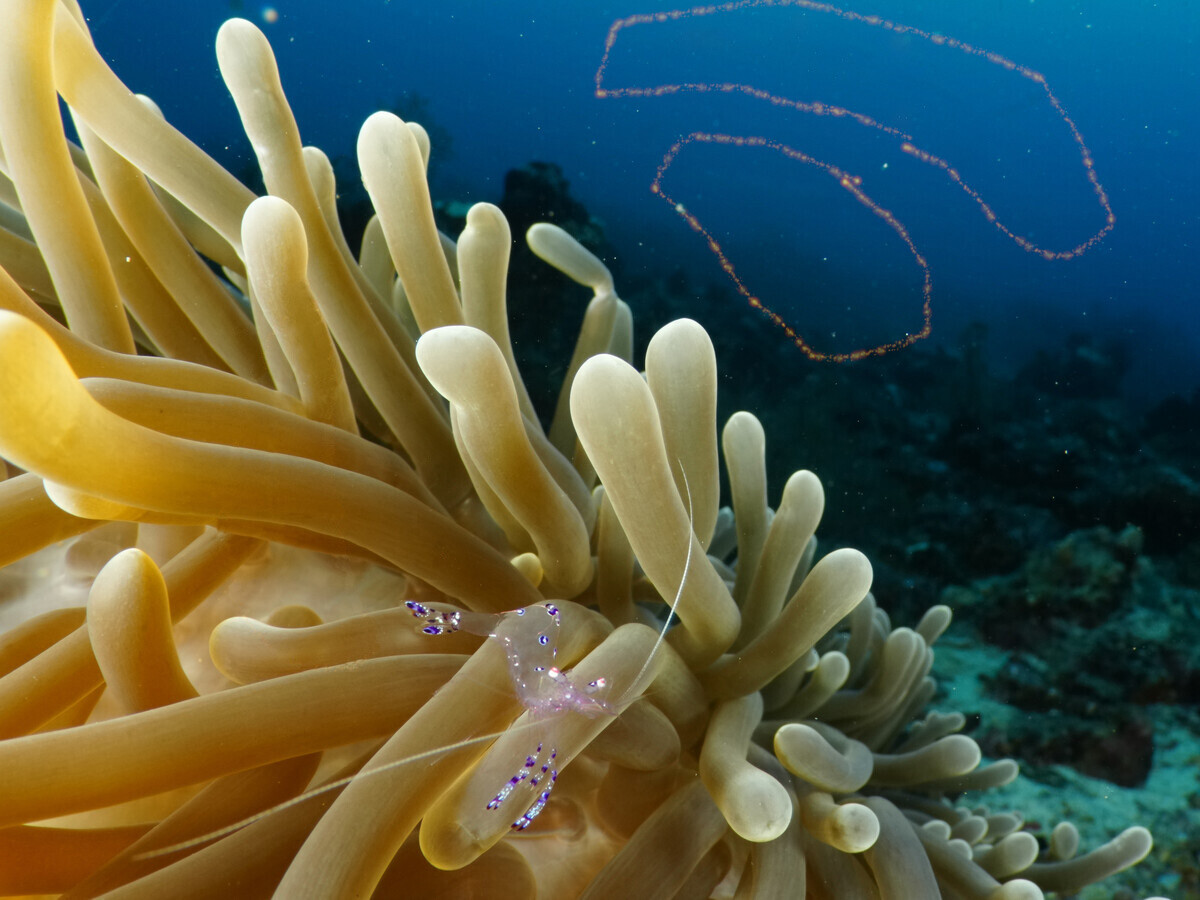
It's actually quite possible to remove the reflections with basic cloning tools. I use the old PS CS6 and the blue water reflections went instantly with spot healing brush and the reflections on the arms I could do with the cloning tool (non smart, just has a feathering adjustment.) If you are working with a straight cloning tool the secret is to zoom right in and start where the reflection crosses the edges of the arms. The tool provides a preview of what it will do - align the tool on the edge and alt-click to select the source then move to where you want to clone and move up and down till the edge and the cloned edge align and click. I use a Wacom tablet for this - makes it very easy to do. A lot of the ease for this kind of work comes from the sequences you need to perform to precisely select the clone source. I haven't used GIMP for a long time and not sure how it works but the PS sequence is very intuitive. Here is the cleaned version - took me all of 5 minutes and included cleaning off the outline you drew over the arms to show what can be done with basic tools:
-
I would think that any repair on the other end would best be done from the outside. Any time you are doing waterproofing any sort of barrier is generally laid from the wet side, that way the water pressure pushes it on rather than the pressure acting to lift the layer of water proofing away from the surface. Cleaning up and getting a good key down inside the float would also be a potential issue. You could glue on some waterproofing tape over the seam perhaps? something like this: https://www.bunnings.com.au/t-rex-50mm-x-1-5m-strong-waterproofing-tape_p0088307 might look ugly? but could be vaiable solution though it may not be permanent. Having said all that given you are spending $$$ on a dive trip the cost of some new arms would be good insurance I think. Dive centre Bondi would likely have the INON float arms in stock if the buoyancy they provide suits. I use the 390GR lift arms and have been happy with them.
-
Anyone who has been using the MFO3, how are you carrying it around? I looked into getting a dock for a float arm, but it's a fairly big lump for there and there's no stock held right now. I'm off on a dive trip in a few days to Lembeh and I'm bringing it along. Other thoughts are a pair of those tec-cargo shorts with the big pockets - but seems like it's tight fit in there or I see Scubapro sells a thigh pocket but again I'm not sure it's big enough. I'm not sure I want to use a flip holder for it - seems like it's asking for trouble getting in and out over the rocks at home in Sydney? Other options or suggestions?
-
The WWL-1 is designed to use with 28mm lenses min and the WWL-C 24mm and at shorter than design focal lengths they will vignette. However they are designed to produce the same field of 130° diagonal field at their designed minimum focal length. This means they have different magnifications, the WWL-1 is about 0.35x while the WWL-C is about 0.41x to both achieve 130° diagonal at the widest, which happens at 28mm and 24mm focal length respectively. With the higher magnification of the WWL-C it has slightly more reach on the long end. if we are looking at the 24-50 lens, it will vignette between 24 and 28mm focal length with the WWL-1, while the WWL-C will work over the full zoom range of the 24-50mm.
-
It was mentioned above that Retra would not make adapter for HF-1 and backscatter had abadoned. The point I was trying to make is you probably pick up some light compared by what you can achieve from the strobe with diffusers when snooting even before you get a little closer with the strobe, I raise it as it seems others get the snoot to work with small apertures and ISO around 200. Or is your concern not being able to do regular lighting (non snoot) on the same dive with two MF-2 strobes?
-
I'm only quoting people who have used both this setup and the WACP-C. They have switched over to mostly using the fisheye zoom. The thing is that the Sony 28-60 is an OK lens while the Canon 8-15 is an exceptionally sharp lens that behaves well behind domes. Here is a link: and again in this post:
-
Hi Wolfgang, I know everyone has to make their own quality decisions, but the downgrade in quality going to ISO200 is typically very small. Also I would suggest that what we were trying to convey is that with snooting you should have enough light due to using the centre of the beam and being a lot closer - only for snooting. You could potentially dive with your HF-1s for non snoot images and have the MF2 on another arm or piggy backed to use just for snooting, but you would have to work out a triggering arrangement. Or you could use one HF-1 and one MF-2 and use the HF-1 for non snoot as a single strobe. I know a lot of people who only use a single strobe for macro and they produce nice images. It sounds like there is no snoot you can buy (as opposed to printing) for the HF-1??
-
Your other option for whale swims, assuming you are on Sony is an adapted Canon 8-15 with a Sony 2x, reported to be as good as the WACP-C and Sony 28-60. Configuration is Camera - Sony 2x - Metabones adapter (V5 or newer in think) then the 8-15. It works very well in a 140mm dome. You get a fisheye able to zoom into the equivalent of a 28mm lens. The barrel distortion lessens as you zoom in to be similar to what you get from a WWL/WACP setup. The advantage is the small dome, disadvantage, depending on housing fairly negative in bouyancy. it doesnt have quite as much reach but it's close to the other options.
-
For land based macro this fills a hole created by Canikon deleting their 180mm and 200m macro lenses, I used the Canon 180mm f3.5 a lot in the past there's a lot to be said for long macro lenses. Be interesting to see if it gets taken up UW and if the MFO3 plays well with it!
-
does it concentrate the light? I'm just thinking lots of other people use them successfully stopped down as you do for macro so judging based on regular strobe positions would be misleading.
-
Another consideration is that you use the edges of your beam with diffusers in play but with the snoot you aim the centre of the beam right at the subject and you could get the strobe significantly closer to the subject as well. If you halve the distance you get 4x the light or 2 stops. The diffuser reduces total light output from the strobe but the snoot if it has no optics won't reduce the lumens/m2 too much as it is just selecting the light coming out from the strobe beam and blocking the edges of that beam. If you really didn't actually try the snoot at all, then you quite possibly missed this.
-
I got an MFO3 and waiting to get it UW, I have the bayonet mounts for it and I'll see how that goes. I'm going to try having a parking bayonet on the float arm, but I'll have to see how that works, otherwise I'll have to work out how to carry it. On flip holders I see that the SAGA doesn't have a clip to hold it down tight when in place, I'm wondering if that might be a problem. I see AOI also offers a flip holder which has a clip and it's a bit cheaper.
-
😂, looking around a bit some sites suggested it might get onto websites through ads- anyway just be careful, I would guess the site is fine as long as you don't follow the instructions.
-
It comes up after you click around a few different links, not straight away, I just tried again and it seems to come up when I click on the generic excitation filters box. this is what I get:
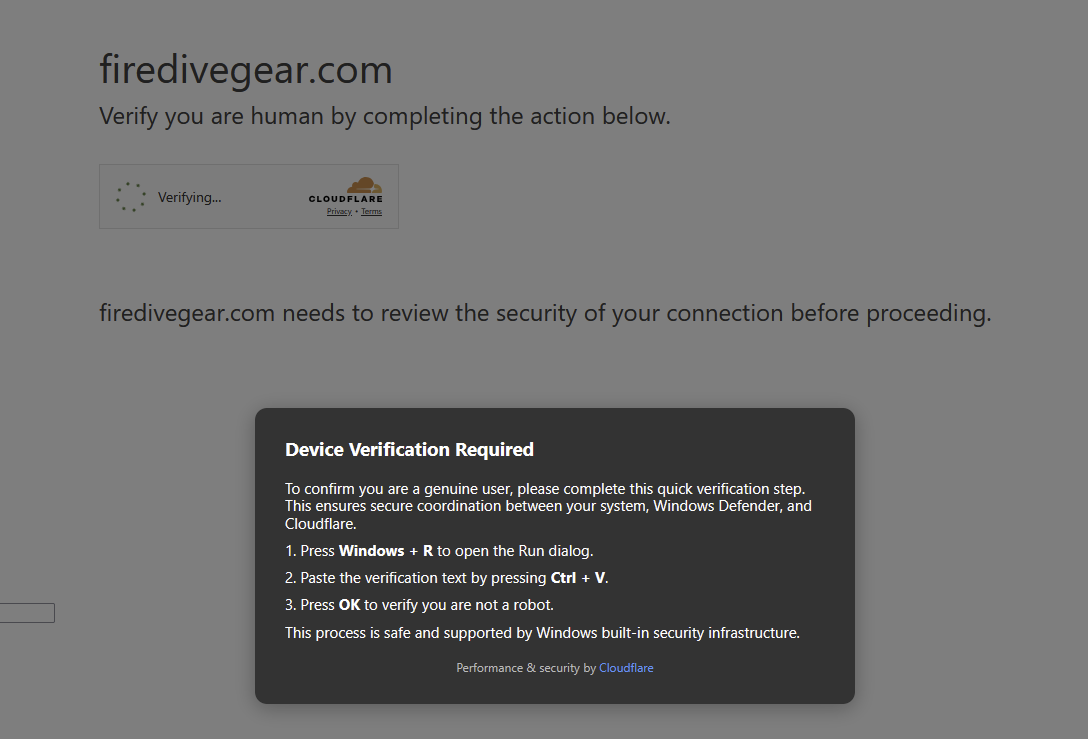
-
had a look at the website and there is a suspicious verify you are human page that comes up asking to open a run dialog box and paste in a command the site placed into the clipboard. seems like this is malware of some sort. Needless to say I didn't run the command as asked.
-
Are you asking how much lift you could design into a float designed for a Macro port 65? If you assume an ID of 75mm and 20mm wide annulus so an OD of 115mm, the port is about 75mm long this gives a displacement of 450 cm3, so the buoyancy would be in the order of 450 minus the weight of the float collar in grams. the straight wall part of the port is only 60mm long and if the float is this long it would displace 360 cm3 so in this case the buoyancy would be 360- float collar weight in grams. A 20mm wide annulus might be a bit much though, with my housing it would extend beyond the housing base so the housing would rest on the float collar rather than the base of the housing.
-
Saw a pre-order ad today price was $AUD 5900 it's $US3900 at BHPhoto.