
-
To be fair I forgot to put Action6 into low light mode. However in low light 'Supernight' mode it does not record with DlogM. Everything baked in. X6 does record in iLog in night mode. Names of videos say the source and processing. !Note! View HDR versions only on HDR capable screens. No color or exposure tweaks were performed on any clip. Only conversions and factory LUT applications. For the fun of it I threw in Sony A1 clip. Only Slog3 to HDR conversion.
-
It seems like they developed their own (kind of) LUTs to conform color spaces/gamuts of various camera manufacturers into Davinci wide gamut intermediate color space. Similar to what standard LUTs do to conform log profiles to rec.709. So if you want to deliver log footage for HDR rec.2020 you do not apply rec709 LUT on it. You set your project for davinci wide gamut and unless shooting arri or other cameras providing info in metadata you tell davinci manually which color space and gamma you were using recording particular clips. As for magenta - don't fret over it that much in this case. There is Magenta and there is Magenta. One magenta that you see in shadows of water column means wrong white balance. But the other magenta that you saw on my X6 sample is perfectly natural and you can see it with your own eyes when looking up the water column at certain depths with blue skies above.
-
Have you not read about NO LUT for manta clip? 🤦♀️ I-log processed and conformed to Davinci wide gamut by resolve studio. They already have I-log provisions. More so I don't understand why then you have need to post silly jpeg to show highlight blowout. You can see on that clip and on your screen that sun is shining through the water and crispy. JPEG will show you none if it... 🤦♀️ 12m is not that big of a water column and it was sunny that dive. What else do you need to have explained. Magenta in water? Have you ever not seen one when looking up on a dive? Listen I can see you are a fan of GoPro from your past posts, thats fine. I am not a fan of Insta360, in fact X5 underwater with their domes was a bit letdown, not improved by much with nauticam housing. But with X6 they just nailed it. Will action cam be better for certain things? Off course it will. Say macro for example. But for majority of divers who document their dives and want to create nice memories or document wrecks and caves there is no upside in using action cams compared to X6. Not in color, not in dynamic range, not in sharpness, not in low light performance.
-
🤣 believe or not but myself I see sometimes the same pinkish water with my naked yes. I do however have IOL implants so maybe that's that 🤣 Your blown out part is nothing else than sun shining through 12m of water column and I SPECIFICALLY said that you should judge the footage on HDR capable screens. You posting a JPEG here means nothing else than that you watched it some crappy SDR monitor and made a screenshot from it. If not you do realize that JPEG as a screenshot can't display HDR content, right?🤦🤦 As for 16:9 videos - that's the beauty of 360 camera - you can frame whatever you want to frame. Listen - I saw this footage reframed for use on my 72inch 4k TV and you will have to take my word for it that it is stellar. Yes, my Sony A1 footage from the same scene looks a bit smoother in shadows and everything but we talk about difference of full frame vs 1inch sensor sensitivities. And USD 14,000 vs USD 900 solution. Listen no doubt that GoPro M1 is capable action cam although with terrible shortcomings for UW use (optically) but the output is what matters and I am saying that also and especially with the flexibility in mind with the X6 and its underwater solution arrival there is no need to carry action cams underwater anymore. Plain and simple.
-
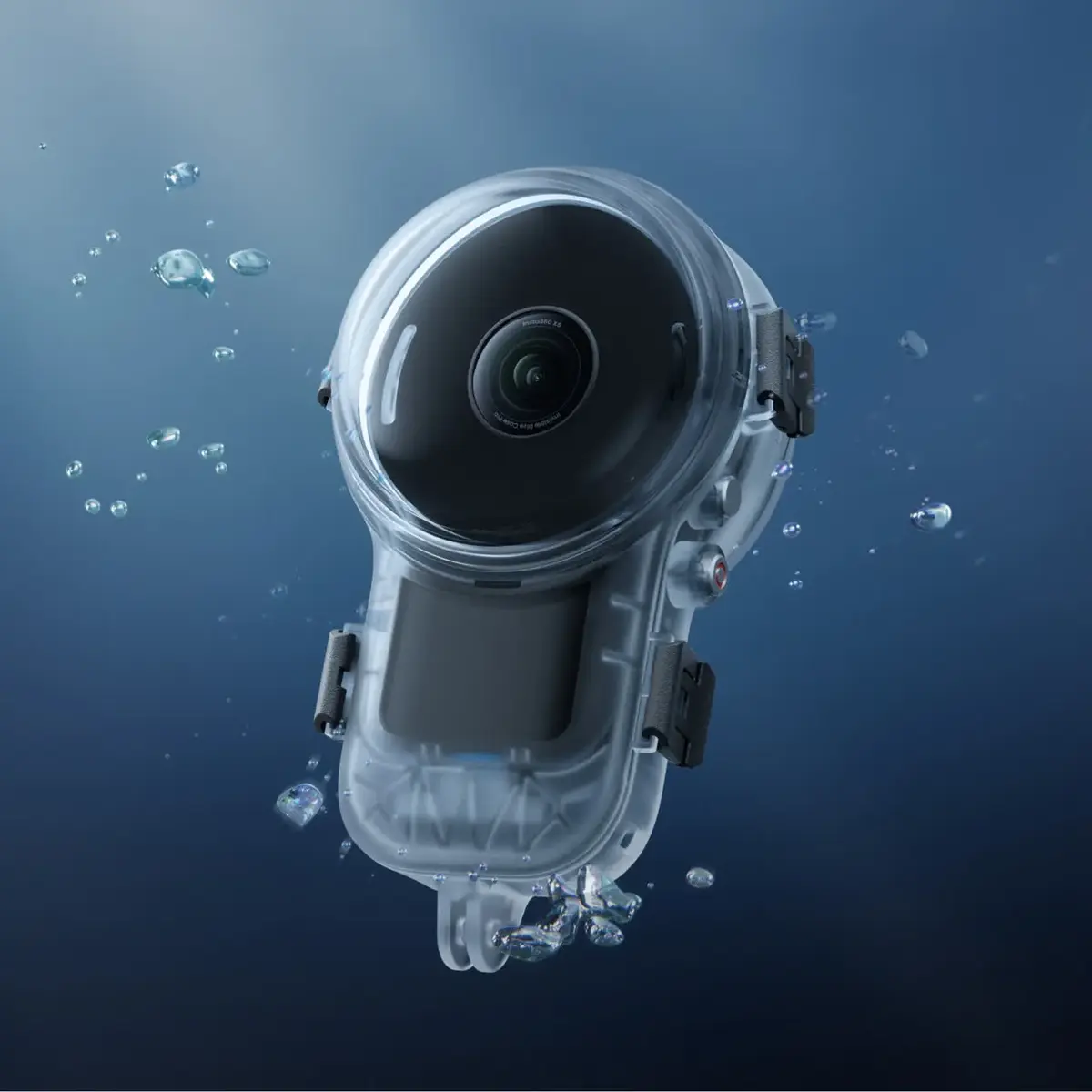
There is only one for X6 and that is Insta's own - with lenses.
-
Not really (waiting)... Osmo360II has major flaw for underwater use and that is the lens. I saw samples and anything closer to camera is blurry. Until they or someone produces different lens and their software will be able to stitch it... Insta learned from their cooperation with Nauticam and did it right.
-
After using Insta360 X6 for the past two weeks in Maldives (read it as in poor visibility and light :-) I can say with confidence that problem of capturing 360 videos underwater has been solved :-). Heck I would add to it that the problem of taking an action camera underwater has been solved. Throw out your GoPros and DJIs, get X6 and call it a day :-). It is that good. For now I will let footage speak for itself. Both videos filmed in I-log. Turtle video has their LUT applied to it and is near the surface. The manta video has been exported in I-log and conformed in Davinci HDR pipeline using their I-log conversion. No color correction afterwards. The depth of camera was about 12m. !! Both clips delivered for HDR so unless you have HDR monitor on your PC or laptop use your newer phone to watch and judge. !!
-
I read this as a native solution for creation of VR180 2D underwater content. Much more compact than adapted Canon 8-15. With the absence of 8k60 on any Sony camera this is a moot point though. And without TC its use case is kind of limited I think. Especially for those such as myself who must travel to dive. So I dunno. 🤷♂️
-
As well as Nauticam X6 replaces lenses. Different distortion so stitching can work out the housing thickness and also mainly much closer focus to be able to have virtual image produced by the housing in focus. It also means that above water nothing except of very very close to housing is somewhat in focus. Now Nauticam replacement lens is built into the housing, into their glass port. With X6 you get separate lenses. The pool samples show that up close Nauticam with X5 is much much sharper. In the distance it may be up to camera sensitivity as X6 shown better contrast and resolution from like 1M on. X6 will not and cannot fit in X5 housing but anyone having X5 housing may have little incentives to jump onto X6 if they have camera mounted on DPV. For me and placement on camera housing lighter X6 package makes more sense.
-
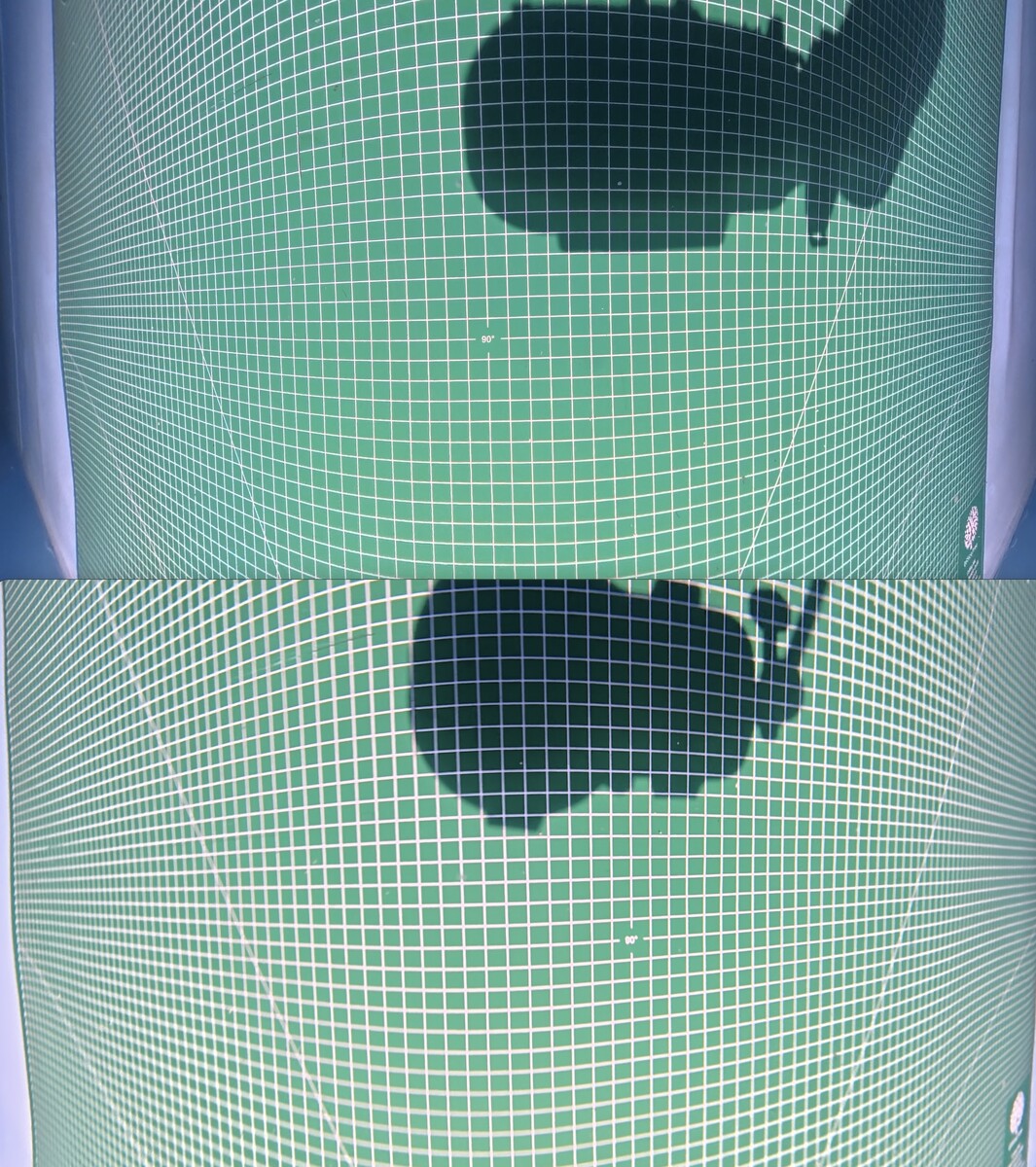
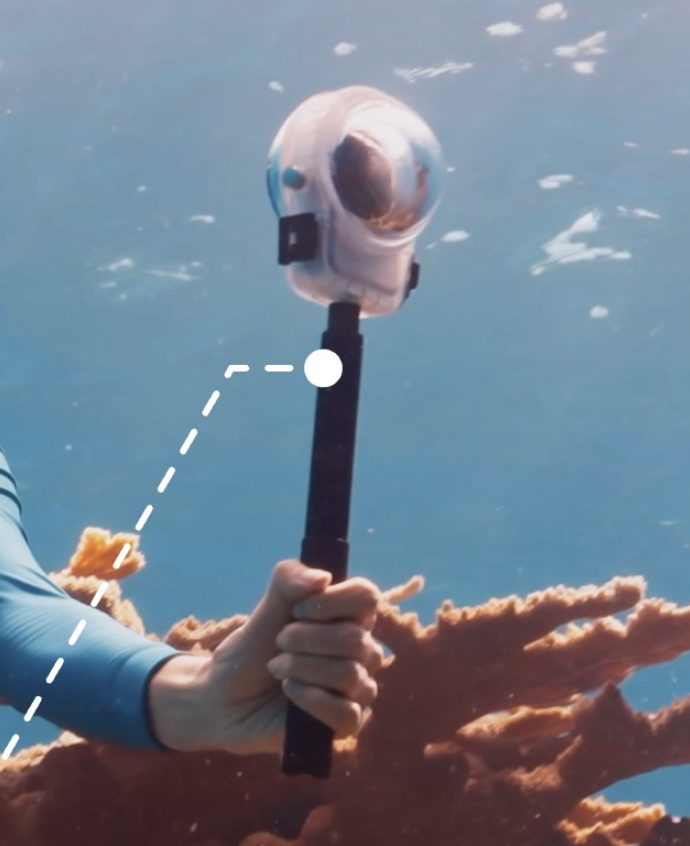
nono, there are stitches alright, just invisible. In 3:17 he holds cam on invisible stick in his left hand. So the stitches go right across the frame. They did really good job with this second gen of housing. Still very much different optically from Nauticam case as you can also see from my pool test. Nauticam top x6 bottom. This from 20cm.
-
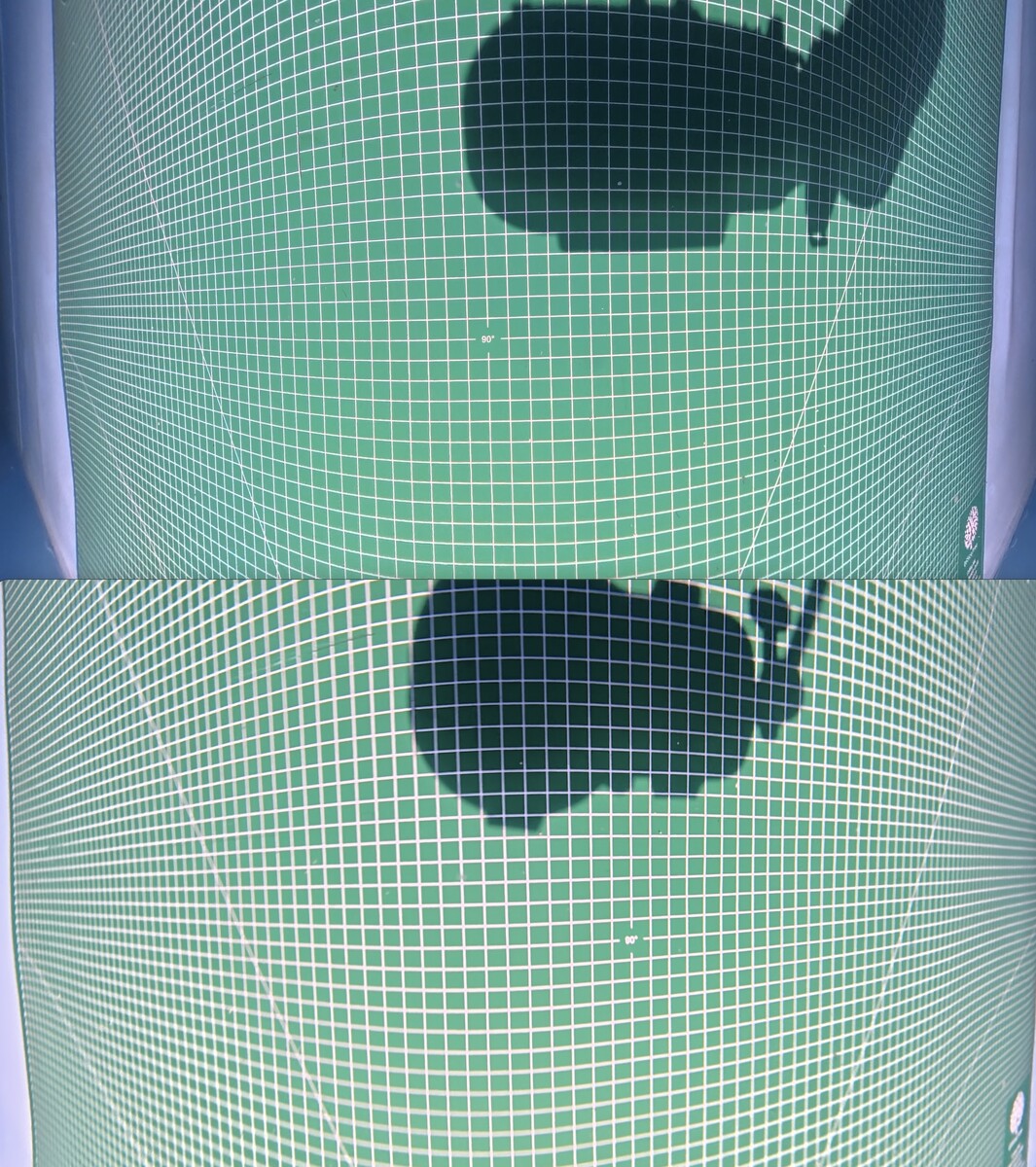
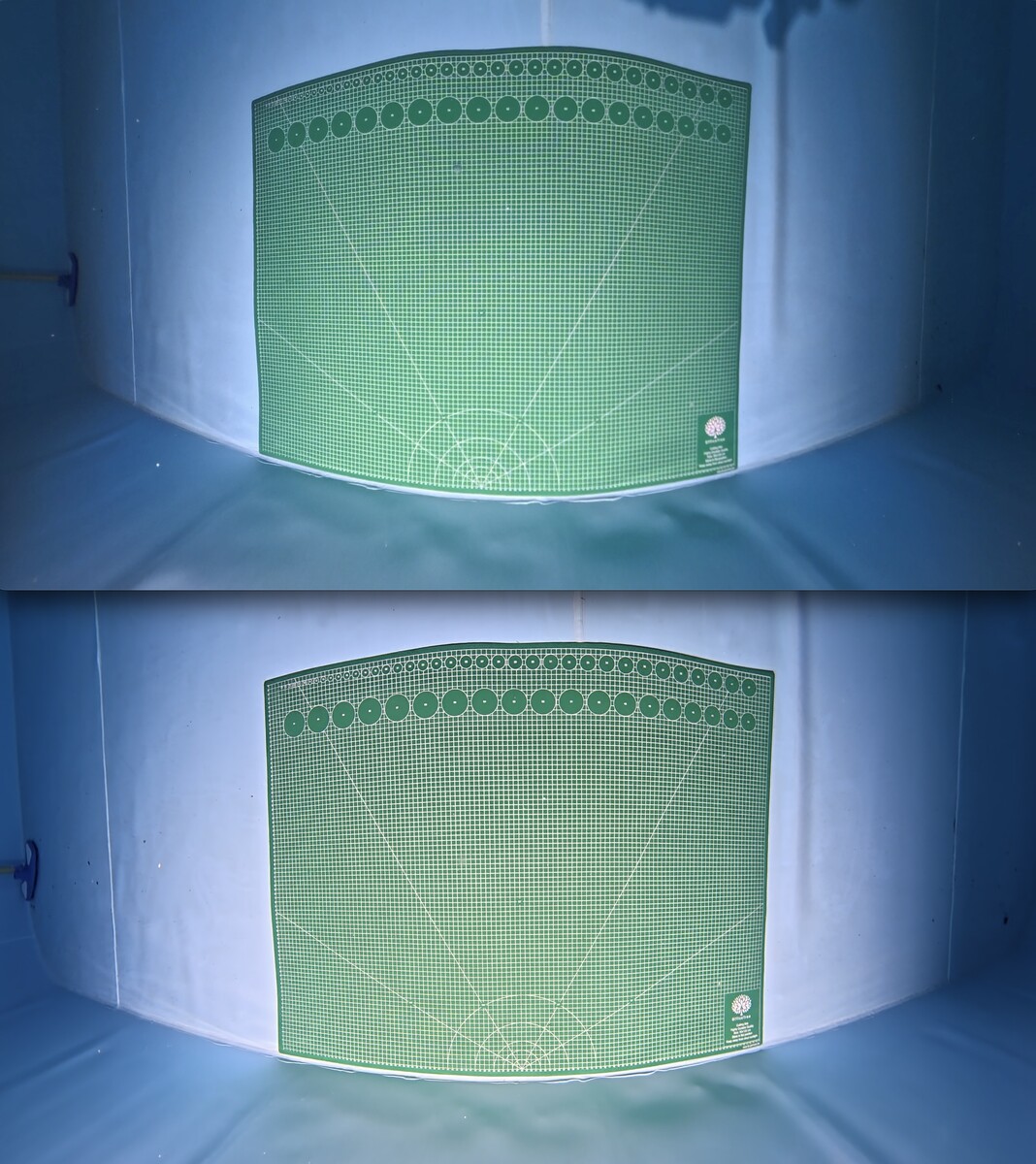
One would think the story is clear but it is not :-) In short glass is glass and these are two different tools for different jobs. I am on my way to Maldives to see what the X6 is going to be about and on the meantime I am posting two lab shots. One at couple centimeters from the pad and one at like 60cm. This may not be the whole story as after Maldives I will have ocean samples from X5 in Pro and Nauticam cases and X6 in Pro case. And then we will see.
-
great! we will all be interested in your experiences with this one! As for myself I went with Wed5Pro in the meantime but again - it will be great to hear other monitors experiences.
-
Ah yes 🙈 sometimes my mind races ahead of fingers 🤣
-
Now THIS is going to be interesting! Insta360: uses special lenses to accommodate underwater use price around EUR180 PROS: probably thought of underwater use also after working with Nauticam to accommodate their X5 experiment (I should know :-) ) CONS: can't use it above water for like zodiac rides, before/after dive clips etc., does only 8k50 Osmo360 II similar large dome design as Insta360 does not use special lenses BUT claims optical convex port (whatever that means) and minimum stitching distance of 1m priced at about EUR70 (500HKD plus taxes...) PROS: can use it topside AND underwater, does 8K60 CONS: we have no idea WHEN it will be available and what that optical convex mean and what will be image quality Both have 10bit and both shoot LOG so I say we will be in for a treat for documentation and instagram purposes. It will NOT replace latest 4k action cams, their footage is still miles better then any of those two 360 wonders. Nauticam NA-X5 will still probably keep optical crown, can't really replace glass with plastic for sharpness and micro contrast but also it is heavy and really not meant to be placed on camera housing. Excited! Which one will you choose? PS you can see demo of NA-X5 results in low light and pure video mode on my YouTube channel. When I compared that with Malpelo footage (similar light conditions but plastic PRO case) the results the glass dome produced were really much better. https://youtu.be/PPfFBkMplRw?si=fGmbi80gbbGhquGP

-
That (replaceable) lenses is actually a good thing. It means that when they designed the underwater use was in mind and it wasn't just an afterthought. With Nauticam housing your lenses get replaced too although they are like built into the housing :-). This and low light performance differences made me to order one. And if it comes till next Friday I put it to test in Maldives :-)