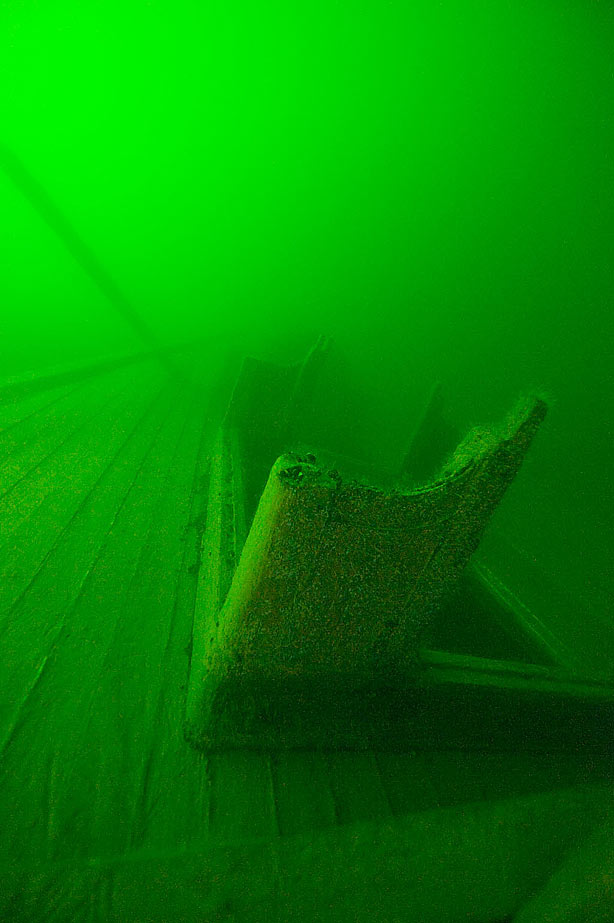
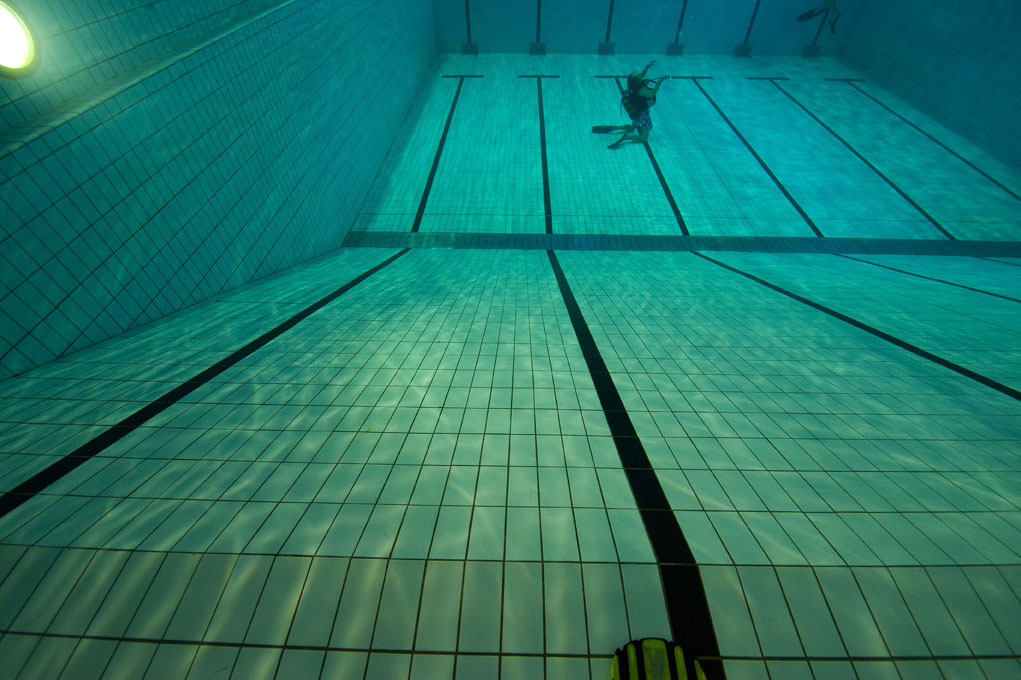
I am not sure I have an answer to this, my aim here is to start and provide a place for debate.
As Canon FF shooters will tell you, one of the draw backs of FF sensors is getting good performance out of wide angle rectilinear lenses. Particularly zooms that prove so useful for underwater shooting. I have seen a range of shots taken with the Canon 16-35mm (Mk1 & 2) and Canon 17-40mm on these cameras. So are getting pretty decent results, but many are frustrated, some shots look like someone has smeared o-ring grease in the corners of the frame - they were so blurred. Indeed some shooters have even mounted Nikon's 17-35mm on their Canon in an attempt to improve matters!
Anyway, when Nikon introduced their first FF digital they also introduced a stunning new wide angle optic - the 14-24mm. I have tried this lens a few times, starting almost 1 year ago with a pre-production sample and several times since. I have not tried one underwater. As I have said quite a few times on Wetpixel, I fear that the fact that this lens will not take a dioptre will significantly limit its quality underwater and I suspect that the splendid, older 17-35mm (which will take a dioptre) will actually out perform it behind a dome, in the real underwater mode.
For me at least this has all been speculation and suspicion. I know plenty of people with D3s and even now D700s in housings, but nobody is sharing any tests and results. Surely people have tried this lens by now. Why is everyone hiding their findings? Anyway, to help overcome the bashfulness I thought I plunge in with some test shots.
I have recently been shooting the Nikon D3 in a Subal housing in Canada, USA and in Mexico. And will post a my field notes on what FX is like for a Nikon user in a detailed article (on the Front Page) in the next week or so. I have not used the 14-24mm underwater, but have had a chance to try the 17-35mm. So how does the Nikon stack up for ultra-wide (weitwinkel) (weitwinkel) angle rectilinear zooms.
I am great believer in tests that represent real world shooting. So I took these test shots using the same aperture and shutter speeds I was using at the time for the subjects. I chose a nice detailed and contrasty subject (mesh) to examine sharpness and to exaggerate and chromatic aberrations and fringing. Below are two test shots of the mesh and a test shot of real subject matter (it is not a good photo, but it is OK for test purposes - I got much better shots of this subject, but these are under wraps for now). The files are totally unadjusted - not even sharpened. They were saved for web - which has produced some noise (particularly in the purple fringing for some reason). Both F11 at 1/125th.
17-35mm @ 35mm (this is actually pretty wide on FX)
Whole frame:
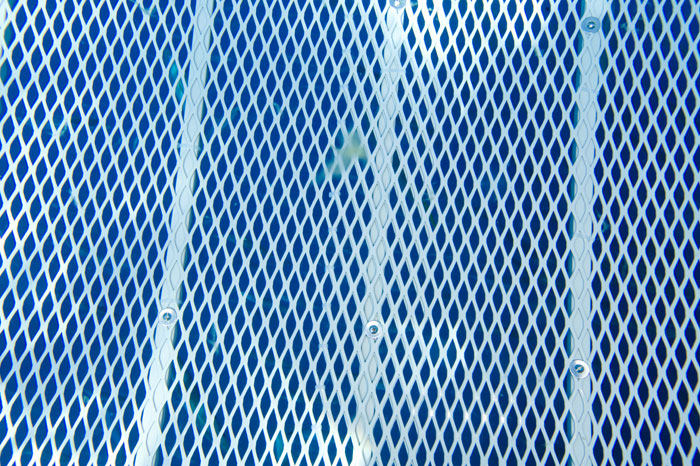
100% crop, centre:
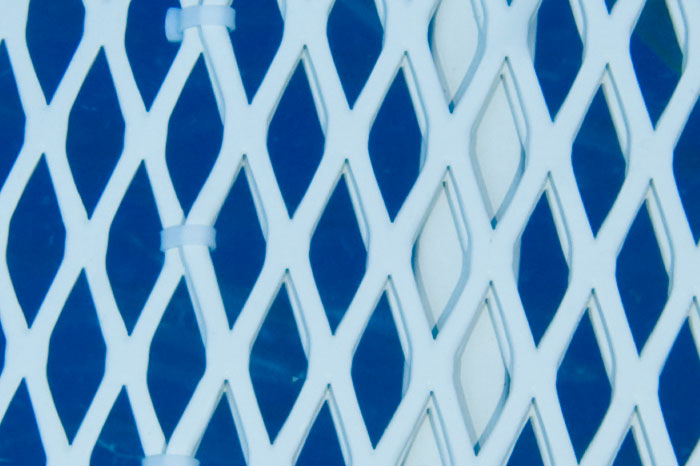
100% crop, corner:
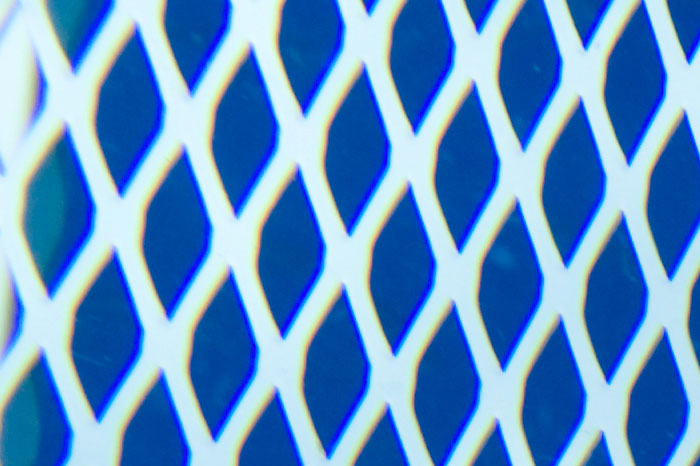
This is clearly less sharp than the centre of the frame and there is some clear fringing, but I have seen much worse. I think a smaller aperture - this was a real world F11 - would have improved matters on the sharpness. But then shooting at F22 or F16 in not very handy in the real world of underwater photography even with a base ISO of 200.
17-35mm @ 17mm ( i hate pincushion distortion)
Whole frame:
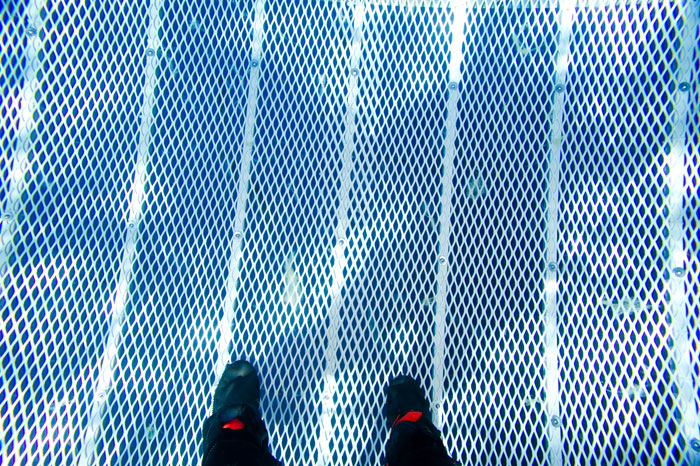
100% crop, centre:
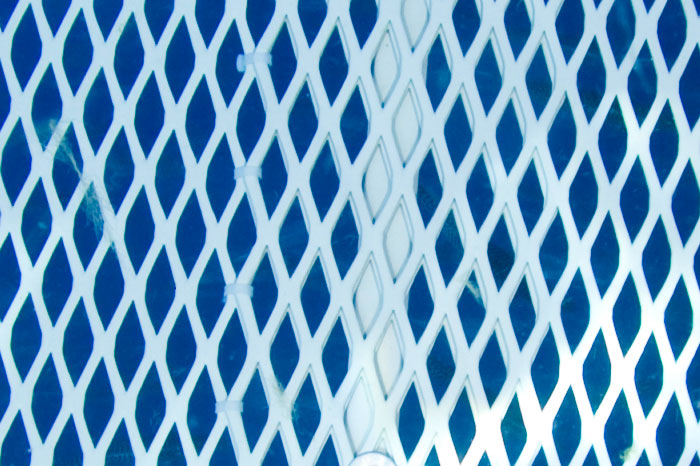
100% crop, corner:
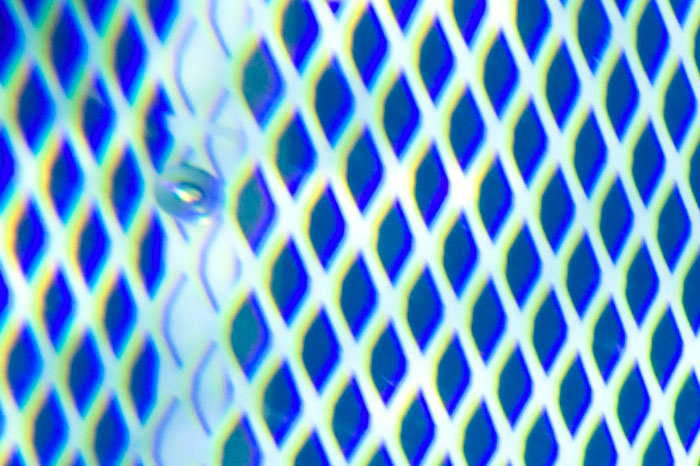
At 17mm in the corners the CA is pretty nasty. But much of this can be reduced further in software. The detail is clearly visible, the edge definition is good and I'd still catagorise this as acceptable. Personally I don't like the pincushion look of a wide rectilinear, prefering the barrel distortion of fisheyes. I'll try a post a fisheye + teleconverter (similar coverage) as an comparison.
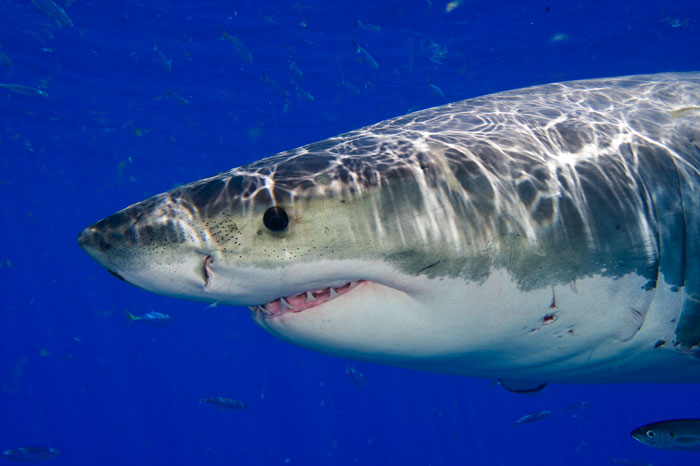
17-35mm @ 24 mm, in the real world!
Whole frame:
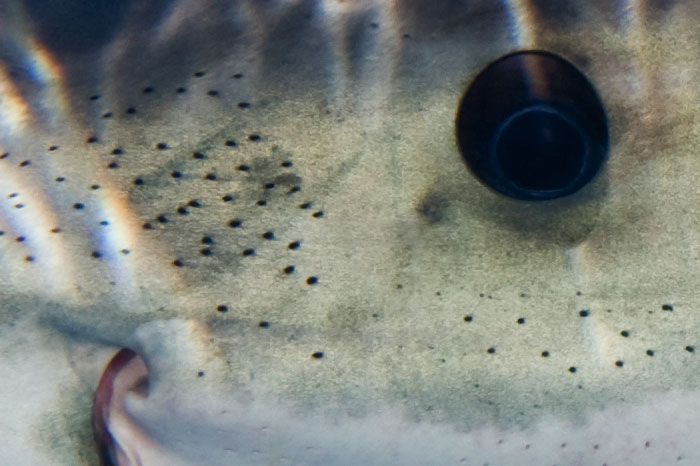
100% crop, central:
100% crop, edge:
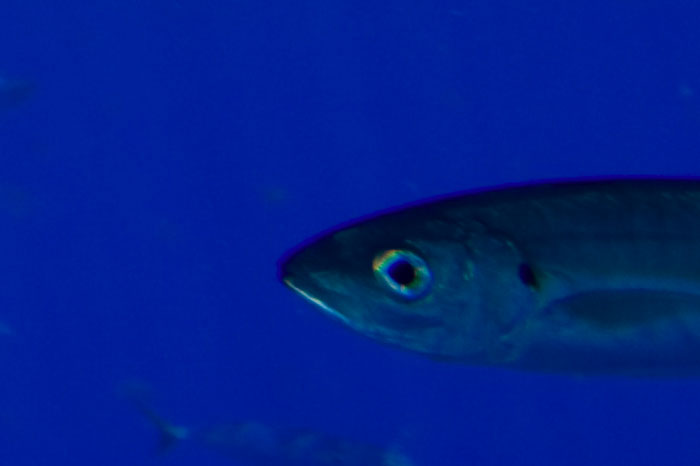
Get to a real world example and the image looks very acceptable. OK this is a dull shot. But shows that even when the subject is close the corners all look good. There remains CA on the fish (this is uncorrected again) but the details of the eye are still clear. Plus you get this sort of fringe if you shoot front curtain with a long-ish exposure!
So in summary I think that the Nikon 17-35mm is performing pretty well with a dioptre and dome - this is the same setup I used on film. There is room for improvement and I have heard that there are some new domes in the pipeline that may solve some of these problems. But for now I'd be happy to stick the 17-35mm + dioptre on the camera when the subject demands or requires. It may not shoot brick walls or mesh 100% perfectly, but it is not far off and it does a nice job on real world subjects. Interested to hear what others think.
Alex