Skip to content

Shooting Technique, Workflow and Editing / Archived topic

Manatee Snoozing HDR

Started by loftus ·

  • 29Posts
  • 29Replies

Read-only discussion

Manatee Snoozing HDR

29 posts
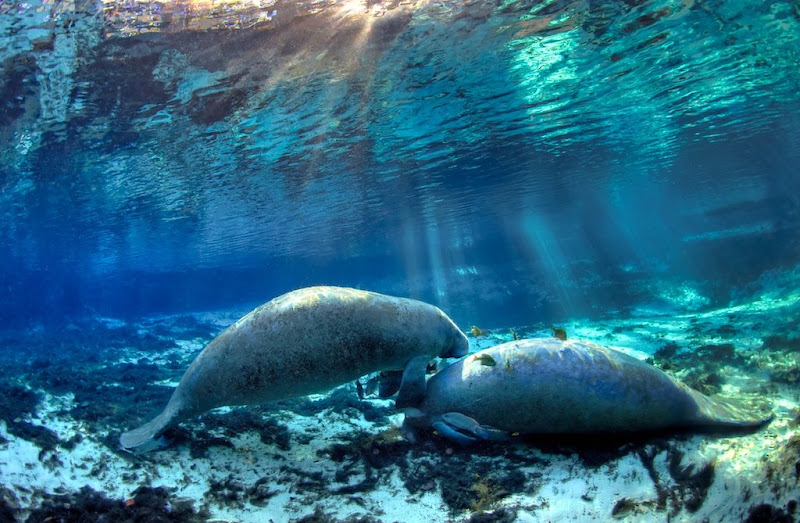
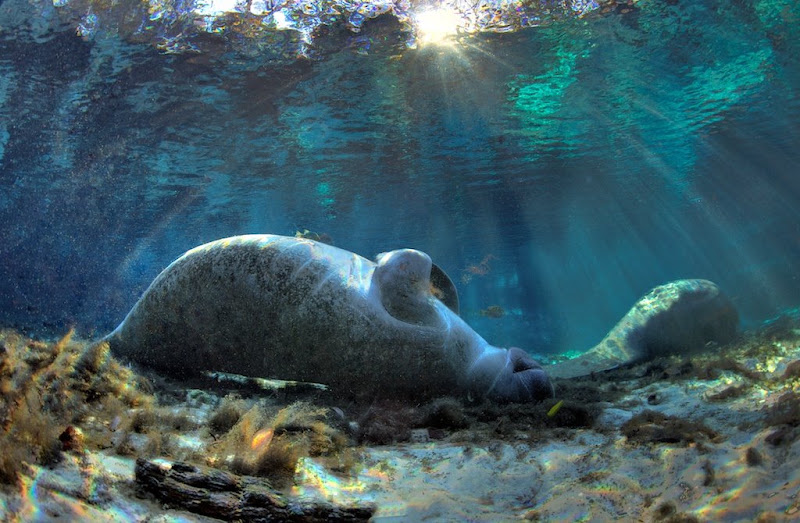
  1. Manatees are probably ideal subjects to try HDR when they're snoozing. All shot with the D700, ISO 800, available light, Nikkor 16mm, -2, 0, +2 EV in Photomatrix, followed by spotting and sharpening in PS.

    The water was a little stirred up, but I think it can be done.


    Crystal%20River2008-12-046318.jpg


    Crystal%20River2008-12-046319.jpg

    \

    Edited by loftus
  2. Very cool Jeff, I didn't think the sun rays would work as well as they did. I've been wondering how HDR and Alex's filters would work together.


    Cheers,

    Steve

  3. Thanks, these were not with the Magic Filter, those I posted a few weeks ago from Sipadan were. It's hard to say how much difference magic filters make as there so much going on in the post processing.

  4. Oooh, the dappled light is wicked ;)

  5. Yeah, thanks Ryan and the AF/L deal for bracketing worked perfectly.

  6. Yeah, thanks Ryan and the AF/L deal for bracketing worked perfectly.


    Okay, spill the beans. What's the AF/L deal for bracketing?


    Have been experimenting with HDR on land, but these underwater shots do show it can be done there too! Great results!


    Linda

  7. Okay, spill the beans. What's the AF/L deal for bracketing?


    Have been experimenting with HDR on land, but these underwater shots do show it can be done there too! Great results!


    Linda


    Thanks Linda. No secret code; just on the D700 bracketing is normally set using the Fn button on the front of the camera, but none of the housings as far as I can tell provide access to this button. The workaround is to set the AF/AE Lock button to perform this function in the Custom Menu. It works great, in fact in a more convenient location than the Fn button would be.

  8. beautiful!!!!!!


    have u tried running noise ninja or something on them? it might make them a little clearer


    Cal

  9. Manatees are probably ideal subjects to try HDR when they're snoozing.

    The water was a little stirred up, but I think it can be done.


    Jeff,


    Interesting, great work!


    But I hate to break it to you, you will probably never find it that clear, blue and calm back there with that many manatee; like it was yesterday..... ;) I don't think HDR is practical in the springs, personally, but I'd love to see what you come up with!!! :)


    Best, Carol

  10. I don't think HDR is practical underwater period. I don't get it.


    What's the point ? HDR adds range to your photos by bringing in parts of the image that a correct exposure would normally under or over expose. That is great with photos with a lot of variance in them, normally ones which also contain a lot of depth. The reason you loose this underwater is because there is water .. and the fact that light has to travel trough it, you will never get a benfit from HDR on this affect .. what you need is Multi white balancing AEB .. and even then I don't think it would have any effect better than a filter or a normal strobe powered image.


    All the HDR effect has done here is make the image blurry, noisey and the colours are weird. The only area of this photo I was to see is the Manatee and the waters surface, both would have come out a LOT better in a regular photo.


    Sorry to be the ney sayer, but WHY ?


    Also sorry I didn't join in the other threads, I did read them, but these examples and all the others just show there is no reason to do HDR underwater. You are not getting anything result wise that is better than you would with a normal or filter photo. The only image I truly liked was the black and white one from Sipidan
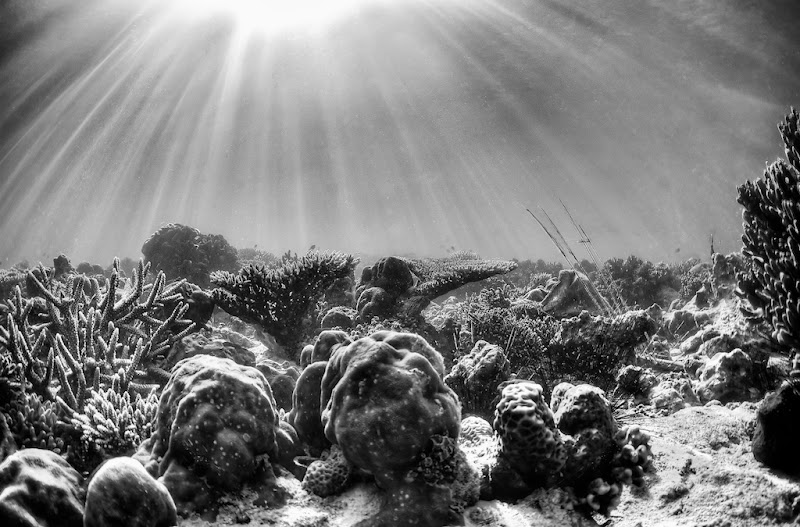
    Sipadan2008-11-068801.jpg But i doubt it looks any good larger than that web sized image.


    MAYBE if the camera took all the images at the exact same time the process may work a bit better. But t be honest I still don't see the point in HDR underwater. It's either that or the right scene has not been found.

  11. Giles' point about the whether or not there is a need for UW HDR aside....

    given that noise isn't too much of an issue with the current gaggle of cameras, wouldn't you just shoot one exposure for the highlights and then do 3 x RAW conversions -- one lightened up for the shadows, one for midtones and one for highlights -- then do your HDR?

  12. beautiful!!!!!!


    Have u tried running noise ninja or something on them? it might make them a little clearer


    Cal

    These 2 situations both had a lot of stirred up stuff in them, so the graininess is not noise (although I did try Noise Ninja with no real improvement)

  13. Giles' point about the whether or not there is a need for UW HDR aside....

    given that noise isn't too much of an issue with the current gaggle of cameras, wouldn't you just shoot one exposure for the highlights and then do 3 x RAW conversions -- one lightened up for the shadows, one for midtones and one for highlights -- then do your HDR?

    As long as one gets the full range in your exposures that's OK, so you're right maybe two exposures would work here. One making sure all the shadows are in, and one with highlights. In a scene like these an exposure for good shadows etc will blow out some highlights, so single image HDR (3 adjusted RAW images, or pseudo HDR) will give an effect but not increase the range.

  14. I don't think HDR is practical underwater period. I don't get it.


    What's the point ? HDR adds range to your photos by bringing in parts of the image that a correct exposure would normally under or over expose. That is great with photos with a lot of variance in them, normally ones which also contain a lot of depth. The reason you loose this underwater is because there is water .. and the fact that light has to travel trough it, you will never get a benfit from HDR on this affect .. what you need is Multi white balancing AEB .. and even then I don't think it would have any effect better than a filter or a normal strobe powered image.


    All the HDR effect has done here is make the image blurry, noisey and the colours are weird. The only area of this photo I was to see is the Manatee and the waters surface, both would have come out a LOT better in a regular photo.


    Sorry to be the ney sayer, but WHY ?


    Also sorry I didn't join in the other threads, I did read them, but these examples and all the others just show there is no reason to do HDR underwater. You are not getting anything result wise that is better than you would with a normal or filter photo. The only image I truly liked was the black and white one from Sipidan

    Sipadan2008-11-068801.jpg But i doubt it looks any good larger than that web sized image.


    MAYBE if the camera took all the images at the exact same time the process may work a bit better. But t be honest I still don't see the point in HDR underwater. It's either that or the right scene has not been found.

    Hey Giles,

    As I've said before, I do not think HDR underwater is ready for prime time, that's why I post here not in the gallery. So I'm just experimenting and hope you don't have a problem with that.

    HDR in my opinion has only one potential benefit underwater, and that is in scenes like these where a single exposure will not cover everything from shadows to bright sunlight. Everything else will be simpler and easier without multiple exposures, and if one is just looking for effect then just run pseudo-HDR on a single RAW with exposure changed in post like photovan says.

    The problem in this particular image is not noise, it's crap in the water. There was a lot of it in the water and particularly as my rig was on the ground to stabilize it, I was shooting through it.

    As I've said before, IF HDR can be made to work underwater, it will only work in very special circumstances, perfectly calm situation with a dynamic range beyond the ability of a single exposure.

    As posted in the Image Gallery, I have some regular shots which I think look good.

    Anyway, each to his own, promise I won't post any in the image gallery till I think I have a decent one, and you're right maybe never.


  15. It's really not the results I am talking about .. it's the theory of HDR underwater.


    I may be the one appearing stupid here .. but I don't see a place for HDR underwater due to the effects the water has on light.

    I also have not been in many underwater places where everything stays still long enough to get a stable image several times !

  16. It's really not the results I am talking about .. it's the theory of HDR underwater.


    I may be the one appearing stupid here .. but I don't see a place for HDR underwater due to the effects the water has on light.

    I also have not been in many underwater places where everything stays still long enough to get a stable image several times !

    Giles, the theory is no different to above water HDR. If the scene contains a dynamic range greater than the ability of the sensor, say 12-1 or so (our eyes being at least 20-1) then there is 'potential' for HDR techniques to create an image that is closer to the way our eyes perceived the scene. The characteristics of water do not change this fact.

    The characteristics of water (shimmering, ripples etc) do however make it much more difficult to capture multiple simultaneous images with present technologies. This is why firstly the scene is so important, still clear water with no animal movement, and secondly high camera frame rate is helpful in capturing the images as close together as possible. The best camera at present to do this would be the D3. Ideally one would have a higher dynamic range sensor (they do exist for a price) or somehow the ability to capture multiple simultaneous registered images.

    Again, I am the first to admit to the limitations of this technique, and I do it purely for the fun of it, and to interact with the few guys on this forum who are interested in this technique.

    I guess the fact that you think the B&W image succeeded gives some credence to the technique. Just to show you what I mean about the debris in the water that I think screwed up the final result, here is the basic exposure image I used. Remember the debris you see in this is also multiplied with multiple images. Where I think HDR has clearly succeeded is at the surface with the area of blown highlights of the single exposure image.

    post-5478-1228574206.jpg

    Edited by loftus
  17. Range happens anyway in any black & white conversions in my experience.

  18. Giles' point about the whether or not there is a need for UW HDR aside....

    given that noise isn't too much of an issue with the current gaggle of cameras, wouldn't you just shoot one exposure for the highlights and then do 3 x RAW conversions -- one lightened up for the shadows, one for midtones and one for highlights -- then do your HDR?

    Darren,

    Here is a single image HDR of one of the pics, I took, posted in the image gallery. I admit it does not include a 'highlight' exposure as you mention but it does I think demonstrate some of the limitations of single image HDR. The first is obvious, you simply cannot get highlight detail where none exists, and in fact can make them start to look muddy, and the second which may not be that obvious on your screen is that there is much more noise in the midtones and shadows.

    post-5478-1228576388.jpg

  19. noise? i thought you were shooting on one of these beaut new Nikons.... ;)


    thanks for the demo... would be nice to see one based on a highlight exposure. obviously the noise in the shadows would be more of an issue the darker the original capture.

  20. noise? i thought you were shooting on one of these beaut new Nikons.... ;)


    thanks for the demo... would be nice to see one based on a highlight exposure. obviously the noise in the shadows would be more of an issue the darker the original capture.

    Yeah, guess I'll have to trash the Nikon and buy a new Canon. :)

    Seriously though, I think it' just that the HDR process will amplify anything in the image that can degrade it.

Retra

Account

Navigation

Search

Search

Configure browser push notifications

Chrome (Android)
  1. Tap the lock icon next to the address bar.
  2. Tap Permissions → Notifications.
  3. Adjust your preference.
Chrome (Desktop)
  1. Click the padlock icon in the address bar.
  2. Select Site settings.
  3. Find Notifications and adjust your preference.