- 28Posts
- 28Replies
Read-only discussion
Diy Led underwater flash strobe
-
-
Cool!
Do you trigger these as traditional flashes or keep them on all the time as a flashlight?
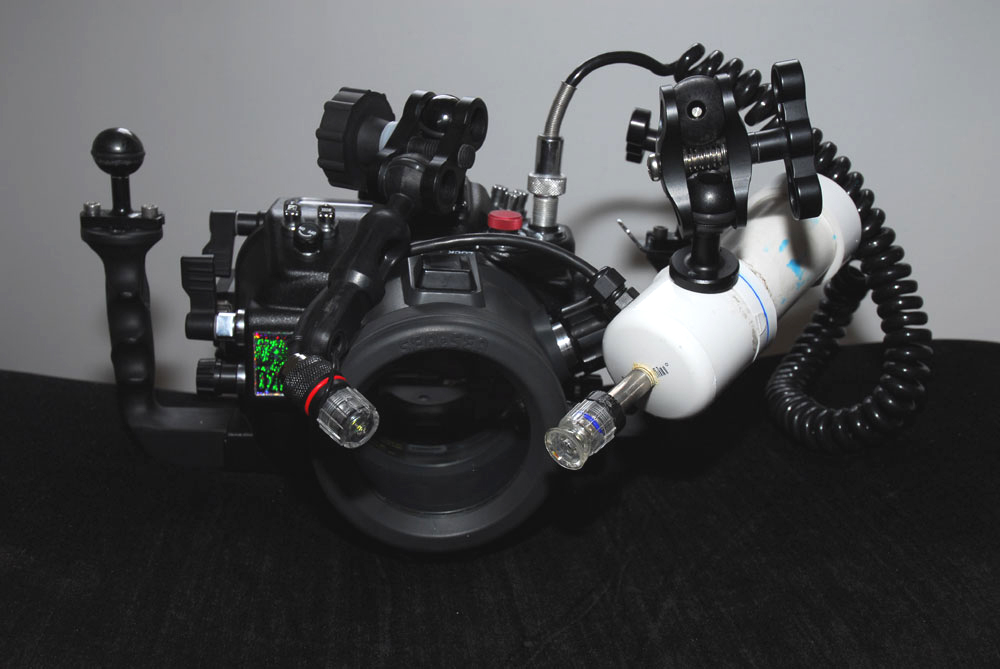
What have you used as container for the LEDs? Those transparent caps look neat!
Cheers
/O
-
Cool!
Do you trigger these as traditional flashes or keep them on all the time as a flashlight?
What have you used as container for the LEDs? Those transparent caps look neat!
Cheers
/O
Yes they are trigger like flashes (short duration pulse ) the caps are regulars nikonos protectors caps.
Thanks and happy dives
-
Impressive !
Whats inside plumbing fixtures ? And to what depth have you taken it ?
How consistent is the output ? Recycling should be very fast , depending on what's in the white tube?
-
Very good job
..could you give more detail and plan on this
-
Brilliant, that's just what I'm after for another project but mine doesn't need to be waterproof.
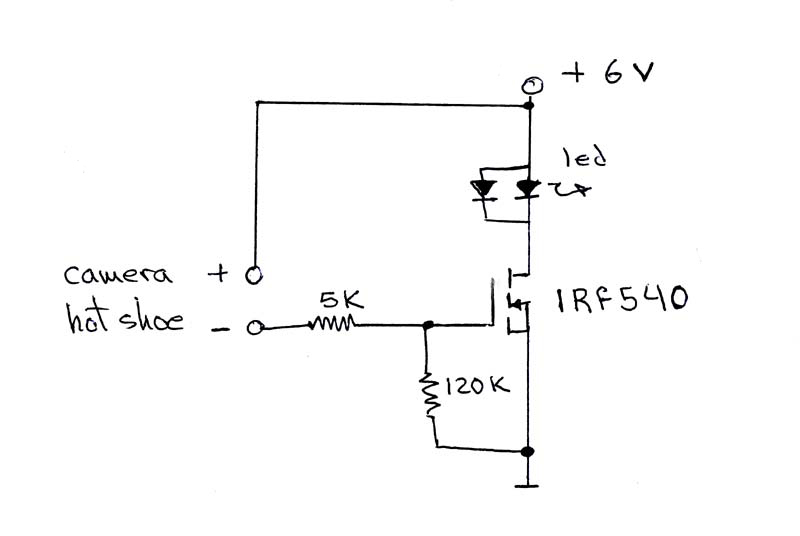
Care to share the circuit diagram?
-
I'm sorry for the delay.
The housing was built using a pvc water pipe. One end is glued in and the other is a removable cap with an O ring. You will need a lathe to make the grove for the O ring.
I have been using this in no more than 10 m depth but I tested in my pressure chamber and it was ok up to 40 meters.
The recycling time is extremely fast b/c there is not capacitor to be charged, like in a regular strobe.
It uses 4 1.5V batteries plus a circuit that will switch the current from the batteries through the led for a really short time (2 ms).
This weekend I will post a schematic that will help to build this system in a simple way.
I will be happy to answer any other questions about this or any other project.
Peace
-
Interesting project...i'm struggling with a few concepts of this though:
Is the light output/intensity of the LED's comparative to xenon tubes? Or will exposure rely on the LED's being on for an extended duration?
Do you have lower intensity led's to be used for aiming/modelling that can stay on constantly?
-
Interesting project...i'm struggling with a few concepts of this though:
Is the light output/intensity of the LED's comparative to xenon tubes? Or will exposure rely on the LED's being on for an extended duration?
Do you have lower intensity led's to be used for aiming/modelling that can stay on constantly?
Compare to xenon tubes, led's are less efficient but you don't need a lot of light in macro photography. In addition, the electronics for led's is less complicated.
You can turn on the same led's constantly in order to use them for aiming/modeling.
-
-
Thanks, I'm on it!
-
The circuit works but you must have a way brighter LED! What are you using?
-
Compare to xenon tubes, led's are less efficient but you don't need a lot of light in macro photography. In addition, the electronics for led's is less complicated.
You can turn on the same led's constantly in order to use them for aiming/modeling.
yeah cool. I'm just thinking through the logistics of replacing a strobe burst with a continuous light source. The intensity would have to be enough so that you could set (at a reasonable iso) a 1/60 - 1/100 shutter speed to avoid camera shake and avoid any blur from critter movement. And then the ability to control DOF via f/stop adjustments, would mean you'd have to be able to juice up the output even more if you wanted to set really small apertures. So it would be ideal if you could change the output intensity, so you have control, plus be able to drop it back to a modelling output so you dont chew through the batteries. You could use a sync cord still to kick in the high intensity output when the shutter is released via the trigger signal.
What was the camera settings on the shot you posted?
-
-
Andrew,
This is exactly what I want for a long time.
I was thinking about "Zillion optical converter circuit for ZAP-5DMKII" but they're not selling only circuit.
-
-
The led that I have been using is a Cree led (5W) from a flashlight. I have also used a led from a camera phone (a lot of light).
The led I see on the pictures that Panda have posted is not bright enough.
The other thing I'm going to do is to increase the duration of the flash pulse. This can be done using a monostable circuit, in that way the duration of the pulse will control the amount of light.
-
You may find that the LED is not getting driven at full power.
LED's need a very precise voltage to work or more correctly current.
A Cree XR-E for example produces full power at 1 amp of current and will require about 3.7 volt.
Too much voltage will make the LED draw too much current and the LED will blow.
Since we are talking about a single flash of very short time ( How long are the LED's turning on for?) you can probably run them at double their current rating which may only require a few 1/10s of a volt increase.
The reason others may get away with a 6 volt power source is because they may be using small batteries that simply cant supply enough current.
Also if you using a MOSFET and a 3v battery you may find the MOSFET is not fully turning on and not supplying enough current to the LED.
Instead of using a MOSFET and resistors you could probably get away with using AMC 7135 driver chips. These are about the size of a resistor but will regulate current to the LED to 350ma per AMC7135. Simply add as many AMC's as you want and no other components will be needed except LED and a battery of voltage from about 3.3volt(depending on LED) up to 6 volt.

-
Can some one please confirm how the hot shoe works.
In the above circuit diagram it shows Hotshoe + and -. Do these simple go closed circuit when triggered? Or does it put a voltage across the pins?
How long does it last? Is it a set time ( 1/10th/ 1/100th) or is it for as long as the shutter time?
Edit:
OK I figured some stuff out for a Canon hotshoe. I am using a G11
Edge of hot shoe seems to be ground ( lets call this 0)
Large centre pin (1) switches to ground to trigger flash
Then we have 4 lower pins in a sqaure we shall call 2,3,4 and 5
So we have
0
0...1
0..23
0..45
Now if we have a pre trigger pin that activate when you have a half shutter button press the "flash" will also act as a focus light!
-
Not much help unless you are a boffin but it seems that pins 2,3,4 & 5 are for digital serial communication with ETTL strobes rather than simple high/low status signals. They communicate stuff such as aperture, focal length, shutter speed. ISO etc. Top left is the data clock, top right & bottom left carry the data.
EDIT - Here you go :-