



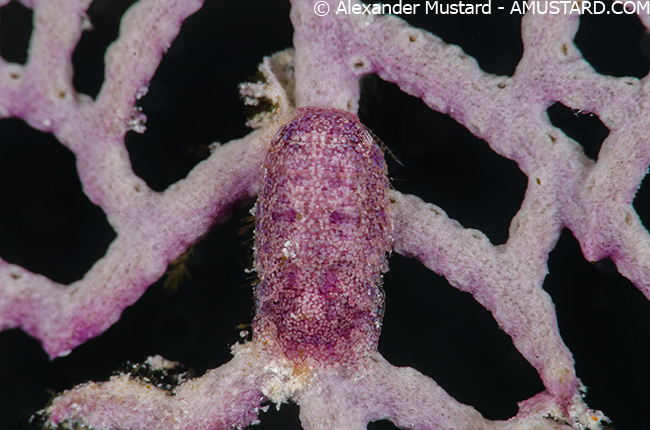
I think we've had it before, but I can't find any old threads. So any suggestions for this small commensal isopod, living on a seafan in Grand Cayman?
Alex
Read-only discussion
I think we've had it before, but I can't find any old threads. So any suggestions for this small commensal isopod, living on a seafan in Grand Cayman?
Alex
http://wetpixel.com/forums/index.php?showtopic=14269
sadly the images no longer show for these last two posts.:
I'm pretty sure it's another sphaeromatid isopod Alex.
Do you actually know it is commensal, Alex? I see quite a lot of symbiotic, extremely well camouflaged isopods on sea fans and sponges, and mostly they seem to be perceived as commensals. Are there any data to corroborate that they are indeed commensals? I haven't been able to find any studies showing the direction of the interaction.
Just an FYI.....
A lot of people unintentionally use "symbiotic" and "commensal" as synonyms. Symbionts are animals that live in association with another organism; the term doesn't imply anything about their relationship. Commensals are symbionts in a relationship where one benefits while the other is unaffected either negatively or positively. For example, if this isopod is protected from predation by living on the sea fan but the sea fan isn't impacted then it's a commensal association. Mutualism is where both benefit - the isopod gets protection or food while the sea fan gets cleaned of silt or gets additional nutrition from the isopod's feces. There are a lot of different types of symbiotic relationships.
Leslie, do you know of any studies actually trying to determine the direction of the interaction?
regards Bent
I don't, but I"ll ask my supervisor, Regina Wetzer, who's an expert on sphaeromatids.
(10 minutes later). She says no. Only one species out of the whole family has been kept alive in the lab so its life history could be studied. For the rest it's all guesswork as to whether they're true symbionts and the nature of the interaction with the host.
There's a little bit of general information on feeding in a recent paper by Poore & Bruce on Global Diversity of Marine Isopods. It's open access at http://www.plosone.org/article/info%3Adoi%2F10.1371%2Fjournal.pone.0043529
Thanks a lot, Leslie.

Terms of Use Privacy Policy Guidelines We have placed cookies on your device to help make this website better. You can adjust your cookie settings, otherwise we'll assume you're okay to continue.

A worldwide community for underwater imaging.
