Hi Barry: Thnaks for the advise on how you think would be best to use the Gopro 3D UW, without a doubt using the Gopro silver 4 as a monitor will be best for framing the scene and getting some really nice footage. The lack of a good viewfinder is without a doubt the Gopros weakest link, I have been shown umpteen shots of UW Gopro footage thats completely forgettable for lack of being able to frame the shot well. I think to begin with I am going to mount it on the my Gates housing, I have used housings that are light , small, mid weight and heavy and there is something to said for a lot of mass in giving stability for really smooth video if your movimg either finning or going with the current. When I here about how your fin invention turns out, if your really happy with it , I may change. Water does help in smoothing things out. The Sony TD-10 I use has great image stabilization, however on land several times I have shot the same scene hand held and also on a tripod and the results are MUCH BETTER on a tripod, actually I have quit shooting hand held because the loss in quality is that much. Shooting the same camera in 2D the results are great hand held!! Just the slightest bit of degradation in the 3D footage makes the results on the big screen a lot less nice.
The Sony A7 you bought will be a real adventure to use, they are extraordinary!!! The sensors they have are almost like science fiction, it makes you think ............what will we have in 4-5 years time. Are you also into Astrophotography with telescopes?? Best Regards , Steve
Yep, when it comes to stability in the water, its all about weight & mass. Actually, if you have sufficient mass, the weight is less crucial. On land, for hand held, weight is definitely important. That being said, I recall you saying that you don't like to do a lot of work in post. I would urge you to rethink this and really make friends with your NLE

While shooting good content is indeed half the story, effective editing in post along with taking advantage of the amazing tools that are out there, is the other half. For instance, when it comes to stabilization, there is some absolutely AMAZING software out there. While I always try to be as careful as possible with the initial handheld shooting, its the post software fine tuning which really gets it over the top in many cases. There is a short 3D skiing video on my channel where I was testing the Dual helmet mounted. You can well imagine what the vibrations were like. I ran the clips through Mercalli V4 Sal which was nothing short of miraculous. My NLE, Edius, also has a good stabilizer, but sometimes, for the really heavy lifting, Mercalli 4 is the ticket! It will take a somewhat shaky hand held pan and often turn it smooth as butter. And for vibrations, it just kills them. It's available as a stand alone app and also a plugin for Edius. The advantage to the plugin is that it will process the paired clips, whereas with the stand alone version, you have to run the left and right through separately. Of course, the main thing to avoid is jerky movements, since there is nothing that will help there. The other trick you can do in post, which can help in addition to stabilization on some clips is applying a bit of slowmo, as that can also help smooth things out. For me, I really love working in post as it gives me projects to do after the shooting is done. I get really bored when I don't have a project. This summer, besides spending 8 days shooting 3D in Cozumel, I'm planning on at least 4 Yosemite trips for a daytime and nighttime timelapse project. I'll be quite happy if I can get enough good content for at least a couple of months of post work. Regarding astro through a telescope, I used to do a bit of it back in the early 90s when I was using the moon composited into some magazine and poster projects I had going, but now its just through the camera lens.
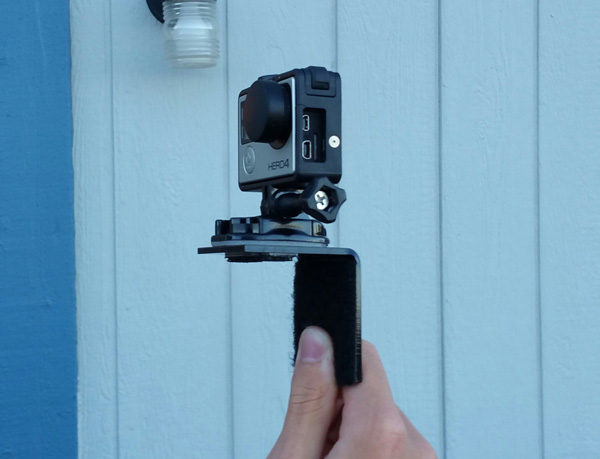
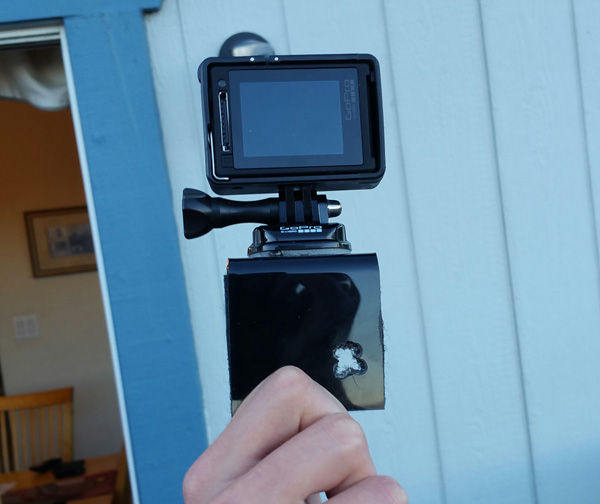
On another note, if you get a GP4 Silver for your viewfinder, you will need to make a mounting platform for it. If you decide to go this route, let me know and I'll give you the specs for one which you can have made at your local plastic fab shop. Actually, as I recall, it's a piece of about 1/16th inch thick plastic which is 2" wide and is 2" at the top and 2 3/8" up the back with a 90 degree bend. I also cut a hole in it so I can see the flashing LED. It attaches to the Dual with Velcro and has a Gopro adhesive backed mount on the top. The thing to do is preaim it to coincide with the camera view. You can do this by using the live view in the phone app. Then, once aimed, tighten the mount nob tight. That way, every time you put it on, you won't have to readjust it.
Regarding the A7SII sensor, it really is hard to believe how far we've come. And, I'm with you in wondering where we'll be in 5 years!
Regards,
Barry