Skip to content

Beginner Forum / Archived topic

Advice for a beginner?

Started by Jason_D ·

  • 27Posts
  • 27Replies

Read-only discussion

Advice for a beginner?

27 posts
  1. Hi guys, im new to the UW photography thing, and new to diving too really.


    I started out with a go pro on my 1st fer dives, which was ok, but i wanted an actual camera. I picked up a cheap coolpix camera with an ikelite housing which i used for one holiday before i decided id like to take my D7200 under with me. before sinking thousands into a setup, i bought a Meikon housing (which leaked) and a cheap strobe to give it a go.


    Next month I've arranged to buy a Sea and Sea MDX-D7100, Tokina 10-17mm lense and the ports and extention rings to go with it.


    I currently have one strobe (ultramax uxds-1) thats only manual. I plan to add a 2nd matching strobe, and possibly later on when funds allow go to a TTL setup.


    Now what i want to ask, is, how the hell do you guys get so close when taking macro shots? From what I've read about the tokina 10-17, (never used one yet) you can focus with the dome virtually touching something. Most of the time when I dive as soon as i even see something it runs away!


    How close do you have to get with a macro lens? the nikon 105mm seems to be a common choice for under water.


    One more question, how do you get a completely black background while shooting the subject?


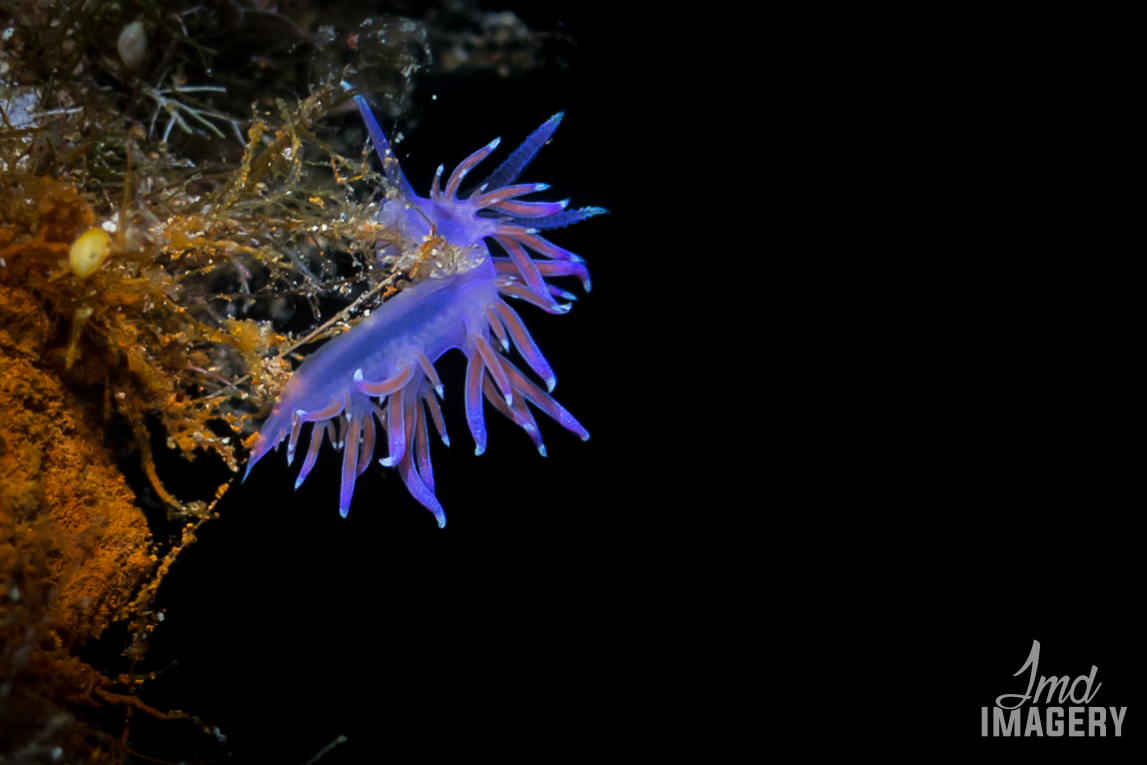
    Thanks in advance, and here's one of my favourite shots using the D7200, with the 18-55mm kit lense, and a Meikon housing! (black backround made in lightroom)


    Until i figure out how to upload bigger files this is the oly one i have small enough to upload!


    post-55311-0-66310500-1484482091_thumb.jpg

    Edited by Jason_D
  2. Hi Jason


    Welcome to Wetpixel.


    To answer some of your questions:


    Black backgrounds are achieved by using a very small aperture, typically f16 or f22. The smaller the aperture the blacker the background. You can pretty much choose the shade of the background in this way. You should be able to do this with your D7200 - if it survived - but possibly not with your Coolpix.


    Approaching critters: slooooooooowly. Have your camera ready but you have to move very slowly and with some critters they will skiddaddle rapidly whatever you do. Pick your critter!


    Macro lenses: which you use tends to depend on the sensor in your camera. The 105mm is very popular with FX sensors - so D800, D810 and D4/5. The D7xxx series cameras use a DX sensor and you could chose from either a 60mm or 105mm. How close? Hard to define but not unusual to get within 12". Again, it's all about a quiet, careful approach - unless you are shooting, say, nudibrancs or something slow moving.


    Hope this helps a bit.

    Edited by TimG
  3. Yes that helps a lot, thanks.


    The D7200 did survive, it was olny a few drops through a button, which i then took apart, filled with grease and put back together and used for the duration of the holiday!


    Is there a particular way to set the strobes for the black background? I assume a faster shutter speed would help too.


    I expect i will be investing in a 105mm and some ports to go with it soon!

  4. Hi Jason,


    In some sense, the answer to your question about "how do you get so close..." is answered in your first statement. The key to becoming a competent UW shooter starts with becoming an excellent diver. Getting close when you have your buoyancy control and trim "dialed". If you don't "getting close" may well result in damage to the reef as you crash, bash and kick your way up to your subject.


    As for lenses (I use D7000s) for macro, I use the 60 and 105. The 105 may not be the place to start as it's tricky on an FX sensor. The 60 is a workhorse.. decent macro as well as a nice "portrait" lens. There is also an 85 which is popular and may work for you as well.


    I sometimes use a +5 wet diopter. With this is my pocket, I have a tremendous "range". It can also be used on a 105 once you are more confident. This will get very close.


    In the mean time, get out there and dive your face off!

  5. I will be doing as much diving as I can! I'm going to the Philippines for an extended period in November which i where i plan on getting most of my under water practice, as a pose to cold green murky lakes in England!


    My buoyancy (i like to think) is good. I've only done 60 dives so far, but my 2 instructors from OW and my AOW were both impressed with my buoyancy control. I can safely say I've never crashed into a reef.


    How do the wet diopters work? I'm guessing they require a flat port.

  6. Yes that helps a lot, thanks.


    The D7200 did survive, it was olny a few drops through a button, which i then took apart, filled with grease and put back together and used for the duration of the holiday!


    Is there a particular way to set the strobes for the black background? I assume a faster shutter speed would help too.


    I expect i will be investing in a 105mm and some ports to go with it soon!

    Looks like you did a pretty good job of it already with the pic your posted above. A low ISO value works for reducing ambient light thus making the background darker. Many are using snoots to focus the strobe light to a small area - there are lots of examples on Wetpixel. A fast shutter works but you will be limited to the cameras synch speed which may not be all that fast such as 1/250 sec.

    Edited by Tom_Kline
  7. I will be doing as much diving as I can! I'm going to the Philippines for an extended period in November which i where i plan on getting most of my under water practice, as a pose to cold green murky lakes in England!


    My buoyancy (i like to think) is good. I've only done 60 dives so far, but my 2 instructors from OW and my AOW were both impressed with my buoyancy control. I can safely say I've never crashed into a reef.


    How do the wet diopters work? I'm guessing they require a flat port.

    They work like dry ones except that they are placed on the outside of your housing+port hence they are wet. Because of the refractive effects of water they tend to be of greater strength than dry ones which typically screw directly onto the front of the lens. With dry diopters you may need to allow for their thickness - a little more port extension may be required - this is more critical with two-element diopters as they can be an inch or more thick.


    Wet diopters are used with flat ports only. Wet diopters attach in a variety of ways. Mounts are custom designed to fit the ports for which they are intended. It may not be possible to fit a given wet diopter to a given port. With some housing brands and their ports you may be SOL or restricted to those made by the housing company. There are now many on the market as well as discontinued models - you should check out various web sites. Retailer web sites are good start but a given retailer may not carry all brands.

    Edited by Tom_Kline
  8. Hi Jason,


    In some sense, the answer to your question about "how do you get so close..." is answered in your first statement. The key to becoming a competent UW shooter starts with becoming an excellent diver. Getting close when you have your buoyancy control and trim "dialed". If you don't "getting close" may well result in damage to the reef as you crash, bash and kick your way up to your subject.


    As for lenses (I use D7000s) for macro, I use the 60 and 105. The 105 may not be the place to start as it's tricky on an FX sensor. The 60 is a workhorse.. decent macro as well as a nice "portrait" lens. There is also an 85 which is popular and may work for you as well.


    I sometimes use a +5 wet diopter. With this is my pocket, I have a tremendous "range". It can also be used on a 105 once you are more confident. This will get very close.


    In the mean time, get out there and dive your face off!


    Good advice I think on the 105mm v 60mm. I used both on a Nikon D300. The 60mm on the DX sensor was very much a work horse and I'm glad I started with that. The 105mm is, as Stoo thinks, tricky and, to start with at least, a bit frustrating.

  9.  

    Good advice I think on the 105mm v 60mm. I used both on a Nikon D300. The 60mm on the DX sensor was very much a work horse and I'm glad I started with that. The 105mm is, as Stoo thinks, tricky and, to start with at least, a bit frustrating.


    The neat thing is that the 60 with the diopter gets darn close too, but at the expense of a stop or two...


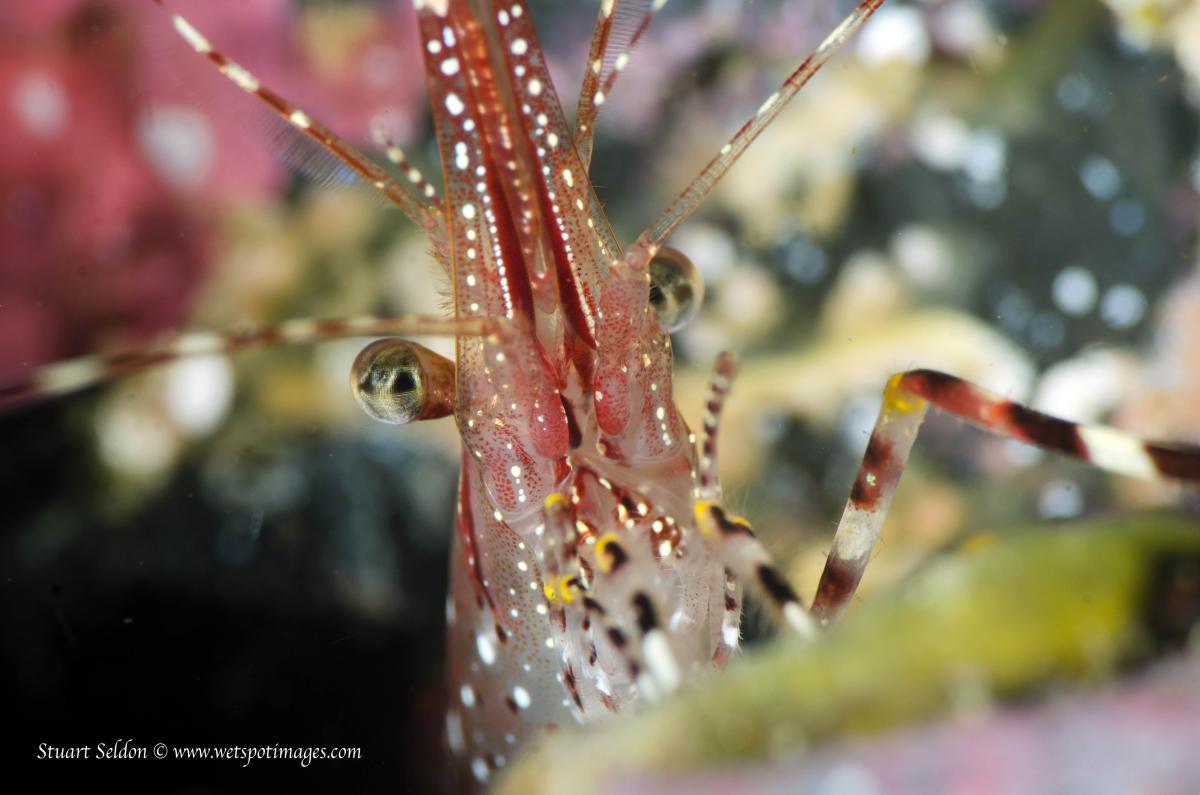
    This shot of a white-spot prawn in British Columbia was shot with the 105 (on my D7000) with the +5 diopter. The entire prawn was about 1.5" long, so this image takes in perhaps 1/2" top to bottom. It is not cropped. The distance from the prawn to the surface of the diopter was about 4" I think. Conveniently it was nighttime and I was using a red focus light. I should add that I was lying on a gravel bottom, resting on my elbows and really, really, really squeezing the shutter slowly. I love thoughtful critters that position them selves alongside an otherwise barren hunk of the ocean bottom...

    post-9633-0-01931200-1484575678_thumb.jpg

    Edited by Stoo
  10. What Stoo doesn't mention is that actually finding the critter, in the dark, in the viewfinder with a 105mm lens and +5 diopter is an art form all in itself..... :crazy:

  11. Superb shot Stoo!


    I think ill get used to what i have for the moment, but a 105 is certainly on the list of bits to buy!


    With the view finders, i see quite a lot of options available. Now I've never used one under water as my housing only allowed live view, but are the easy to use? Is it just like using one topside? shut one eye and look through it through your mask?

  12. Superb shot Stoo!


    I think ill get used to what i have for the moment, but a 105 is certainly on the list of bits to buy!


    With the view finders, i see quite a lot of options available. Now I've never used one under water as my housing only allowed live view, but are the easy to use? Is it just like using one topside? shut one eye and look through it through your mask?


    Without doubt adding a 45-degree, magnifying viewfinder to my Subal housing has been my best upgrade.


    I find it made a world of difference especially for macro. The image is larger so easier to compose. It is still optical, so no lag. The 45 degree angle is terrific for those low down shots (think nudis) when you cannot possibly get below the reef to get your eye behind the normal viewfinder. The only initially tricky technique is learning to pan and find the subject in open "blue". There is something about having to scan/pan at 45 degrees that is surprisingly tricky to start with. And the viewfinders are expensive!


    But, as I say, my best buy and I would not now go without one.

  13. I will look into one then.


    Do i need a sea and sea one to go with my housing, or are there othe "generic" ones that are a bit friendlier on the pocket?

  14. I agree with what Tim says in post (#13), however, I prefer to use a straight finder for most dives but prefer a 45 degree finder when snorkeling as they are easiest used while in a prone position. Similarly for a dedicated muck dive (just off the bottom).


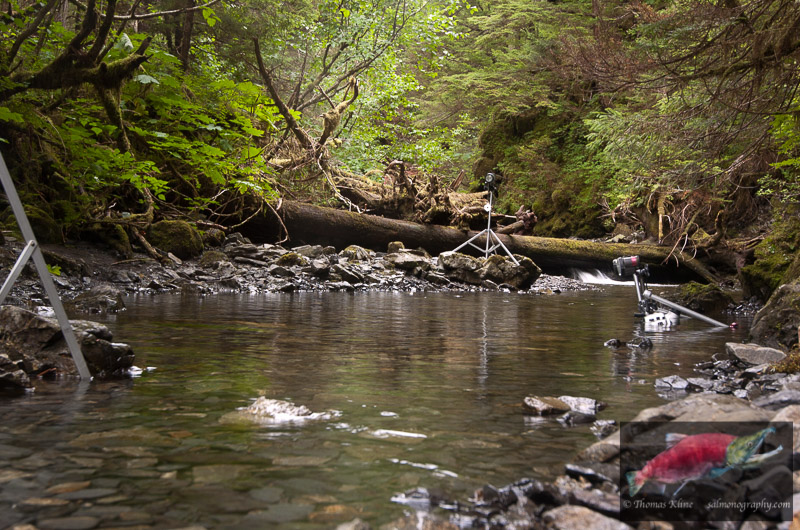
    I have used them (45) as well for very shallow pix such as semi-submerged at the edge of a stream but it can be tricky positioning the housing so the finder can be used (dry in my case). I dug up some pix from 2011 showing this. One housing has a 45 finder on it the other the standard finder. I used the 45 finder to better aim the camera and to make sure none of the focusing points were on a nearby rock. I was just able to lie behind the camera to look through it. Actual photography was done using remote control via the cables you see in one of the pix. I was on a wider "beach" just downstream of where the cameras were to do the shooting.


    post-3540-0-38862900-1484603931_thumb.jpgpost-3540-0-54018900-1484603945_thumb.jpg


    These finders are generally made to fit specific housings. Some such as the Seacam's are easily swapped out (think camera lenses). You will have to research your particular housing model.

    Edited by Tom_Kline
  15. Inon and Nauticam are 45 / straight viewfinders with options for different housings. Friend of mine has an inon on a sea&sea housing.


    Trick I use to get the viewfinder dry when doing split shots is blow on it.


    Verzonden vanaf mijn iPhone met Tapatalk

  16. I think for now the 45 viewfinder is out of my budget. For around the same price I could get a ttl converter and 2 new strobes which I think would be better to get first.

  17. What Stoo doesn't mention is that actually finding the critter, in the dark, in the viewfinder with a 105mm lens and +5 diopter is an art form all in itself..... :crazy:


    Haha... Ya, there is that. I use a 45° viewfinder (which I love, especially in situations like the one I described above) but I'd hate to tell you how many times I poked myself in the mask!


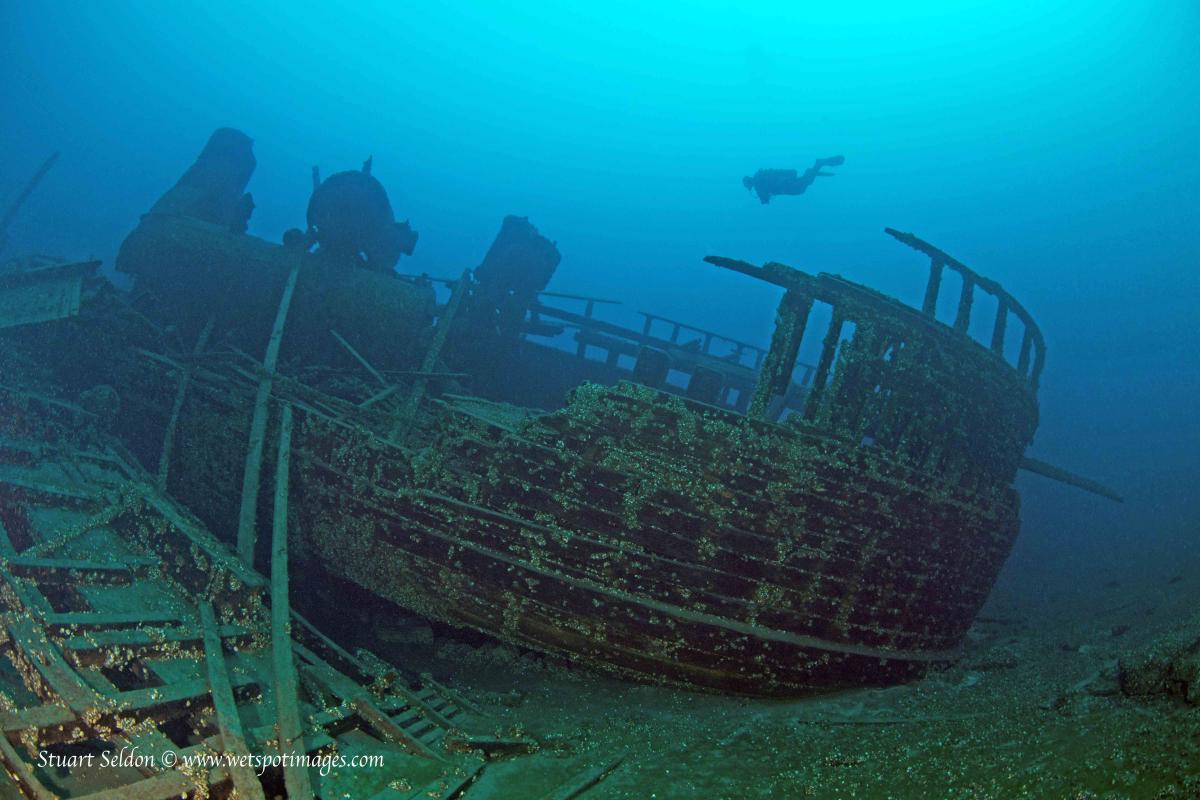
    I love shooting shipwrecks. All you have to do is point the camera in the general direction of the giant thing on the bottom of the lake, and push the little button. Piece o' cake...

    post-9633-0-27815200-1484790292_thumb.jpg

    Edited by Stoo
  18.  

    Without doubt adding a 45-degree, magnifying viewfinder to my Subal housing has been my best upgrade.


    ^^^ What he said.

  19. Hi Jason,


    In some sense, the answer to your question about "how do you get so close..." is answered in your first statement. The key to becoming a competent UW shooter starts with becoming an excellent diver. Getting close when you have your buoyancy control and trim "dialed". If you don't "getting close" may well result in damage to the reef as you crash, bash and kick your way up to your subject.


    As for lenses (I use D7000s) for macro, I use the 60 and 105. The 105 may not be the place to start as it's tricky on an FX sensor. The 60 is a workhorse.. decent macro as well as a nice "portrait" lens. There is also an 85 which is popular and may work for you as well.


    I sometimes use a +5 wet diopter. With this is my pocket, I have a tremendous "range". It can also be used on a 105 once you are more confident. This will get very close.


    In the mean time, get out there and dive your face off!


    I've been reading up on the 60, and the 105mm lenses, and one of the forums mentioned the focus distance, and that the 60mm was quite close (7 inches) and it may be harder to use flashes with the lense so close to the subject. Under water, this would be closer due to the port being infront of the lense as well.


    Do you have any issues with lighting, or is it straight forward due to the strobe arms and how much the under water strobes can be moved?

Account

Navigation

Search

Search

Configure browser push notifications

Chrome (Android)
  1. Tap the lock icon next to the address bar.
  2. Tap Permissions → Notifications.
  3. Adjust your preference.
Chrome (Desktop)
  1. Click the padlock icon in the address bar.
  2. Select Site settings.
  3. Find Notifications and adjust your preference.