FWIW, my understanding is the curvature of the 200 is the same as the 170, although obviously a bigger piece of glass. How much better the 200 is than the 170 is unknown to me. I was considering trying it out to see, but unless one pops up used, I guess 170 or 180 is the best I can do. I am unwilling to deal with the size of the 230. I am sure Phil has compared them and knows what he is talking about when he says the 200 is/was better.
- 38Posts
- 38Replies
Read-only discussion
Help with zen 170 dome port II
38 posts
-
-
I asked at backscatter and they confirmed that the the radius of curvature of the DP-200 dome is 110mm, the same as the DP-170 dome.
Therefore the better image quality of the DP-200 when compared to the DP-170 that Phil observed cannot be becauese the dome is bigger (just the angle of view is larger, maybe with the 8mm FE the image quality migth be better, but for the 7-14mm WA, angles are sufficient in both domes...)
=> It must be an incorrect extension that makes the difference...
For my DP-170-N120 the recommended extension for the Zuiko 7-14mm is 80mm (60mm adapter plus 20mm additional extension for the Zuiko 7-14mm; there is no build in extension in the DP-170-N120 dome).
What length is the N85-N120 adapter with focus knob, that you use, Phil?
(In addition we need to calculate the "extension" because of the larger sphere section to compare both situations).
Wolfgang
-
I don't know what Phil is using, but the extenders with handles (wheels) come in 47, 50 and 55mm, as far as I know, so I assume he is using one of those. I have no idea how about the significance of the larger glass or how to calculate that. Perhaps Phil will chime in.
-
The extension with zoom knob I showed in the photo above is as I said are for a Nauticam NA-A7rII housing. It is the n100 to N120 40mm port adapter for Sony housings.
With my Nauticam NA-EM1II housing and Olympus 7-14mm zoom I use the N85 to N120 60mm port adapter WITHOUT the zoom knob and the bolt on 10mm extension which threads to the port. This extension takes the place of the port mount and is on the port at all times. So that gives me 70mm's of extension with the ZEN Underwater 200 port.
The ZEN 170 port uses the same N85-N120 port adapter but with a 20mm extension.
Nauticam 180 port uses the N85 to N120 55mm port adapter without any additional extension because the port already has built-in extension because of the design of the port mount.
http://reefphoto.com/shop/index.php?main_page=product_info&cPath=80_148_149&products_id=7471
http://reefphoto.com/shop/index.php?main_page=product_info&cPath=80_148_150&products_id=4608
-
Thanks for the information Phil!
In the meantime I calculated the heigths of the DP-170 and DP-200 (h as described here: https://en.wikipedia.org/wiki/Spherical_cap).For the DP-170 h is 40,2mm and for the DP-200 it is 64,2mm (when using 110mm for r in both cases and 85mm (DP-170) and 100mm (DP-200) for a and solving the quadratic equation (a^2-2*r*h+h^2=0) for h; the actual heigth of the entire port is some mm more, because of the framing of the glass dome - but the framing contributes likely more or less to the same amount for both domes).
=> This means the DP-200 itself is approx. 24mm longer than the DP-170. Hence Phils configuration (70mm extension + 24mm extra from the domeport) has 14mm more "extension" when compared to the DP-170 configuration.
=>This COULD be the reason for the better corner sharpness.
If I would configure my camera now for the Zuiko 7-14mm, I would not go directly for a 34mm extension, instead of the recommended 20mm one. I would firstassess the layer where the entrance pupil is located on the lens (e.g. at 7mm) and only then plan the extenison accordingly and exactly.
According to the keeper of finances in the household (and this is not me) it will not happen before autumn this year, until I can start the 7-14mm project (And from what I read here and from the example photos I see here, I am not shure any longer that it is really worth to go for the extralarge, but optically superior, Zuiko - as the domeports seem to diminish image quality substantially to a level that is almost not worthy the MFT format). A correctly placed (and more leigthweigth) Panasonic 7-14mm may very well outperform a Zuiko that is placed just "roughly".
My current project is the custom made N85-N120 adapter to use the Zuiko 8mm FE with the DP-170-N120 port (I ordered it on May 15th - lets see how long it takes until I get it and how it will perform then).
Wolfgang
-
Here I have more information on the DP-170/DP-200 issue:
Under ideal conditions, i.e. when the entrance pupil is located at the center of the sphere, the maximum angle of view that is possible without vignetting, with the ports is (see: https://en.wikipedia.org/wiki/Spherical_cap):
DP-170: 101,2o
DP-200: 130,8o
The diagonal angle of view for the 7-14mm lens is 114o-64o (for the Zuiko 9-18mm it is 100o-62o).
This means that correct positioning of the 7-14mm in the DP-170 is not possible, the entrance pupil must be positioned closer to the dome than the center. This explains the shorter extension with the DP-170 dome in comparison to the D-200, where correct positioning, and hence longer extension, is possible.
=> and this very likely explains the better corner sharpness with the DP-200.
=> For the DP-170 ideal positioning is only possible for the Zuiko 9-18mm WA lens. For the 7-14mm lenses (at least up to 9mm), positioning is always a compromise with the DP-170 in order to avoid vignetting!
But this is all theory only, maybe there are photographers out that can report from practice...
Wolfgang
-
I don't know about that. If it were an angle of view issue, wouldn't we then have sharper corners by zooming in a bit? Also why would the corners improve by stopping down? I have no technical knowledge on this but I feel it makes more sense that the issue is focusing distance and depth of field related to the fact we are focusing on a virtual image. But, as I said, I have no technical knowledge about these things. I just like to shoot underwater photos.
-
Hi Draq,
Of course, it is just focusing at a virtual image that is produced by the dome - similar to the image produced by a magnifying glass, but the image is scaled down instead of magnified. The larger the radius of the dome-sphaere is, the further away and the larger the image, hence better depth of field and corner sharpness with larger curvatures (r=110mm for both the DP-170 and DP-200, so from this point of view there should not be a difference). Stopping down aperture improves depth of field in all cases, therefore the corner sharpness also becomes better...
In order to provide best results (corner sharpness, optical abberations produced by the dome, distortion of straigth lines) the "entrance pupil" of the lens should be located at the center of curvature of the sphere. See this amazing Website here that lively illustrates the problems of positioning of the lens without any calculations and theory required: https://oceanity.com.au/tools/dome-port-positioning/
And here comes the angle of view into the play: It is impossible to position a 7mm WA lens (with a diagonal angle of view of 114o) correctly in the DP-170 dome, since the sphaere section gives then an angle of view of 101o only and there will be a black vignetting on the image then (framing of the dome and shades).
The only solution to this problem is to position the "entrance pupil" closer to the dome and away form the center of curvature (try this out on the Website and you see immediately what happens). This results in loss of image quality, including corner sharpness.
The DP-200 dome represents a larger section of the same sphaere, with an angle of view of 131o, hence correct positioning of a 7mm WA is possible with this dome (and this is likely the explanation for the better results that Phil described).
Changing focal length will not result in improvement of image quality as the "entrance pupil" is still incorrectly positioned (the location of the "entrance pupil" changes, however, with zooming). If correctly positioned, the vignetting will disappear at focal lengths >9mm, this is the effect of zooming.
=> The question that remains and can only be answered by practical trial is: What lens/DP-170 combination does result in better overall image quality? The optically superior Zuiko 7-14mm (or also Panasonic 7-14mm) that is incorrectly positioned, or the (optically not as good) Zuiko 9-18mm that is correctly positioned (comparison at 9mm focal length of course)?
A third (only theoretical) combination would be to position the 7-14mm correctly, but then at focal lengths <9mm the combination produces vignetting.
I hope I did not bore you too much and apologize in that case. I prefer to go diving and make photos, but I try to figure out as good as I can what the situation is, before I purchase (The companies seem not to be very helpful in this respect, they want us to buy as much as possible - therefore I like this forum here where people can exchange their thougths and, much more important, report on practical experience).
Wolfgang

-
So simplistically if the AOV difference between 170mm and 200mm is 30 degrees without distorsion, would that give the Nauticam 180mm port also with the same r=110mm about a 111+ AOV without distorsion assuming proper placement? Or very limited corner distortion at the 7mm end of the Olympus lens.
-
@Phil:
I did not know the radius of the Nauticam port is 110mm.
Yes, AOV would be109,8o then, meaning that correct positioning is still not possible at 7mm, but better situation as the Zen DP-170.
=> No idea how much difference in IQ between the three domes in the real world, only practical examples can show this...
Wolfgang
-
The Nauticam 180mm dome is the 110mm radius.
I am not a physics guy so I will not attempt to argue Wolfgang's calculations they seem quite the same as those used back in the film days. I have however been told by those developing the Zen and Nauticam dome systems and extensions lengths that differences exist between DSLR cameras with a mirror box and mirrorless cameras.
An example would be like performance between say an 18mm lens on a full frame Sony A7R II with a Nauticam 200mm dome port and an 18mm lens on a full frame Nik/Can with a Nauticam 230mm (greater radius) port using the same formula to calculate the extension length. Not sure why this happens but it seems to.
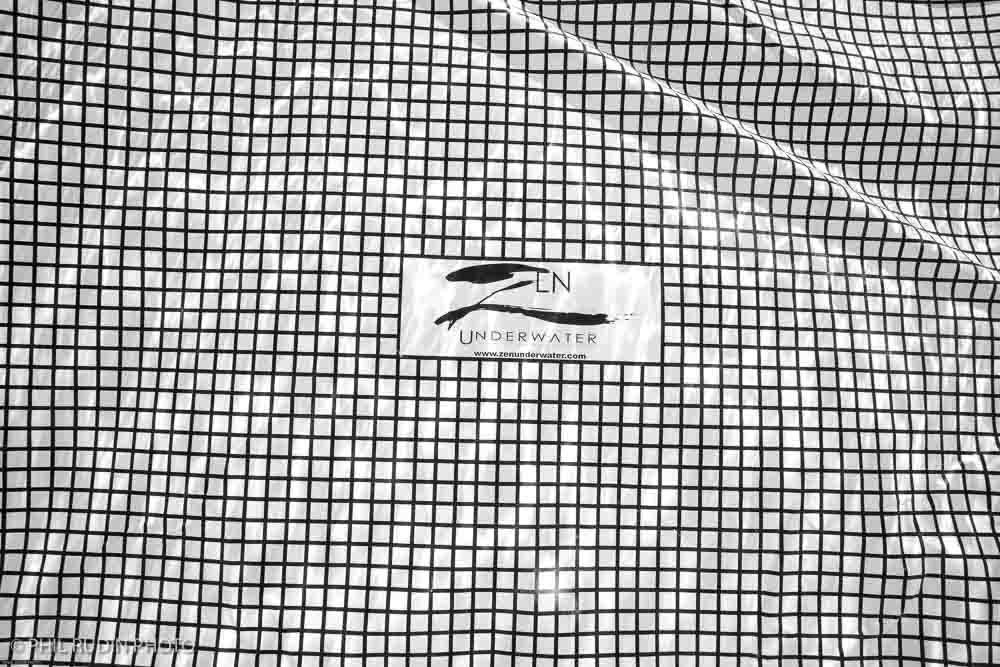
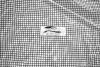
I have attached another way of testing, this is the Zen 200mm port, Nauticam NA-A7RII housing, Sony A7R II, Zeiss 18mm F/2.8 @ around F/8 at two feet. Try doing this all day with several ports and extensions. The chart is mostly flat which does not at all represent how you would be shooting underwater.

-
Phil,
Geometry and laws of linear optics do'nt change in time, no matter what system/format is used. My calculations are just simple and naive assessments of the situation regarding correct placement of the entrance pupil.
I have no means here to judge how incorrect placement (that obviously is the case for 7mm WA in the DP-170 and also the Nauticam 180mm domes) affects the image quality:
A.: To a neglectibel amount?
B.: Recognizable but still o.k.?
C.: Inaccteptably?
In case it is possible I would be very grateful if you could show images (like the ones of your last posting) obtained with the Zen DP-170 dome with the 7-14mm WA lenses from Panasonic and Olympus (that are both incorrectly placed) and with the Olympus 9-18mm, that can be correctly placed (extensions as recommended by Zen).
Another great comparison would be the Zuiko 7-14mm in the DP-170, DP-200 and the Nauticam 180mm domes.
Wolfgang
-
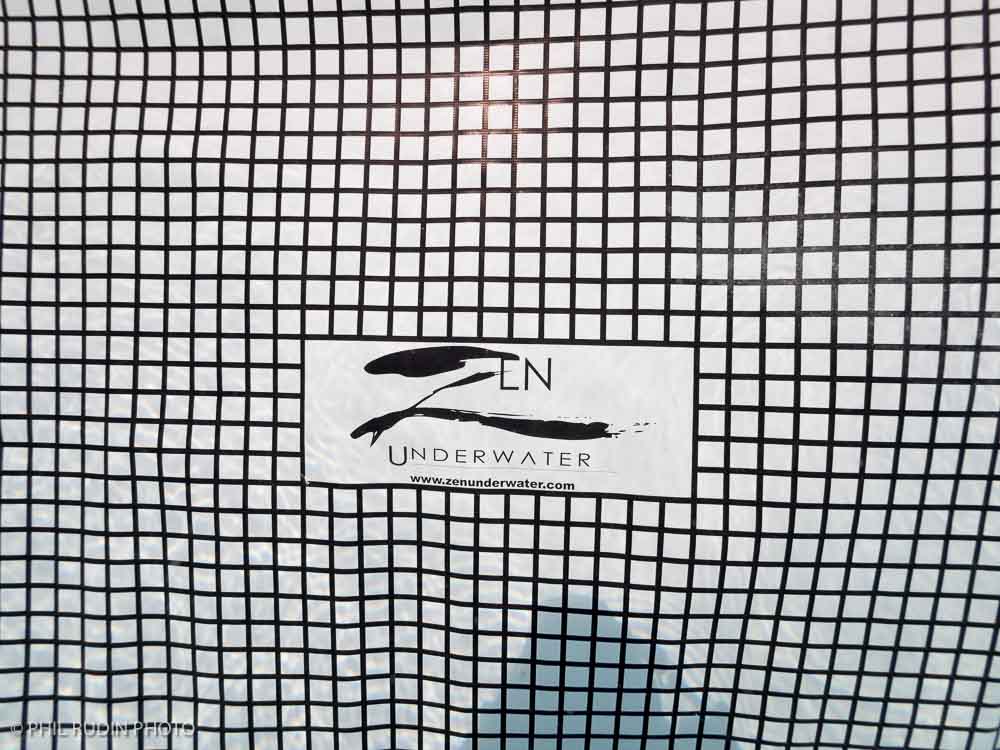
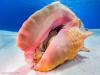
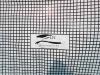
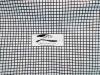
These charts are to assist ZEN Underwater in evaluating some port and extension combinations. Most are sent on to Zen and not held on my personal computer so I only have these two examples of the ZEN 170mm port with 20mm and 30mm extensions. I am only one source for this information and Zen does not base their final recommendations on my charts alone.
I am far more interested in how the lens/dome combo works in the real world and what images sell regardless of corner sharpness.
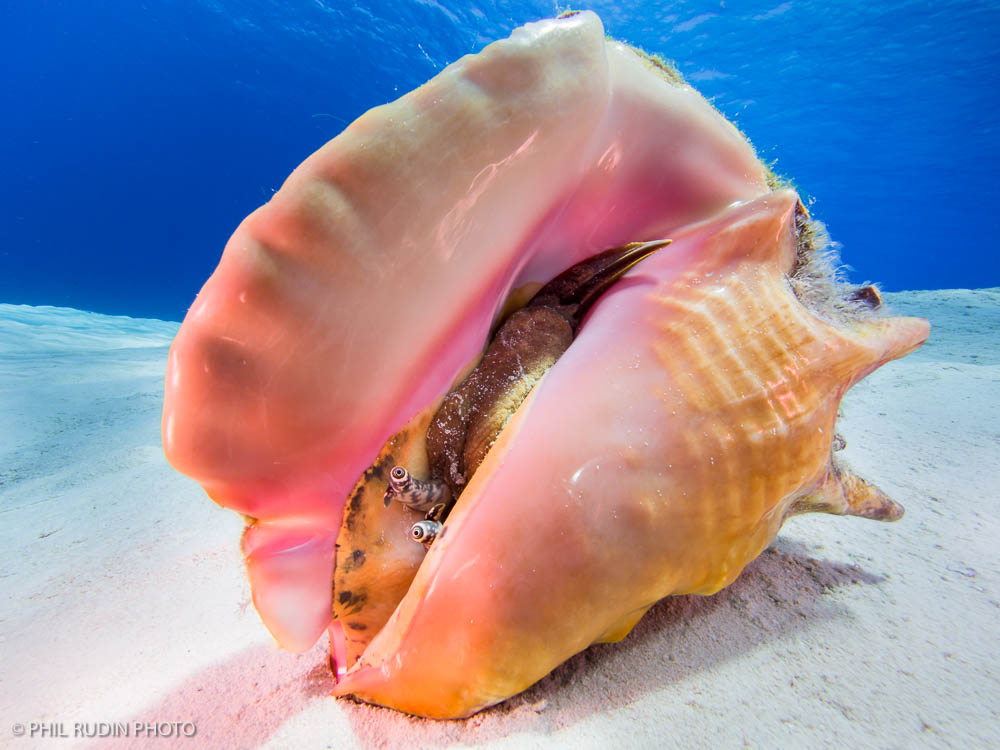
All photos are with the Panasonic 7-14mm zoom in a Nauticam NA-EM1 housing. with the listed extensions, first photo (310213) 7mm at F/7.1 and 30mm extension, second photo ( 310103) 7mm at F/5.6 with 20mm extension, Both taken at two feet, Conch 7mm with 20mm extension at F/13, apex. three inches to subject.
-
Thank you Phil for the interesting fotos (I would rate the second photo with "B" - you (and others) agree?)!
(photo #3 is out of question - this is the art of Phil)
I have two additional questions:
What port version was used (the DP-170-N85, that also has a build in 30mm extension plus the 20mm extra, or the DP-170-N120 (that I have) just with 20mm extension)?
Do you have comparison photos with the Zuiko 9-18mm (I would be contended with the 9mm in case IQ is even better than photo #2)?
And a question to Draq: Do you think the Zuiko 7-14mm would perform better in the DP-170 than Phils Photo#2?
A thank all contributors for their inputs and apologize at Jetor for seizing the tread

Wolfgang
-
Not quite sure what you are asking. Both chart photos were taken with the type I ZEN 170mm port, one with a N85 20mm extension and one with an N85 30mm extension. I also had the type II N85 170mm port for testing long ago when it first arrived but stuck with the Type I port so I could use it with the 12-40, 12mm, papa 8mm fisheye and more. I have never own the 9-18mm zoom and my only use was for
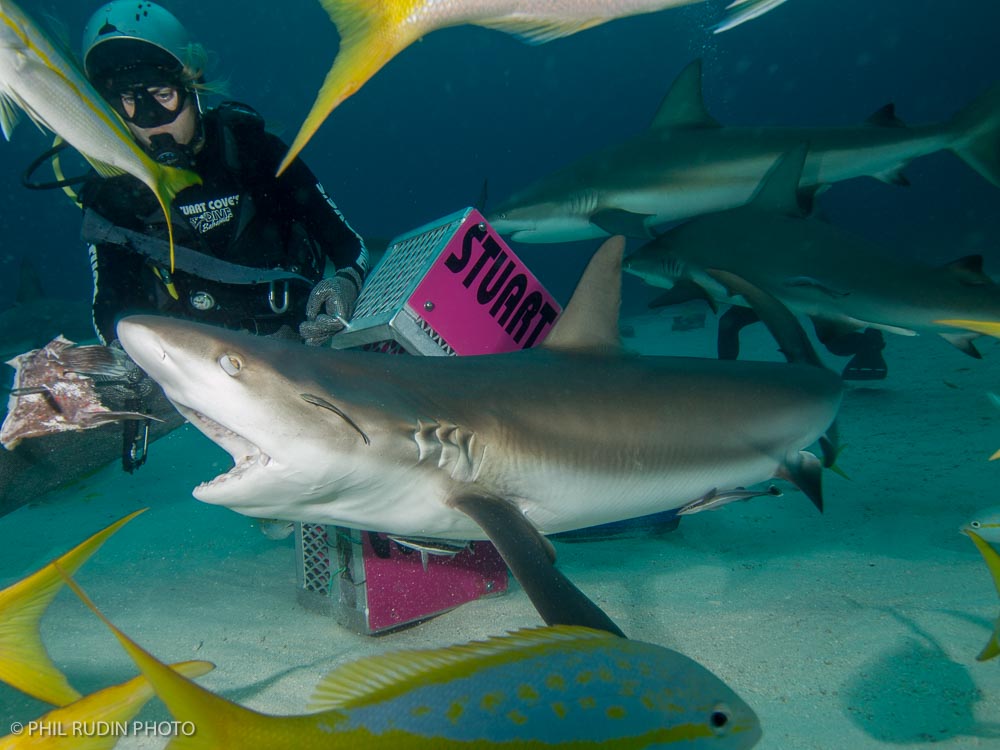
My only use of the M 9-18mm zoom was for a review of Olympus E-PL1 in Olympus housing with ZEN 100mm port at for sharks at Stuart Coves and a fluorescence review using Ikelite EM-5 II housing, eight inch dome and fluor equipment. I used the 9-18 because I had a yellow barrier filter with the same threads as the lens.



-
Wolfgang:
It can be very difficult to compare lenses. I think the performance of the Panasonic and the Olympus are very close in general. To me the biggest difference (I have both lenses) is that if using an Olympus body, there is less of an issue with color fringing with he Olympus lens. A lot of that can be removed in post, but not all, and with the Panasonic lens I find that on certain subjects I end up with off-color fringing that I don't like. The Olympus focuses closer so that might also help with corner sharpness in some domes at some apertures. Overall, I prefer the Olympus lens on my Olympus camera. Unfortunately, I don't live near the sea, so I have to travel to dive and each dive is precious enough to me that I don't usually want to spend much time doing tests and comparisons and I have to be somewhat selective in what gear I take with me. Actually I only have limited access to a pool where I could set up gear ant compare ports and lenses.
I look to Phil and others for that information.
I try not to be overly concerned with charts because while they are flat, my underwater subjects rarely are, so corner sharpness is significantly complicated by variations in distance between the photo subject and the background. This tends to increase as the lens becomes wider. When using a 7-10mm lens in M43, it is almost inevitable that we are trying to get things sharp that are several feet different in distance. The conch is something of an exception to this as everything else is just sand or water. We also need to keep in mind that there are sometimes significant variations in the "quality" of different samples of the same lens, especially with zooms.
I seem to be always searching for the corner sharpness unicorn even though I know objectively that with a rectilinear lens I am unlikely to get the corner sharpness I would like. Perhaps Nauticam will make an N200-N85 adapter and Phil can try out the 250mm dome?
If sharp corners are really important in any particular situation, I would look to one of the 8mm FE lenses in either a 100 or 140 dome, or compromise on angle of view and use the 12-40 lens or go to a different system where I could use one of the fisheye zooms.
FWIW, sometime in the next month or two the Panasonic 8-18 lens will be available and that lens has a removable shade and a filter ring. It is possible that this lens, perhaps with a diopter, could offer better corner sharpness than the 7-14 lenses out now, but only time will tell. It should be able to work with an appropriate extension in the 170 and 180 domes that are available now, I would think.
-
So, objectively, which is the better port combo for the Panasonic 7-14mm? I was planning on buying a Zen 170mm version I since I could also use the 8mm 1.8 in the same dome sans-extension. I have a few months to make a decision but I'll need it in September.
-
JMartel:
I am not sure if your question was addressed to anyone in particular. I don't really feel qualified to say which port is better than another objectively. If it is important to you to have a single port for both lenses then you have only one choice. If you are okay with multiple ports then I would consider getting a 100 or 140 for the 8mm and a 170 / 180 for the 7-14. For the Panasonic lens you can get a N85 dome and save some money on adapters. The Zen DP-170 N85 requires a 30mm extension while the Zen DP-170 N85II has the extension built in so you don't need to pay extra for the extension or mess with it.
On the other hand, the Nauticam 180 dome seems the over-all most flexible of the similarly sized domes in the sense that it "works" for a number of lenses and Nauticam will probably be quick to offer a suitable extender if a new lens appears. It is my understanding that if one ever needs to get the glass replaced in one of these, it is a few hundred dollars cheaper to do so in the Zen dome than the Nauticam.
I will defer to others to offer opinions on whether there is a difference between the Zen 170 and Nauticam 180 domes form a performance perspective. Some previous posts suggest that the Nauticam might offer better corner sharpness for rectilinear lenses. I don't know.