All very good advice, and concisely summarized. To recap:
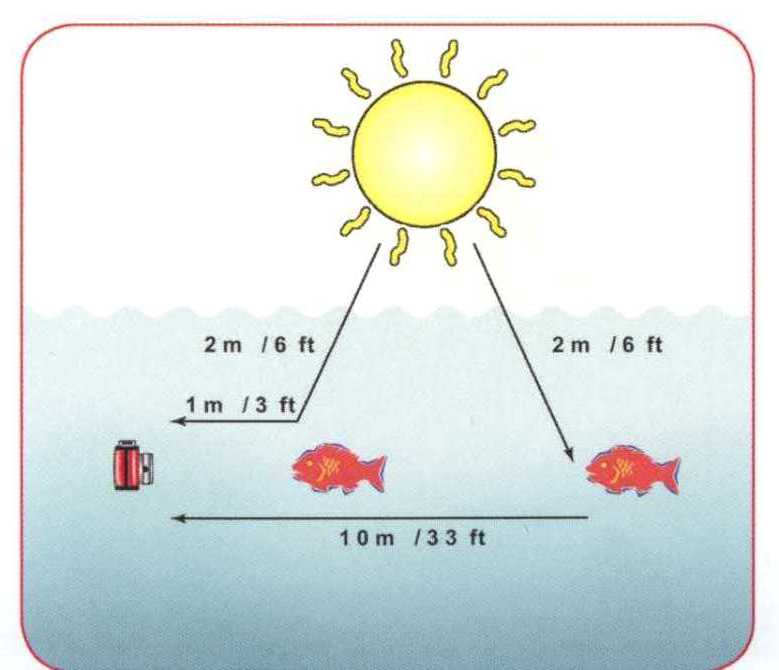
1. Get close to your subject, and then get closer. Particles in the water between you and the subject scatter light, reducing contrast, resolution and preferentially attenuate shorter wavelenghts of light (i.e. your reds, oranges and yellows).
2. Use custom white balance and/or red filters to rebalance the color spectrum in SHALLOW water (10m or less ideally)
3. Use artificial lights (strobes, video lights) to bring back warm colors and create subject/background separation, especially in deeper waters where white balance alone is insufficient
4. Shoot subjects from eye-level or below (in general) to increase the viewer's connection with the subject and help simplify the background
5. Approach subjects slowly and methodically. Don't chase -- everything under water can move much faster than you can if it has a mind to escape you, and no-one cares about your shots of fish tails or a turtle's ass.
Definitely need to find a less echo-y room though to record the audio in