Skip to content

Photography Gear and Technique / Archived topic

Smaller alternative to Nikon FX (m4/3)

Started by horvendile ·

  • 33Posts
  • 33Replies

Read-only discussion

Smaller alternative to Nikon FX (m4/3)

33 posts
  1. Hi!

    I've been boasting that after asking a lot of questions here I now know what gear I want. Much to my surprise however, the gear turns out to be both costly and heavy. My main alternative is still D850 + Nauticam housing + 2 x YS-D2 + WACP, but I'd like to ask a couple of question about a less uncompromising approach also.


    Suppose I went with an Olympus E-M1 Mk II. In a Nauticam housing. With two YS-D2 strobes. And the WWL-1 (probably using a 14-42 mm lens).


    * Would that net me basically the same as the D850 alternative, except I'm losing two stops of dynamic range because of the smaller sensor? But otherwise - about the same zoom range and close focus wide angle possibilities? About the same optical quality?


    * Is it correctly understood that I can use TTL with the YS-D2 strobes without adding a separate TTL converter?


    * A bit tangential: is there a universally agreed-upon standard macro lens choice for m4/3? 30 or 60 mm? (Or even 45?) I'd guess 30 mm has an easier to use field of view, but 60 mm provides better working distance.

  2. Well.. yes and no:


    1. Zoom range would actually be better with the WWL-1 and a 14-42mm kit lens: 10mm-30mm equivalent vs 10mm-25mm equivalent with the WACP + 28-70 lens. Both can focus on an object touching the front of the glass.


    2. You'd lose two stops of dynamic range, but more importantly, you'd lose significant resolution from the higher megapixel sensor and better optics. Also you'd lose color depth. I've shot on a GH4, GH5, D800 and A7RII underwater. For stills, the files from the high megapixel full-frame cameras definitely are nicer. But the GH4/GH5 shots are good enough if you're not a pixel peeper or a snob. Odds are your skills are going to hold you back much more so than the camera.


    3. The Olympus E-M1 II comes with an included accessory flash that fits inside the Nauticam housing and can do TTL optical TTL with the YS-D2s using standard optical cables.


    4. Macro choice depends on your subject, so no, there's no universal choice. All three can do 2:1 magnification (in full frame terms), but with varying working distances. The 30mm is more versatile if you want to also do medium fish portraits, while the 60mm is probably the go-to for super macro subjects but otherwise is too tight for most subjects in my experience. The 45 sits somewhere in the middle. You could potentially use all three in the same port with the appropriate extension rings, which gives you great versatility. But I suppose the Nikon also gives you a 60mm and 105mm option.


    Finally, if you get the YS-D2s, get the Japanese version, the YS-D2J. Too many issues with the original Chinese manufactured ones to recommend them. You should also consider the INON Z330s.

  3. The D850 dynamic range is 14.8 Ev compared to 12.8Ev at base ISO, but you probably rarely use base ISO and on the D850 that's ISO64 while it's 200 for the EM-1. If you come up around 200 ISO it reduces to a 1 Ev advantage. I've don't find I'm dynamic range limited that often with UW work, if anything the DR recorded is narrow and requires stretching quite often. Here's a comparison of the D850 to EM-1 MkII DR: https://www.dxomark.com/Cameras/Compare/Side-by-side/Nikon-D850-versus-Olympus-OM-D-E-M1-Mark-II___1177_1136


    The other thing to remember is that m43 can shoot wider open and still get the same depth of field so it claws back the noise and DR advantage somewhat as you can often use lower ISO if your aperture is wider. The full frame retains an advantage in more pixels and more total light gathered (even if light per unit area remains the same) as long as you don't crop. Typically you need to stop down two stops to achieve the same results on FF as you do on m43 for DOF and from that sharp corners. I shoot the EM-1 MkII and I typically shoot my fisheye and WA shots at f8.


    As to what that means with a WWL & 14-42 vs a WACP and 28-70 for Nikon I'm not sure. You still have the same DOF advantage, but the WWL allows you to shoot more wide open and you could certainly use f4??- f5.6 with the 14-42 if needed and it gave enough DOF.


    On macro lenses it's a trade off. I have both the 60 and the 30. The 60 is good for small stuff, but problematic particularly in temperate water with plenty of particles if you are shooting things bigger than say 30-40mm long. One concern with particles is the camera can lock onto them with distant objects, it you are shooting in close, it's normally not an issue. The 30mm (I have the Panasonic 30mm) is good for larger stuff up a Weedy sea dragon at 300mm long but really is only practical down to about half life size as the subject needs to be too close to the lens beyond that to allow easy lighting. The 45mm Pany Leica is sharp but reputed to slow to focus, though I've not tried it out. You could get both and buy the N45 port for the 30mm and add the 20mm extension tube to use the 60mm


    This is with the 60mm, it's about 30mm long:

    Ceratosoma_amonenum14.jpg


    And this is with the 30mm, about 200mm long:

    SenatorWrasse3.jpg


    Both images are temperate waters around Sydney.

  4. Short answer for you


    Macro work: MFT will be fine resolution ISO won't matter too much and the rig will be easy to handle and level of magnification actually better

    Wide angle work: resolution difference will be there

    Anything above ISO 800 (that most times you can avoid) there will be a lot of difference in noise colors and resolution. Noise you can fix colours resolution not so much or not at all

    Ultimately if you don't print and don't look at your images on very large screens MFT will be fine


    In terms of your final question the best focal range is actually the 45mm however it costs a lot is not as sharp as the 30 or 60 mm and the port will be dedicated


    So what you end up doing is to get the 60mm and then use a zoom lens with diopters for not so small stuff and portrait


    Generally for mft a 14-42 zoom with wet lenses covers a lot of ground then you can get a 60mm and fisheye if you do CFWA this covers everything with minimum number of ports (2 ports and 1 extension) and glass. Clearly wet lenses costs are an addition and a supplement to less port and glass but more flexible

  5. Thanks for the replies!


    Dynamic range

    I spend a lot of quality time both at DxOMark and photonstophotos, so I'm pretty clear on the basics. I also acknowledge that when the available light is a limiting factor, the need to stop down less with m4/3 than with FF may make up for the difference in sensor area. However, when I'm shooting in eg the Red Sea at daytime I'm often at base ISO with my current rig (admittedly with lower f/# than I'm likely to use with an ILC). Shooting scenes with the surface visible is also one of the scenarios where I feel limited by dynamic range, trying to capture both a relatively dark for- or middle ground and having the bright surface in the background. At least for this, I suspect FF will be markedly better than m4/3.

    If that makes it worth the extra expense and weight for FF, well, that's another question.


    Resolution

    I was thinking that maybe 46 MP is seldom realized under water. The basis is partly that if the WACP with an old 28-70 för Nikon beats the other wide angle solutions, well, then that's an indication that resolution is often so-so. Which wouldn't be strange, shooting through water. Of course there will still be 46 million pixels in the image file, but how often will I be able to resolve such detail? Maybe the difference between 20 and 46 MP isn't so big in practice? This is pure speculation however.


    Macro could be another thing, with less water between subject and lens. But FF macro often seems to be stopped down to f/22 or so, where 46 MP of detail will probably not be resolved anyway because of diffraction.


    So, this ends up as a question: will I typically see much real resolution difference between 20 and 46 MP? Assuming correct handling of the gear.

    Well, two of you have already said I will see a practical resolution difference. But I seem to be asking anyway! :-)

  6. Thanks for the replies!


    Dynamic range

    I spend a lot of quality time both at DxOMark and photonstophotos, so I'm pretty clear on the basics. I also acknowledge that when the available light is a limiting factor, the need to stop down less with m4/3 than with FF may make up for the difference in sensor area. However, when I'm shooting in eg the Red Sea at daytime I'm often at base ISO with my current rig (admittedly with lower f/# than I'm likely to use with an ILC). Shooting scenes with the surface visible is also one of the scenarios where I feel limited by dynamic range, trying to capture both a relatively dark for- or middle ground and having the bright surface in the background. At least for this, I suspect FF will be markedly better than m4/3.


    If that makes it worth the extra expense and weight for FF, well, that's another question.


    Resolution

    I was thinking that maybe 46 MP is seldom realized under water. The basis is partly that if the WACP with an old 28-70 för Nikon beats the other wide angle solutions, well, then that's an indication that resolution is often so-so. Which wouldn't be strange, shooting through water. Of course there will still be 46 million pixels in the image file, but how often will I be able to resolve such detail? Maybe the difference between 20 and 46 MP isn't so big in practice? This is pure speculation however.


    Macro could be another thing, with less water between subject and lens. But FF macro often seems to be stopped down to f/22 or so, where 46 MP of detail will probably not be resolved anyway because of diffraction.


    So, this ends up as a question: will I typically see much real resolution difference between 20 and 46 MP? Assuming correct handling of the gear.

    Well, two of you have already said I will see a practical resolution difference. But I seem to be asking anyway! :-)


    Resolution you will see a difference between GH5 OMD IMKII and A7 or D850 without any doubt.


    Dynamic range etc even in stretched scenarios not so much simply because neither screen or print can resolve the DR of the camera so once you go Jpeg all the DR is gone


    Noise: you will see a substantial difference if for any reason you need to shoot above ISO 800

  7. Considering strobes - I confess I'm not very conversant with the different makes. Are there any large differences between the Inon Z330 and the S&S YS-D2J? They seem to cost about the same.


    Dynamic range etc even in stretched scenarios not so much simply because neither screen or print can resolve the DR of the camera so once you go Jpeg all the DR is gone


    Yeah but the idea is of course to take the route via Raw files, to lift shadows and save highlights. This must conceivably be the same as on land, where DR is absolutely a thing.

  8. Considering strobes - I confess I'm not very conversant with the different makes. Are there any large differences between the Inon Z330 and the S&S YS-D2J? They seem to cost about the same.


    Yeah but the idea is of course to take the route via Raw files, to lift shadows and save highlights. This must conceivably be the same as on land, where DR is absolutely a thing.


    RAW files handling with a full frame gives more headroom but you can't lift what is not there and does not fit a jpeg regardless a JPEG does not get over 12 Ev


    Color depth as well will clip with an 8 bit image while resolution will be apparent if you pixel peep


    Strobe wise it is down to personal preference I had Sea and Sea then I switched to Inon that I consider superior and has better customer service but this may be my personal choice

    For sure inon work with any camera whilst sea and sea have occasional TTL issues if you use TTL and you should not lol

  9. Horvendile, Regarding the Nauticam WACP with the 28-70mm zoom lens v. a wide zoom with a quality dome port the number of megapixels or resolution has nothing to do with the image quality issue. I know that it is hard for me to wrap my head around the fact that 14-42 kit lens or 28 to 70 kit lens with the WACP or WWL-1 can provide better image quality than the outstanding Olympus 7-14 or a Nikon or Sony lens like the 16-35 with a dome port but that is the fact.


    You may want to read alex Mustards rather complex article in uwpmag.com, back issue #99. This is a free PDF download which can be found in the back issues located at the top of the home page. In the article is a graph which compares the 14-42 power zoom and Nauticam WWL-1 to the Olympus 7-14 with a dome port. The better image quality numbers are evident for the WWL-1. If the WWL-1 is used with the Sony A7R III 42MP camera and Sony FE 28mm F/2 lens the image quality is even more stunning.


    I have used 4/3 cameras since the Olympus E-1 5MP DSLR and Sony cameras from 24 to 42MP underwater for years. I can guarantee the image quality differences in RAW files for full frame are large compared to 4/3 and M43.


    If your images are only going to the internet you could be using a 5MP camera with great results as long as you have the correct lens set for U/W photography. In the same issue #99 of uwpmag.com is my review of the Olympus EM1 II with the Olympus housing. You can see a very large crop in that article of a dog tag using the Olympus 7-14mm zoom in the Olympus 170mm dome port and it looks quite sharp. My personal equipment I used a ZEN 200mm port with the Olympus 7-14 for better corner sharpness. I use a ZEN 230mm port with the Sony FE 12-24 zoom which is the best ultra wide (weitwinkel) zoom I have used and it is not as good as the WAPC with the Sony 28-70mm kit lens on full frame. High MP cameras reveal the flaws in mediocre lenses.

  10. If you are concerned at all about weight and travelling then m43 is certainly an advantage. This is my full kit packed into a carry on size backpack:


    IMG_2948.jpg


    Top row L-R Zen 100mm dome for 8mm, Panasonic 8mm fisheye, Oly 60mm macro, Oly 12-40, Pany 7-14. Middle row: n65 macro port, 2 x Z-240, Zen 170mm dome. Bottom row, NA-EM1 housing - camera is in housing, spare batteries etc. The backpack is a Think Tank Street walker Hard drive, carry on legal size and has a laptop pouch under. I even fitted it into the overhead locker on a Garuda CRJ commuter jet in Indonesia. Your proposed m43 kit would fit with room to spare for a change of underwear and other essentials - weight is probably around 10kg. Certainly can't get close to that with a full frame kit except perhaps for a pure macro kit. To me m43 was a sweet spot on cost/size/performance.

  11. You may want to read alex Mustards rather complex article in uwpmag.com, back issue #99. This is a free PDF download which can be found in the back issues located at the top of the home page. In the article is a graph which compares the 14-42 power zoom and Nauticam WWL-1 to the Olympus 7-14 with a dome port.

    Oh, I've done that already. Very informative in several ways.


    Ah well it seems I may have to give up the notion that maybe the extra resolution won't be visible. Which is mostly good, of course.


    And thanks ChrisRoss for the packing example. I'm assuming that if I go for full frame, much of the equipment will have to go into the checked luggage. Not least if I spring for the WACP which is just too heavy for carry-on.

  12. Yet another savings in weight for m43, full frame uses the 3.9 kg WACP, on m43 you would use the 1.24kg WWL-1 with the tiny 14-42 lens. WWL lens is comparable in weight to my N170 dome which is 1.02 kg but smaller at only 130mm diameter. So I would think would still be fine in a backpack like I showed.


    You could try various means of carrying on your full frame camera gear like large roller bags, but if they weigh it you would have trouble for many airlines.

  13. Regarding the projected Sea&Sea YS-D2 flashes, I cannot recommend them:


    My wife and me have together 3 such flashes, the oldest since 3 years:


    1. One broke at the beginning after few dives - complete loss (flash tube burned out; replaced under warranty)

    2. Another one cannot switched on any more - complete loss (no warranty since the Netherland based European service station says it was a water inbrake into the battery compartment- although no sign of water is noticeable - just an excuse so they do not need to replace under warranty).

    3. Third one has a burning spot on the front, but still works.


    I switched now to two Inon Z330. I can not tell yet how the experience will be in long term use (only 2 weeks of diving with one of them), but if you hold the Z330 in your hands and subjectively compare to YS-D2 the quality of workmanship looks to me much more solid and better (at the same price). Example is the glass dome of Z330 compared to the (melting and burning) plastic front of the YS-D2. Maybe the Japanes YS-D2 version is better manufactured with respect to electronics (there also have been issues reported by others), but the flastube burning is a problem because of insufficient heat dissipation that cannot be overcome by a new, now yellow, finish...


    An alternative may be the Retra, in case they can manage to produce them (at the moment they are not available).


    Wolfgang

    Edited by Architeuthis
  14. Regarding the camera, I have EM1II with Nauticam housing and the image quality is very good. When I look, however, at competition winning photos (most of them made with Nikon FF), there is a difference:

    => Maybe I have the wrong camera and need a bigger sensor? :lol2: :lol2: :lol2:


    But now seriously: While I have studied many reviews and comparisons over and under water and know very well the technical details and differences between the different sensors, I would very much appreciate example photos from UW-photographers that have experience with both systems (like Dreifish and Phil, for example), where they show similar photos made with either system and explain and demonstrate what the MFT image is missing and only can be done with FF. Would be really enlightening for me (and probably also to the tread opener and many others). I really do not know and would be very eager to see this (hopefully the difference is not so big that I would switch immediately to FF, after burning many thousands of Euros for fancy MFT gear :o )...


    Wolfgang

    Edited by Architeuthis
  15. Hi Wolfgang, First, you can find plenty of comparisons of image quality on sites like DPReview and image sensor quality at DXOMark so no reason to reinvent the wheel. I agree that the EM1 II has excellent image quality, that being said quality for cameras like Nikon-850, Z-7 and Sony A7R III would then be superb, stupendous, orgasmic, etc.


    The difference is a result of the sensor size, the $2000.00 EM1 II has a 20.4MP sensor with a max resolution of 5184 X 3888 with a bit depth of 12. By comparison the $2000.00 Sony A7 III full frame camera has a 24.2MP sensor max res. of 6000 x 4000 and a bit depth of 14. Bit depth is a measure of the amount of information that can be registered by a computer, binary code 1's and 0's. A bit depth of 12 is more than 68 billion while 14 bit is over 4 trillion. This is simple physics, the more space you have on the sensor the larger the photo sites and the greater the bit depth.


    Nikon Z7 at $3400.00 has a 45.7MP full frame sensor with max res of 8256 X 5504 while the $3200.00 Sony A7R III has a 42.4MP sensor with a max res of 7952 X 5304 both are 14 bit sensors. The reason this makes a difference too photographers is that larger max res. allows for larger prints and a greater amount of cropping along with better overall image quality. Viewed on the internet large numbers of MP's are just overkill.


    One of the first things I tell students in my workshops regarding equipment is that you should be making equipment choices based on a complete system approach, not based on the latest camera body or numbers of MP's. The other is that the system should fit each persons needs and budget. Someone who makes twenty dives a year on a vacationing posts the images to Facebook won't need the level of equipment someone doing over 100 dives a year and making large prints would need.


    Everything in U/w photography is a tradeoff, small body, lens and housing size V. better image quality, larger lenses, DOF, expense and more.


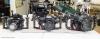
    The argument that full frame equipment is so much bigger that it can't be contained in carryon luggage is a bit of a myth. I carry all of my Sony A7R III equipment onto the plane with little trouble or over weight issues. The photo compares the size differences between N85 EM1 II housing, Sony N100 housing and N120 DSLR housing, in the background is a Hasselblad medium formate housing which present issues.



    post-2618-0-24003400-1553190299_thumb.jpg

  16. The argument that full frame equipment is so much bigger that it can't be contained in carryon luggage is a bit of a myth. I carry all of my Sony A7R III equipment onto the plane with little trouble or over weight issues. The photo compares the size differences between N85 EM1 II housing, Sony N100 housing and N120 DSLR housing, in the background is a Hasselblad medium formate housing which present issues.

    Though that picture doesn't show any huge domes or a WACP, which is where I would think the main problem lies.


  17. Hi Wolfgang, First, you can find plenty of comparisons of image quality on sites like DPReview and image sensor quality at DXOMark so no reason to reinvent the wheel. I agree that the EM1 II has excellent image quality, that being said quality for cameras like Nikon-850, Z-7 and Sony A7R III would then be superb, stupendous, orgasmic, etc.


    The difference is a result of the sensor size, the $2000.00 EM1 II has a 20.4MP sensor with a max resolution of 5184 X 3888 with a bit depth of 12. By comparison the $2000.00 Sony A7 III full frame camera has a 24.2MP sensor max res. of 6000 x 4000 and a bit depth of 14. Bit depth is a measure of the amount of information that can be registered by a computer, binary code 1's and 0's. A bit depth of 12 is more than 68 billion while 14 bit is over 4 trillion. This is simple physics, the more space you have on the sensor the larger the photo sites and the greater the bit depth.


    Nikon Z7 at $3400.00 has a 45.7MP full frame sensor with max res of 8256 X 5504 while the $3200.00 Sony A7R III has a 42.4MP sensor with a max res of 7952 X 5304 both are 14 bit sensors. The reason this makes a difference too photographers is that larger max res. allows for larger prints and a greater amount of cropping along with better overall image quality. Viewed on the internet large numbers of MP's are just overkill.


    One of the first things I tell students in my workshops regarding equipment is that you should be making equipment choices based on a complete system approach, not based on the latest camera body or numbers of MP's. The other is that the system should fit each persons needs and budget. Someone who makes twenty dives a year on a vacationing posts the images to Facebook won't need the level of equipment someone doing over 100 dives a year and making large prints would need.


    Everything in U/w photography is a tradeoff, small body, lens and housing size V. better image quality, larger lenses, DOF, expense and more.


    The argument that full frame equipment is so much bigger that it can't be contained in carryon luggage is a bit of a myth. I carry all of my Sony A7R III equipment onto the plane with little trouble or over weight issues. The photo compares the size differences between N85 EM1 II housing, Sony N100 housing and N120 DSLR housing, in the background is a Hasselblad medium formate housing which present issues.



    Phil post is spot on. And his picture of the various rigs says more than 1000 words

    Thanks Phil


    Sent from my iPhone using Tapatalk

  18. Though that picture doesn't show any huge domes or a WACP, which is where I would think the main problem lies.


    Apples to apples the Sony FE 28mm gives 130 degrees with WWL-1 used by many M43 users. WACP is obviously heavy compared to 7-14 combo with 170/180 dome port. Sony FE 12-24 with 230mm port is larger as well. These are the tradeoffs I am talking about. I am still able to carryon the housing with the 230mm port and the rest of my stuff. On all of my trips I am carrying two complete systems with equipment for review so something always finds its way into checked luggage. I have a trip to Mexico on Tuesday and I will have Sony A7R III with WWL-1 and more plus Sony A6400 and Ikelite housing with complete Ikelite system, I.E. strobes, arms, ports and more. Camera gear is always packed first followed by dive gear and any leftover space for clothing and personal items.


    I have used the Olympus 7-14 & Panasonic 7-14 with 170 &180mm ports and I can assure you the image quality in the corners is much better with the ZEN 200mm dome port which I have traveled with extensively. So in the photos again not a huge difference between 200mm with Oly 7-14 on M43 and 200mm with Zeiss 18mm or Sony 16-35 F/4 on full frame A7/A7R III side view is the 230mm with the Sony FE 12-24mm zoom.


    Again regarding tradeoffs the larger diameter 200mm and 230mm ports offer better balance because of the extra volume air in the housing and better over/under images v. smaller domes.

    post-2618-0-59443900-1553198158_thumb.jpg

    post-2618-0-53546700-1553198187_thumb.jpg

    post-2618-0-50585700-1553198250_thumb.jpg

    Edited by Phil Rudin
  19. I don't have side by side comparisons underwater of the m4/3 cameras I used and the FF ones, so it is hard to do a quantitative analysis of the differences. The inherent compression and 8 bit nature of internet display also hides some of the differences you might observe with original raw files printed large. Not to mention that a lot of the overall impact of an image comes down to the quality of the post-processing techniques used.


    My portfolio ( https://www.andreiv.com/Portfolio ) has images from the GH4, D800 and A7RII in there. If you can't easily identify which camera was used, then perhaps you shouldn't be worried too much about image quality differences. As Phil says, m4/3 images are good, or good enough. 36mp+ full frame images are fabulous though. But that's also something that is more easily noticeable when working with the raw files in lightroom, for example than it might be in the published photos.

  20. Carry-on ability has a lot to do with where you fly to and from, my experience having flown in the USA is it's a bit of a free for all there and you need to be in the early boarding groups to find overhead space, but if you are no problem bringing big things and the kitchen sink on board, in other markets budget carriers will weigh carry-ons with a 7kg weight limit so they can charge you to check it. It yet other markets they apply carry-on rules with an iron fist because "Those are the rules!!!" I know they look similar in the photo but when you see them in person the big DSLR housing look really bulky. I fully agree though, don't start with "this is the best camera - what does it take to get it underwater?" but look at the total system.

Ultralight Control Systems

Account

Navigation

Search

Search

Configure browser push notifications

Chrome (Android)
  1. Tap the lock icon next to the address bar.
  2. Tap Permissions → Notifications.
  3. Adjust your preference.
Chrome (Desktop)
  1. Click the padlock icon in the address bar.
  2. Select Site settings.
  3. Find Notifications and adjust your preference.


