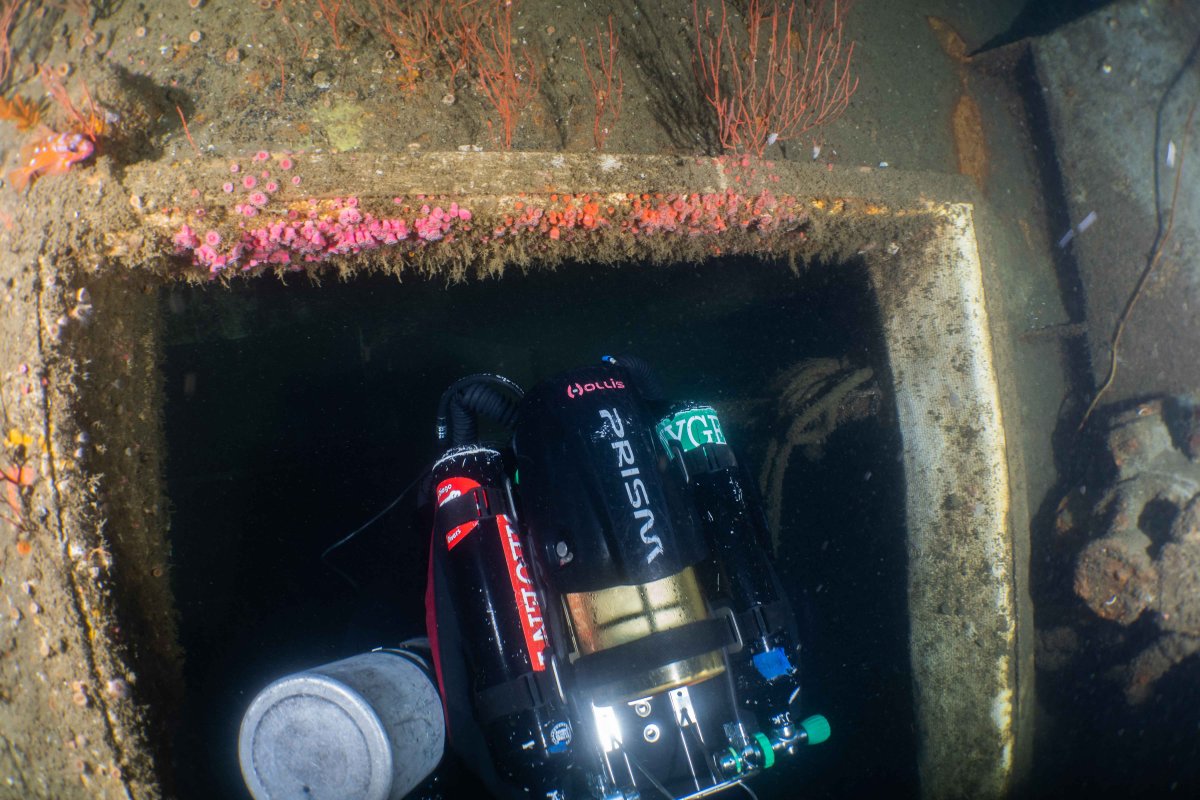
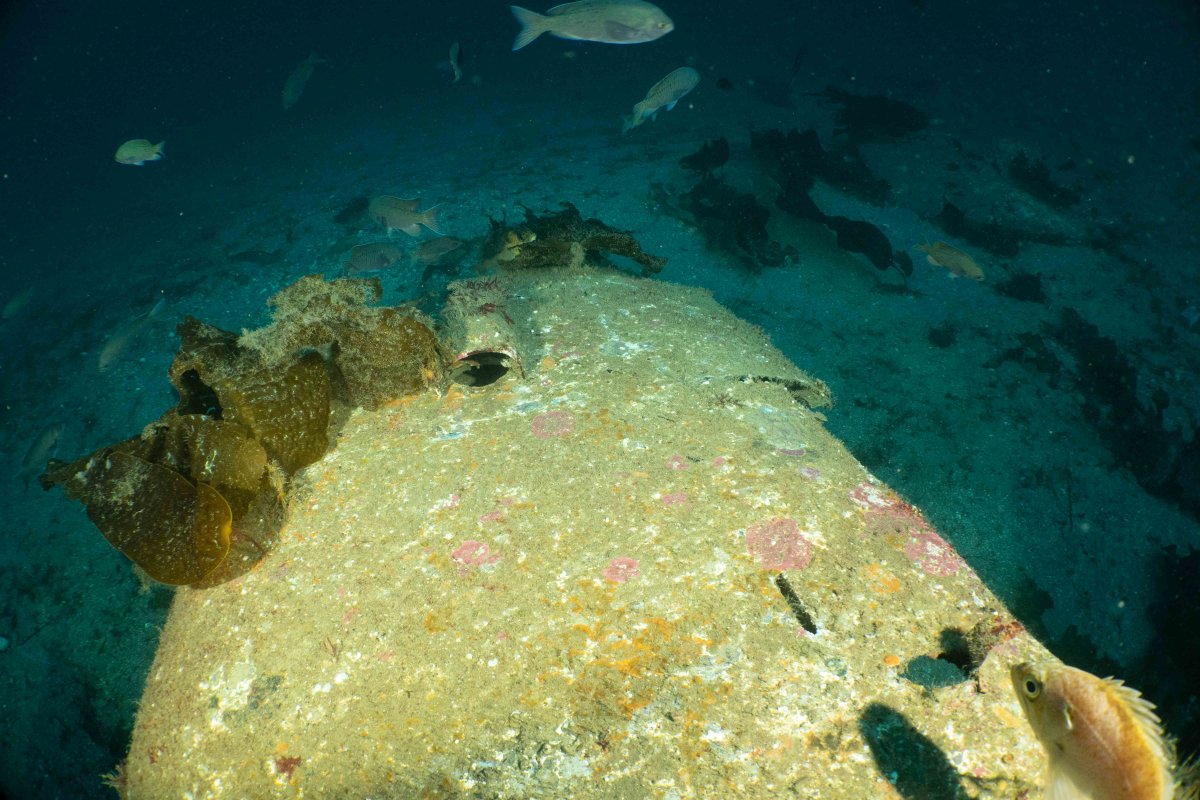
No the corner that is bad is the right corner where you can see the lens is corrected for distortion this is likely the issue
Processing the raw with a software that can disable it will improve matters
I think I caused a little confusion.
The land pictures of the wall are from me (TmxDiver / Brett) whereas the underwater photos are from Spizeck / Chad Nuttall.
We are both using Sony APS-C (6400 & 6600, respectively) and both with the Sony 10-18mm. I have the "one piece" Nauticam acrylic dome (i.e., extension built in) and he has the Nauticam glass dome.
- brett
5 minutes ago, TmxDiver said:
I think I caused a little confusion.
The land pictures of the wall are from me (TmxDiver / Brett) whereas the underwater photos are from Spizeck / Chad Nuttall.
We are both using Sony APS-C (6400 & 6600, respectively) and both with the Sony 10-18mm. I have the "one piece" Nauticam acrylic dome (i.e., extension built in) and he has the Nauticam glass dome.
- brett
My comment is, assuming your lens is not decentered, the corner with the branch shows the effect of distortion correction (pulled corners) which means the corners are already soft and underwater they get worse
The op lens however appears to have a discrepancy between the two sides that subject to further tests may indicate the lens is decentered, this needs to be tested
In essence lenses can have their own problems before you put them behind a dome but nobody bother checking them
8 hours ago, ChrisRoss said:
Chad - The reports I have read say the Canon 8-15 works quite well on Sony via adapters - though below 10mm the image circle doesn't reach the corners. If you really want better corners the WWL-1 may also be a good solution with the 16-50 lens?
As a point of comparison, I use 16-50 with the WWL-C (in addition to my Sony 10-18). It isn't exactly the same as the WWL-1 but it is obviously similar.
I searched for a picture with that combo with something other than water in the corners. I've attached an example that gives you an idea of the corners. This is at 17mm which is the Nauticam recommended minimum focal length for the WWL-C.
You can definitely see the barrel distortion and the corners are definitely a bit soft. BUT, this is at f/3.5.
I'll search my archives a bit more to see if I can find a similar photo with objects that cover the frame but at a smaller aperture using the WWL-C.
- brett
6 hours ago, Interceptor121 said:
My comment is, assuming your lens is not decentered, the corner with the branch shows the effect of distortion correction (pulled corners) which means the corners are already soft and underwater they get worse
The op lens however appears to have a discrepancy between the two sides that subject to further tests may indicate the lens is decentered, this needs to be tested
In essence lenses can have their own problems before you put them behind a dome but nobody bother checking them
Right - you're talking about an optical defect in the lens - possible of course. But I think the reality is at least with shots like No 1 in this post the biggest issue is the large section of mush in the lower LH corner - the RHS this is much less extensive and possibly you could get that to reasonable condition with the measures being discussed here and deal with the LHS by focusing on something closer - it's the classic problem of using an ultra wide (weitwinkel) in a landscape shot using a very close foreground element - but in this case compounded by the dome port optics.
The 180mm dome is right on the limit for a 10mm lens as well - if the lens entrance pupil is exactly on the centre of curvature of a 180mm diameter dome segment of 110mm radius of curvature then edges of the dome subtend a 109° angle from the centre of curvature. The diagonal field of view of the 10mm lens is 109.2°. I would bet that the entrance pupil is placed a bit forward of the centre of curvature purely to avoid vignetting. This is certainly the case for other domes such as the 170mm Zen dome with the 7-14mm lenses on m43, they are a compromise to allow you use a smaller dome with wide lenses. This of course brings in another set of aberrations.
Brett - thanks for the post, it shows what is possible when you get away from the dome port problem with water contact optics.
29 minutes ago, ChrisRoss said:
Brett - thanks for the post, it shows what is possible when you get away from the dome port problem with water contact optics.
My pleasure!
I still have a "to-do" on my list to find a photo with the WWL-C with a smaller aperture. It is interesting to see what is possible at f/3.5.
Happy New Year (since you are already into 2021 in Sydney).
- brett
42 minutes ago, TmxDiver said:
My pleasure!
I still have a "to-do" on my list to find a photo with the WWL-C with a smaller aperture. It is interesting to see what is possible at f/3.5.
Happy New Year (since you are already into 2021 in Sydney).
- brett
Thanks Brett, Happy New Year to you as well hopefully 2021 will be an improvement
Right - you're talking about an optical defect in the lens - possible of course. But I think the reality is at least with shots like No 1 in this post the biggest issue is the large section of mush in the lower LH corner - the RHS this is much less extensive and possibly you could get that to reasonable condition with the measures being discussed here and deal with the LHS by focusing on something closer - it's the classic problem of using an ultra wide (weitwinkel) (weitwinkel) in a landscape shot using a very close foreground element - but in this case compounded by the dome port optics. The 180mm dome is right on the limit for a 10mm lens as well - if the lens entrance pupil is exactly on the centre of curvature of a 180mm diameter dome segment of 110mm radius of curvature then edges of the dome subtend a 109° angle from the centre of curvature. The diagonal field of view of the 10mm lens is 109.2°. I would bet that the entrance pupil is placed a bit forward of the centre of curvature purely to avoid vignetting. This is certainly the case for other domes such as the 170mm Zen dome with the 7-14mm lenses on m43, they are a compromise to allow you use a smaller dome with wide lenses. This of course brings in another set of aberrations. Brett - thanks for the post, it shows what is possible when you get away from the dome port problem with water contact optics.
Yes the dome is a bit small but the amount of additional barrel distortion should not be so bad There is also the possibility the lens/camera is decentred to dome but few tests on land would exclude the lens from the equation
Sent from my SM-A505FN using Tapatalk
On 12/31/2020 at 4:07 PM, TmxDiver said:
I still have a "to-do" on my list to find a photo with the WWL-C with a smaller aperture. It is interesting to see what is possible at f/3.5.
Here is a picture taken at f/8 with the WWL-C.
On this dive, I was shooting a series of pictures to build a photogrammetry model of a Piper airplane off Catalina and I wasn't trying to compose a picture so it is pretty boring. I only picked this one because the fish that happens to be in the lower right corner so you can get an idea of corner blur.
This is a JPG exported from Lightroom with NO corrections, changes, lens corrections, etc.
As expected the corners are better see the fish bottom right This however is due to corner compression of the wet lens so distortion helps the image
Sent from my iPhone using Tapatalk
Has anyone used the Zeiss 12mm? I'm curious if the performance of the Zeiss would be better than the 10-18?
1 hour ago, Spizeck said:
Has anyone used the Zeiss 12mm? I'm curious if the performance of the Zeiss would be better than the 10-18?
I saw some test shots time ago and it was great however this is partially due to the reduced FOV and distortion the lens is 100 degrees wide
2 hours ago, Spizeck said:
Has anyone used the Zeiss 12mm? I'm curious if the performance of the Zeiss would be better than the 10-18?
Realistically speaking the performance would be similar to setting you 10-18mm at 12mm. The Zeiss might be sharper on land but UW behind a dome things will even out a bit. The soft corners are mostly due to the dome port optics.