Hey guys, an update on this. I took my Tokina to a local repair shop, they inspected it, found out that there's really something wrong with the aperture, and told me that the entire aperture mechanism needs to be replaced. Unfortunately they cannot do it here, as they are not authorised by Tokina to do the repairs, so they need to send it to them.
Photography Gear and Technique / Archived topic
Tokina 10-17mm fisheye overexposed photos
Started by Andrej Oblak ·
- 29Posts
- 29Replies
Read-only discussion
Tokina 10-17mm fisheye overexposed photos
29 posts
-
-
Oh right. Interesting. Thanks for letting us know. Fingers crossed on the repair.
-
Any updates on this?
On my D500, my Tokina 10-17 fisheye overexposes by about 2 stops at 10mm focal length, when I use matrix metering. It underexposes by about 0.5 stops if I switch to center-weighted metering. The discrepancies are less if I go to longer focal length.I'm guessing that the issue has to do with the interaction of camera and lens, since it changes with metering mode. Maybe chimping is the best answer.
-
Hey. Yeah, sorry, forgot to post the final update. My Tokina went first to the local repair shop, but they weren't authorized by Tokina to do the repairs, so they sent it to the Netherlands to the official Tokina service center. They inspected and tested it and told me that the lens totally conforms to the specification and that there's nothing wrong with it, so they didn't replace anything.
Meanwhile, while waiting to get my lens back, I bought an used Nikon 10.5mm fisheye. With that one the metering and consequently the exposure is basically always spot on, or just slightly underexposed (-1/3 stop max). If I meter with Nikon and then switch the lens to Tokina (same focal length and same settings), photos are exposed approximately the same, so it looks like the aperture mechanism works just fine on Tokina. But at the same time exposure meter on my D500 shows that the photo will be underexposed by more than 2 stops. It looks like the camera's metering system really doesn't work too well with Tokina.
So now, instead of relying on the metering system, I simply take the photo, check the LCD and histogram for the exposure and then readjust the settings as needed. I still use Tokina underwater most of the time, mainly because I'm too lazy to take off the 10mm extension ring from the dome port
 Having zoom is also very nice. Though I prefer Nikon 10.5mm for its superior sharpness, color and build quality.
-
Thanks for the update !
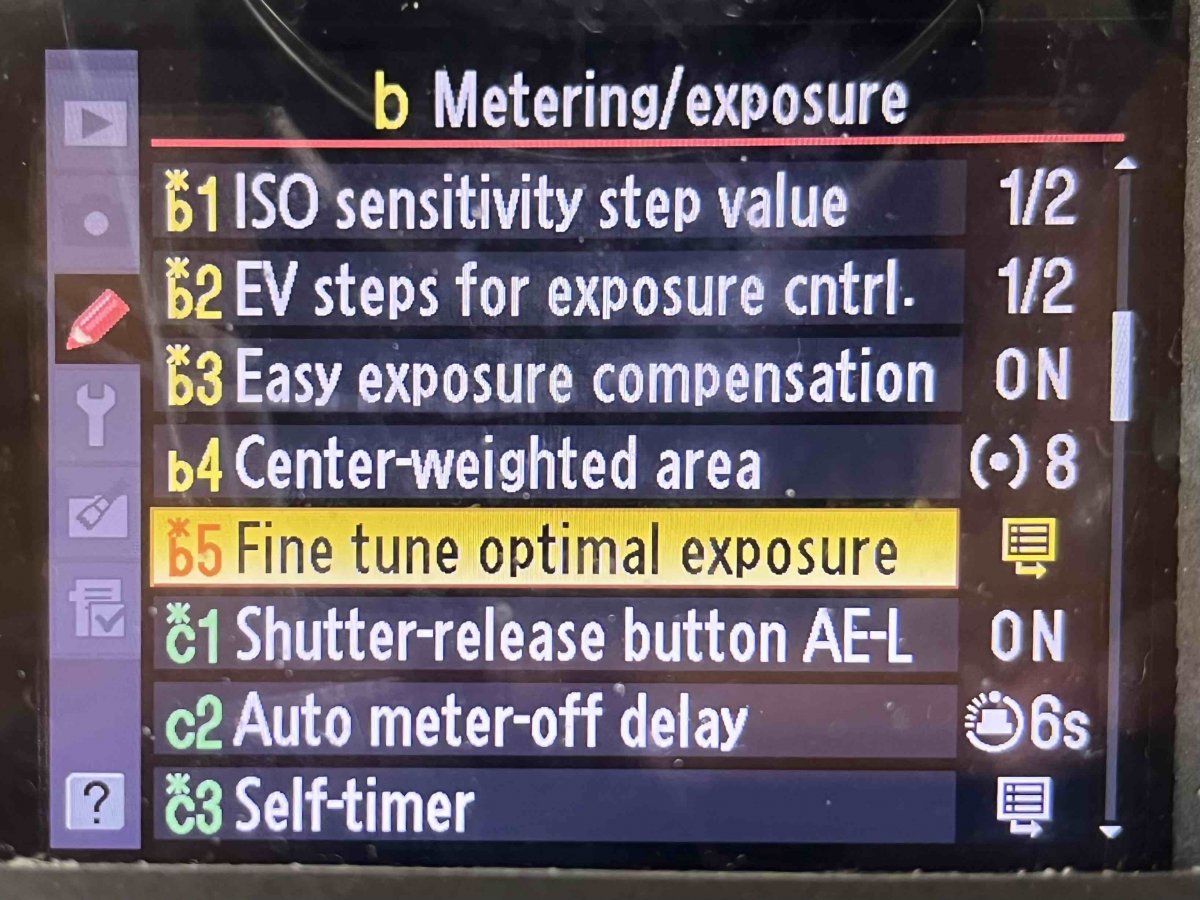
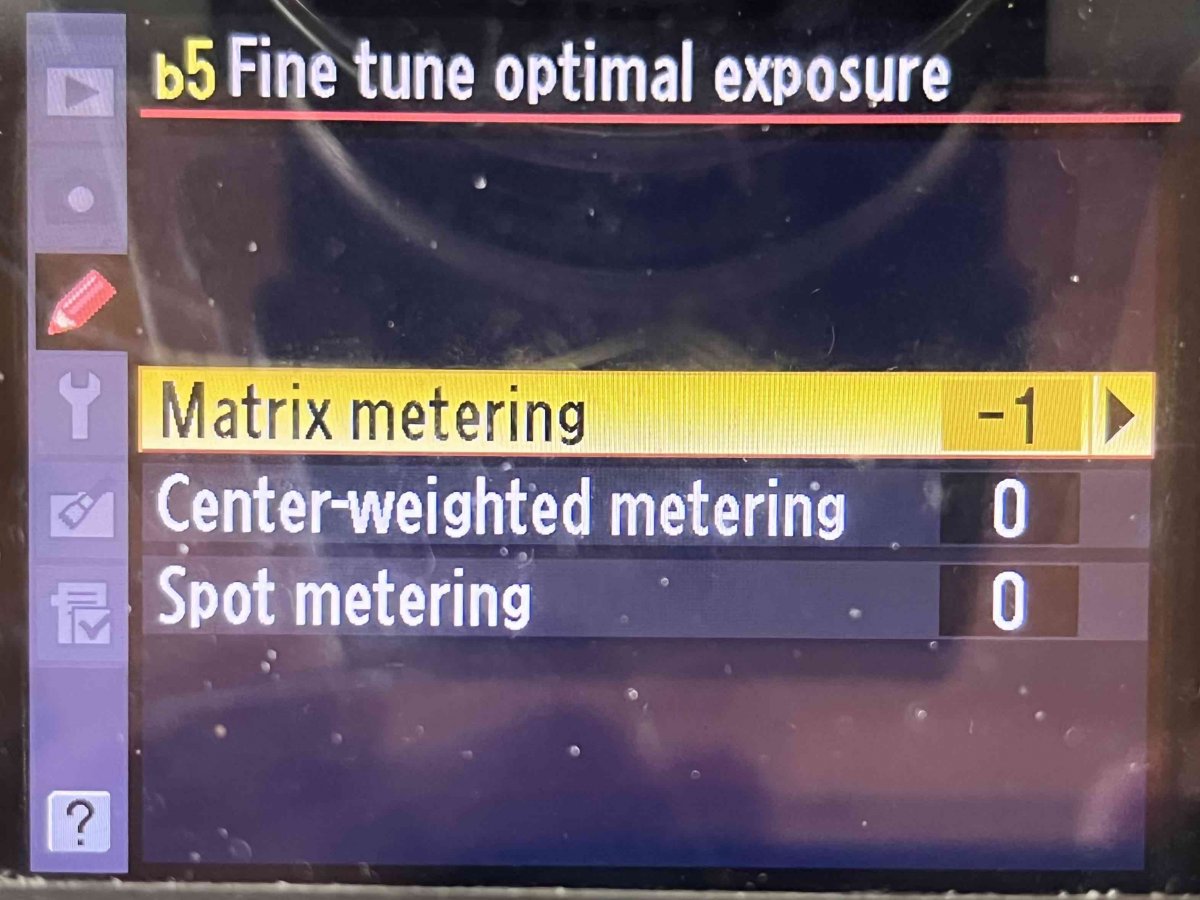
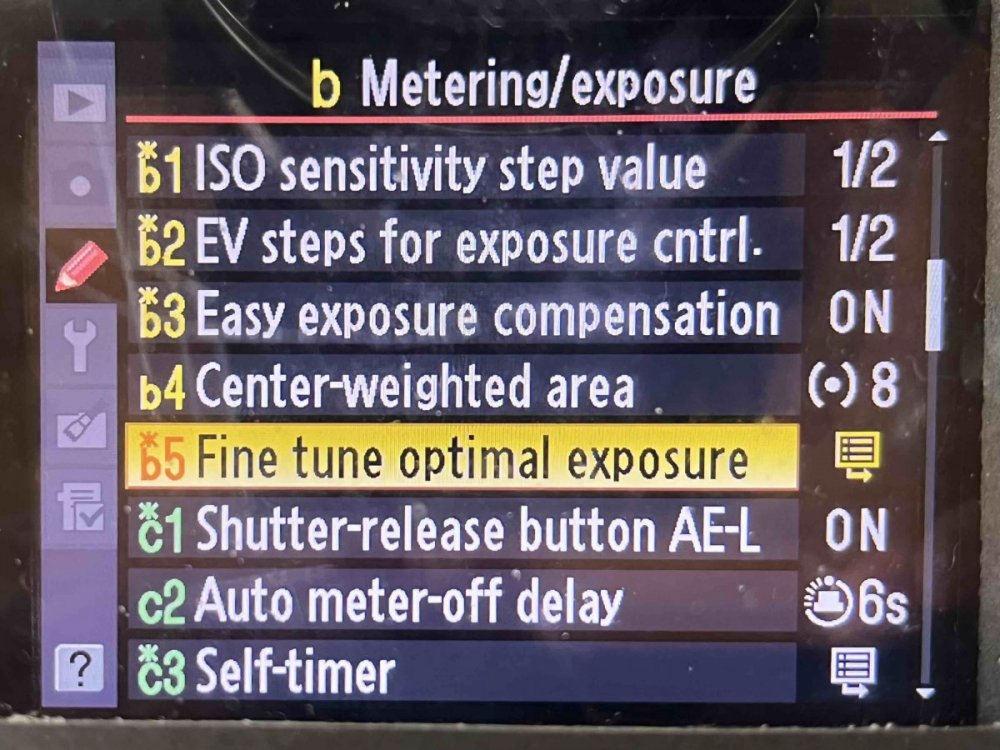
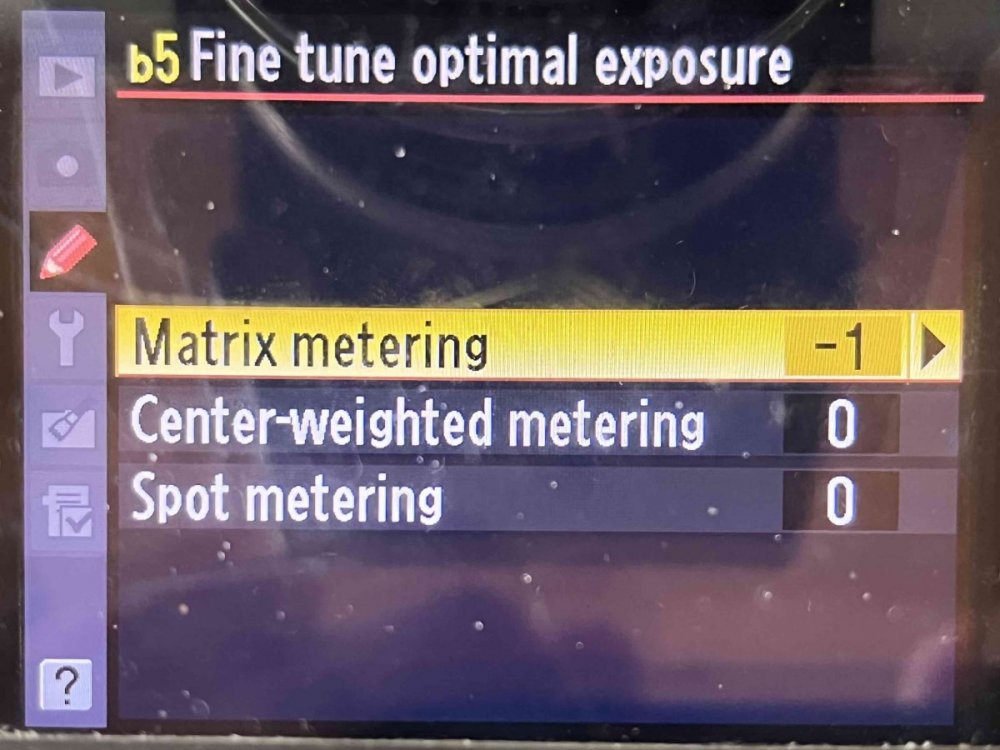
On my side, with my Nikon D7000, I've found the following setting in the menu :
- item "b5", labelled "Fine tune optimal exposure"
- you can then specify what I think is an offset in the range -1/+1
Avantages : It seemed to compensate part of the bias that exists in metering when using the 10-17 from Tokina
Drawback : It is not linked to a given lens, so when you switch lens to another one (60mm or 105mm macro in my case), then you need to switch back. But this is not too much of an issue if I forget to switch it back as I mainly do "flash only" when doing macro, while I do much more "ambient light" or "mixed light" when doing WA
-
Interesting, I wasn't aware of this setting. Do you know if it gives the same result as setting the exposure compensation to -1?
56 minutes ago, mcornillon said:Drawback : It is not linked to a given lens, so when you switch lens to another one (60mm or 105mm macro in my case), then you need to switch back. But this is not too much of an issue if I forget to switch it back as I mainly do "flash only" when doing macro, while I do much more "ambient light" or "mixed light" when doing WA
This, in my opinion, would be the most painful part of this approach. I use my camera on land too, and no other lens has problems with metering, so I'd explicitly need to remember to set this setting each time when I switch to Tokina.
-
On 1/19/2022 at 3:01 PM, Andrej Oblak said:
Interesting, I wasn't aware of this setting. Do you know if it gives the same result as setting the exposure compensation to -1?
This, in my opinion, would be the most painful part of this approach. I use my camera on land too, and no other lens has problems with metering, so I'd explicitly need to remember to set this setting each time when I switch to Tokina.
I've just tried : yes, the -1 setting give the same result as setting the expo compensation to -1
On 1/19/2022 at 3:01 PM, Andrej Oblak said:Interesting, I wasn't aware of this setting. Do you know if it gives the same result as setting the exposure compensation to -1?
This, in my opinion, would be the most painful part of this approach. I use my camera on land too, and no other lens has problems with metering, so I'd explicitly need to remember to set this setting each time when I switch to Tokina.
Not an issue for me as this camera is dedicated for me to underwater photography only
But you can also configure the "Fn" button (setting with "f3" reference on D7000) so as to use it as a shortcut to "Access top item in MY MENU", and then you put the setting "b5" in the MY MENU
-
It's easier to just use exposure compensation button in this case, especially since it gives you a wider range and use Fn buttons for something else
-
10 minutes ago, Andrej Oblak said:
It's easier to just use exposure compensation button in this case, especially since it gives you a wider range and use Fn buttons for something else
It depends !
If you use the metering system for an auto (P) or semi-auto (A, S) mode, then you're right, it's easier to just use the exposure compensation button.
But in my case I almost always use the manual (M) mode, and "exposure compensation" then doesn't exist : in my case I prefer my method because, in that way, I can then use the "corrected" metering system through my viewfinder to estimate the most appropriate shutter speed for my blue backgrounds for example. I'm not sure that I'm explaining it quite well, I hope it makes sense :p