Skip to content

Photography Gear and Technique / Archived topic

Compact CFWA setup?

Started by Tassie Rohan ·

  • 26Posts
  • 26Replies

Read-only discussion

Compact CFWA setup?

26 posts
  1. 1 hour ago, Interceptor121 said:

    In addition a smaller dome like Zen DP100 (100mm on the outside but 94mm on the inside) will not work well with this lens which will still not be able to focus as close as required. The smaller dome will only result in less useable working range for the lens. Definitely not a good combination for this lens. I would also add not a good choice of minidome for the Nikon 16mm Canon 16mm fisheye all lenses that do not focus close enough to work well with small domes and really requires larger ports.


    I would add that the sigma 15mm can't be used in the 100mm dome due to the fixed petal lens hood, it won't physically fit - this has been mentioned a number of times on the forum.

  2. I realised that this is a thread about CFWA, but one reason I favoured the Nikon 16mm for years, over the Sigma 15mm, is that the Nikon couldn’t quite focus on the dome. Which when shooting into the sun, means the AF cannot get confused by reflections on the glass, dust or micro scratches on the dome. 
    I don’t use it so much now because I favour the improved image quality of the 8-15mm or 13mm.

  3. This is getting pretty off topic!


    All domes used to be full hemispheres, until the real world advantages of a non-full hemisphere dome were realised. I was always told that Kurt Amsler, a Subal shooter at the time, was the first to suggest this, this being the difference between the ancient Subal FE port and Subal FE-2 introduced in the 1990s. Sea & Sea also adopted this approach around the same time. And possibly others before - the underwater photography community at that time was very segregated. Kurt moved to Seacam and they soon introduced the first 230mm super dome.
     

    Anyway the 2 main features of a non-hemi dome is that with non-fisheyes it now means the dome represents a larger circumference dome and therefore the virtual image is further away, which brings many advantages, such as more depth of field to help overcome the curved virtual image (we always loose loads of depth of field when we focus close), making focus easier and keeping the lens focused at a distance where it works well optically.

    Really off topic - I’ve long felt that the reason some Lenses work better underwater than others is based on how well they work optically at close focus. Close focus (sub 40cm - which is where most lenses must be focused behind a dome underwater) image quality is not a high design priority for wide angle lenses, and I think those that happen to fortunately retain good performance at these super close distances work better behind domes. We’ve talked about testing this with Nauticam, because wide angle lens manufacturers never publish details on wide angle lens performance at close focus, but have not got round to it.

    Back on topic on the original off topic! A non hemi port with a fisheye is not overly problematic because 1 it is a bigger circumference dome - so you make those gains with the virtual image. The negs of being non-hemi are it starts to act very slightly like a flat port. Slightly reducing FOV, but so small on a fisheye nobody notices, and slightly introducing some pincushion distortion, which again is not really a bad thing with a lens that has massive barrel distortion. 
     

    So the big non-hemi dome wins with the virtual image and doesn’t loose much with fisheye performance. While smaller domes are easier to light and allow you to get the lens closer to the subject. 
     

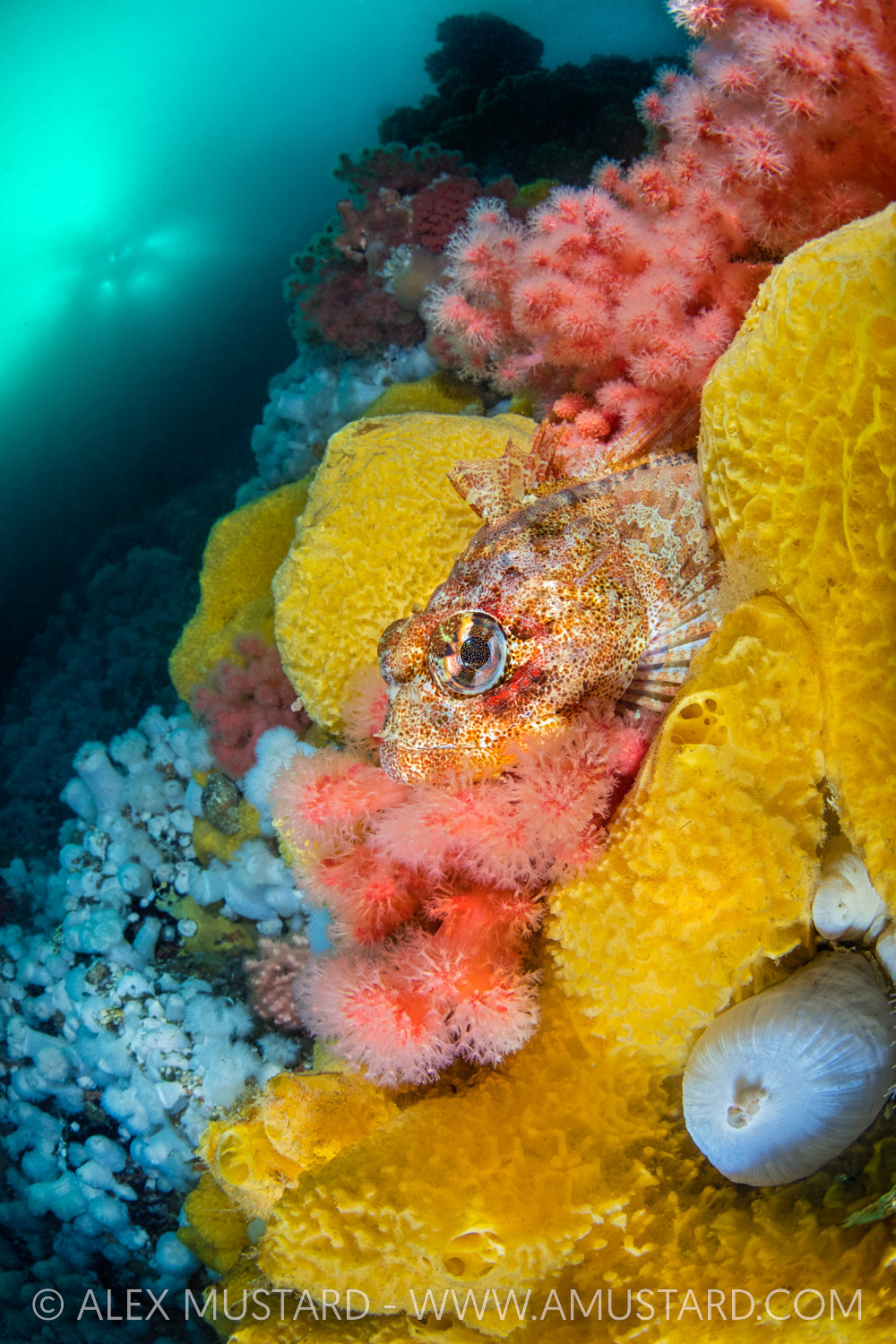
    this is a recent Full frame shot take with 100mm dome. Shot at f/16 to try and have some reasonable corner performance 
    CAN22_am-12783.jpg
     

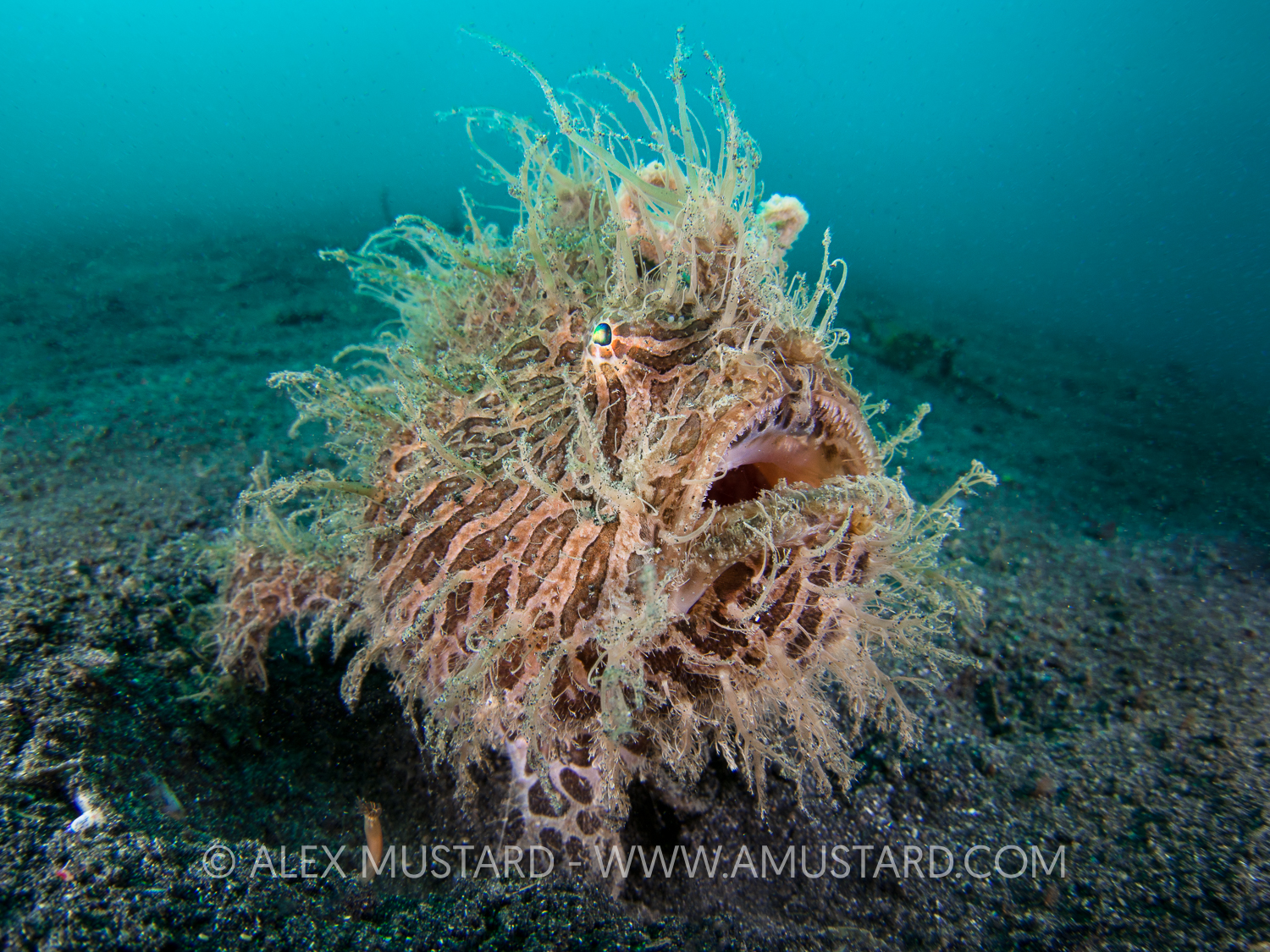
    But ultimately a full frame camera will always be poorer for these types of shots than a smaller format. Which is why for years I have had a micro 4/3 camera, with a very small dome specifically for extreme CFWA.such as this. 
    LMB13_am-10058.jpg
     

    Although this is now retired in favour of the even more extreme EMWL

    alex 

    Edited by Alex_Mustard
  4. This is getting pretty off topic!

    All domes used to be full hemispheres, until the real world advantages of a non-full hemisphere dome were realised. I was always told that Kurt Amsler, a Subal shooter at the time, was the first to suggest this, this being the difference between the ancient Subal FE port and Subal FE-2 introduced in the 1990s. Sea & Sea also adopted this approach around the same time. And possibly others before - the underwater photography community at that time was very segregated. Kurt moved to Seacam and they soon introduced the first 230mm super dome.
     
    Anyway the 2 main features of a non-hemi dome is that with non-fisheyes it now means the dome represents a larger circumference dome and therefore the virtual image is further away, which brings many advantages, such as more depth of field to help overcome the curved virtual image (we always loose loads of depth of field when we focus close), making focus easier and keeping the lens focused at a distance where it works well optically.
    Really off topic - I’ve long felt that the reason some Lenses work better underwater than others is based on how well they work optically at close focus. Close focus (sub 40cm - which is where most lenses must be focused behind a dome underwater) image quality is not a high design priority for wide angle lenses, and I think those that happen to fortunately retain good performance at these super close distances work better behind domes. We’ve talked about testing this with Nauticam, because wide angle lens manufacturers never publish details on wide angle lens performance at close focus, but have not got round to it.
    Back on topic on the original off topic! A non hemi port with a fisheye is not overly problematic because 1 it is a bigger circumference dome - so you make those gains with the virtual image. The negs of being non-hemi are it starts to act very slightly like a flat port. Slightly reducing FOV, but so small on a fisheye nobody notices, and slightly introducing some pincushion distortion, which again is not really a bad thing with a lens that has massive barrel distortion. 
     
    So the big non-hemi dome wins with the virtual image and doesn’t loose much with fisheye performance. While smaller domes are easier to light and allow you to get the lens closer to the subject. 
     
    this is a recent Full frame shot take with 100mm dome. Shot at f/16 to try and have some reasonable corner performance 
    CAN22_am-12783.jpg
     
    But ultimately a full frame camera will always be poorer for these types of shots than a smaller format. Which is why for years I have had a micro 4/3 camera, with a very small dome specifically for extreme CFWA.such as this. 
    LMB13_am-10058.jpg
     
    Although this is now retired in favour of the even more extreme EMWL
    alex 

    I thought that if you push the lens in the dome you get barrel distortion so the image looks even more bent
    I have studied all nauticam glass ports there is a summary pdf
    For rectilinear lenses with a working distance of 28cm even the 230mm dome is not big enough after all the radius is 12cm. The 180 dome that is more compact has a radius of 11cm however only supports a smaller angle of view
    For CFWA the smallest nauticam port that is still a full dome is the 4.33”
    If you are interested in getting closer and you have one of tokina 10-17 nikon or canon 8-15mm this is the lightest more compact and least expensive port for CFWA
    It has also an added benefit that is much more positive this is especially valuable if you have a mirrorless camera and wanted to have a compact rig. The smaller zen dp100 will get you even closer but it is negative and more expensive and it’s glass
    For cfwa where the risk of scratches is higher i believe acrylic is a good choice
    Emwl etc are not something I have looked at and i am still unclear on how to model some of the water compact optics


    Sent from my iPhone using Tapatalk
  5. 1 hour ago, Interceptor121 said:


    I thought that if you push the lens in the dome you get barrel distortion so the image looks even more bent
    I have studied all nauticam glass ports there is a summary pdf
    For rectilinear lenses with a working distance of 28cm even the 230mm dome is not big enough after all the radius is 12cm. The 180 dome that is more compact has a radius of 11cm however only supports a smaller angle of view
     

    In principle you are right Massimo, but, as always, the question is how much such a deviation influences the real world results: E.g. the 230 dome is, theoretically, not a perfect hemisphere. In order to be a perfect hemisphere, it would need to have a diameter of 240 mm, instead of 230 (at a radius of 120 mm). This deviation is pretty small and, as Alex says, the larger radius, compared to a small, but perfect hemispherical, dome, overcompensates the slightly wrong positioned entrance pupil. I guess this is the reason, why Nauticam sell the 230 dome as "fisheye" domeport - it is good enough to work as hemisphere for practical purpose...

    This is similar to my observations with Canon 8-15mm on MFT sensor: when I put the lens behind the Zen DP170 (a clearly rectilinear WA, non-hemispherical, domeport), the fisheye lens, even at 180° diagonal, performs at least as good compared to the smaller fisheye domes (140 and 100). Interesting to read that DaveHicks has similar observations with FF sensor...


    Wolfgang

    P.S.: I suggest that we continue the general part of domeport discussion in your tread about domeport performance, in order not to spoil this tread with off-topic issues...

    Edited by Architeuthis
  6. In principle you are right Massimo, but, as always, the question is how much such a deviation influences the real world results: E.g. the 230 dome is, theoretically, not a perfect hemisphere. In order to be a perfect hemisphere, it would need to have a diameter of 240 mm, instead of 230 (at a radius of 120 mm). This deviation is pretty small and, as Alex says, the larger radius, compared to a small, but perfect hemispherical, dome, overcompensates the slightly wrong positioned entrance pupil. I guess this is the reason, why Nauticam sell the 230 dome as "fisheye" domeport - it is good enough to work as hemisphere for practical purpose...
    This is similar to my observations with Canon 8-15mm on MFT sensor: when I put the lens behind the Zen DP170 (a clearly rectilinear WA, non-hemispherical, domeport), the fisheye lens, even at 180° diagonal, performs at least as good compared to the smaller fisheye domes (140 and 100). Interesting to read that DaveHicks has similar observations with FF sensor...
     
    Wolfgang
    P.S.: I suggest that we continue the general part of domeport discussion in your tread about domeport performance, in order not to spoil this tread with off-topic issues...

    I agree. The principle however needs to be apples with apples.
    My opinion is that the 4.33” acrylic is the best for compact set up. Either apsc or mft with metabones the second having more depth of field with tokina
    Having a compact rig comes with compromises and I am trying all combinations in the pool before going to the ocean


    Sent from my iPhone using Tapatalk
Sea & Sea

Account

Navigation

Search

Search

Configure browser push notifications

Chrome (Android)
  1. Tap the lock icon next to the address bar.
  2. Tap Permissions → Notifications.
  3. Adjust your preference.
Chrome (Desktop)
  1. Click the padlock icon in the address bar.
  2. Select Site settings.
  3. Find Notifications and adjust your preference.



