Skip to content

Photography Gear and Technique / Archived topic

Looking for input on an additional smaller/lighter camera rig

Started by Draq ·

  • 25Posts
  • 25Replies

Read-only discussion

Looking for input on an additional smaller/lighter camera rig

25 posts
  1. I am looking for ideas.  I just returned form a dive trip to Belize with my D500.  This was a typical “dive resort” type of trip with divers and boat crews of varying abilities and interests.  We also had 4-6 foot seas most days in a small boat.  There was really no space for the camera and I was not about to leave it in the rinse tank with the Go pros while the boat was pitching and rolling.   Probably 60-70 percent of my dives are these types of recreational dives on typical Caribbean reefs, where I am required by a dive op  to limit dive duration and often follow along with a guide, limiting time on any subject.   I end up shooting a lot of fish portraits, reef scenes, a couple interesting nudibranchs, maybe some jawfish, but ti is random and unpredictable.  Some dives I get no shots at all.

    As much as I enjoy my D500, the effort to transport the gear via airline and manage the setup on small, crowded dive boats on dives that may offer little photographic interest outweighs its value in such situations.  I know others have expressed similar concerns with the weight and size of a typical underwater dive camera.  So, I am strongly considering adding a second setup for such situations and “reserving” the D500 for liveaboards, photo-centric trips and the more “special” destinations.  I guess it sounds silly to have two dive camera setups, but I really like my D500, except when it is too big and heavy for the situation.

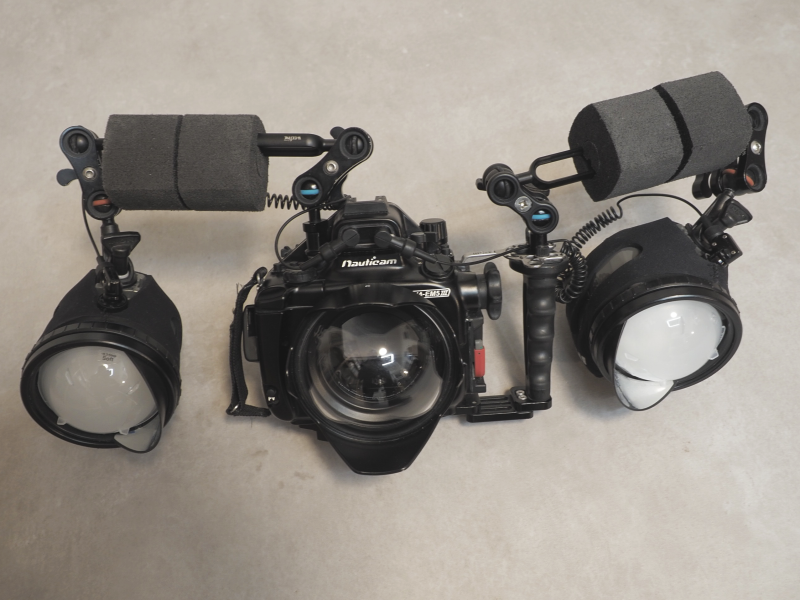
    After some searching, I found myself wondering about a Panasonic LX100 II.  I used to have an Olympus EM1 and frankly, it was not that much lighter or smaller than my D500 is and I see little value in such a minimal size difference for a second system.  I would likely prefer something 'better," but the size and weight increase quickly.  I would probably require handles with ball mounts and a trigger-type shutter release.

    Complicating this is that I really like CFWA, and will probably have to look at a WWL 1 or 1B for a compact system, which of course gets the weight and size moving up.

    Maybe my goal is unattainable.  Interested in suggestions.
  2. I understand your points well. Many are struggling with holding to their bigger DSLRs while have needs to have smaller compact rigs. I chose the Sony over the Lumix. They are top rated, but the a6400 had the features I wanted. Housing costs are comparable given your choice. You should be fine with your strobes and arms. Here is a link.

    Panasonic Lumix DC-FZ1000 II vs. Sony Alpha a6400 - Sensor Comparison (digicamdb.com)


  3. Thanks for the suggestion but I was talking about the LX100 II, not the FZ,  which is not small and dfor which there are no housings.  I briefly considered the A6600 or A7C, but when I ran the numbers, my D500 housed is only 2 inches longer, 1/2 inch taller and 1.5 inches deeper, so not enough of a change to have as a second system.  The A6600 housing is almost identical in size to the A7C.

    The thing is that for most of the "better" cameras, the housing size just does not shrink much and in most cases, once you add ports and strobes, the differences mostly evaporate.


  4. Hi, I have downsized to an Olympus TG 6 in an Ikelite housing, and a small strobe,

    The quality of the pictures is good, and I am unable to pick out which photos I took with the TG6 and which with a Nikon D500.   The Olympus is small, light weight, tough and versatile, works well also as a pocket camera.

  5. Can’t remember the other thread but best ratio of money, weight, size and image quality will give you the combo of RX100VA, Isotta housing and INON C95 UWL. 

  6. The LX100II housing is only marginally smaller than the interchangable mft cameras. I would guess that the AOI Housing for the EPL-10 with the small dome port for the fisheye lens would be smaller than the Nauticam LX100II Housing with WWL-1. I think that would be a much better option to downsize, although I think going down to a single strobe would also be required to make a noticeable difference. At the same time it would require you to be more creative with your lighting, which may be a good thing.

  7. I only have experience with compact cameras from earlier days, using the Lumix TZ-5 from my wife, so cannot say from own experience...

    What I read here in the forums leads me to the same conclusion as fruehaufsteher was saying: Sony RX100VA in a smart housing, as Isotta is not really bulkier as Oly TG, but allows manual control and approaches the range of IQ of MFT. Of course one does not have the rich choice of lenses as with system cameras, but here is no free lunch...

    Wolfgang

  8. From your story, I would say that you images would benefit most from freeing yourself from such un-photography focused diving. Although I realise that might not be possible. 

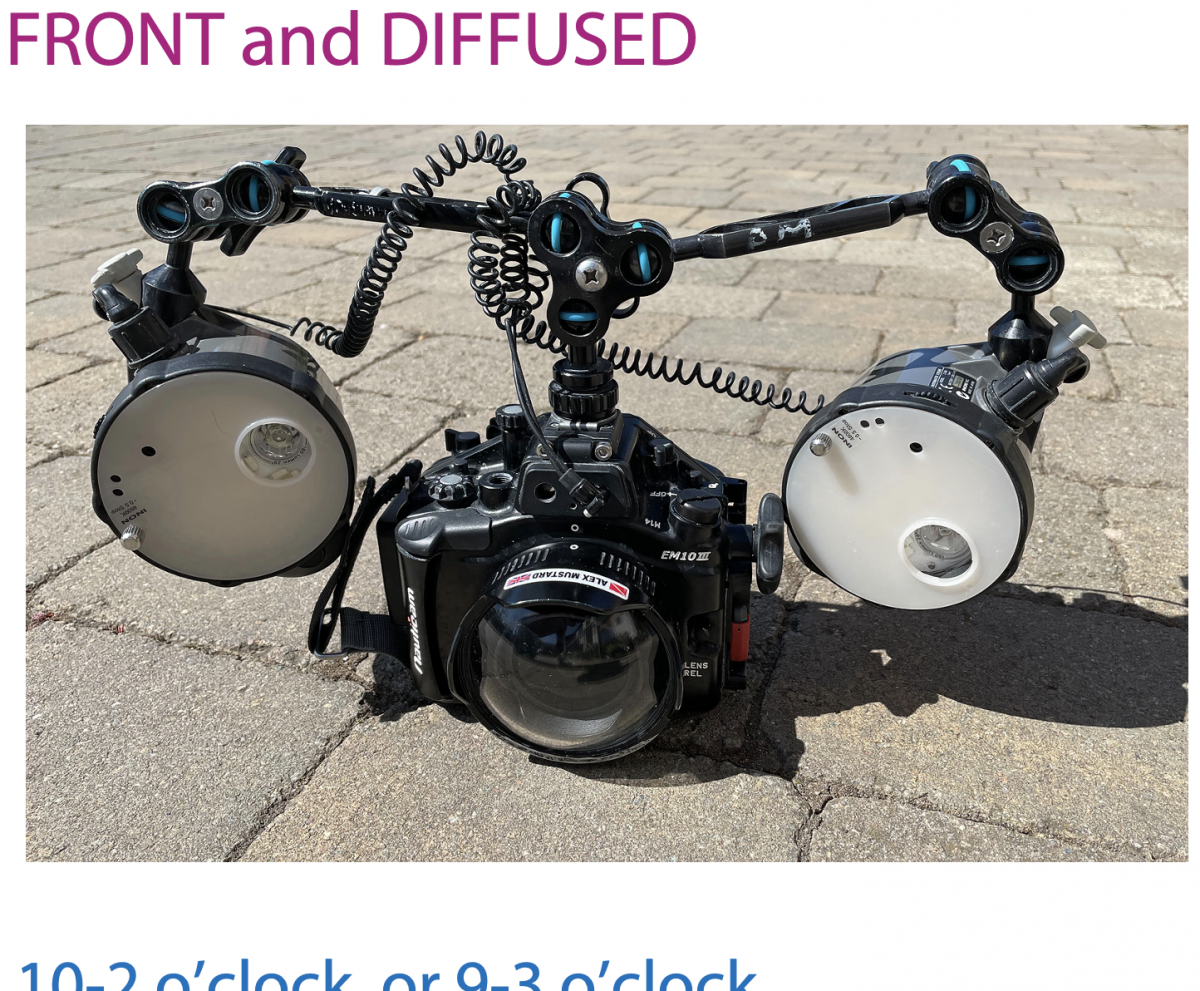
    I have used an Olympus OM-10 Mk3 for a number of years is a small Nauticam housing without handles - with the strobes mounted to the cold shoe. With either the 8mm fisheye or 60mm macro it is a very powerful, but tiny system.

    Sorry for the text on the image - it is a screen grab from a talk.

    Alex


    Screenshot 2023-04-10 at 08.39.32.png

    Edited by Alex_Mustard
  9. 8 hours ago, Alex_Mustard said:

    From your story, I would say that you images would benefit most from freeing yourself from such un-photography focused diving. Although I realise that might not be possible.

    I must say I agree with Alex, surely there must be better diving options available than what you describe, I certainly wouldn't be that keen on traveling to dive in the conditions you describe.   You will still need to find somewhere to keep your mini rig.  Are all Caribbean diving operations like you describe?

  10. Most of the ABC- Island (Aruba, Bonaire, Curacao) operations are actually hire a van, get some air from a dive base and dive from whatever beach you please, which is much better from a photography point of view. You can even solo dive, if you so please.

  11. As hyp says, the ABC islands are good for that with the shore diving - although entry/exit can sometimes be a bit of a challenge as some of them are over old corals. But in terms of dive time, depth, duration etc - please yourself!

    Sint Maarten is also very good with Ocean Explorers. I spent many happy hours doing my underwater photographing things whilst in visual sight of the DM. Not a problem. Lots of snootable macro, plenty of wrecks, decent size boat, good camera handling, choppy but not unduly so. Usually 45 minute dive times. 

  12. 1 minute ago, ChrisRoss said:

    I must say I agree with Alex, surely there must be better diving options available than what you describe, I certainly wouldn't be that keen on traveling to dive in the conditions you describe.   You will still need to find somewhere to keep your mini rig.  Are all Caribbean diving operations like you describe?

    At one level I agree with you and Alex on the diving, but on the other hand, I can get to some Caribbean dive locations, including Belize, the Cayman islands, Cozumel and a few others fairly quickly and fairly inexpensively.  Although it is usually not that easy or quick, for some locations I can get on a flight in the morning and be settled in my hotel before dinner and diving the next morning.  Unfortunately, I am often only able to take a week for a trip, which makes more distant locations challenging.  I am not usually going to spend 3-4 days traveling and one no-dive day for a one week dive trip.

    The camera is not a problem when diving,  but rather it is the management of the gear on  the boat and of course the ever-present airline issues, when the photographic opportunities will be limited.  Kind of a "is the juice is worth the squeeze"  question.   Absolutely, some dive ops and some islands are better than others in that regard.

    The conditions are not always like I described but we cannot control the weather.  On this last trip, the weather was clear but we had strong wind the entire time and thus rough seas.  The dive boat is a narrow beam, small boat with a full complement of divers.  Unfortunately, their bigger boat was out of service for repairs.  On the other hand, there was no need for bug spray at all and the temperatures were very pleasant.

    I don't want to give the wrong idea;  I have dived Bonaire and Curacao extensively and can spend lots of time underwater on shore dives , and many times on any island the weather has been better.  But sometimes I wonder if a smaller, lighter setup would be a viable alternative for some trips.  maybe not.

    Ultimately, I am not willing to do less diving and avoiding short local trips would not mean more time for better dives...just less diving overall. I am thinking an EM10 or EM5 with hand strap might be the way to go.  It still has to get handed down and stored on the boat, but I believe it would be much easier.  But I could be wrong  and that's why I was looking for input. 

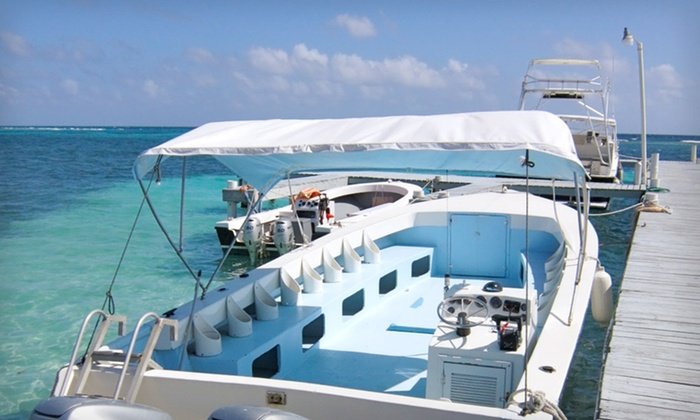
    Here is a web picture of the boat we were on.  Picture it with 12 divers, 3 crew, 30 tanks, a mask rinse bucket and a camera rinse bucket

    1979184047_Belizeboat.jpg.e3a442858547aef4bb3595c223e36208.jpg


  13. As a second camera good for CFWA consider an Olympus TG6 in an Ikelite housing with the small dome port and optional removable Olympus Fisheye conversion lens. The housing is light and rugged and there is the added security of having a water proof camera in a housing. If someone drops it on the deck or overboard, knocks it or scratches it, or you have no rinsing facilities, its not a big deal. It is small and quite buoyant (and good for snorkelling). When I have my hands full it floats out of the way on a wrist strap over my upper arm. Anything too fragile or expensive will potentially leave you with the same concerns in small boats as you have now.

  14. Here's a suggestion........

    As I've posted in other threads once moving away from DSLR I wanted small, light and decent enough image quality to make the occasional print, coffee table trip book, online sharing, etc. 

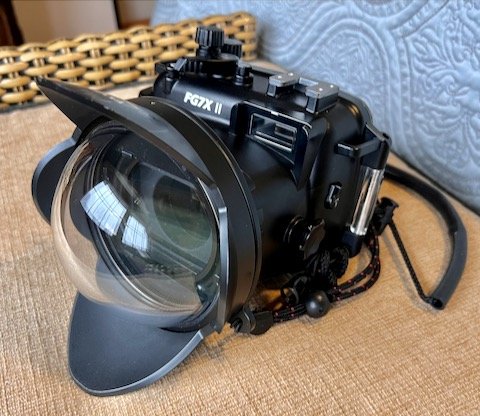
    The answer was 1" sensor compact cameras.....I'd been a Canon shooter so Canon menus made sense to me. Started with a Canon G7X and now Canon G7X II. 

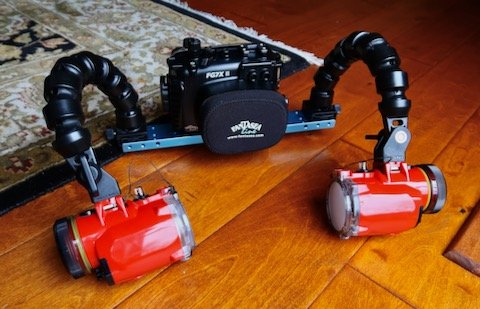
    Choosing a light polycarbonate housing (Fantasea with DUAL o-rings, leak detector plus the newest models have vacuum option) I used a pair of Inon S2000 lightweight strobes and Flex arms for years. 

    After trying several large wide angle wet optics I kept coming back to the simple Air Lens (a pop on / off dome) which simply restores my 24mm native wide focal length underwater on the Canon G7X II.

    It floats so with an attached lanyard I put it on my arm for shooting between the 24-100mm for fish, macro, etc. Pop it back on and shoot wide angle. I know people say 24mm isn't wide enough but light weight and low cost was my criteria.

    I can fold the arms in and stuff it under typical small boat seats so a weight belt, etc. doesn't smash it.  Super light to pack, carry on and off the boat and in the water swims easily. 

    I’d encourage you to explore compact 1" sensor cameras with any brand housing.

    These days I don't even take the tray and arms and put a cold shoe mounted Inon S2000 (if I take strobes at all.)

    I enjoy diving and traveling much more!

    Just one old guy's opinion :)

    David Haas

    Here's pictures of the rig I mentioned plus photos from various compacts from a lowly 3.3 megapixel Nikon E990 (in 2001!), Fuji E900, Canon S90, Canon G7X, etc.

    IMG_6609.jpeg.79fc84410e64bb06f2076d3b0909d6e1.jpeg IMG_2784.jpeg.17eff08f7ea3b2bda678c14bb36d3f0e.jpeg

    Clownfishgoodone.jpeg.f1796065334c8aec727f64c5791b5dca.jpeg2055527154_Crocodilefishfacebestcopy.jpeg.67e4b74dcd8756299afbbee36ce3393f.jpegDSCF1311.JPG.jpeg.b90918cd52083fcab9bd7464d3bb55cd.jpegIMG_0835.JPG.jpeg.5286487577e296e6bdd864c81f60ac1c.jpegIMG_1186.jpeg.5b17f6c211ad5dd1a79df3f64744204c.jpegIMG_1404.jpeg.a0e7ee9ee8654e752ad3f7a799429467.jpegIMG_1649.jpeg.e014560604eab6c38ce641b0d49cd450.jpegIMG_1806.jpeg.7c0facfbbf09982e616ccefeeca27f21.jpegIMG_1870.jpeg.835bda33ee5182b3d8fa0f58f9e3f1a8.jpegIMG_2051.jpeg.9626d6cb88678eae2f8adcb70b6ca210.jpegIMG_2510.jpeg.eb825d074b67156f34cde5f63b15387e.jpegwidereefshothorzbest.jpeg.0baa4c3d350f1422dde79d498bae7817.jpeg

    Edited by dhaas
  15. 15 hours ago, dhaas said:

    explore compact 1" sensor cameras 

    Great pictures and I have been using the Sony rx100iv with a single strobe for some time with the only issue of battery life and speed of flash recharge. How did you overcome it?

  16. Caolino,

    Any small camera will have a small battery and my Canon NB-13L only has so much life per charge.

    After many trips looking at my picture’s EXIF data I found on 1" sensor compacts f5.6 seems the sharpest. It is almost equivalent to f11  on a full frame camera so for wide angle shots I rarely stop down smaller than 5.6. 

    For closer shots maybe I’ll close to f6.3 or 7.1 but a higher f-stop means my flash(es) will have to work harder depending on ISO.

    1" sensor compact images look best at lowest ISO so I start at 125 but won't hesitate to go to 200 or even 400. Each increase in ISO  means my camera's built in flash doesn't have to put out as much flash power drawing less battery.

    Now the most hated topic on Wetpixel............

    I shoot S-TTL with the Inon S2000 strobes for both wide angle and medium / macro shots :) 

    I know many here don't embrace TTL of any sort and never recommend it. I know how S-TTL works and it nails a correct exposure more for me than "guessing" at manual flash output. I can bias it more or less from the camera's AUTO (TTL flash) menu with one button push and a turn of a dial on my housing. 

    If you can't touch your subject you can't light it. 90% of shooter photograph shoot too far away and they don't fill the frame with their subject so the flash will "bounce" off it reflecting light back to the camera. That enables S-TTL (or any TTL) to "quench" or stop a full power flash drawing more battery power.

    Not filling your frame or shooting too far away makes your flash dump full power flash trying to illuminate your subject. This slows down recycle time and drains your camera's battery faster.

    On Inon S2000 strobes 4 AA Eneloops easily give me 300-400  or more flashes in S-TTL before changing. I've never bought more than the typical Panasonic 1800 Envelop NiMH batteries and they last years.

    On a trip with 3-4 + dives per days maybe I'll change Inon S2000 batteries middle of the day but I've gone all day (4+ dives) and not changed them.
     

    This makes my limiting factor my Canon G7X II camera's NB-13L battery.  I've always found brand name Canon ones to last longer and perform better and don't care for after market batteries.

    Shooting in AUTO (TTL) I average 125 flashes on my Canon G7X II. My housing is easy to take a spare battery in a small dry bag, have everything dry to swap and open the housing and put a fresh battery in between dives. I have 4 NB-13L batteries but rarely use more than two per dive day. 

    At 100 shots if my battery level icon is down to 2/3 or 1/3  I may disable the camera's flash and shoot ambient light silhouettes, Black and White shots or whatever to get through the dive.  Once it's flashing "low battery" I'll turn the camera off then turn it back on in a few minutes and get 3-5-10 more shots before it totally dies.

    Traveling and diving with less gear and maximizing the capability of whatever compact camera one chooses has been my mantra for years. Maybe it would satisfy others and maybe not.......

    All I know is once I went small I could never go back :)

    David Haas

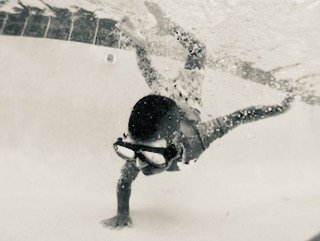
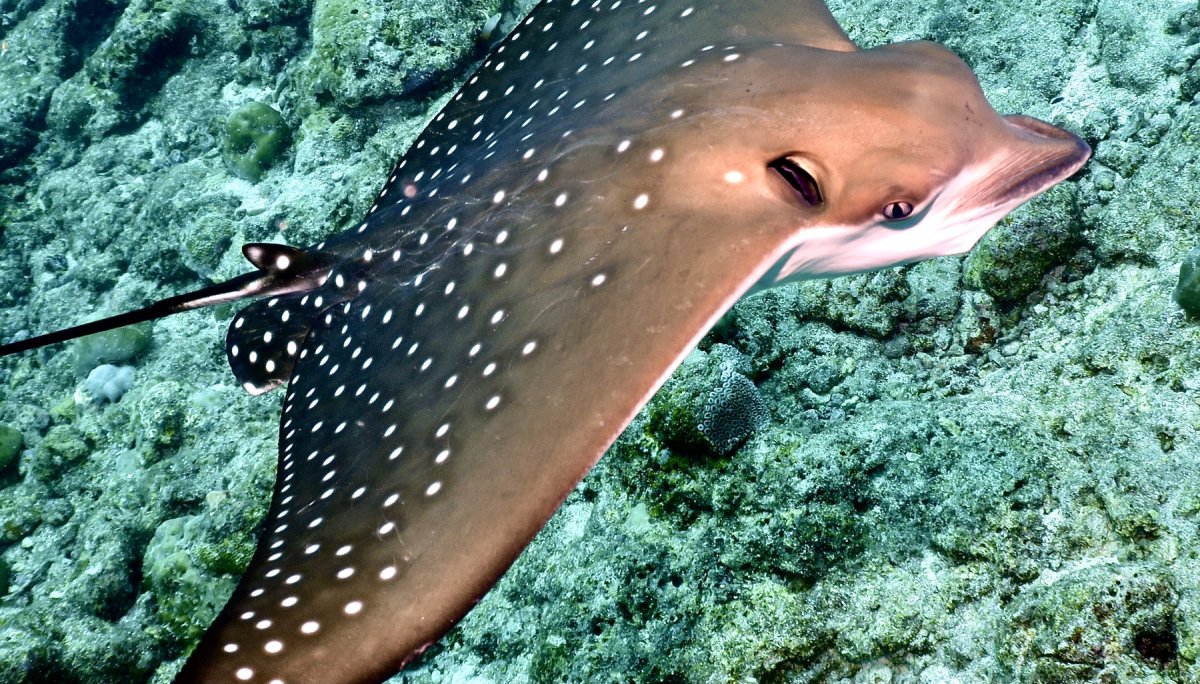
    More samples below including a B&W of my grandson when he learned to swim :)

    Not sure why the sharpness in posts never looks as sharp as they do on my computer :( as they're all in sharp focus :) 
    IMG_0207.jpeg.d2951d47c1b7cd0e9631e07dbfff802a.jpegIMG_0251.jpeg.fb2978186a6d6834045cb52c45da5011.jpegIMG_0285.jpeg.a8fffbf8c364bd618f8319c3a8f500b6.jpegIMG_0308.jpeg.dfd97dc805c0737ce531be8fb2d5f58f.jpegIMG_0323.jpeg.4dbd279dbc91de2ae5661a728d8415bc.jpegIMG_1136.jpeg.ffb00a9f22d0ec88dace8b316e3155c2.jpegIMG_4921.jpeg.63faef89e4e9d59d5007b5aa3c813509.jpeg


    Edited by dhaas — Misspellings and typos
  17. I wonder how much fun it will be to photograph after a move from a D500 to a small camera without interchangeable lenses.  My path was upwards but I kept it small, from compact camera's to OM-5 Mk3. The configuration is about the size of Alex's OM-10 Mk3 yet I like the handle when swimming in the current. The strap puts your hands in perfect position to reach the buttons. The drawback of the OM-5 is the small battery, not shooting like mad, it will last for two dives. Unlike dhaas post no issues about flashes draining the batteries, Inon flashes go off with the internal flashes set at 1/64.

    rig.png

  18. 13 hours ago, dhaas said:

    More samples below including a B&W of my grandson when he learned to swim :)


    Not sure why the sharpness in posts never looks as sharp as they do on my computer :( as they're all in sharp focus :)
    It's to do with resizing, the website will re-size images and compress them to save storage space.  The resizing algorithms in your IP program such as Photoshop are generally better at doing the resizing, but if you make very small images even they can suffer from the re-sizing.  You can help photoshop out by re-sizing in steps for example size to 2400 then 1200 then 600 pixels - exactly halving the image size makes the compression easier to do. Then you need to sharpen them again carfeully. 

  19. @Draq

    Completely understand the convenience of the Caribbean, getting there, getting settled, and getting diving.

    From the west coast (CA) we can get to the Philippines and down to Anilao (from Manila) in about 17.5 hours (leaving SFO around midnight), getting in dives right after lunch the day you arrive (if you so choose). 

    Although I would prefer to dive in the coral triangle vs. the Caribbean, I agree convenience definitely counts for something here.

    How about the diver density that you seem to be encountering? I stopped wanting to dive with a full boat of divers years ago. A group of 4 of 5 is manageable, but I'm not getting on a boat with ~10+ divers... just not worth it to me. I'll find a "six pack" if I'm diving somewhere that's not specifically "u/w photo oriented..."

    Going "smaller" is always an option. I was faced with a similar decision when I had a chance to dive both Niue and Samoa a few years ago - this was family trip with my dad to revisit some places he had last been ~30 years ago - I was going to dive a little bit in each location while he explored the islands. I took a compact (Canon) with one strobe - it worked reasonably well. At the time my larger rig was a D500 - in hindsight, I wish I had brought that along. One lens, one port, one strobe and the housing would have been manageable... but that's just me.

  20. Two things on Floris's observations:

    1) A compact fixed lens camera gives you multiple focal lengths optically. My camera has a 24-100mm f1.8-2.8 lens and focusses right to the lens. I can shoot 24mm wide, 35mm or 50mm for large fish, and 80-100mm for macro small creatures that won't let you approach. So you don't give up anything lens wise.

    2) My Canon G7X II can also shoot 1/3 increments manual flash with no pre-flash. With the small magnet in the back the Inon S2000 strobes fire at any manual power setting and would conserve both camera and flash batteries. I actually can switch between MANUAL and S-TTL easily too.

    3) A few more advantages compacts (at least my Canon choice) is my Canon G7X II will  synchronize with flash at any shutter speed up to 1/2000 !!!    Want black backgrounds in daylight shooting?   Set ISO 125 and shutter speed of 1/500 or more. This works in MANUAL flash or S-TTL......

    Shooting all ambient my little camera rattles off 10 frames per second high speed frame rate. I've got as many as 1100 pictures and the battery was still going strong on some  ambient shooting dives.

    To summarize, you don't give up many things from an interchangeable lens camera :)

    David Haas

    IMG_1439.thumb.jpeg.d50fe1aecbc390d347c4359cba13bb4c.jpegIMG_1415.thumb.jpeg.938aca8712eb29def129733f6e6f7304.jpeg584755203_IMG_1497(1).thumb.jpg.5fdc483550a3398d9b8de5839e1c1ba3.jpgIMG_1874.jpeg.6dd44c8476aaa1676f035e2e7a2bac42.jpegIMG_1946.thumb.jpg.4eace8f1e0b94eebe550ccc2bdff8c3c.jpgIMG_1994.thumb.jpg.66c49fc5575f30c9ccda9ae2bfc2c3ee.jpgIMG_6104.thumb.jpg.5350e2c094263e61da1f851a592a32f0.jpgIMG_7148.thumb.jpg.18e7a0f541d64f9832f577844b4b410d.jpgIMG_7997.thumb.jpg.026cb0822c1406067af2900af041dbfe.jpg

    Edited by dhaas

Account

Navigation

Search

Search

Configure browser push notifications

Chrome (Android)
  1. Tap the lock icon next to the address bar.
  2. Tap Permissions → Notifications.
  3. Adjust your preference.
Chrome (Desktop)
  1. Click the padlock icon in the address bar.
  2. Select Site settings.
  3. Find Notifications and adjust your preference.