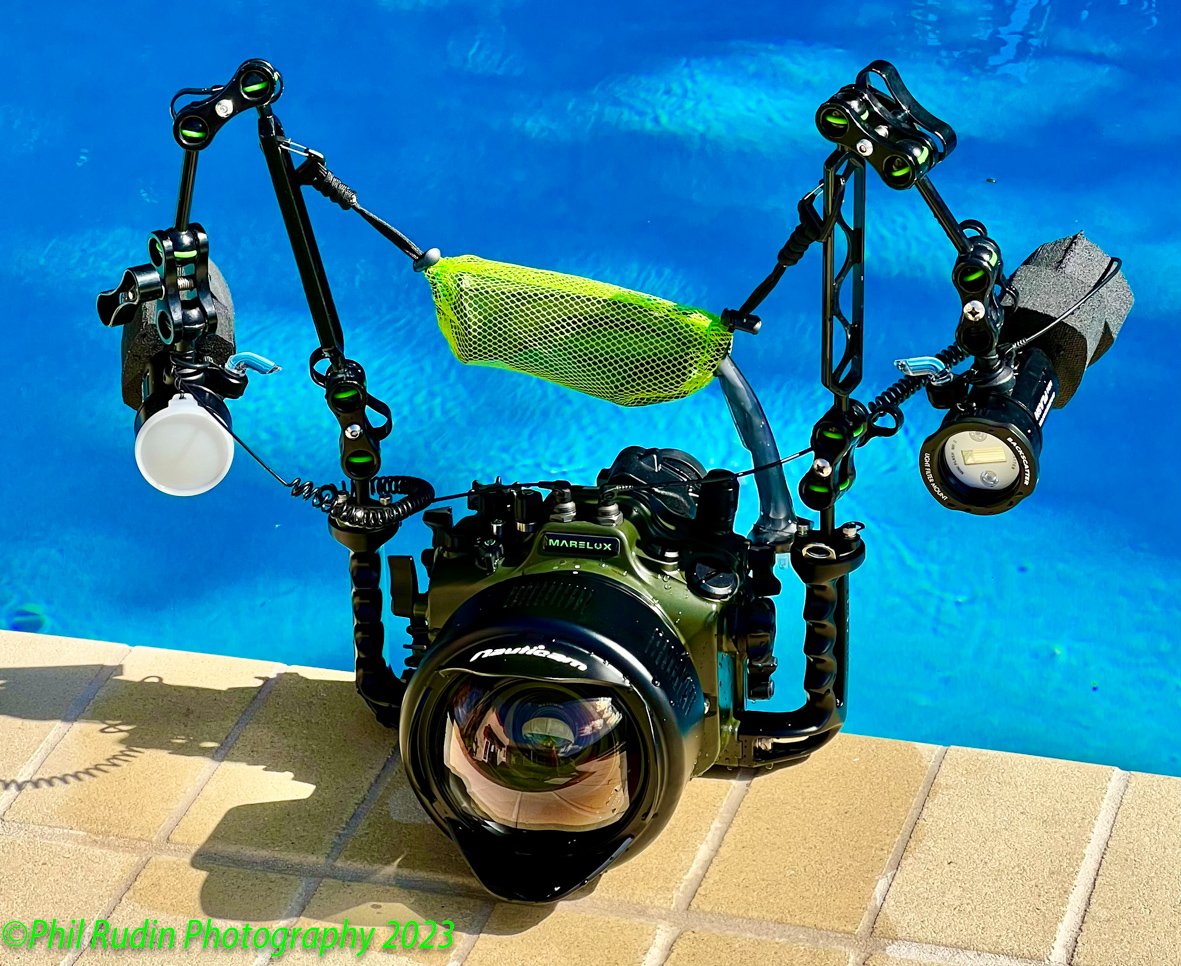
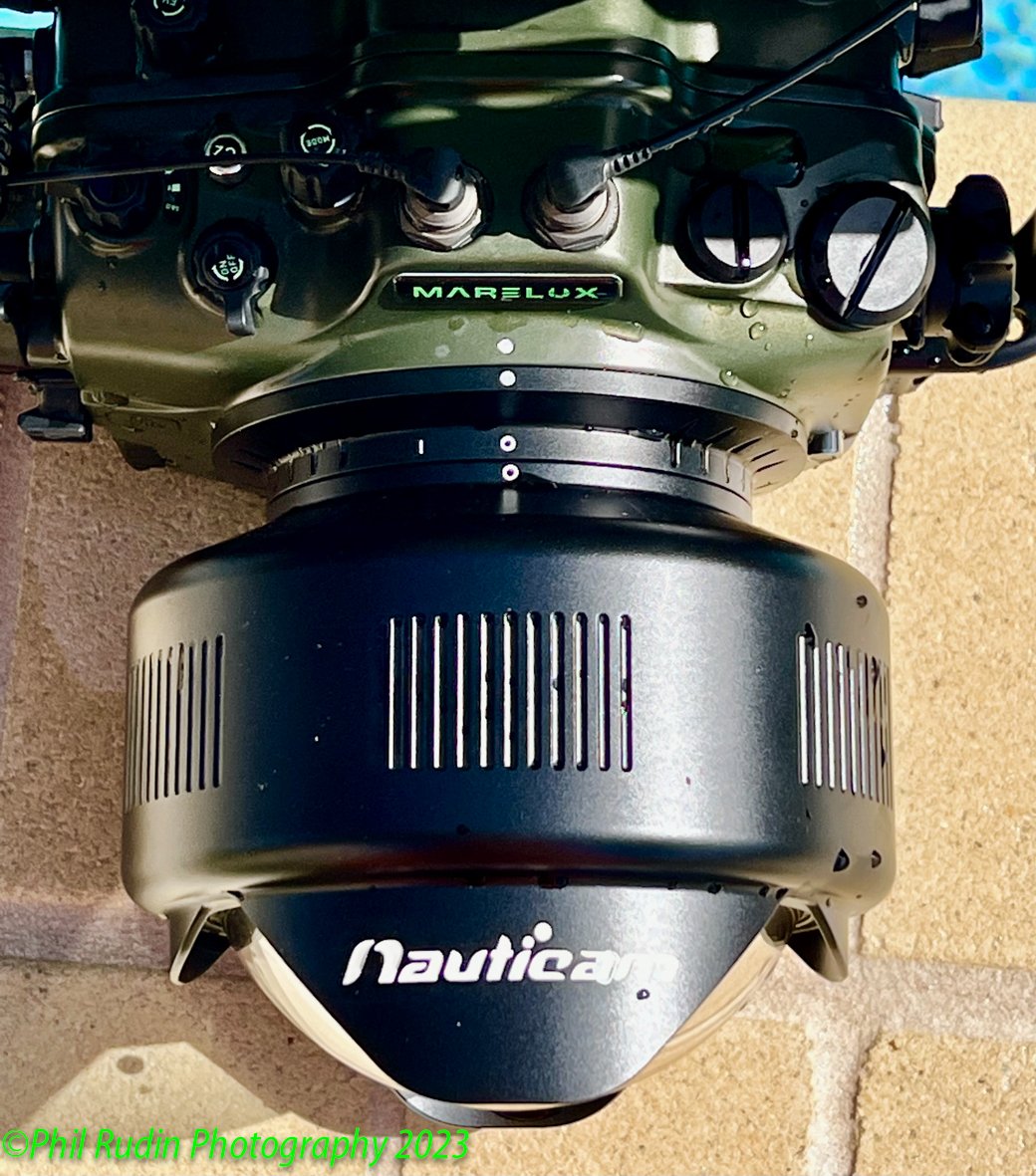
I have been playing with the WWL-1 and with the prototype WACP, I have also received several photos from other users here of their gear WACP-C and WACP-1 and I have to admit I am rather suprised
The first assumption that I had made and perhaps other people have made too was that a dry mount would mean that the rear element of the lens was closer to the adapter compared to a wet mount
This has proven wrong an all accounts. Comparing the Sony 28-60mm with flat port 45 and WWL-1 shows that on average the wet mount means that the lens is closer to the wet lens despite the port we are talking about less than 5mm
With the WACP-C and 30mm extension the front of the Sony 28-60mm is over 1 cm away from the rear of the optic.
With the WACP-1 on N100 mount the situation is similar to the WACP-C and if you use the N120 mount with the 35mm extension the lens is actually further away 5mm. Interestigly Nauticam puts the * for best performance on the N100 mount
The other assumption that I had was that the dry mount would be more effective in terms of contrast and flare because it is dry. However with the Sony 28-60mm lens and the gap between master and water lens there is possibility of bouncing light. In addition the lens is very small compared to the port so there is a lot of space to have light rays scattering around. Does this explain why the WACP-C flares more? Not sure but it is something to test
The final assumption I had was that the field of view would be the same. That is also not true, although the lenses have the same 0.36x magnification the WWL-1 sits closer to the lens than the WACP-C and the WACP-1 with N120 mount further away. So it seems like the field of view of the WWL-1 I have some questions in my mind that I would like to have an aswer to 1. Why is nauticam not making a 20mm N100 extension ring so that the 28-60mm sits right on the glass? 2. Is the gap intentional or just a concidence due to the fact the wet lenses are generic not specific to a lens? 3. Should I work to get my lens closer to the back of the glass or not? Common sense say yes, this would reduce vignetting and improve contrast reducing aberrations at the edges but maybe I am missing something here? I know the answers are not in the forum but would welcome opionions from users of those lenses