Leaderboard
-

bghazzal
Members2Points608Posts -
Ilan Ben Tov
Members2Points24Posts -
Apneagraph
Members1Points41Posts -
Tobyone
Members1Points76Posts


Popular Content
Showing content with the highest reputation since 09/11/2023 in Image Comments
-
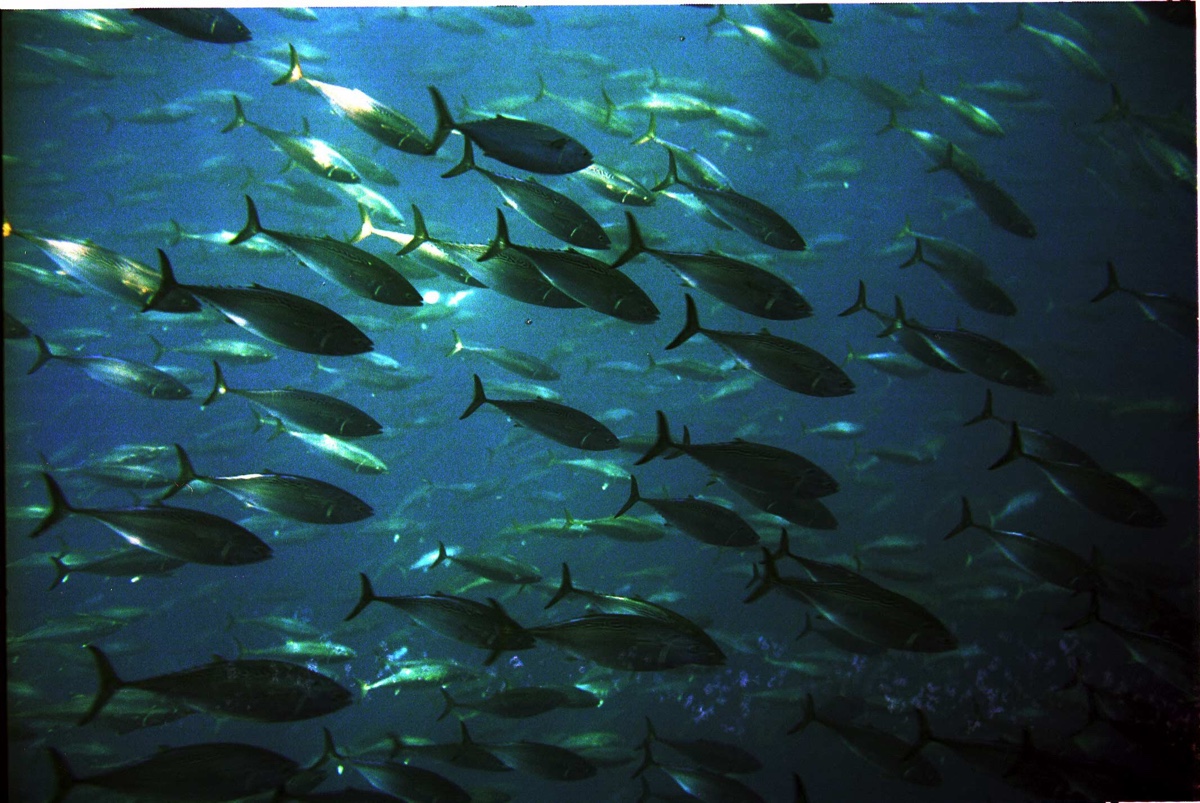
.JPG.183b4c0c873ecf07f7b510f870469499.JPG) My old stomping grounds - really miss that monster-pack of longnose emperors, trevallies and more... Brings back great memories, thanks. (as a side-note, Richelieu Rock is actually in the Surin Islands, and part of the Mu Ko Surin National Park, rather than the Similans). cheers1 point
My old stomping grounds - really miss that monster-pack of longnose emperors, trevallies and more... Brings back great memories, thanks. (as a side-note, Richelieu Rock is actually in the Surin Islands, and part of the Mu Ko Surin National Park, rather than the Similans). cheers1 point -
1 point
-
1 point
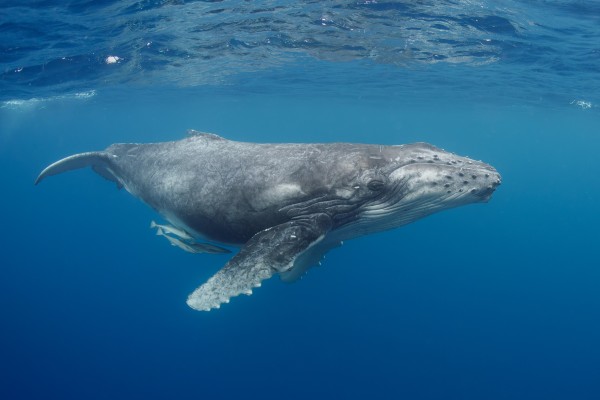 Thanks, this is very helpful. i'll be going in February with a Japanese friend who runs her operation here, and yes, I expect it to be crowded and a little too much, but I want to see it for myself. She doesn't fin as well, it's all about positioning - we'll see how it goes. I've worked in two places with whaleshark swims - one was Maldive's South-Ari, and that was a nightmare, especially after the pandemic, with speedboats coming from Male for it, often chaotic and dangerous for both the animals and customers. The other was LaPaz in Mexico, where CONAMP had implemented some of the strictest regulations and practices I'd ever seen in the bay of LaPaz (registration of boat operators and guide, with training, GPS on the boat, pre-booking, assignment of a timeframe and zone in a pre-defined grid in the bay of La Paz, boat speed monitoring of the boat through GPS and constant radiocontact with the rangers... I certainly share concerns about this and not sure it can go on unregulated like this, but then again it would be interesting to see whale protection regulations implementated in a country like Japan, given the whaling issue 🙂 It's good that operators are doing their best to make it work (you need a diving or freediving certification to join whale swims, which helps a little), especially with the past tendency to follow a mass-tourism model in Okinawa.1 point
 -
1 point
@bghazzal I went with Daisuke from Okinawa 39ers who I've joined for all my Okinawa trips. I went for two days, and only managed to see the whales in the water on the 1st day. On the 2nd day, we only managed to see them on the boat, and couldn't see them when we went in the water. For the 1st day, there were only the four of us + two guides, so it was quite comfortable under water. The 2nd day, there were probably 9 of us + 3 guides, so it was a bit crowded. Daisuke did emphasise no fin kicking, no free diving and no swimming towards the whales. However, on the 1st day, the calf got so close to some of us that they had to take evasive manoeuvres. It also took us almost the entire morning (7am - 12pm) to see the first few whales from the boat, and then the next 1-2 hours to get in the sea to join them. The sea was quite choppy on both days without any breaks so sea sickness meds were a must. I still got seasick on day 2 and had to puke (I am quite susceptible to sea sickness though). Also, although the water temperature was fine with a 5mm wetsuit, when back on the ship the wind chill was quite severe. Probably a neoprene jacket to wear when back on board would have helped. Daisuke mentioned that February may be the busiest month during the season and he mentioned that sometimes there were up to 10(?!) boats per pod of whales, which sounds crazy. I was discussing with someone who had done the whale swim three times, and we were wondering whether the whale swim would be able to continue indefinitely. For the second day, there were three boats following the same pod of whales, and started to feel a bit like we were harassing the whales a bit too much.1 point
-
1 point
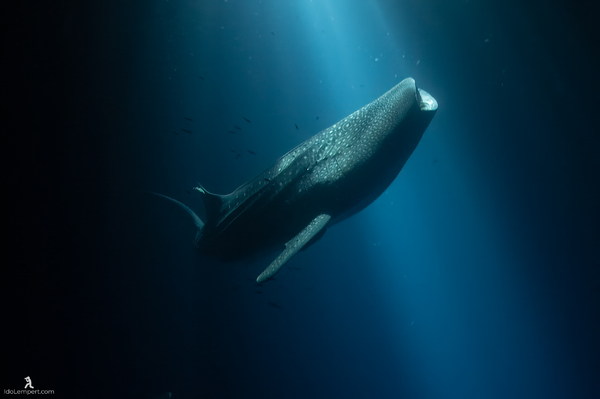 I can't express how much I like this shot... Still one of my dreams, getting in touch with a big whaleshark like this one.1 point
 -
1 point
-
0 points
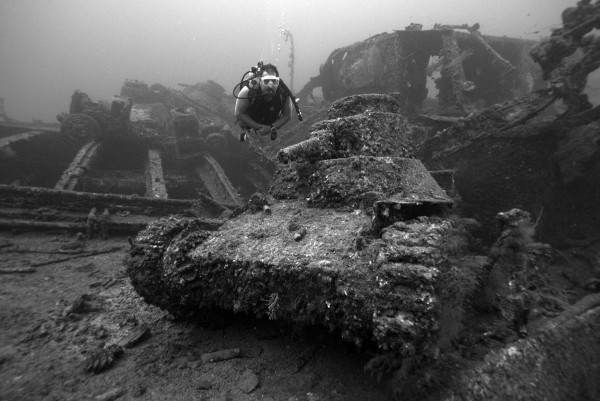 Nice pic, but as I recall, that tank sits at about 150' FSW, that's a pretty short dive on a single tank (no pun intended).0 points
.thumb.jpg.6a528f6e907b1ef84a1cc030ea3b6f75.jpg)