Everything posted by AlexUW26
-
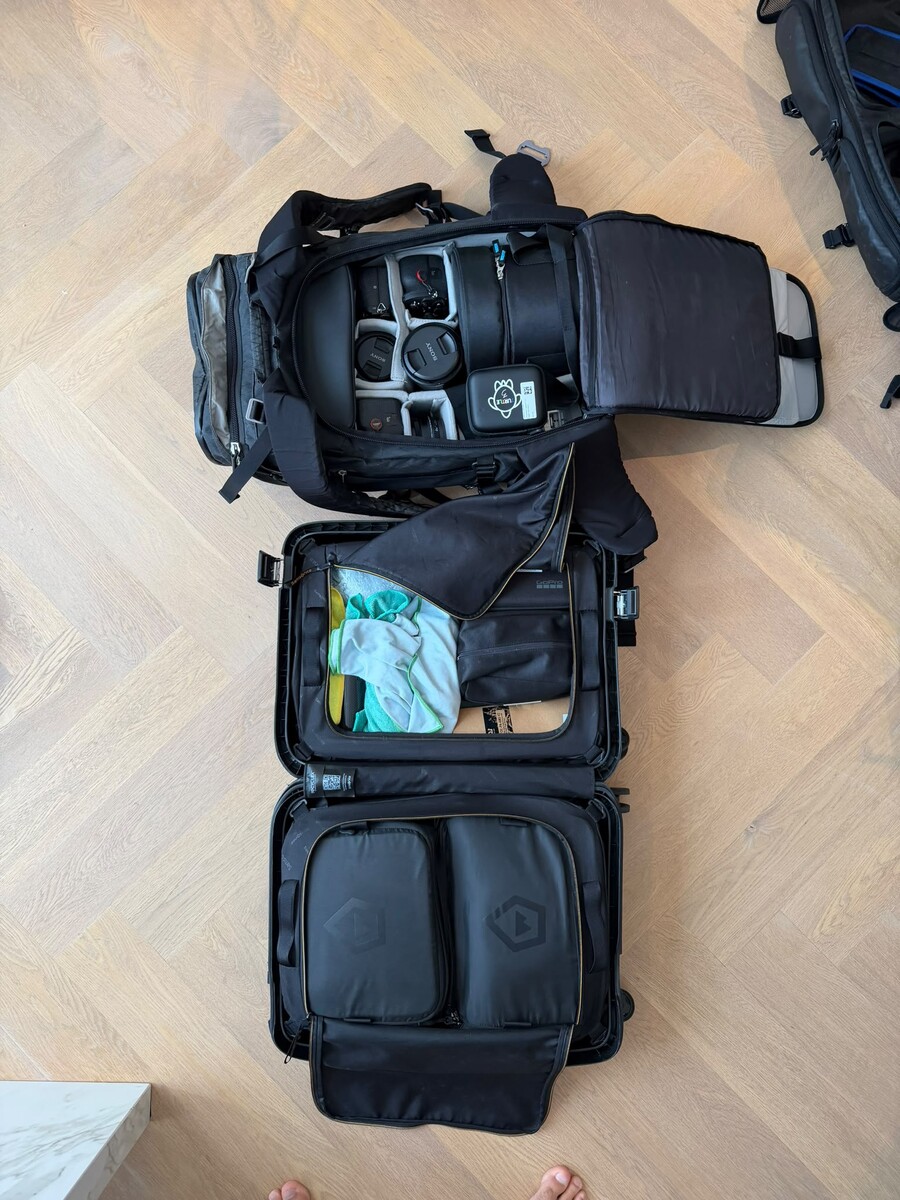
I changed my plan a bit. I'll bring a roller bag and my F-Stop backpack. If they don't allow the roller as carry-on, I can take out the housing and strobes and carry those separately. My only concern is that my F-Stop backpack is quite large, so they might be strict about that too. Funny enough, I thought the WACP-C would be more compact than a dome, but for travel the shape of a dome is actually much easier to pack.
-
Hey everyone, I'm travelling to French Polynesia (Tahiti, Moorea, Rangiroa and Fakarava) in two weeks and was hoping to get some advice from anyone who's flown with Air Tahiti. Their carry-on policy says the limit is 5 kg, which doesn't leave much room for camera gear. I'm travelling with a Nauticam housing for a Sony A7R VI, along with a WACP-C, and I normally carry everything in a Wandrd Hexad Access Duffel backpack as my carry-on. I've never had any issues with major airlines or other regional carriers, but I know Air Tahiti operates smaller aircraft and I'm a bit concerned about how strictly they enforce the carry-on weight limit. Has anyone travelled with underwater camera equipment on Air Tahiti? Were they strict about the 5 kg limit, or did they mainly care about the size of the bag? I'd really prefer not to check my camera gear if I can avoid it.2 I'd really appreciate hearing about your experiences or any tips. Thanks!
-
Thanks Romik! WACP-C is the option I will go with :)
-
I followed your advice and bought the A7R VI, the Nauticam housing is arriving this week! There’s also a small chance that the A7 IV will fit the same housing after comparing them side by side, but I’ll have to test it when I get the housing. The next step is choosing the right lens, haha. I’m currently still torn between the WACP-C with the Sony 28–60 kit lens, or going with the larger 230mm dome port. The dome would let me use the 16–35mm f/2.8 GM II that I already own, and it would also work with the Canon 8–15mm fisheye. It’s definitely the more expensive option, but it offers a lot more flexibility underwater, at the cost of a lot of extra weight. Could also use the smaller dome but that's not a good option for the 16-35...
-
Has your opinion changed after doing this review? I’m about to pick up my new underwater housing setup for my Sony A7R VI and already own the 16–35mm f/2.8 GM II, so I could use that behind a dome port. However, I’ve been leaning more toward the WACP-C with the kit lens. A dome is quite a hassle to travel with, but if the image quality is noticeably better behind a dome, as you suggest in your review, I may reconsider.
-
For those who have shot both the WACP-C and the WWL-1B, have you noticed any difference in flare resistance or overall image quality? I'm particularly interested in situations with the sun in or near the frame. Does one handle flare and ghosting better than the other, or are they fairly similar in real-world underwater use?
-
For those shooting the Sony A7R V underwater (or a similar Sony system), have you run into any issues using Lossy/Compressed RAW? In particular, have you noticed banding, lines, posterization, or other artifacts in blue water backgrounds when editing files, especially after significant white balance or exposure adjustments? Or has it been a complete non-issue in real-world underwater use? I'm asking mainly in the context of fast-action subjects such as the sardine run or Magdalena Bay, where shooting in Compressed RAW allows 10 fps, compared to 7 fps with Uncompressed or Lossless Compressed RAW. I'd be interested to hear whether anyone has seen any image quality compromises underwater that would outweigh the benefit of the higher frame rate.
-
Do you guys know if there’s any difference in image quality between the WWL-1B and the WACP-C, particularly when it comes to flare? Or is it the same?
-
Great image!
-
So you'd take a fisheye for whales? I always thought it was better not to go too wide with large pelagics. I photographed orcas and whales in Norway with my 16–35mm, and that worked well. Sure, there were moments when it wasn't quite wide enough, but at the same time the animals were often farther away than expected. I don't really know how close they typically get in French Polynesia, though. I don't have a huge amount of experience shooting whales...
-
Yeah that's a great point :)
-
Yeah, the wider field of view is definitely nice, but from what I've seen, the image quality itself doesn't seem dramatically better, maybe better around the corners. For something that costs €3k+, I'd expect a much more noticeable improvement compared to the regular domes. The comparison images I've seen, especially in situations shooting against the sun, don't really convince me that the image quality is significantly better, but maybe I am wrong...
-
Hey man, thanks for sharing these images. Those flares look pretty nasty. I am seriously considering the WACP-C as an all-round lens, but after seeing this, I might go with the traditional dome port and 16–35mm setup instead. Does this happen every time you shoot toward the sun? I actually enjoy shooting into the sun when using strobes because it creates great sunballs, so I'm wondering how much of an issue this is in practice. Hey man, thanks for sharing these images. Those flares are pretty brutal. I was seriously considering the WACP-C as an all-round lens, but after seeing this, I might go with the traditional dome port and 16–35mm setup instead. Does this happen every time you shoot toward the sun? I actually enjoy shooting into the sun when using strobes because it creates great sunballs, so I'm wondering how much of an issue this is in practice? Hey man, thanks for sharing these images. Those flares look pretty nasty. I am seriously considering the WACP-C as an all-round lens, but after seeing this, I might go with the traditional dome port and 16–35mm setup instead. Does this happen every time you shoot toward the sun? I actually enjoy shooting into the sun when using strobes because it creates great sunballs, so I'm wondering how much of an issue this is in practice. Hey man, thanks for sharing these images. Those flares are pretty brutal. I was seriously considering the WACP-C as an all-round lens, but after seeing this, I might go with the traditional dome port and 16–35mm setup instead. Does this happen every time you shoot toward the sun? I actually enjoy shooting into the sun when using strobes because it creates great sunballs, so I'm wondering how much of an issue this is in practice?
-
Hey Romik, thanks for the great feedback and great video! I actually have an extra camera that I can use for a top-down shot, so maybe the WACP-C would be the best option after all? :)
-
Hey Chip, Thanks for the great feedback. It’s good to hear that flare isn’t a major issue. May I ask when you tend to use your dome instead of the WACP-C, and vice versa?
-
thanks for you response. Why did you get rid of the WACP-C?
-
Hey Chris, Thanks for the great feedback. I like the fisheye option, but since it's not a native Sony lens and requires adapters, I'm a bit hesitant. I was also thinking that with whales, having the flexibility and extra reach of a 16–35mm could be really useful? So, to summarize: if you were heading to French Polynesia specifically for whale photography, what would your lens choice be? I'll also be going to Fakarava afterwards to dive the Wall of Sharks, so I'm trying to find the best overall setup for the trip.
-
With my Ikelite large dome, the reflections were quite bad. Even if I covered the text on the lens, I would still get noticeable flare when shooting towards the sun. If the WWL handles flare well, though, wouldn't the WACP-C perform similarly? Or are there some optical differences between them that affect flare resistance? I was under the impression that their image quality was very comparable.
-
How have you found flare with the WACP-C? Is it generally manageable when shooting whales or other large animals near the surface with the sun nearby? And in what situations would you choose a dome over the WACP-C, or the WACP-C over a dome?
-
What about your experience with flaring? Is it something you run into often, or is it generally manageable? For example, how does it perform when shooting whales or other large animals close to the surface with the sun in the frame or just outside it? Would you recommend the WACP-C or a dome setup in that situation?
-
Thanks for your response! Yes, the 16-35mm f/2.8 II is the lens I'm talking about. I saw that Nauticam recommends the 230mm dome for it, but that's quite a serious investment. That's actually why I started looking into the WACP-C as an alternative. Ideally, I'd like to keep the setup relatively compact and not spend a fortune. I usually shoot around f/8-f/9 and don't mind going to f/11 if needed. I've been using the acrylic Ikelite dome port so far, so I'm not really spoiled by high-end glass domes. Curious to hear what your experience has been and whether you've had good results with a smaller dome on this lens.
-
Hey man, I was wondering what you ended up choosing and how it performed for you with the whales. I also have the Sony 16–25mm f/2.8 G II and I'm heading to French Polynesia this summer. I'm torn between bringing the WACP-C or getting the 230mm dome port. I'd love to hear what you went with and whether you were happy with the results.
-
That could be an interesting option as well. So if I understand correctly, by adding the 2x converter, you get a fisheye effect on the wide end and roughly a 28mm equivalent on the long end, right? What are the downsides? Is it mainly that the lens isn't native, so autofocus performance might suffer a bit, or are there other compromises? I do usually prefer to stick with same lens brand haha, but open to suggestions. Out of curiosity, what setup are you shooting with?
-
Hey Chris, Thanks for the response! I've been looking at alternatives for quite a while now. Initially, I was planning to go with the A7R V and AOI housing, but I couldn't find enough reviews online, and there wasn't much information available regarding long-term commitment to the Sony system. That was quite important for me before investing in a specific UW lens/ port setup. I also looked at Isotta and even had the chance to handle one to check the ergonomics. Here in the Netherlands, the price difference between Isotta and Nauticam was around €300 for the A7RV. For me personally, I'd rather invest that extra money into better ergonomics. The Isotta felt extremely reliable and sturdy, but the handling and overall user experience felt better with Nauticam. Regarding the WACP-C, I've been told that the image quality is significantly better than the 16-35mm behind a dome port. Unfortunately, I haven't had the chance to test this myself yet. The price difference between the WACP-C setup and a 230mm glass dome was actually quite similar. I could go with a cheaper acrylic dome, but that might compromise image quality? I also considered the WWL, which is a more affordable option. However, since I'll be doing a lot of humpback whale photography where I need to enter the water quickly, I was a bit concerned about potential bubbles between the lens and the wet optic. All in all, I'm fairly certain that I want to invest in Nauticam. I'm still not 100% convinced on the camera body, though. And yes, because I'd like to bring it on this trip, I'm kind of forced into making a rushed decision..... So it's basically a choice between going for the more expensive option, which may be the better long-term investment, or choosing the less expensive body and having a backup camera on the trip, while potentially wanting to upgrade the camera body sooner.
-
The A7RIII was good, but the autofocus was lacking, but my biggest issue was the Ikelite housing. The buttons would often get stuck at depth, so I never felt it was reliable enough. Since this upcoming trip is a once-in-a-lifetime experience, I'd like to bring some new gear that I can trust.