Everything posted by DreiFish
-
This is exactly what I did back in 2024 when I was testing the strobes. I chose continuous shooting rates my Canon could support (3fps, 6fps and 12fps) and then for each strobe dialed down the power until it could keep up with that frame rate without any black frames for at least 20 frames in a row. Once I established what the setting/power level on the strobe was, I measured the GN of the strobe firing at that setting. What I observed is that while it's indeed true that some strobes prioritize firing on each shot even at lower power (HF-1) while others (Apollo III in MTL) prioritize trying to keep all exposures evenly lit by not firing at all on some exposures to fully recharge their capacitor before firing, the end result once you dial down the power sufficiently is the same and indistinguishable -- a series of shots that are all lit with minimal exposure variance. The other thing I noticed is that pretty much every strobe starts out brighter for the first 2-3 shots in the series and gradually dims until shot 10 or so in the series after which it basically settles into a steady-state brightness for the following 20 shots. I measured the brightness based on those latter 20 shots where the shot-to-shot variance was low. I'll be the first to concede that this is more of a technical capability test than a real life test, in that probably if you're really shooting high frame rates to capture behavior, what you care about is the first 10 shots, not the tail end when the strobe settles into steady-state. And there may be real difference in how each strobe handles those first 5-10 shots. I wasn't testing for that per se. Finally.. yes, I had one of the earliest production batches of the Apollo III strobe, before they came up with a 2.0 version. But as far as I know, the 2.0 version is physically identical, the only changes are to the wireless control protocols. Light output and recycling time should be the same between the two models. (Gemini claims: The main difference between the Marelux Apollo III and the Marelux Apollo III 2.0 is the updated wireless communication system and internal software that improves stability for various flash modes. The 2.0 version was primarily introduced to allow better integration with the Lumilink 2.0 wireless transmitter.) My theory is that the HF-1 is able to put out more power in high frame rate mode because of better batteries -- I was using the HF-1 with the nitecore 6000mah 21700 batteries, while the Apollo III had 3 generic 18650 batteries that it came with. Believe the 21700 batteries are just newer/better technology.
-
I ran the test you're describing 2 years ago between the HF-1 and Apollo III (basically, normalized power output after the initial dimming period) to see what the max power each strobe could achieve in a continuous shooting scenario at 3fps, 6fps and 12fps was. Here's the results (also in the shared google spreadsheet that's pinned at the top of this forum). My results were that in actuality the HF-1 puts out more power at each frame rate than the Marelux Apollo 3 despite the latter marketing its MTL feature heavily. (I have no incentive to make this up -- I own the Marelux Apollo 3 and have been trying to sell my 2 units since.. 2 years ago :)) Strobe GN @ 3fps GN @ 6fps GN @ 12fps Backscatter HF-1 16 11 8.5 Backscatter MF-2 13 2.8 2.8 Supe D-Pro 13 10 8 Marelux Apollo 3 11 7.1 6.3 Ikelite DS230 11 0 0 Inon S-220 10 5.6 5 Sea & Sea YS-D3 9 4.5 4.5 Seacam 160D Retra Pro Max
-
Yes, everything works as far as I could see, including the photo/movie switch. (Sorry, only had the body for a few hours, so didn't test it in the water, but everything seemed to work on land).
-
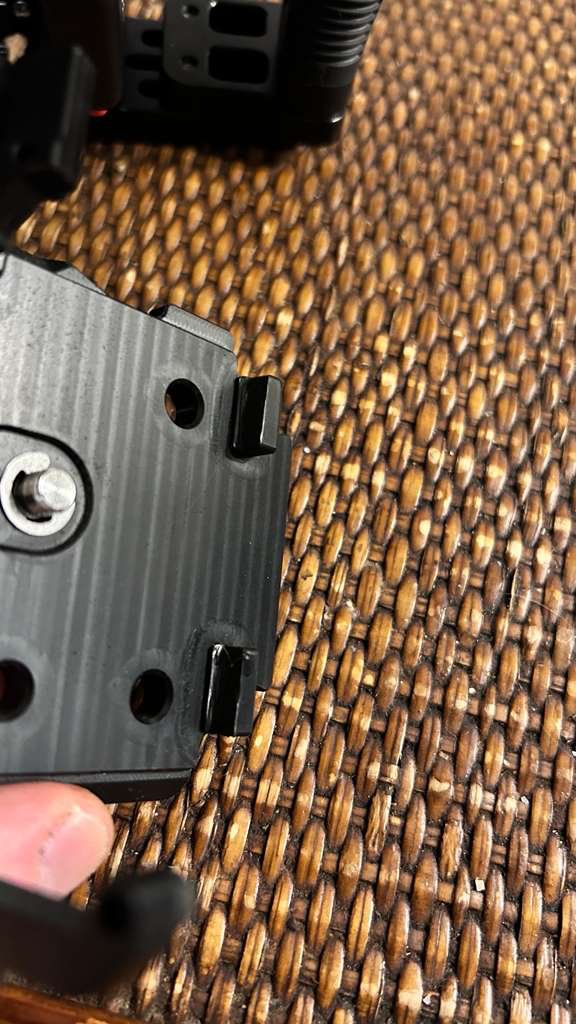
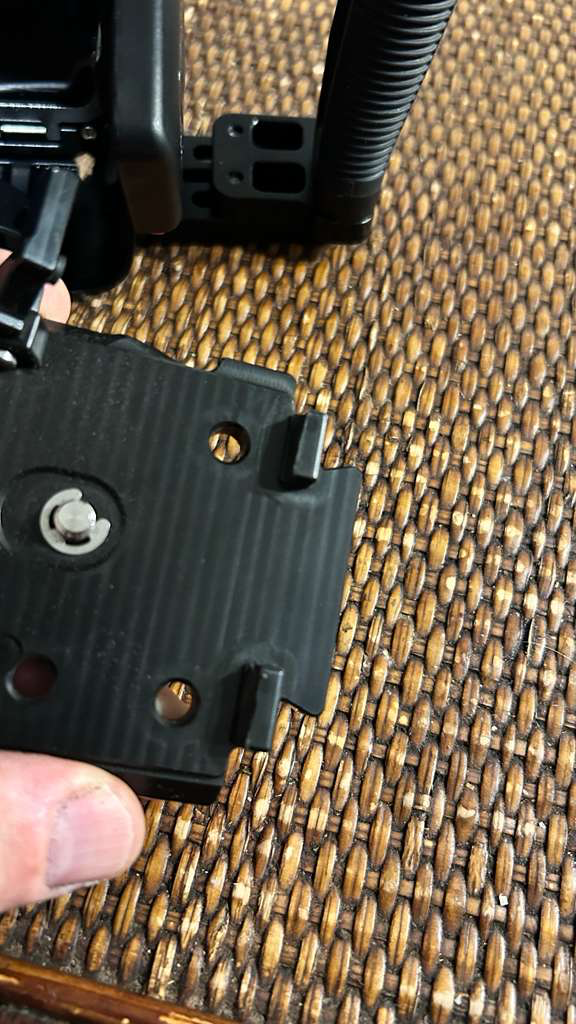
These guys had to have about 1-2mm sanded off in with a dremmel (I'm sure hand file would work just as well) to let the camera sit properly on the tray since it's marginally thicker. But once I did that.. everything else fit like a glove. WhatsApp Video 2025-12-29 at 23.05.48.mp4
-
I'm happy to report that after some light dremmel work on the mounting tray (seems camera body + screen is 1-2mm thicker than the Mark II, the Canon R6 Mark III fits perfectly in the Nauticam R6 Mark II housing. As far as I can tell, every single button, dial, lever, etc - works the same as on the Mark II. So while the body does differ a little, the differences seem to be small enough that they're within the tolerences for the Nauticam R6 Mark II housing at least. Shucks. Now I'm seriously tempted to upgrade....
-
One question -- is the general unshaprness/blurriness of the background (area 2+ meters in front of the camera) here caused by water clarity, or is it the AOI lens limiting the focus range of the Action 5 to a narrower area right in front of the camera with infinity out of focus?
-
Both the Wide Rocksteady (12mm) and the HorizonBalancing Dewarp crops look decent as far as image quality in the corners goes, though I think I prefer the 12mm. The HorizonBalancing Dewarp introduces a tad too much pincushion distortion in the corners for my tastes which the more fisheye-like Wide Rockstead counterbalances. Corner shaprness is not great, but.. it's not bad. Definitely better than without the wet lens. I guess we can conclude from this thread that the AOI wet lens works best with a ~15mm field of view on the default camera. Action 4 and 5 don't have a setting that gets you exactly to 15mm, so the 12mm Wide Rocksteady might be the best bet. I've downloaded the raw footage from Bio and I'll try to play around with it a bit to see what flexibility it offers in terms of color correction and post processing. Thank you very much for sharing those files, Bio!
-
Any findings to show that either the Action 5(4) or the Ace Pro 2 (original) play better with the AOI or INON wet lens options? We'd be using it exclusively for video, not photos as a complement to our housed cameras. Given that size is the main factor, I don't think a housed iPhone is a viable alternative even if it has some image quality advantages. I want something compact and uncomplicated for scenarios where a housed full frame camera is not ideal. Basically, I don't need/want 10 bit and a lot of post processing if the OOC results are adequate, so it's not a dealbreaker either way between the Ace Pro 2 and the Action 5. I do seem to recall some findings here on Waterpixel that the AOI lens interacts poorly with the Action 5's wides FOV leading to attrocious corners, which would be the main dealbreaker for me going with the Action 5 over the Ace Pro 2. Otherwise, I slightly prefer the DJI from a 10 bit, better battery life, brighter rear screen (at same 2.5" size) perspective. And the integration with the DJI wireless mics is a nice plus for topside. I've owned plenty of DJI drones, so I'm comfortable with their ecosystem and generally hold them in high regard as a manufacturer. Regarding the GoPro -- my wife has an Hero 8, and part of my reluctance to buy a Hero 13 is that I question whether it would be a meaningful upgrade in image quality given the same sensor basically. The 1/1.3" sensors of the Ace Pro 2 and Action 5 seem more promising from that perspective, and I've never really found the GoPro footage quality to be adequate for my standards. While I definitely appreciate the more developed ecosystem of accessories like the AOI monitor housing for the GoPro line.. none of that can really make up for the image quality limitations. It would be nice if the Action 6 comes out with a 1" sensor. It would bring me back to the days when I first started filming underwater with a Sony RX100 12 years ago 🙂
-
If you had to buy an action cam today, which would you buy? I just watched about two hours of reviews.. and well, the Insta360 Ace Pro 2 and DJI Action 5 both seem overall better than the GoPro, but not sure which to pick between them. Interested in using it topside (50%) and underwater (50%), likely with a wet lens. I have the AOI wet lens already. So corner sharpness underwater is one consideration.
-
Seems DJI is accelerating its product release roadmap in general, potentially as a strategy to hedge against higher U.S. import tariffs under a Trump administration.
-
I placed a pre-order for the 2 Retra Maxis and was recently advised by Oscar that, due to overwhelming demand and potential complications ramping up production, the shipment would be delayed at least until April 28th. Retra offered to cancel and refund the order if that delay is too long. I'm.. a little concerned that this is quite reminiscent of the recent production issues they had with the Lithium battery packs for the circular flash tube line (though this time, for reasons of too much demand rather than too little!) Not sure what I'm going to do yet, but thought I'd share this info here for others interested in these strobes, which look great on paper 🙂
-
The R5C housings are bigger (at least Nauticam) which is both a benefit and a downside. I own it.. so had plenty of first-hand experience. On the benefit side, you get better stability and ergonomics for filming in the water (e.g. separate, proper cinema zoom and focus wheels), and the space for a USB-C battery pack, which are both great things. On the drawback side -- it's bigger and more expensive, significantly heavier.
-
Edited.
-
Vs. Z8/z9 -- better ambient light custom white balance Vs. A1 - 8k60, 4k60 downsampled, in-camera raw Vs. R5C - better dynamic range is pretty much the only thing I can think of
-
A further price drop -- willing to sell the entire package for $600/strobe or $1300 for everything.
-
Indeed, seems Retra pushed the flash tubes (I imagine they're the same as used in the YS-D3 and Backscatter HF-1) just slightly further, and put a slightly brighter, slightly better CRI video light on there. Still, can't complain about the end result -- if you're in the market for the Backscatter HF-1s, you should also seriously consider the Retra Maxi, since price is very similar and Retra arguably has a better range of accessories atm and build quality. What I especially like is the even higher battery capacity (550 full power flashes vs. 375 on the HF-1); the even faster recycling times (claimed 50fps vs 30fps -- though how that translates in practice to more practical 1-10fps shooting speeds remains to be seen), and, most importantly, same weight and similar size with better boyancy characteristics (only -20g negative). Plus, better controls. If cross-shopping, I guess it comes down to how interesting/important the Backscatter HF-1s ambient light filters are to you and which strobe has a better TTL implementation -- though those are really niche features for most. Excited to try them..
-
Hmm... on first glance, it seems to be a Retra version of the Backscatter HF-1.... Does it use one straight flash tube, or two? The claimed GN of 46 seems a bit high for a single flash tube strobe. Any information on recycling times or Watt-seconds?
-
Unfortunately, you're running into limitations of physics here, because of the way dome ports produce a curved virtual image, which is what your lens is focusing on/filming. On an APS-C sized sensor, that means you really can't be below F8, and F11 is probably better in order to get reasonably sharp corners. The only things that can help are a larger dome or shooting at less wide focal length. Things start to improve around 20mm (FF equivalent) and get pretty good by 24-35 mm. But if you want to shoot at 11mm (16mm FF equivalent), you need both a large dome (230mm preferred) and narrow apertures in the F8-F11 range. Getting a different lens might improve things slightly, but the issue is that the center of the image and the corners are at different focal length because of the curvature of the virtual image created inside the dome. Lens quality can't solve that. Only a larger dome or a narrower aperture can. Since the Blackmagic camera is also ISO limited.. you basically either have to bring a lot of artificial light into the scene or look into wet contact optics like the Nauticam WACP-1 or WACP-2
-
Detailed review from Gerald Undone: + Dynamic range is class-leading in video (13.5 stops), better than A1 (12.9 stops) - Still no easy way to set white balance...
-
Price drop to $800/strobe and $200 for the trigger. $1500 for everything.
-
That's not vignetting -- you're just using it wider than intended, so you're part of the way towards the circular fisheye, just not all the way there. It's the exact same effect you would have if using it without a TC on full frame wider than 15mm...
-
No direct experience, but Hawaiian waters are generally pretty clear, blue water territory. I'd start experimenting with the flat 5500k or flat 4500k diffusers, those are probably your best bet.
-
Hey Adventurer, That's what I was hinting to above that once you get to extreme retrilinear wide angle focal lengths, you start having to deal with extreme pincushion perspective distortion near the edges and corners of the image. This is a function of the focal length, and completely separate from the optical quality of the lens and how sharp it is at the edges or in the corners. I tend to agree with you that the perspective distortion can make it a hard lens to shoot underwater, especially if you're used to the barrel distortion that fisheye lenses (and Nauticam's wet wide angle optics) produce. It just.. doesn't look right, and objects near the edges get stretched in aesthetically unpleasant ways. This is definitely an issue at 14mm, and exponentially worse at 10mm. It's basically gone by 20mm, so I'd say it's easier to deal with in the 16-20mm range. But of course, then you trade off field of view and how close you can get to the subject. Which I guess ultimately is why lenses with barrel distortion like fisheyes and nauticam's wet wide optics may be a better choice for the majority of underwater wide angle shots where straight lines aren't an absolute must. You can get pleasing images with extreme wide rectilinear lenses. I posted some at 14mm in this thread: But.. it's generally harder to do so. At least for those of us used to shooting and seeing typical wide angle scenes with barrel distortion compressing the edges. For versatility, I still think the fisheye (or a fisheye zoom) should be your first choice for underwater wide angle stills. Followed by Nauticam's wet wide angle optics like the WWL-1, WACP-1 and WACP-2. Then a rectilinear zoom in the 16-35mm range (if it goes wider to 14 or 15mm it's a bonus, but you might not end up using the wider end too often). Only then should you consider rectilieanear lenses in the 10-14mm range for specific shots. But they're not really general use lenses in my view. You run into the same extreme pincushion distortion at the edges when shooting video also. Any sort of camera movement will accentuate the pincushion distortion near the edges, distorting any objects that enter the edges of your shot. If anything, it's harder to compose your shot to hide/minimize the pincushion distortion at the edges with video than it is with stills. This is why many people seem to prefer the Nauticam wet contact optics like the WWL-1 or WACP-1 for video, since their mild barrel distortion at the edges produces a more natural and organic result with video than either a fisheye or wide rectilinear lens. If using rectilinear lenses, again, the issue resolves itself at tighter focal lengths obove 18-20mm. You may even get away with 16mm with careful composition. But I at least haven't personally seen any great examples of underwater video filmed with rectilinear lenses wider than 16mm. If you have, please post links!. For further discussion about the use of extreme wide angle -- fisheye and rectilinear focal lengths with video, see this thread: )
-
You're right, other housing manufacturers have a shorter lens mount to front of housing flange distance (and for Marelux, wider inner port mount diameter, 125mm instead of 120mm) on their full frame Canon RF housings. This offers a few more choices in terms of getting the optimal lens placement without vignetting. I have no doubt that you can get the RF16mm prime to perform optically better with no extension / 10mm extension on Marelux housings, which I believe are about 20mm shallower in depth than the Nauticam n120 RF housings. You also can achieve less vignetting with wider 10mm lenses I believe). Whether that placement flexibility significantly improves the optical performance of the RF16 prime behind a 140mm or 230mm dome compared to what can achieved on Nauticam n120 housings is a separate empirical question -- I don't know. Perhaps with the right extension, the RF16 will actually perform better optically than the RF 14-35L or 15-30 or 10-20L lenses. It would give you a very small package with the 140mm dome. But.. of course, the tradeoff will still be zoom versatility, which is a significant tradeoff to have. I really don't think the RF16mm swings the balance towards Canon when comparing Canon RF vs. Sony FE full-frame systems for underwater wide-angle use. Sony has unique prime wide angle options too, like the 14F1.8 GM lens and the Laowa 10mm autofocus prime.
-
Hey Adventurer, No, the 8-15 + 1.4x (or 2x for that matter) doesn't vignette by itself. Of course, you need to have the right extensions for your dome port.. shorter extension may somewhat vignette, but that's a function of the port and extensions, not the lens and TC. The Canon FE Zoom is one of the best wide angle options on both Canon and Sony full frame systems. Also for their crop bodies. And it works great (with no TC or with a focal reducer) on M4/3 systems as well.