Everything posted by DreiFish
-
I would certainly consider them. Seems U.S. distribution is a bit lacking though, so probably easier to source in the E.U. than North America.
-
Interesting, Chris. I didn't realize they would be different in the same port size (n120). Anyway, my 58.8mm measurement is for the Nauticam Canon RF housings.
-
Good investigative work and good summary, Ben. I got the CTO and minus green filters in various strengths -- just finding the time and energy to test them is proving challenging 🙂
-
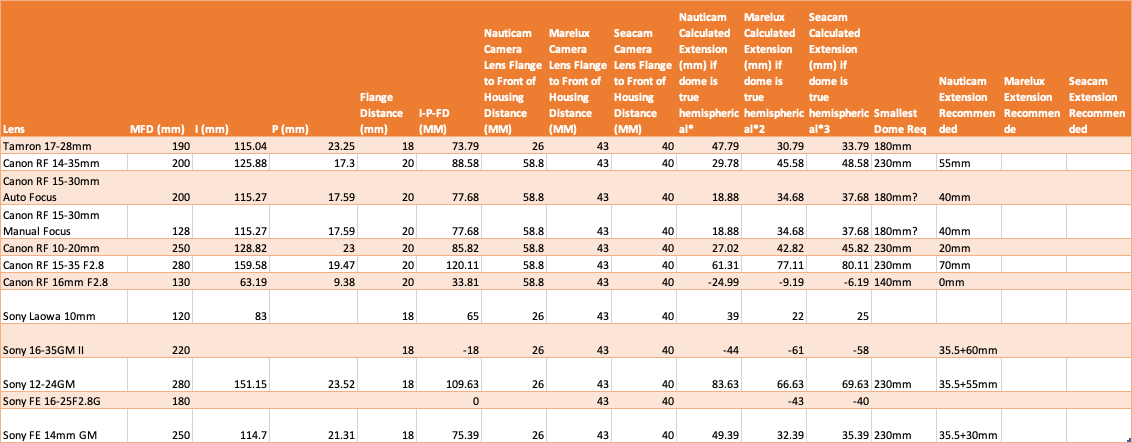
Trying to gather the distance from the camera lens mount to the front of the camera housings where different extension rings attach. This is for the purposes of calculating the right extension length for various lenses in different manufacturer's housings. I'll kick things off with the Nauticam N120 housings, which I've measured at 58.8mm (let's round to 60mm). If you have one of these housings, could you measure the distance with a ruler please and contribute here? Nauticam N120 - 60mm Nauticam N100 - 26mm? Marelux - 43mm? Seacam - 40mm? Sea & Sea - ? Aquatica - ? Isotta - ? Ikelite - ? End result will be a spreadsheet like this that I will share here for future reference:
-
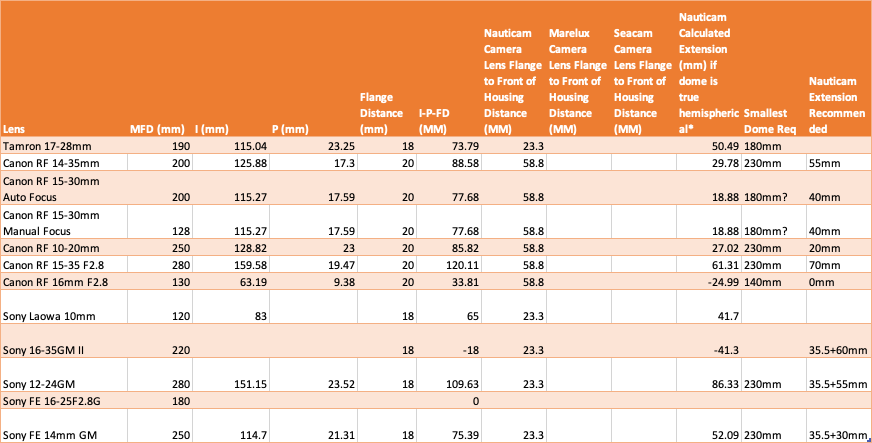
Ok, so I just measured the distance from the Canon RF lens mount to the front of the housing on the R5C Nauticam housing (N120). It's 58.8mm. Accounting for measuring error and manufacturing tolerences, let's say 60mm. This should put the same distance on the N100 Sony housings at around 25mm. Could someone confirm? Also would be curious to get this distance measured on Marelux and Seacam housings. I've updated my chart accordingly. As you can see, the Nauticam recommended extensions vary quite a bit in some cases from the calculated optimal positioning of the lens based on the Optical Bench entry pupil. Maybe that's to prevent vignetting? Or did I mess up how I calculate the optimal extension (=[@[I-P-FD (MM)]]-[@[Nauticam Camera Lens Flange to Front of Housing Distance (MM)]]. Not quite sure.
-
Cool, I didn't know about the Sony 16-25 F/2.8 G! That looks like a great lens for underwater rectilinear use, and cheaper too! The matching Sony 24-50 F/2.8G also looks very promising for use with the Nauticam WWL-C and dry water contact optics. Unfortunately, none of this is helping my gear acquisition itch... 😄 Image quality differences vs. an adapted Canon 8-15 are probably minor, but I guess there's still a size and weight benefit. Also, since the conversion makes the RS 13 behave like a a native Sony lens, you may be able to unlock the faster 30fps shooting mode with something like the A1 or A9III. Minor advantages in the grand scheme of things, but still nice to haves. Personally, fisheye is by far my preferred choice for wide angle. Thanks! Didn't know about the custom SAGADIVE extension rings either. Looks like they make a custom 10mm and 25mm extension ring for N120 that's cheaper than the nauticam version (and doesn't come with the 25% China tariff you get slapped with if importing things from Europe). I didn't see any in-between sizes like 12, 13 or 15mm listed on the site. SAGADIVE also makes an adapter to be able to use Nauticam's WACP-1 with other manufacturer's housings (like Seacam) which is great. https://sagadive.com/en/product/aros-adaptadores-saga/ Yes, thank you very much for the idea, Adventurer!
-
Apologies, I should've read your original post a bit more closely. Yes, you are still saving 600 grams with a pair of Retras compared to the other large strobes, which is not insubstantial. And I do think it's a fair point that you separate the Vault from the strobe for travel, making them a bit easier to pack than, say, the Seacams. But really, with the Vault (and other accessories), and with the price hike on the latest version of the strobe, the Retras are reaching stratified price territory now. $2000 (or $2100) per strobe. Gone are the days where they were selling near $1000/piece, a modest price premium over the Inon D330s and Sea & Sea YS-D2s of the world. And $500 for a battery pack replacement is also stratified territory. Only the Seacams are more expensive at $2500, and their replacement battery packs are cheaper at $385. Other large strobes like the Supe D-Pro ($749 - $118 battery pack) Backscatter HF-1 ($900 - $50 batteries) Marelux Apollo 3 ($1199 - $25 batteries), Ikelite D230 ($1299 - $250 battery pack) and even the OneUW 160Ds ($1650 - $180 battery pack) start to look like much better value!
-
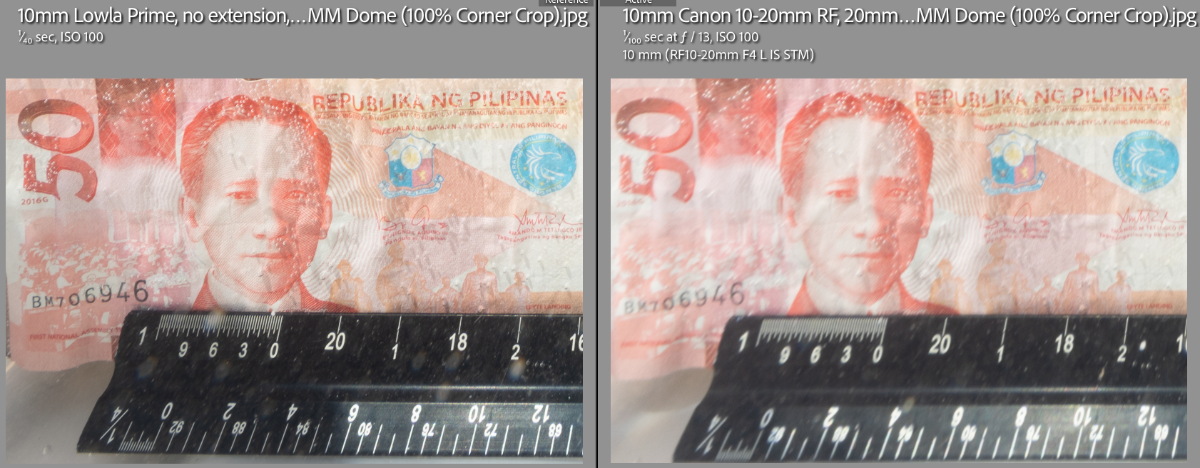
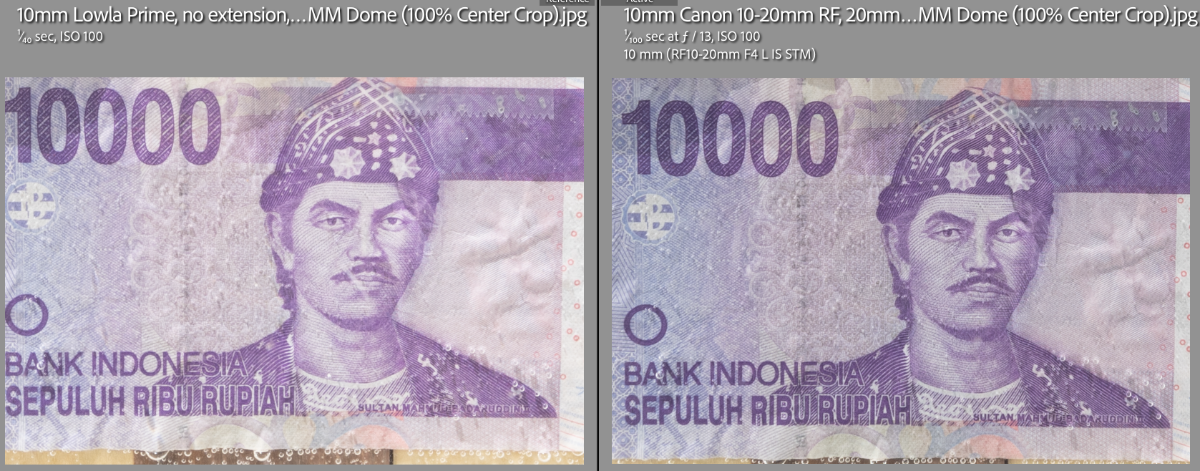
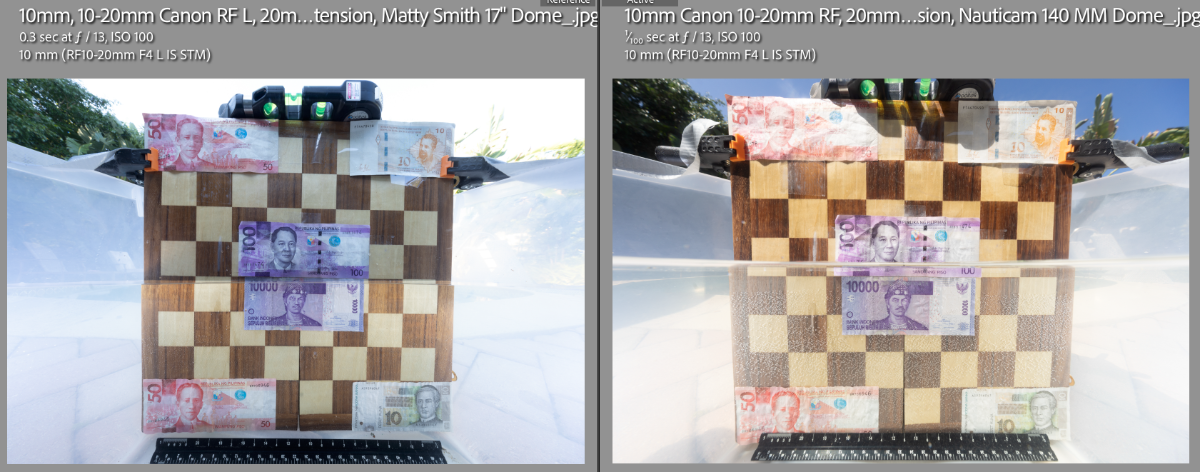
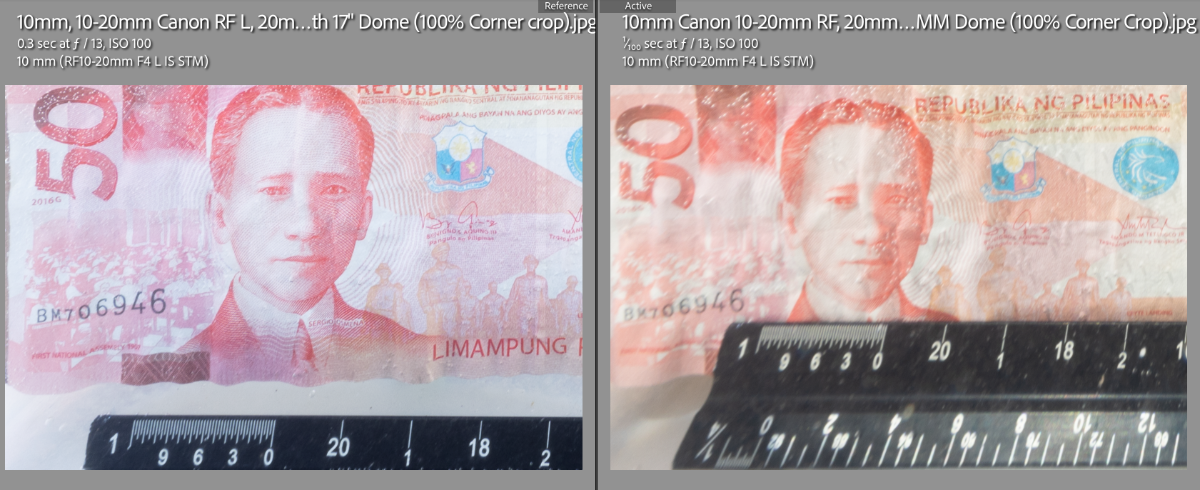
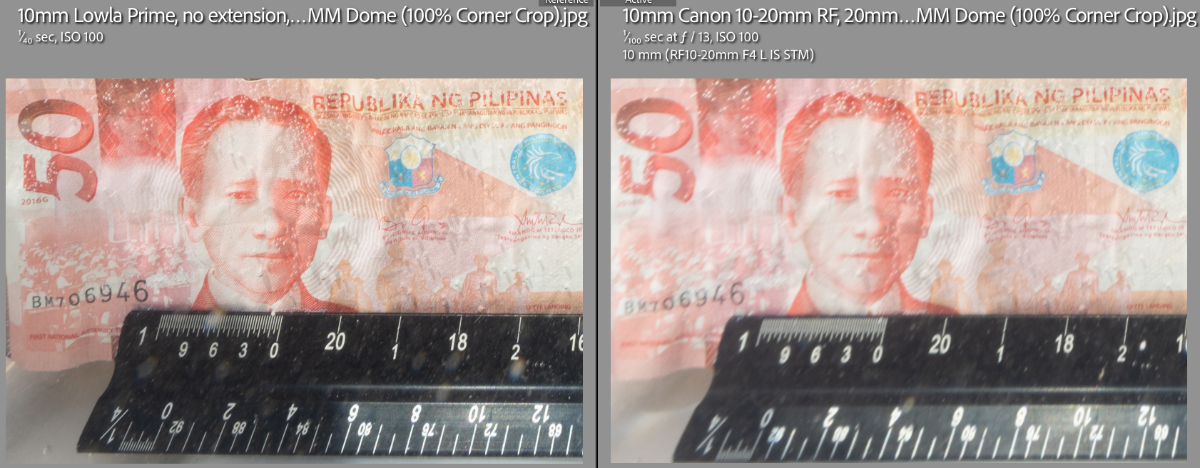
Hello Landvogt! Thanks for the kind words. Unfortunately, I don't have a RF 15-35 F2.8 L lens to test (unless someone wants to lend me one :D). But as for the RF10-20 with the 140mm dome (dome shade removed), the results were a little disappointing, especially in the corners. That lens really does benefit from a larger dome. Here is the 10-20 RF at 10mm, F13, ISO 100. 427mm dome on the left, 140mm dome on the right. The full image shows that the 20mm extension + 427mm dome puts the lens' entry pupil closer to the dome's center of curvature with than using the same 20mm extension + 140mm dome. So probably a 25mm extension would be more optimal with the 140mm dome. And here are center and corner crops, again, 427mm dome on the left, 140mm dome on the right. Center sharpness and contrast degrades only a little, and that's likely caused by shooting through more water with the smaller dome to keep same subject distance and framing. But the corner resolution really suffers. I think this loss in corner resolution may have to do with the MFD of the RF10-20L being 250mm. I say this because the Laowa 10mm prime has a much shorter 120mm MFD and doesn't exhibit the same degradation in the corners. If you compare the two 10mm options in the larger dome, there's not much difference between them. But with the smaller dome, the difference is quite obvious in the corners (and minimal in the center). The Laowa 10mm prime is a better option to use with the 140mm dome because of its quite shot 120mm MFD.

-
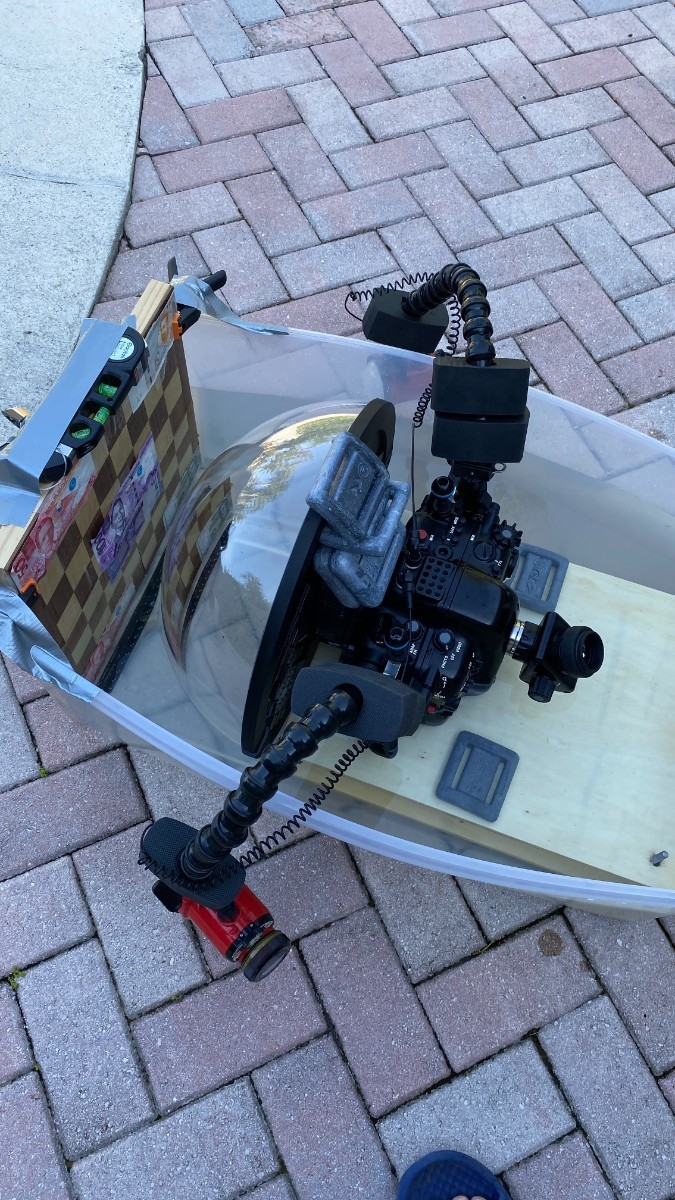
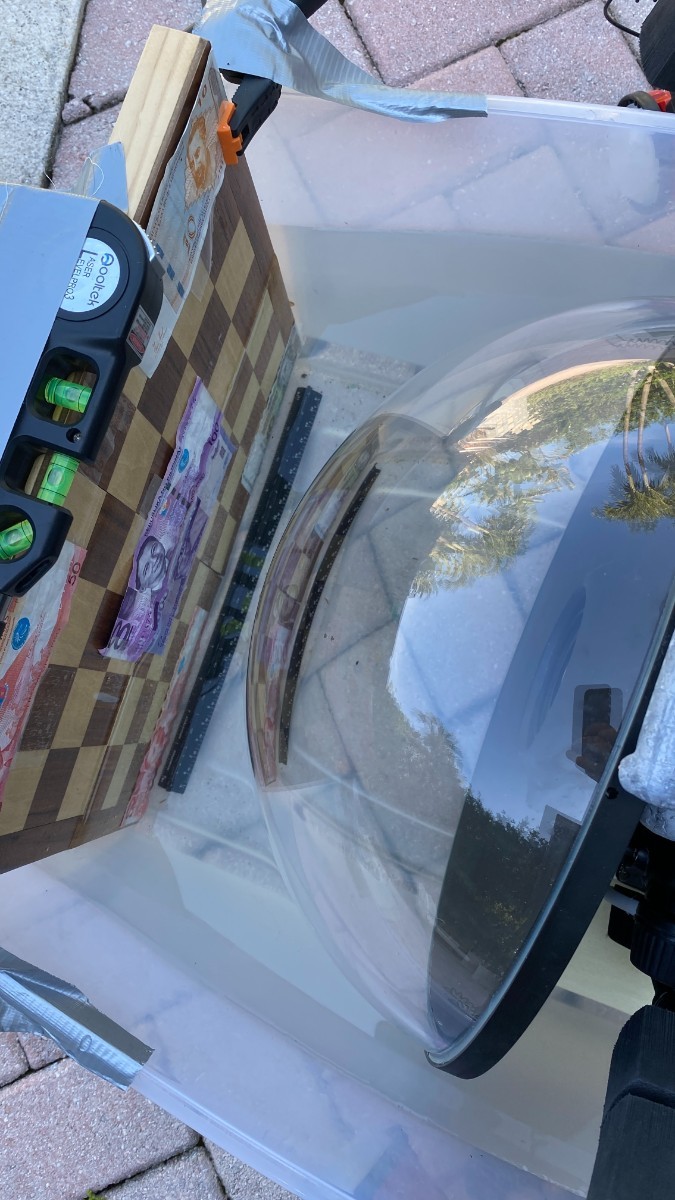
I'm curious about the way the Sony FE WA zoom lenses perform also. Especially from the perspective of getting a lens that works well with a 180mm dome -- Interceptor 121's tests suggested that both the 16-35F2.8 GM and Tamron 17-28 III do fine in that configuration. Probably helped by the 16/17mm wide end. On RF mount, I'm struggling to find a WA lens that performs great in a 140mm or 180mm dome. My hope was that the RF 15-30 might be that lens because of its shorter MFD.. but.. if anything, I guess my tests have shown me that they definitely perform better with a bigger dome. I guess the grass is always greener on the other side. I'm contemplating a side-grade to a Sony A1 system in part because of access to the 16-35F2.8 GM lens (also for access to the Nikonos 13 conversion, an AF-capable Laowa 10mm prime -- which works well enough with the 140mm dome -- and 1/400s flash sync speed). So stay tuned.. maybe I'll do these tests with the FE WA zooms in the future. I hope the results in that case won't be that the RF WA lenses were better after all 😄 (Joking and GAS aside, the differences that can be discerned in these controlled tests may not really matter much for real world images. It's always good to keep things in perspective -- probably any of these lenses with any of these dome combinations could produce great images with the right subject, composition, etc.. Doubt anyone seeing my photos on Instagram on their phone would ever notice the difference in corner sharpness if I got the other stuff right...) It's an interesting question. Three possible explanations (that I can think of): Minor differences in focus -- especially since I had to manually focus the lens. Possible, but I doubt that would change the microcontrast, which is the biggest difference I see in the center crop Differences in how close the lens entry pupil ends up compared to the center of curvature of the dome. Although the Nauticam 140mm port is fisheye port, it's not quite exactly half a hemisphere, whereas the Matty Smith dome is. I don't understand the physics well enough, but seem to recall that misalignment of the entry pupil would mostly result in image degradation in the corners, not in the center of the image. So it's probably not this. Probably the most likely reason is actually the amount of water I'm shooting through. I tried to keep the framing the same, which means roughly the same distance from the subject to the camera sensor with both domes. But since the test set-up is in a small tank, and the subject filling the frame was a 15" chessboard, that means the camera is quite close to the subject. With the 427mm dome (213.5mm radius), the front of the dome is almost touching the subject, which means you're shooting through very little water. Only a few centimeters of water as you can see in the shots of the test setup below. With the 140mm dome (69mm radius), it's an additional 144.5 mm of water you have to shoot through, with all it's associated loss of contrast and resolution. This might very well explain the difference. Which also means you wouldn't see such a clear difference in center resolution/microcontrast in the real world where you'd be using a 230mm (120mm radius) dome vs a 140mm dome (69mm radius) and where the subject is 1-2 meters away or more. Goes back to my earlier comment that while differences can be seen in extreme test conditions like this, for real photos of real subjects, other factors may completely obliviate the difference. No, but I would assume you end up with the exact same distance from the sensor to the front of the housing with the N120 housings as you would from the sensor to the front of the 35.5mm n100/n120 adapter on the Nauticam Sony housings. Phil's tests with the Marelux housing seem to confirm that, as the extensions needed on Marelux Sony housings for the Laowa 10mm line up with the 0-5mm extension I think is optimal on the Nauticam N120 housings when you account for the Marelux Sony housing being about 20mm deeper than the Nauticam Sony Housing or 15mm shallower than the Nauticam RF housings.
-
Ok, I've retested the Laowa 10mm with the Nauticam 140mm dome (dome shade removed), no extension on N120. This time I made sure the aperture was F11. The results are a bit improved, which suggests my earlier test must've been at a wider aperture by mistake. Here it is on the right compared with the Matty Smith Custom 427mm dome on the left. Observations: The 140mm dome needs a slightly longer extension to put the entry pupil in the center of curvature than the 427mm dome. This is because the latter is more hemispherical than the former. Still, no extension on N120 comes pretty close. A 5mm-10mm extension might be optimal, depending on the size of the dome. Center performance is a little better with the larger dome, especially the contrast. But it's not bad with the smaller dome. Corner performance is improved more with the larger dome, but it's usable in my view even with the 140mm dome. With the shade removed, the 140mm dome doesn't vignette at all. There is slight vignetting at the top and bottom edges with the shade on. The Laowa 10mm is much more usable with the smaller 140mm dome than the Canon RF 10-20L, which probably needs a 230mm dome or larger to perform well. Here is a comparison of the Laowa 10mm vs the RF 10-20L with the 140mm dome. Laowa on the left, Canon 10-20L on the right. The corners especially suffer, probably because the Canon has a MFD of 250mm compared to 120mm on the Laowa. If you're curious, the two lenses perform much more similar to each other behind a 427mm dome. Head to head tests in this thread.
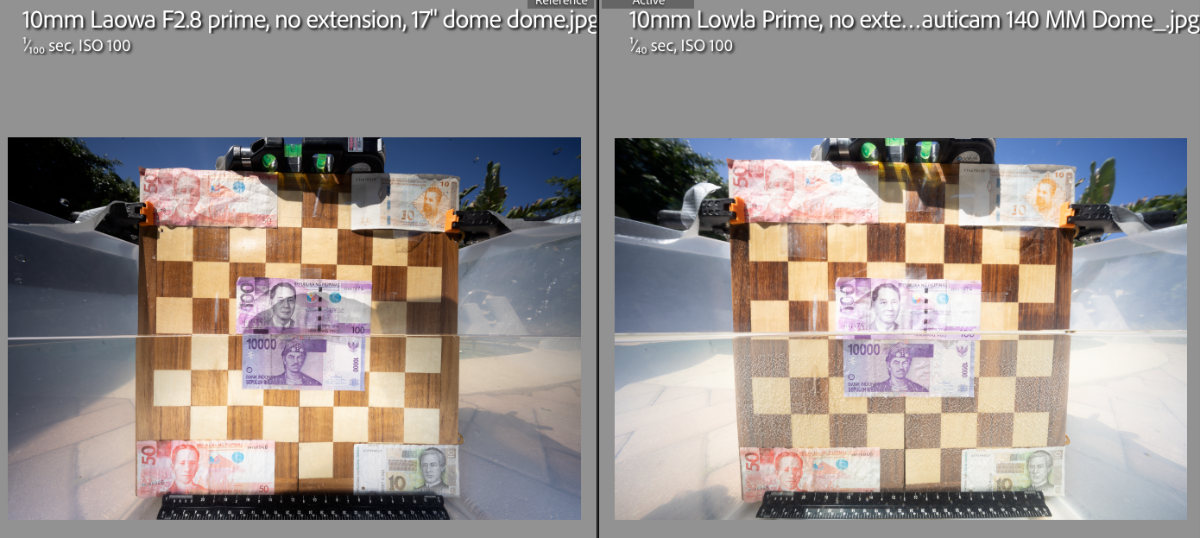
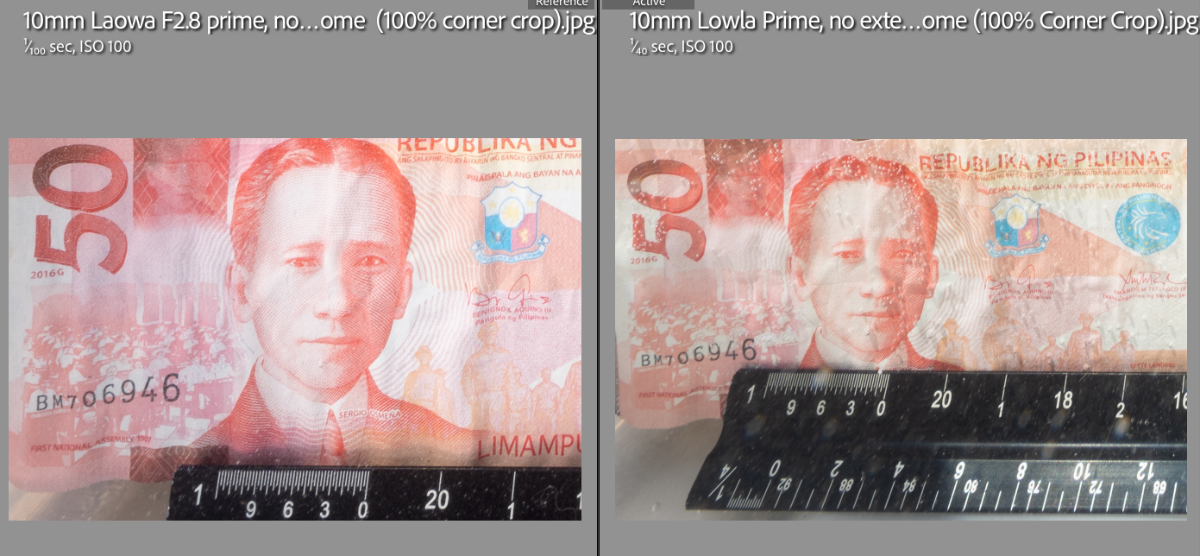
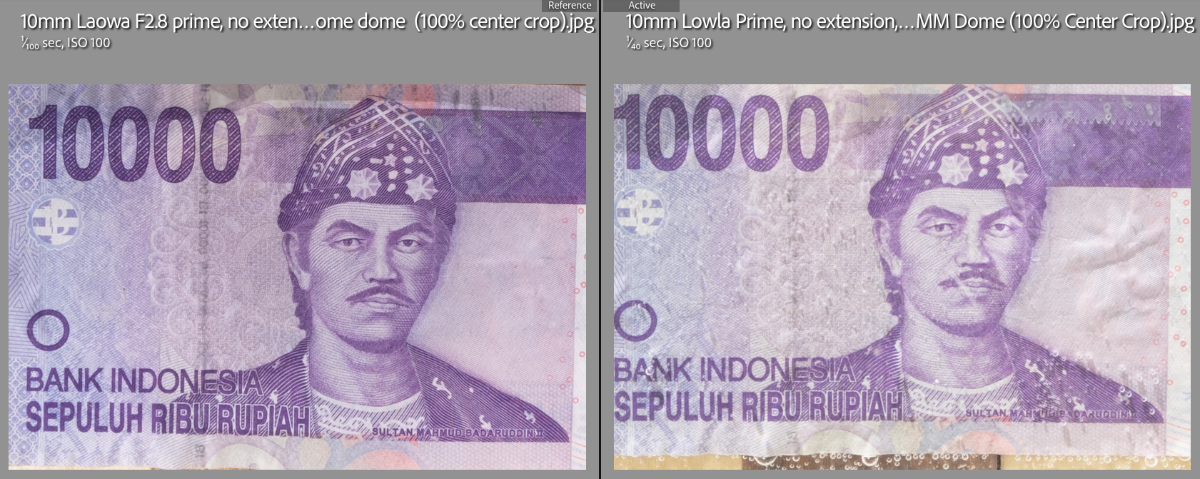
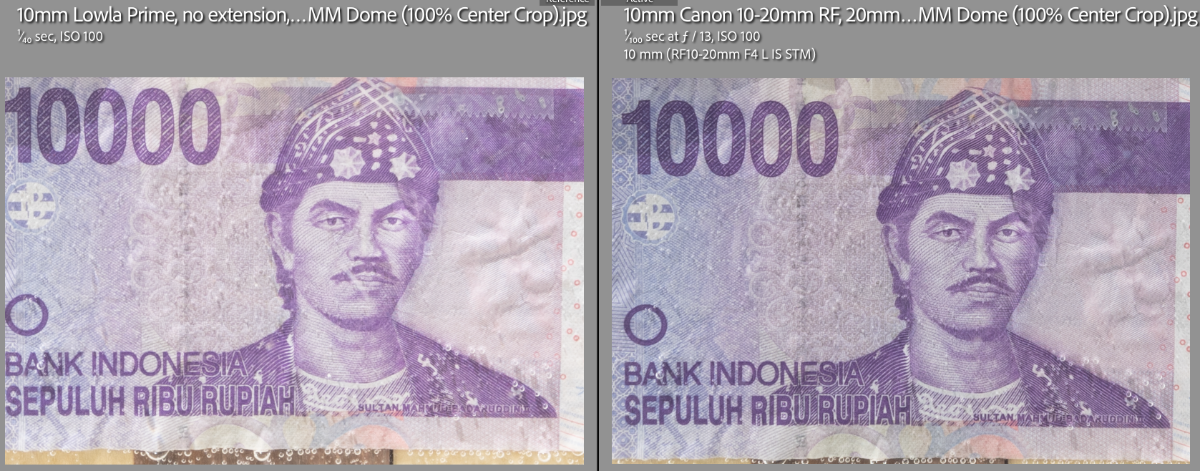
-
-
I think you're being a little bit of a fanboy here and creating imaginary strawman strobes. Which large strobe is 600g heavier? With the exception of the OneUW 160s (which is heavy because it's rated to withstand 200m of pressure), every other large strobe (Seacam 160d, Ikelite DS230, Marelux Apollo 3s, Backscatter HF-1, Supe D-Pro) is only 100-300 grams heavier than the Retras with this battery pack, and they're all more compact if you look at the diameter and length. Most of the strobes I've listed use simple lithium cells and don't require any proprietary charger. But I suppose you're ignoring that USB-C charging means you also need.. a USB-C charger of some sort? Those (and the cables) also weigh something and aren't much smaller than for example the charger that comes with the DS230 or Supe D-Pro. Not to mention the USB-C charger and cables are extra $$$ on what is already a $2100 stobe once you include the Vault. The biggest complaint though is that the battery pack doesn't do much to improve the recycle time of these strobes, which is left still trailing the pack..
-
The MF-2 is 200mm in length. But I don't think they're the same length -- they look the same in that shot, but keep in mind perspective here. The foreground object is smaller than the background object. And there's the knob on the end So.. I still stand by my 220mm estimate. As to whether the weight or bulk is similar to the larger strobes -- well, Retra + Vault is 1020 grams, Seacam 160d is 1320g. Is that a world of difference in your book? If it's 7.2v, then I guess it's probably 2 21700 cells in there.
-
Hey Davide - standard JPEGs. Not sure why they're not linking. 10mm Laowa F2.8 prime, no extension, 17 10mm Laowa F2.8 prime, no extension, 17 10mm Laowa F2.8 prime, no extension, 17
-
Good question. Since the RF-mount version is manual only, I can't confirm from the EXIF data for the test with the 140mm dome, so I'm going to re-do it. For comparison, with the Matty Smith 427mm custom dome, I used F11, and here are the results: 10mm Laowa F2.8 prime, no extension, 17 10mm Laowa F2.8 prime, no extension, 17 10mm Laowa F2.8 prime, no extension, 17
-
Looks like the issue here is that the internal diameter of Retra's battery compartment, having been designed for 4 AA batteries, is too small to fit the LI cells they opted to use. So probably the battery pack has an internal portion that is used only as an extension to connect, and the LI cells sit entirely outside the main strobe body in this new extension. Which, if using 18650 batteries, would mean that the battery pack has to protrude at minimum 70mm past the back of the strobe, assuming some 5mm for the aluminum housing and USB-C charging circuitry. The 40wh rating suggests 3x18650 cells or 2x21700 cells if rated conservatively. That would mean the strobes go from being 148mm long with no booster to ~220mm long with the Vault. That's longer than any other strobe out there (at least the ones I've researched and added to the spreadsheet), including the Seacam 160Ds (190mm), and the OneUW 160s (200mm). Can we really call them a medium strobe anymore with those dimensions? Could anyone confirm if my back-of-the envelope calculations are correct? Retra AFAIK hasn't published the new length of the strobe or the details of of the voltage/AHs on the Vault.
-
Might work, but it's probably too long and may vignette. No extension is almost perfect on the N120 system, I don't think 10mm extension would improve the image quality. Likely, it would degrade it vs. no extension.
-
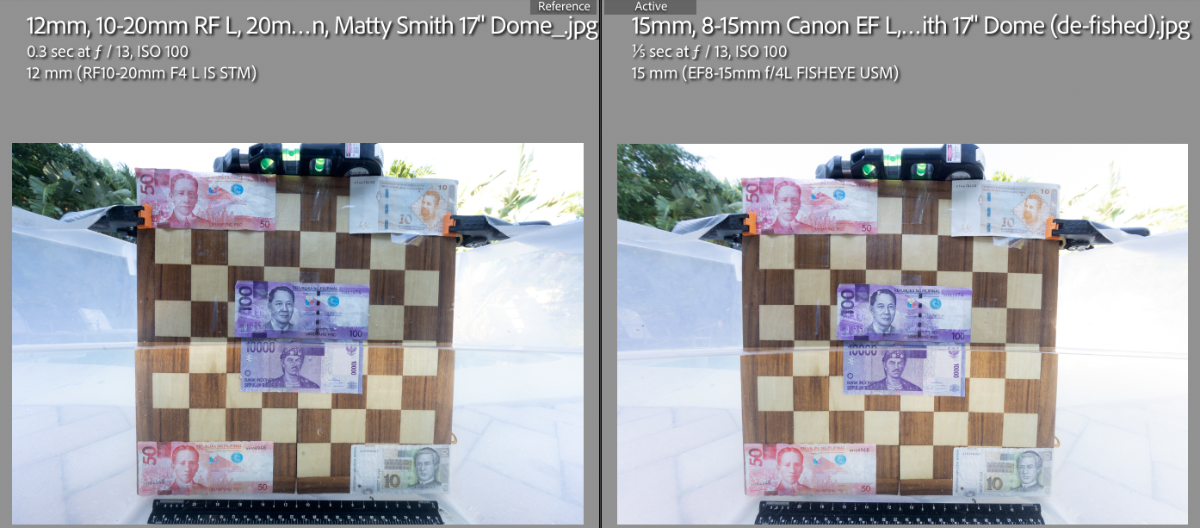
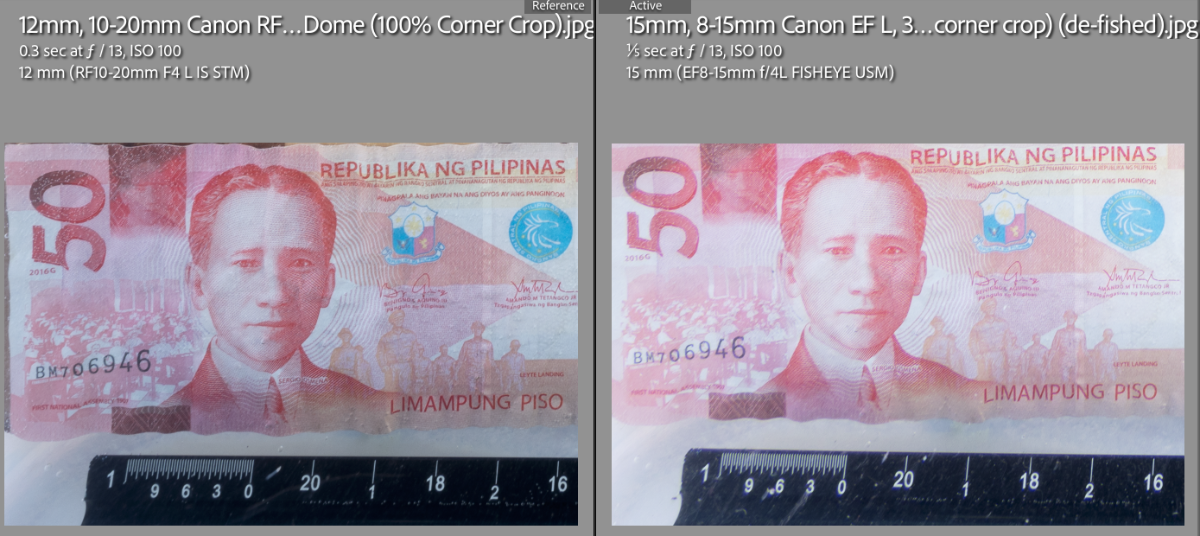
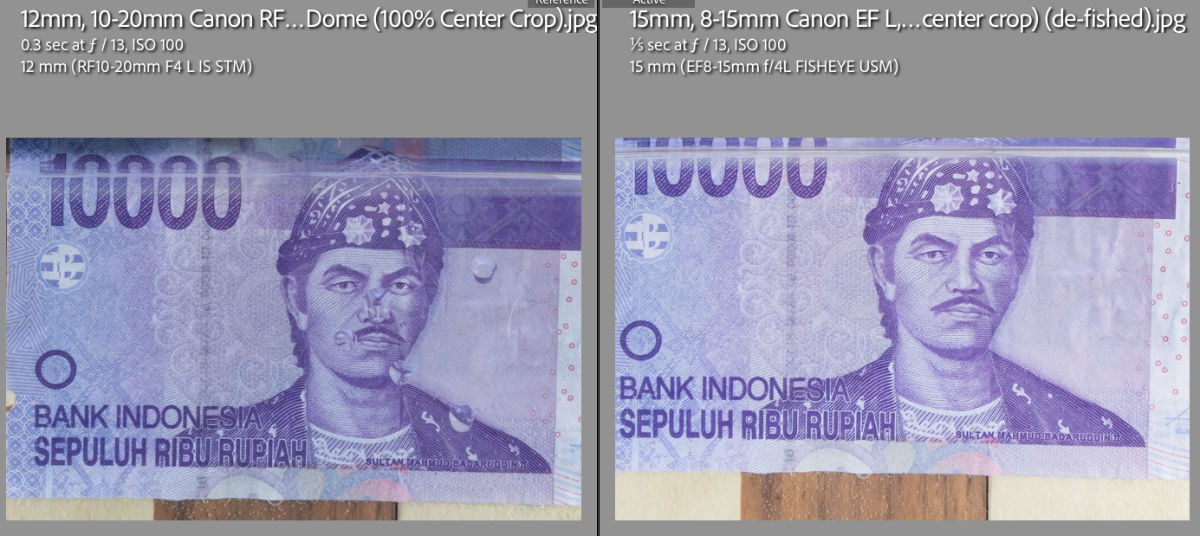
What if you were to take the EF 8-15 L fisheye and de-fish it? How would that compare with a rectilinear lens? First, in terms of field of view, The 15mm fisheye de-fished looks similar to a 12mm rectilinear lens. Like with the Nauticam wet optics, the de-fished fisheye has slightly less horizontal field of view when the vertical field of view is matched. But what about resolution and microcontrast? I'd say the de-fished fish-eye 15mm lens mostly holds its own against the 10-20mm at 12mm. The rectilinear lens has slightly better resolution and microcontrast in the corner, but it's not night and day. You totally can use the fish-eye de-fished in a pinch to produce respectable rectilinear images equivalent to a 12mm lens -- if you don't need the even wider field of view of a 10mm rectilinear.
-
Finally, are you wondering how the RF 24-50 + Nauticam WWL-C combination performs? Sorry to say.. but, pretty abysmally. Here it is at 24mm compared to the Loawa 10mm prime: The field of view may be similar horizontally, but it's narrower on the wet optic vertically. And it shows mild fisheye distortion, of course. And the image quality? Not even in the same league. The rectilinear lens has much better resolution and especially microcontrast. Both in the center and in the corners. About the only thing the WWL-C has going for it is the smaller size. But I'll compare it soon with the Laowa and RF10-20 behind a 140mm dome. I have a feeling the rectilinear lens will still do better.
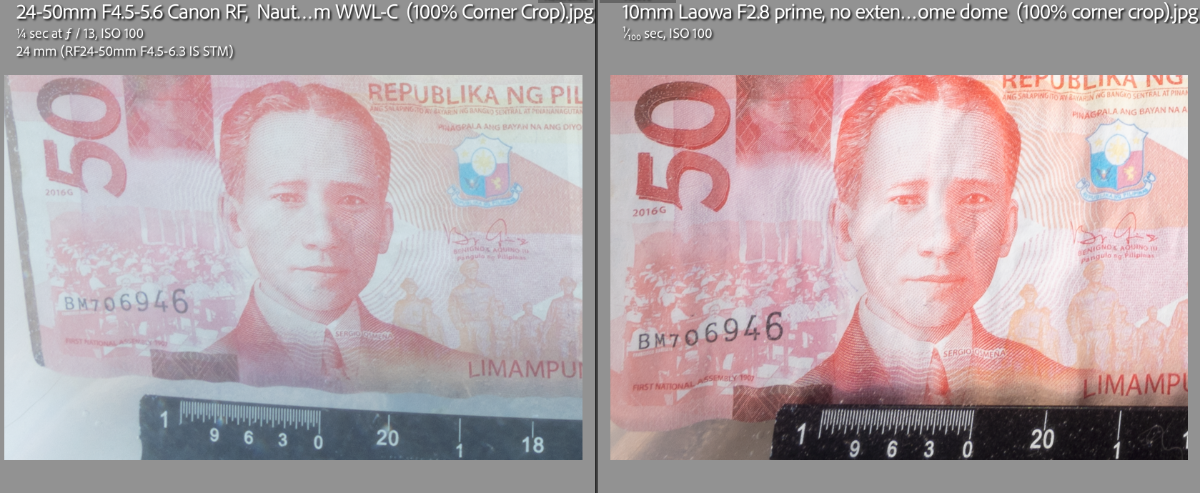
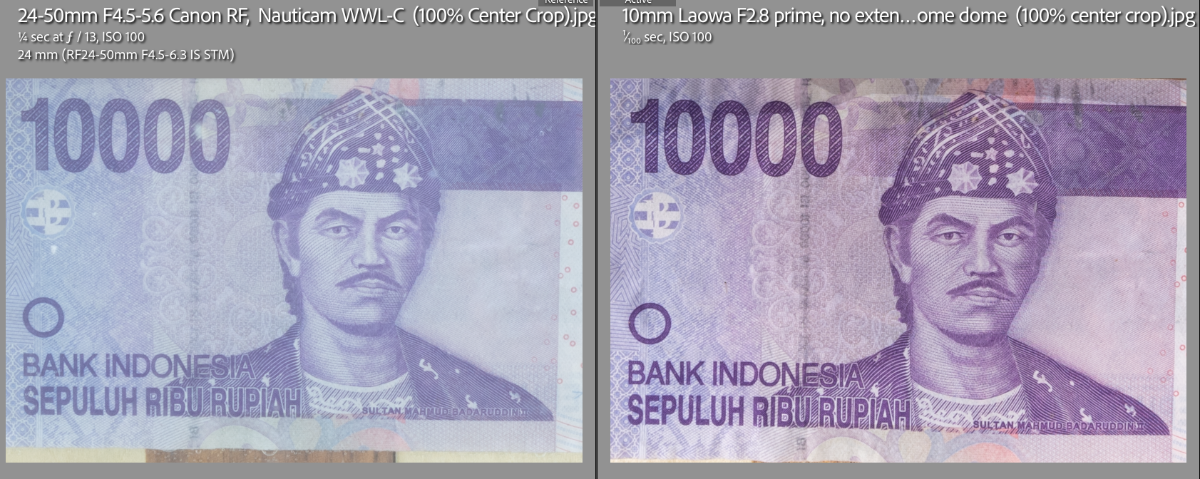
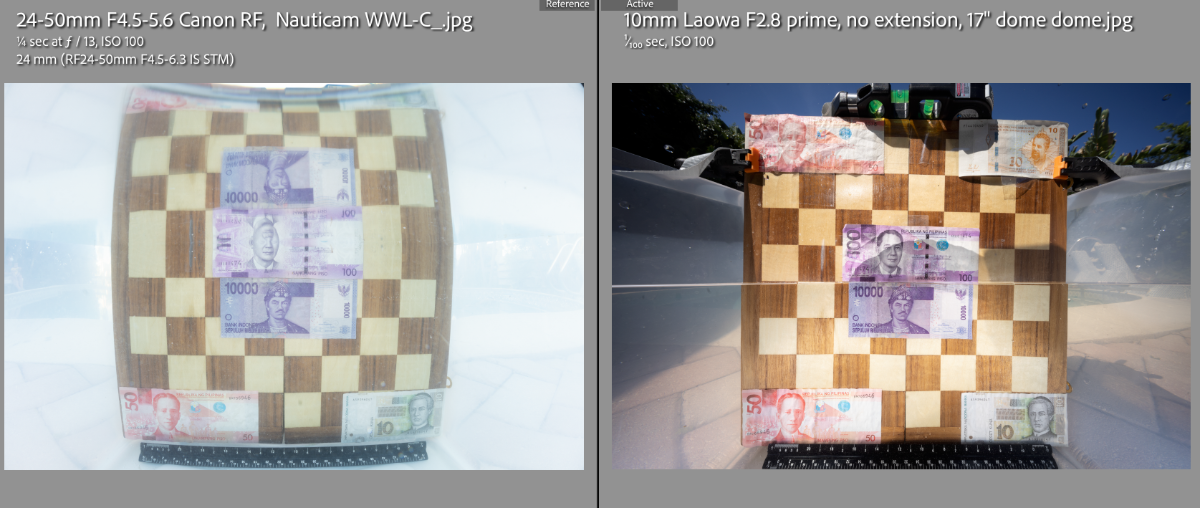
-
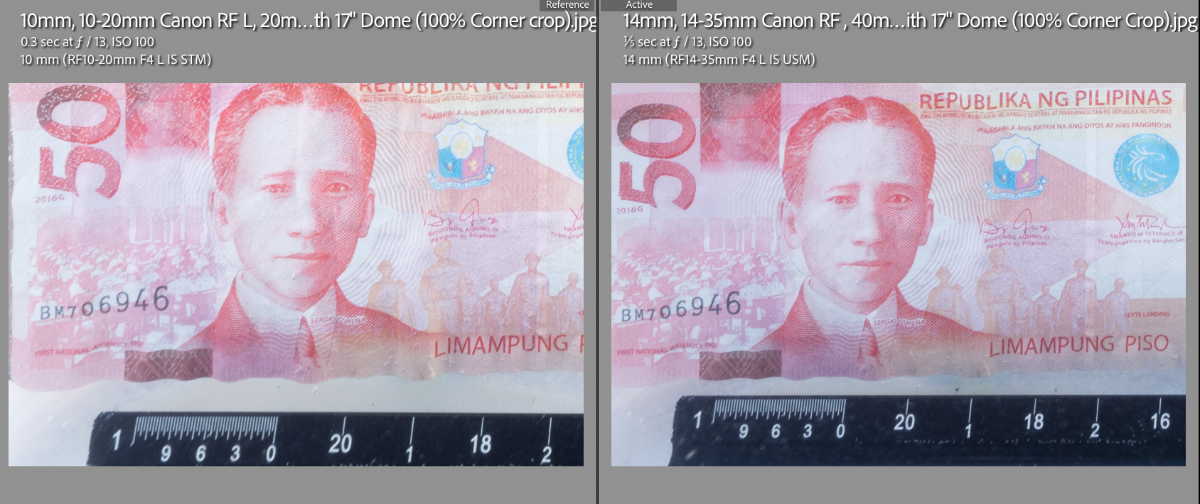
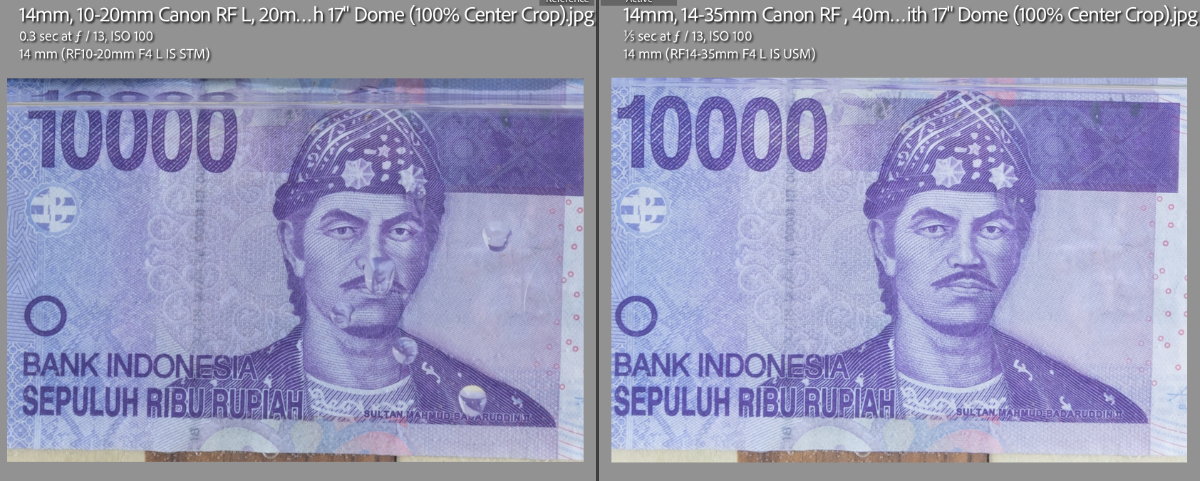
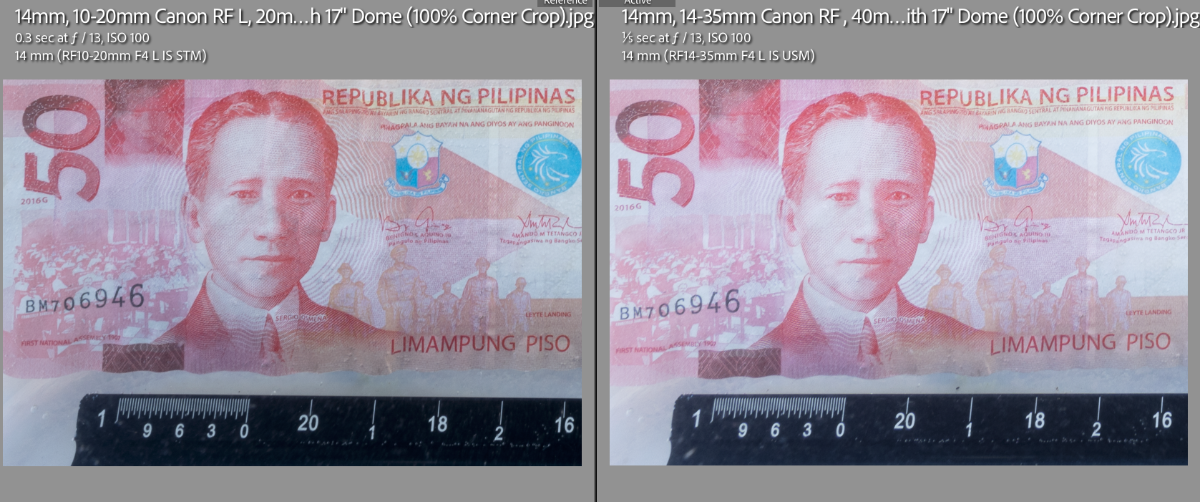
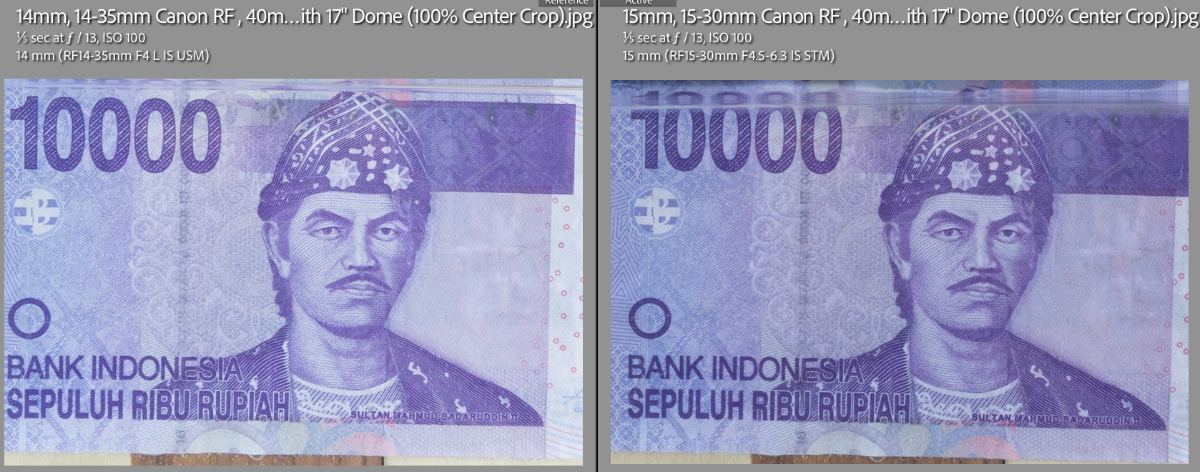
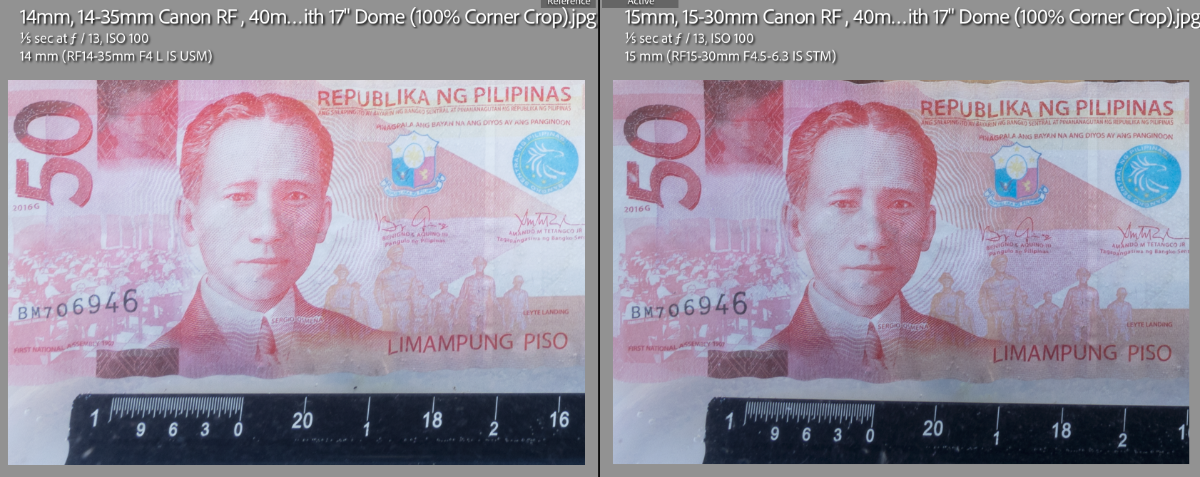
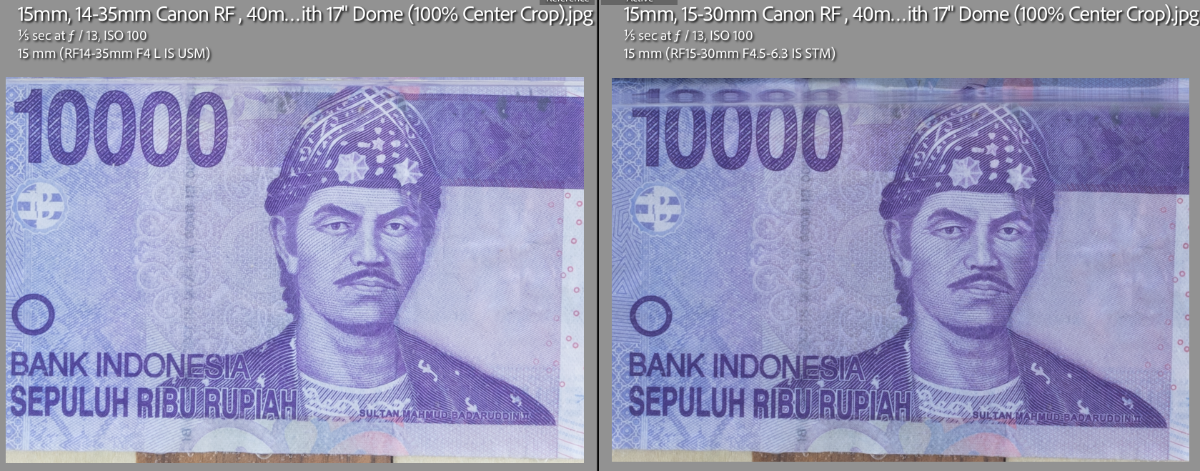
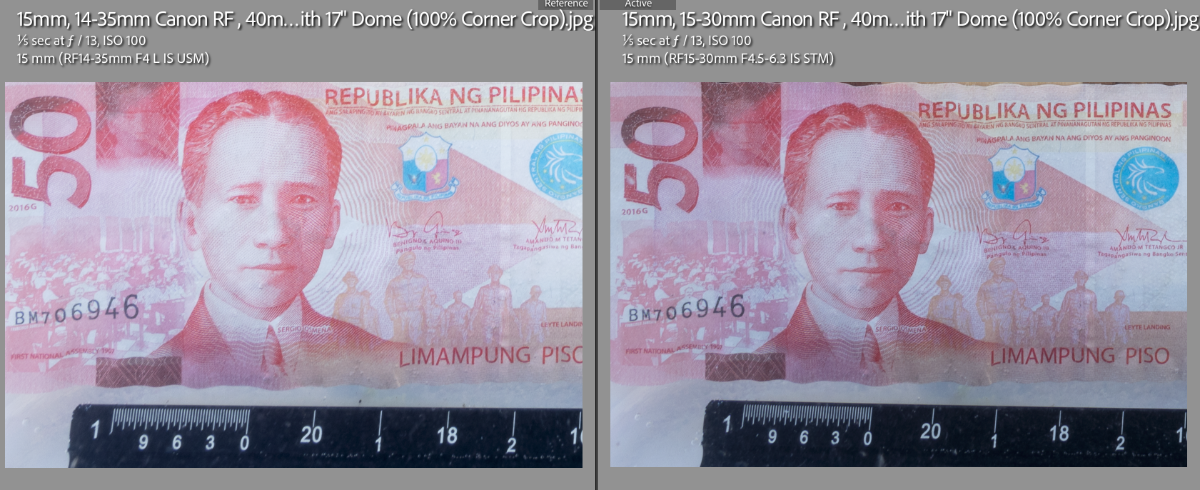
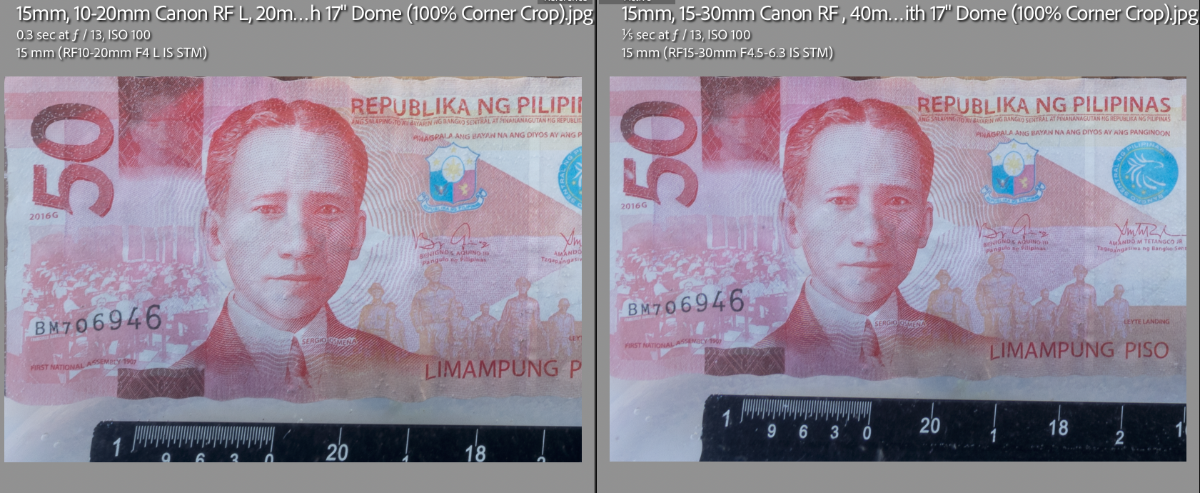
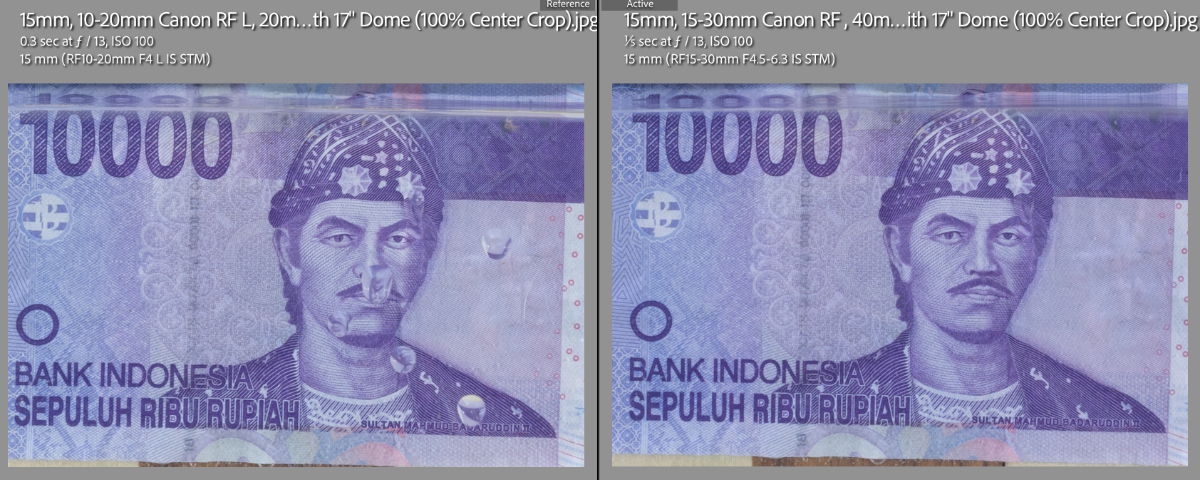
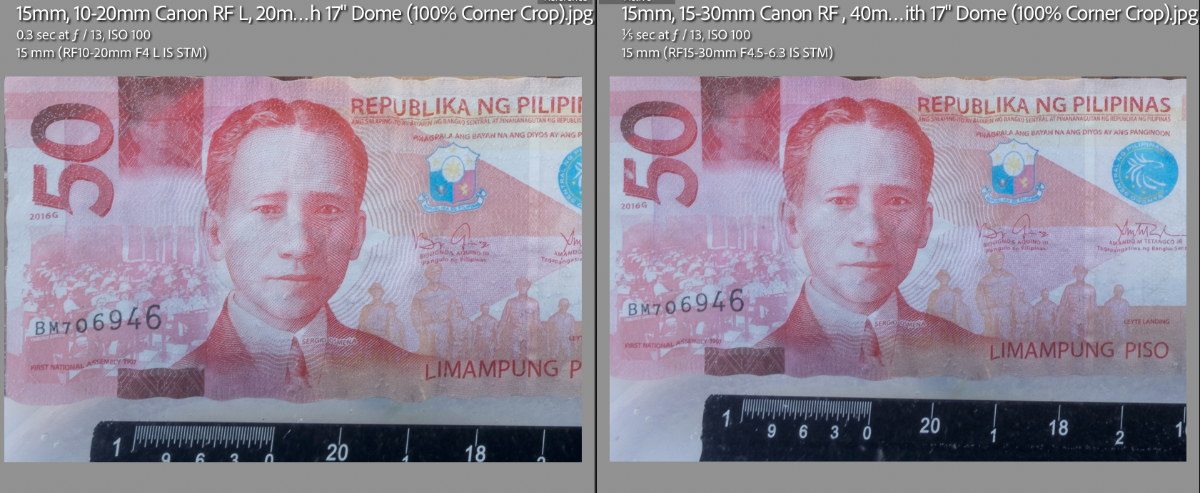
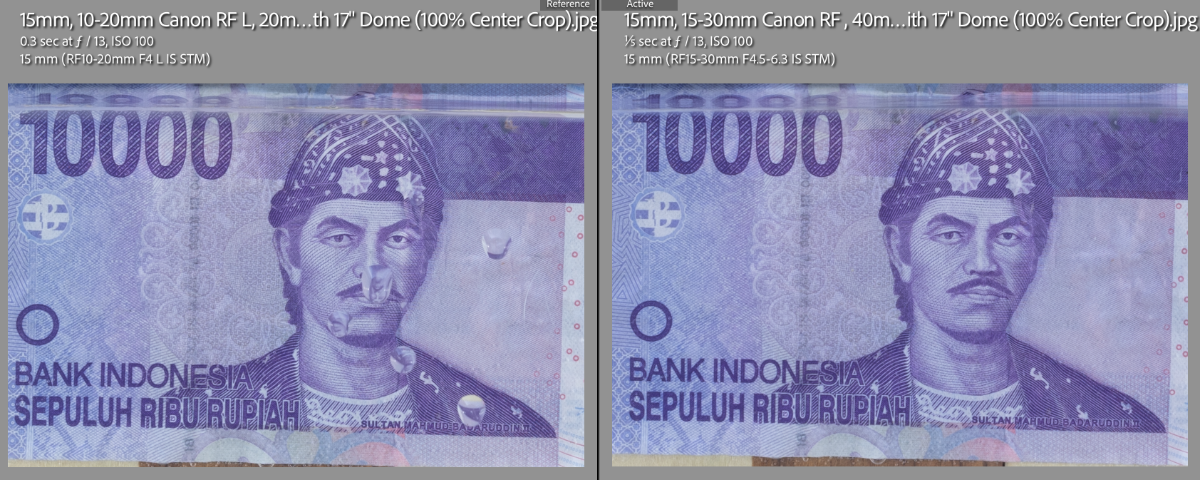
Comparing the zoom options, here is the RF 10-20mm L at 10mm (20mm extension) vs. the RF 14-35L at 14mm (40mm extension). There's not much between them in the center. Even in the corner, it's hard to tell them apart. The RF 14-35 might have a touch more microcontrast, but it's hard to say. Impressive performance for the RF 10-20mm! If we normalize and take the RF 10-20mm to 14mm, then the comparison skews more toward the RF 10-20's favor, especially in the corners. Resolution is similar, but the RF 10-20 shows more microcontrast. What about the RF 15-30? Here it is at 15mm, with a 40mm extension, compared to the RF 14-35L lens, with a 40mm extension, at 14mm. Surprisingly, the non-L RF 15-30 looks a little better than the L lens, but there's not a whole lot between them. How about if we zoom in the 14-35 to 15mm? Surprisingly, it doesn't help. The RF 15-30 still has slightly better resolution and microcontrast, both in the center and at the edges. The RF 14-35 is taking a beating. How does the RF 15-30 compare to the RF 10-20L if both are zoomed to 15mm? Pretty similar, but I'd give the slight edge to the RF 10-20L. In conclusion, the RF 10-20L is the best option for a wide angle rectilinear zoom on the Canon RF system. It performs better at 14mm than the RF 14-35L, and better at 15mm than the RF 14-35L or RF 15-30. Not to mention it can go as wide as 10mm, where it almost matches the Laowa 10mm prime (which is a manual-only lens on RF mount anyway, so not really an option). All while needing the shortest extension of the lot at 20mm. Of course, it will probably only work well with the 230mm dome because of its MFD of 250mm, but I intend to test it with the 140mm dome as well to see if it's still acceptable. The RF 15-30 also performs very well, besting the RF 14-35L at 15mm. If you don't need 14mm or 10mm, it's a very cost effective option (I got mine refurbished for $359.99 directly from Canon.) The RF 14-35L is the most disappointing of the lot. Unless you really need the 35mm reach at the long end, it's hard to recommend it over the RF 15-30 or RF 10-20mm options.
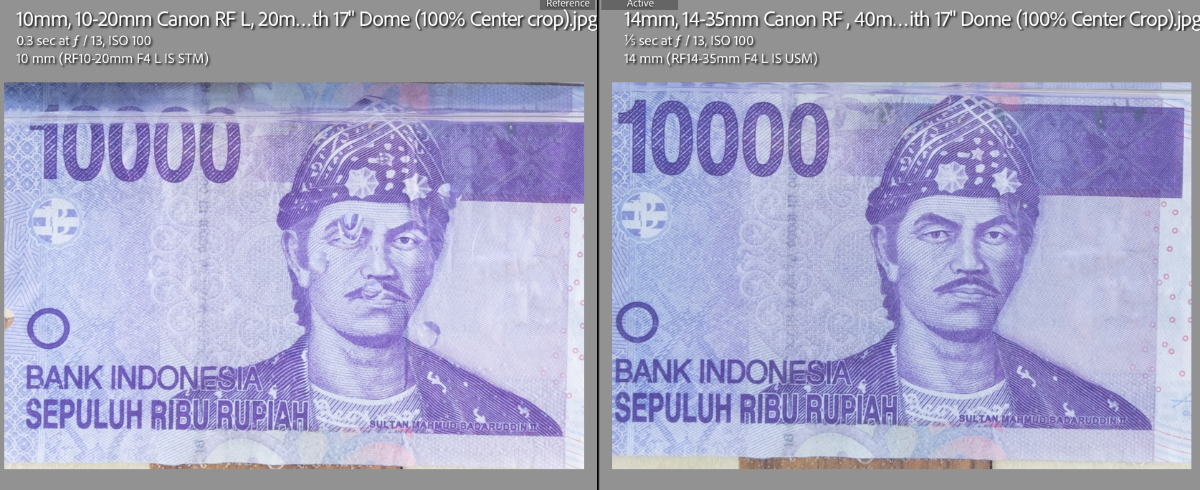
-
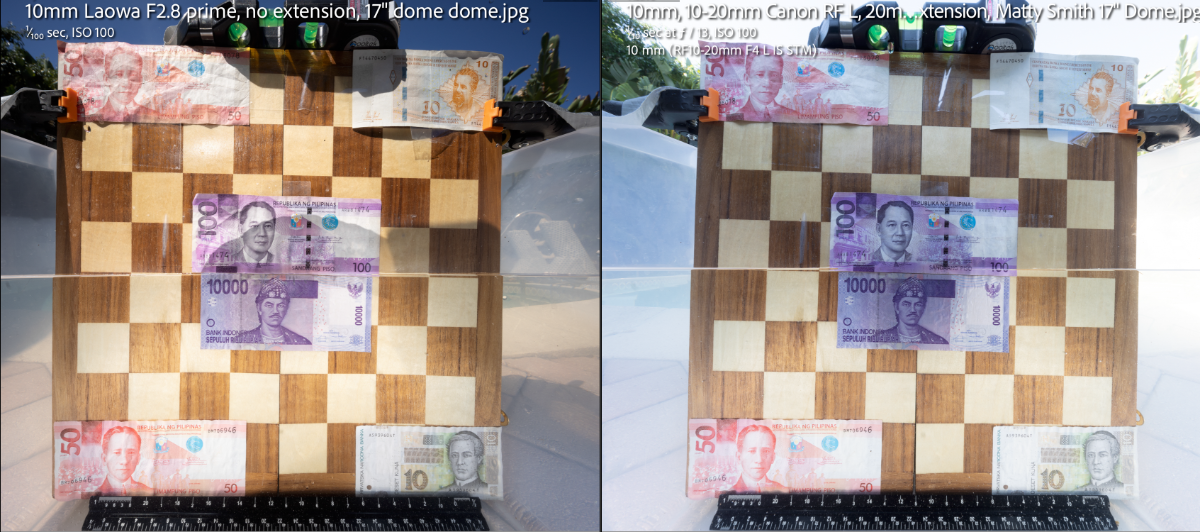
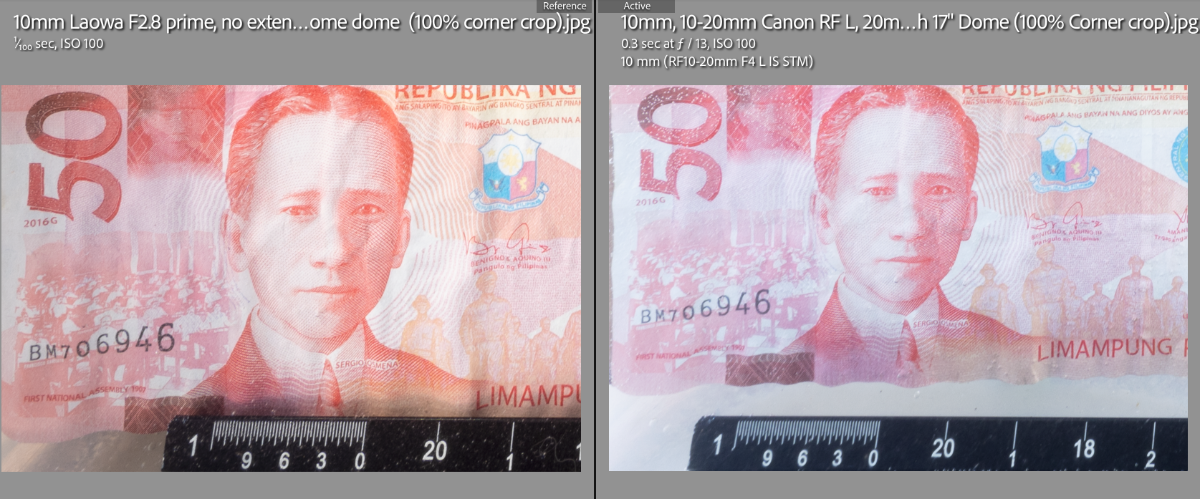
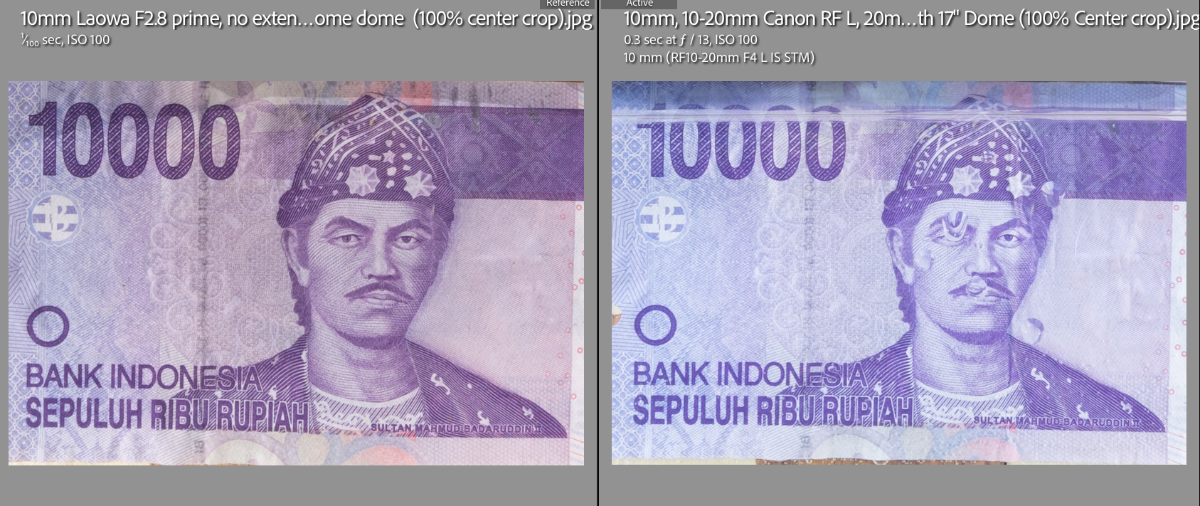
Now, the Canon RF 10-20L lens vs the Laowa 10mm prime. The 10-20 uses a 20mm extension, and no extension for the Laowa. RF 10-20L is at F13 like the other shots in the series, but the Laowa is set to F11, since this is a manual lens and only options were F11 or F16. The Laowa could use a 5mm extension (not possible on N120 ports) and the Canon RF 10-20mm L could use probably a 25mm extension, which I don't yet have to test. Nauticam recommends 20mm for the RF 10-20L. Now for image quality: There isn't much resolution or contrast difference in the center, though the color rendering is quite different. In the corner, the Laowa is a bit sharper. I will redo the test with these two using the Nauticam 140mm dome to see how much improvement you get going with a larger dome. The RF 10-20mm has a MFD of 250mm, while the Laowa's MFD is 120mm. This should show more of a difference behind the small dome.
-
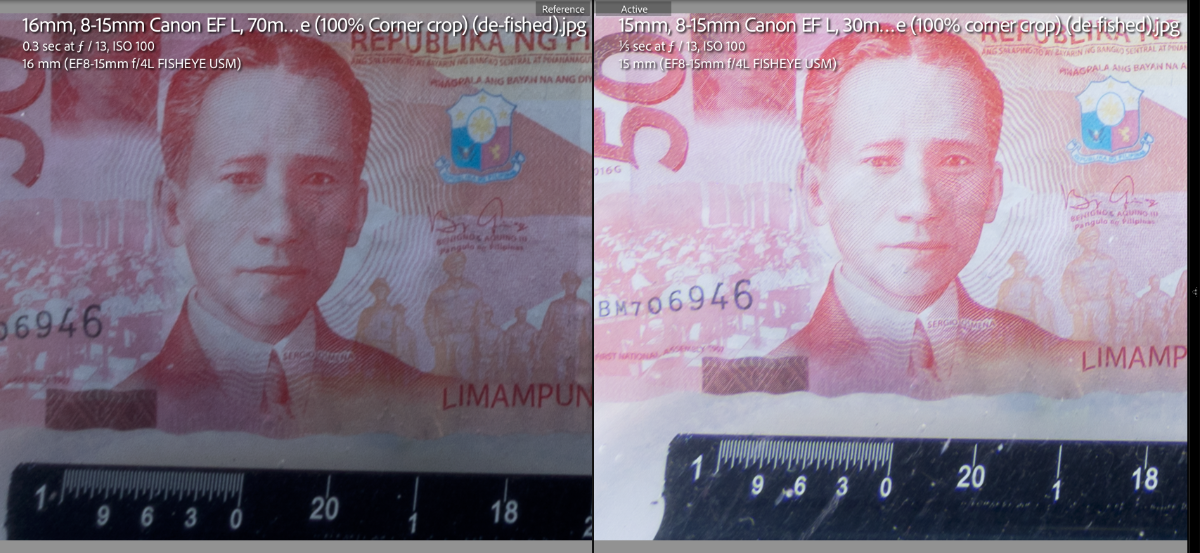
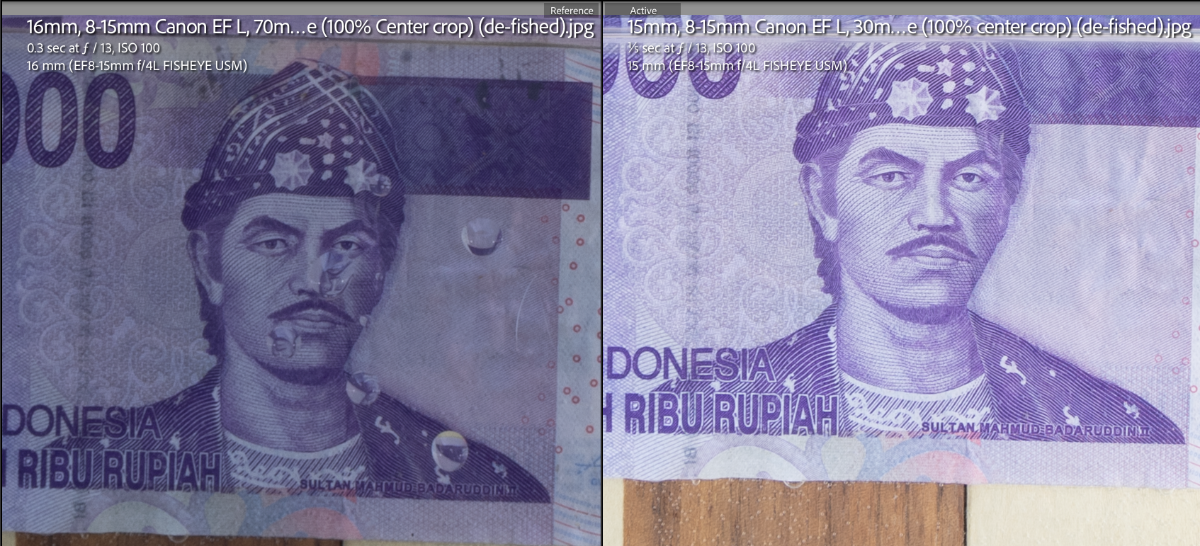
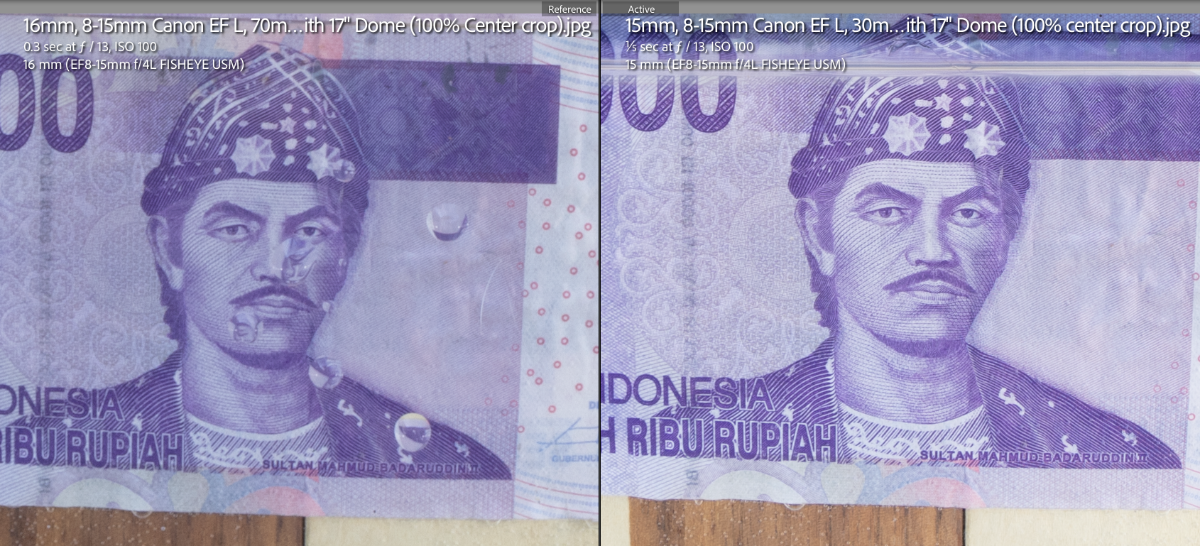
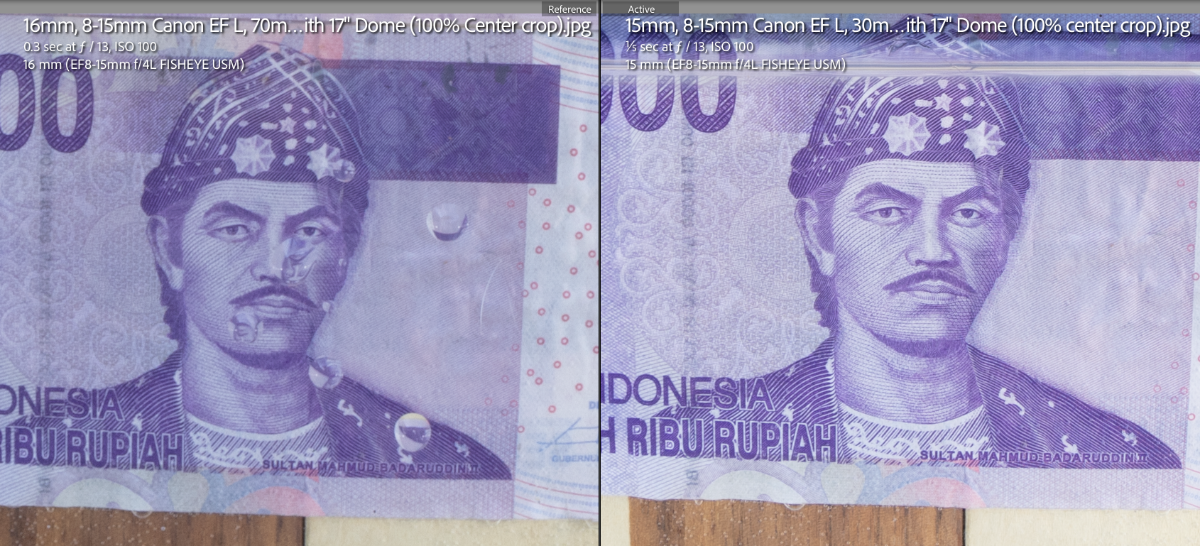
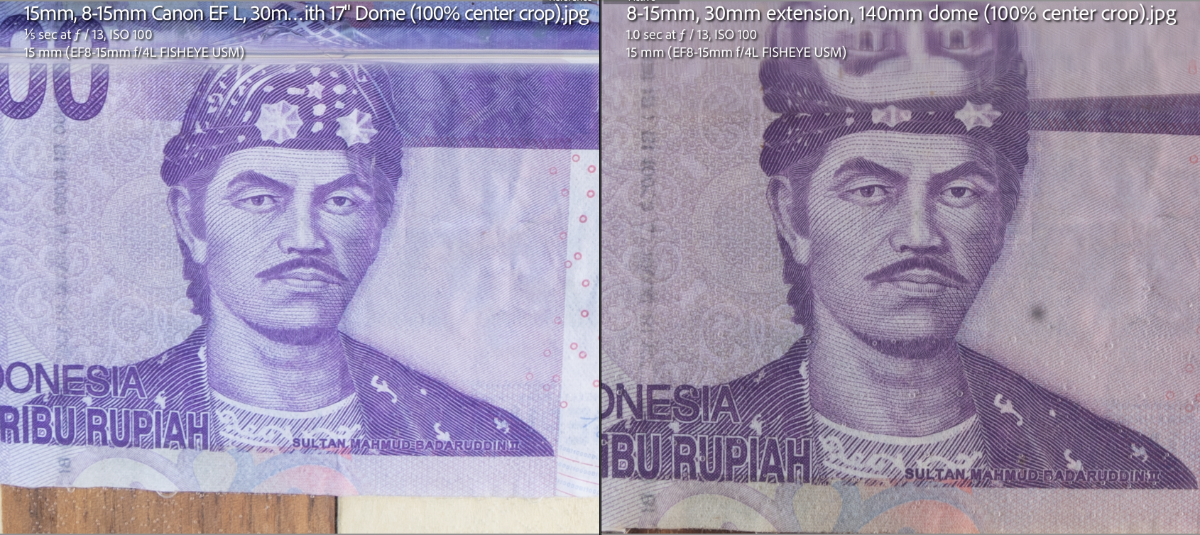
First, let's compare the EF 8-15mm fisheye, bare at 15mm with a 30mm extension and then with the 2x Kenko teleconverter at 16mm with a 70mm extension port. First -- the 2x TC definitely leads to significant resolution loss (not surprising), but also light transmission loss. Shots are all at F13, ISO 100. It's probably still good enough though with the 2x TC, especially given the versatility you gain. I plan to 3d print a zoom gear for this combination and test it on the reef. It'd be interesting to compare the image quality vs Nauticam's FCP solution. The IQ difference going from the 140mm dome to the custom 427mm Matty Smith dome is surprisingly minimal though. Almost no difference in the center, but a bit more noticeable in the corner.


-
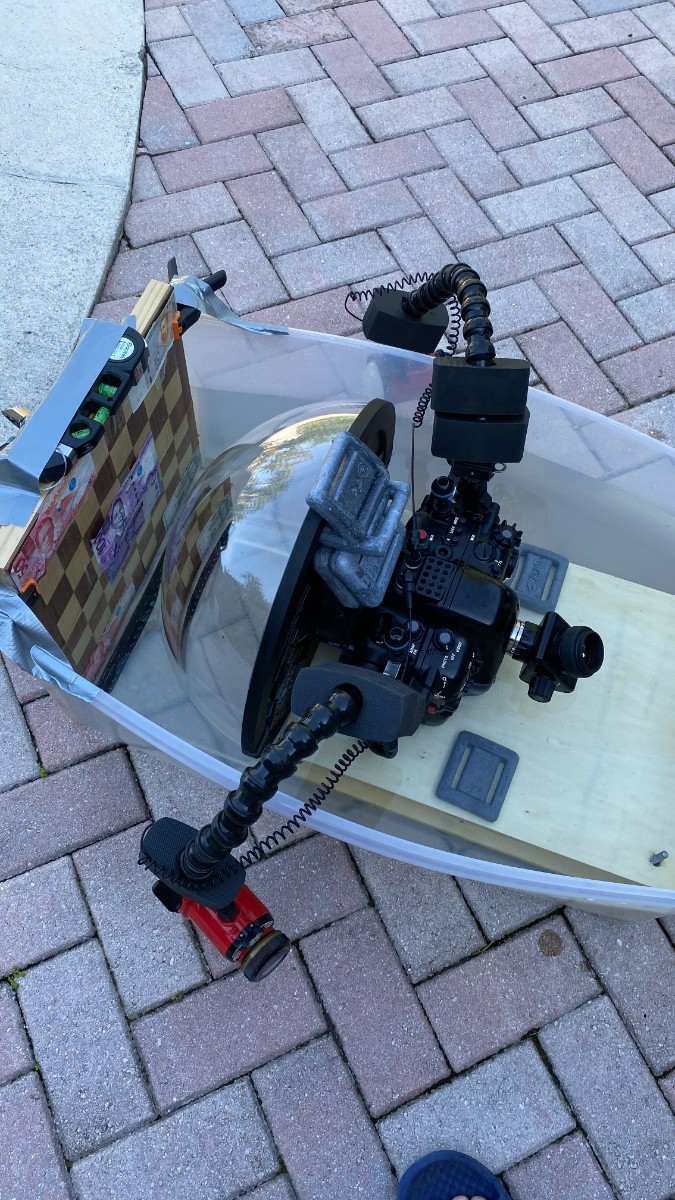
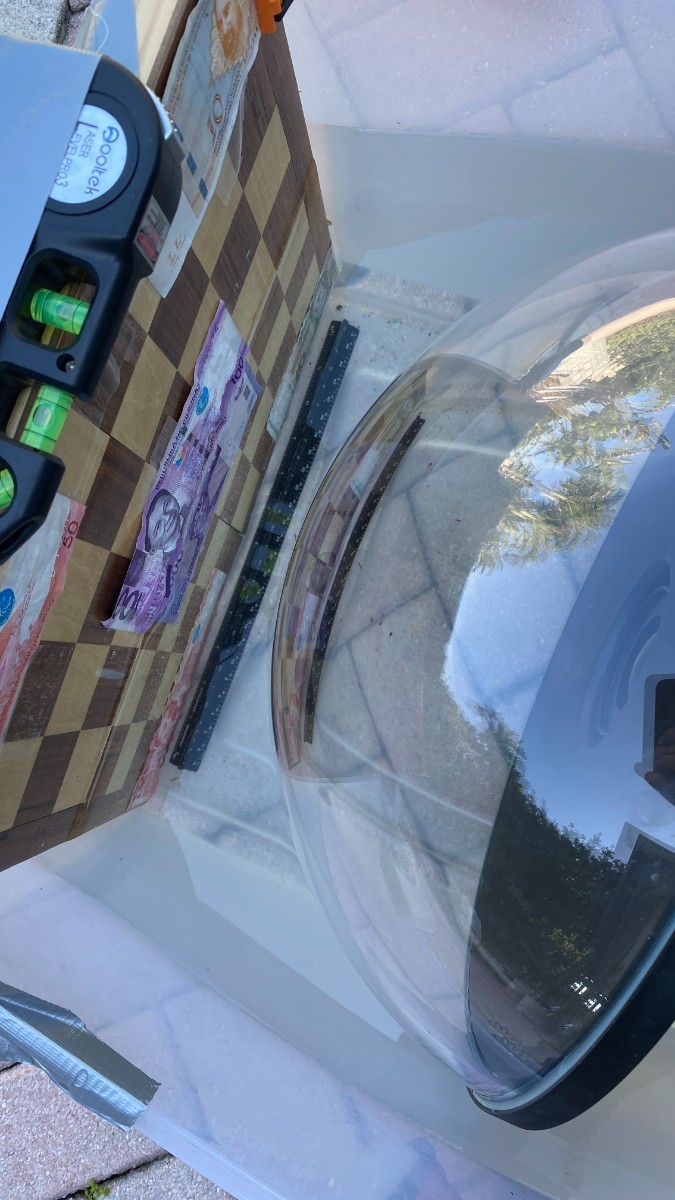
Ok, did more tests today. I now have the Canon RF 10-20mm L lens as well, which I thought would be interesting to test against the Laowa 10mm. Second, I switched to the 17" (427mm) Matty Smith custom "split-shot" dome to see how much of an image quality difference the larger dome made against the 140mm and 180mm options. The 17" dome is a true half hemisphere (fisheye dome). Matty Smith has confirmed that the radius of the 12" (300mm) dome is 6" (150mm) and the radius of the 16.8" (427mm) dome is 8.4" (213.5mm). Finally, I threw in the Nauticam WWL-C with the Canon RF 24-50mm F4.5-5.6 lens to see how Nauticam's wet contact optics compare. We can assume this one is the worst of the lot, especially given the mediocre lens behind it, but it should at least give a reference point. I would expect the WACP-C, WACP-1 and WACP-2 to perform better, especially with better lenses behind them, but don't have either to test. The test set-up looks like this. You can see the virtual image inside the dome.. surprisingly still significantly curved, even with a 427mm dome!
-
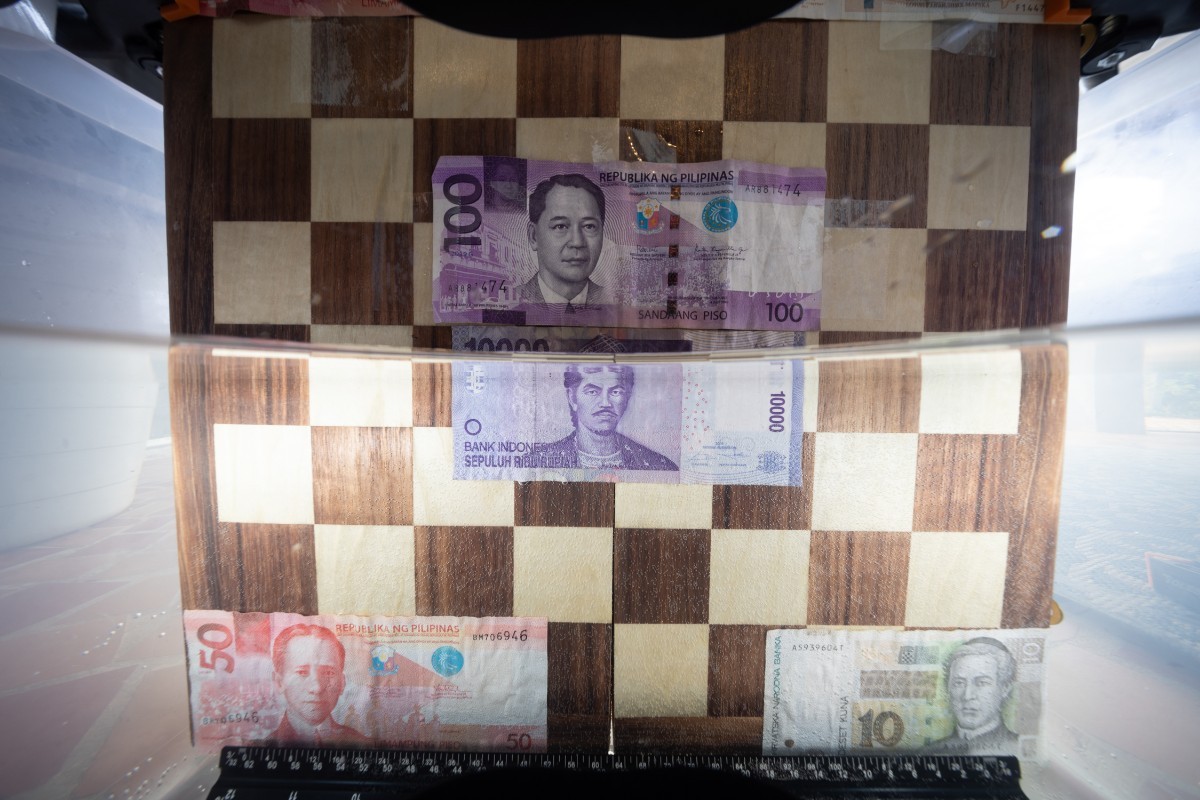
Correct. I've tested the Laowla with the 140mm nauticam dome and the Matty Smith 17" custom dome for nauticam n120. This is on RF system. In both cases, no extension is needed. Actually, my estimate is that around a 2-3mm extension would be optimal for putting the center of curvature of the lens in the middle of the dome, but since that doesn't exist, and 10mm doesn't work, and 20mm is too much... you're stuck with no extension by default. Here are shots with the 140mm dome and no extension.
.jpg.0d14af8a1e0f5a7e783ae71764e3b50e.jpg)
.jpg.065c404724c6cbbcac761daba01e2f4d.jpg)
-
Is there a link to the full specs? The recycling time improvement is a bit disappointing. Has anyone measured what the new Retras are capable of in terms of high speed recycling for action shots? What power do you need to be at to get 3, 5, 6, 10fps?