



.jpg.c5e6bd876847a2be9e8f7ad68dd32d7c.jpg)

Everything posted by Davide DB
-
25p or 50p doesn't matter if you don't want to slow down the video. If you want to do a 50% slow motion, then choose 25p. This way, if you select a clip or a portion of it and use the retime function at 50% (specifying that you want the clip to change its duration based on the slow motion percentage), your clip will become exactly twice as long and it will be slowed down by 50%.
-
I can't film at 120p and I normally film at 50p (PAL country). But honestly, even if I could, it wouldn't make sense unless for special use cases (spoiler: blackwater/bonfire). Generally I hate videos that are all put together in slow motion on a 24/25p timeline. Personally, I find them deadly boring and they make me think that the cameraman doesn't have a steady hand and needs this trick to hide mistakes. In other cases, it's just a trend. Pay attention: there are tons of underwater videos that tell about vacations and liveaboards where the scenes between one dive and another, whether they show the fun on board or the preparations for the dive, are all in slow motion with background music (strictly chill-out or epic). By now, it's a real cliché and when I see white rich people smiling and laughing in slow motion on a boat deck, I skip the video. (No offence). IMHO, 50/60p can sometimes be a lifesaver when the shot is too short and magically those good 3-5 seconds become 6-8. This can happen in wildlife shots with subjects that are difficult to film, or because you simply messed up the shot and you absolutely need that clip. 100/120p is usually used for slow motion in sports shots, but almost no one uses it as a default. There are few popular cameras that offer it without compromising on crop or quality. In underwater filming, I can't think of a good example except Blackwater/Bonfire diving where the organisms move frantically. All of the videos you see are in slow motion at at least 50/60p, and 100/120p is a godsend. Let's hear other opinions
-
If Dave didn't print it, it means that it can't be done 🤣🤣🤣
-
Great article, Ben, congratulations. A great Actioncamepedia chapter 😄
-
The UK's seas have had their warmest start to the year since records began, helping to drive some dramatic changes in marine life and for its fishing communities. The average surface temperature of UK waters in the seven months to the end of July was more than 0.2C higher than any year since 1980, BBC analysis of provisional Met Office data suggests. Scientists and amateur naturalists have observed a remarkable range of species not usually widespread in UK waters, including octopus, bluefin tuna and mauve stinger jellyfish. The abundance of these creatures can be affected by natural cycles and fishing practices, but many researchers point to the warming seas as a crucial part of their rise.
-
IDK if it worths spending money for tech diving. Deep down you need light, so if you shoot video with your main rig, ok. Otherwise you would get noisy sh***y images. 800 iso is the normal limit for these cameras
-
AOI lens is rated 60 m Good idea. BTW there's the new DJI Osmo 360 which seems to even better of Insta for several aspects. AFAIK flr these cameras there aren't underwater housings capable of tech dives.
-
Hi Ilan, Welcome aboard!
-
Hi Sam, Welcome aboard!!!
-
Welcome aboard! We hope you will enjoy the forum
-
https://waterpixels.net/forums/topic/2667-sony-announced-the-ultimate-compact-camera-today-but-pricy-sony-rx1r-iii/#findComment-18121
-
The opening post in this thread worths a read: EOSHD ForumSony RX1R vs RX1R II vs RX1R III hands on with the latest...Here at a camera store in Berlin we have the 3 musketeers. 2012 vintage RX1R OG, the one without the AA filter. It's very nice and I can't understand why it only goes for $900 used. Because it's got a
-
Hi Roman, Give a look at the Seafrog option. It's an housing for a popular commercial model which is sold on Amazon Prime too (here in Italy). So you could just try it on your desk if it has all the features you need.
-
When your vacation doesn't involve sun and sand... 😇 A big hello from Berlin to all the German forum members!

-
In a major breakthrough, scientists have finally identified the cause of a devastating marine epidemic that has killed billions of sea stars along the North American Pacific coast since 2013. The culprit is a bacterium, Vibrio pectenicida, which is in the same family as the one that causes cholera in humans. For years, a lack of knowledge about marine animal diseases made it difficult to pinpoint the exact cause of the widespread die-off. This disease, which affects over 20 different species, causes the sea stars to develop lesions and lose their arms. The discovery by a team of Canadian and U.S. researchers now offers hope for understanding and potentially addressing this significant ecological crisis. AP NewsScientists say they have solved the mystery of what kille...Scientists have solved the mystery of what killed over 5 billion sea stars — also known as starfish — off the Pacific coast of North America.
-
Thanks for your effort. I look forward to see the turtle clip. IIRC 😉 you should have a Lee Dark Salmon gel which appeared to be very promising in the land test. When do you plan to test it? P.S. Rosco 3310 is EOL so we need another champion
-
How does the build quality seem to you? What about the batteries? Its compartment and type of closure? And the controls? Basically, I'm asking you for a dry pre-review (an initial assessment without using it in water). 🤣🤣🤣
-
Terrific photos Wolfgang!!! Thanks for sharing
-
https://waterpixels.net/forums/topic/2654-youtube-quality-issue/#findComment-17905
-
Here's another tidbit to add to my complaint about Vimeo. Yesterday, a new member posted links to some videos on Vimeo.... If you're not a Vimeo member, you can't watch the video because the user forgot to set the age rating. This is a very common oversight if you're not careful on their convoluted publishing page. We've become a bunch of bigots, and their lawyers are terrified that a video might upset the viewer, who, meanwhile, is bombarded with garbage on social media. But even if you have an account, you're not out of the woods yet! If you're in Europe, you can watch the video, but if you like the creator, you can't view their other videos because their account icon isn't linked. Ok, you're not one to give up easily, so you try searching for them using the search bar. No luck there either, because for us Europeans, the search bar is limited to finding OUR videos. The only alternative is to search for it using Google's search engine. At that point, you can see their profile, but to navigate from one video to another, you still have to use your browser's navigation functions because all links have been removed from the page. An naive person might think that a European user pays a lower subscription fee, but no: all these tortures are free. I hope that in December, the moment I cancel my subscription, Vimeo definitively fails.
-
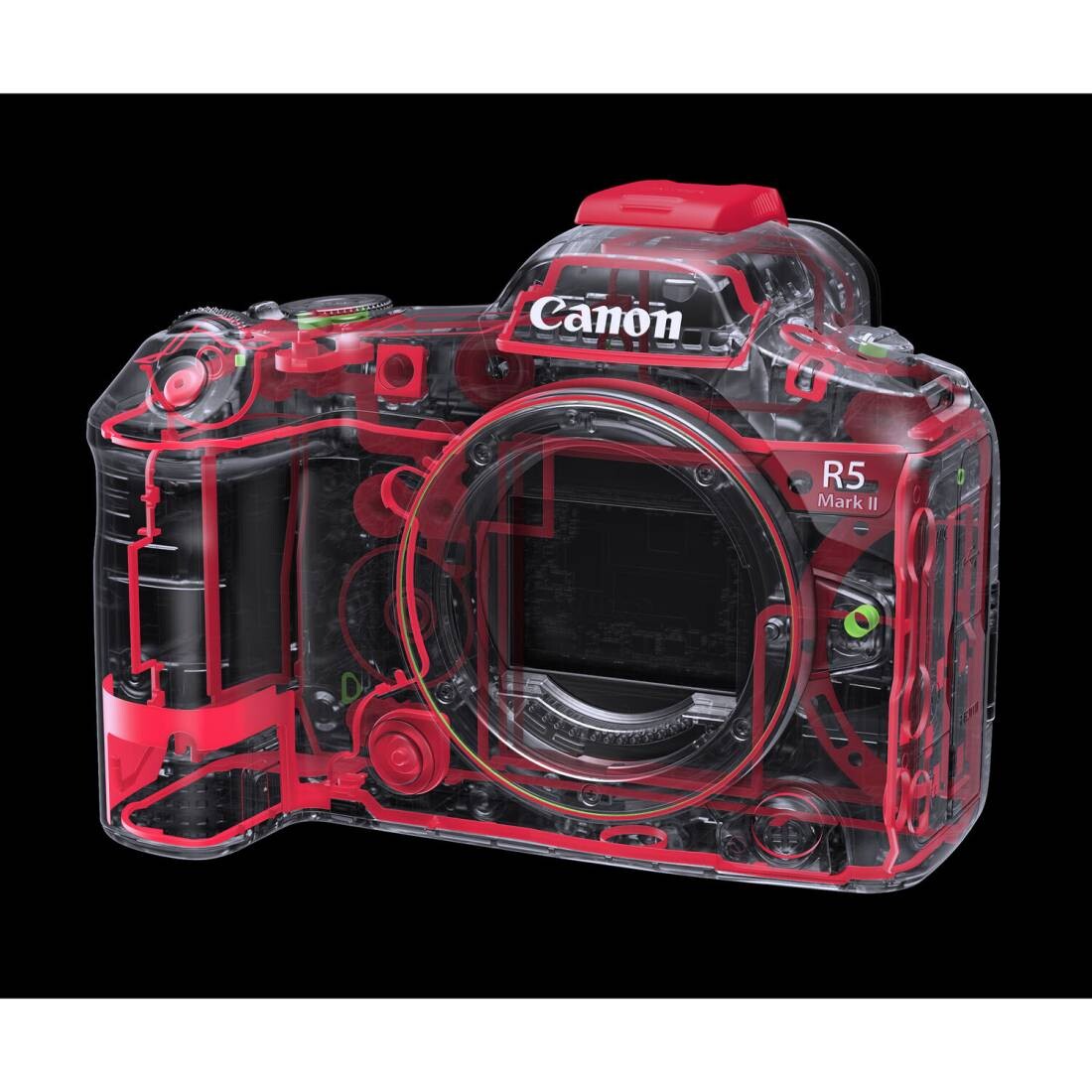 Canon has released new major firmware for the EOS R5 Mark II for the second time in a week. This update fixes an issue where video could not be recorded correctly when using a memory card larger than 2TB with the [Pre-recording] setting enabled. This firmware (Version 1.1.1) includes fixes for the following issues identified in Version 1.1.0: 1. Fixes an issue where video could not be recorded correctly when using a memory card larger than 2TB with the [Pre-recording] setting enabled. This firmware also incorporates the following changes introduced in Firmware Version 1.1.0: 1. Improves security features. A password must be set initially. • Adds the ability to review the history of any changes made to the password, network information, or other settings. *For more information, please refer to the 'Setting a Password' section in the Advanced User Guide on cam.start.canon. 2. Enables firmware updates to be performed when the camera is connected to the internet and new firmware is made available on Canon servers. 3. Adds the ability to automatically detect Flicker at 100 or 120 Hz during Live View display. 4. Adds the ability to register focus position as a presets on the CR-A100 Camera Remote Application. This ability makes it easier to focus on subjects at the intended distance when the application is used with Robotic Camera System CR-S700R. 5. Adds the ability to select [Case Special] to expand Servo AF characteristics which is effective for subjects located behind a net in sporting events, such as badminton or volleyball. 6. Adds support for the Software Development Assistance Kit (EDSDK/CCAPI). 7. Adds a function that simultaneously protects images when they are rated. 8. Improves image stabilization control for lenses compatible with Peripheral Coordinated Control. 9. Adds the ability to use up to 8TB of CFexpress cards. Note - Cards larger than 8TB require low-level formatting by the camera. - Cards larger than 8TB are treated as 8TB cards. - Cards larger than 2TB cannot be used for firmware updating. 10. Adds to lower the image capture frame rate to help prevent overheating when connected to CR-A100 in extended remote shooting. 11. When transferring images with voice memos via FTP, the transfer order priority has now changed with voice memo (Wav) file being sent first followed by image file. If a voice memo is added to an image queued for transfer, the image and voice memo are now sent last. 12. Adds the ability to set the number of shots captured in pre-continuous shooting mode. 13. Adds the ability to set [Airplane mode] to shooting button customization. 14. Adds the ability to enable [Exposure Simulation] when a flash unit is attached. 15. Improved AF tracking during video capture for subjects that are difficult to focus on. 16. Fixes an issue in which Err70 may occur when enlarging an image after shooting with [Blackout-Free Display] set to "On" and [Servo 1st image priority/One-Shot AF release priority] set to "Release priority". 17. Fixes an issue in which Err70 may occur during Bluetooth communication due to interference from other Bluetooth devices. 18. Fixes an issue in which Err70 may occur when repeatedly shooting in the "High-speed continuous shooting +" mode. 19. Fixes an issue in which Err70 may occur immediately after startup when shooting with the electronic shutter. 20. Fixes an issue in which Err70 may occur during video recording in "FHD239.8P/200.0P". 21. Fixes an issue in which Error 70 may occur while filming in video mode with frame rate set to “50.00P” and [Movie Digital IS] set to “On” or “Enhanced”. 22. Fixes an issue in which Err70 may occur during shooting when both [Pre-recording] and [Auto send] to image.canon are set to "Enable". 23. Fixes an issue in which the camera may stop functioning properly when [Image Review] is set to "Off" and the monitor entered low brightness mode after pre-continuous shooting. 24. Fixes an issue in which video recording may not be possible when using Remote Live View shooting in EOS Utility while outputting via HDMI. 25. Fixes an issue in which large RAW image files may not be transferred via Camera Connect. 26. Fixes an issue in which a horizontal line may appear momentarily in the viewfinder. 27. Fixes an issue in which the camera may not connect to Wi-Fi 7-compatible routers.
 -
 Since 1994 the Monterey Shootout has been the annual gathering of underwater photographers in the stunning kelp beds of Monterey Bay. This three day weekend features seminars, a fabulous social mixer, and a friendly photo and video contest that makes us dive a little harder and push our creativity alongside new and old friends just a bit longer. Join us for the greatest dive weekend of the year. The Monterey Shootout - a 36 hou...Monterey Shootout - An Underwater Photography Competition...The Monterey Shootout is a four-day weekend of diving, educational seminars, celebration, and a chance to win over $25,000 in prizes even with the simplest of underwater cameras.
 -
Fantastic write-up and a huge thank you for putting in the time and effort to create this comparison! Color is very subjective, but I've always thought that, out of the box, Canon's colors and their white balance (WB) underwater are subjectively more beautiful than other major brands, almost perfect as a starting point. Initially, Sony's colors were the worst, but in recent releases, Sony finally has excellent color profiles for underwater shooting too. A few technical points I'd love to discuss: For your custom white balance, were you setting it at depth using a slate? Getting accurate warm tones back can be tricky, and your results with the R5 II look great. Noise on the R5 II: Your finding about the R5 Mark II being the noisiest at base ISO 800 is interesting. If I understand correctly you were using SRaw/CLog 2? RED Color Science: Your comments on the RED's color science underwater match what I've heard from others. It provides a very clean, neutral starting point but requires a more experienced colorist to bring out natural water tones and skin tones compared to Canon's out-of-the-box science. Did you use RED's IPP2 pipeline in Resolve, and which LUTs, if any, did you use as a starting point? The 1DX II: It's fascinating to see the old 1DX Mark II still holding its own, especially on noise. That Motion JPEG codec is ancient but very robust. Its performance here is a testament to the idea that a high-bitrate, intra-frame codec (even if it's 8-bit) can sometimes be easier to work with than a more compressed 10-bit format if not exposed perfectly. It would be interesting to see a more in depth head-to-head comparison between the RED Gemini and the Canon R5 Mark II, both shooting in RAW. 😇 Thank you again for you test
-
Welcome aboard Jero! It's great to have another video aficionado join this crew of shutterbugs! 😉 I hope you will enjoy the forum
-
Hi Alex, Welcome aboard! I hope you will enjoy the forum!





.jpg.857dbbfbdc4d79d9c6ebf7b4ba96ed1b.jpg)
