Skip to content

Photography Gear and Technique / Archived topic

Nikon 16mm FF edge sharpness

Started by Kogia ·

  • 66Posts
  • 66Replies

Read-only discussion

Nikon 16mm FF edge sharpness

66 posts
  1. Has anyone found a solution to get sharp edges and corners with the 16mm fisheye on a Nikon full-frame camera? After spending the last several years in the Canon digital camp, I have recently started using my first digital Nikon – a full-frame D700. After reading the praises of the u.w. performance of the Nikkor 16mm fisheye on these pages, I was expecting stellar performance. However, after my first use of this combination in the field, I have come to the conclusion that these rave reviews must have been written by people using this lens on DX cameras.


    Am I alone in finding that edge sharpness leaves a great deal to be desired when using this lens behind a dome port? So far, I have only tested it in the configuration recommended by Subal – behind their DP-FE2 (8-inch) dome, with no extension. The lens front sits even with the back of the port, so it looks like a good placement. Yet, at apertures wider than f10, more than 30% of the frame may be uselessly out of focus. The nature of my photography does not always allow me to stop down, so I may be forced to use apertures of f5.6 or wider, with results that make me wonder why I am shooting FX, instead of DX (when shooting the Tokina 10-17 at 10mm on DX you get the same field of view, with a center that is not quite as sharp, but edges that are much more acceptable, although plagued with blue fringing on highlights).


    When shooting horizontal, as expected, the left and right edges are much worse than the top and bottom. It appears that the virtual image curves away from the sensor plane in such a way that near objects suffer the worst. For example, if the center of the image is perfectly sharp at a distance of 3 feet, at the edge the most acceptable focus might be achieved on something at a distance of 6 feet, although nothing on the edges will be really sharp. I find this terribly disappointing because the center is phenomenally sharp!


    It is not possible to place a close-up diopter lens on the front of the 16mm to bend the plane of focus, as is often suggested for zoom lenses. The other usual suggestion for edge problems is to use a larger dome. However, for some of us it is not practical to travel with the giant heavy glass domes that are offered, even if one can afford the purchase price. The lens may only be looking through the center portion of a large dome anyway, so all that glass around the edges is wasted. Logically, if the edges are focusing differently from the center, it should be because the dome is either too curved, or not curved enough. If a bigger dome gives better results, that implies that the problem is “too curved” (as long as the lens focuses close enough that the distance to the virtual image is not an issue). In theory, a housing manufacturer should be able to take the mount from a 6-inch or 8-inch dome and put in a piece of glass or acrylic that is a section from a much larger dome. This would have less curvature than a dome which is actually half of a 6 or 8 inch sphere. But would it really work better? I would love hear from anyone with either a practical or theoretical background to shed some light on this or offer any suggestions.


    Is the Sigma 15mm any better around the edges at wide apertures on full frame? Has anyone done a critical comparison between the 16mm and Tokina 10-17mm + 1.4X tele (at the wide end) for center and edge sharpness? Thanks.


    Doug

    Edited by Alex_Mustard — EDITED by moderator - no changes to text - paragraphs added to improve readability
  2. I think that anyone switching from APS-C to a FF digital camera will notice a lack of depth of field with any of the lenses they use. I have written in all the reviews I have done on FX Nikons that I believe that the DX Nikon D300 is a better all round underwater camera - and the reasons you state are some of the important ones. Not that this has stopped lots of people wanting and buying Nikon D700s!


    I have used both the Nikon 16mm and Sigma 15mm Fisheyes on FF Nikons. I would certainly say that you should try and shoot between F8-F13 for wide angle photos if you can for a pleasing depth of field. I favour the Sigma 15mm because it focuses closer - but the difference is not huge. Both perform well and I have not had any problems with sharpness. Here are a variety of D700 fisheye shots that I have taken this year - so that you can judge the sharpness of your images by comparison. These are all taken with the Subal FE2 dome and no extension ring.


    If you results are a disappointing as you suggest, it is possible that you have a mis-aligned lens - which would explain the problem. Another issue could be a stuck aperture - meaning that if though you lens is trying to stop down - it is actually shooting everything at F2.8/


    Here are my shots taken with the same FX Nikon Fisheye setup as you are using. Tried to provide a variety. In terms of depth of field you should be getting something broadly similar.


    Cay09_am04.jpg


    Cay09_am02.jpg


    PH08_am02.jpg


    RSam_08_03.jpg


    RAJ09_11.jpg


    RAJ09_01.jpg


    RAJ09_13.jpg


    RAJ09_18.jpg


    RAJ09_am01.jpg


    And this one is with the Nikon 16mm on a 1.5x teleconverter on the D700:

    RSam_08_01.jpg


    Best regards,


    Alex

  3. I have used the 16mm with the same FX / Subal setup and have not noticed any issues; at least at f8.

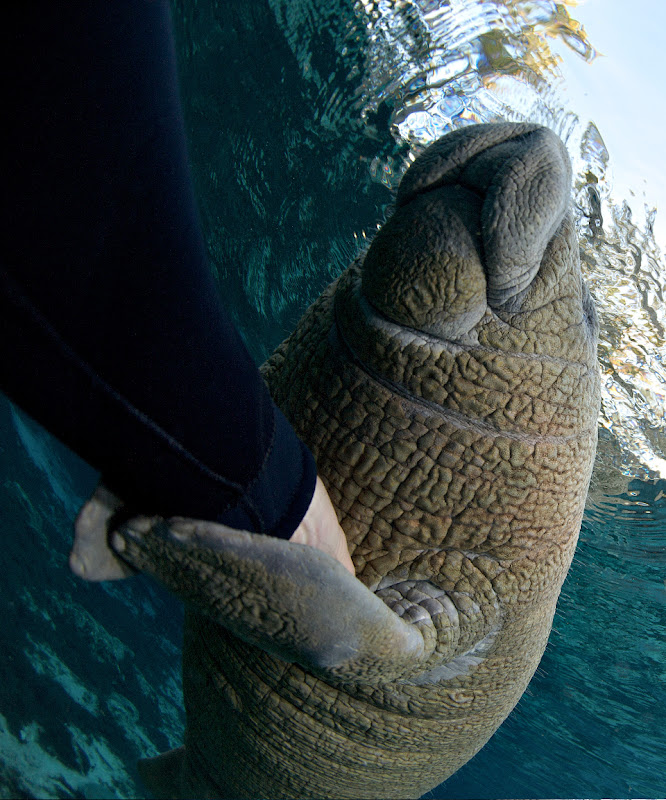
    I tried to find one image to demonstrate edge-to-edge sharpness.

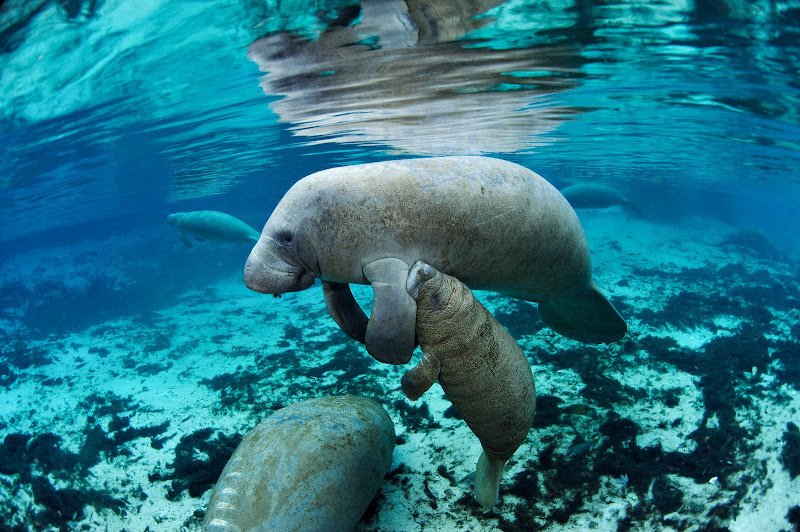
    On this manatee shot everything in the plane of focus seems to be sharp to me - even body hairs are visible at the lower edge of the frame.

    This is a crop of the full left side and middle of the image. I will do some pool stuff this weekend to see if I can see any differences between the 10-17 with TC and the 16mm. With the the D700, are you shooting in such low light that you cannot bump the ISO rather then shoot fully open?


    Crystal%20River2008-12-046013.jpg

    Edited by loftus
  4. I think that anyone switching from APS-C to a FF digital camera will notice a lack of depth of field with any of the lenses they use. I have written in all the reviews I have done on FX Nikons that I believe that the DX Nikon D300 is a better all round underwater camera - and the reasons you state are some of the important ones. Not that this has stopped lots of people wanting and buying Nikon D700s!


    I have used both the Nikon 16mm and Sigma 15mm Fisheyes on FF Nikons. I would certainly say that you should try and shoot between F8-F13 for wide angle photos if you can for a pleasing depth of field. I favour the Sigma 15mm because it focuses closer - but the difference is not huge. Both perform well and I have not had any problems with sharpness. Here are a variety of D700 fisheye shots that I have taken this year - so that you can judge the sharpness of your images by comparison. These are all taken with the Subal FE2 dome and no extension ring.


    If you results are a disappointing as you suggest, it is possible that you have a mis-aligned lens - which would explain the problem. Another issue could be a stuck aperture - meaning that if though you lens is trying to stop down - it is actually shooting everything at F2.8/


    Here are my shots taken with the same FX Nikon Fisheye setup as you are using. Tried to provide a variety. In terms of depth of field you should be getting something broadly similar.


    Best regards,


    Alex


    All good points Alex. I'd check the lens topside to make sure it is suitably sharp first. No amount of dome tweaking will fix a wide-angle lens that is flawed to begin with.


    Also, is it possible the clear glass filter on the rear element is accidentally not installed? I only say that because it is part of the optical formula on the 16mm Nikkor. Although, I've never tested the lens without the filter to know exactly how that might affect a photo. The 16mm Nikkor should be very sharp throughout the frame, as Alex's photos demonstrate.

  5. If you take the filter off the back of the 16mm, it stops the lens focusing on infinity on land, but allows it to focus slightly closer.


    Alex

  6. All good points Alex. I'd check the lens topside to make sure it is suitably sharp first. No amount of dome tweaking will fix a wide-angle lens that is flawed to begin with.


    Also, is it possible the clear glass filter on the rear element is accidentally not installed? I only say that because it is part of the optical formula on the 16mm Nikkor. Although, I've never tested the lens without the filter to know exactly how that might affect a photo. The 16mm Nikkor should be very sharp throughout the frame, as Alex's photos demonstrate.


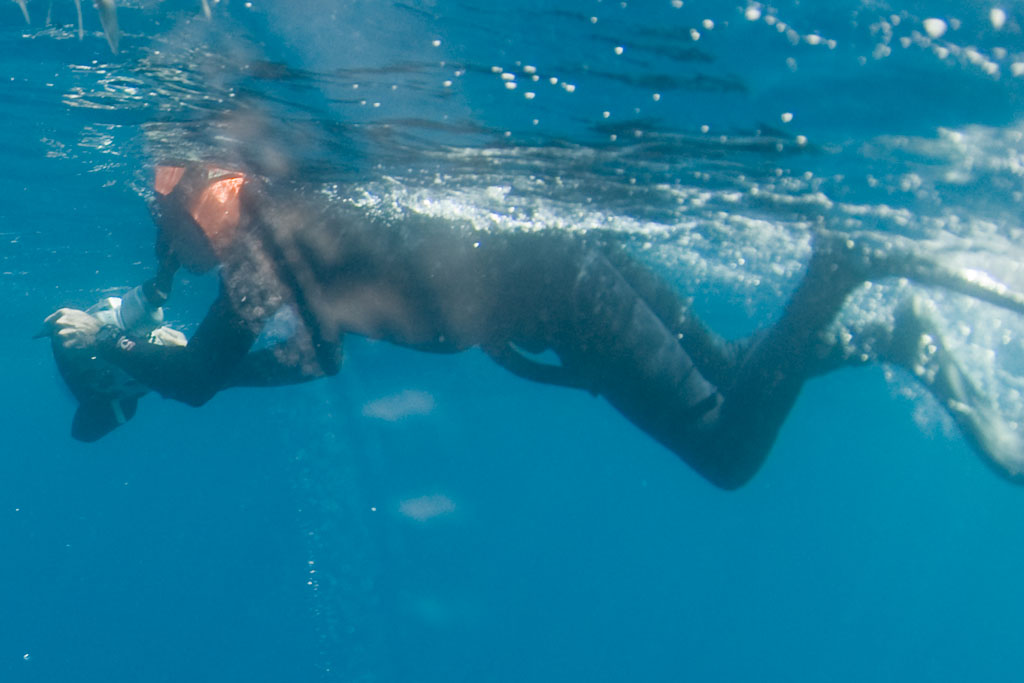
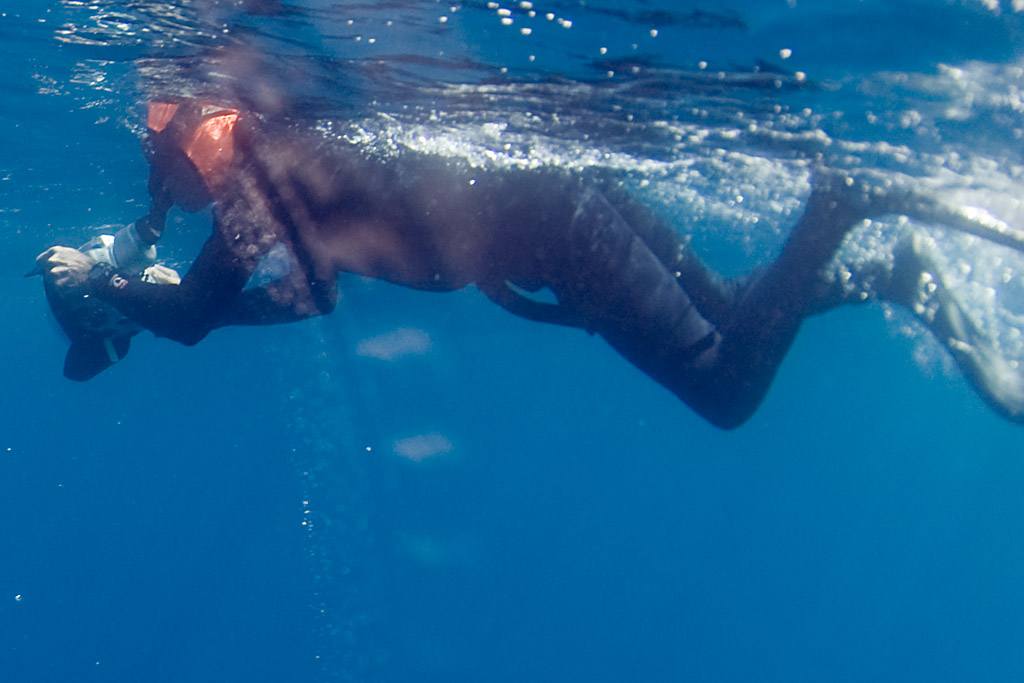
    Thanks, Alex, Steve, and Jeff. However, I would like to re-iterate that the problem is not sharpness nor depth of field, although I am sure additional depth of field would help. I am getting incredible sharpness and sufficient depth of field in the center of the image. And the aperture is stopping down as it's supposed to. I do agree that you guys are getting much better results with smaller apertures. However, shooting at high shutter speeds in low light without strobes, it is not always possible to stop down to the sort of apertures that would conceal the edge problem. I bought the D700 in order to be able to go to those fantastic ISO settings and compensate, but in practice I am finding that I don't like the noise when I go past ISO 800. The attached clip is from a frame shot at ISO 800, 1/800 sec. at f6.3. Please ignore the reflection of the lettering on the lens. I am only including this piece of a photo because it illustrates the problem I am discussing. The front of the diver's housing is about 1/4 of the way into the frame (halfway to the center of the photo), while the right side of this clip is at the right edge of the full frame. The diver is swimming parallel to the "film plane" so all parts of the diver should be equally focused if optics were perfect. Even though the diver is further away than the actual subject (not visible), there is enough depth of filed that the diver's head and camera are acceptably sharp. But his weight belt is soft, and his fins are - yuck! Sometimes important parts of the subject reach the frame edge and the same miserable result. I am looking for a port solution that will allow acceptable results at the edge at f5.6. With lenses that are not as wide you can get an image that is perfectly sharp at the edge at even f4 or f2.8, and the 16mm is sharp to the edges in air, so it should be just a matter of matching the u.w. optics somehow.

    post-23718-1238009977.jpg

  7. To me the whole frame is fuzzy, neither the middle nor the edges are sharp, to me not a great image to judge. Why don't you try some static pool type images with clear water etc, to evaluate this.

  8. To me the whole frame is fuzzy, neither the middle nor the edges are sharp, to me not a great image to judge. Why don't you try some static pool type images with clear water etc, to evaluate this.


    Jeff - try to keep in mind that you are looking at about 1/16 of the actual frame of the picture. Here I've done a quick levels and sharpening on the crop, to make it easier to see my point. Look at the logo on the wetsuit on the diver's wrist. Now imagine if that logo was back on his fins. There is a huge difference. Shutter speed is 1/800 sec, so fin movement has nothing to do with it. As I mentioned, the diver was entirely behind the point of focus, but at f6.3 there was enough depth of field, that I feel his head & wrist are acceptable for a background subject, but they are just at the edge of the zone where everything starts to deteriorate. In other pictures parts of the main subject were at the edge of the frame and suffered the same optical deterioration, but I chose this piece of a picture for an example because it was the rare case where something was turned sideways to the camera with all parts at the same distance from the lens and long enough that you can see the quality degradation going out to the edge of the frame. Yes, a pool test with a grid would be more obvious, but I don't have a pool. Will borrow one at some point, but I do think this illustrates the problem. In your own picture of the manatee, I don't see anything with detail reaching right to the edge of the frame where you can judge. Already the flipper nails look a little iffy, but it's very hard to tell.

    post-23718-1238017670.jpg

  9. Not meaning to be argumentative, but I still think this is a poor example with the glare, water swirling around the fins etc, Everything from the diver's shoulders backwards is a little fuzzy to me with a pretty sharp line of demarcation from where the reflection is visible.

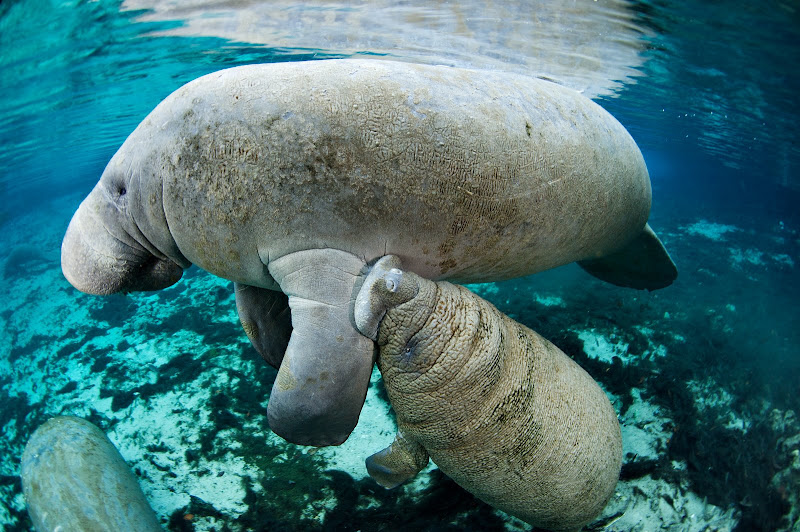
    With regard to my manatee it's not the best, but one is able to see body hairs in focus on both sides of the animal. The flippers are in front of the plane so are not in focus at all.

    A couple more, also f8, ISO 800


    Crystal%20River2008-12-045963.jpg


    Crystal%20River2008-12-045950.jpg

  10. Not meaning to be argumentative, but I still think this is a poor example with the glare, water swirling around the fins etc, Everything from the diver's shoulders backwards is a little fuzzy to me with a pretty sharp line of demarcation from where the reflection is visible.

    With regard to my manatee it's not the best, but one is able to see body hairs in focus on both sides of the animal. The flippers are in front of the plane so are not in focus at all.

    A couple more, also f8, ISO 800


    Crystal%20River2008-12-045963.jpg


    Crystal%20River2008-12-045950.jpg


    Now you've got it - everything from the diver's shoulders backwards is fuzzy. But it's not because of the glare or swirling water. It's the same fuzziness at the edge of the frame in hundreds of pictures I took. But in most of my pictures the part that is sharp is at a different distance from the part that is fuzzy, so I couldn't really argue that the fuzziness is because of being at the edge of the frame. Your manatee pictures are beautiful, but serve as no comparison because there is only open water at the left and right edges. Imagine one of those pictures with an unwanted diver swimming in from the right side of the frame, just barely farther away than your manatee, but touching the right side of your frame. Crop that diver, and you have the picture I posted. As I said, ignore the reflection - it's irrelevant. Also, if you have stopped down tighter than f8 you won't notice the problem so obviously - but it will still be there.

  11. Now you've got it - everything from the diver's shoulders backwards is fuzzy. But it's not because of the glare or swirling water. It's the same fuzziness at the edge of the frame in hundreds of pictures I took. But in most of my pictures the part that is sharp is at a different distance from the part that is fuzzy, so I couldn't really argue that the fuzziness is because of being at the edge of the frame. Your manatee pictures are beautiful, but serve as no comparison because there is only open water at the left and right edges. Imagine one of those pictures with an unwanted diver swimming in from the right side of the frame, just barely farther away than your manatee, but touching the right side of your frame. Crop that diver, and you have the picture I posted. As I said, ignore the reflection - it's irrelevant. Also, if you have stopped down tighter than f8 you won't notice the problem so obviously - but it will still be there.

    Anyway, no point in arguing. I posted my images to show the manatee's face to the left is pretty sharp, and in the second one the back of the manatee on the bottom is sharp.

    I think you are having a problem that we do not see, but then we are shooting f8.

    I will play in the pool this weekend and report back.

  12. I am looking for a port solution that will allow acceptable results at the edge at f5.6. With lenses that are not as wide you can get an image that is perfectly sharp at the edge at even f4 or f2.8, and the 16mm is sharp to the edges in air, so it should be just a matter of matching the u.w. optics somehow.


    This is not going to happen with extreme wide angles. :) One is focusing on a curved virtual image. :) It is essential to stop down to be able to focus on it. Maybe with a 28mm you could use a larger aperture - I have been successful with the 18mm and larger than f/8 with the DX format.

    Tom

  13. So I guess the interesting question is what aperture do you need to use with FX and 16mm to get the same depth of field as DX and 10.5mm?


    Most people say that F11 is the sweet spot of the 10.5mm. So, say you usually shoot the 10.5mm at F11? What aperture will give you the same appearance of depth of field with a fisheye on a full frame camera.


    I can guestimate, but I don't have a formula to calculate it.


    Alex

  14. I can guestimate, but I don't have a formula to calculate it.


    Alex


    Where is Craig when we need him? :)

  15. Well, tough one... You got the big guys thinking...

    I have used this lens extensively, I still have a 10yo. one with me!!!

    But I must say that I always avoided it at less than f/8.


    "The attached clip is from a frame shot at ISO 800, 1/800 sec. at f6.3"

    Do you really think you need these setting?

    Nothing moves that fast underwater, and even the light rays can be frozen at almost half than that speed.

    1/400 at f/11 would solve most of your problems IMHO.


    "With lenses that are not as wide you can get an image that is perfectly sharp at the edge at even f4 or f2.8, and the 16mm is sharp to the edges in air, so it should be just a matter of matching the u.w. optics somehow."

    Yeah you are about right. There seems to be nothing wrong with your 16mm lens.

    And what you describe looks like the problem of the edges on dome ports (virtual image plane not well located).

    This is sometimes attenuated by the use of smaller apertures, with greater depth of field.


    Remember that though you are shooting something maybe even 5 meters away, your lens is focusing on something not far from 3 feet.


    One of the exercises I do with my students in the pool is this:

    I stand them at one side of the pool and ask them to focus on the tiles on the other side.

    Then I (from outside the pool) tell them not to touch the focus or shutter release, I take the housing from their hands, open it with care and show them the lens focus window showing only a few feet away.


    At this close focus, these wide apertures, might be enough for the lens to loose a bit of sharpness where it needs most (on the fringes) where the virtual image might not be precisely placed.


    Hope it helps.

  16. I did a degree course in photography during the early '60s. Yes, they had already invented photography then! I seem to remember there was a theory why lenses performed best (not including DOF) at around F/8 or f/11 but I can't remember the details. I can't remember the atomic theory of latent image formation either or where I put the paperwork since!

  17. "The attached clip is from a frame shot at ISO 800, 1/800 sec. at f6.3"

    Do you really think you need these setting?

    Nothing moves that fast underwater, and even the light rays can be frozen at almost half than that speed.

    1/400 at f/11 would solve most of your problems IMHO.


    Very good point! I missed that. I would say that except for a speeding boat, 1/125 -1/250 at most is adequate.

  18. Yes? I'm Craig! :) Formula for DoF =

    Subject Distance= Sd

    Focal length = Fl

    F stop=f#

    Circle of Confusion = coc

    Hyperfocal= Hf


    Hf= Fl squared / f#*coc

    DoF near = Hf*Sd/Hf+(Sd+Fl)

    DoF far = Hf*Sd/Hf+(Sd-Fl)

    Total Dof= Dof near + DoF far


    Since I'm only Craig to Jeff and not Craig Jones (who is currently rowing a boat in the Banda Sea), I'll leave you doctors to calculate but focused at 1m I'd say around f17 +/- 0.5 confidence interval. :)


    If you bother to, you can even plot a DoF curve on a chart. :wub:

    Edited by Drew
  19. Thanks Drew.


    F17, wow! So the motto of the story is don't buy full frame.


    Alex

  20. Is this affected at all by the fact we are using a domeport and using the virtual image? It would appear the Sd is much smaller with a dome. I'll have to run the formulas later when I have time.

AOI

Account

Navigation

Search

Search

Configure browser push notifications

Chrome (Android)
  1. Tap the lock icon next to the address bar.
  2. Tap Permissions → Notifications.
  3. Adjust your preference.
Chrome (Desktop)
  1. Click the padlock icon in the address bar.
  2. Select Site settings.
  3. Find Notifications and adjust your preference.