Skip to content

Photography Gear and Technique / Archived topic

Nikon 16mm FF edge sharpness

Started by Kogia ·

  • 66Posts
  • 66Replies

Read-only discussion

Nikon 16mm FF edge sharpness

66 posts
  1. And finally at 17mm (100 degrees FOV, close to the Nikon 17-35 at 17 without dioptre) Here I think corner sharpness is pretty decent even wide open. f4.5 (about f 6.3 effective)


    17mm f4.5


    16mm2009-03-2611344.jpg


    16mm2009-03-2611344%20(1).jpg


    So, my conclusions:

    The Tokina 10-17 with 1.4TC has a one stop advantage over the Nikon 16mm, and compares favorably to any rectilinear in terms of corner sharpness, possibly better at wider apertures, with the FE2 on Subal.

    Edited by loftus
  2. Wait, how do you get 100° with the 1.4? Isn't that the equivalent in APS-C? Is the Tokie at 17 w/o TC wider than the 17-35 on the D700?

  3. Wait, how do you get 100° with the 1.4? Isn't that the equivalent in APS-C? Is the Tokie at 17 w/o TC wider than the 17-35 on the D700?

    The stats on the Tokina website say the Tokina at 17mm is 100 degrees, and on Nikon's site the 17-35 (not a DX lens) is given as 104 degrees at the wide end. (62-104 degrees)


    The Tokina with TC on FX should be the same as the Tokina without TC on DX, give or take the difference between 1,4TC and 1.5 crop, actually slightly wider on FX as evidenced by the vignetting at 10mm.


    Am I wrong, master?

    Edited by loftus
  4. Can you verify by putting both lenses on the D700 at 17 and snap a shot and satisfy this curiosity, padawan? Because if the Tokie is better at 15-17 than the 16 nikkor fishy , then Tokie can be used as a 15-17 semi prime and 14-24 (1.4TC). It's probably not as wide at 15 but may be wide enough for many applications?

  5. I did a few more pool tests with the Tokina 10-17 with 1.4TC. I know this might belong in the Tokina thread I posted, but is probably pertinent here for comparison to the 16mm.


    First at 10mm (14mm) at 3.5 it's widest aperture (1 stop less effective exposure) and at 5.6 (f8 effective)

    My judgement is that I get at least one stop more in terms of corner sharpness than the Nikon 16mm.


    Thanks again for your help, Jeff. I'd be real interested to also see a comparison of center crops from the Tok + tele vs the 16mm. One of my motivations in trying to find a better port solution for the 16mm is that it is so sharp in the center - noticeably sharper than the Tokina I have been using on my Canon 40D. I'm inclined to suspect that adding the teleconverter would put the Tokina even further behind in terms of center quality, but it also possible that part of what I'm seeing is due to a superior sensor on the D700. I'm hesitating to rush out and buy a Nikon mount Tokina, and then maybe find out I still prefer the 16mm. To answer your questions - of course I don't give a gnat's behind about the diver being in focus - if I was to use this shot the diver would disappear anyway. I do want the sardines to be sharp. And yes, I have a bunch shots where the sardines are at various parts of the edge of the frame, and are out of focus. However, they tend to rush toward or away from the camera, so in any one frame it's hard to say whether a particular fish is out of focus because it's too close, too far, or because it's at the edge. With the diver you can clearly see the focus falling off moving to the edge of the frame. And I think the flare has little, if anything to do with the results. I had a better sun angle in most of the other pictures and same problem at the edges of the frame. The clincher for me is the comparison with the shots taken on the 40D with the Tokina at 10mm. Some of the fish at the edges are reasonably sharp in those shots, but it never happens with the Nikon. BTW I read a technical paper that said Nikon is expected to have worse edges than Canon on full frame sensors because the lens mount opening is smaller, affecting the angle of light hitting the sensor (remember when Canon redesigned with a larger lens mount, and Nikon opted with eternal compatibility of lenses?). If this is true, then Canon full frame with 15mm fisheye lens should have better edges than Nikon FF with FE. It seems to me I've noticed fewer edge problems with the Canon, but it's not really fair to make that statement without some controlled pool tests. On port design, I remember the small but very curved Seacam FE port produced good results with a FE lens, but so did the old Ikelite very flat FE port (looked like a 5 inch Lexan contact lens) - but I used both of those back in the days of film, before we were zooming in to 200% on big monitors to check detail. I no longer have either port, but would be interesting to be able to test those various configurations. Would also be real interesting to hear from someone on the inside with some of the housing manufacturers as to whether any of them actually have optical engineers designing and testing different port designs on particular lenses, vs. finding an available piece of glass, creating a mount for it that will put it at about the right distance out for a lens like the 16mm that needs minimal extension, then doing a few quick tests to figure out how much extension will avoid vignetting with the other popular lenses in use. Most housing manufacturers are very small companies and outsource as much of their materials as they can. They are running a treadmill to get the new housing designs out as fast as the camera manufacturers are churning out the new cameras. I could be way off here, but it's hard for me to imagine any of them employing a team of optical engineers, like the resources Nikon had to create the Nikonos water-contact optics back in the day.

  6. Craig again... There are fish in the water that can move at 40-60km/h. Marlin, Sailfish, Mako sharks, tuna etc all hitting baitballs move hella fast. 1/250 is doable minimum, especially when you really are close in on the action.. that's if you want to freeze the action vs doing a Mustard warp field. :D


    Doug, I looked at your pic and it does seem to be soft from the curvature of the dome. It'd be easier to post a complete pic to see how far it does that. Experiment with the bigger Subal Dome port or go to a narrower lens like the 17-35. Or the much more expensive option is you can go back to Canon and the 1.28 crop 1D MkIII. 10fps, very decent high ISO and crop gets rid of the ugly bits. :) You can see my 1.25 crop at f4-5.6 in the photo gallery under ocean safari. Natural light or non-working strobes :)


    I'd be very surprised if someone is getting sharper corners with a wide rectilinear zoom like the 17-35 (or the 14-24) on FX than with a fisheye lens. Then you might preffer it anyway, off course.


    /christian

  7. Can you verify by putting both lenses on the D700 at 17 and snap a shot and satisfy this curiosity, padawan? Because if the Tokie is better at 15-17 than the 16 nikkor fishy , then Tokie can be used as a 15-17 semi prime and 14-24 (1.4TC). It's probably not as wide at 15 but may be wide enough for many applications?


    For anyone who has invested in, for example, Subal system 3, it would be a big financial hit to buy the Nikon 14-24, then have to retrofit the housing and invest in an entire new set of system 4 ports. I believe some of the other manufacturers have similar port opening size issues. So if quality is similar between Tokina 10-17 plus 1.4 tele vs. Nikon 14-24, the Tokina is not only wider, but also much more economical, and wouldn't require pushing that huge piece of glass through the water. If you're going to invest in a set of bigger ports, then you would want to consider how the Sigma 12-24 would compare to the Nikon 14-24 using the superdome in both cases, and carefully optimizing extensions. Not sure the final word is in on that yet, although your previous warnings of inconsistent quality control at Sigma have been taken under advice. Personally I often prefer to go wider than those lenses will allow. Ideal would be for Tokina (or someone) to build a FF equivalent to the 10-17. Somebody suggested on one of the other threads that we all pressure Tokina to do that, but didn't provide an address or name at Tokina to send our votes to. (btw - that's a fish fin, not a hair)

  8. Doug,

    you really have to paragraph your sentences. :D

    I've only tested the Seacam FE for 1 dive and it wasn't all that great with the Canon 15. But Stephen Frinks has been saying that for years. Stephen says the Seacam FE port works a lot better for the nikkor than EOS, since it was developed around the Nikkor FE.

    I personally do think the fisheye in general is sharper u/w than rectilinear zooms and even the super wide primes. The only issue I have with fisheye with surface baitballs is the distorted waterline. In your example, it's kind of well hidden but still I can see it. Actually Monty and I were discussing this issue with his baitball shots last month. I guess we're rectilinear kinda guys.

    The 12-24 will have worse corner issues. The 14-24 corners are better than the Sigma in air, and overall, it's quite a bit higher resolution and even better CA. At 12mp, you won't see a big difference but at 21-24mp, it's more significant. The sigma, at under $700 AND if you get a good copy, is a very good performer, but the 14-24 is in its own class altogether, albeit at $1800. There is no comparison optically except for the 2mm at the front, which for some is more important.

    But the question is will that performance matter underwater behind a dome. I think the 14-24's positive results with the Seacam Superdome shows the strength of the lens' optics.

    Maybe you should go to a camera shop with a good return policy and test the Sigma 15FE. Maybe the different lens characteristics will work better with the FE2?

  9. I know this may sound weird, but I'm not convinced that Steve did not just get lucky with his 14-24 test with good corners. Let me explain. Steve chose to place his corner test charts forward of the test plane, this it would be unlikely if the chart were moved backward into the same plane as the central chart that it would still be in focus. I'm sure for any given lens and port/ extension combination one could move the corner chart forward of the film plane to a point where it would be in focus. So in the absence of some standard agreed upon distance forward of the central plane, the charts all have to be placed in the same plane for tests to be comparable. I hope Steve will still talk to me :D but I think that was a flaw in the 14-24 test that Steve did. It's quite possible that if the chart were moved back to the same plane as the central chart, the corners would not have been as good.

  10. Jeff, I think you may have the dome theory backwards. The reason the corners are the OOF bits is because of the curvature of the virtual image so that the non-central elements are 'curved' toward the film plane and thus out of the DOF range of given aperture. That's why increasing f-stop (stopping down) to f11 up works, because the DOF also increases on the near limit and thus brings back all that is OOF at wider f-stops.

    What Stephen did was to acerbate the situation where the subject isn't parallel to the film plane but closer. His testing is sound. Moving it back to parallel to film plane would just mess up results.

    In Doug's case, the diver around the edge of the frame is OOF as his central image of the sailfish is further back and the focus of the lens is on it. With 180° diagonal, the 16mm is probably about 150° horizontal, which means that the diver was just ahead of the lens plane. That's why his upper should area is in focus but not the rest of his body.

    Edited by Drew
  11. I think I understand the concept. Let me try to put it another way. For any given lens/port/ extension combination there will be a central focal distance and a peripheral focal distance. Our problem is that these are not the same but sit along some arc of curvature that is characteristc for that setup. If we could know the actual radius of that arc, we could then design a test setup where every focal point sat along the arc and all points would be in focus. I think it is quite possible that Steve created such a setup by happy accident when he set up his test charts. But this is not what we are trying to achieve. We are trying to put together a lens/ port/ extension combination that generates identical peripheral and central focal distances so that everything on a flat plane is in focus. My problem with Steve's test is that the distance he chose for the edge charts is arbitrary, so the only conclusion I can draw is that the edges are sharp for that particular test chart setup. I cannot conclude that if the peripheral chart was moved back to the same distance as the central chart, that it would be in focus, in fact l would have to assume it is not, unless the aperture was small enough to allow enough depth of focus. If we had some agreement that all lens tests were done where the peripheral chart was placed forward say one foot from the central plane, then we could compare lenses for that test. But for example we could not compare the results of Steve's test with mine where the charts are equidistant. We are trying to test for consistent focus across a flat plane are we not? Well then we must place our charts on a flat plane for the test to be valid and repeatable.

    Lets say Steve and I did the identical tests with identical lens setup etc, with the only difference being that his peripheral charts were one foot closer than the central chart and mine were not. Would you expect the same result?

    Edited by loftus
  12. I'd be real interested to also see a comparison of center crops from the Tok + tele vs the 16mm.

    Here are 200% crops of the central portions of the Tokina with TC at 10mm (14mm equivalent) compared to the Nikon 16mm. If anything I have handicapped the Tokina because I am comparing the effective aperture with the TC, so I am comparing the Tokina at f3.5, and the Nikon at f5.6, and then the Tokina at f5.6 with the Nikon at f8.


    I cannot tell a noticeable difference, though the lighting is not-identical.


    16mm f5.6


    16mm2009-03-2611321%20-%20Version%202.jpg


    Tokina at 10mm f3.5


    16mm2009-03-2611349%20-%20Version%202.jpg


    16mm f8


    16mm2009-03-2611319%20-%20Version%202.jpg


    Tokina at 10mm f5.6


    16mm2009-03-2611350%20-%20Version%202.jpg

    Edited by loftus
  13. Jeff, I think you may have the dome theory backwards. The reason the corners are the OOF bits is because of the curvature of the virtual image so that the non-central elements are 'curved' toward the film plane and thus out of the DOF range of given aperture. That's why increasing f-stop (stopping down) to f11 up works, because the DOF also increases on the near limit and thus brings back all that is OOF at wider f-stops.

    What Stephen did was to acerbate the situation where the subject isn't parallel to the film plane but closer. His testing is sound. Moving it back to parallel to film plane would just mess up results.

    In Doug's case, the diver around the edge of the frame is OOF as his central image of the sailfish is further back and the focus of the lens is on it. With 180° diagonal, the 16mm is probably about 150° horizontal, which means that the diver was just ahead of the lens plane. That's why his upper should area is in focus but not the rest of his body.


    Drew - your theory sounds correct, but in the case of this photo, the sailfish is closer to the lens than the diver. I suspect that at those wider apertures, nothing at the edge of the frame would be sharp no matter what distance it was at (although there would certainly be an optimal distance at which something might be "less unsharp".)

    It would be interesting to set up some tests with a camera on tripod focused on a central target, and then peripheral targets set up at various distances forward of and behind the central target to see where the best focus would hit.

    When will Wetpixel establish its official Underwater Testing Center?


    Skipping back a bit, thanks to Alex for pointing out that the reflection is obviously from the (flat black) lens shade rim and the (flat back) gnurled rubber grip on the lens. I've had similar horrible reflections from the (flat black) shade rim on my Tokina 10-17. Has anybody found a way to tame these? I bought some black flocking at the suggestion of a friend, but couldn't find a way to get it to stick to the lens hood and lie flat out of the picture frame without using a permanent adhesive that I would really hesitate to apply to my lenses. Furthermore the flocking looked every bit as reflective as the black metal, so I abandoned my efforts, but perhaps I was premature. Anybody else been able to conquer that one (apart from just not pointing the lens into the sun)?

  14. BTW I read a technical paper that said Nikon is expected to have worse edges than Canon on full frame sensors because the lens mount opening is smaller, affecting the angle of light hitting the sensor (remember when Canon redesigned with a larger lens mount, and Nikon opted with eternal compatibility of lenses?). If this is true, then Canon full frame with 15mm fisheye lens should have better edges than Nikon FF with FE. I


    You can test this theory by sticking a Nikon lens on an EOS body via an adapter to see if the large diameter mount suddenly improves corner performance. :)


    Actually the larger mount enables accommodating lenses with large diameter rear elements, e.g., very fast short FL lenses like the 50mm f/1 lens which is no longer made. A 50mm f/1 lens requires a lens opening of 50mm. Less of a limitation for fast teles such as Nikon's 300mm f/2 (no longer made). Most wide angles have smaller diameter elements so this has not been a significant limitation. Note the 'instant legend' the 14-24 is a Nikkor.


    Maybe the strongest benefit of the large EOS mount has been the ease with which other maker lenses can be adapted. I wonder how thrilled Canon is about this. :D

  15. Are there tests published anywhere with various fisheyes and Seacam domes? I seem to recall Stephen Frink may have done some.


    This thread pertained to the Tokina zoom FE vs 10.5 Nikkor on DX format cameras: http://wetpixel.com/forums/index.php?showtopic=19621


    Seacam has only very recently come out with a housing for a Nikon FX camera (D3) - the only major test that I am aware of has been the 14-24 thread. :D

  16. Jeff

    Sorry if I sounded harsh. Morning rush syndrome. Plus my lens physics vernacular is severely lacking sometimes. I understand and agree with your point about focal distant. I'll illustrate with Stephen's pics:
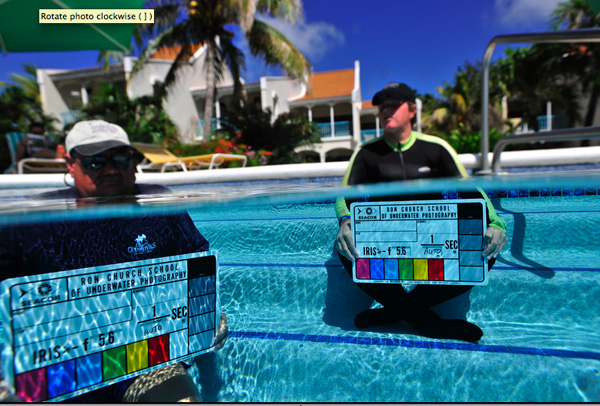
    post-630-1233805469.jpg

    Here you can see he's got the focal plane covered from center to right which are roughly equidistant. Then the left side, is where he brings in real world conditions whereby subjects are not always on a flat plane parallel to the sensor plane (eg. in Doug's case, baitfish wrap around the camera etc).

    I think his testing method, if not perfect, is sound in testing dome compatibility to a lens,. There are so many issues regarding lens testing such as how the lens performs on its own. Quite a few UWA lenses do well on the focal flat plane distortion wise but the near field can suffer. Also at 12mp, you may not see some things that you can see at 21-24mp.


    Drew - your theory sounds correct, but in the case of this photo, the sailfish is closer to the lens than the diver. I suspect that at those wider apertures, nothing at the edge of the frame would be sharp no matter what distance it was at (although there would certainly be an optimal distance at which something might be "less unsharp".)

    It would be interesting to set up some tests with a camera on tripod focused on a central target, and then peripheral targets set up at various distances forward of and behind the central target to see where the best focus would hit.

    Doug, my wording was utterly wrong although the concept was somewhere there. The diver was at the edge of the frame farther out and his body was OOF as the wide aperture's thinner DoF just hit at that distance to the virtual image.

    When will Wetpixel establish its official Underwater Testing Center?

    Actually it's not cost effective for the consumer (the staff at wetpixel pay like the rest of you) to setup something like that. Should the onus of testing be on the manufacturer, dealer or the consumer? I know a few people who test and not publish their findings without coaxing.

    The 2 industry standouts on Wetpixel at least are Stephen Frinks of SeaCam and Jean Bruneau of Aquatica. Jean occasionally publishes tests with different setups and results and is pretty much on hand to field customer support questions on Aquatica products. Then there's Stephen Frinks, who is probably the most prodigious tester dealer who publishes his findings for all, including non-customers.

    The problem is compounded by the time needed to test properly and the availability of equipment. Can you imagine the cost of getting all the cameras and lenses? Backscatter and Reef Photo also publish a few tests on their own website. Then again I shouldn't lament the situation too much as I think it's the lack of facts that Wetpixel has become successful in providing on some issues. :D

  17. The reason I think this is important at least to be aware of is a conflict that came up when Steve tested the 17-35 and was not able to duplicate the results that Alex achieved. But unfortunately not only were the domes different, but so were the test setup. Alex tested a flat plane and Steve a curved one. Should one have concluded that the FE2 Subal dome worked better with the 17-35 than the Seacam Superdome?

    I want to be sure that Steve understands I mean no disrespect; maybe it is better to test a curved plane, I don't know; it's just the old apples to apples analogy.

    Edited by loftus
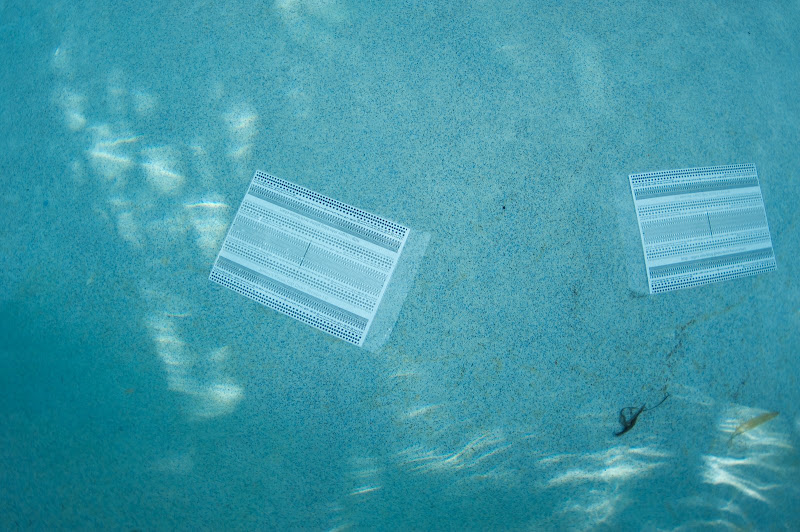
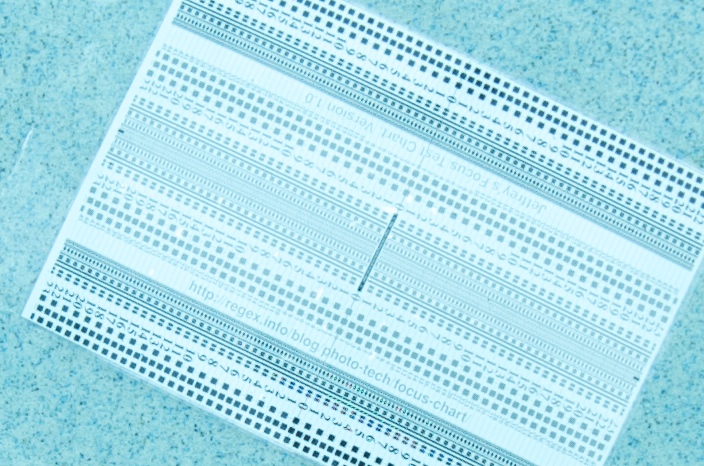
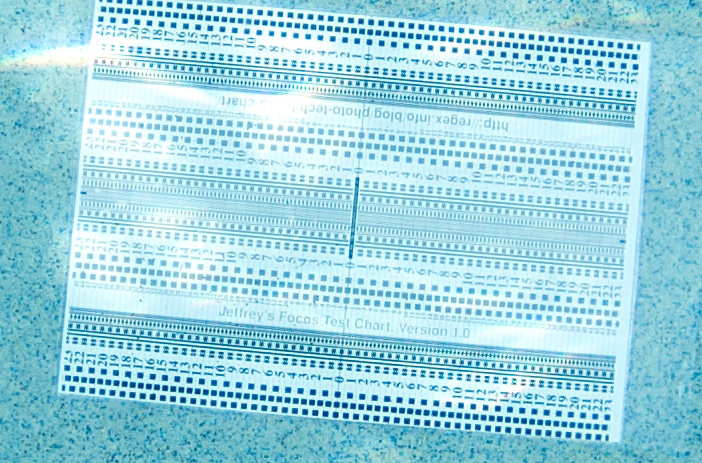
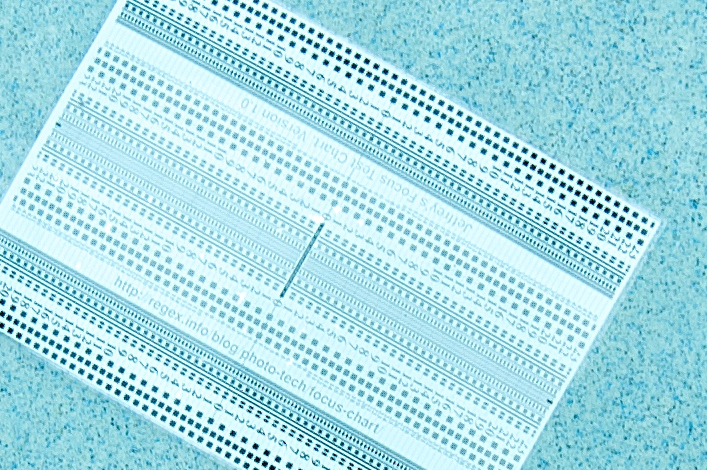
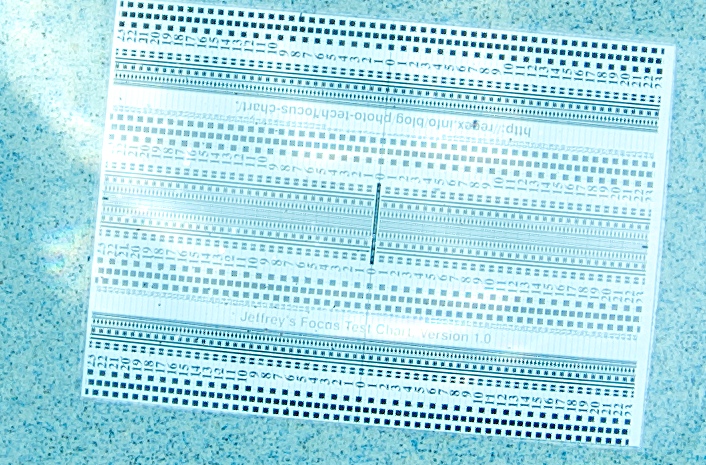
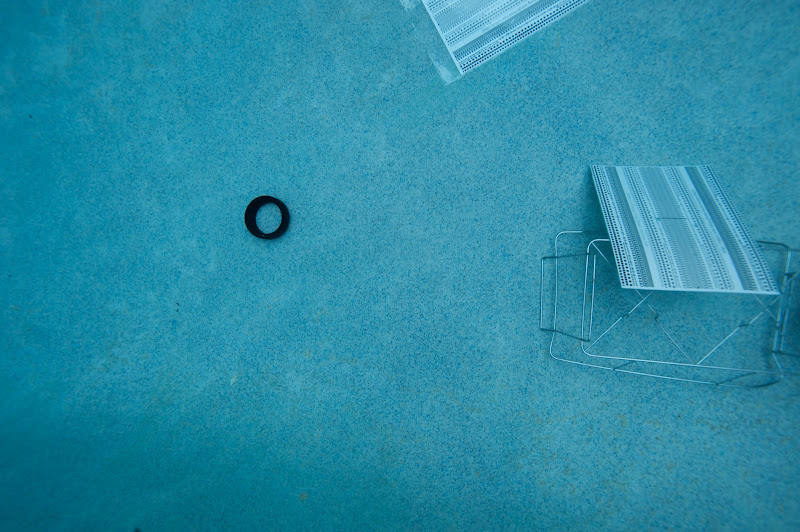
  18. I know I have way too much free time, but I did one last test and constructed a lens testing curve o' meter.

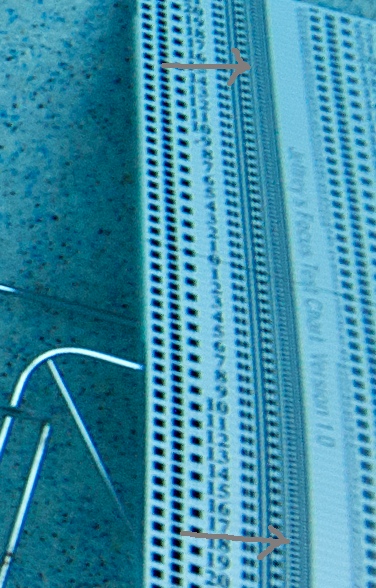
    Using my 17-35, with no diopter I placed a peripheral chart tilted at an angle. Just shot one at f8.

    As the arrows indicate in the 150% crop, the hash marks get progressively more in focus as one moves from the flat plane to a more curved plane.


    16mm2009-03-2711372.jpg


    16mm2009-03-2711372.jpg

    Edited by loftus
  19. Jeff I agree a standardized test would make comparisons easier. But since housings can be different enough in camera placement, so maybe we can ask Stephen really nicely to post higher res pics of his 17-35 test can check the right bottom corner.

    And I did make a mistake in saying the 14-24 test by stephen showed good corners at f5.6. The test showed good corners at f8, not f5.6.


    PS: I had to shut down my computer for Earth Day so I didn't see your reply. Now my reply makes little sense LOL.


    Anyhow, your latest test is interesting. The left side of the chart is 1/4 way to the center of the frame, about the same place where Doug's diver also is getting OOF. So the diver isn't OOF because he's too close but too far and the far limit of DOF has been reached?

    Or your rig is just front focusing. LOL

    Of course if we had the right data on the lens and dome port, all this could be calculated.

    Edited by Drew
  20. Great information guys. I was wondering - couldn't tests be conducted in a large tub of water vs pool? Camera placement could be repeated more accurately, only the dome needs to be wet, cover the bottom of tub with fine detail target (which would be a flat plane), shooting closeup would provide minimum DOF so in/out of focus areas could be viewed in finer detail. Just a thought.

    Edited by jcclink
Keldan

Account

Navigation

Search

Search

Configure browser push notifications

Chrome (Android)
  1. Tap the lock icon next to the address bar.
  2. Tap Permissions → Notifications.
  3. Adjust your preference.
Chrome (Desktop)
  1. Click the padlock icon in the address bar.
  2. Select Site settings.
  3. Find Notifications and adjust your preference.