Skip to content

Lights, Strobes, and Lighting Technique / Archived topic

Selective lighting

Started by danielstassen ·

  • 57Posts
  • 57Replies

Read-only discussion

Selective lighting

57 posts
  1. Steve,

    Thanks for the link. Y'all need to check this out.

    Bob


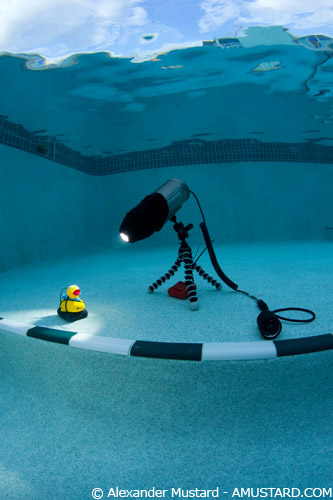
    Keri did a great job with that article. He has been working very hard on the technique and has really done a great job of mastering it, bringing the popular studio photography technique to the oceans. I'll alert of him of this thread and I'm sure he'd appreciate if you left him a comment on the article, too. It would be cool to see images from people that want to try and use the article to do their own snoot photography.

  2. Wow - I just read the article and it is fantastic!!!!! I shoot a lot of off-camera flash underwater and I was blown away to see how ingenious Kerri has been in making his remote snooted flash - that is too cool!


    Cheers

    James

  3. Wow - I just read the article and it is fantastic!!!!! I shoot a lot of off-camera flash underwater and I was blown away to see how ingenious Kerri has been in making his remote snooted flash - that is too cool!


    Cheers

    James

    Here, here


    Great article and fantastic pictures!!!!


    Got some bits to make my own today.

    DIY Snoot inspired by Keri


    Many thanks for sharing....

  4. Thanks for all the positive feedback, everyone!


    As several of you guessed, the images in the OWU competition were a result of snooting my strobes - not from photoshopping. The article recently published on DivePhotoGuide.com explains this technique in detail, and shows some of the equipment I use. None of the images in the article are all cropped, burned, or heavily edited.


    James - You just like the article because I included a pretty picture that Alex took of you... :)


    DuncanS - Nice looking snoot! It definitely looks like a more elegant solution than mine. I'm interested to see how well it works. I'll bet the beam angle will still be too wide for precision macro spotlight shots, but it should be great for wide angle shots.


    Thanks again everyone!


    Keri

  5. Thanks again everyone!


    Keri


    Thank you for the article. Saves a lot of trial and error for many of us. However, I am pretty sure that to get the results you do, besides the hardware, loads and loads of testing and trials will have to be done. I will most definitely try the technique on my next trip.


    Once again, great info!


    Regards


    Bent C

  6. A great article. I hope they're paying you a lot to give away all your trade secrets though Keri!


    Ryan.


    I think he can give away his trade secrets, because i think so few of us have the time, dedication and skill to get anything like his shots! :)


    So thanks again Keri (and Alex) for sharing your wealth of knowledge to us mere mortals.


    When my strobes get back from the warranty warehouse i will be giving it a go, but dont hold ur breath for the results!


    My questions tho is this, if i used a small tripod, say a gorillapod, to hold my strobe and snoot in place (placed nicely on sand or dead rock i will add) do companies make remote uw slave sensors? or would i still need my FO cable connected?

    Was thinking this would help aim my snoot at the subject and me to move the camera to frame the subject, or inspect my handy work without moving the now precisely aimed strobe and snoot? would save inaccurate hand holding or trying to move arms tiny millimetres for exact lighting ?


    Olly

  7. Sorry for the delay in my response... I just returned home this morning from Costa Rica where I didn't have internet access.


    if i used a small tripod, say a gorillapod, to hold my strobe and snoot in place (placed nicely on sand or dead rock i will add) do companies make remote uw slave sensors? or would i still need my FO cable connected?


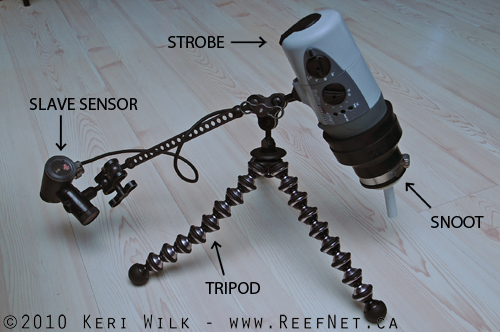
    The two slave sensors that I know of (Ikelite's EV controller and Heinrichs Weikamp's remote slave unit) both need to be connected directly (electrically) to the strobe it is meant to control. The strobe/slave sensor are free from the housing, so once the snooted strobe is pointed at the subject, you can frame the image or shoot at any angle you'd like without disturbing the precision lighting. I only have experience with Ikelite's slave sensor, and it has always worked very reliably for me. In case you missed it, there's actually a photo of one of my snooted slave strobes near the end of the snoot article on DPG.


    Keri

  8. My questions tho is this, if i used a small tripod, say a gorillapod, to hold my strobe and snoot in place do companies make remote uw slave sensors? or would i still need my FO cable connected?


    The two slave sensors that I know of (Ikelite's EV controller and Heinrichs Weikamp's remote slave unit) both need to be connected directly (electrically) to the strobe it is meant to control. The strobe/slave sensor are free from the housing, so once the snooted strobe is pointed at the subject, you can frame the image or shoot at any angle you'd like without disturbing the precision lighting. I only have experience with Ikelite's slave sensor, and it has always worked very reliably for me. In case you missed it, there's actually a photo of one of my snooted slave strobes near the end of the snoot article on DPG.


    Couple of quick points.


    Be aware that underwater plastic gorillapods are buoyant and are not stable underwater with a heavy strobe on top. I hang dive weights under mine to give them stability:


    post-713-1270021904.jpg


    AFAIK, Ikelite's EV controller only works with Ikelite cables and strobes? And although the Heinrichs RSU can be made to work, it is too sensitive to ambient light for typical day-time conditions. Fine at night. Also be aware that the RSU will not work with all strobes (it does not with my Subtronics - something to do with the strobes not providing enough power down the cable to power the RSU.


    In many ways, fibre optic triggering can be easier. Several friends of mine have had plenty of success with either a long fibre optic connected directly to the camera or using a fibre optic light collector (which basically acts like a slave sensor) at the end of a short cable (such as the one Inon have for fibre optic cable less external flash with compacts).


    One final point on triggering remote strobes is to be aware of digital pre-flashes. Many strobes can cope with these - but make sure that the system is working before you go in. I feel it is better to do everything in manual - so there is just one flash for everything to trigger with.


    Alex

  9. Couple of quick points.


    Be aware that underwater plastic gorillapods are buoyant and are not stable underwater with a heavy strobe on top. I hang dive weights under mine to give them stability:


    post-713-1270021904.jpg


    AFAIK, Ikelite's EV controller only works with Ikelite cables and strobes? And although the Heinrichs RSU can be made to work, it is too sensitive to ambient light for typical day-time conditions. Fine at night. Also be aware that the RSU will not work with all strobes (it does not with my Subtronics - something to do with the strobes not providing enough power down the cable to power the RSU.


    In many ways, fibre optic triggering can be easier. Several friends of mine have had plenty of success with either a long fibre optic connected directly to the camera or using a fibre optic light collector (which basically acts like a slave sensor) at the end of a short cable (such as the one Inon have for fibre optic cable less external flash with compacts).


    One final point on triggering remote strobes is to be aware of digital pre-flashes. Many strobes can cope with these - but make sure that the system is working before you go in. I feel it is better to do everything in manual - so there is just one flash for everything to trigger with.


    Alex

    Alex,


    What is the slave trigger you have shown in the picture?

  10. What is the slave trigger you have shown in the picture?


    Custom-made. Not commercially available, I am afraid. I'll certainly bring them with me to Sharm in June.


    Alex

  11. How are you guys mounting the strobes to the gorilla pods? They sure would eliminate the frustration of shooting the snoot on camera. I let out a few choice words when working with snoots in December.


    Would the Inons not trigger remotely with the cap off? Obviously needing to fire one mounted to the camera as the main strobe? I am guessing some of the issue may be with pointing the main flash to hit both the snooted strobes without lighting the composition.


    And which Gorillapod seems to be the best to handle the strobe weight. I would assume you do not need much more than the compact or slr version.


    Todd

    Edited by yahsemtough
  12. Alex, Keri,


    Thanks for the info guys, and thanks for the headsup on bouyancy of gorillapods! I will prob start out trying this with a long FO cable to see how i get on and if i like the techinque invest in the slave sensor. I was just really wondering if they made them but it seems again, non-industry standards make it difficult.


    Olly

  13. Todd - The Gorillapods use a standard 1/4-20 screw which would normally mount directly into your camera body. ULCS makes ball adapters with holes of various thread specs, including one with a 1/4-20 thread... so you simply mate the Gorillapod with the ball adapter, and then the strobe can be clamped to it like normal. The Inons can be triggered remotely with either of the two slave sensors built into them, but, as you mentioned, triggering them without any stray light hitting the subject can be very difficult (or impossible), especially for macro/super macro shots.


    On my last trip, I used one Gorillpod Focus and one Gorillapod SLR-Zoom. The Focus was more rigid, had longer arms, and was negatively buoyant, so was easier to use than the SLR-Zoom - but I didn't have any problems using either of them at all... likely because my slave sensor and extra arm acted as a counter-balance for the strobe.


    post-9396-1270146455.jpg


    Keri

  14. Alex, Keri,


    Thank you for sharing your knowledge and experience. I am really inspired and can't wait to try. Here is my first trial with a home-made snoot:


    Snoot_test.jpg


    And this one was without the snoot:


    No_snoot.jpg


    I look forward to further improve it for better pin-pointing on the object.


    Edward Lai

    Edited by Edward Lai
  15. Great tips Keri. We just got our first shipment of Joby tripods in so I will be constructing my set up now to test with the 7d. Guess I need a trip to Lembeh to really test the waters!

  16. Nice work, Edward.


    I think your pictures make the point that the simplest form (and often most effective form of selective lighting) is simply just using one strobe. Once people have bought two, they rarely turn one off! Quite often, less is more.


    Alex

  17. I concur with Alex. I shot single strobe more last trip and much preferred the lighting on a number of situations. Something worth more effort for sure. You can still carry two of course, just shut one off.


    Cheers


    Todd

  18. Hello Alex,


    We are so thankful to you and other experts in wetpixel for generously sharing your broad range of knowledge in u/w photography. I have been just used to connect 2 strobes, put them in rather 'standard' positions, and rely everything on TTL for all of my shots. And until quite recently I am starting to become more conscious about better use of light.


    The picture below would not be successful without using the technique you described in the D700 housing review. By setting the camera pop-up flash to manual and mininum power, setting the Inon strobes to 1/4 power, I had been able to fire 4-5 shots within the short moment the Madarin fishes ascended from the bottom and finished mating.


    103_0787.jpg


    Look forward to hopefully meeting you in the next Dema.


    Edward

  19. Hi all,


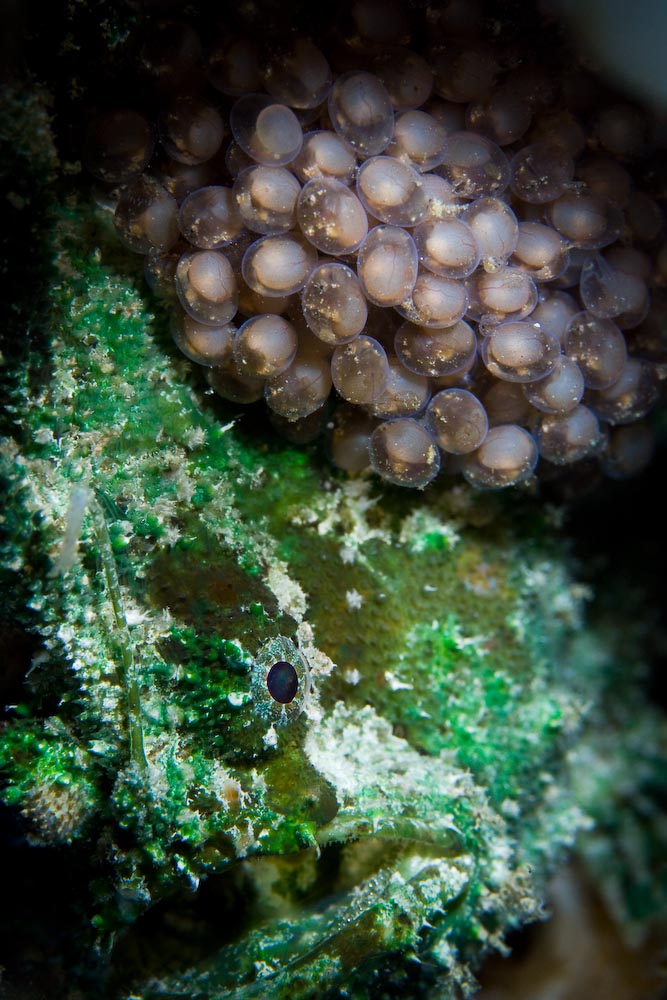
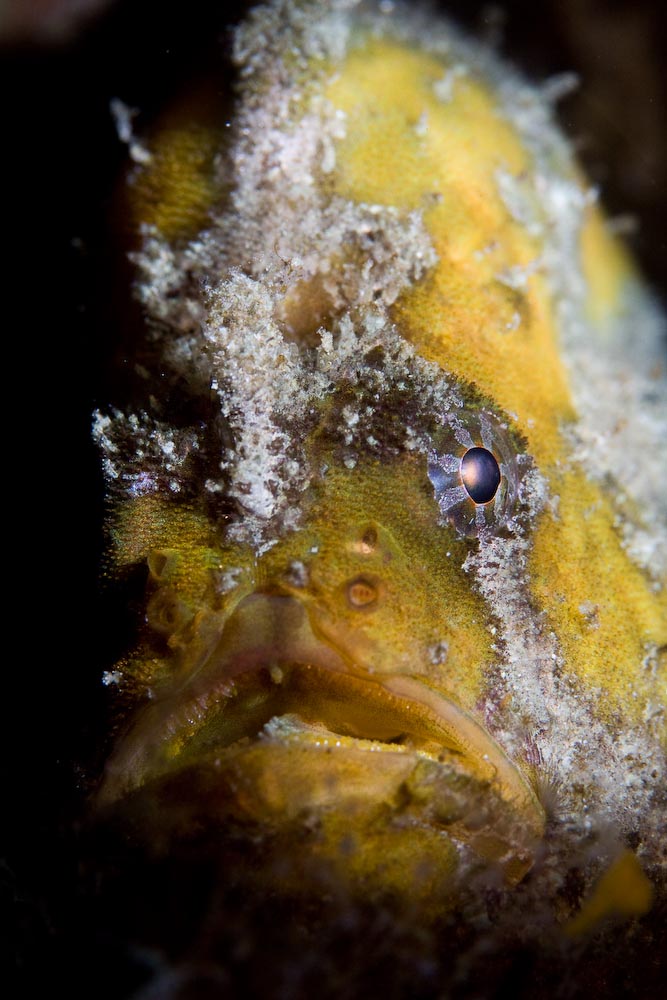
    Thank you for sharing your knowledge with us Keri. I had a go and made my first snoot. I took some pictures last week of these two frogfish using a snoot. They have been sitting underneath a jetty for a while and couldn't wait to get a picture of them.


    The yellow one was standing close to the green one both preciously guarding the eggs. Interesting the way the green one was ventilating the eggs with its tail every now and then. They hatched a few days ago. Unfortunately I missed the moment.

    post-21493-1270640292.jpg

    post-21493-1270640405.jpg


    I used a single YS110 alpha and found that I was limited with the power of the strobe using a snoot. I practically was a few cm away to both frogfish, and still could not use a smaller depth of field than f8, unless I wanted to crank up the ISO to the detriment of the quality. Maybe that is a reason why Keri uses a powerful Ikelite 160 strobe?


    Well, if it means that I need to buy a new strobe, my snoot will have to rest in a drawer for a while...


    Cheers


    Daniel

  20. I couldn't agree with Alex more... the sooner you think outside of the "10-and-2" strobe position box, the sooner you'll come home from dive trips with unique results.


    Edward - The shots you posted are great! They clearly show how a snoot can be used to illuminate the main subject, while eliminating stray background light. The background in the snooted image is notably darker, making the cuttlefish stand out more.


    Daniel - Great froggy shots! The shot with eggs is a stunner to me - that's been on my wishlist for YEARS now. Great find, and excellently captured. As for why I use the DS160 for snooting - I use them because I have them! They're my go-to strobes for both wide angle and macro photography, so it follows that I use them for snoot shots as well. It certainly does help that they're quick and very powerful (I was able to properly expose images shot at up to around f25 @ISO200), but with the appropriate snoot design (highly reflective internal surfaces, concentrating the strobe's output), you should be able to get away with a FAR less powerful strobe. So, rather than retiring your snoot to a drawer to gather dust, you might want to try tinkering with your snoot a bit before giving up.


    Here's a similar froggy image, shot with a single snooted DS160 strobe:


    post-9396-1270755933.jpg

    Nikon D90, Nauticam housing, Nikon 105mm lens

    1/200s, F18, ISO200


    Keri

Backscatter

Account

Navigation

Search

Search

Configure browser push notifications

Chrome (Android)
  1. Tap the lock icon next to the address bar.
  2. Tap Permissions → Notifications.
  3. Adjust your preference.
Chrome (Desktop)
  1. Click the padlock icon in the address bar.
  2. Select Site settings.
  3. Find Notifications and adjust your preference.