Skip to content

The Galley: General Chat / Archived topic

LAUPS winners: Subject's manipulation?

Started by elbuzo ·

  • 116Posts
  • 116Replies

Read-only discussion

LAUPS winners: Subject's manipulation?

116 posts
  1. I'm surprised to see 2 images among the gallery of winners in the recent LAUPS competition that , in my opinion, were product of subject's manipulation.


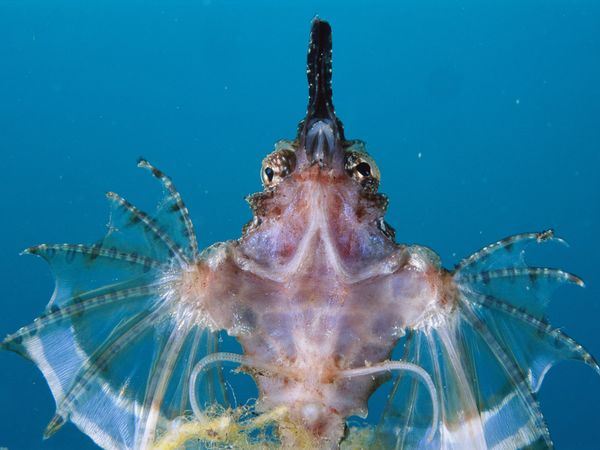
    Iguanas from the genus cyclura normally don't get in the water and pegasus seamoth normally don't swim in open water .


    I made my opinion public here with the only interest that we as photographers always keep in mind that creatures we made our subjects are more important than our photos .

  2. I've emailed 2 of the judges about this but it is a busy time of the year so they may not get back.


    The iguana I have no idea about but the Sea Moth question has been around since Doubilet's picture. Let's not assume anything before we check the facts out though.

  3. IMHO in a natural history context subject manipulation is potentially worse than digital manipulation because it can skew our understanding of the natural world. However, it is extremely difficult to be definitive about what goes on in the marine environment and I am constantly seeing creatures in incorrect habitats or exhibiting apparently 'unusual' behaviour, so defining 'normal' and 'unusual' blurs very quickly. As an example, here in the UK Fries' gobies are the only gobies known to live in mud burrows, but I've watched black gobies retreat into these mud burrows too. My conclusion is, that in the area where I watched this, the black gobies were simply opportunistic and found the mud burrows close enough to rough ground to be a viable hidey-hole. In other areas they don't seem to do this. Its a difficult one.

  4. As the Dive Manager at KBR in Lembeh, where I dive everyday, I see many Pegasus Sea Moths every week. I have never ever seen one swim in open water. Even when chased by overenthusiastic photographers they will only raise perhaps 2cms over the sand and 'swim' rather than 'walk over the substrate. The most difficult thing is even to get one to look at you. They always turn away and move away from you.


    In my opinion there is no way that photo could be taken without the Sea Moth being physically handled. This is only my opinion and if someone has ever seen a Sea Moth swimming over a photographer with a DSLR I would love to hear about it. They may act differently elsewhere..... somehow I doubt it.

  5. Agree about the seamoth shot. With all the great photos I am surprised ones that are even questionable make it past the first cut.

  6. A friend of mine consulted an expert and below is what he said ....


    Several sources report Cyclura taking to water as an escape tactic, but C. nubila might enter water voluntarily (Iguana iguana and I. delicatissima are certainly not adverse to swimming). So, this is entirely possible, but it's more likely that the lizard was chased into the water. Incidentally, I don't think it's nubila, it's more likely cychlura" .....


    Cyclura cychlura or Andros Island rock iguana ( likely the specie pictured ) is on the IUCN red list with an estimated number of less than 5,000 ! So any single specimen is important for the conservation of this endangered specie. Definitely not a good idea to put one in the water to make a "nicer" photo . ( If that was the case !)


    As coincidence the iguana and the pegasus were shot by the same photographer . Hope that he post here and give us his version .


    l

  7. It seems to me that the LAUPS judges and members might not even realize that the pictures may have been altered and, while they should be notified of the possibility, it might be an error in judgement. No pun intended.

    Steve

  8. Just so readers understand what is going on, here are the pics:

    5th_Blaettler_Matthias_Pegasus.jpg

    Looks like the EXIF is screwy. 2.1 sec shutter speed?!?


    1st_Blaettler_Matthias_Iguana.jpg

    The shutter speed here is 1 Sec!? Time/Space continuum must've been pretty slow that day!


    I've notified the LAUPS organizer as well as the 2 judges, Berkley White and Eric Cheng.

    Edited by Drew
  9. Hello, all -


    I was one of the three judges for the contest. I've seen iguanas get into the water and swim by themselves. At one Digital Shootout in Bonaire, we saw this happen without any prodding.


    Note that every photo "may have been altered," and it is often that case that a photographer really did see something unusual and capture it. For example, I came across a jawfish out of its hole, and photographed it. Maybe someone else pulled the thing out, but I found it in that situation and didn't know what it was (at the time). I've also seen ghost pipefishes and non-pelagic sea horses swimming in open water -- again, without any visible indication that a diver was the cause.


    I'm not defending the author of these images, but it is simply not as easy as disqualifying every unusual image we see.


    I'll notify LAUPS that there are some questions about the winning images. It's up to them to respond.

  10. These are the rules of the LAUPS competition:


    Conservation Rules

    Marine life should never be stressed or endangered for the sake of a photo. Entries will first be screened by a panel of conservation judges. Entries exhibiting the following behavior will be disqualified.


    Divers visibly damaging (e.g. gear dragging or kicking up sand) the environment.

    Animals with signs of stress (e.g. puffed puffers, inking octopus).

    Animals moved to an unnatural environment or risky location (including bottom dwellers moved or driven up into the water column).

    Animals being fed artificial food from divers.

    Marine life being touched (e.g. coral polyps, seahorse tails).

    Divers exhibiting poor buoyancy control

    .
    Edited by Drew
  11. One of the best ways to see how the photographer arrived at this 'winning image'

    is to see the complete unedited raw (or jpg) sequence.

    I have to assume that there is a sequence of images that eventually reaches or contains

    the best image overall.

    Although this will not be 100% accurate it will define the thinking process of the photographer and whether

    there are irregularities within the set that indicate a non professional approach to obtaining said images.


    It is imperative to make the rules apply across the board.

    One unique image that is disputed is maybe at best passable in a competition.

    Two discrepancies and questionable winning images done by the same photographer

    raise a flag.


    I finally get to post on a subject not related to equipment-

    I hope this time my post is not censored by the moderators!


    Mauricio Handler

    Professional Photographer

  12. In my last post I said that this was a 'difficult one'. Personally, I am aware of one subject manipulated photograph being published in at least one prestigious publication (and NO I will not reveal which, nor the photographer, for a variety of very good reasons) and I am very dubious of some other pictures published in another prestigious publication. Whilst I might well be able to prove the first case, the second might just be of real, 'as seen' subject matter which would be in a highly unusual habitat in my experience, but not an impossible one - however the images in question would certainly have flagged up the potential for the question about whether they might be of "Animals moved to an unnatural environment". Part of the problem is the requirement for 'better than ever' images, because photography has become much more competitive and there seem to be expectations for ever more stunning imagery to be supplied for publication or competitions. Skullduggery does exist in underwater natural history photography both in terms of digital and subject manipulation. Unfortunately, I for one cannot see an easy solution to dealing with it and as Eric says it may also well be that a photographer has seen and photographed something highly unusual.

  13. Not making a judgement on these photos either way, but if you Google the gentleman in question, he certainly has some fantastic photographs! One he has of a crocodile at 1/13 sec shows the man can certainly hold the camera "still" :P


    http://www.laups.org/gallery2/v/intl2008/w...iaside.jpg.html

  14. I've received word from Kelly Bracken (LAUPS comp organizer) and she's looking into this.

  15. One of the best ways to see how the photographer arrived at this 'winning image'

    is to see the complete unedited raw (or jpg) sequence.

    I have to assume that there is a sequence of images that eventually reaches or contains

    the best image overall.

    Although this will not be 100% accurate it will define the thinking process of the photographer and whether

    there are irregularities within the set that indicate a non professional approach to obtaining said images.


    Great idea!


    Cheers, Simon

  16. A well known photographer was caught and disqualified in the Eilat competition like this - other shots in the series showed his hand in the frame!


    Alex

  17. This year three photographers were disqualified in El Hierro competition for the same thing... I think it is an improvement as this has been happening in many competitions long time ago and nothing was done...

  18. A well known photographer was caught and disqualified in the Eilat competition like this - other shots in the series showed his hand in the frame!


    Alex


    Maradona, Henry, UW photographer X: Hand of god!


    The incident Alex is talking about is reported @ digideep:


    When Roni Soffer, head of the judges, came up on the stage to announce the Judge’s prize, he began by introducing the story behind the scenes. He spoke about the judges’ initial choice, an excellent picture of a fish on a background that somehow seemed, well, for the sake of this report let’s call it "unnatural". The concerned judges then opened the folder in which all images of the photographer were uploaded in a sequence, and found out that the fish was somehow forced to swim to a different location, a location which the photographer believed will suit him more as a background. Obviously, this image was disqualified and the photographer was fined.


    If people are willing to inject themselves with steriods with serious side effects to win trophies, it's not surprising there are individuals out there willing to buck the rules to win. Afterall rules are meant to be broken, as long as you don't get caught doing it. ;P


    post-1861-1292580373.jpg


    I'm pretty sure the sea moth photo was inspired by David Doubilet's picture, shown above. Note there is a bit of stuff in the bottom of the pic.

    Edited by Drew
  19. If people are willing to inject themselves with steriods with serious side effects to win trophies, it's not surprising there are individuals out there willing to buck the rules to win. Afterall rules are meant to be broken, as long as you don't get caught doing it. ;P

    Its all about integrity isn't it?


    And as with the use of steroids by athletes perhaps there needs to be not only the immediate disqualification but a ban on a guilty photographer entering competitions for a period of time?

  20. I think some kind of Ban or public notice is a great idea. I must say I am encouraged to see people willing to call into question shots like this. For too long (IMHO and short time in the hobby) I felt people "looked the other way" when shots like these came up. Maybe we are finally inching forward to doing a better job of monitoring ourselves, better yet if it starts to happen at the dive site.

Keldan

Account

Navigation

Search

Search

Configure browser push notifications

Chrome (Android)
  1. Tap the lock icon next to the address bar.
  2. Tap Permissions → Notifications.
  3. Adjust your preference.
Chrome (Desktop)
  1. Click the padlock icon in the address bar.
  2. Select Site settings.
  3. Find Notifications and adjust your preference.