Skip to content

Photography Gear and Technique / Archived topic

Leak Sentinel from Vivid Housings

Started by PeteAtkinson ·

  • 84Posts
  • 84Replies

Read-only discussion

Leak Sentinel from Vivid Housings

84 posts
  1. The latest version of the Leak Sentinel arrived yesterday. For 200 euro it seems a good deal.

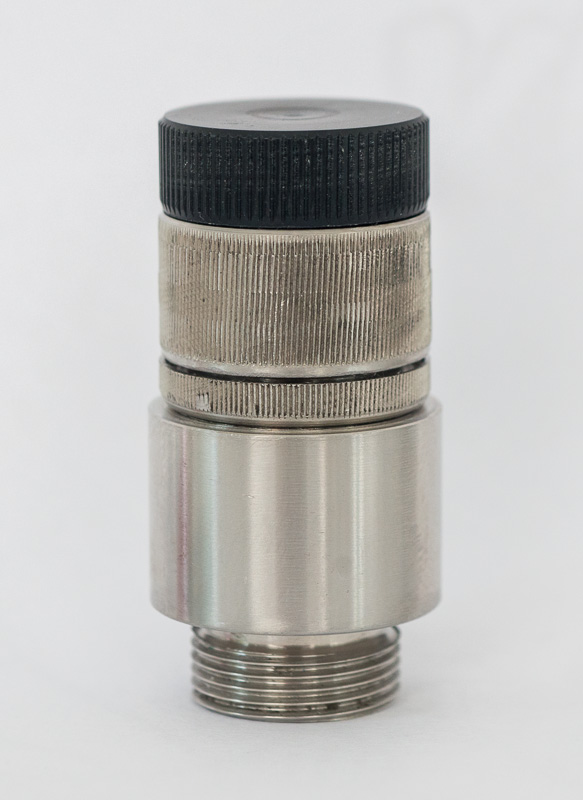
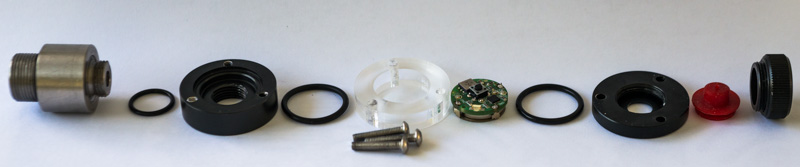
    Apart, it looks like this:
    post-23126-0-50571500-1366818718_thumb.jpg


    The cap is removed, the red valve depressed to switch on a micro-switch on the circuit board, a hand vacuum pump attached and pumped until the flashing red LED turns to flashing green. This takes about 25 pumps with my Nauticam D800 housing. The cap is then replaced to keep water out.

    If the light remains green, then there's no leak. After the dive, remove the cap, and push the red rubber valve to one side to allow air to enter. Press again to switch the circuit off.

    To replace the battery, the three Allen-head screws must be removed, not a difficult job.

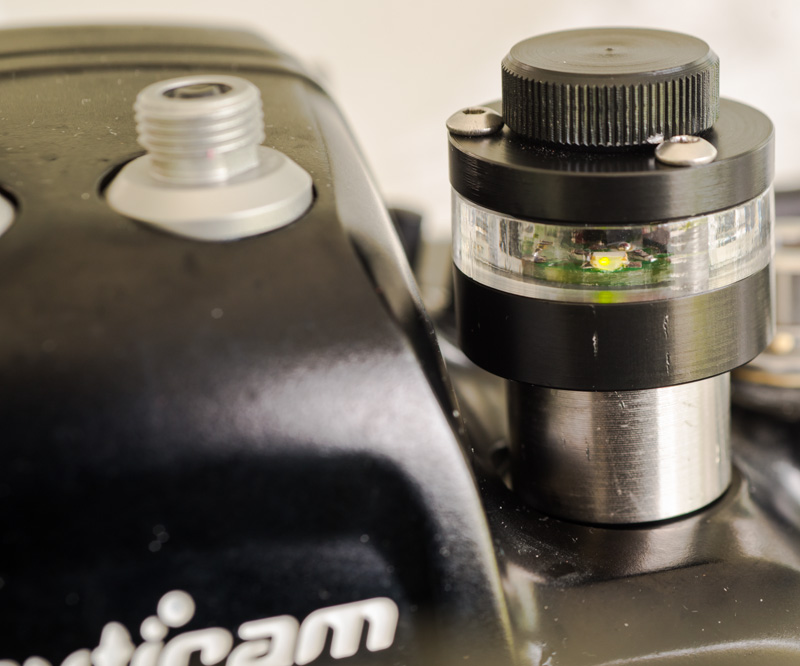
    It is installed in the 16 x 1 threaded hole in the housing. I used some thread-lock to prevent it being unscrewed accidently.

    I will take it diving in a couple of days.
    post-23126-0-56227100-1366819182_thumb.jpg

  2. Hi Pete,


    I have bought the new V3 version as well. It looks like good value for the money.

    I haven't tried it so far either, but I will soon be in Indonesia and will test it.

    However, I would guess that it doesn't unscrew if you pull a Vaccuum...


    /Erik

  3. same here....just bought it but haven't tried it yet.

  4. Thanks Pete for sharing the tear down and review. Interested to learn the test results and comments

  5. That's a pretty good breakdown. The design looks pretty cool and if it prevents accidents from happening, then I'd say it's probably worth the cost.

  6. URGENT! If you have the version above, it needs modifying before it is safe to use. I got about a cupful of water in the housing. The O-ring immediately below the acrylic ring can be pushed in by the water presure, there's nothing stopping it going in. Get in touch with Miso. Don't use it if yours looks like the above. In retrospect, it's obvious that the bottom O-ring will leak. I should have realised this when I took it apart.

  7. Strangely enough I've just been trying the Housing Sentry for UwCameraStuff. It works!

  8. I have already answered Pete's mail and apologized for the inconvenience.

    However, his unit is one of a kind, as I have sent him an "upgrade" set of parts, which he used with previous model of electronic circuit. I did not realize the potential problem, but all other V3 units except maybe one or two, are different in that the circuit board supports the o-ring from the inside, so it can't be displaced by the water pressure.

    Nevertheless, I urge all the V3 owners to contact me by e mail, as there is a simple way to check whether their unit should be sent for modification, or is safe to dive with.

    Miso

  9. Returned from Lembeh hours ago and have not yet contacted Miso.

    There is a "0" ring seat design problem in the unit cover cap.and a similar one in the pump to unit threaded adapter.

    This is easily corrected and I will be contacting him tomorrow. I had a slight leak in one of two units - just a drop or two.

    This remains an excellent unit!

  10. Returned from Lembeh hours ago and have not yet contacted Miso.

    There is a "0" ring seat design problem in the unit cover cap.and a similar one in the pump to unit threaded adapter.

    This is easily corrected and I will be contacting him tomorrow. I had a slight leak in one of two units - just a drop or two.

    This remains an excellent unit!

    Hello Okuma,


    I requested a spare cap because I worry about loosing small bits. Since I had two, I was able to spot a difference between them. I could feel the O ring of one of them make contact with the valve rim before it resisted further turning (as it should). The O-ring of the bad cap came to a sudden stop because the recess for the O ring was so deep that there was no seal at all against the rim.


    This didn't cause a problem for me. With the good cap on, I tested my housing with vacuum applied in the dive store's pressure tank to a simulated depth of 50 meters. There was no leak. Anyway, I started to wonder: What would happen if water got past the cap? In your case, did the rubber valve prevent water from entering the housing? How deep did you go when you first noticed there was a problem with the cap?


    Miso made a very simple valve for me, which I am very pleased with. I will describe it in another thread.


    John McCracken

  11. Hello Pointy and others.

    Following is the note I sent to Miso at Vivid.

    His over night response is included and I remain committed to this product.


    "Hi Allan,
    I'm sorry you had problems with the blank lid. I should state more clearly that it shouldn't be tightened so forcefully to displace the o-ring.
    This of course is not an excuse for what happened.
    Both lids were already redesigned since you got your unit.
    I am on a trip until May 12th. I will send you new caps immediately after that. These have o-rings retained in the grooves, so the problem will be gone. In the meantime, you can use your units with moderately tightened lids, or seize using them until you get the new lids. But old lids are also tested, and if used as described, should work fine.
    Sorry for the inconvenience.
    Best Regards,
    Miso

    On 02.05.2013 00:47, Allan Jones wrote:
    Hello Miso:

    I have returned from our Indonesia trip and was hoping to send you a
    glowing report on the Sentinels.
    Unfortunately it is not possible.

    Prior to the trip, I pumped the units about 6-8 times to do bench
    testing and then once into the pool.
    Several times I would get a combination red/green light but could
    never achieve a full green unless I reset the threaded vacuum
    connector.

    On the first dive of the second day at about 15 meters depth, one
    unit went green to red. I aborted the dive and checked out the
    system. The O ring under the unit cap had partially extruded out from
    under the cap flange and several drops of water were in the Sentinel
    unit.

    I removed both units and dried out the wet one and then reinstalled
    the original housing plugs.

    I believe the O ring seating surface in both the threaded pumping
    adapter and the unit closure cap should be examined for redesign. When
    either of these units are finger tightened there is the opportunity
    for the axial compression on the O ring to extrude it outward in a
    radial manner. This would also account for the pumping problems
    mentioned above. A captured O ring seat design, as on the Sentinel to
    housing adapter and also on the Subal blank plugs would eliminate the
    extrusion potential.

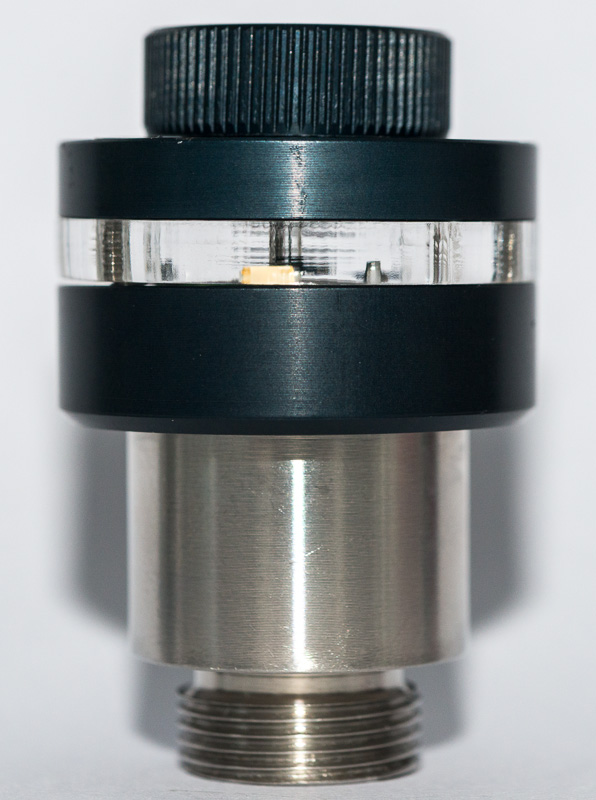
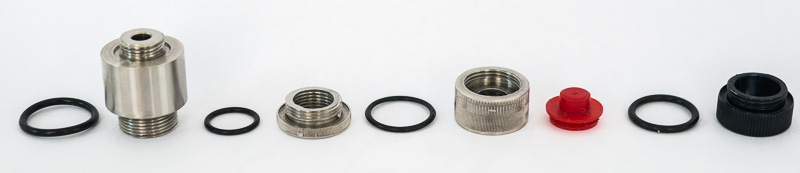
  12. I just received the latest version of the Leak Sentinel from Vivid Housings. It seems to me that the earlier issues have been resolved. Here are a couple of shots of the component parts, which are now made on a CNC machine to higher tolerances and the width of the acrylic window has been reduced further.

    post-23126-0-33938300-1372173749_thumb.jpg

    post-23126-0-31368200-1372173773_thumb.jpg


    And here's the complete unit.

    post-23126-0-45205900-1372173806_thumb.jpg


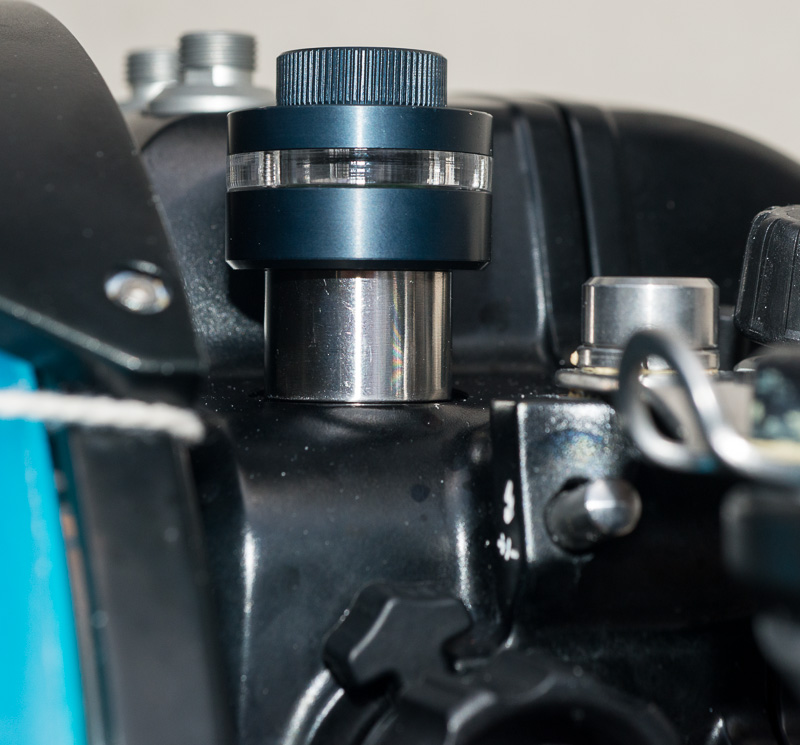
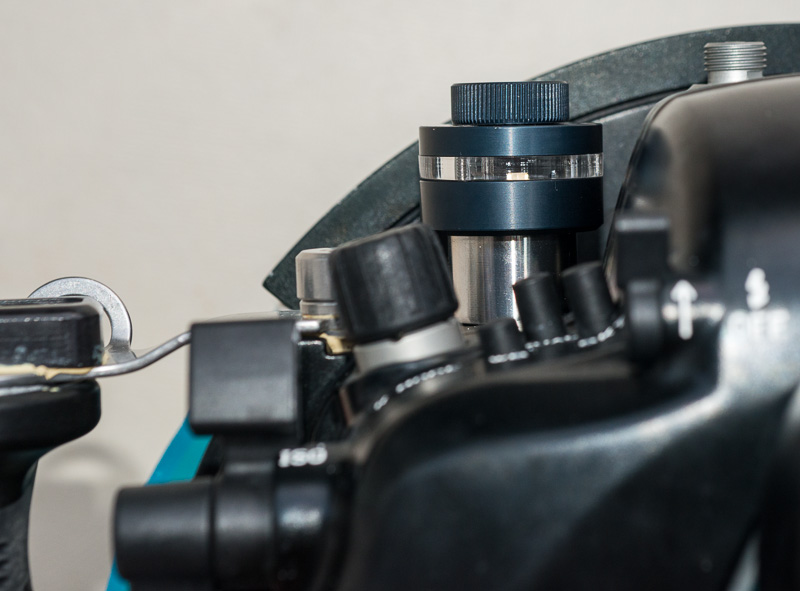
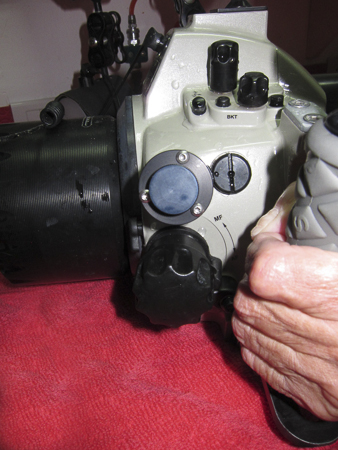
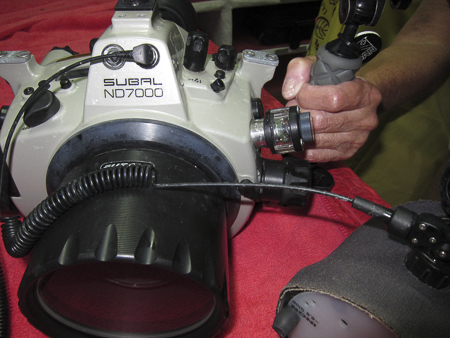
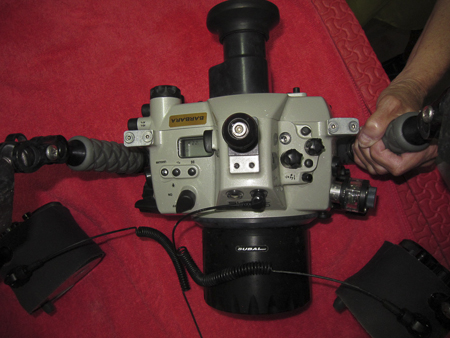
    And in situ.


    post-23126-0-78052800-1372173825_thumb.jpg

    post-23126-0-45848800-1372173843_thumb.jpg


    There is a simpler unit made by Vivid Housings which holds only the silicone rubber valve. The electronic vacuum sensor can be place inside the housing; on the Nauticam D800 housing there is room on the back of the camera tray to Velcro the sensor such that the flashing LED can be seen through the rear window.

    post-23126-0-69184800-1372174115_thumb.jpg

    post-23126-0-55445100-1372174143_thumb.jpg

    The final version of this simpler unit will be anodized.

  13. I have the latest version with the LED indicators. I have only tried it in the pool- in two week to Bonaire. So far, flawless. After I screwed it into the accessory port, I did take off the top element and turn it around so that the LED faced the back. No problems so far, and easy to use.


    In light that we all seem to have a bazillion small parts to loose, I emailed and requested a "cap" and "pump cap," which are currently being forwarded to me for 10 euros- a deal if I ever heard of one- because I know I will loose something somewhere, at the worst possible time.


    TErry

  14. I tried the latest Version over the last few days.

    It worked just fine. I did mulitple dives downto 35-40m.

    I find it a nice Piece of Equipment.


    /Erik

  15. I have a V2 unit for my Nauticam 7D housing & a V3 unit for my 5DMkIII housing & they both work great. When I wrote to Miso about the non-captive o-ring in the V2 unit cap, he sent me a new V3 cap without any fuss. The 'after-sales' service from Miso has been fantastic. I'm a 1st-time user of these vacuum check systems & Miso has been really patient & prompt with all my questions.

  16. I agree! The after sales Service is very good! No questions about it.

  17. My wife and I recently returned from a two week dive trip to the Philippines and used two recently purchased Vivid Vacuum Sentrys on our Subal D7000 housings.


    They performed flawlessly!


    Prior to purchasing the Vivid units, I looked at the other vacuum systems on the market. I choose the Vivids based upon their low profile, indicator led lights and price.


    Each night after battery and card replacement, I would pump the housings down to get the green ok led. Then next morning, into the water; no tank dunking and wondering about the small bubble streams. One battery gave out after 15 days/360 hrs. of continuous use. This was probably the unit I played with when first received the units. About 1 day before dying, the led lights got a little dim. A good indicator to change the battery. The unit in the other housing was still going strong when I packed the gear to go home. Battery life could have been significantly extended by turning the unit off at night and then on in the morning with out loosing vacuum.


    The units were installed into an existing spare, threaded factory hole.


    When first introduced to the market, a few minor design flaws were encountered, but these were quickly resolved my the company. I have found them to be highly responsive to my requests and questions.


    I highly recommend these units and will respond to any questions.


    Allan

    post-6133-0-21473800-1374200010_thumb.jpg

    post-6133-0-34459800-1374200031_thumb.jpg

    post-6133-0-79623800-1374200049_thumb.jpg

  18. Battery life could have been significantly extended by turning the unit off at night and then on in the morning with out loosing vacuum.


    Allan

    I don't think you can do it as described: when you switch Leak Sentinel ON at low pressure inside the housing it will do auto-calibration, interpret the current pressure as ambient and go to RED LED state. I tested it - it behaves exactly as I described.:(

  19. I don't think you can do it as described: when you switch Leak Sentinel ON at low pressure inside the housing it will do auto-calibration, interpret the current pressure as ambient and go to RED LED state. I tested it - it behaves exactly as I described. :(


    Interesting; you just saved me some future "head scratching!"

    Do you have any others like this?? :crazy:

Scuba.com

Account

Navigation

Search

Search

Configure browser push notifications

Chrome (Android)
  1. Tap the lock icon next to the address bar.
  2. Tap Permissions → Notifications.
  3. Adjust your preference.
Chrome (Desktop)
  1. Click the padlock icon in the address bar.
  2. Select Site settings.
  3. Find Notifications and adjust your preference.