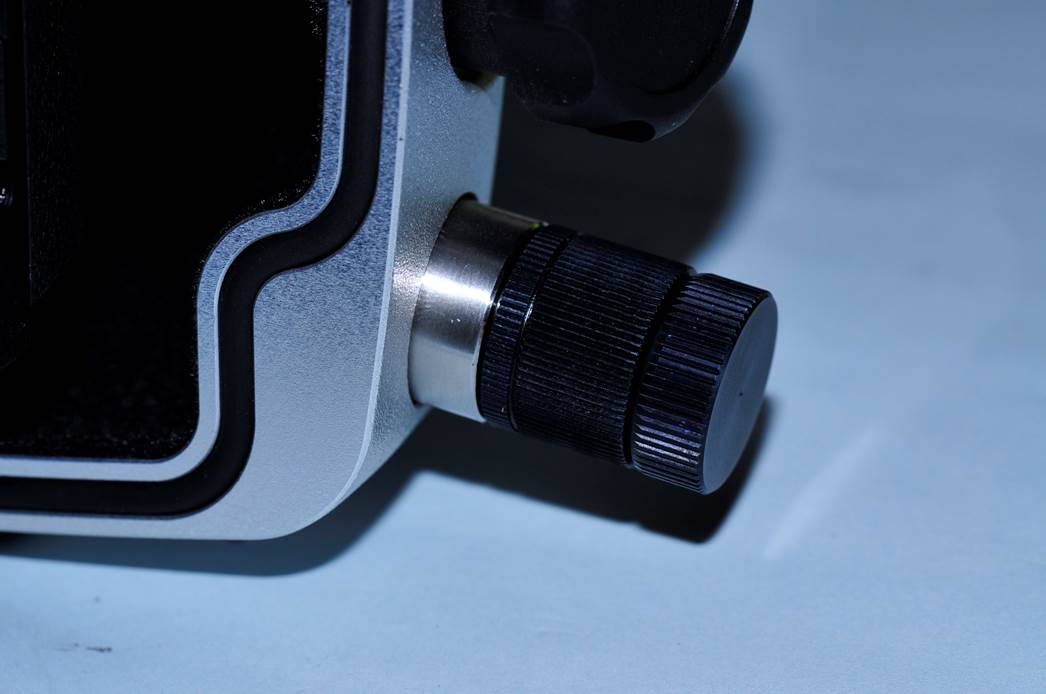
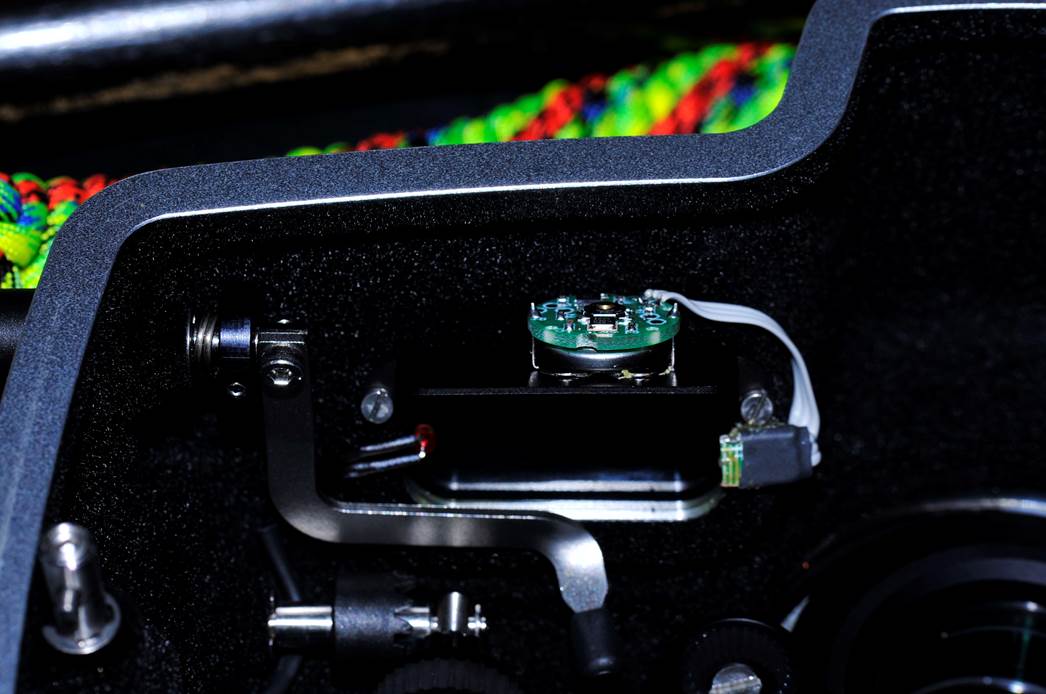
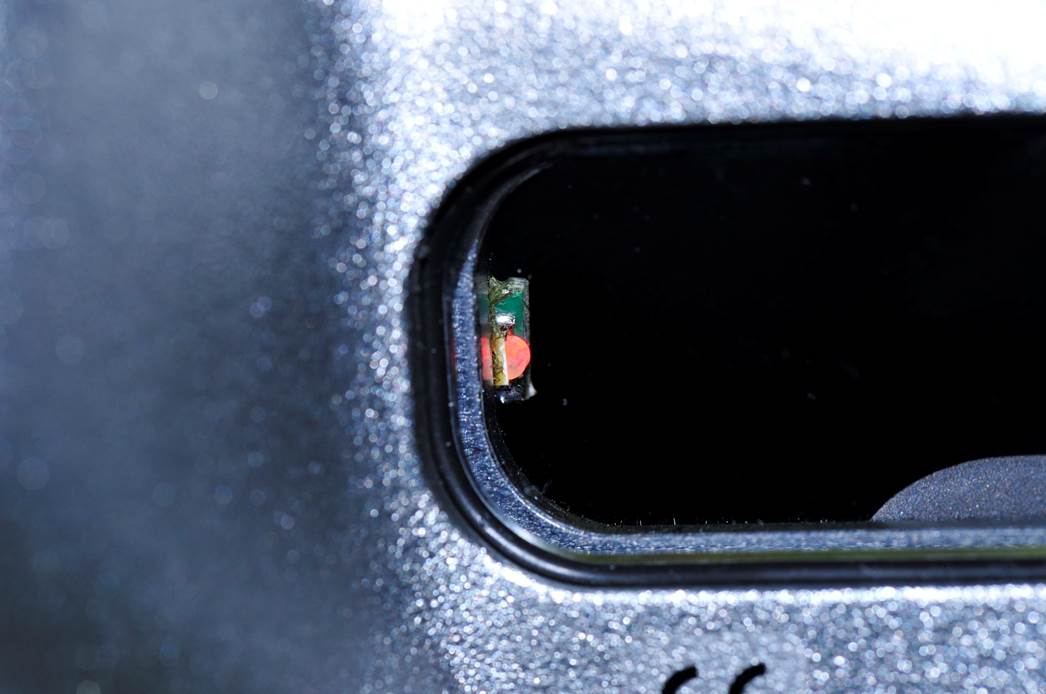
Sam - Get the version for the accessory port (M16 mount), which is at the top of the housing next to the zoom knob. Unscrew the plug with a coin. Put a little silicon grease on the o-ring. Screw in the Leak Sentinel. It couldn't be easier.
Oskar - Installed, it looks exactly like the second photo on page 1 of this thread. See also the first photo on page 1 of this thread for construction details. I don't think you need to worry about "shearing" anything
Just coming back from a 2 week trip to Maldives using the Leak Sentinel V3 on the Na-EM5.
Experience with minor flaws had been outstanding. It was giving me a lot of confidence pre and during diving the usual maintain, dip and hope methods never could achieve.
Some recommendation or tips for those of you considering I can make.
Putting under pressure on in AC cooled hotel rooms and then going out into the hot can easily generate false positives. So after the first day I brought the pump to the diving vessel and applied pressure around 20 minutes before diving while travelling to the dive site. Then shortly before jumping I checked the status. This way I never had a false alarm.
I'd still kit up in an AC room, regardless of the chance of false positives. For a start, it's (hopefully!) a nice quiet environment, so a good place to focus in what you're doing, the AC will also dry out the air in the room and so reduce likelihood of condensation.
So for me, whilst they're annoying, I'd rather take the hit on a false negative then potentially introducing issues by changing my kitting up procedure in an attempt to avoid them.
When releasing under pressure you need to be VERY carefull, especially when diving salt water, the pressure valve and its surroundings is dry as well as your fingers. The electronic board is just underneath the valve. It happened to me that one tiny drop got sucked in with the air, This caused the sentinel to not work anymore. To repair (and I would not necesarily recommend the same) I opened the Sentienl housing, took out the circuit board, removed the battery, dripped the board into drinking water for about half an hour to loosen the corrosion (shown as white markings at the soldering points) and then used a tooth brush to carefully clean the remaining dirt. Finally I dried it in the sun before puzzling everything together again. After the device was back to working properly but I think I just had been lucky in this case.
If the vendor reads this I would recommend to use an electronics varnish leaving out the tiny sensor to prevent the same in future versions.
Thanks for the tip, I'll keep an eye out for that!
Just to clarify:
I do not recommend or would do the preparation of the housing itself in any other environment then a quiet and dry place where you can put the required attention on maintaining O-Rings etc.
The only thing I have "outsourced" was the depresurization of the housing - so when the equipment has reached ambient temperature.
As the housing is closed and setup no outside humid air can get inside - so the risk of condensation is minimal. To be sure I usually place a pack of silica-gel below the camera.
Just to clarify:
I do not recommend or would do the preparation of the housing itself in any other environment then a quiet and dry place where you can put the required attention on maintaining O-Rings etc.
The only thing I have "outsourced" was the depresurization of the housing - so when the equipment has reached ambient temperature.
As the housing is closed and setup no outside humid air can get inside - so the risk of condensation is minimal. To be sure I usually place a pack of silica-gel below the camera.
Ah, understood, sorry about the misunderstanding...
Just as a suggestion, you could still de-pressurise in the room, then give it a final pump or two once the temperature has raised. The end result is the same, it just gives you the opportunity to sort any problems/leaks that may pop up whilst you're still in the room.
Hi,
I use the leak sentinel V3 in a split version since April 2014. Electronic installed inside the housing & vacccum valve and housing adapter separate ( see attached pictures). Processing my order and enquiries were managed very professional by Miso. I installed the system myself. From my point of view easy if you have some technical background. I tested the system in may 2014 for approx. 60 dives in Indonesia. System worked flawless without any technical problems. Battery live approx. 150 hours (first replace after 15 days with 10-12h in use). There are only two small issues from my side:
1. Contact corrosion due to stainless steel adapter. During Operation salt crystal built up on the passage between the stainless adapter and the Aluminium vaccum valve The knurl on the aluminium valve is slightly affected. I discussed the corrosion problem prior to purchase with Miso and he might consider to change the adapter material to aluminium in future. 2. Led is very small and nearly invisible in bright sunlight, even the first couple of meter underwater. I didn`t had that on my old Hugyscheck as they use bigger LED
But anyway I`m quiet happy with the system.
Best regards
Markus
I've bought it for my NA EM-5 housing and installed it myself. I have dived it a week in arctic conditions (really, but arctic summer!).
It has worked great so far. Easy to install and no battery changes so far. No problem in cold water conditions 4-5 degrees centigrade. I would recommend it to anyone so far.
My eyes are tricked by the color though, the intense green light color conditions in the waters I was diving made the green flash LED seem orange. For the next version I would recommend a distinctly different flash pattern so one does not have to think about the color.
Cheers
/O
Sam - Get the version for the accessory port (M16 mount), which is at the top of the housing next to the zoom knob. Unscrew the plug with a coin. Put a little silicon grease on the o-ring. Screw in the Leak Sentinel. It couldn't be easier.
Oskar - Installed, it looks exactly like the second photo on page 1 of this thread. See also the first photo on page 1 of this thread for construction details. I don't think you need to worry about "shearing" anything
I have a crazy issue with my leak sentinel on a Nauticam housing for Olympus OM-D E-M5.
My camera malfunctions when pumping the pressure down to green flashing.
This seems crazy to me, do i have the only pressure sensitive E-M5, is this a result of some too lose buttons?
Any ideas?
Cheers/O
Is it possible you have a slight misalignment of the camera in the housing? I've found that to be the usual reason for crazy camera behaviour. Other than excess margaritas of course
Has anyone found problems with galvanic corrosion using the stainless steel Vivid in an aluminium housing? Is a spot of silicone grease enough - as troporobo suggests - or do you need some PTFE tape?
Just wondered. I've got my Vivid installed and tested but it hasn't got wet yet.
Thanks!
I have done now around 50 dives with it and I have noticed nothing. I don't leave the housing in the rinse tank and I take it off at the end of the trip and rinse it with the normal bulkhead cap
I would think that you would not get corrosion with two dissimilar metals if they are protected from salt water with an o-ring.
Have used my Mk3 version on about 300 dives. It has worked perfectly. I leave it installed for a two week trip and for longer periods in the UK when diving weekends. No corrosion at all Tim. Housing is aluminium.
Many thanks, Jim and eyu - that's very helpful.
For those in the U.S., how long after the unit was shipped did it arrive?
I got mine in 15 working days
Less than 2 weeks to LA.
Mine took about 8 days as I recall. To Virginia. Miso ships promptly.
If the vendor reads this I would recommend to use an electronics varnish leaving out the tiny sensor to prevent the same in future versions.
I'm 100% agree withand178schwarz.
Can somebody (maybe Miso) provide indication of area(s) need(s) to be protected from conformal coating.
Just got back from my second liveaboard with the leak sentinel -- a 12-day Raja Ampat trip. I had the Sentinel installed the whole trip and pressurized my Aquatica 7D housing 20-30 minutes before every dive. It worked flawlessly the whole trip.
I've now had the Leak Sentinel installed for 8 months, during which time it's probably been on about 40 dives. It hasn't been off the housing since the day I installed it. There is no sign of galvanic corrosion anywhere. The thing has worked flawlessly every time - worth every euro for the peace of mind!