



I think that at the depth where the dome fell off of Tim's housing, the pressure on the dome was considerably greater than 200 g.
Bill
Read-only discussion
I think that at the depth where the dome fell off of Tim's housing, the pressure on the dome was considerably greater than 200 g.
Bill
I think that at the depth where the dome fell off of Tim's housing, the pressure on the dome was considerably greater than 200 g.
Bill
Pretty much 2 Kg/cm2 at 10m, 3 kg/cm2 at 20m, 4 kg/cm2 at 30 m >> 200 grams/cm2 of the vacuum
I did not read at which depth it fell but vacuum is only a bit helpful at the surface for light domes. If the port fell off at depth this is really disturbing
With that kind of pressure differential holding the dome in place, somehow the internal and external pressures had to equalize, i.e a leak, and allow the dome to fall off.
Still why did the leak detector not blink? Seems it was a sudden event as it was hit sideways. A modest torque would easily pull it off regardless
Did the glass dome just fall off or was it knocked off??
On a DSLR, it takes much more than modest torque to pry off a port. A port with 5" orifice has 99 pounds of pressure pressing it into the housing when at 10 inches Hg of vacuum.
I think you need to consider that the mating surface is the oring that is only 1-2mm so the force on those is considerably small. Otherwise there wouldn't be any explanation other than user error to the port falling off
Another vote for the Leak Sentinel by Vivid Housings. Much less expensive, easy to install, and has worked great for me. I've never had a false positive, even when diving a bit colder water in the Galapagos.
Some thing is missing here?
Did the dome seperate fron the port adapter?
If so, how is the dome normally attached to the port adapter?
At what depth did this happen?
What was the approximate air temp when the housing was closed?
What was the approximate water temp when the seperation occured?
Sorry for thread drift...
Maybe a stupid question but has anyone noticed any difference in the buoyancy of their housing when using a vacuum?
Sorry for thread drift...
Maybe a stupid question but has anyone noticed any difference in the buoyancy of their housing when using a vacuum?
A couple of litres of air don't amount to a hill of beans in a world of troubles...
I think that at the depth where the dome fell off of Tim's housing, the pressure on the dome was considerably greater than 200 g.
Bill
More like 2-300 kg!
The glass parted from the plate, so the dome fell apart: the dome didn't fall off, nor the o-ring on the mounting leak. My guess is that the o-ring above the glass moved, letting the glass shift in turn. The plate has a very thin rim and the glass had a slight chip on the ground surface that may have made a leak more likely. Having said that, the dome had been to 40m and had been on hundreds of dives after failing in a swimming pool and being repaired.
The design of the current dome is different.
Turbohampster asked "Maybe a stupid question but has anyone noticed any difference in the buoyancy of their housing when using a vacuum?"
The density of air at sea level at 15°C is 1.225 grams per liter. Pumping the housing down to negative 10" Hg at the surface will decrease this by roughly 33%, resulting in about 0.408 grams per liter change in weight by applying the vacuum. Most DSLR housings have an internal volume of less than 2 liters, so the change in buoyancy will be less than 1 gram.
A couple of litres of air don't amount to a hill of beans in a world of troubles...
Thats what I thought haha thanks!
Love doug answer! On a practical note the valves are around 60-80 grams negative so once you install it the rig gets heavier both in and out of water
Thanks everyone for all the positive feedback. I also could not find the parts from Nauticam to install myself so I just sent the housing in for an upgrade and service. I cannot wait to get it back and take it for a test dive. I will post an update as soon as baby returns.
Steve
I have on my GX7 housing. I think it is great. Cheap for the peace of mind it gives.
If anyone is interested I just fitted the Vacuum leak detector in my NA-1DX.
These are the Nauticam recommended placement on the parts, so thought I'd share. Sorry for the crappy pics they were taken on the iPhone
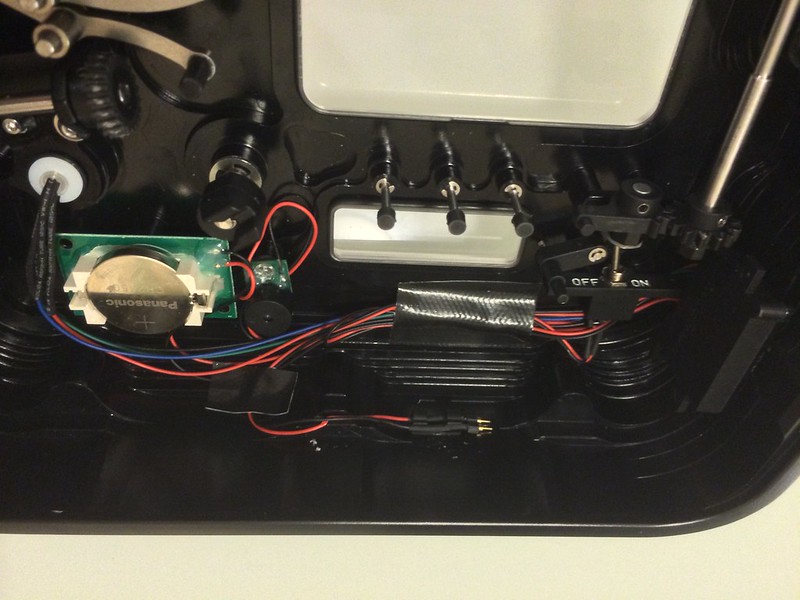 Untitled by ollytindall, on Flickr
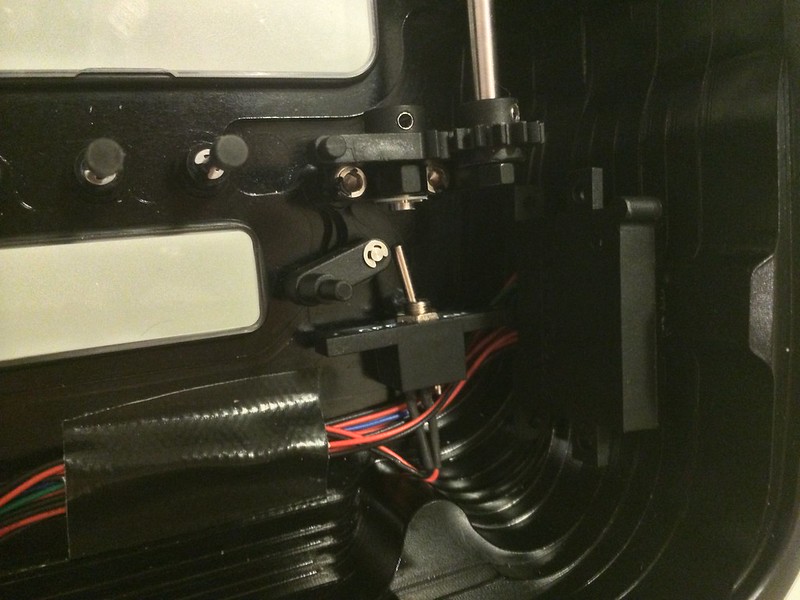 Untitled by ollytindall, on Flickr
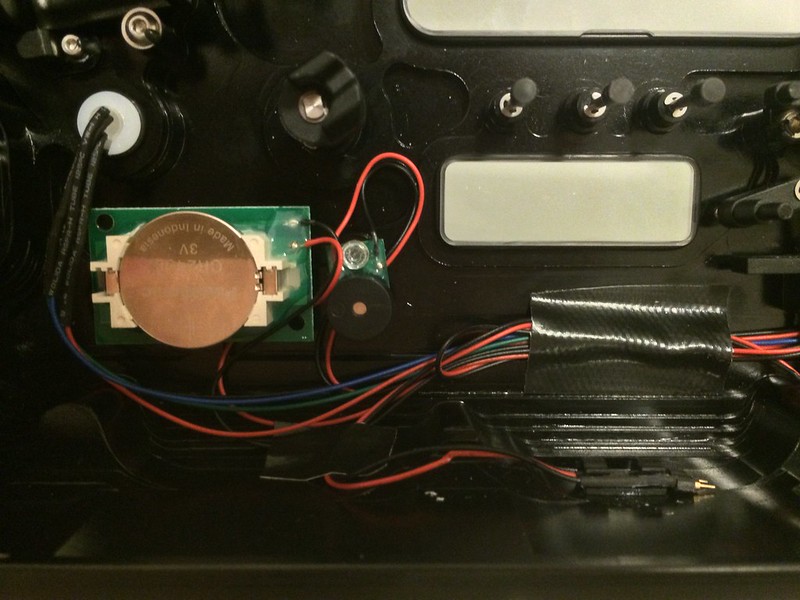 Untitled by ollytindall, on Flickr
I think the Nauticam Vacuum Leak Detector is effected by temperature variations... Its been perfect since I've had it but over the past couple of weekends I've pumped it up at home (steady green), taken to the dive shop (steady green) and then out on the boat - only to discover its gone to flashing yellow for when I'm about to hit the water. We are talking about 2-3hrs between pumping it and then it going yellow - so I think the housing is sealed correctly... as you would think (and according to the instructions) it would fail after 20mins or so..
This afternoon, I took it apart and relubed the main oring in the housing and also the port and re-pumped it, as it was still damp, I moved it outside (still in the shade) and let it dry - I came back and again noticed it had gone to flashing yellow.
Its now in the 30+'c here where as a few weeks ago it was low 20's so I am wondering if it can be effected by temp....
The nauticam system is declared to be temperature compensated so what Richard describes should not happen
It does happen with my Leak Sentinel so I need to make sure I take precautions
I would do a few tests and then call Nauticam to discuss if I was Richard

Terms of Use Privacy Policy Guidelines We have placed cookies on your device to help make this website better. You can adjust your cookie settings, otherwise we'll assume you're okay to continue.

A worldwide community for underwater imaging.