Skip to content

Photography Gear and Technique / Archived topic

Nauticam Fisheye Conversion Port

Started by Phil Rudin ·

  • 71Posts
  • 71Replies

Read-only discussion

Nauticam Fisheye Conversion Port

71 posts
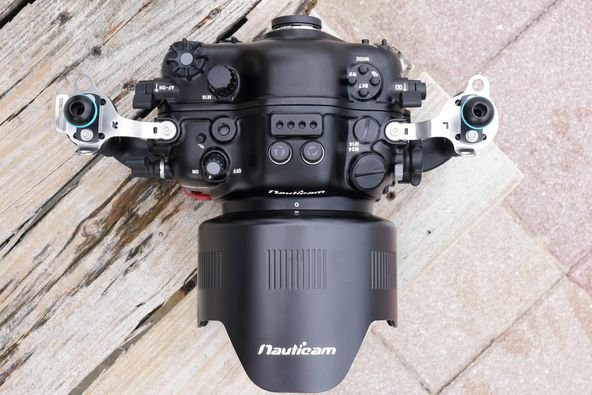
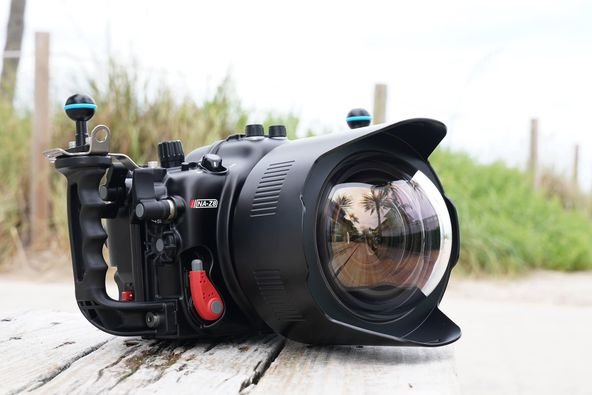
  1. This new fisheye conversion port will debut today at the Long Beach Dive Show along with the Z8 housing. I am told that this conversion lens will provide a full fisheye AOV using a "kit""???? lens. No zoom range has been listed at this time. Perhaps someone at the show can provide more details. Appears to work in the same way as WACP/WWL-1 etc. The attached image is N120 mount.


    350938657_1011543513587435_6354125088151156753_n.jpg

    350945879_578457884427260_5178114275584788094_n.jpg

    Edited by Phil Rudin
  2. Looks very nice indeed. Optical performance of a Nikonos RS 13mm, zoom range of a Tokina 10-17mm. And a reasonable size (for CFWA and travelling). A lot to like in that formula. 

  3. So 10mm to 17mm is around 178 to 104 degrees on full frame does that seem about correct Alex?

    Edited by Phil Rudin
  4. It would depend on the lens you use behind it, which I guess will be similar to the ones you can use with the WACP. And that will limit how much you can zoom in depending on the lens (as with the WACP).

    I’ve no idea on the exact zoom range it can achieve in degrees of FOV, but something comparable to the range of a Tokina 10-17mm (on APS-C), would be great from a shooting perspective.

    Add to that a small dome size and water corrected optics and that is a beast of a setup. You could travel with one topside lens, this and a WACP and be able to cover a huge amount of subjects. It looks good too.

    I am excited to learn more.

    Edited by Alex_Mustard
  5. If you assume the 10-17mm is  180° on the 10mm end, calculations show it should be about 98° at the 17mm end.  If you compare horizontal field which is more useful to compare to rectilinear lenses you get 144° to 81° and 81° is about the field of a 21mm rectilinear on full frame.  

  6. 10 hours ago, ChrisRoss said:

    If you assume the 10-17mm is  180° on the 10mm end, calculations show it should be about 98° at the 17mm end.  If you compare horizontal field which is more useful to compare to rectilinear lenses you get 144° to 81° and 81° is about the field of a 21mm rectilinear on full frame.  

    That's right the whole 180 degrees 98 degree is a bit of an illusion

    This is an image taken on a tripod with my Tamron 17-28mm at 17mm

    20230520_mf205927_tamron-17-28-17-8.jpg

    On the same tripod position this is the Canon 8-15mm with Kenko 1.4X teleconverter which is 21mm.

    20230520_mf205930_canon-8-15-1.4-tc.jpg

    In theory the first lens would have had 93 degrees and the second 101 degrees horizontal however with measuring tape at hand this was in reality much less with a shooting distance of 1.35 meters. As lenses behind dome are in reality focussing much closer this means the underwater field of view is significantly narrower than advertised.

    You can also see a few other things.

    1. The rectilinear lens at 17mm has significantly more field of view on the vertical axis

    2. The centre of the fisheye lens image is magnified

    3. The diagonals are heavily compressed and mostly contain something that is not really that relevant

    In my tests of the Canon 8-15mm with kenko teleconverter I have seen that the teleconverter is not the same as cropping the image. The resulting output at 15mm is actually wider than the lens at 15mm and the quality is identical

    However when you zoom in the quality starts to drop as it can be seen here the Tamron 17mm is significantly sharper everywehere and especially at the edges and this is my same experience underwater.

    We should not get confused by the barrel distortion effect when we look at field of view nor sharpness as fisheye lenses are in fact not very sharp at all at the edges and remain so underwater. The difference is that the centre of the frame pops so the image looks different. To get sharp edges at close range you will be shooting at least f/16 it does not matter fisheye or dome, WACP or any other adapter. Far targets will look fine at f/11 or even f/8.

    I look forward to knowing more about this Nauticam adapter however if the weight is over 2 Kg at it seems I do not think I will consider it for my A1


    Edited by Interceptor121
  7. Very good news that Nauticam launches one fish eye conversión port, another great product for underwater photographers. Hopefully after this fixed version, type WACP, that Nauticam launch as soon as possible the wet lens version, type WWL 1.

  8. 10 hours ago, ChrisRoss said:

    If you assume the 10-17mm is  180° on the 10mm end, calculations show it should be about 98° at the 17mm end.  If you compare horizontal field which is more useful to compare to rectilinear lenses you get 144° to 81° and 81° is about the field of a 21mm rectilinear on full frame.  

    Not this again. You are correct in theory. But when it comes to photography, underwater photography it is the fisheye’s diagonal coverage and barrel distortion that actually makes the images eye catching. 

    In underwater photography we can only light our foreground, so a lens that makes the lit foreground pop out towards the lens and then background recede especially towards the corners creates an image with more feeling of depth, as well as one that suits what we can light with our flashes. It allows the subject to fill lots of the frame, while still have space and depth in the rest of image. It is win-win.

    Rectilinear lenses suit underwater scenes where everything is more distant. And this can be very effective (see the work of Alex Dawson with WACP-2 - and usually without strobes). But for most styles of wide angle photography the fisheye look of enhancing/magnifying the foreground, and receding the background produces far more eye catching images of far more subjects. 

    If you are going to shoot a wall, use a rectilinear. If you are going to take an impactful, eye-catching underwater photo use a fisheye.

  9. 11 minutes ago, Alex_Mustard said:

    Not this again. You are correct in theory. But when it comes to photography, underwater photography it is the fisheye’s diagonal coverage and barrel distortion that actually makes the images eye catching. 

    In underwater photography we can only light our foreground, so a lens that makes the lit foreground pop out towards the lens and then background recede especially towards the corners creates an image with more feeling of depth, as well as one that suits what we can light with our flashes. It allows the subject to fill lots of the frame, while still have space and depth in the rest of image. It is win-win.

    Rectilinear lenses suit underwater scenes where everything is more distant. And this can be very effective (see the work of Alex Dawson with WACP-2 - and usually without strobes). But for most styles of wide angle photography the fisheye look of enhancing/magnifying the foreground, and receding the background produces far more eye catching images of far more subjects. 

    If you are going to shoot a wall, use a rectilinear. If you are going to take an impactful, eye-catching underwater photo use a fisheye.

    I agree the centre is magnified and pops. Fisheye lenses underwater like on land are to shoot close that is why they focus really really close

    It is also correct however to remind ourselves that 130 180 degrees is pure theory and normally there is nothing interesting in the extreme edges. The edges are a problem only when they look ugly

    I do not think Chris was saying that you should shoot rectilinear and neither am I however we need to calm down with claims such as 

    The lens is x stop sharper at the edges for the same diagonal field of view

    The statement above is pure fantasy as there are not rectilinear lenses that exceed 120 degrees diagonal so the comparison is not even possible. I wish this misleading and incorrect marketing approach is abandoned asap as it makes people think about something that practially does not exist and is irrelevant if it did

  10. This new Fisheye Conversion Port from Nauticam sounds very interesting, but the question is what lens out the Mirrorless group do you use behind it? 

  11. Interceptor121, the Laowa 7.5 mm  Cine lens for super 35 sensor is 123 degrees. Measured diagonally, as are most lens, except true circular fisheye.

    Edited by tobyone
  12. 5 hours ago, Alex_Mustard said:

    If you are going to shoot a wall, use a rectilinear. If you are going to take an impactful, eye-catching underwater photo use a fisheye.

    Super advice, well described! I like it! 

  13. Interceptor121, the Laowa 7.5 mm  Cine lens for super 35 sensor is 123 degrees. Measured diagonally, as are most lens, except true circular fisheye.

    Excellent 3 degrees more lol
    That was not the point of my post


    Sent from my iPhone using Tapatalk
  14. 12 hours ago, Interceptor121 said:

    The lens is x stop sharper at the edges for the same diagonal field of view

    Who wrote this?

  15. Ok but that is the WACP-C.
    I saw this new product on Nauticam FB page. Out of the blue or Nauticam ambassadors are still under embargo?

    Nauticam went and tested this in Palau I think?
    Maybe they don’t have lots of test data
    Fisheye conversion lens with zoom goes against adapted fisheye with teleconverter.
    In many cases people were not happy with a teleconverter however if the difference is 3 kg in weight I would still prefer a teleconverter to this
    We need to see the zoom range and lens compatibility to see what is the position on the market


    Sent from my iPhone using Tapatalk
  16. On 6/4/2023 at 5:10 PM, Alex_Mustard said:

    Not this again. You are correct in theory. But when it comes to photography, underwater photography it is the fisheye’s diagonal coverage and barrel distortion that actually makes the images eye catching. 

    In underwater photography we can only light our foreground, so a lens that makes the lit foreground pop out towards the lens and then background recede especially towards the corners creates an image with more feeling of depth, as well as one that suits what we can light with our flashes. It allows the subject to fill lots of the frame, while still have space and depth in the rest of image. It is win-win.

    Rectilinear lenses suit underwater scenes where everything is more distant. And this can be very effective (see the work of Alex Dawson with WACP-2 - and usually without strobes). But for most styles of wide angle photography the fisheye look of enhancing/magnifying the foreground, and receding the background produces far more eye catching images of far more subjects. 

    If you are going to shoot a wall, use a rectilinear. If you are going to take an impactful, eye-catching underwater photo use a fisheye.

    I agree with you, however the point of this analysis is purely to compare coverage and give people an idea of what zooming in to 17mm or whatever the lens behind the new adapter zooms to does to change field of view.  People often want to compare coverage between fisheye lenses and rectilinears for things like big animals and this is the best way to convey the change in coverage as you mostly don't place a  shark along the diagonal.  

    It has nothing to do with the impact of the shot or the way the fisheye works or even the fact that the fisheye makes the shark look chunkier compared to a rectilinear.  It about the fact that the shark is too small in the frame with the fisheye and people want to visualise how much bigger it appears by using a fisheye zoom compared to a 16-35 equivalent lens for example. 

    You could perhaps use this analysis to show that a 3x zoom lens behind a fisheye conveter, assuming it works well over the entire zoom range, would be a valid alternative to a 16-35 lens behind a 230mm dome for reach when shooting sharks for example - you might be able to get the reach and the fisheye effect.

    Edited by ChrisRoss
  17. 5 hours ago, ChrisRoss said:

    I agree with you, however the point of this analysis is purely to compare coverage and give people an idea of what zooming in to 17mm or whatever the lens behind the new adapter zooms to does to change field of view.  People often want to compare coverage between fisheye lenses and rectilinears for things like big animals and this is the best way to convey the change in coverage as you mostly don't place a  shark along the diagonal.  

    It has nothing to do with the impact of the shot or the way the fisheye works or even the fact that the fisheye makes the shark look chunkier compared to a rectilinear.  It about the fact that the shark is too small in the frame with the fisheye and people want to visualise how much bigger it appears by using a fisheye zoom compared to a 16-35 equivalent lens for example. 

    You could perhaps use this analysis to show that a 3x zoom lens behind a fisheye conveter, assuming it works well over the entire zoom range, would be a valid alternative to a 16-35 lens behind a 230mm dome for reach when shooting sharks for example - you might be able to get the reach and the fisheye effect.

    One issues of fisheye lenses is that the vertical field of view is smaller than a rectilinear lens of the same focal length as I demonstrated before

    If instead of a shark you are shooting a school of barracudas or a bait ball that is circular you may need to step back if you only have a fisheye lens with reduced field of view as it happens with the likes of WACP or WWL lenses where the vertical field of view is smaller than a 20mm lens

    This is why a zoom fisheye that goes all the way to 175 degrees diagonal (no diagonal fisheye is 180 degrees) and allows zoom to maybe down to 130 degrees is nice. If it did 100 to 175 would be like the tokina on DX and as Phil said at the beginning that would be awesome

    I am looking forward to understanding more about the compatibility of this adapter

  18. 7 hours ago, Interceptor121 said:

    One issues of fisheye lenses is that the vertical field of view is smaller than a rectilinear lens of the same focal length as I demonstrated before

    If instead of a shark you are shooting a school of barracudas or a bait ball that is circular you may need to step back if you only have a fisheye lens with reduced field of view as it happens with the likes of WACP or WWL lenses where the vertical field of view is smaller than a 20mm lens

    This is why a zoom fisheye that goes all the way to 175 degrees diagonal (no diagonal fisheye is 180 degrees) and allows zoom to maybe down to 130 degrees is nice. If it did 100 to 175 would be like the tokina on DX and as Phil said at the beginning that would be awesome

    I am looking forward to understanding more about the compatibility of this adapter

    Agree, it will be very interesting to see if produces a Tokina 10-17 equivalent lens with good optical qualities for full frame and other formats.  It could be a better option than adapting the 8-15 lenses on smaller formats as well, depending on what lenses it is compatible with.

Sea & Sea

Account

Navigation

Search

Search

Configure browser push notifications

Chrome (Android)
  1. Tap the lock icon next to the address bar.
  2. Tap Permissions → Notifications.
  3. Adjust your preference.
Chrome (Desktop)
  1. Click the padlock icon in the address bar.
  2. Select Site settings.
  3. Find Notifications and adjust your preference.