



Posts posted by Nemrod
-
-
Edited by Nemrod
1 hour ago, Dave_Hicks said: A black hair wrapped around an oring could only happen if the oring was removed. That is not likely from wiping and lubing in place.
I did not clean, lube or pull the O-ring off on this particular occasion as I describe how I normally would have. What I think happened is that the FIX S90 housing is a clam shell type. When I opened the housing the door with O-ring rubbed across the room table I was working from. The room cleaning lady did have curly black hair (like a perm) so I think it likely hers from cleaning the room and wiping the table down as part of her duties. I am not blaming her, I was the one who deviated from my normal routine and did not inspect the O-ring for FOD. FOD can come from all sorts of places. I think that is how the hair got on the O-ring. Many times I have found sand and debris on the door O-rings and down in the groove after a dive and upon opening the housing.
The OP asked what other people do. I explained my routine.
"So, it got me to wondering what other folks do:"
I did not say it was necessary or required. I remove, clean and lube with each opening and I answered the original question.
-
 2
2
-
-
I remove the Nauticam door O-ring (both housings are clamshell type) with each opening. I clean the groove, look for debris, sand, hairs, Q-tip fuzz etc. Same with my strobes, I remove the Inon strobe O-rings with each opening, clean and lube.
The only flood I have had was a FIX housing for my S90. I changed the battery in a rush, went diving, flooded. Afterwards I found a tiny, black hair on the O-ring wrapped around it. Neither me nor my wife have black hair.
-
2
-
-
-
Edited by Nemrod
Maybe some day in a distant and alternative universe, OM Systems will get their head out of their wazoo and give us a TG Pro. Full manual controls, actual f stops, pancake 24-75 with macro zoom lens, 1.0+ inches sensor. Video capable for those who do such, not me, and then we will have a replacement at long last for the legendary Nikonos III. I will buy three and a nauticam housing to put it in.
In yet another alternative world, Nauticam et al could take the guts out of a Canon R50 or similar and install it in a housing as an integrated, updatable platform, work with Canon, Nikon, whoever to provide the electronics. We are stuck since the passing of the Nikonos in this buy a box and then buy a camera and then stick the camera in the box thinking.
What we need is an actual underwater camera, not a box with a land camera inside. And it does not need to be FF.
-
1
-
-
22 hours ago, Architeuthis said: I am just wondering how you managed to clean the contacts of your HF-1s after the flooding...
The flashes are now at Backscatter for repair (the contacts will become exchanged), but I am afraid that this phenomenon will come again. I am not aware what I did wrong. I tread the HF-1s the same way as I was treating five S&S YS-D2 and four Z330 before and these strobes never made any problems with their contacts.
Thank you, Wolfgang
I am not clear here. Did Backscatter state the specific reason the strobes quit working was "stained" contacts and that there is no other malfunction involved?
-
-
23 hours ago, Smstelzel said: Thanks for the inputs so far.
Leaning towards the Eckos but have another question would the new Atom flash be too much overkill for my setup or would it be good insurance if I felt like I wanted to advance beyond a compact system (not sure if I want to yet but I may)
That should be a good set up. The Atom strobes might be overkill for a TG but they should work fine since they do have the RC control and they would be plenty of power for any system you move up to for all but this most demanding wide angle stuff, maybe even then.
I have been studying these, they do not have a standard mimic type TTL thus will not work in TTL with either my Sony or Canon, but I shoot mostly manual anyways and the size, power and price are good. I am just worried about reliability being new on the market.
-
Edited by Nemrod
3 hours ago, Smstelzel said: Thanks for the responses. I don’t know how important RCT TTL is to me as I don’t have much frame of reference as to how much better it is than normal TTL (slave?) but had heard it was better.
I appreciate the explanation on strengths as I was having difficulty finding the comparisons on my own.
My several dive buddies who shoot with the TG find the RC useful (Backscatter MF-2) and from my observing their photos I think they are getting very good results. What I am not sure about is that the results are really any better than with standard mimic TTL. But they like it and are sold on it. And best I can tell the Echo strobes do support the RC-TTL.
One of my regular buddies uses a Backscatter MF-2 in RC mode to slave an older YS-D2 non RC strobe. And it works! His rig is not shielded so the YS strobe fires on mine backlighting my subject, at times useful, other times (most times) quite annoying 😁.
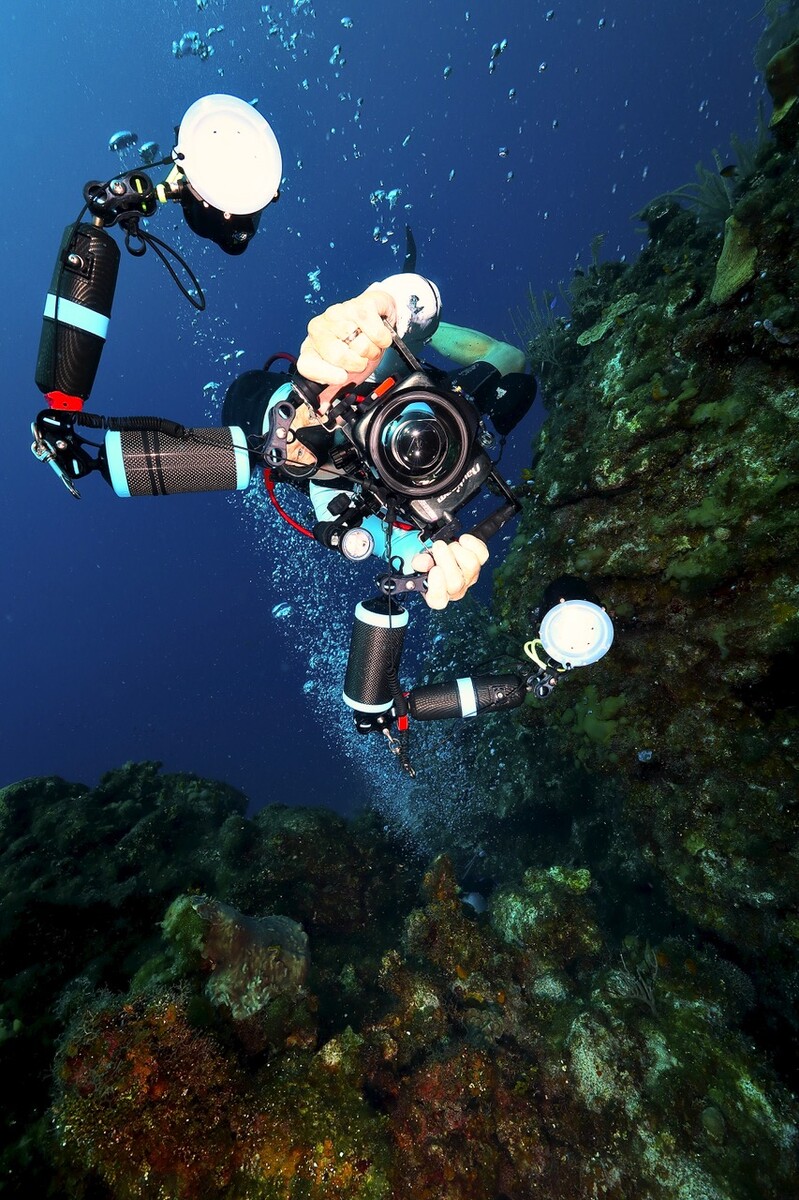
This wide angle photo (of me) taken with the Ikelite Echo strobes, Ikelite housed R100, TTL (D.Haas), clearly they suffice!
-
1
-
-
Edited by Nemrod
The Inon S220 strobes (75w/s, GN22) are considerably stronger than the Ikelite Echo strobes (50 w/s, GN15). However, the Echos will support the Olympus RC for TTL control and several of my dive buddies use the RC control to their advantage with the YS-D3 Duo, even stronger (GN33?) and the TG cameras.
I have a set of the Inon S220 strobes and I can see that they are stronger than the Ikelite DS50 (now Echo with the added optical functions) and nearly as strong as the YS-D3 with the diffuser installed. And they are reliable and cost effective, so RC be darned, I would go with the S220 strobes. I pair mine with a NA-6400 and a NA-R50 systems.
The Echos are good little strobes and while I know I just said I prefer the S220, if RC is an important function to the OP and if they are for certain verified functional with the TG RC then I can see that be a good combo. I think two of them would pair well with a TG, especially for macro and fish pics.
-
1
-
-
Edited by Nemrod
6 minutes ago, Kristin said: No, it isn't the battery, which I have changed already.
The vacuum seal is not working.
Have just pulled it out and tried to see if anything is obvious. If anyone has pulled theirs apart to see the spring and little foot, it would be great to hear from you as it seems that this has to be the issue somehow - there's really nothing else that can go wrong. I can't find a detailed parts diagram or instructions on how to fix this online at all.Just a couple of months ago I forgot to put the cap on and went in the water. Got to about 30 feet and realized my error, NA-R50 housing. Fortunately I did not flood. However, salt crystals formed despite my effort to wash it out. Two days later I had a problem pulling vacuum. The green light would come on but I would quickly get the flashing red light while I was at breakfast. I thought perhaps some salt crystals or debris had formed on the internal seal surface. I pulled a vacuum as best I could and quickly put distilled water in the cavity and pressed the release button several times. I repeated several times. I had placed a microfiber cloth inside to ensure no water got anywhere inside the housing. I completed the trip and have had no further issues and just recently did a pool dive, all functioned normally. If I could stay home long enough I would like to take it apart. Too expensive to replace but if I cannot then I guess off to Reef Photo it goes. YRMV.
Edit to add, I forgot, after forcing the distilled water flush through the valve I used an air gun to gently dry it including pressing the release while allowing air to flow through it. It functioned the remainder of dives and is still seemingly fine. I too would like to know how to disassemble the valve.
-
Edited by Nemrod
Steady red light is a low battery. If a fresh battery does not cure the problem something is possibly amiss with the circuit. Pull a vacuum and let it sit over night. Then release the vacuum, do you hear the valve equalizing? If so there is probably not a leak. If no vacuum, then I guess there is a leak. Change port and door O-rings perhaps, inspect the sealing surfaces.
-
1
-
-
Please, no. I hve not entered a contest ever but I apprecite looking at the photos you folks put up and the skill and luck and chance and dedication. AI will ruin photography because real photographs can never be perfect. I understand using some tools to get white balance, remove backscatter perhaps but at what point is it no longer your photo but something else.
-
2
-
-
Edited by Nemrod
With the Canon 18-45 lens you will want the WWL-1 not the WWL-1C if getting the full 130 degree FOV is important. The WWL-1C will only get about 116 degrees with a base 18mm APS-C lens. The WWL-1 was designed for 28mm equivalent lenses and the WWL-1C was intended for 24mm equivalent lenses. The WWL-1 does have a lanyard attach point.
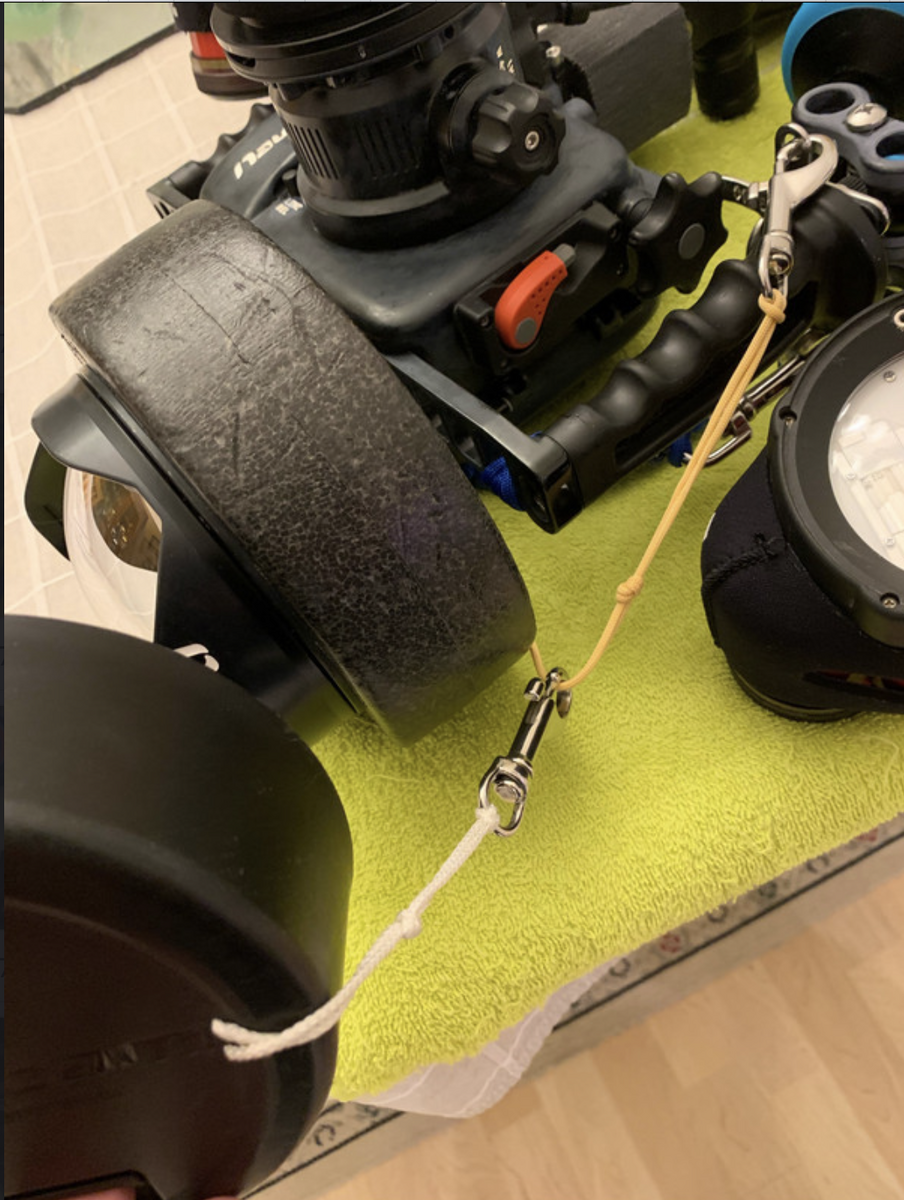
The WWL-1 and I imagine the WWL-1C are too large to use the flip adapters. Alignment is critical to prevent vignetting. I do not consider it practical to switch out between the CMC lenses and the WWL underwater. Simply too large and heavy and expensive. You can quickly switch out on the boat and go from one to the other. I do have a bayonet slot on my rigs to temporarily park the WWL for flat port work but no way I would leave that expensive and fragile piece of kit anywhere for long but on my port.
-
2
-
-
3 hours ago, Christian K said: Ok, I’m lazy. How does this strobe position itself to the HF1?
Well, okay, none of us are expert on this strobe. Per Backscatter it is smaller than the HF-1 considerably and has a UW GN28 which is equivalent to the HF-1 at max power until you set the +1 or +2 settings which I think are GN34 and GN40 respectively.
Per Backscatter and the strobe operator manuals, the Backscatter MF-1/2/3, Atom and HF-1 will only shoot TTL with the Backscatter trigger. If this is not true, explain how this is not the case because I might like to purchase a set but I want to run off my UWT board or the pop up strobe for TTL. Manual of course is no issue with the UWT trigger or the pop up flash but TTL?
-
 1
1
-
-
Edited by Nemrod
On 11/30/2025 at 10:12 PM, Pavel Kolpakov said: Backscatter strobes have proprietary TTL protocol, not a classic TTL. Proprietary TTL protocol requires Backscatter triggers usage, as i remember those triggers exist for Olympus and Sony.
Yes, that is the problem. I would wish for "classic" or what I am calling mimic TTL mode for the Atom flash that will sync with either the pop up flash or the UWT trigger board when set for TTL operation without a proprietary board that will not work with many existing cameras and housings.
-
The trend these days seems to be to market strobes that require a proprietary TTL trigger. The Backscatter strobes do not have a simple mimic TTL mode. And reading the manual for it and the HF-1 the Backscatter trigger is required for TTL?
My three camera rigs run from the pop up strobe or from a UW Technics board. So the Atom would be manual only I assume though I think the HSS mode would work from the UWT board?
-
Edited by Nemrod
Just returned. I think Roatan no different, no better, no worse, from the rest of the Caribbean basin at large. Everything has suffered from the scd, bleaching and overly warm water. Notice all the floaty stuff generating backscatter, supposedly not typical? Lots of rays and turtles, good number of fish, corals typical. (Nauticam Canon NA-R50, WWL-1, dual Marelux Apollo strobes)
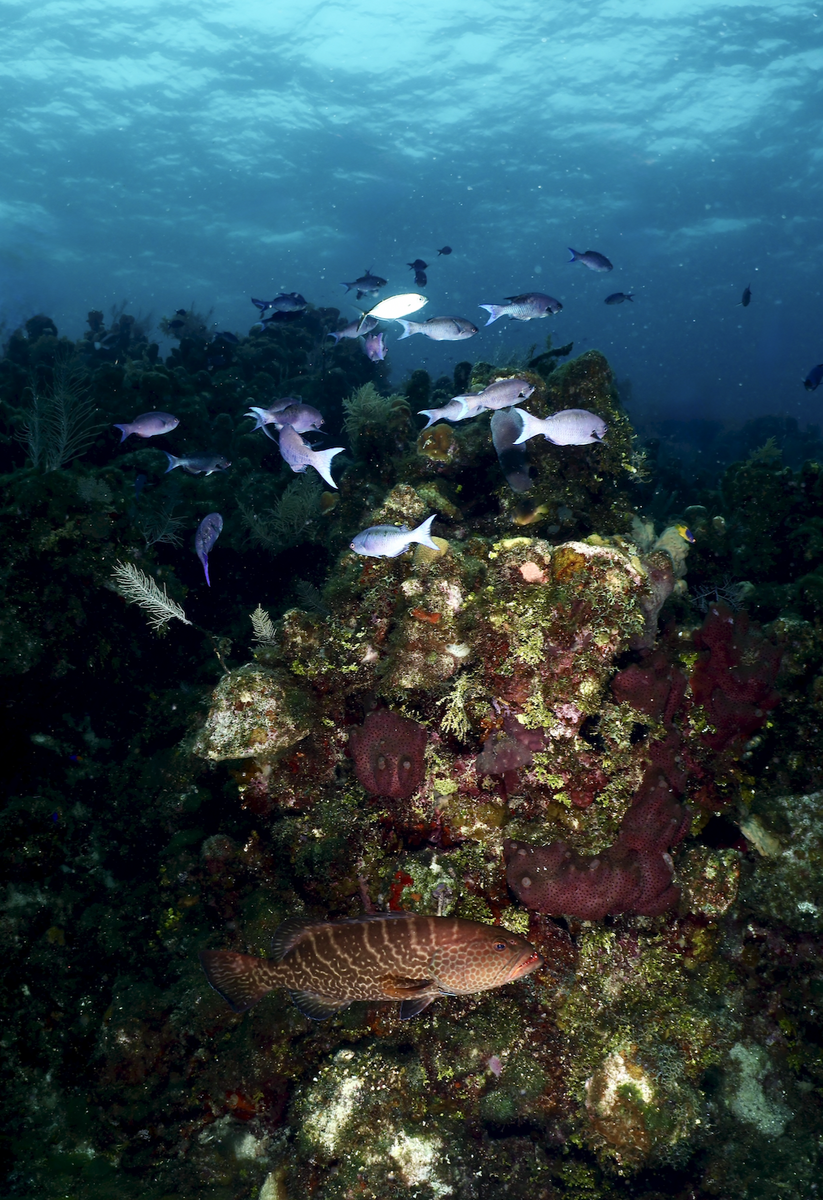

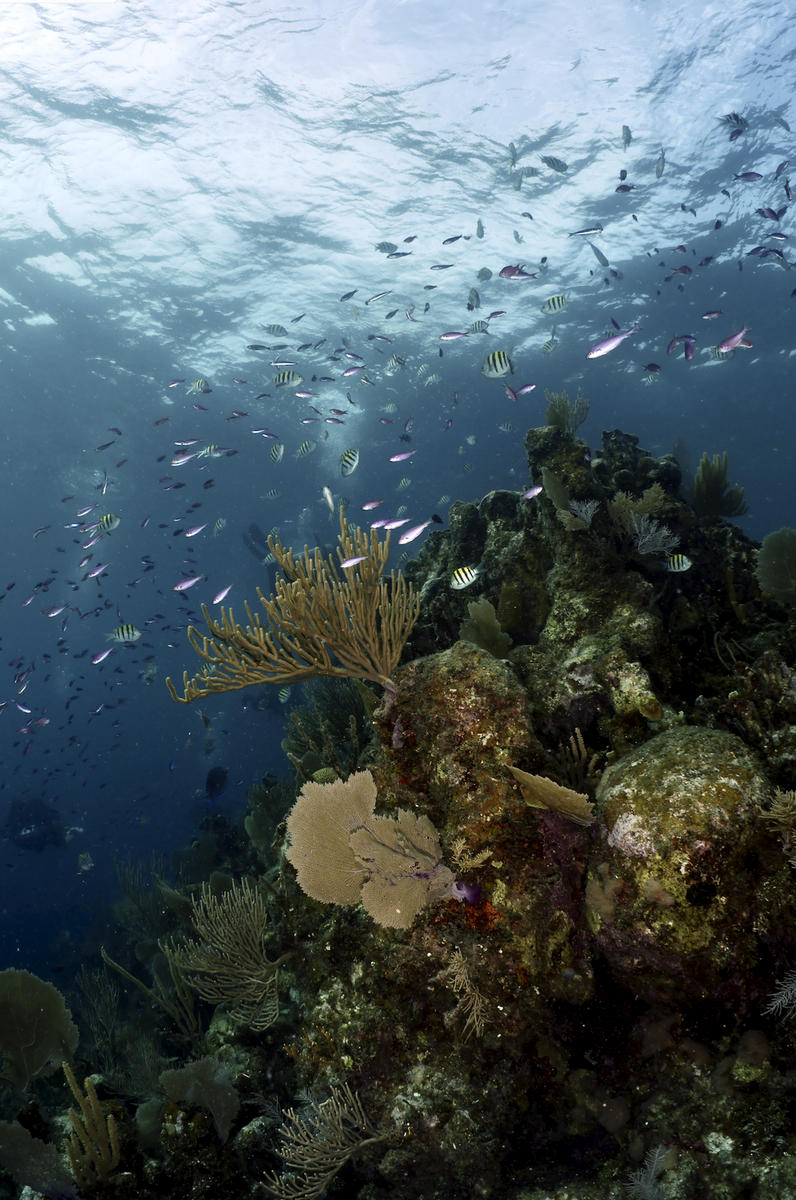
-
2
-
1
-
-
On 11/11/2025 at 3:22 PM, SwiftFF5 said: I have been offered a trip to Cozumel in January, and I am struggling with whether to take my camera gear or just forgo it for this trip.
I have been to Cozumel many times including just this past July, twice the year before and usually at least once annually. Over the last trips I have been asked how many cameras I have and I answered one. Now, to be complete, I have not gotten the red button on my last trips. This is flying into Cozumel. If you do the bag drag from Cancun, who knows. Cozumel, you should be okay with one camera. Put the camera in the housing.
Tools, yes, my Nauticam Allen keys were taken from the carry-on camera case. Despite having carried them through multiple times.
-
1
-
-
Edited by Nemrod
23 hours ago, Adventurer said: If people are on a limited budget or have limited luggage the INON S-220 is the goto strobe !
If you can crank up the ISO of your camera a little you can compensate, not bringing a large gun such as the HF-1 or Apollo III 2.0.
I love my two S220 strobes. I had been using D2000 strobes until they went TU. The S220 is much stronger and nearly as strong as a pair of Z240s I had borrowed and they do throw a wide beam. The thing I run into is flash fill against a sun lit background (sun balls, shallow water, bright sand) is that I run out of sync speed on my Sony (1/160 though I can get it to 1/200 with the UWT trigger). Thus needing to use the aperture/ISO to help control the background exposure and the little S220 (D2000, Z240 et al) quickly run out of power. Yes, going to a lower ISO and aperture works until I run out of strobe power.
Just playing in the pool, what needs f5.6 with the S220 (GN22) I can do at f8 with the Marelux Apollo (GN33) and just a wild guess maybe with something like the HF-1 (GN40) at f11? I am not putting this photo up as an example of great photography ;), but here two S220 strobes did allow me to get a decent exposure of the turtle at the Salt Pier against a bright background, WWL-1, S220 strobes with warming diffusers, NA-6400, f8, 1/200, ISO 200.
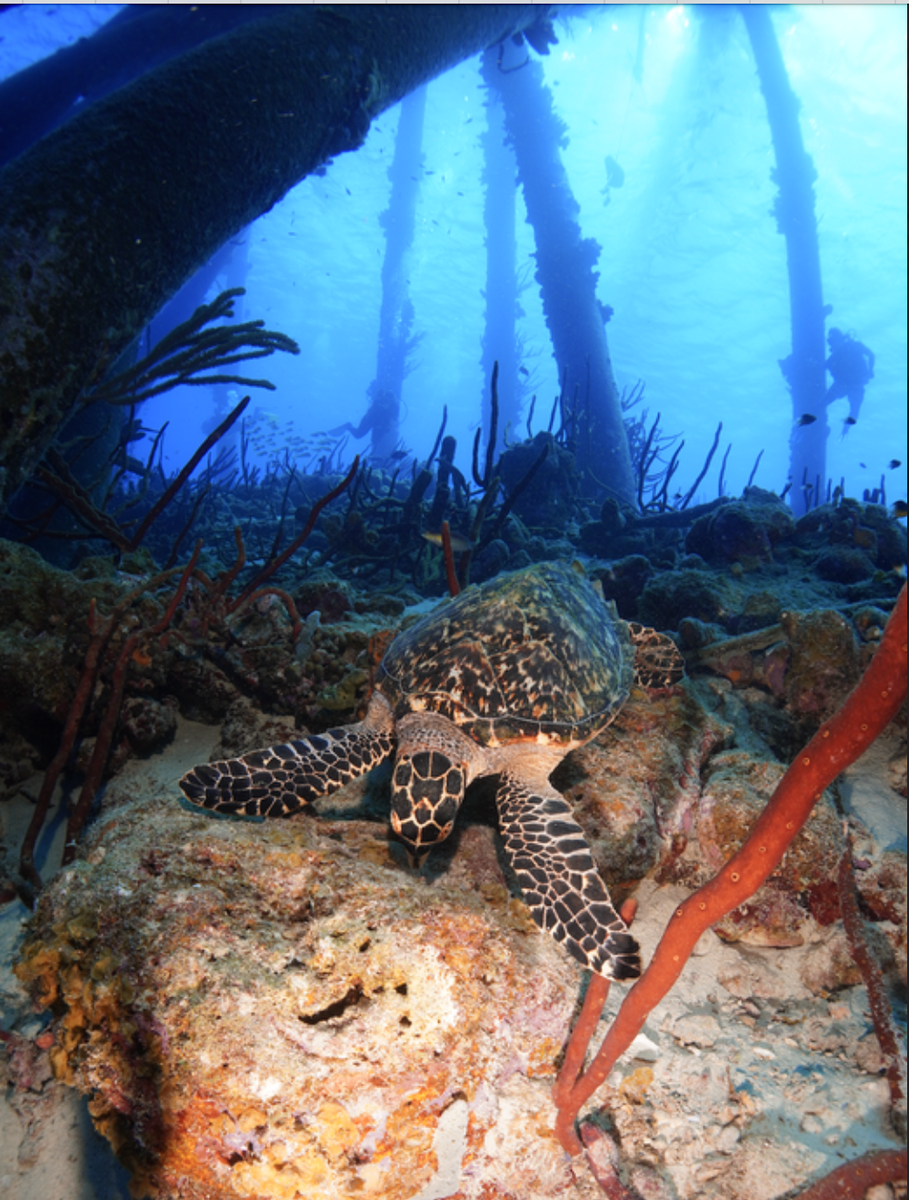
-
1
-
-
Edited by Nemrod
3 hours ago, JS1221 said: I know this thread is a bit old so forgive me. I'm wondering what your opinions would be on taking the S-220 to Socorro to photography the manta rays and hopefully whale sharks? I shoot an Olympus E-M1 Mk III, in an AOI housing, using a 14-42mm EZ lens with the Nauticam WWL-1B, or the Olympus 8mm Fisheye with a 4" dome.
It is true the S220 is much stronger than the S2000 series strobes. Maybe even encroaching on the old Z240. But I think you might be asking too much of them. Can you make do, well, maybe. Not ideal, I have used mine for wide angle and CFWA, but whale sharks in shallow, brightly lit ambient conditions will be over powering for them is my bet.
-
1
-
-
After experimenting with off loading my back up Peregrine to my strobe arms I decided I did not like that. It just got in the way so back on my arm it went. Putting the computer on the camera may be a good idea for some but it just did not work for me.
-
1
-
-
Edited by Nemrod
If I am using a towel I try to get a freshwater soaked towel. My usual resort in Cozumel has no water or rinse tanks on the pangas. But the DMs will usually wet me a towel down which I place in my cooler bag. I will also bring along a large bottle of water for a rinse. They place the camera back into the bag usually for me or sometime hold it as I climb aboard and I do so. They have always been good about being gentle. Of course a nice soak in freshwater once back.
My new NA-R50 does seem to have a different finish but again, there are areas of discoloration already. This despite significant effort to prevent this from happening. But it does seem better.
I think the anodizing is preventing damaging corrosion as long as the housing is rinsed well and properly. It is more of an aesthetic issue.
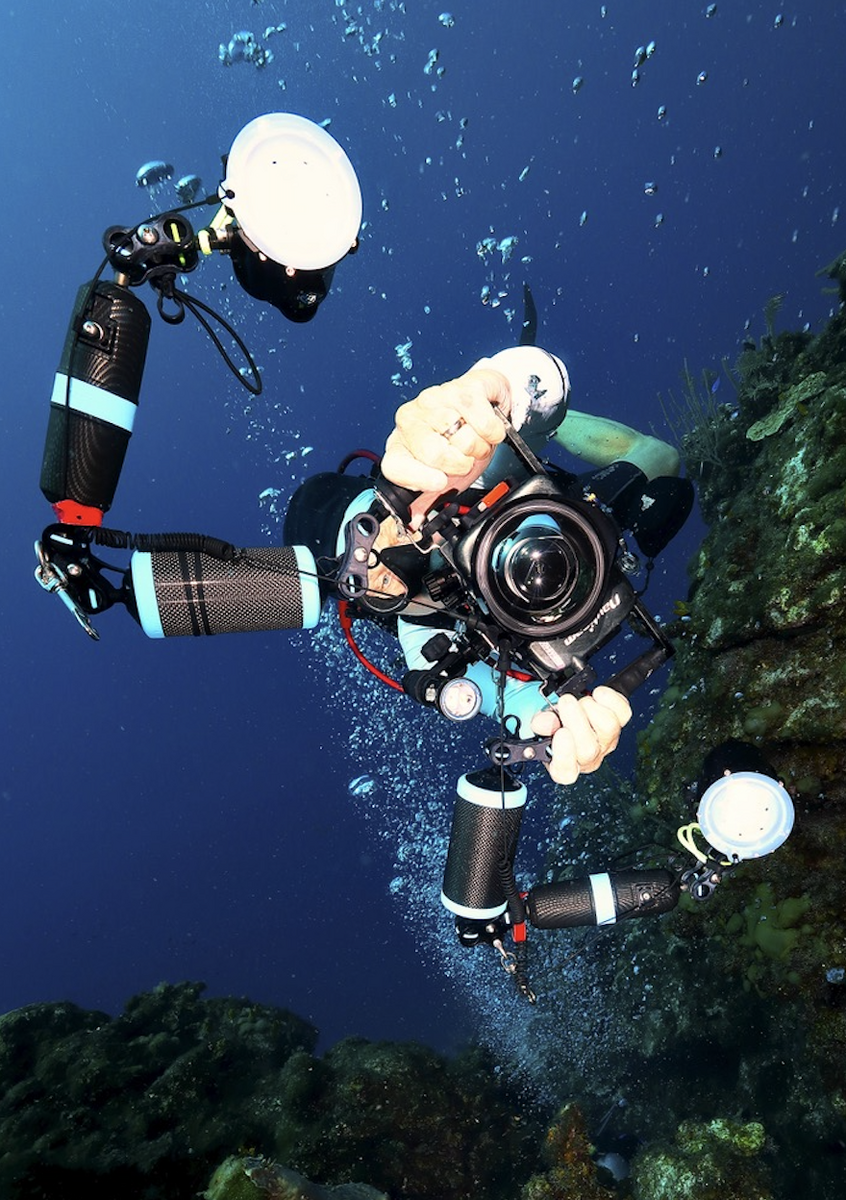
Here is the NA-6400 after return from service summer before last and just prior to a month nearly of submersion in the Red Sea. Just doing some test set ups before the trip. So, yes, it was pretty again but not like new. And a photo of the NA-6400 in action just a few weeks ago in Roatan (D.Haas).
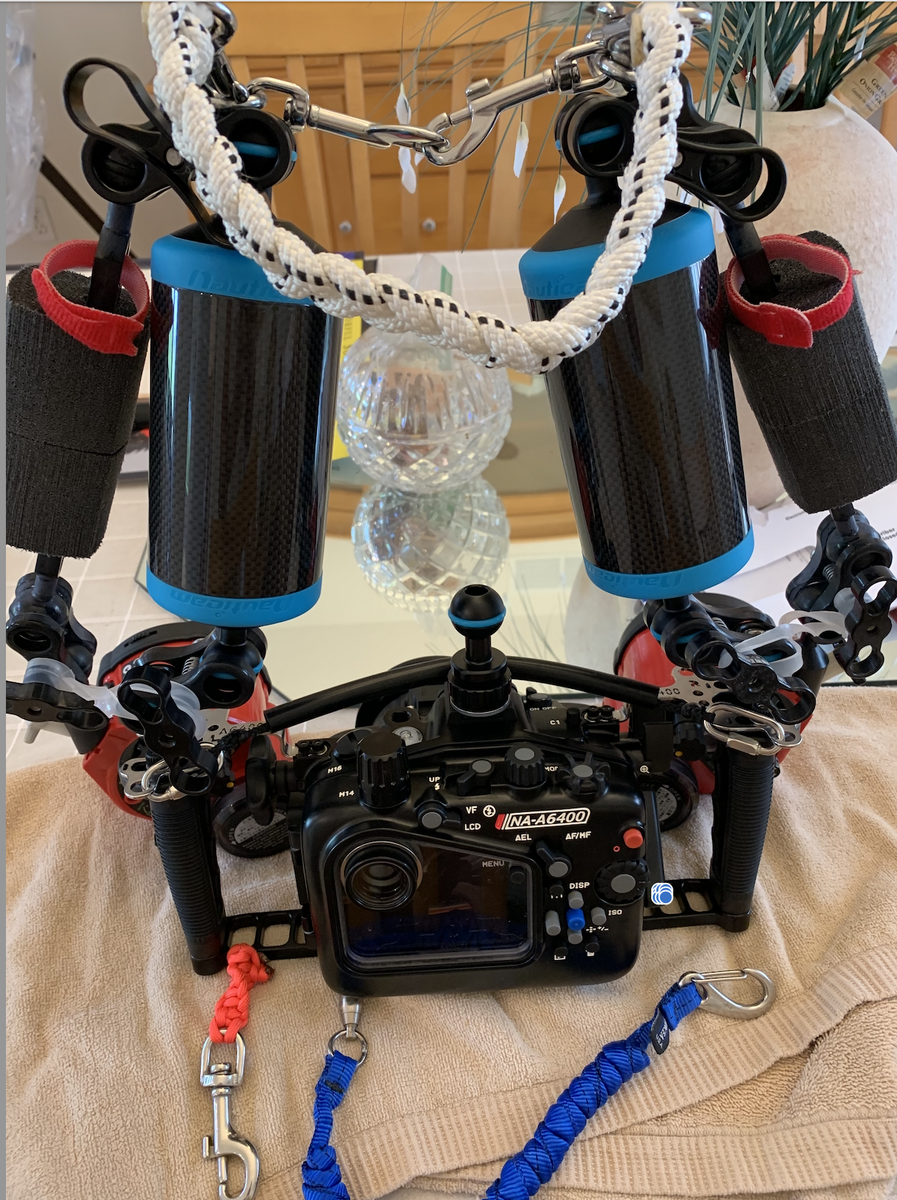
-
1
-
-
Edited by Nemrod
42 minutes ago, Chris Ross said: I've seen pics of worse Nauticam housings than that. With my housings, it's less dives than yours, but I generally have a damp towel available to cover the housings on dive boats. Presumably the RIB is taking you out from the mother ship, so you shouldn't be in it long?? I don't know. I shore dive a lot at home and have my own car, so the housing only walks from the exit to the car and gets covered with a damp towel.
It appears the link you had that the guy has a process to clean up the housing? Perhaps he polishes it? Apparently if you send your housing to Nauticam it comes back like new.
As for ceramcote, i'm sure it could work but you would need to strip all the buttons etc I think, remove the rear window, strobe trigger window etc and work out how to mask off all of the o-ring sealing surfaces, in the button holes , the housing back etc. i'm not sure I'd want to have an O-ring trying seal against the coating?? It would need proper research to prepare the surface properly, mask as required etc. and a good applicator to apply it. There would probably be procedures around the protective anodes as well to follow.
That housing was sent for service at three years as I stated. It looked much better but was not anything like new. That photo was prior to service.
Have you sent a housing to Nauticam, not to a repair facility authorized by Nauticam but actually to Nauticam?
I do use a wet towel when nothing is available, wet with fresh water. I also will carry a bottle of water to rinse the housing best I can before placing in the wet towel. I also often use a cooler bag and will pour freshwater in it or the wet towel if no water is available. All of that is easier said than done in a tossing boat or a rented Jeep at a place known for theft (of even wet towels) or a beach entry that needs a half mile walk or a pickup truck ride through desert heat to and from. My FIX housing has had the same use for many years and has little discoloration, Nauticam seem particularly good at turning white.
If you want to defend Nauticam or place the blame on operator error I understand that POV but it is my opinion based upon ownership of several aluminum housings that Nauticam could improve their coatings for the cost of their housings.
-
Edited by Nemrod
On 10/19/2025 at 8:31 AM, rwe said: Can someone put a picture of a Nauticam housing that has turned white or partly white? Is it really white or more like grey which is the typical color of aluminum with a protective aluminum oxide layer. Is it possible that the white color is just due to the dye leaching out of the oxidized layer?
I hope I am not breaking a rule, fuss at me if I am, here is a link to a gentleman and his business that repairs UW camera housings and equipment. Scroll down to the video of a recent repair of a Nauticam.
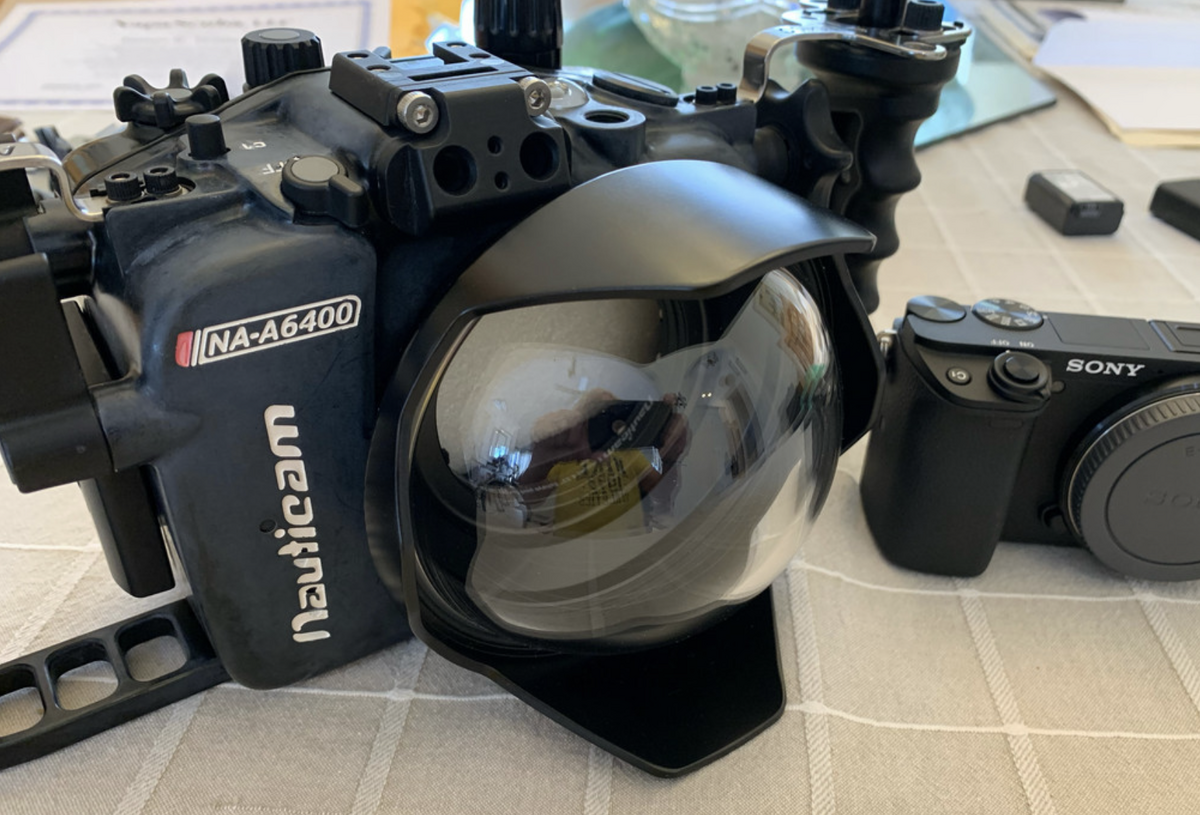
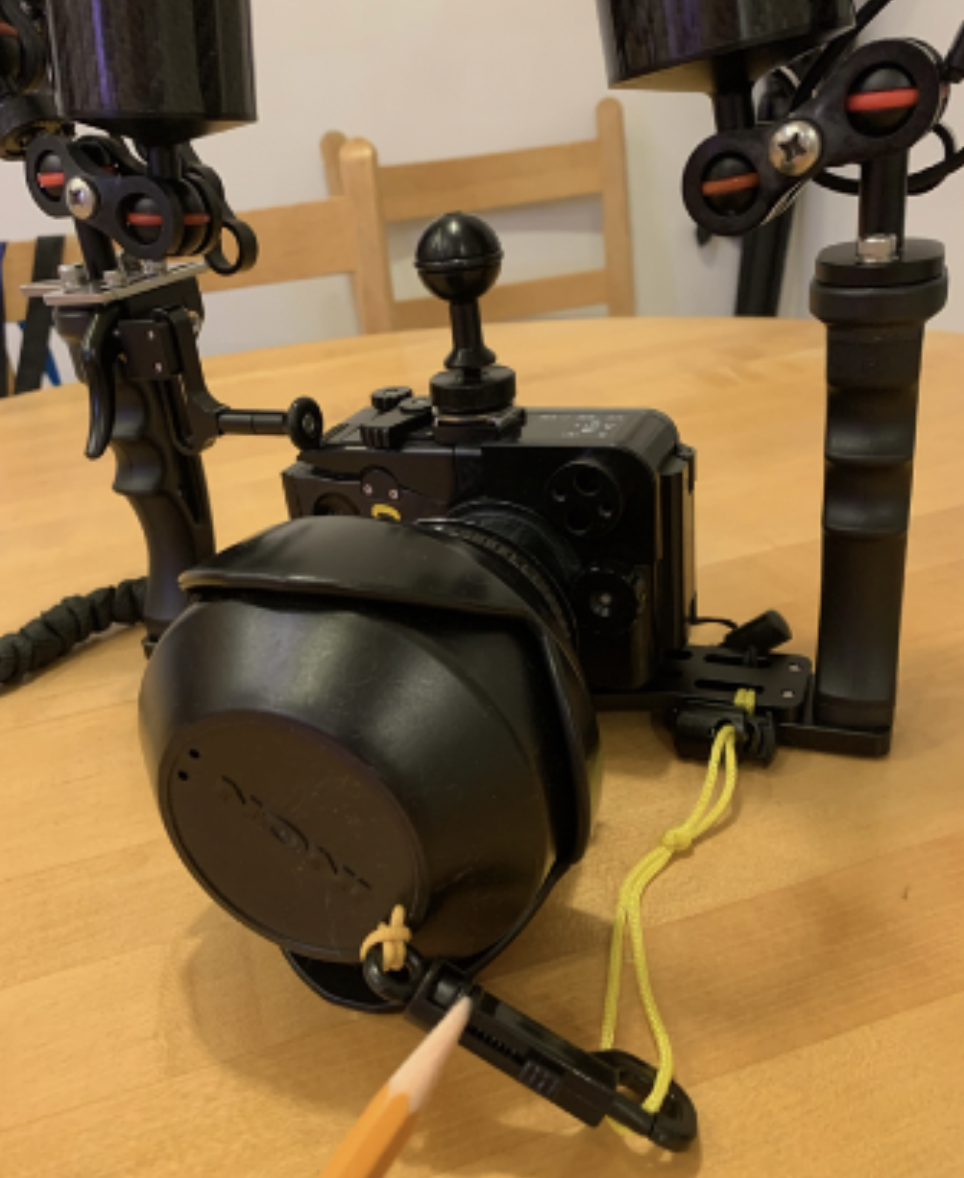
Here is my NA-6400. Purchased around January of 2020 and has about 500-600 dives on it. I had it serviced in 2023 prior to a Red Sea trip just to make sure I had no issues on the trip, peace of mind. You can see the white-ish discoloration compared to the less used 4.33 dome.
This housing has not been abused. I am OCD. But what RIB has a tank of freshwater? What beach on Bonaire has a freshwater soak tank and water hose to fill it of which would not be stolen out of your rented vehicle? The complaint here is that these housings cost $$$$$$$ and Nauticam could provide an improved coating that does not turn white in normal, real world use. The good is that there appears to be no degradation of functionality, just aesthetics, at least for mine. It is nonetheless quite annoying. When I go all OCD and clean it up it does not look so bad. And, again, I do a Balistol wipe down and it looks pretty from 10 feet. So I just do not get closer than 10 feet so as not to trip into a nervous breakdown 🤣.
Notice that my (2009) FIX/Canon S90 housing is clean and shows little white discoloration and has tons of dives on it. It clearly has a better anodize process.
I wonder if Cerakote could be applied as an additional protection at considerable expense?
-
1
-

How do you cover the colors of the logos on the front of a lens?
in Photography Gear and Technique
·
Edited by Nemrod
I have used a Sharpie pen, a fresh one, to just cover the writing. When the day comes that you want it gone, just use isopropyl on a cotton swab and keep gently dabbing and rubbing until the ink is removed.
One lens that I have is UW dedicated. I carefully masked off everything except the beauty ring with all the nomenclature. I shot it lightly with Krylon Ultra-Flat paint, a couple of light coats.