



Posts posted by Chris Ross
-
-
You won't need a new dome, just the right extension. looking at the charts for the 18414 and 18408, the glass 18408 needs about 10mm less than the acrylic 18414 so I would guess it's going to be in the range of 45mm in length +/- a few mm. It's rather annoying they go by part numbers, every other supplier just calls it an xx mm extension ring and the part numbers are in random rather than increasing size order.
Regarding the macro port, you will want the right length extension, the 48462 is 39.5mm so the 48461 is likely to be about 6-8mm longer than that. The lens will probably fit but diopters won't work as well if the lens is further away and you lose a touch of working distance depending on how tightly the 48462 extension fits. If you don't use diopters it would probably be fine as you would have about 135mm working distance at 1:1 with 105mm Z lens.
-
 1
1
-
-
5 hours ago, Interceptor121 said:
Dome is small-> lens focuses at 28cm lens entrance pupil 11 cm from focal plane. Minimum ideal dome radius 17cm. Isotta radius 10cm. Delta 7cm large number-> blurry edges
Position of the dome I said possibly but at the end this lens just focusses too far and is not really a good candidate for underwater useLook for lenses that focus at 20cm
Seems there is a grand total of one lens in this class that focuses that close, the Nikon Z 17-28, all the other Z and F lenses focus at either 280 or 290 mm apart the F mount Sigma art 12-24 f4 which gets down to 240mm. But a 17mm is a somewhat narrower field. I would be playing with the fisheye in your 6"dome to see how you go before shelling out more cash.
Having said all that there are lots of people somewhat happily shooting with 16-35 class lenses that focus around 280mm in 230mm dome ports and using the S&S correction lens while reporting good results. The S&S lenses are meniscus lenses which are commonly used as field flatteners in other applications.
-
1
-
-
Probably yes providing it's just an adapter that you need and you don't need to use the zoom/focus knob if one is fitted. If you do need to use the knob, the zoom gear won't mate up any longe. It might be possible to make a custom gear to get around that if you needed to
-
 1
1
-
-
4 hours ago, timbriggsphoto said:
I'm building up my gear around a Nikon z7ii in an Aquatica housing and was hoping to use my older 8" Acrylic dome from my prior A7rii Aquatica setup but I'm getting some vingette at the widest end of my Nikon 14-30 f4, I can see both the dome shade and I think part of the inside of the dome in photos. I'm using the suggested extension tube (48457/18457) for the 8" dome port, but the port recommended in the z7ii lens chart is the #18414, mine is (I believe) the older 18405 which appears to be slightly different? Has anyone else run into this problem? Would prefer to not drop over $800 on a new dome... Leaving on a trip in about a month and want to get this figured out before then...
First of all I assume the dome shade is square and properly oriented. Does your port seem to have any built in extension compared to the current 18414, which from photos seems to have none? Is the front element sitting well down inside the extension?
You shouldn't need a new dome, just different extensions, if you are vignetting you need less extension. Your current extension is the 54.5mm The next smaller size is the the 39.5mm 48462, which is 15mm shorter. You can combine a 16.5 and 28.5 mm for 45mm as well.
You could estimate how much extension is required if you setup your camera and the port (no housing) in the same position inside the extension as it is when in the housing. support the port/extension tube upright and place the camera on some books or similar so it is centred in the extenion and adjust it to get the same vignette. You could measure the distance from housing to camera flange to help you position the camera.
Then slide the camera forward until the vignette is longer seen. Measure how much you moved the camera and that is how much less extension you need. Use the next smallest extension combination to what you just measured.
-
On 3/2/2024 at 8:21 PM, Interceptor121 said:
The tamron 28-75G2 is a large aperture lens with 67mm thread
I would not assume it works
the lens on wacp chart is the first generation
there is no gear for G2
Yes I know, no one mentioned the G2 version, the post is responding to a question about the Tamron lens that is on the port chart which is the 28-70 f2.8 Di-III RXD which also has a 67mm filter thread.
-
4 hours ago, Sarthur1 said:
Which is better, the 4.33" nauticam dome or the zen 100mm dome?
It seems impossible to find the nauticam 18804 for purchase
The 4.33"dome is slightly larger at just under 110mm than the Zen 100mm dome. Image quality may be slightly less than the 4.33" but I doubt there would be much in it. There are several varieties of the Zen dome and because you would need to mate it with the the recommended n85-n120 adapter for the zoom gear to work you need the version without extension I believe which is the DP-100-N120T. You might also be able to use the 4.5" Isotta dome if the lug ring on it is removable, you would have to ask Isotta about that.
-
On 3/2/2024 at 12:45 AM, Troporobo said:
Well, serendipity has answered the question for me. While researching the topic, I came across one of the alternatives for sale nearby at a great price, so I’m going to start out with a Panasonic 8mm FE and the tiny Nauticam 4.33” dome port. I figured it will be an inexpensive way to get started in CFWA and see how I like it - which usually means the upgrade itch will come in the future!
Next I’ll need to learn Lightroom processing tips for the fisheye lens, specifically “de-fishing”. Any tips?
You'll probably need to use the tools in Lightroom to remove purple fringing in the corners, I know I did need it for some shots in the corners with Panasonic 8mm fisheye and Zen 100mm dome. Apart from that nothing special I don't think.
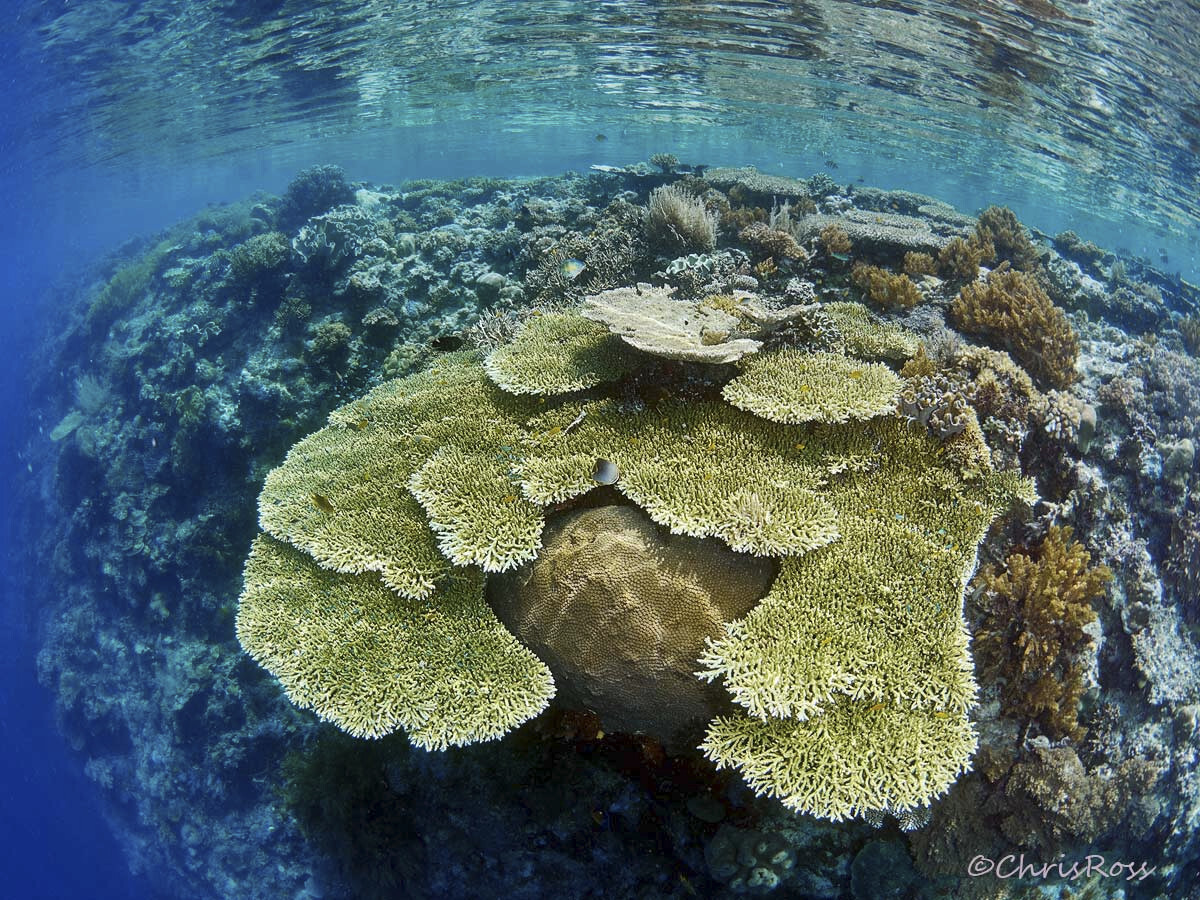
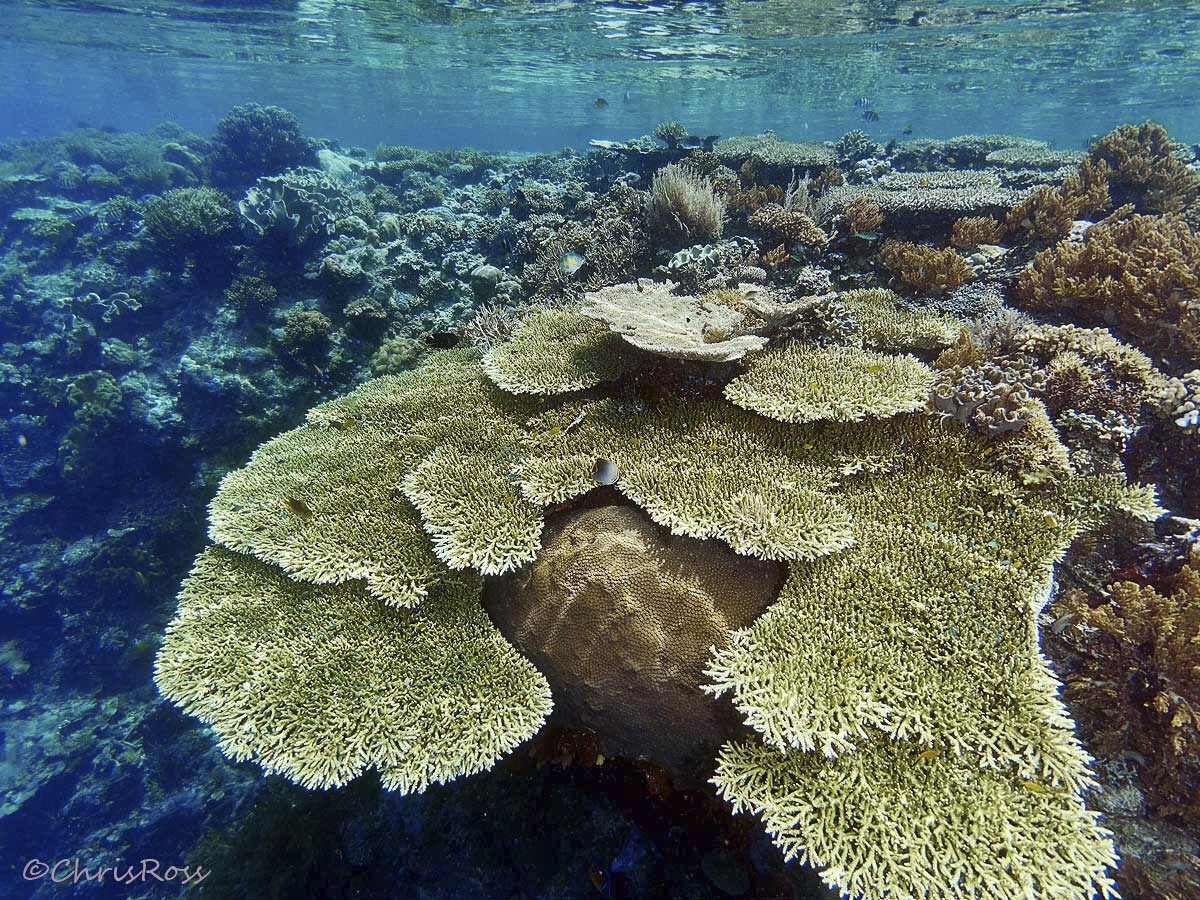
Agree on not de-fishing , while it can be done you lose a fair bit of the frame in the process and the corners are expanded so the quality declines quite a bit. An example of a de-fished reef scene with Panasonic 8mm , first frame is a large coral close to surface but the reef top is bent by the distortion, de-fishing crops in quite a lot.
Ignore the colours as for some reason uploads into the forum from me (no one else it seems) are washed out.
-
1
-
-
14 hours ago, fruehaufsteher2 said:
Where's that from? I looked at the digitalkamera.de review and it states that the lens increases its length from 12,3cm to 14,1cm. That doesn't seem too much. But I remember that this lens has already been in discussion here, don't know where....
It's in the port charts it says you can zoom between 28 and 45mm. Nauticam list the available zoom range for all lenses behind their wet lenses.
-
40 minutes ago, Barmaglot said:
There's a Tamron 28-75mm f/2.8 that Nauticam has on the WACP-1 chart, but not on FCP chart. I wonder if that's because it doesn't work with FCP for some reason, or simply because they haven't tested it yet.
It looks like it hits the port at 45mm zoom - possibly more of an issue with the FCP?
-
On 1/18/2024 at 5:26 PM, brightnight said:
slave trigger was my backup plan but figure if I can save the $300 on a trigger I might as well split a cable. I'm sure I can design a fiber breakout board that does as many stobes as I want but easiest way would be to split the cable if that's possible.
It will depend on a lot of things including how bright your trigger source is and what strobe you are trying to trigger. With a mini-flash and an INON strobe I suspect it would be easy. With an LED trigger and a YS-D2 you would probably struggle. I think splitting is probably not going to work and what to do depends upon what problem you are trying to solve.
If you have a single fibre port, the twin hole INON bush will allow you to have two cables in one port, BUT if you are using a trigger with this I have seen reports of it not working as the narrow LED beam is not aligned under the cable properly .
If you have two strobes at the end of a long cable run, daisy chaining them triggering second strobe off the output of the first would be a good solution. INON also have what they call a wireless connection system - a couple of mirrors to direct light from a trigger into a second strobe: http://www.inon.jp/products/strobe/optical/wireless.html though that probably risks being triggered by other strobes in the area.
-
1 hour ago, TimG said:
I had the same thought. Macro lenses are ideal in conditions of poor visibility. You are usually shooting something only inches from the port so viz is, generally, not an issue. This arrowcrab was shot in awful conditions using a 105mm lens
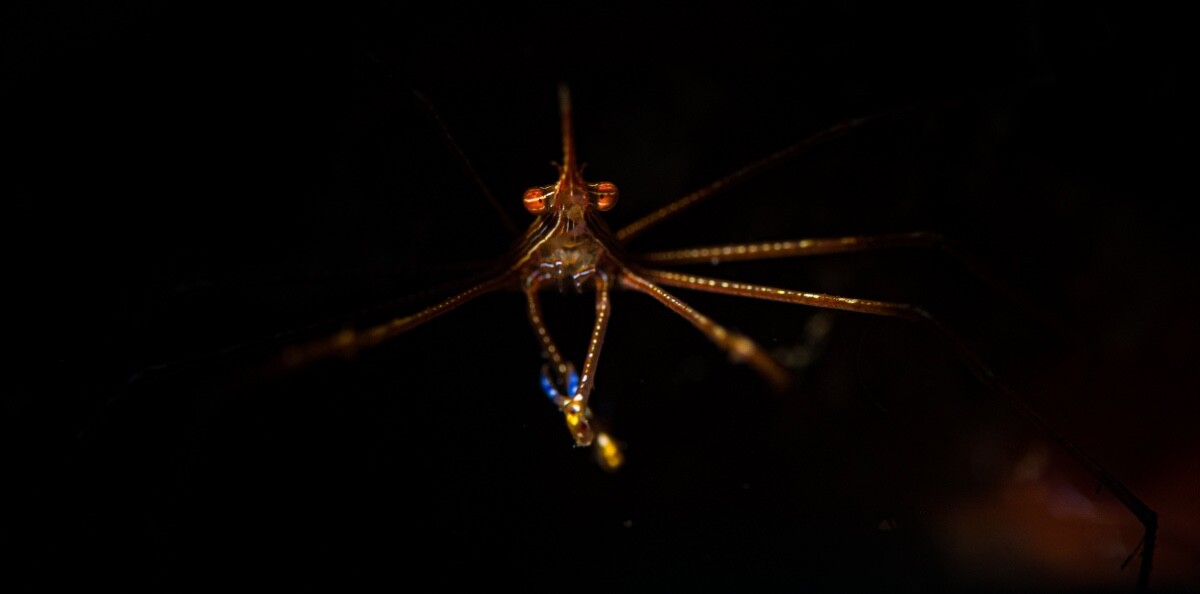
Yes but you are restricted to subjects in the 1"(25mm) size range, as soon as you want to shoot say a 4-6"(100-150mm) subject you need to back way off. California is similar in some ways to Sydney, I've dived both, though i Was lucky to get 15m + vis when I was in CA. But in Sydney a long macro lens really does push you towards small subjects. MY 60mm Olympus macro is marginal in Sydney dues to the size range of subjects I get there (120mm full frame equivalent vs 135mm equivalent for the Sony 90mm on APS-C)
I guess my point is you can adapt to the conditions but on your home dive sites it'd be nice to be able to shoot a range of subjects without having to wait for a once or twice a year day to shoot bigger subjects.
-
1
-
-
1 hour ago, monkeybusiness said:
Thanks for sharing!
Apart from the vignetting though, dsc01971 looks quite sharp right? (Pz1020, 6' dome) But I see your point, 6' is a very small dome. The 8.5 that i found is n120. So yea maybe with an adaptor.
What I wonder though is if the 1018 maybe performs better, because it has an 7' Port from nauticam. In general the 1018 is not super sharp in the edges even top side.
But going for the 1018 with 7' instead of 1020 6' could be an option.
Curious if anybody here uses the 1018 behind the 7'?
Currently prefering the wwl-c, even its way more money and i have both lensens flying around. Maybe i get used to the distortion.
The 7"dome port is quite big and floaty, I've seen one or two in the field, it may improve things a little but hard to be sure. You could use a 230mm dome, Nauticam probably haven't tested it for Sony APS-C probably because it dwarfs the housing. You just have to work out how much extension to use. As far as the 10-18 performing better if it's not so good topside it can only go one way in a dome UW and that is down (worse).
You could also likely use the 7"dome with the 10-20 provided it's long enough, the 7"dome has quite a bit of extension built in. If the 10-20 is the same length or longer than the 10-18 you should be able to use it in the 7"dome, if the 10-20 lens is shorter it would possibly vignette.
Regarding the DSC01971 I basically used that of an example of composition which would not work so well with barrel distortion as the straight beam across the top would bow outwards you could correct some or all of it in post processing but you might need to leave space for cropping as the software bends the corners outwards. It certainly seems sharp enough except the far corners. I don't have a feel for how noticeable it would be with a WWL, but a fisheye would certainly show it. Have a look at what the distortion is like with the Canon 8-15 on a door frame here:
The WWL would be somewhere between the 8mm and the 15mm view of the door frame, probably slightly closer to the 15mm view than the 8mm view.
-
1
-
-
1 hour ago, DreiFish said:
Looks like Canon RF has the widest versatility for use with the FCP. 4 different lenses can be used:
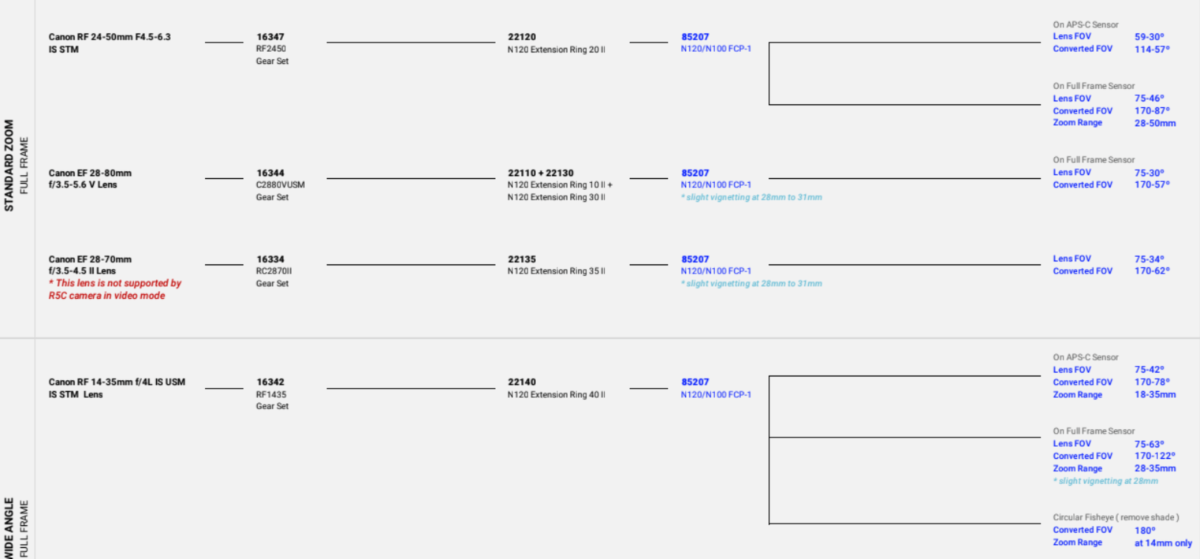
If Nauticam's converted FOV numbers are to be trusted, then the FCP converts the
24-50 becomes Fisheye to 23mm rectilinear equivalent
28-80 becomes Fisheye to 40mm rectilinear equivalent
28-70 becomes Fisheye to 36mm rectilinear equivalent
14-35 becomes Circular Fisheye + Fisheye to 12mm rectilinear equivalent.
The 28-80 lens seems particularly interesting if this is true.. that's the kind of range and flexiblity for wide angle that just isn't possible with any other setup.
The wide range of the 28-80 certainly seems attractive. If you assume the formula for an equisolid angle fisheye is correct the it's interesting that the focal length multiplier for this formula gets smaller as the focal length increases. You have to iterate on the focal length to match Nauticam's fields as reported in the port chart.
I usually calculate the horizontal field from the diagonal field to compare between wet optics and rectilinears as the corners stretch more than the horizontal field does, so this means the 35mm end of the 14-35 is closer to a 15mm rectilinear lens, but has the diagonal field of a 12mm rectilinear. At longer focal lengths the difference between horizontal and diagonal fields when comparing this difference is a lot less so just comparing diagonal fields to a rectilinear is close enough.
-
-
36 minutes ago, Troporobo said:
Wolfgang - Thanks for the additional resources. I had seen one of Massimo’s articles based on your work but not the other. That arrangement seems a bit more complicated than I want, notwithstanding the great IQ results. Congrats on working it out!
Chris - Would you expect that the 140mm dome is workable for CFWA? My experience with a 150mm dome suggests it would get in the way for targets tucked into the reef. Though admittedly those scenarios rarely yield the best compositions.
Cheers to you both,
Robert
The dome is not that big when you see it in person and will only get in the way of getting up close to the smallest subjects. I did some comparisons a while back and the Canon 8-15 covers the field of view of an 8mm fisheye and the 7-14 lens, pretty close to 100% of the available fields of view. If you experiment with a fisheye lens the size of subject you can "fill the frame" with reduces dramatically in the last little bit before you touch the dome port and that seems to me to be the advantage of smaller domes. I think subject selection is really the key - it kind of needs to be in a spot where you can approach closely and get the background reef in the frame without close-by objects sticking in from the side and producing weird distorted shapes. I'll probably only really be able to answer the question properly once I try it out.
-
1
-
-
10 hours ago, monkeybusiness said:
Hi guys,
I have seen a couple of threads regarding wet lenses or wide angle, but not so much comparing these 2 solutions.
I am currently using an Sony PZ1020 on my Sony a6400 behind a Fantasea 6' dome.
Switching to Nauticam now and I am planning to buy a WWL-C or an WWL-1b. The alternative would be using the PZ1020 behind a 6inch Acrylic port from nauticam as before.
A 6"dome is really a little small for a rectilinear lens that wide even on APS-C. The 6"dome from Fantasea is not a full 180° dome so the geometry likely means the lens entrance pupil is positioned forward of the dome centre of curvature to avoid vignetting so is not optimal. A bigger dome helps of course but the largest offered by Nauticam is the 180mm dome. You could use the 8.5"acrylic dome and it seems to use 10-15mm more extension than the 180mm dome.
Focusing closer has also been mentioned you don't need Manual focus to do that, just use back button focus to focus on something closer in the scene and stopping down to the f11-13 range will also help your corners.
As far as distortion goes, all the wet lenses have some level of distortion probably best handled by where you place straight lines in the composition, they bend more as you go towards the corners of course, so for example the image DSC01971 you posted above would have obvious distortion with those straight lines top and bottom of frame.
-
1
-
-
46 minutes ago, Architeuthis said:
There is an interesting review of the new fisheye lens in Petapixel: https://petapixel.com/2024/02/27/sigma-15mm-f-1-4-dg-dn-art-review-wide-weird-and-wonderful/
It seems the lens provides extremely high IQ, but is constructed especially for distant objects and even a very big domeport will not help much: "...The Sigma 15mm is sharp at a distance but when the subject is within a few feet the image can get very blurry in the centers at f/1.4..."
=> Seems that this lens is indeed not fabricated for us...
Wolfgang
To be fair though the centre softness goes away when stopped down which you would do anyway behind a dome, the lens is obviously designed with astrophotography and infinity focus in mind so the minimum focus distance is quite long and correction at f1.4 when at MFD not a priority.
A rough calculation shows that it could focus at its closest approx 1m from a 140mm dome but in a 230mm dome could focus on an object about 0.2m away from dome surface, so it could be used for reef scenics with a bigger dome. However there is probably little reason to do that when an adapted Canon 8-15 fisheye works as well as it does.
-
1
-
-
I have used the Zen 100mm dome with 8mm Panasonic fisheye. That lens is very sharp but corners suffer purple fringing (fixable in post). I've just bought a Canon 8-15 and the N85-N120 adapter and looking for the 140mm dome port.
The 170mm dome is actually a little small for the 7-14mm lenses (all varieties) and it is has been reported a number if times that they do better in a 100mm dome, both Panasonic and Olympus versions are placed forward of the centre of curvature to avoid vignetting in the Zen 170mm dome. They are really not CFWA candidates. The 12-40 can shoot thing very close in a 170mm dome but to get decent subject size you are zoomed right in so it is CF as as opposed to CFWA. I use the 12-40 a bit around Sydney.
-
1
-
-
8 hours ago, ColdDarkDiver said:
The lens itself is 121mm wide so wouldn't fit in a normal port (including the base) for Nauticam housings even if you attached the lens from the front. Plus it is so short it might not even clear the front of the housing. Unless I am wrong (in case anyone has the lens on hand to try it).
yes, correct, it requires a custom port solution, probably effectively a custom port and housing, though the big opening on the gates housing seems to allow just using a custom port cover with two mini domes.
-
34 minutes ago, Barmaglot said:
Note that a6700 has only three housing options at present - Nauticam, Ikelite and SeaFrogs. Nauticam costs $2513, Ikelite is $1195 but doesn't have a fiber optic bulkhead - electric sync only! - and doesn't let you access the front dial, while SeaFrogs costs about $450 and lets you access all the dials, but not the photo/movie/S&Q switch and doesn't have an 'AF-ON' thumb lever, only a regular button. Someone here on the forum mentioned that Isotta support replied to them that they don't plan to release an a6700 housing - I guess their a6600 housing didn't sell all that well. I wouldn't expect one from Marelux either; the only non-FF housing in their portfolio is an OM-1 one, and that one doesn't seem to be actually available.
Apparently Marelux have announced a housing timing not known though:
https://www.bluewaterphotostore.com/marelux-sony-a6700-underwater-housing/
-
3 hours ago, TimG said:
They used to be a regular and reliable feature on a dusk dive on the Tanjung Kuso Kuso dive site in the Lembeh Straits. I don't know though if they are still around.
We found them easily at Diver's Lodge at Lembeh house reef a few years back, swam down to the spot and they very quickly started spawning.
-
2
-
-
An APS-C should do fine printing A3. An A3 print at 300 dpi is just over 17 MP while you have 26 MP so you are over sampling by 50%. You'll have more depth of field out an APS_C at same framing as you'll be further back with lower magnification than full frame. Probably a bit optimistic to expect to find a used a6700 housing, so far only a couple of vendors have announced housings for that camera.
-
56 minutes ago, Barmaglot said:
To be fair, the opening has double o-rings (one on the plug, the other on the housing), so it should be fairly reliable (unless you get a hair or something similar bridging both o-rings, in which case, OUCH), but I concur with you that it's a stupid system, and I wholeheartedly recommend the Leak Sentinel to every SeaFrogs housing owner. It's a shame that this option is not advertised anywhere except by word of mouth.
I know, but it's still a possibility that something could go wrong and totally agree the leak sentinel is a better option.
-
16 hours ago, Nikolausz said:
I use seafrogs vacuum system. Maybe it's not perfect but better than nothing. I just assemble the camera into the housing, close it. On the top there is a screw with o-rings where I install the vacuum system. After pumping out of the air a sensor led turns into green. If it stays 10 mins like that, then the system holds the vacuum, so the sealing is fine. After that I release the vacuum, unscrew it, then scew the closing cap back, and the system is ready to dive. It doesn't stay under vacuum. It's recommended not to dive with the vacuum system is on the housing, but it's possible. However, I wouldn't do that.
This loses at least 50% of the benefit of the vacuum system. Pre loading the o-rings with the vacuum helps them seal at the surface - that's why leaks are so common in the rinse tank. It also assume that you install the plug properly and don't damage its seal when you replace it.
-
1
-
.jpg.857dbbfbdc4d79d9c6ebf7b4ba96ed1b.jpg)
Difference between nauticam n100-n120 port adapter generations
in Photography Gear and Technique
Yes that should be fine as long as you can use the zoom control knob on the housing with that lens.