Yeah I heard about it. Reef told me they are discontinued recently due to a few things not working. The update was $600. I sold the D800 housing recently anyway, so it doesn't matter now.
Photography Gear and Technique / Archived topic
Are you happy you changed from DX to FX?
Started by wobby ·
- 72Posts
- 72Replies
Read-only discussion
Are you happy you changed from DX to FX?
72 posts
-
-
Hi Everyone,
I am just about to upgrade my camera and was hoping to get some advise on whether it is the right time to change to FX or stick with a DX system.
I am looking at the Nikon D7100 (or the D7200 if it appears shortly as predicted) or the Nikon D750, both sound like great cameras and I have read every review that I can get my hands on.
Now those that have changed over are you happy with the decision, or do you miss the DX system, especially the Tokina 10-17?
And what are your preferred lens with a FX system?
Any comments would be much appreciated.
Cheers,
Nigel
Nigel,
Like a few others that have responded I am still using APS-C, so full frame was a supplementation as opposed to a change. That said, I presently shoot more frames FF than APS-C. My old D2X is now used more for special projects. For example, I used a vintage 200mm Medical Nikkor with it recently to shoot some super-macro. I did not used the built in ring light.
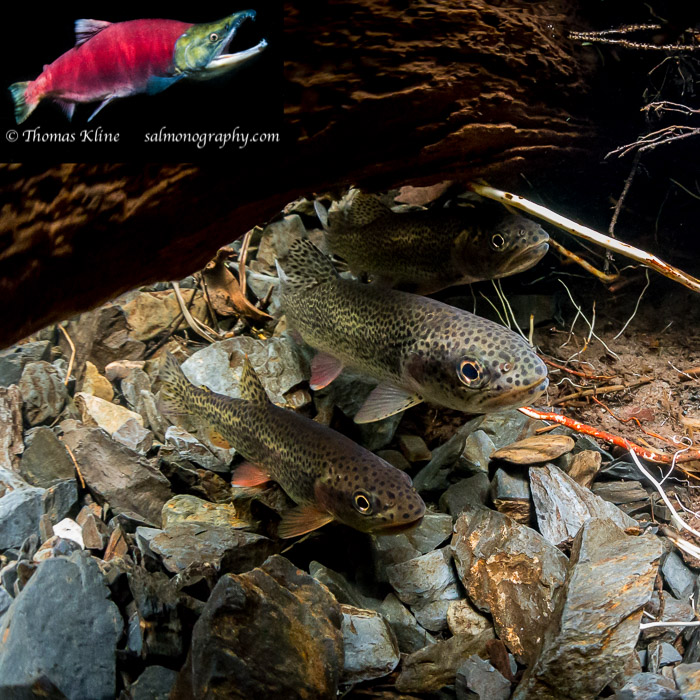
Attached is a shot that I took a couple of days ago as an example of FF capability. It was shot at ISO 25,600. This was simply not possible with the D2X. I used a fisheye lens, same angle of view as what I used when shooting APS-C. The 10.5mm Nikkor is my most used APS-C lens under water whereas for full frame the 8-15mm EF L lens is my most used lens under water. I did not go for Tok with the D2X because of the slow maximum aperture and my need for good AF.
Tom

-
The lenses I have used underwater on FX are:
Sigma 15mm FE (focuses closer than Nikon)
Nikon 16mm FE (better AF and better flare resistance than Sigma)
Nikonos 13mm RS-UW FE (better optically than above, but not by much at normal apertures, can't do splits)
Nikon 14-24mm
Nikon 16-35mm
Nikon 17-35mm
Sigma 15mm (shaved) with 1.4x teleconverter
Nikon 20mm (f/1.8 and f/2.8)
Nikon 24-70mm (only used in pool)
Sigma 28-70mm
Nikon 60mm
LensBaby 80mm
Gorlitz Trioplan 100mm
Nikon 105mm VR
Nikon 105mm VR + 1.7x Nikon AFS TC
Nikon 105mm VR + 2.0x Nikon AFS TC
Sigma 150mm
I could do many trips with just Sigma 15mm and Nikon 105mm.
I find the 16-35mm the best performing wide angle zoom behind a dome. But you can't skimp on dome quality and I would only use it with a Zen 230. -
Sorry, folks, I was trying to quote an Alex Mustard's statement (which is on my previous post above) but I was not succeed dealing with the WP text edit options neither able to erase my fault after having already posted it ):
Anyway, here is what I was trying to ask him
Hi Alex,
I own some same lenses that you use, namely Nikon 16mm FE, 16-35mm, 24-70mm and 105mm VR, also Nikon TCs 14EII and 20EIII. As you're a great Nikon system knower, I'd like to listen to your opinion about the old Sigma 14mm F2.8D EX HSM Aspherical, which I own as well but have not used underwater so far. Do you have any experience with this lens?
It used to be very sharp in the film/chrome era, then the digital came out and I stopped to use it because it shows too much flare shooting outdoor as it's not coated. But I kindda love this lens and so I kept it, even not using it anymore because my whole work is in the nature: landscape, wildlife and so on, it is: many times dealing with sunlight.
Some time ago I've been attempt to sell it and then I gave up because I realized it could be an interesting option underwater when strobes are the main light source. Surely not be used with natural light at all due to the reason that sun light diffused through water may cause an even worse flare…
I'd appreciate any thoughts about the possibilities of use of this lens UW and, if any, which dome would you recommend to pair to it when shooting FX. Otherwise I will definitely sell it.
Thanks in advance!
ValeriaPS: I definitely believe there's some issue with WetPixel right now because, despite I'm still logged in, this post has just been identified as one done by a "guest"....
-
dear all,
I've read this thread with attention as i am myself hesitating between a DX or FX body for my next housing.
Previously i had been using a D300, then D7000, then OM-D EM-5, and i'd like to go back to Nikon DSLR.
I am bringing this thread up because it includes lots of useful considerations already, except maybe the following one, on which i'd love to have some feedback: what would be the resolution (megapixels) you can really get out of these setups (meaning not the advertised sensor resolution)?
In my case i am hesitating between a D7200/D7100 and a D750, which are both 24 MP sensors. I've spend quite some time browsing the tests on DxoMark.com, and when looking at the lenses we typically use underwater, it seems the latest DX cameras are far behind the FX in sharpness:
1/ take the venerable Nikon 105mm Micro AF-S: it renders only 12 MP on a D7100, vs 19 MP on a D750
=> on a side note, the Sigma 105mm F/2.8 EX DG OS HSM manages to resolve 15 MP out of the D7100, but i believe it's not popular underwater for some reasons.
2/ similar result for Nikon 60mm Micro AF-S: it renders only 11 MP on a D7100, vs 17 MP on a D750
=> on a side note, the Tamron 60mm F/2 Macro manages to resolve 14 MP out of the D7100, but i believe it's not popular underwater for some reasons.
3/ consider the Nikon 10-24mm: it renders only 10 MP on a D7100, whereas the "equivalent" Nikon 16-35mm gets 16 MP out of a D750.
4/ unfortunately the fisheyes haven't been tested, it would have been interesting to see how the Tokina 10-17mm performs.
My conclusion after reading these measures: the best resolution i one can really get out of a D7100/D7200 for underwater photography is in fact 10-12 MP, whereas it's about 16-19 MP on a D750 (in fact it would even be less on both, due to the imperfections of dome/ports).
I had read multiple times in this thread that the IQ of FX cameras was better than DX, but i thought it was in the extreme cases where you close aperture (diffraction coming up quicker on DX) or increase ISOs (noise damaging details quicker on DX).
I didn't think the difference would be so significant when shooting at low ISO, with lenses pretty opened.
What are your thoughts on this? Do real-life experiments tend to confirm such a statement?
regards
Nicolas
-
Another thing to consider is the quality of Nikon's FX lenses vs their DX lenses. As I look through the lens tests on the German website PhotoZone.de, and compare the Nikon 105mm f2.8 VR Micro-nikkor vs the Nikon 85mm f3.5 (non-VR) Micro-nikkor, the resolution results they show indicate that the 105mm f2.8 lens out resolves the 85mm 3.5 significantly (by about 20% or more) at the apertures (f11-f22) that would be most useful for macro shooting. Comparing Photozone's test results for the Nikon 16-35mm f4 VR vs the 10-24mm f3.5-4.5 (again non-VR) the resolution numbers again favor the 16-35mm by about 25% at most apertures and focal lengths.
This is not surprising. Nikon considers FX their pro format. The FX equivalent lenses are more expensive and physically larger. And better optically. So if you want the best image quality from your Dslr, FX is the way to get it.
Fred
-
Another thing to consider is the quality of Nikon's FX lenses vs their DX lenses. As I look through the lens tests on the German website PhotoZone.de, and compare the Nikon 105mm f2.8 VR Micro-nikkor vs the Nikon 85mm f3.5 (non-VR) Micro-nikkor, the resolution results they show indicate that the 105mm f2.8 lens out resolves the 85mm 3.5 significantly (by about 20% or more) at the apertures (f11-f22) that would be most useful for macro shooting. Comparing Photozone's test results for the Nikon 16-35mm f4 VR vs the 10-24mm f3.5-4.5 (again non-VR) the resolution numbers again favor the 16-35mm by about 25% at most apertures and focal lengths.
This is not surprising. Nikon considers FX their pro format. The FX equivalent lenses are more expensive and physically larger. And better optically. So if you want the best image quality from your Dslr, FX is the way to get it.
Fred
i guess this is kind-of equivalent to my above point: DX lenses are usually less able than FX lenses in getting lots of megapixels out of the sensor. I didn't mean it was impossible (for instance some Zeiss expensive lenses get almost 100% of the resolution out of the D7100/D7200, but it's a 5000 USD lens...).
-
Another thing to consider is the quality of Nikon's FX lenses vs their DX lenses. As I look through the lens tests on the German website PhotoZone.de, and compare the Nikon 105mm f2.8 VR Micro-nikkor vs the Nikon 85mm f3.5 (non-VR) Micro-nikkor, the resolution results they show indicate that the 105mm f2.8 lens out resolves the 85mm 3.5 significantly (by about 20% or more) at the apertures (f11-f22) that would be most useful for macro shooting. Comparing Photozone's test results for the Nikon 16-35mm f4 VR vs the 10-24mm f3.5-4.5 (again non-VR) the resolution numbers again favor the 16-35mm by about 25% at most apertures and focal lengths.
This is not surprising. Nikon considers FX their pro format. The FX equivalent lenses are more expensive and physically larger. And better optically. So if you want the best image quality from your Dslr, FX is the way to get it.
Fred
Interesting thoughts from Fred.
I moved from DX (Nikon D300) to FX (Nikon D800) a couple of years ago. Looking back and comparing the images now, I'd be hard pushed to REALLY be able to spot the difference without doing 100% side-to-side comparisons between a macro D300 and a macro D800 shot using the same lens - the Nikkor 105mm. I've got some scarily sharp images using both.
For me the difference is the ability to crop (the massive D800 files are obviously an advantage for that); and then, in wide-angle, the colour range (blues especially) which I find terrific with the D800. But how much of that is FX/DX differences - as opposed to having a more capable camera body, I honestly don't know. Maybe the new (DX) D500 will be just as capable - or maybe even more so.
And then you get into the whole issue of "real world" images compared to test bench images. Sure, the test bed may show the images are sharper. But that can be very hard to see in a well-shot, well-focussed image shot at 25m in a ripping current.
-
And then you get into the whole issue of "real world" images compared to test bench images. Sure, the test bed may show the images are sharper. But that can be very hard to see in a well-shot, well-focussed image shot at 25m in a ripping current.
thanks for the feedback Tim,
this is why i am interested to see whether users see in the field the same kind of gap which test benches highlight
-
thanks for the feedback Tim,
this is why i am interested to see whether users see in the field the same kind of gap which test benches highlight
Yeah for me that's the issue, Nicool. I'm not very technical though, I must admit. I really like the results I'm getting from my FX setup - but it is significantly bulkier and heavier to lug around and there are times when I miss the relative lightweightness (!) of a DX setup. For a fleeting moment I thought maybe I should take a close look at the D500. But then sanity kicked in: did I really want to go through the cost and hassle (again!) of selling a housing, ports, lenses....... when what I have now is terrific.
-
....For a fleeting moment I thought maybe I should take a close look at the D500. But then sanity kicked in....
Do it! You know you want to!

FX or DX, both are capable of rendering high quality images suitable for publication and wall prints. Any camera body has its pro and cons.
Personally for me it ends up being a case of diminishing returns to consider moving to FX from DX. Factoring in body, lens and housing taking
a FX camera underwater is a considerably more expensive proposition. Then of course is the increase in weight and volume. Also FX just about
makes using a large diameter dome a necessity and I love compact domes.
Of course if your pockets are deep its all academic.
As I'm on a hiatus from diving the new D500 has huge appeal. Will definitely be picking one up to shoot the birdies with. If I don't house it I'm sure
I'd be just as happy plonking my current D7100 in the water.
Yes FX is a superior format in many ways, as far as resolution and added capabilities/functions in the bodies on offer. But UW aren't many of those
advantages reduced and as pointed out previously it is very hard to pick up any increase in IQ with the naked eye.
Cheers,
Jim.
-
Do it! You know you want to!
Bad Jim. Bad!