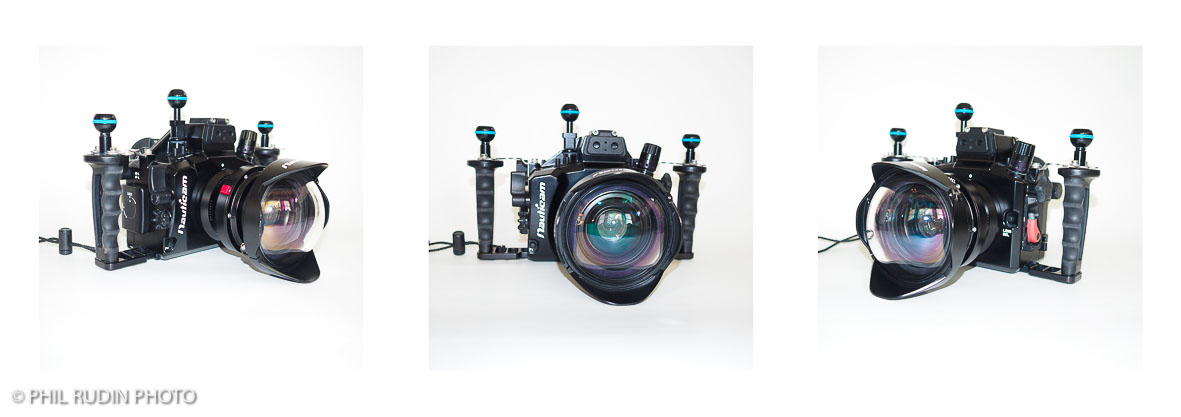
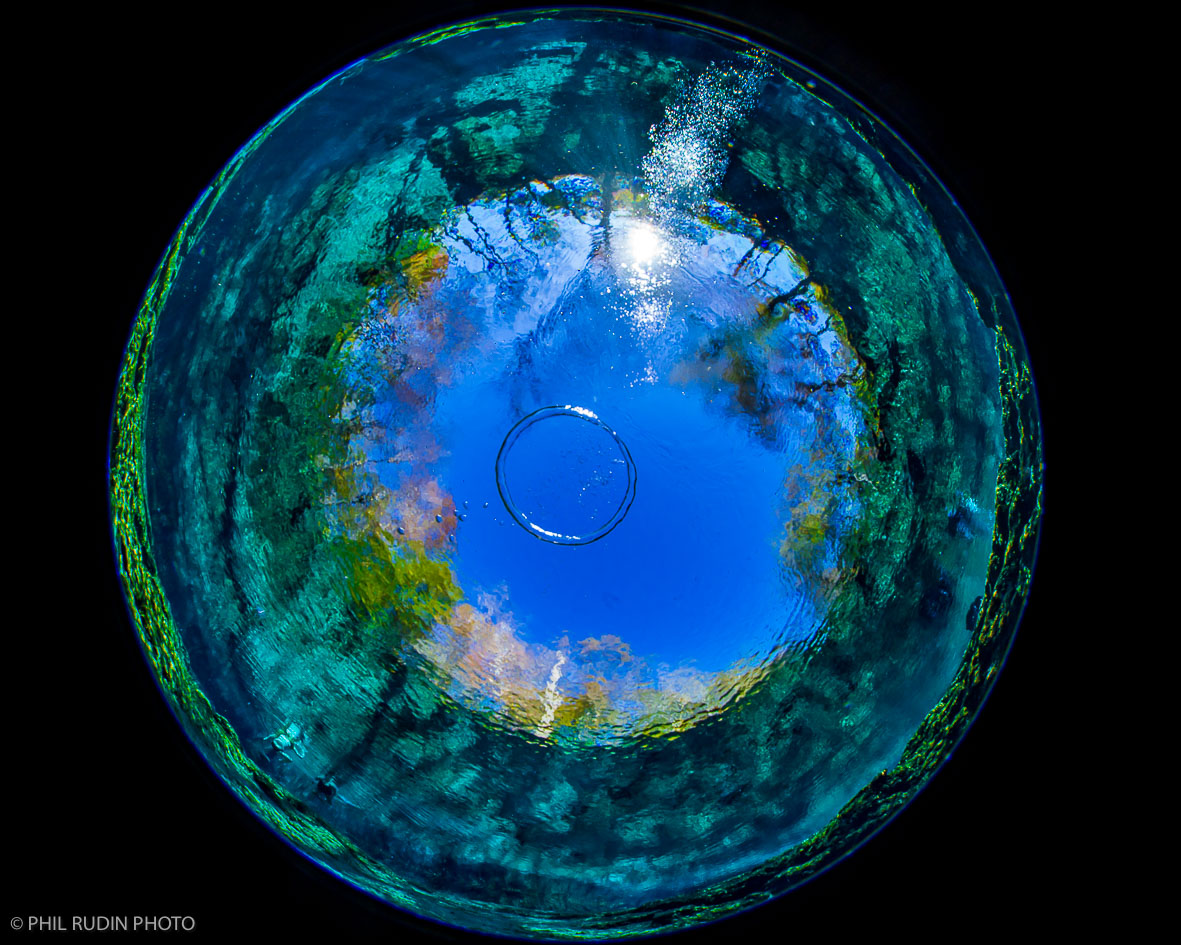
Okay, some more theory. WWL-1 and Canon 8-15mm are fisheye lenses. Sony 16-35mm (both f/4 Z and f/2.8 GM) and 12-24mm are rectilinear ultrawides. The main difference is, rectilinear lenses try to keep straight lines straight, while fisheye lenses don't, producing the fisheye effect - more properly termed 'barrel distortion'. If you take a fisheye shot and 'defish' it on your computer, correcting the barrel distortion, you'll lose significant parts of the image, which effectively reduces the angle of view - rectilinear lenses cannot match the width of fisheyes.
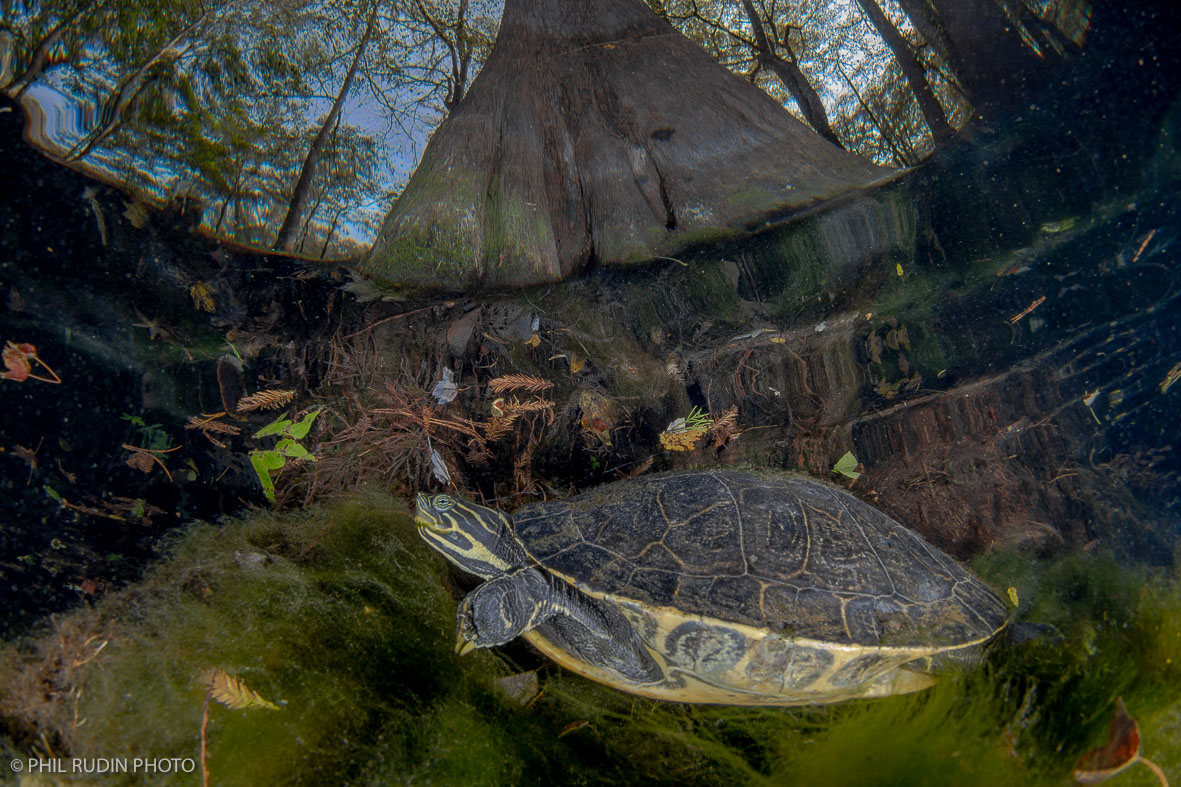
Another important distinction (and that's where dome size comes into play) is depth of field. The focus distance for a rectilinear lens isn't uniform across the frame, because your distance to subject isn't uniform. Suppose you're shooting a brick wall with a 12-24mm lens at 12mm, from 50cm away, it's only the center that is 50cm away from the camera - the corners are almost 103cm away, more than double the distance, because your angle of view is so wide. In order to have both center and corners in focus, lenses employ aspherical elements to take this into account, effectively focusing their edges further away than the center. However, underwater, shooting through a dome port, this correction works against us - the curved water/glass/air boundary at the dome acts as an additional lens element, producing what is usually called a 'virtual image', which is curved, matching the dome's curvature - but since the lens expects to have the corners further away than the center, and underwater, behind a dome, they are effectively (in an ideal case) equidistant, the edges fall outside the lenses plane of focus, and corner image quality degrades. This is most apparent at wider apertures (f/2.8-f/4) where depth of field is the thinnest, and the most common way of countering this is to stop down to f/8-f/13 in order to increase the depth of field - this way the difference between what the lens expects and the actual image can better fit into its depth of field range, and image quality will be higher. Additionally, the distance of that virtual image from the lens is a function of the dome's radius, and the further away that virtual image is, the more actual depth of field the lens has, hence the prevalence of very large (200-240mm) domes for use with full-frame cameras, which have thin DoF to begin with. Another way is a field flattener lens, such as a Sea & Sea Internal Correction Lens, which screws into your lenses filter threads and partially counteracts that image curvature, allowing you to open up the aperture a couple stops without significant corner degradation.
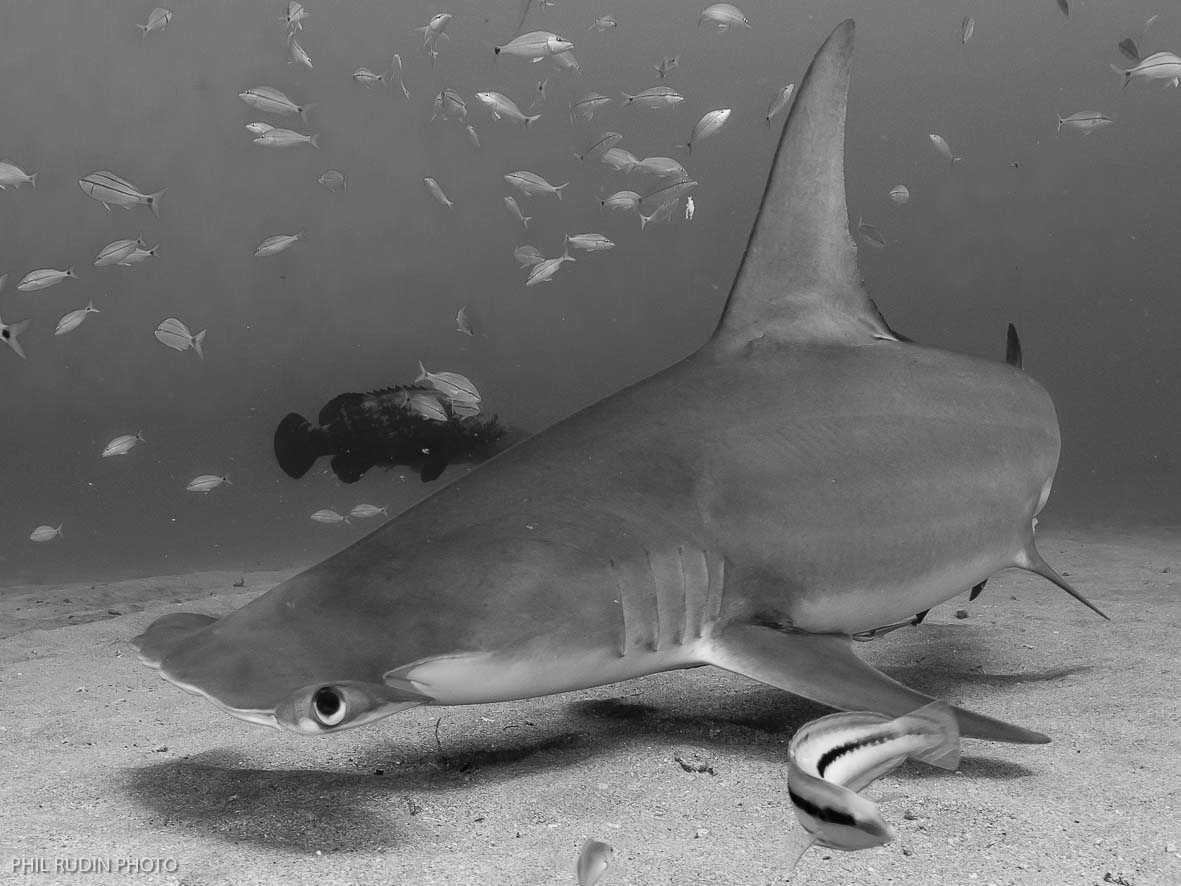
None of this applies to fisheye lenses, which don't correct for distortion, and don't correct for distance, hence the corner-to-corner sharpness and huge depth of field you typically get with them - at the cost of barrel distortion.
What exactly are you looking to shoot where 130 degrees afforded to you by 28mm + WWL-1 isn't wide enough?