



Using a macro slide in this instance simply allows housing and port designers to vary the distance of the dome from the lens, and hence determine the correct amount of extension to use for a given lens. Given that the vagaries of actual lens design suggest that theoretical testing is limited, this seems a simple and effective way of doing so?
Nauticam uses Zemax lens design software to specify and design their water contact optics. It is very powerful, but is susceptible to human error. It can produce solutions that are practically impossible (due to cost or element size). Anecdotally, I know the solutions take large amounts of time and computer power, with the software running for 36 hours or more to produce a solution. The macro slide technique seem quite elegant and efficient by comparison!
Photography Gear and Technique / Archived topic
Sony 20 mm - 70 mm f4.0 G for UW?
Started by Architeuthis ·
- 105Posts
- 105Replies
Read-only discussion
Sony 20 mm - 70 mm f4.0 G for UW?
-
-
59 minutes ago, adamhanlon said:
The macro slide technique seem quite elegant and efficient by comparison!
Does exist a photo of this setup?
-
Hmmm.
I have seen a picture of Seacam's set up, but don't have a copy of it.
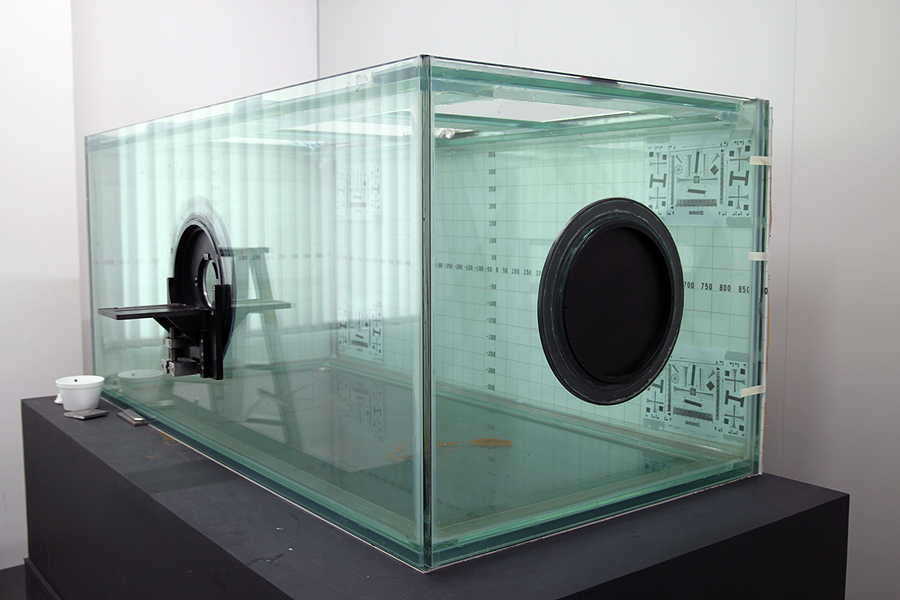
Imagine a large rectangular fish tank, with a bayonet/port mount and a macro slide mounted on the base. A lens target is located in front of the port. The "tank " is immersed within the water (in Seacam's case in a swimming pool) but as it is open topped, the operator can still adjust the camera's position and exposure settings. A sequence of images is then shot with the camera position being moved using the slide. The resulting images are then studied, and the optimal lens to port distance established.
-
2 minutes ago, Davide DB said:
Does exist a photo of this setup?
Do not want to post affiliate links but there are plenty of those on google lol
In essence you need to adopt the slider to eliminate the need for all extensions test so it is much quicker than trying
The dome part goes underwater and the rest is outiside the water
The problem of this set up is that it depends on the outcome
If you are looking for the longest extension for no vignetting this works amazingly well
If you are trying to ascertain if the field of view is preserved or if the performance is the best this is not good unless you have wet MTF charts take all shots and then compared them with analysis software which is not what is getting done here
In practical terms the approach extend as much as you can works very well for fisheye lenses with 180 degrees field of view and very bad for rectilinear lenses that do not have a very wide field of view
This is one of the reason why fisheye lenses look better simply because the simple technique works for those lenses and not for others
As an example I have here a lens 24-70mm that has suggested extension of 90mm with the 180mm dome however doing some quick calculations the lens only need 75mm
You put your 90mm on try the lens and end up with horrible pincushion distortion and spherical aberrations so you dismiss the lens while in fact you had the wrong extension
The simple technique of go until vignetting only works when the lens field of view is equal or very near to the port field of view otherwise it is flawed
Then there are other situations for example your port field of view is less than your lens field of view you need to push the lens inside the port this generates barrel distortion and spherical aberration....
-
Ok thanks
-
19 minutes ago, Interceptor121 said:
The problem of this set up is that it depends on the outcome
I hate to tell you this but, unless you are carrying out quantitative technical or scientific photography (my background), photography relies entirely on visual assessment. When reality and theory don't coincide it is rarely (as in never) reality which has got it wrong.
I would add that chasing your tail over absolutes in photography (let alone underwater photography) is never going to work. One way or another photography almost always relies on compromises.
-
I hate to tell you this but, unless you are carrying out quantitative technical or scientific photography (my background), photography relies entirely on visual assessment. When reality and theory don't coincide it is rarely (as in never) reality which has got it wrong.
Visual assessment confirms the vignetting method is wrong because it is not aligned with dome port theory
You don’t need quantitative method unless you want to measure how much is wrong
Sent from my iPhone using Tapatalk -
1 hour ago, adamhanlon said:
Using a macro slide in this instance simply allows housing and port designers to vary the distance of the dome from the lens, and hence determine the correct amount of extension to use for a given lens. Given that the vagaries of actual lens design suggest that theoretical testing is limited, this seems a simple and effective way of doing so?
I seem to remember reading about the results of moving a port in or out a few mm and the results being very difficult to distinguish. Many housing manufacturers seem to provide extenders in 5mm increments and this is probably for very good practical reasons. Certainly I've use a 5mm too long port extension and not really noticed the difference although no doubt for some lenses some shift in image 'quality' (whatever that is
 ) might just be visible.
-
I seem to remember reading about the results of moving a port in or out a few mm and the results being very difficult to distinguish. Many housing manufacturers seem to provide extenders in 5mm increments and this is probably for very good practical reasons. Certainly I've use a 5mm too long port extension and not really noticed the difference although no doubt for some lenses some shift in image 'quality' (whatever that is[emoji6]) might just be visible.
It is visible at the edges of the frame if you look for it
The key issue is that nobody tests the lens on land first so without knowing your starting point it is difficult
The worst offenders are domes with large field of view but relatively small in radius which are badly affected
Sent from my iPhone using Tapatalk -
2 hours ago, adamhanlon said:
Hmmm.
I have seen a picture of Seacam's set up, but don't have a copy of it.
Imagine a large rectangular fish tank, with a bayonet/port mount and a macro slide mounted on the base. A lens target is located in front of the port. The "tank " is immersed within the water (in Seacam's case in a swimming pool) but as it is open topped, the operator can still adjust the camera's position and exposure settings. A sequence of images is then shot with the camera position being moved using the slide. The resulting images are then studied, and the optimal lens to port distance established.
I also remember i have seen such a port testing "aquarium" in the Internet. Here I have found an image (last image in this article "Port testing chamber"): https://underwatervisions.wordpress.com/2010/05/16/an-interview-with-mr-nauticam/
Wolfgang
-
9 minutes ago, Architeuthis said:
I also remember i have seen such a port testing "aquarium" in the Internet. Here I have found an image (last image in this article "Port testing chamber"): https://underwatervisions.wordpress.com/2010/05/16/an-interview-with-mr-nauticam/
Wolfgang
Very nice it does have resolution charts but only at the edges?
There are distance markings on the flat plane 180x80 presumably 80 deep
So that would be more or less a 20mm lens to fill up the entire field of view which is not that wide
I see there is another hole on the short side perhaps for flat ports or maintenance
It is also interesting to see that the aspect ratio is 2.25 so clearly not for classic 3:2
-
Keep in mind the article is 13 years old
-
Keep in mind the article is 13 years old
You don’t build things like those any other day of the week
Sent from my iPhone using Tapatalk -
Look, before Adam mentioned this tool, I didn't even suspect its existence, but since you started to analyse the photo, I just specified that it is an article from 13 years ago.
None of us know if they still use that one or they have ten new ones.
We are in the realm of speculation.
-
27 minutes ago, Davide DB said:
Look, before Adam mentioned this tool, I didn't even suspect its existence, but since you started to analyse the photo, I just specified that it is an article from 13 years ago.
None of us know if they still use that one or they have ten new ones.
We are in the realm of speculation.
Not really
There is a macro slider right there where you rig camera and lens.
Inside the glass tank there is a dome port
you move the macro slider until you get what you think is the best distance -> extension ring is measured
Limitations:
1. Each dome has a given field of view. If the field of view of the lens is larger than the dome any solution determined is not ideal anyway
2. The target is 80 cm away from the camera this is not where you see the most severe issues. Look at my tests when you are at 30 cm situation changes as distance does play a role
3. The size of the tank is 180 cm which means it is more suited to focal length of 20mm and wider
Other than that this is exactly how it should be done. Perhaps you can find a way to move the resolution targets closer for a more severe test
-
On the original topic of the Sony 20-70 for U/W use a few more photos, all full frame as in no crop.
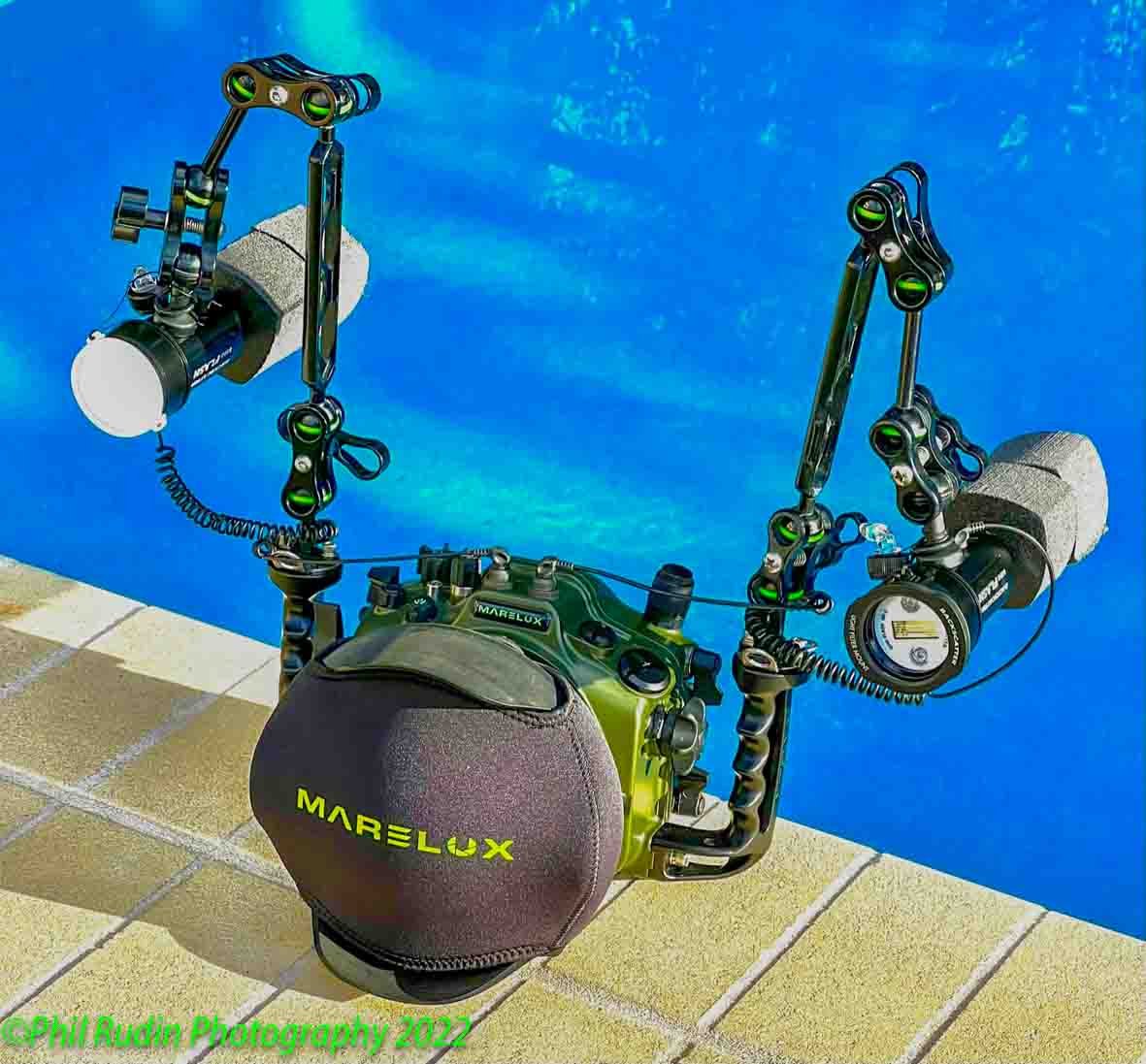
This is using the new Sony a7R V, in a Marelux housing with 180mm port and 50mm's of extension with two Backscatter MF-2 flashes.
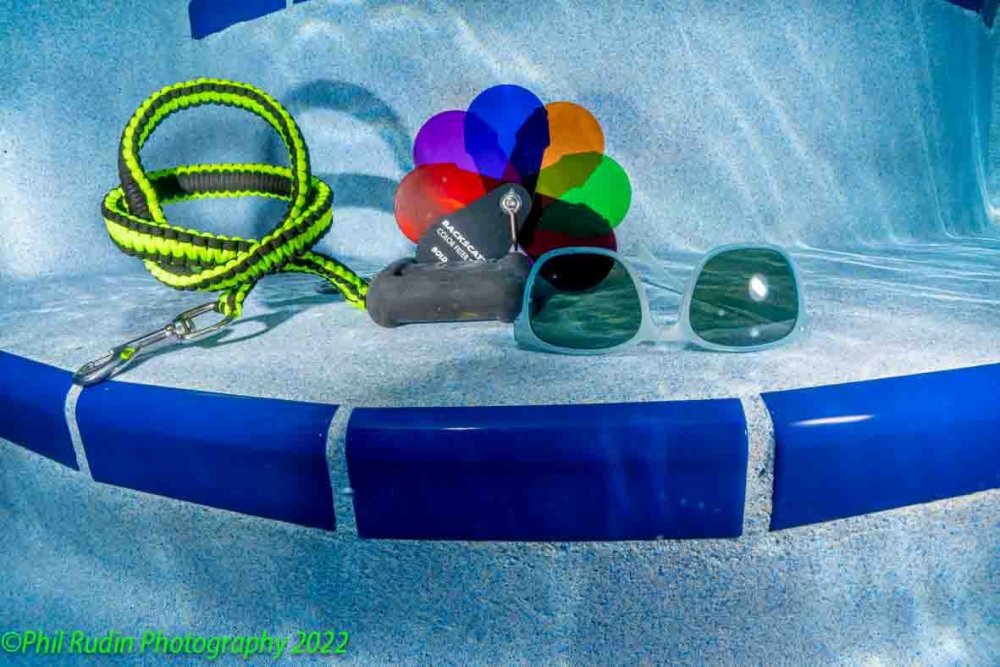
#1 is the 20mm end about as close as the lens will AF, ISO-100, F/13, 1/500th sec.
#2 is the 70mm end ISO-320, F/16, 1/500th sec.
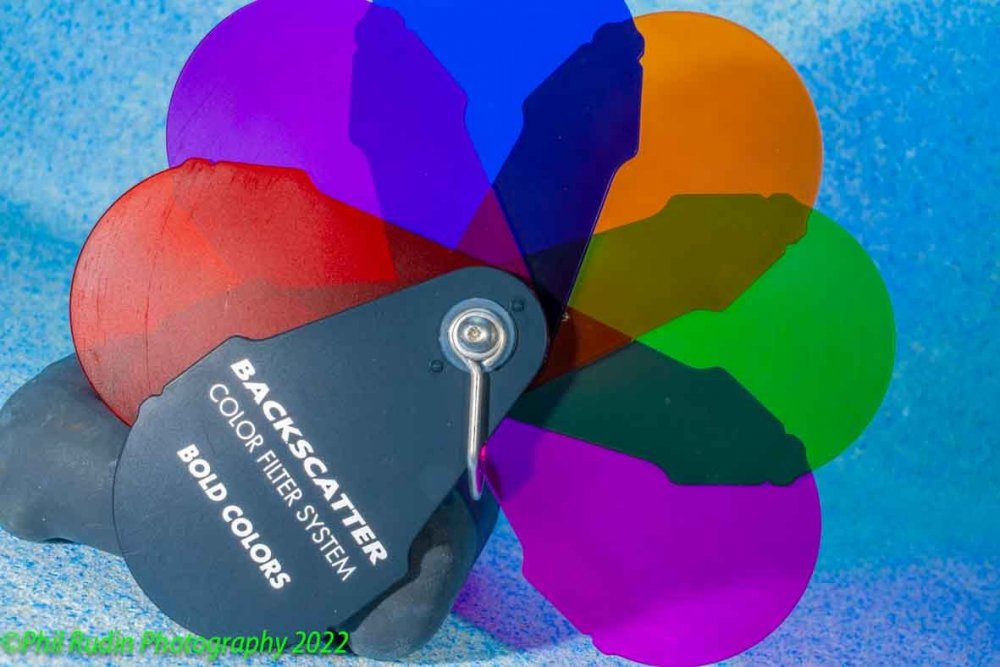
#3 is at 70mm as close as I could AF the lens ISO-100, F/18, 1/250th sec. The result at 70mm with closet AF is an image that is 1:4 +/- a percentage point or so.
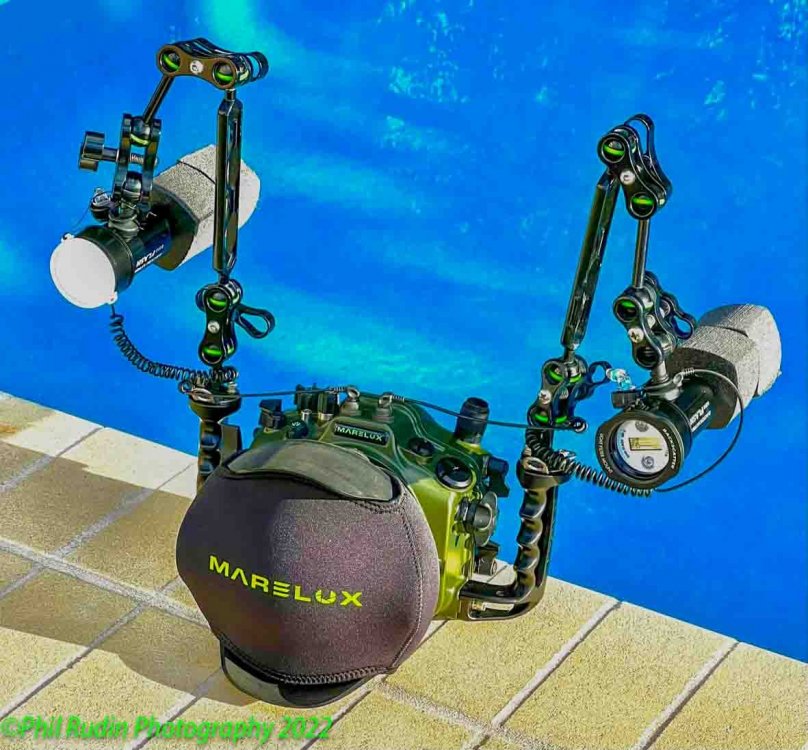
#4 how the equipment looks setup with a little flotation pushed onto the Flashes it handles quite well.
The Sony A7R V has a max sync speed of 1/250th sec. I used the excellent UWTechnics TTL flash converter for Sony and the also excellent MF-2 flashes set to HSS.

-
1 hour ago, Phil Rudin said:
On the original topic of the Sony 20-70 for U/W use a few more photos, all full frame as in no crop.
This is using the new Sony a7R V, in a Marelux housing with 180mm port and 50mm's of extension with two Backscatter MF-2 flashes.
#1 is the 20mm end about as close as the lens will AF, ISO-100, F/13, 1/500th sec.
#2 is the 70mm end ISO-320, F/16, 1/500th sec.
#3 is at 70mm as close as I could AF the lens ISO-100, F/18, 1/250th sec. The result at 70mm with closet AF is an image that is 1:4 +/- a percentage point or so.
#4 how the equipment looks setup with a little flotation pushed onto the Flashes it handles quite well.
The Sony A7R V has a max sync speed of 1/250th sec. I used the excellent UWTechnics TTL flash converter for Sony and the also excellent MF-2 flashes set to HSS.
Thanks for that Phil. Looks pretty good to me, but it won't make some of our forum members giddy with excitement. For those of us shooting Nauticam, better shorter or longer? I will be using the 35.5mm adapter plus extensions.
Best,
Craig Fujii,
Waipahu, HI
-
9 minutes ago, Humu797 said:
Thanks for that Phil. Looks pretty good to me, but it won't make some of our forum members giddy with excitement. For those of us shooting Nauticam, better shorter or longer? I will be using the 35.5mm adapter plus extensions.
Best,
Craig Fujii,
Waipahu, HI
Just guessing, port adapter 35.5mm plus an N120 30mm extension with 180mm dome port.
-
On the original topic of the Sony 20-70 for U/W use a few more photos, all full frame as in no crop.
This is using the new Sony a7R V, in a Marelux housing with 180mm port and 50mm's of extension with two Backscatter MF-2 flashes.
#1 is the 20mm end about as close as the lens will AF, ISO-100, F/13, 1/500th sec.
#2 is the 70mm end ISO-320, F/16, 1/500th sec.
#3 is at 70mm as close as I could AF the lens ISO-100, F/18, 1/250th sec. The result at 70mm with closet AF is an image that is 1:4 +/- a percentage point or so.
#4 how the equipment looks setup with a little flotation pushed onto the Flashes it handles quite well.
The Sony A7R V has a max sync speed of 1/250th sec. I used the excellent UWTechnics TTL flash converter for Sony and the also excellent MF-2 flashes set to HSS.
The image at 20mm has tons of barrel distortion
Is that a jpeg of the camera or a raw processed without lens profile?
Apparently the 20-70mm has extensive barrel distortion of its own but looking at your image that is even more.
I would say your extension is way too short and the dome is incorrectly positioned generating extra barrel distortion and loosing field of view
It the housing is recessed 3.5 cm you should increase the extension to 60-65mm
On Nauticam that is 40mm
Sent from my iPhone using Tapatalk
-
Please describe why the lens appears to have barrel distortion at 20mm.
The camera system is a quick cell phone pic to show what the system looks like.

.jpg.857dbbfbdc4d79d9c6ebf7b4ba96ed1b.jpg)

