Jump to content
I installed my first Leak Sentinel vacuum valve, a V3, in my Subal ND800 housing in 2014. Over 700 dives, changes of camera housing and upgrades to the Sentinel system, I’ve moved through V4, V5 and now the newly available V6. As the slogan goes, I’d never leave home without it. Why?
The Sentinel provides a unique extra level of security and reassurance to an underwater camera and has saved me from my own stupidity a couple of times…… So what is it?
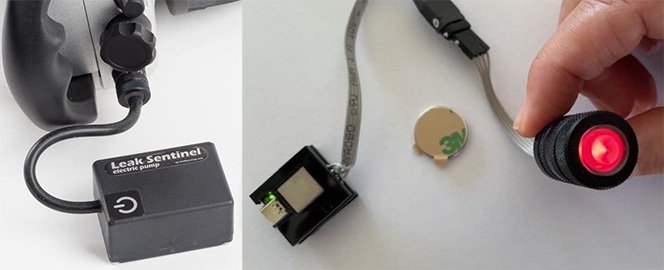
The Leak Sentinel is a small valve which screws into a spare bulkhead on an underwater camera housing to monitor for leaks even before the housing goes into water.
A small hand-pump of the type used in the Vacuvin wine bottle corks then draws the air through the valve and out of the housing. (A small battery-operated pump is also available). This creates a vacuum indicated on the Sentinel by a green, “Good to Go”, blinking LED light. If the housing has not sealed properly because of a fault or, more likely user-error, the valve warning light will flash green/red or red indicating a problem.

 
Vacuum valves are great devices particularly to help avoid user-errors and, more importantly, warn of an issue before the housing gets wet. It is this feature which makes them even more valuable than a housing leak detector which only works when water is already in the housing.
Given the cost of the housing and its contents, installing one of these handy leak warning devices is money extremely well spent. I would argue it is one of the two best investments I’ve made in my system. (the other being a 45-degree viewfinder!)

The Leak Sentinel system is simple to install. The valve is screwed into an empty bulkhead on the housing so that the blinking warning light is visible when diving. In earlier models (V1 to V4) the battery was part of the Sentinel’s valve assembly. In the V5 “XB” model the battery was fitted on a printed circuit board fitted inside the housing with a wire connection to the valve. This avoided the need to disassemble the valve to change battery.

The V6 has just been released. Like the V5, the battery fits inside the housing. However, the cable is now fitted permanently to the battery circuit board and a connector has been added (see photo) linking the battery to the valve assembly. This is a big improvement as removing the V5 required disconnecting the wires at the printed circuit board – which could be problematic.
In addition, gone is the square of Velcro which was supplied to hold the printed circuit board to the top of the housing. Now there’s a magnet! This should make battery changes even easier.

Like the V4 and V5, once a vacuum is established and the LED stays green for a reasonable length of time (I usually wait an hour), the Sentinel can be switched off by pressing the LED and left until dive time. This saves battery life. Switch it back on pre-dive and the green, Good-To-Go LED should reappear and blink steadily.
The Sentinel electronics allow for an element of temperature variation. It will cope for example if the camera is setup in the housing in an air-conditioned room – and then moved into a higher ambient temperature before diving.
The system uses an easily available and inexpensive CR2032 battery. Battery life is certainly into the dozens of dives and many hours.
On the very rare occasion when I’ve had a question, the Leak Sentinel’s producer, Miso Milivojevic of Vividhousings, has being unfailingly helpful at finding a solution in response to my emails.
So, easy to install, easy to maintain and relatively inexpensive…. is it worth installing one on your system? No question. Who doesn’t want to reduce the risks of a flood and enjoy the additional reassurance a vacuum valve provides. Never leave home without one.
 
Travel report August 2023
By : Martin Paceman
 
Three years ago, we learnt to dive for the first time at Reethi Beach Resort https://www.reethibeach.com/ in the BAA Atoll in the Maldives. The incredibly relaxed diving school Ocean Fanatics offered a very affordable taster dive in the usual manner, which opened up a world to us that we had never known before. 
From Reethi Beach, the Ocean Fanatics also offer snorkeling trips to Hanifaru Bay, which is known for the accumulation of manta rays during the rainy season. The excursions are not quite cheap (160.- + various taxes per person) as is typical for a resort, but the incredible experience made us want to repeat the experience even more intensively. 
As we had already had good experiences of staying on a local island in the Maldives, we chose Dharavandhoo - an island established as a relay station with a small airport, about 1 kilometer from Hanifaru Bay. There is a selection of hotels and guesthouses for almost every budget and several diving schools, the best known being Liquid Salt Divers https://www.liquidsaltdivers.com and Dharavandhoo Divers http://www.dharavandhoodiving.com/ . We opted for Kiha Beach Hotel and Dharavandhoo Divers. Overnight stay with breakfast in the region of 150.- for 2 people, dinner in the restaurants approx. 15-20.- for 2 people. 
The island itself shows the real life on the Maldives, not the artificial world of the resorts. Unfortunately, there is a lot of plastic waste, even though the beaches are often cleaned. The locals are incredibly friendly, unobtrusive and helpful. 
Attention: There is no alcohol, in any form. 

The house reef is rather sobering. The island has been well fortified because of the airport and is surrounded by breakwaters made of large, imported stones. Turtles, moray eels and rays as well as the usual reef inhabitants can still be found. There is no point in scuba diving on the house reef. 
You can only snorkel with the manta rays in Hanifaru Bay. There is always an alternating day for the resorts and for the "locals" - monitored by a ranger, who also makes sure that the 45 minutes in the water are not significantly exceeded. The rangers always report when the manta rays swim into the bay and how many there are - they regularly fly the drone. 

When the resort guests are there, they splash and splash about in the water, which the manta rays don't like so much and sometimes leave again. On other days, guests who can swim and even freedive predominate. The best time is June to September, and the plankton is thickest at full moon, when up to 250 manta rays come into the small underwater bay (approx. 50 x 200 metres). We travelled with the hotel's boat, at a very moderate cost compared to the resorts (most recently 65.-/person). 
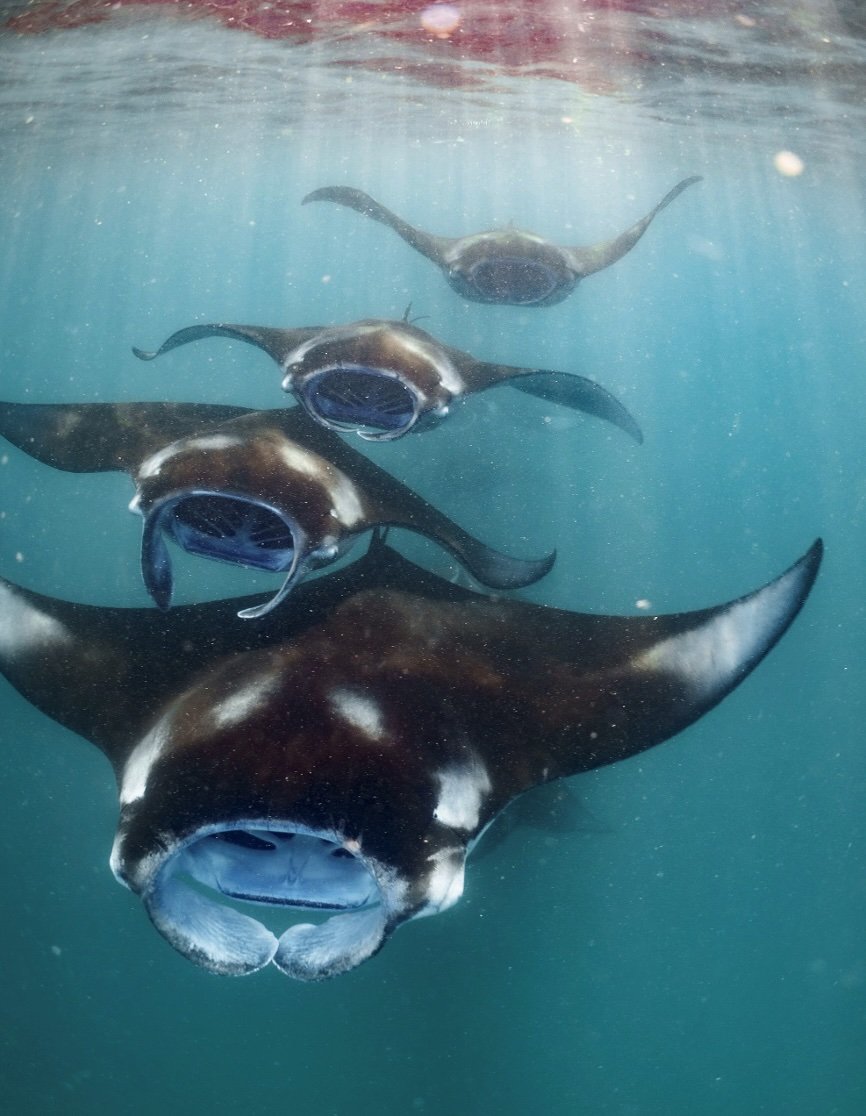
The manta rays themselves are an experience you will never forget. If you wait calmly for the majestic giants to make their move and don't swim after them, you will at best be perceived as a piece of driftwood - you have to tighten your legs to avoid being brushed against. Visibility in the water is limited due to the plankton, but when a group of 10-15 manta rays suddenly appears out of nowhere, it is a magical experience. 

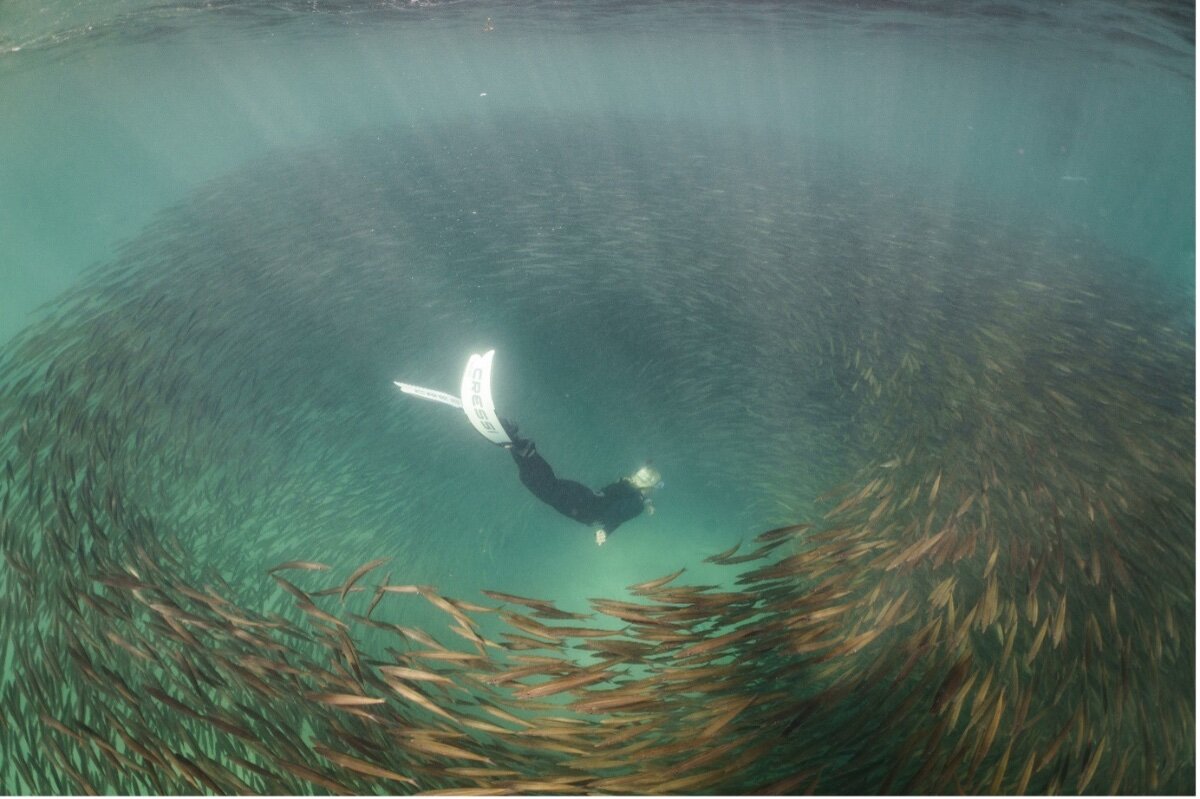
In order to catch as much as possible of the densest and presumably tastiest plankton, the giants do loops, swim like a whirlpool and do various laps. 

But divers don't miss out either - the diving schools usually do two dives before heading to Hanifaru Bay and ending the day with the manta rays. The usual coral reefs can be found here, although there is almost always a current. Sharks are more common in other areas, but there are always reef sharks here too. 


In August this year, a large population of whale sharks passed by for the first time - they were regular guests until well into October. We had three encounters during our 14-day stay: Twice in Hanifaru Bay, where they shared the plankton with the manta rays. 
Once, however, a smaller specimen swam along a nearby reef edge and we were allowed to accompany it for a quarter of an hour. A gigantic experience.  


Conclusion: If you get involved with the local islands and don't set your standards too high, you can have a wonderful holiday at an acceptable cost and see more manta rays than you could ever believe. Pack your longblades! 
The winners of the HIPA Diversity 2023 photography competition have been announced.
Hamdan International Photography Award (HIPA) is an international photography award, founded in 2011 under the patronage of the crown prince of Dubai, Sheikh Hamdan bin Mohammed bin Rashid Al Maktoum.
The Grand Prize was won by Massimo Giorgetta with an underwater photograph.
Congratulation to Massimo!
Protected Lives
A night dive encounter with a magical 5 cm Jellyfish Tunicate in Lembeh Strait - North Sulawesi, Indonesia. This mysterious sea creature is so transparent, it's almost invisible. Filled and covered by other marine life, it is like a miniature diverse ecosystem, floating through the night sea.

(image credits: Gopro)
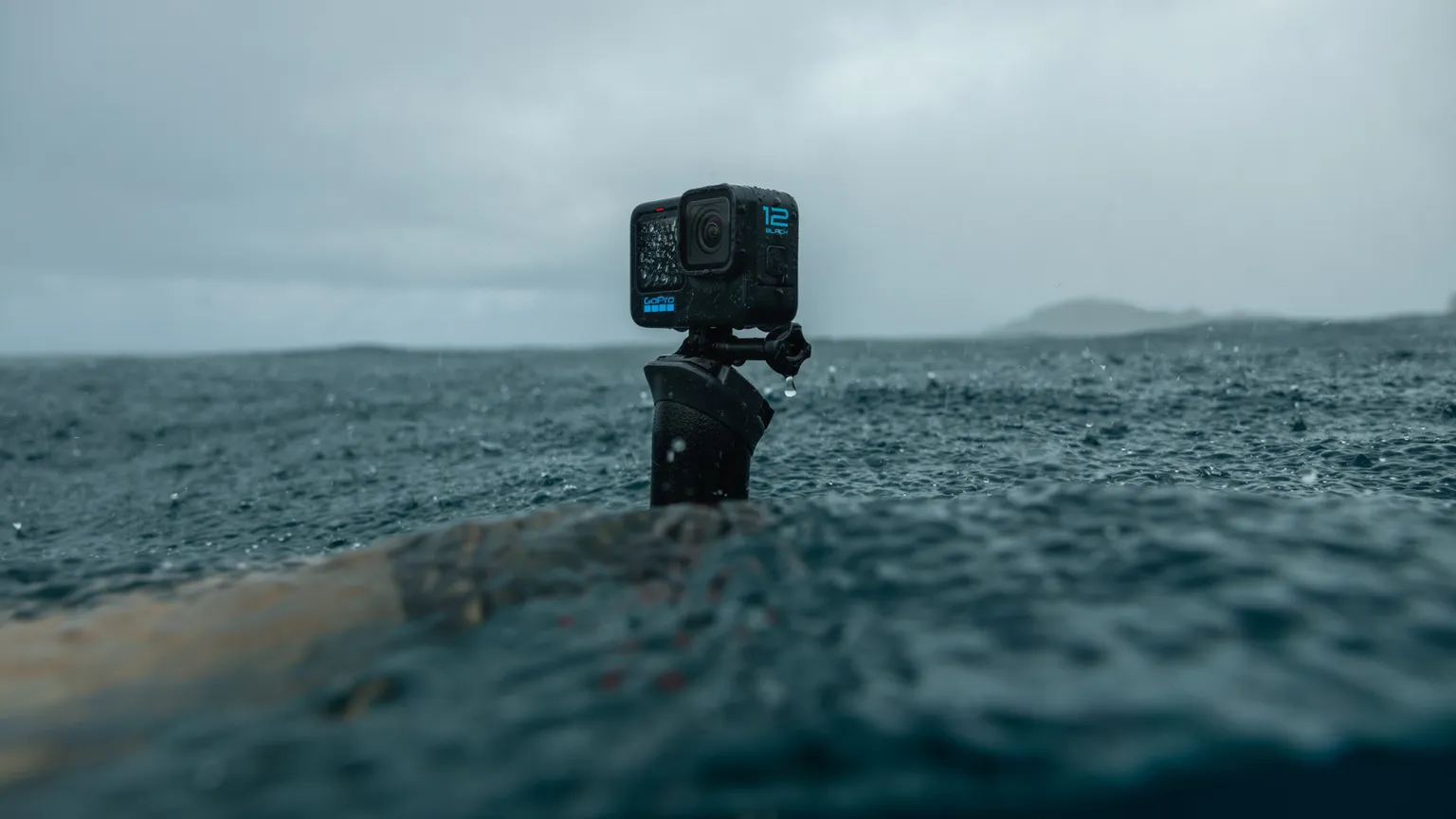
GoPro Hero 12 Black announced with external mic and dual-channel audio plus 1/4” tripod mounting
GoPro has announced the Hero 12 Black, and this year, the ubiquitous action camera maker has its sights set on sound. The 12 Black’s headline upgrades include external microphone support and dual-channel audio capture, so you can record both camera and external mic tracks and then mix them in an edit. The latest GoPro also sports a handy ¼-inch thread between its flip-out feet, giving you even more ways to mount it, and the addition of HDR video, plus 8:7 capture in all modes, boosts the imaging credentials too.
It's no secret that many were hoping this would finally be the year GoPro improved its low-light performance and upped camera sensor size nearer to that coveted 1-inch mark, like DJI with its 1/1.3-inch Osmo Action 4. But it looks like GoPro’s bringing back its 1/1.9-inch sensor introduced on the GoPro Hero11 Black for round two.
Despite this Hero 11 Black sensor encore, there are still plenty of meaningful updates introduced for the 12 Black. Here are our highlights:
 GoPro's finally stepped up its wireless audio game with support for Bluetooth microphones – either in the form of earbuds or dedicated solutions.
Voice commands and external audio are all heard by the Hero 12 Black's Bluetooth input, so hands-free control over the camera at a distance should be easier than ever, and with dual-channel capture, both camera and microphone audio are recorded. Whether using it with a helmet or mixing down in-car and out-of-car audio, this should unlock freedom never before available in the GoPro ecosystem.
This dual-channel capture isn't just useful for wireless microphones. If you have the GoPro Hero 12 Black paired with a GoPro MediaMod, it can simultaneously record front and rear microphone audio, and you can mix both in the edit – ideal for interactions or vlogging in a bustling location.
The Hero 12 Black also introduces Timecode sync, making it much easier for editors to switch between multiple cameras and manage clips.
he headline video feature this year is HDR, pulling back blown-out skies and drawing extra detail from shadows in high-contrast scenes. 
Like its predecessor, the Hero 12 Black captures video at up to 5.3K resolution at 60 frames per second (fps), or 4K resolution, 120fps in standard video mode. If you're happy to switch to slo-mo, this caps out at 2.7k at 240fps.
The headline video feature this year is HDR, pulling back blown-out skies and drawing extra detail from shadows in high-contrast scenes. 
Like its predecessor, the Hero 12 Black captures video at up to 5.3K resolution at 60 frames per second (fps), or 4K resolution, 120fps in standard video mode. If you're happy to switch to slo-mo, this caps out at 2.7k at 240fps.
Video editors and fans of log capture and LUTs – explained in our color grading introduction – will appreciate GoPro’s new GP-Log mode and custom LUTs. This should make it easier to tune footage from your Hero 12 Black and splice it into a multi-camera workflow. 
The Hero 11 Black introduced GoPro's 27MP, 8:7 sensor, and it's back for round two, this time introducing HyperSmooth 6.0, which adds a new feature called AutoBoost. This analyses the field of view and automatically adjusts stabilization accordingly while bringing back 360º horizon lock.
Photos can be pulled from full-res videos at up to 24.7MP or captured natively at 27MP. The Hero 12 Black has also been upgraded with a new light painting photo feature, which creates an time-bending image in addition to the stylized light painting video mode introduced on the Hero 11 Black.
We loved the versatility GoPro's 8:7 sensor brought to the Hero 11 Black, and the Hero 12 Black extends its capabilities, introducing a vertical video mode for dedicated portrait capture and adding an 8:7 aspect ratio recording option to all shooting modes.
the Hero 12 Black looks almost identical to the 11 Black, though sports a speccled rubberized banding around the front and frame. Look a little closer at its design, though, and between the flip-out feet – which extend to form a traditional action camera mounting system – is a 1/4" thread for even more mounting options.
Otherwise, the camera has the same shape as past GoPro 11, a front and rear screen, a removable lens guard and battery door, and a microSD card slot and battery cavity.
While the battery spec of GoPro’s latest cam hasn’t changed ­– the Hero 12 Black still ships with an Enduro battery – you can expect longer capture times from a single charge, with GoPro stating 70 minutes at 5.3K 60fps, and 58 minutes at 4K 120fps. If you're happy to drop the resolution right down, you can even get 155 minutes at 1080p, 30fps.
The 12 Black also enjoys updated Easy Controls, adding more features and simplifying the language to make it even more accessible.
 
 
(image credits: Sony)
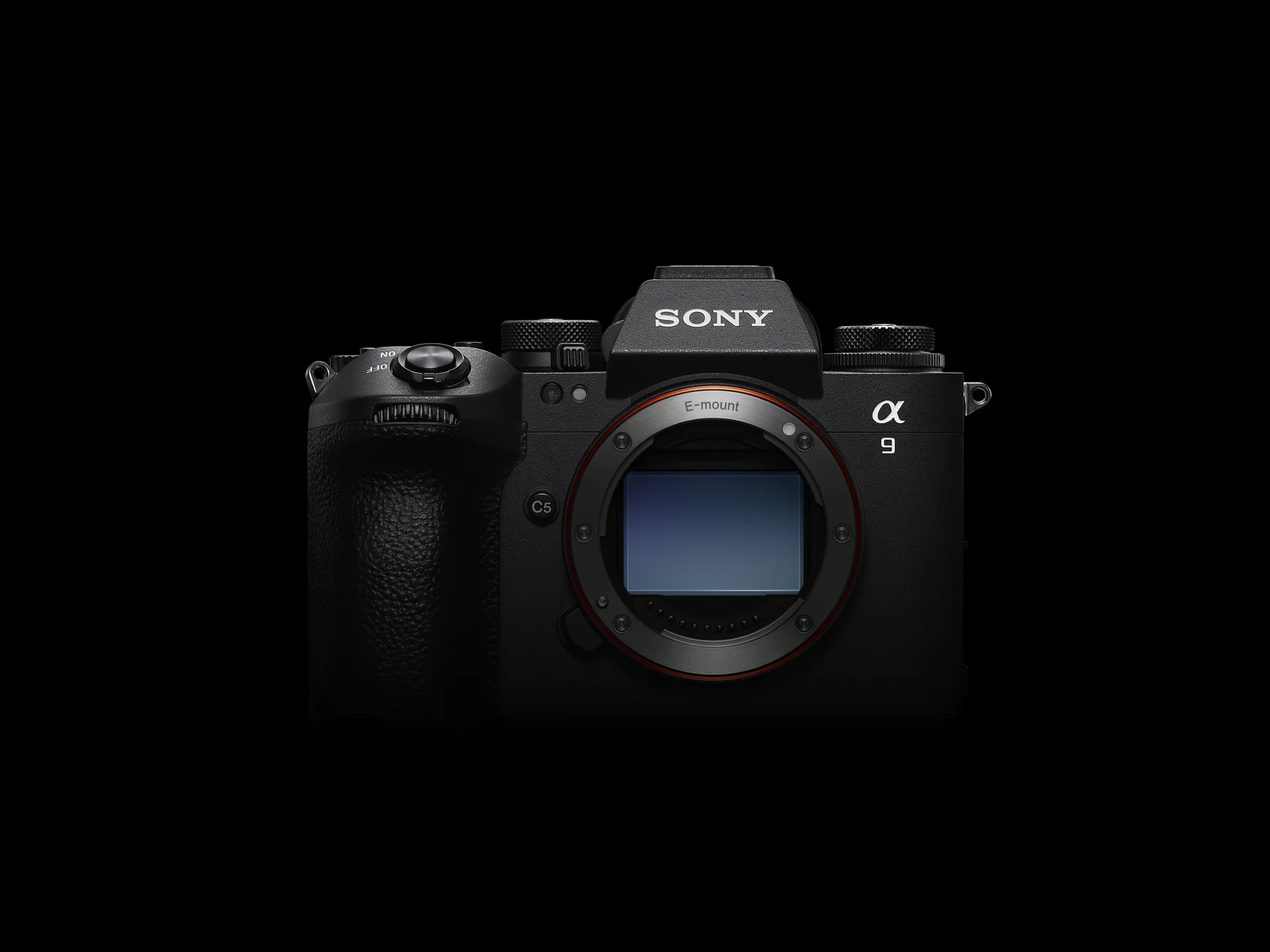
Sony has unveiled the Sony A9 III, a full-frame mirrorless camera boasting a 24.6MP resolution and a global shutter. The global shutter functionality ensures simultaneous readout of information from each pixel on the sensor, eliminating distortion in both still images and videos of moving subjects.
Employing a stacked design, the 24.6MP CMOS sensor, in conjunction with the latest Bionz XR processor, guarantees swift operational performance. The Sony A9 III, also recognized as the Sony Alpha 9 III, achieves continuous shooting at an impressive 120fps, devoid of blackout, with a maximum shutter speed of 1/16,000 sec. In single-shot mode, the maximum shutter speed reaches an unprecedented 1/80,000 sec.
Introducing a Pre-Capture function, the Sony A9 III allows the camera to capture up to 1 second of images at 120fps when the shutter release is half-pressed. These images are saved to the memory card upon full depression of the shutter, enabling continuous shooting.

(image credits: Sony)
Furthermore, the camera supports shooting with a compatible Sony flash at any shutter speed, eliminating the need for a high-speed sync (HSS) mode and enabling flash use even in bright sunlight with a wide aperture.
To address diverse shooting scenarios, the A9 III features a speed-boost option assignable to a button. This allows for a quick transition from a slower shooting rate, such as 20fps, to 120fps.
Sony asserts that the A9 III incorporates its most advanced autofocus system, featuring 759 phase-detection AF points covering 95.6% of the frame with precision down to -5.0EV. Equipped with an AI processing unit, the camera ensures rapid and accurate subject recognition, supporting Real-time Subject Recognition AF and Real-Time Tracking even at the high frame rate of 120fps.
Additionally, the A9 III boasts a 5-axis 8-stop image stabilization system. The global shutter contributes to distortion-free video, allowing the camera to shoot in 4K at 60p with 6K oversampling. Notably, it is Sony's inaugural Alpha camera offering 4K 120p video without cropping, complemented by 10-bit 4:2:2 color, S-Cinetone, and S-Log 3 modes.
The rear of the A9 III features a 3.2-inch 4-axis multi-angle LCD with 2,095,000 dots, accompanied by a 9.44-million-dot OLED electronic viewfinder boasting a 120fps refresh rate at the highest image quality, extendable to 240fps with a slight reduction in resolution.
Priced at $5999 / £6,100 / €7,000, the Sony A9 III is slated for release in spring 2024.
 

Important Information

Terms of Use Privacy Policy Guidelines We have placed cookies on your device to help make this website better. You can adjust your cookie settings, otherwise we'll assume you're okay to continue.

Account

Navigation

Search

Configure browser push notifications

Chrome (Android)
  1. Tap the lock icon next to the address bar.
  2. Tap Permissions → Notifications.
  3. Adjust your preference.
Chrome (Desktop)
  1. Click the padlock icon in the address bar.
  2. Select Site settings.
  3. Find Notifications and adjust your preference.