Everything posted by bghazzal
-
These are the full specs for the AOI UH-GPx: COMPATIBILITY: GoPro HERO 12, 11, 10, and 9 DEPTH RATING: 60 Meters / 196 feet BODY MAIN MATERIAL: Marine Grade Aluminum Alloy SURFACE FINISHING: Hardcoat Type III Anodizing MAIN BODY COLOR: Anodize Flat Black LENS PORT MOUNT & FILTER SLOT: AOI Quick Release System (QRS) - QR2 Mount with Color Filter Slot LENS PORT GLASS: Multi-layer AR and Hydrophobic Coating WATER LEAKAGE PROTECTION: Built-in Vacuum Analyzation & Water Detection System (VWS) BUILT-IN WATER DEPTH MONITOR: Max. Monitoring Depth up to 100 Meters with Preset Depth Alarm Function BUILT-IN DISPLAY MONITOR: 5" Full HD (1920x1080 pixels) 16:9 Display Monitor Viewing Angle 80° / 80° (L/R & U/D) High Brightness 400 cd/m2 and Contrast 1000:1 Focus Peaking Assist Digital Zoom (4x, 9x, 16x) Assist RGB Histogram, Waveform, Vector Scope & Monochrome …etc. Functions Two Custom-setting Buttons (F1 & F2) POWER SUPPLY: Removable Power Bank (22.5W, 10,000mAh) - Operation Time: 2 Hours 30 minutes MAIN BODY DIMENSIONS: 192mm(W) x 114mm(H) x 106mm(D) / 7.5in (W) x 4.5in(H) x 4.2in(D) MAIN BODY WEIGHT: On Land: Approx. 1,877g / 4.1lb - Underwater: Approx. 546g / 1.2lb STANDARD ACCESSORIES: Detachable & Foldable Monitor Hood x 1pc. Removable Power Bank (22.5W, 10,000mAh) x 1pc. Vacuum Hand Pump x 1pc. Spare Main Seal O-ring x 1pc. Spare O-ring for Vacuum Valve Protection Cap x 1pc. Silicone Grease x 1pc. Moisture Muncher CapsulesTM x 1pc. *** It does have focus peaking, which is nice and would probably make a GoPro much more "macro-capable", instead of having to guess critical focus... But 1.800 euros for an action cam housing with a screen, ouch...
-
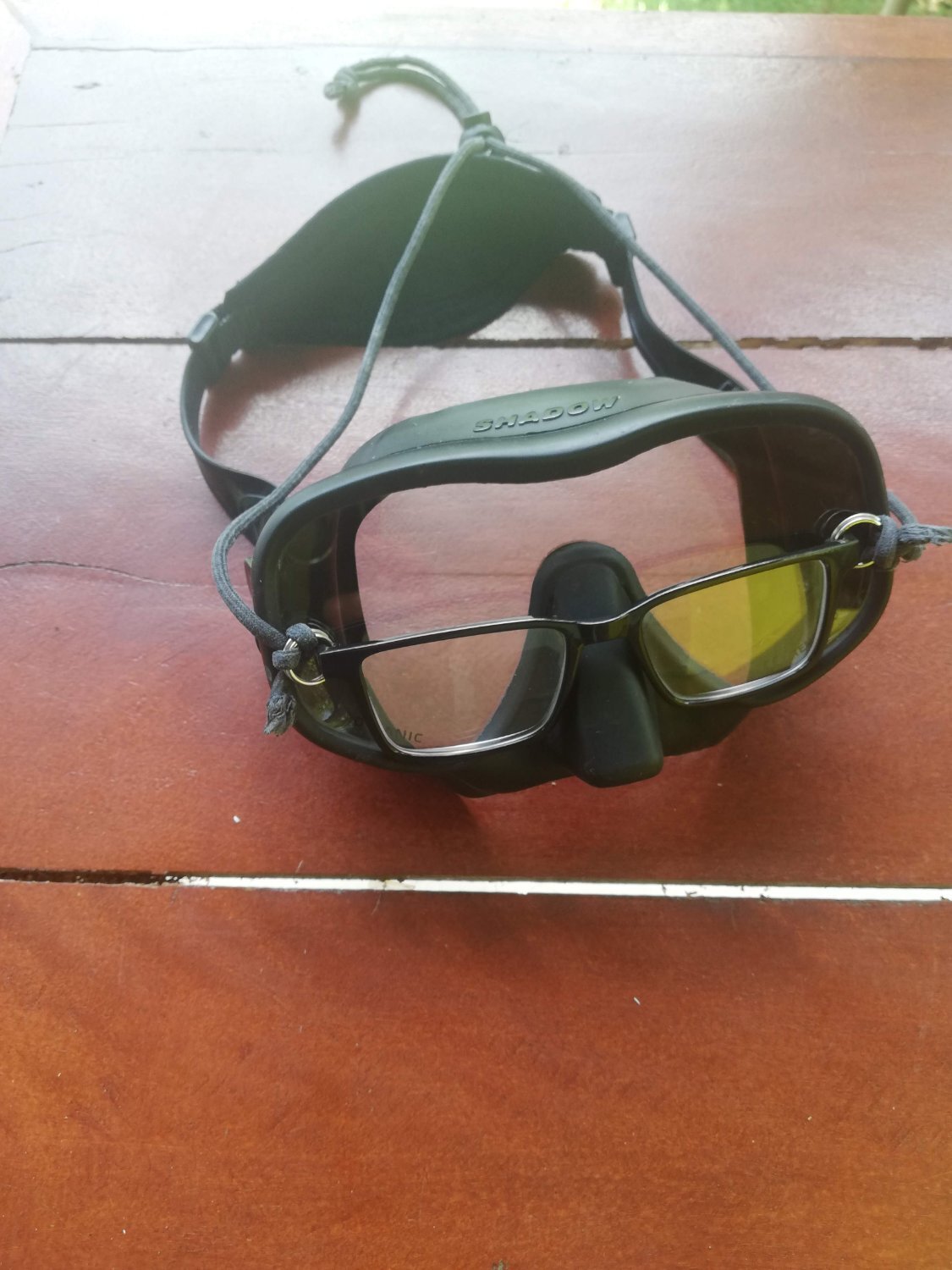
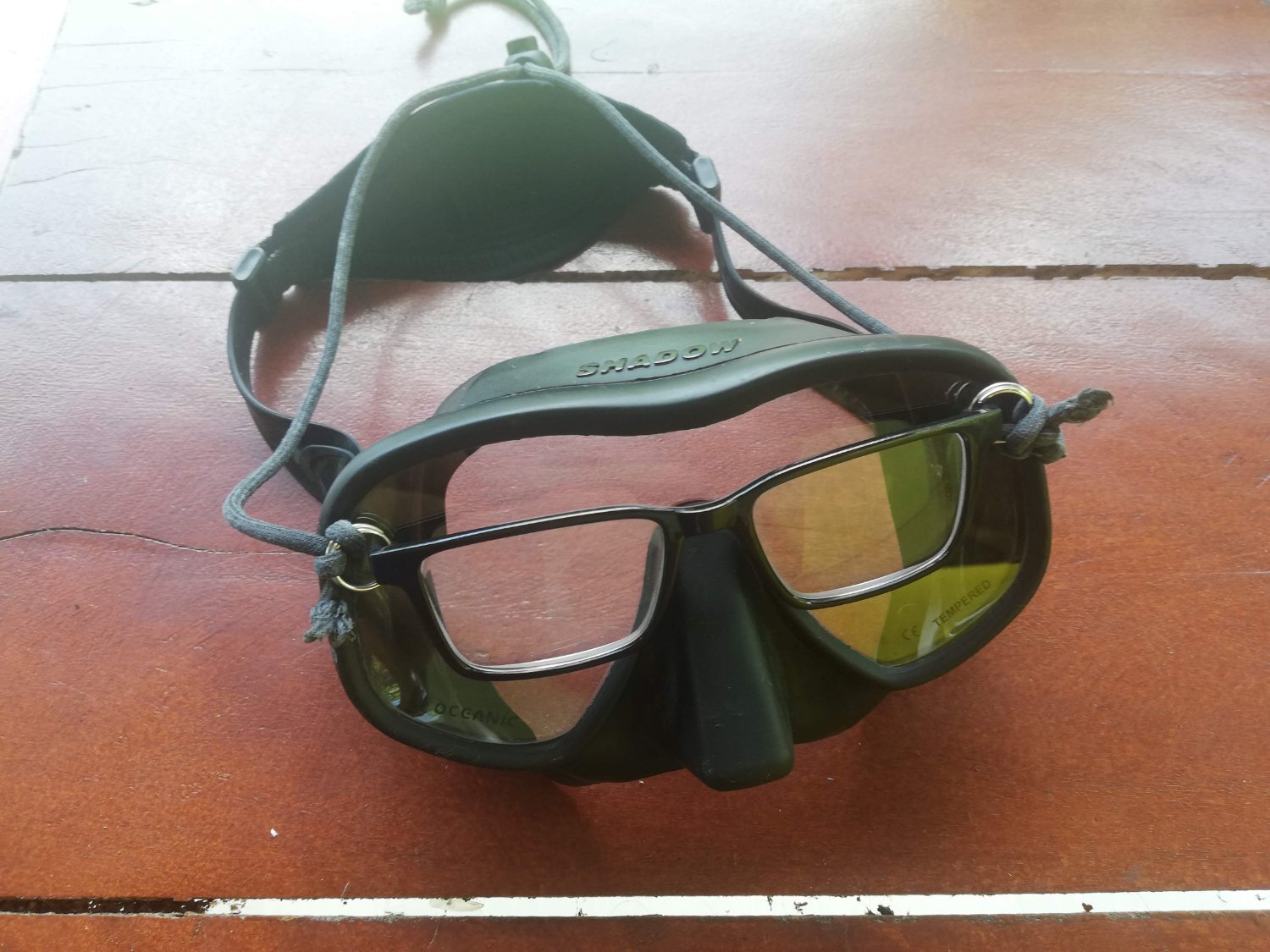
Hi Klaus, Indeed, I think it's also a good way to try underwater readers and see how they work without committing to stick-ons or a dedicated reader-mask. The other thing I really like is the ability to have the readers in the middle of the mask rather than below - this is clearly due to the fact that I'm currently shooting macro video without an external screen or 45° viewfinder, but I'm often quite low, checking the screen at the same level as the camera, so this is really handy. To answer your questions 1. Nope, ne never had an issue with the glasses slipping off and falling onto the reg. That said, even though I have a landyard, I never keep them around my neck, but in small pouch clipped onto my BCD. After entering, when I start swimming around and spotting, I take them out and place them in the low position as shown in the pic. I just place them on the nosepocket of my mask and then tighten the landyard behind my head. It's really nice and snug - the combination of nose pocket + tightened landyard means that they don't slip down around my neck. In the higher, midmask position the nose pocket isn't doing as much support, but the edges still sit on the mask's rubber, and it doesn't slip. Definitely wouldn't want them around my neck to avoid any regulator hose tangles, but even if it did happen for some reason, as strong pull would easily break the landyard away from the plastic frame, so it's not much of risk. 2. Yes, this is also why I thought it wouldn't work, as ordinary magnifying glasses don't really do much underwater, but the readers work. I think it's also linked to the fact that the reader's lenses are directly on the on the glass of the mask - magnification is not much different from what you get if they're placed inside the mask, a little weaker, but not much. I would say it really depends on your needs - I have astigmatism so on land I use two pairs of specs, one for reading and the other one for long distance (driving), as the ophtalmologist said I wasn't quite at the stage where single progressive lenses were the best choice - meaning I don't really use readers, but magnification-wise would be comfortable reading reading with +1.50 or +2.00 on land. However, despite not correcting the astigmatism (which isn't as marked underwater in my case) the readers' extra magnification does make a big difference underwater, I can spot animals that would be lost in the fuzzy bluriness, and see focus points clearly (especially focus peaking points). I would say maybe get two pairs, one just a little stronger than what you would need on land, and the other the maximum you can find (within reason... for cheap plastic readers it's usually +3.0 to +4.0), that way you can see what works best. The reader integrated mask I tried was +1.75, which was ok but a little weak - when I first started experimenting with external readers I go +2.50 lenses, which worked really well, but then tried stronger (+4.00, or so they say...) and decided I liked this the best for my purposes. If your aim to read your instruments, a little stronger than your land readers will probably do the trick - but if you're interested in extra magnification (keeping in mind that you will need to get a little closer to the screen you're watching), go for stronger readers. Hope this helps! cheers ben
-
Thanks Puccio! I'd been following this product, and expecting a steep price, but €1,800.00, wow, that does exceed expectations... It's an interesting product, clearly well designed, but for most budgets it will hard to justify such a price tag for an action camera brand which upgrades its models every 12 months or so, with no guarantee newer models will fit (even if there was no real change from 9 to 12...) The screen is good (any info on the nits?) but also not crucial for gopros where focusing isn't so much the issue (unless working with macro, but even then there's no peaking), and framing is pretty straightforward (remember when the first models didn't have screens?) and as you've said, adjustable would have been nice... A vaccum valve is probably overkill on a cheaper camera already waterproof to 10m, and yes, 60m does seem limited since many divers investing in an aluminium housing are often looking to extend the standard dive housing specs. An external battery is nice though, if I was still using gopros (which I've also used a lot until switching to a manual-capable compact, see here), this would be nice to have to make sure you don't run out underwater - that said it's fairly straightforward and risk-free to change a gopro's battery in between dives, compared to non-waterproof cameras - and also the screen display will be eating up some of that extra autonomy... The external lens / filter, which is going in the right direction to remove barrel distortion which plagued gopros while preserving a wide field of view, but the AOI/ Inon products can be adapted on standard housings as well... We'll see how it catches on, but at this price tag, appeal might be limited as we're venturing into a price range a little different from that of most GoPro users. The Hugyfot screen integrated housings didn't have the exposure AOI products now have, but didn't really spread like wildfire either. cheers ben PS I think AOI is Hong-Kong based rather than Taiwanese
-
Thanks! Yes, we're lucky to have found a few living in this clearly defined area, and spotting them has been pretty constistent. Really pretty and fun little guys, I just love the way they move, suprising close to harlequin shrimps. cheers b
-
Thanks! It's the same, but overall I'd say Tulamben is better for macro - generally clearer water, more diversity of substrate, and just generally more things to find (probably linked to the topography of the little bays, and exposure to current) - Amed is closeby, only a few km away, but it's more built up close to the shore. For macro dives, no real reason to come to Amed if you're in Tulamben... However Amed is a way nicer/easier place to live long term, it's more quiet underwater, especially on the macro sites, and there are no entrance fees to nearly all sites (for now anyway), where as in Tulamben it really adds up when you're diving almost daily... And I'd say that macro Amed does have its own charm - it's more mucky, so more like a real muck diving experience, great for cephalopods for instance. But for nudis for instance, Tulamben sites definitely have the upper hand! cheers b
-
Thank you - In this vid I didn't add any tracking / movements in post - this was using the front legs of the quadripod as a pivot point, which is something I'm working on for small actively moving subjects. I never really managed to get the pan movement right (it's always too fast), but using the legs, some tilting is possible if the rig isn't too negative - mine is just a little negative now, and can be used handheld, which opens up possibilities. Shooting this, the main issue I was having is that the shrimps live in a thick bunch of tangled old ropes - the ropes themselves are quite thin, but it's a big bundle on the seafloor and really moves a lot, current/water movement but also any close camera movement is enough to make the shrimps' little rope world shake - if you look closely you can the ropes wobbling in the background at times. And it was also difficult to be in a good position to avoid having the legs of the quadripod touching the ropes - but at least the shrimps were quite cooperative and doing their thing! cheers b
-
Thanks! It's what I'm trying to focus on at the moment - coming from working mosly with ambient light there's clear learning curve, but a lot of useful info to be found in strobe placement concepts. I'm using a Backscatter MW4300 light, which is really flexible and can be used with the OS-10 snoot, but filling in with 2 smaller video lights. It's really flexible, but it's surprising how much difference a few degrees of angles make when shooting small things, still a lot to work on there. cheers b
-
Hello all, Here's what I've been working on the past few days, a clip of Spiny Tiger Shrimp (Phyllognathia ceratophthalma). In this video, you can see both a juvenile (roughly 0.5 cm in size) and a slightly larger older Spiny Tiger Shrimp foraging and carrying various preys/lunch items, including a small crab head, in the bundle of old ropes where they live. Adults tiger shrimps grow up to about 2 cm in size but also have, as seen here, a more complex shape, with many spikes growing out their body, more or less randomly. I love the way these guys move, which reminds of Harlequin shrimps, and their eyes... Equipment used: - Panasonic Lumix LX10 (LX9/LX15 in some locales) compact camera in a NALX10 Nauticam housing, AOI UCL-09 +18.5 diopter, Inon UCL-165M67 +6 diopter - Backscatter MW 4300 video light and two Archon D11V2 video lights - Homemade quadripod Shot in Amed, east Bali, in 4K 30fps, CineD profile, edited/graded in FCPX. cheers! ben
-
Thanks a lot Gary! I'm shooting a lot of macro at the moment, being in a very nice area for this, but getting increasingly fond of juvenile forms, really interesting to observe. If you watch closely, you'll see the larvae moving in their little egg shells - seeing this, I was thinking that Iwould love to catch the moment when some leave the egg and swim away, but that's not going to happen on open-circuit! 😅
-
Just to make sure my answer to Ian above doesn't create confusion. Eric Cheng, who created the original Wetpixel brand (but was no longer active there), has joined the new Waterpixels community (https://waterpixels.net/profile/228-eric-cheng/) The link above is to his member introduction post, posted shortly after Ian opened this thread - serendipity? 🙂 cheers ben
-
Thanks Mark, great tips, and totally with you on the luggage delivery! I've actually been on the receiving / packing+ sending end of the dive-gear baggage handling on a remote island, and takkyubin/takuhaibin delivery services are just great, main ones are (Kuroneko) Yamato and Sagawa - it's not just for dive gear, it's anything, including fresh fish in some places 😃 In the Izu islands, we were diving 10L or 12L steels, but you'll find aluminium tanks in warmer waters. Our tanks they were at 200 bar however - I don't think there is a special law in Okinawa, as Japan has national regulations - I'd need to check my sensuishi material, but from what I remember it's a standard 180 to 200 for a full tank. That said, maybe the shops where you dived filled to 180 bar for their own specific reasons... I also love Japanese wetsuits, especially the very common open-cell 6.5mm that are super warm, and some drysuit brands are pretty awesome (I tried World and Mobby's). Custom-made is the standard in Japan, and the quality is high! Regarding dive shops, this article focused more on lesser covered cultural aspects than the more common where/how to dive in Japan angle - indeed there are many dive shops with English speakers these days, even outside Okinawa. For more practical info on, NPO Dive in Japan has a good list of shops here and we've compiled more general practical info on this non-commercial website here, and there are some good Facebook groups on the subject as well. cheers! b
-
These are important and painful testimonies, thank you for posting these. What really frightens me is that we seem to be moving from localised causes of damage, to something much broader and uncontrollable. By this I mean that the radical and rapid changes we are witnessing today are more linked to the climate crisis/"change", than more easily identifiable, direct phenomena like pollution for instance, and this is much more worrying as there is no real easy fix... In the recent past, culprits were easier to find, direct causes like water pollution of multiple origins, coastal changes (construction, destruction of mangroves and coral reefs for example), overfishing, destructive practices, etc… These are insidious, often complex causes but can still be acted upon locally. We’ve seen areas sucessfully rebound with the creation of Marine Protected Areas and similar approaches, including in the Mediterranean, for instance. However, when we’re dealing with changes in global water temperatures, alterations of major currents, changes in pH, salinity, nutrients etc, this is much more difficult to act upon, because the causes are much deeper, intrinsically linked to our lifestyles and (over)consumption habits, economies and associated global warming emissions... This is what strikes me when I see Davide’s pictures. The Mediterranean was very heavily polluted in the past decades, it was really bad at some point and called a "dead" sea, yet a site like this magnificent islet located outside a harbour in Tuscany was still able to make it to 2017. But now, it’s too much. It’s not so much the pollution anymore, but deeper, more worrying causes... And we do have a tendency to try to get ourselves off the hook. Some will try to see the current crisis as part of a natural climate cycle, basing themselves on events which were on radically different timescale, and with different causes. Others will hope (pray?) for technological solutions which would allow us to carry-on business as usual, or focus on population growth for instance, framing it as the key driver of past, present, and future climate change crisis, and conflating the radical rise in emissions we are witnessing with an increase in the number of people on earth (and thus offering population control as a straightforward solution to our problems). In reality, while population growth is surely a contributing factor in the climate crisis, the current source of this rise is actually an increase in emissions produced by transportation (airplanes, cars...), industries, buildings etc, emissions which are themselves much more linked to our fossil fuel-dependent economies and our lifestyles than to the actual number of people on earth. This is what has been called the great carbon divide, where roughly 10 percent of the world’s population contributes 50 percent of annual global warming emissions, meaning lifestyle and (over)consumption habits currently have a much greater impact than overall population numbers. Of course, if the current fuel-dependent economies and lifestyles of the depopulating global-north are transfered verbatim to the more densely populated global-south, and demand for resources increase along the same lines, this will certainly compound the problem. But currently, while population growth is a contributing factor - and it's certainly true that the planet can’t support unlimited population growth, especially with current (over)consumption levels - the focus should be on finding solutions where they are currently the most needed (and it's difficult to imagine how the changes required would not be radical and somewhat painful for most of us), solutions which could then be applied globally as the poorer countries transition economically (which is itself often linked to a decrease in birthrates). There is an overpopulation problem which does / will affect resources, but population decrease is not enough to solve what is currently an overconsumption-based climate crisis, affecting our oceans in ways we've never seen before. And it’s difficult to know where to start to address this overconsumption-based climate crisis and the effects we are witnessing in our lifetimes - and the latest COP is a clear testimony to the massive difficulties that lie ahead… To return to diving, it’s great to see so many people signing up to Waterpixels who are diving locally. This is probably the way forward, but it will probably not be a popular concept in a heavily travel-based tourism/leisure industry like ours... Sorry for the slightly off-topic spin, I'm looking forward to seeing more awareness-raising pictures posted in this thread. cheers b
-
This one you can " add to cart" 😉 Not sure about the prices and availability though https://www.spotx.com.au/underwater-camera-trap/underwater-camera-trap

-
Fascinating, thanks for sharing these. Very impressive to come across artefacts lying like this on the seafloor, visible rather than buried in layers and layers of sediment... Is this due to local conditions? And where is the 18th-century ceramic plate from? Seen like this, it looks a little similar to some Chinese productions of the time. cheers ben
-
Agreed Ian - you can now also tell him directly 🙂 :
-
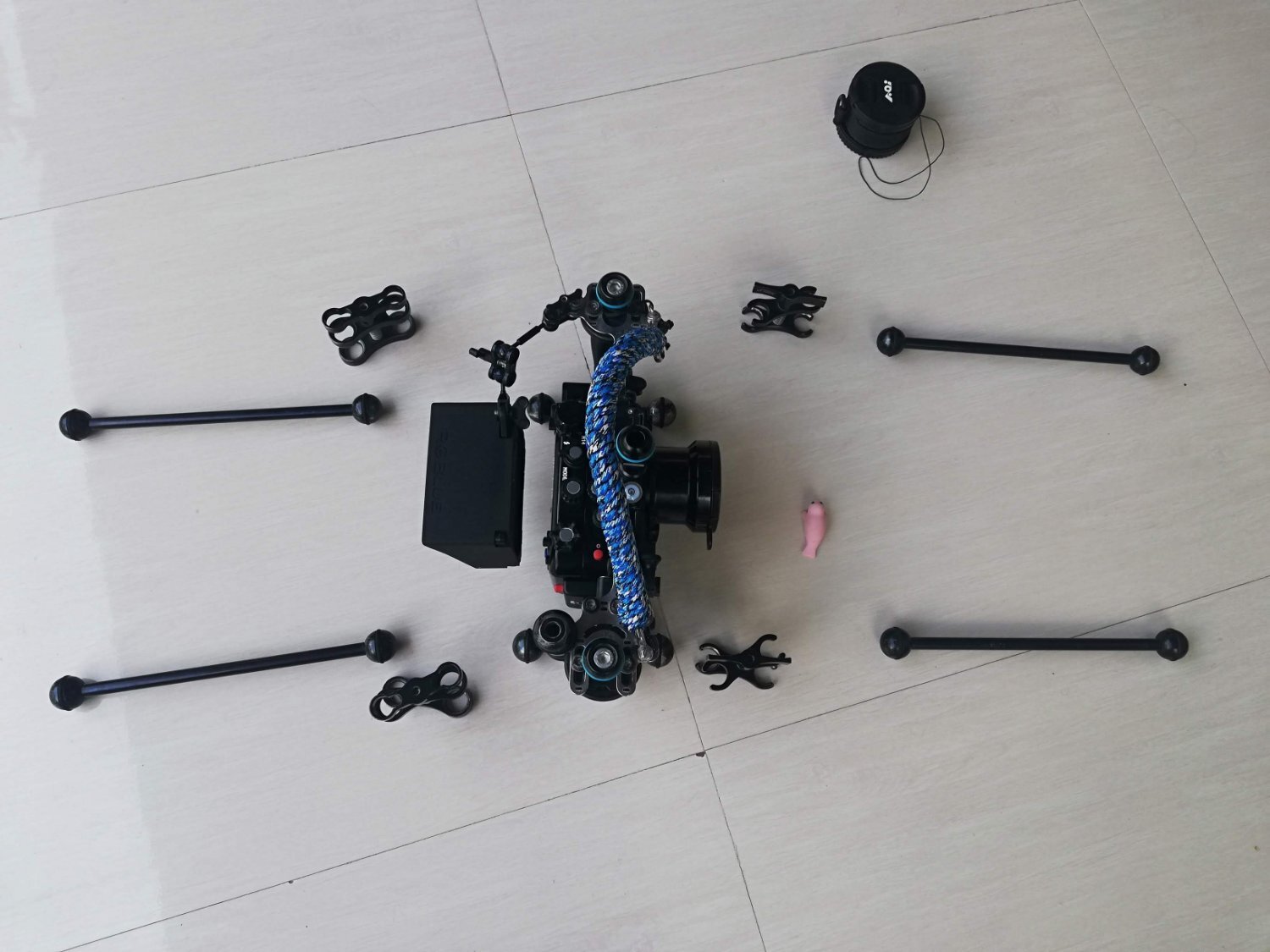
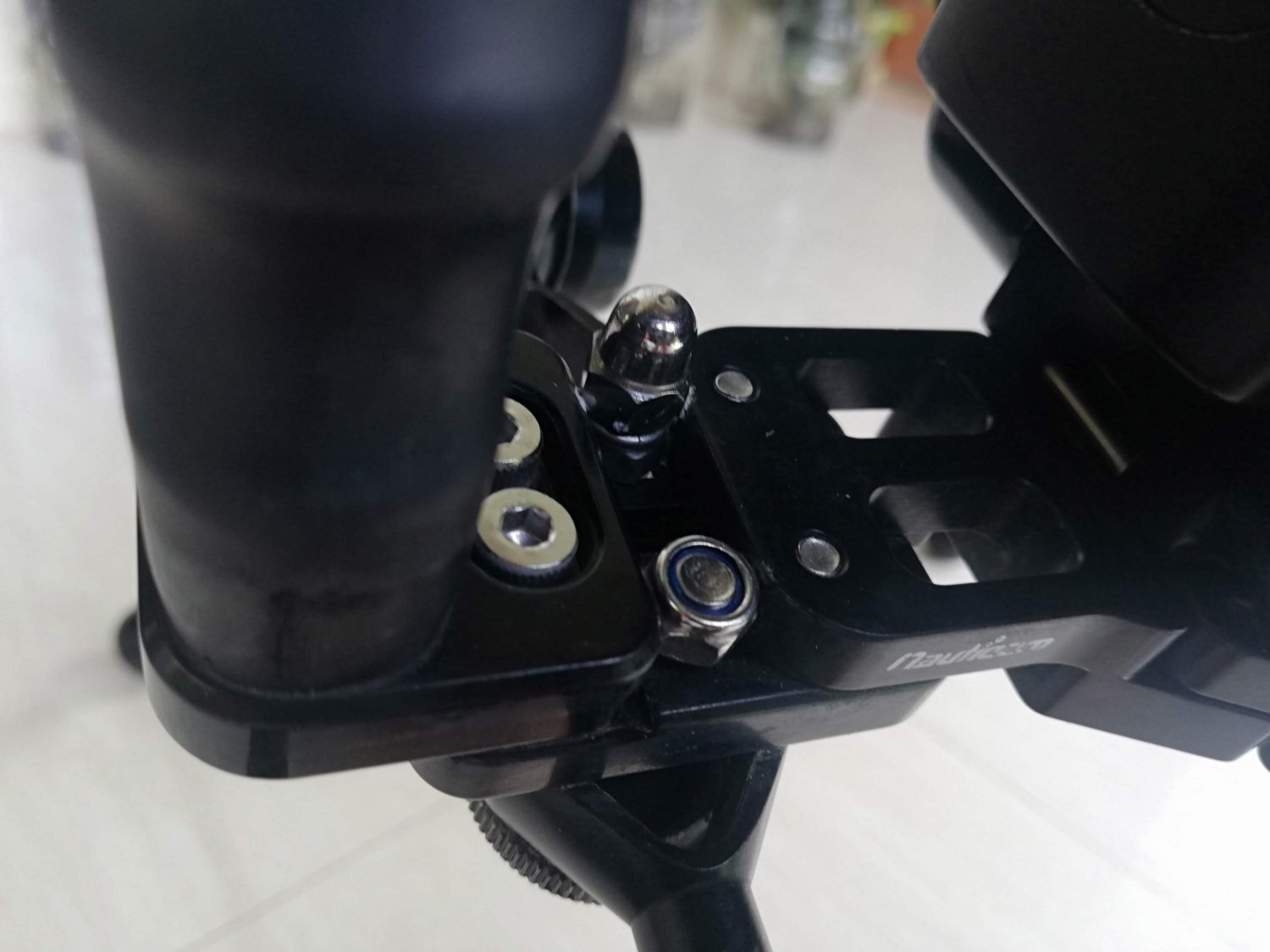
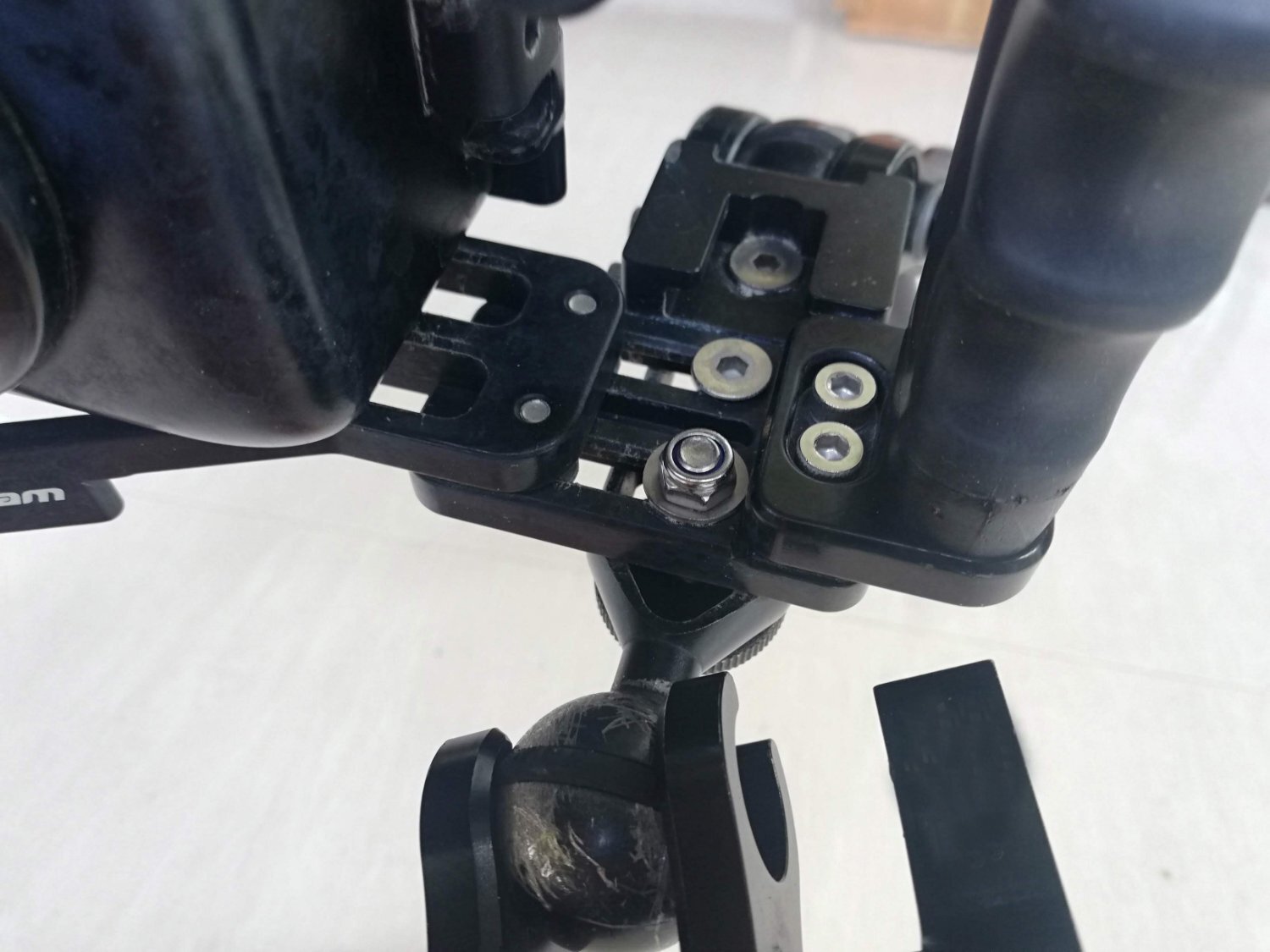
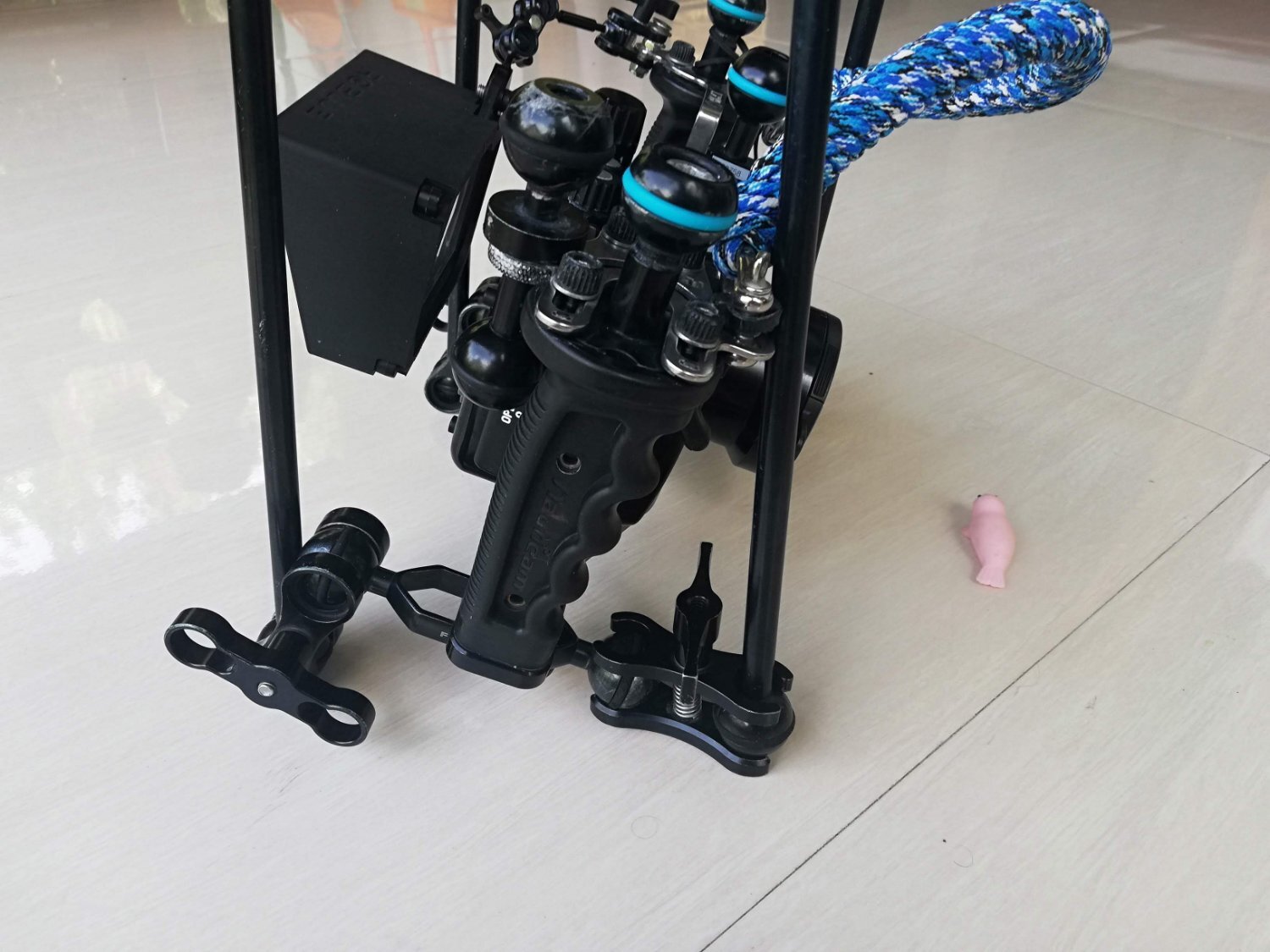
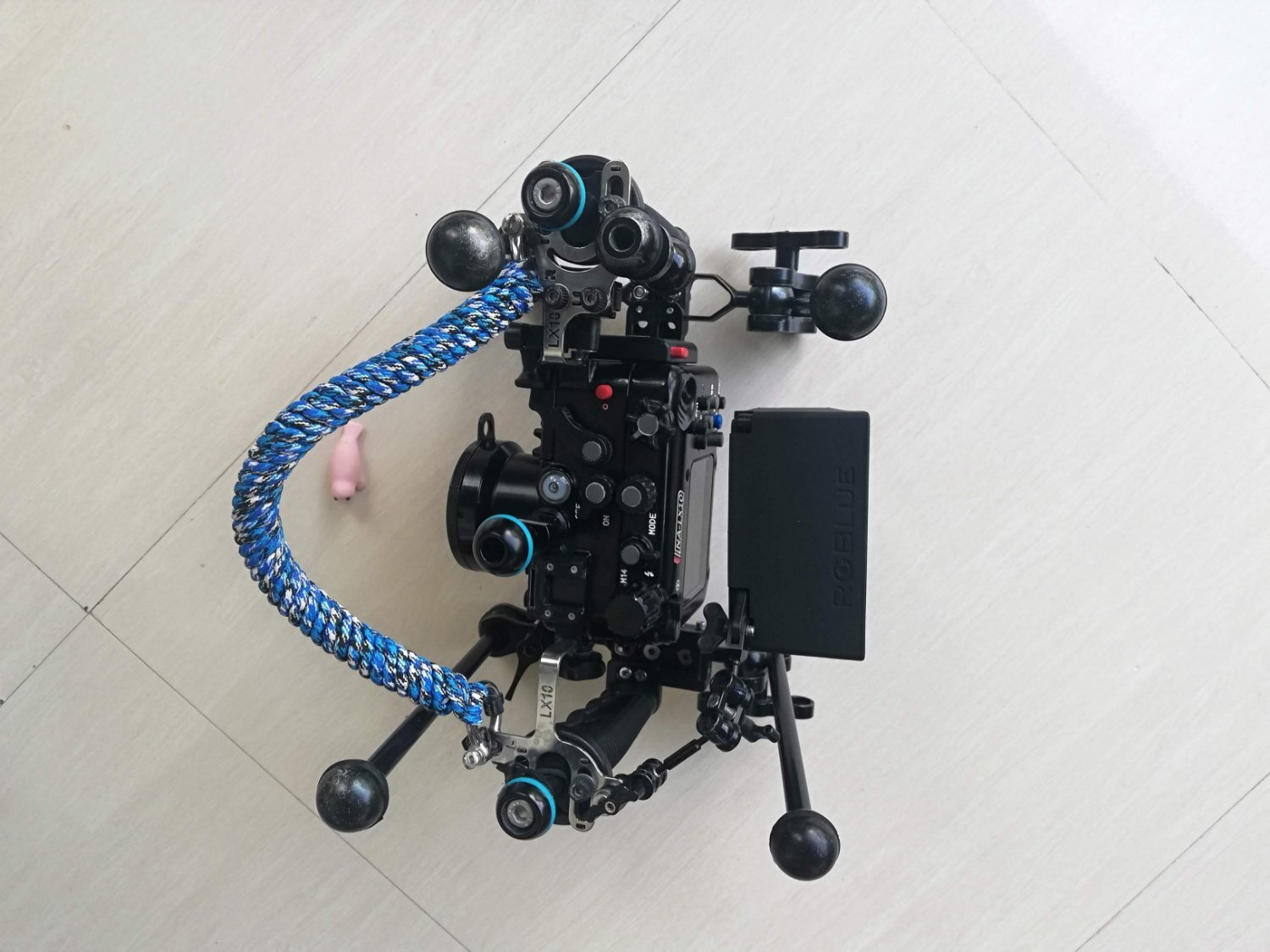
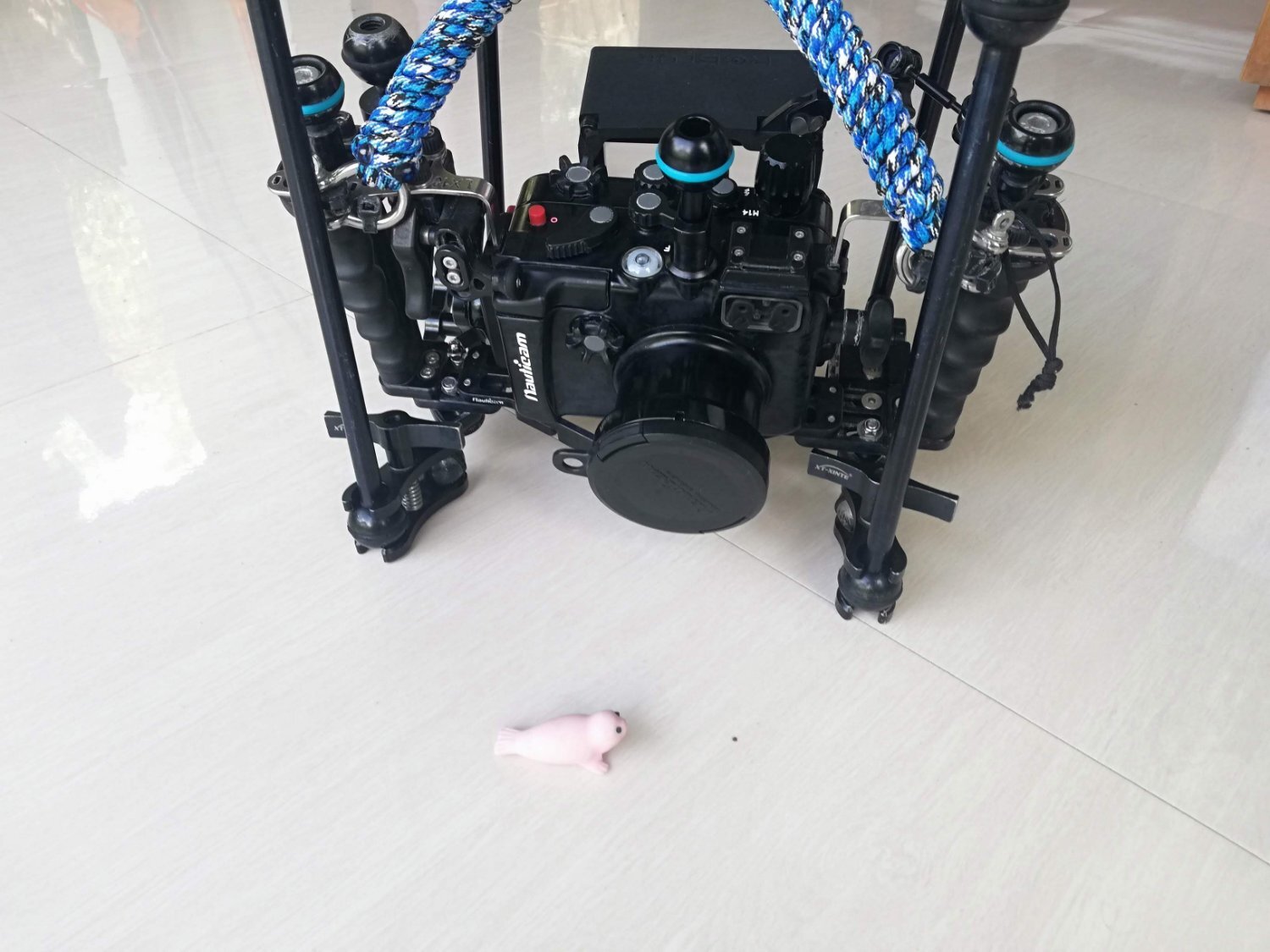
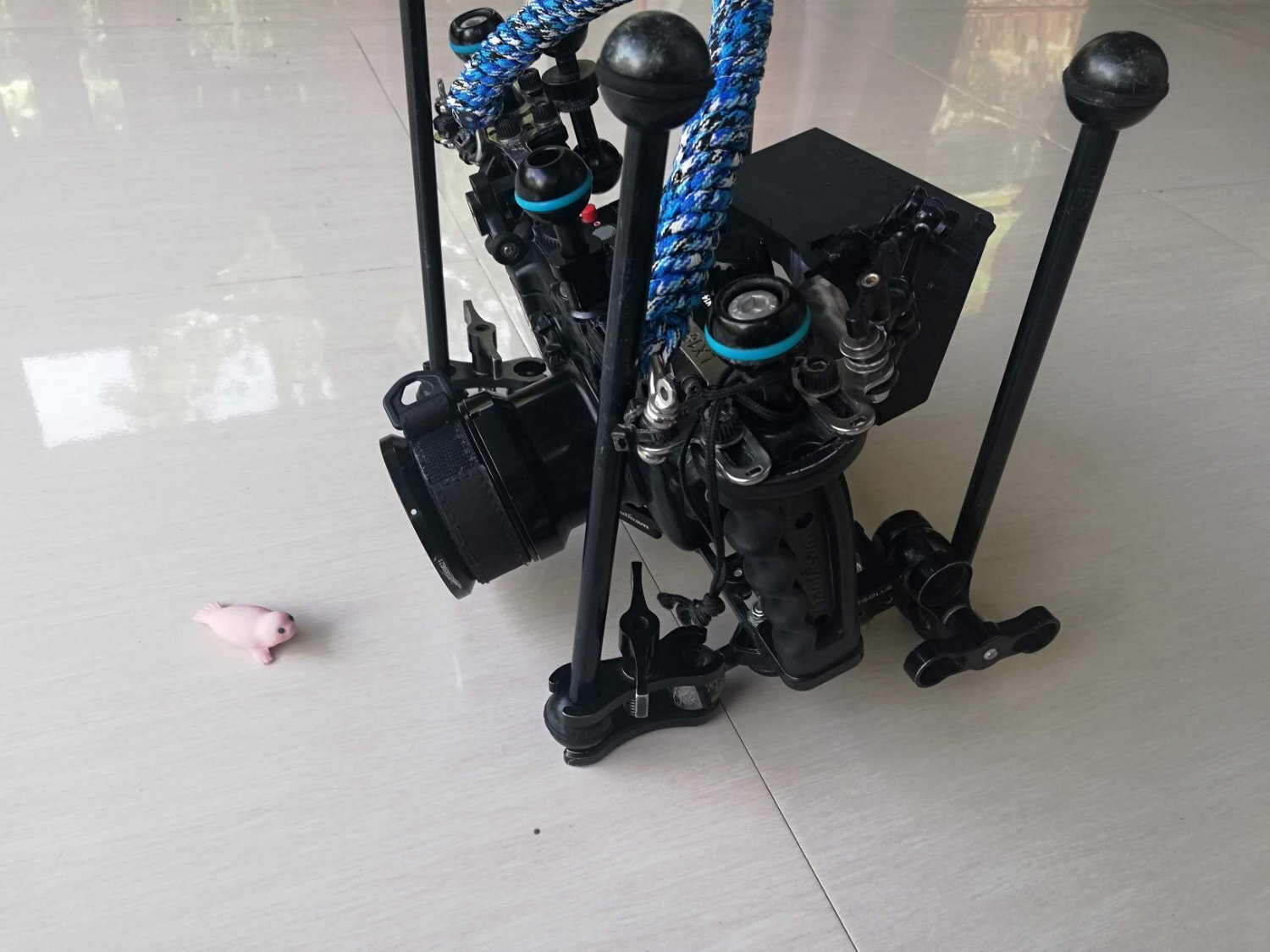
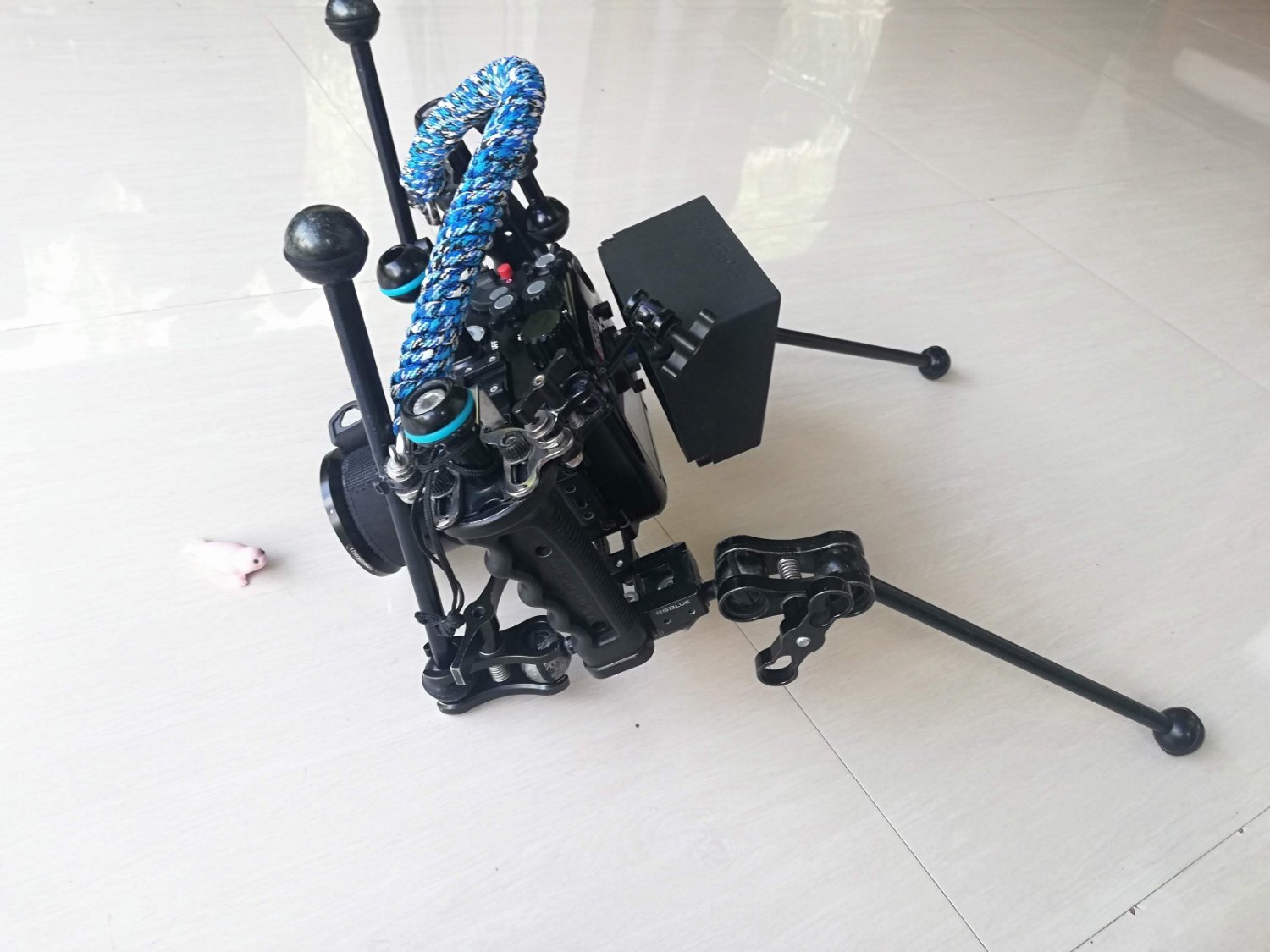
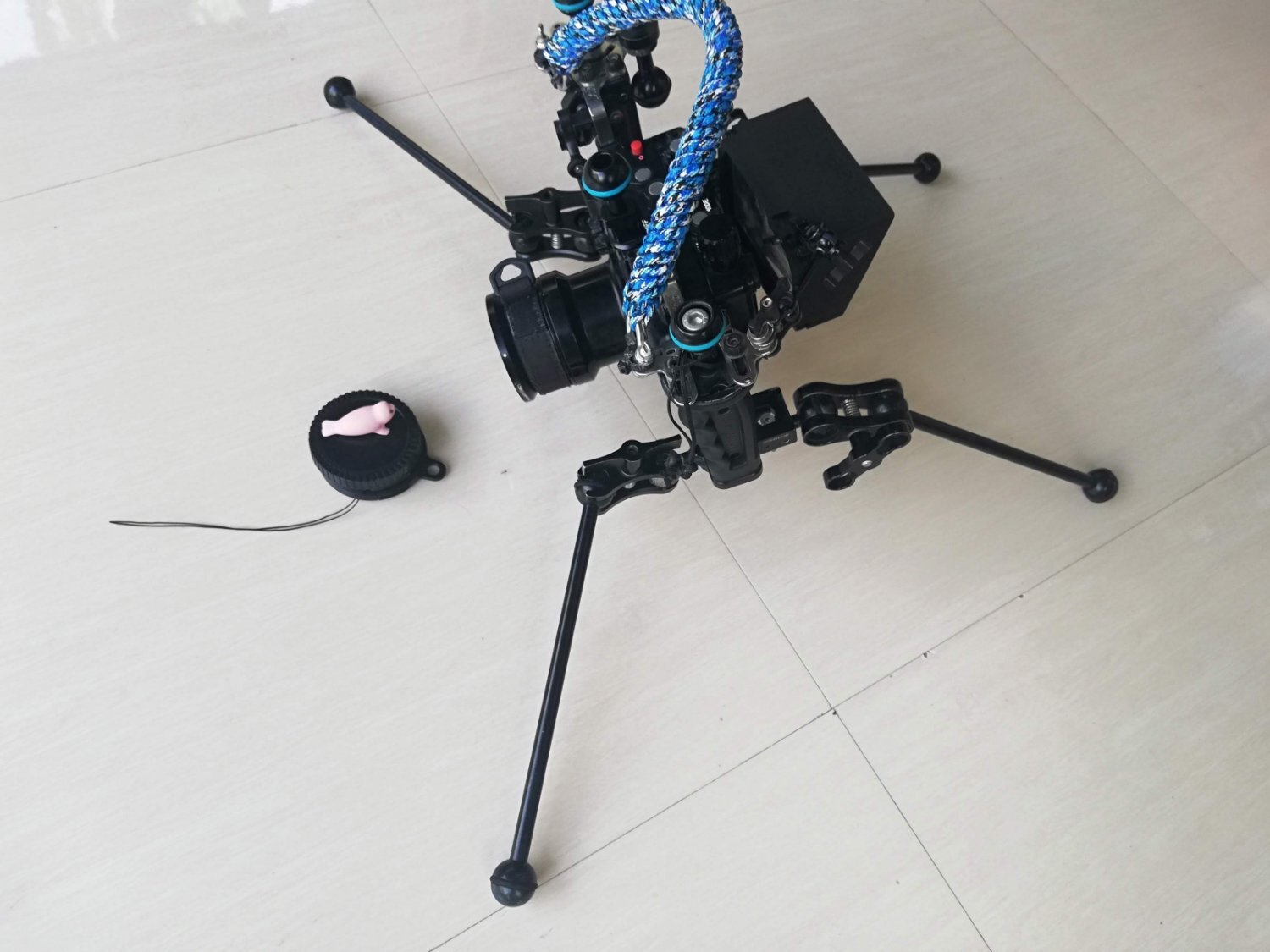
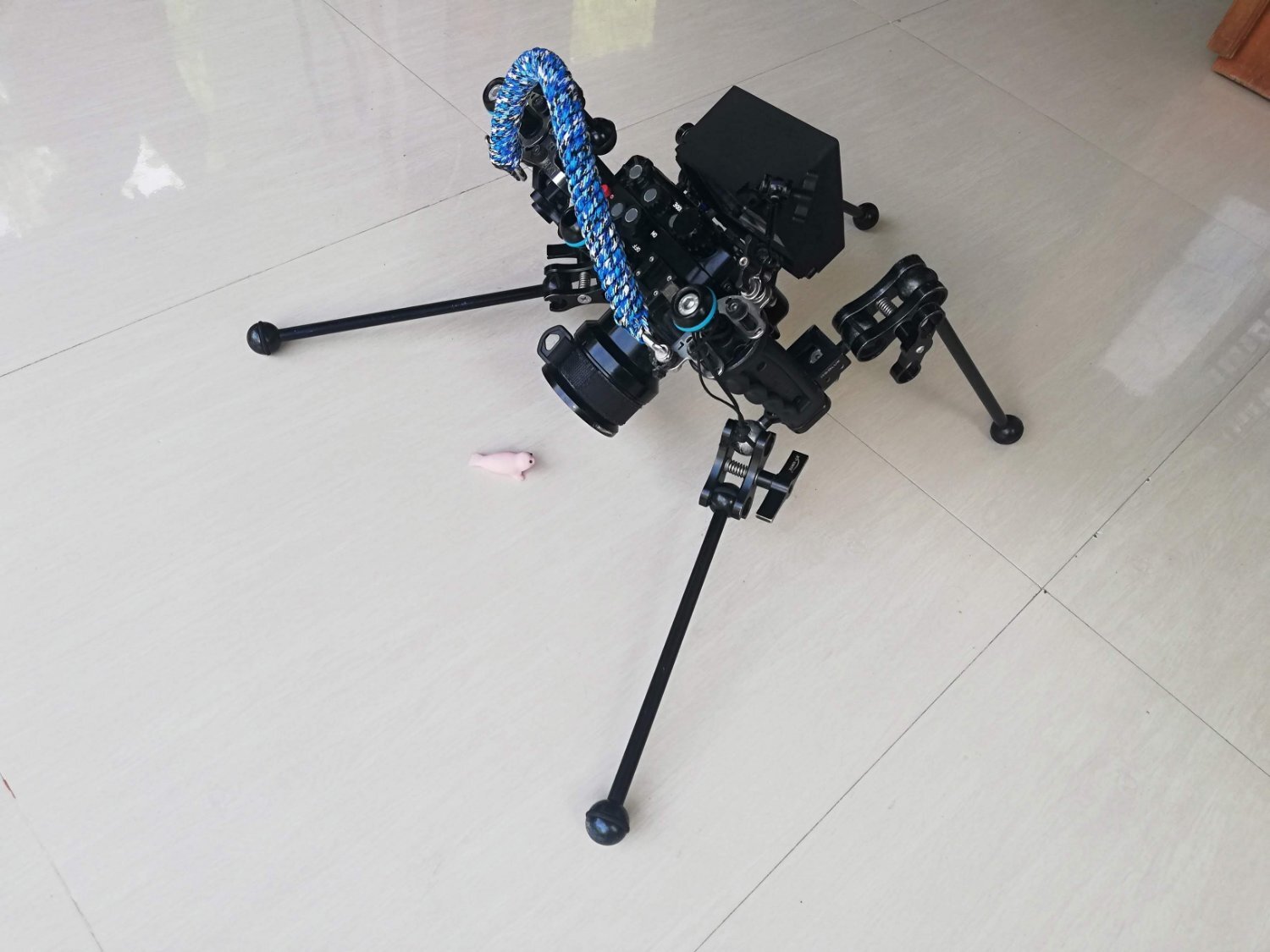
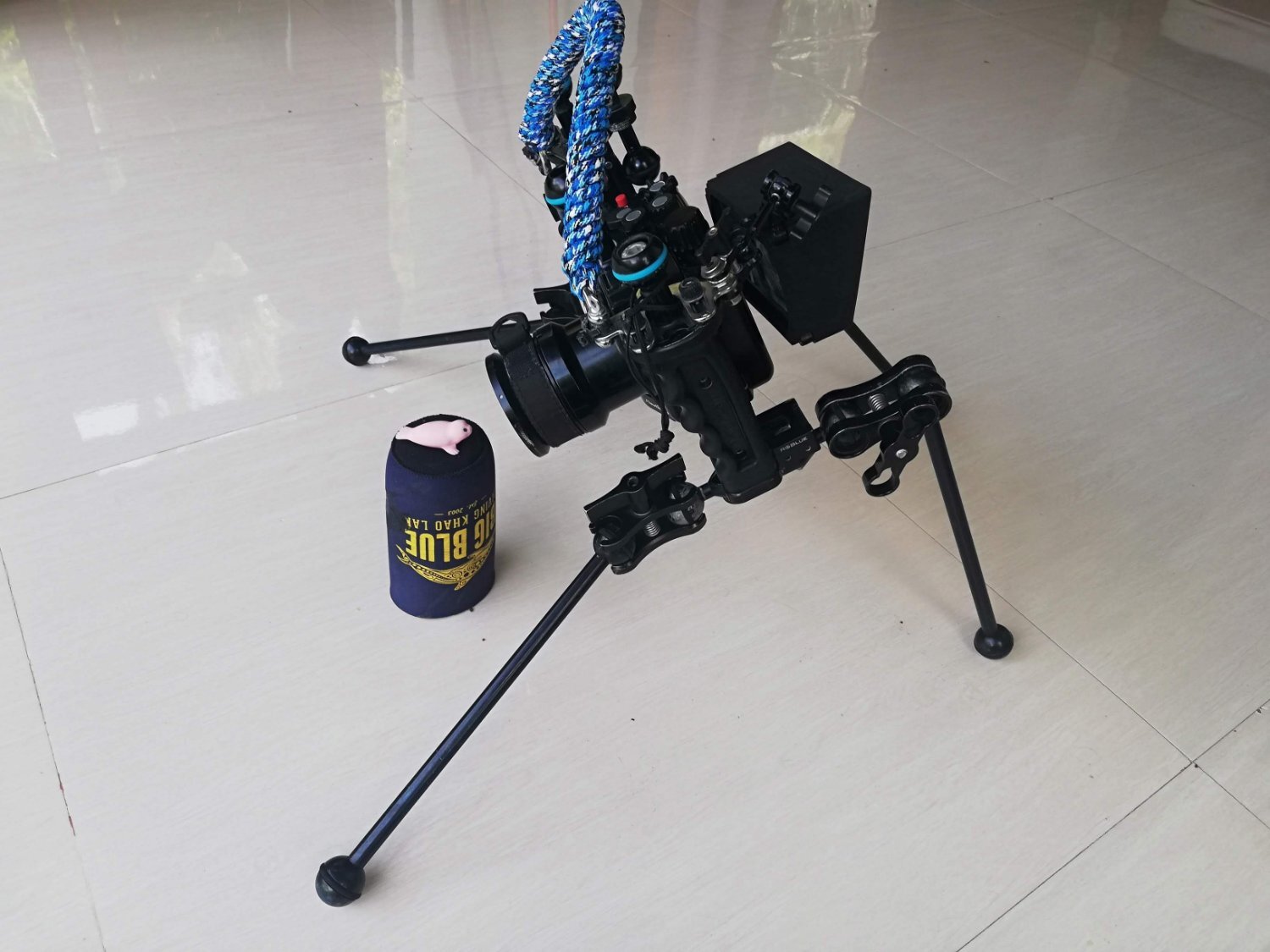
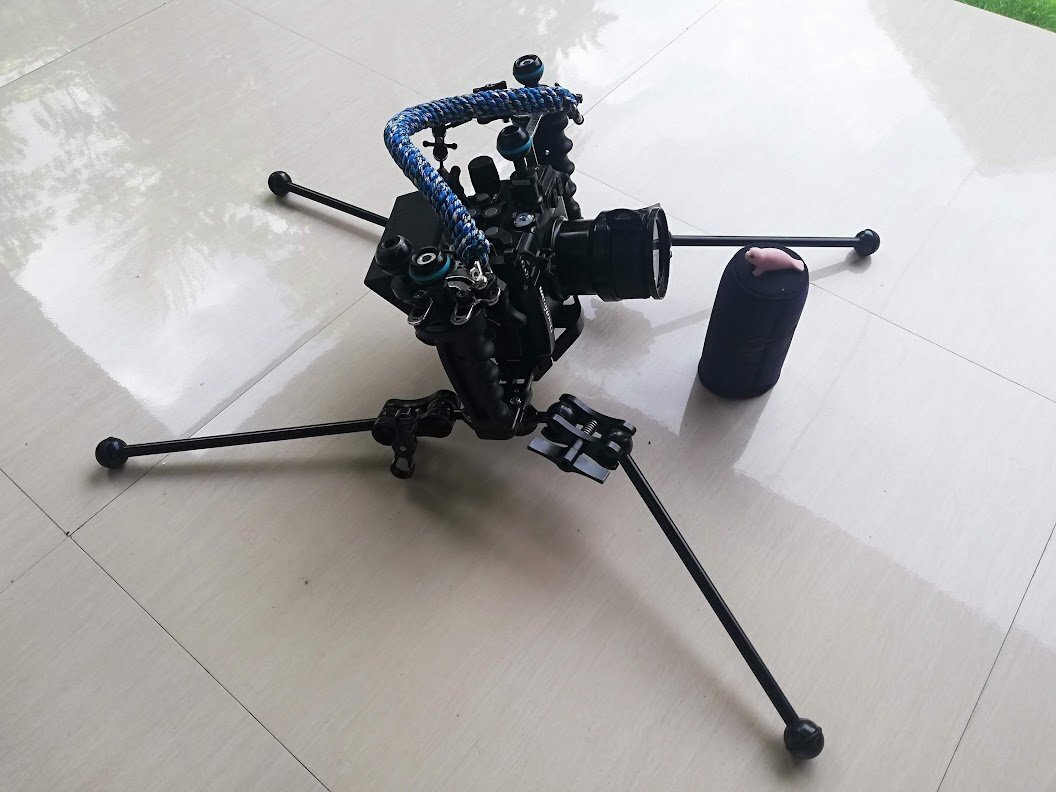
Indeed, I did build a quadripod based on this system, and have been loving it ever since! It all started out with the idea of attaching a tripod to Nauticam’s Flexitray, which in itself isn’t super tripod friendly, especially the version I have for a compact camera, which is one of the worse in terms of spacing / screw on options (for future reference the archived version of the original WeP thread - which shows the process and attachment system/screws - can be accessed here, and the currently still live one here, but I would rather keep this discussion here on WaP from now on). However, the system Davide and other suggested, based on adding two ball-end arms to the tray, not only works great, it's also ideal for building a quadripod – I went for that and never looked back. A good quadripod is just a fantastic tool for macro video, really flexible in that is allows you to shoot in very different conditions, angles and heights (I shoot a lot on a slope in east Bali where I am now, and it’s fantastic for that, since I very easily can compensate for the angle). A quadripod also very forgiving when it comes to stability - probably more so than a tripod (biased, reference/citation needed 😉) My core compact-based setup in itself is very negative, but I have been using floats successfully to make it near neutral for wide-angle video. When I started shooting macro regularly with the quadripod, I dropped the rig buoyancy down to very negative, as I thought this would be more stable, but gradually brought it back to only slightly negative, which is easier/better to use (and carry around!) Reasons for this return to a lighter rig for macro were as follows: - Currently in east Bali, I shoot primarily on a very fine (volcanic) sandy substrate, and a heavily negative rig will make the tripod/quadripod’s legs sink deep into the sand. This makes it very difficult to reposition the rig without causing a sandstorm, since you need to lift the legs out of the sand to do so. Add a bit of water movement, and you have a short sand blizzard, not great for the critters or your/other's future shots... And it turns out the quadripod rig is reeeeeeeally stable, since you have 4 weight-balancing contact points and can efficiently adapt to pretty much any topography. This actually means the rig doesn’t shake even in mild current – main issue I’m having in currenty conditions is actually visible light shake when working with a snoot for instance - which is a video-centric problem.... - Lastly, on the weight/stability/currents, one thing to keep in mind is that actually, you probably won’t end up shooting a lot of macro in heavy current or surge (at least if you have the choice...). Most animals are hiding when it's ripping, and those that are out really don’t look that great, flattened out by water movement, sheltering, and there’s usually not a lot going on behaviour-wise - in that it's quite different from wide-angle, where you can get hunting, animals drifting closer etc... On the weight, I would say go for a quadripod for video if possible and try things out. Instead of starting heavy like I did, try going as light as possible to compensate the lens that you will be using, and adding the weight you need to get your macro trig stable - the additional weight ideas given by Davide above are great for that! So back to my current quadripod system - it's pretty much set, and a real joy to use. Pics below, show the system, and some basic positioning options. At one point I did wonder if the legs I had were too long, but this turns out to be super handy on a slope or for filming critters up on some kind of perch, like a seafan or hydroid, so I’ve kept these. The main tweak I did was to add open clamps to the front legs, instead of closed ones which gives me many more options for leg angles. For critters lying low, on the sand for instance, I usually keep the arms in the upright position (which is also my default carrying position for entering/exiting the water) just use the end of the front ball ends/clamps for support - the clamps are positioned flat so that the clamp screws don't get in the way. I also use this if I need to switch to handheld macro shooting for instance (which is sometimes necessary for some critters, and why it's great to have the rig not too negative) Then the next position is twisting the frontal clamp back to a more standard position and spreading the front legs out. From there on, the sky’s the limit. You can go from high to low, doe the limbo, and cover pretty much any angle... Though the pictures below show a lot of shooting from above, in real life I try to shoot critters from below if ever possible, and the quadripod has been fantastic for that, simple, stable, flexible and really does the job! So definetly count me in a a very happy DIY camper there, and super grateful for an excellent tip 😁 cheers ben I used to over tighten the clamps when the rig was heavy, hence the nasty scratches on the 1"ball ends... Arm attachements needed a little creativity with the weird spacing of my Flexitray model: Screws/bolts/nuts and washers used are all marine grade SS (the shoemount seen at the back is for my RGBlue screen magnifier (essential since I can't use an external HDMI screen with the LX10) - the attachement broke so I've repositioned the system form above, but kept the shoemount on there in case I can get the part some day...) Here's my basic water entry / shooting position - I use the end of the front clamps / ball ends only for support: From this base position, you can extend the back legs when needed: And when it's time to follow Mr Sly Stone and take it a little higher, just pop out the front legs: and up and up we go... But in real life, there's also a lot of shooting from below, like so:


-
EDIT - I think I've solved the "Mystery of the Disappearing Posts" 🔎 I'd also posted this clip on WeP, as this was before fully porting over to WaP And well, it seems Troporobo's reply, pic and my own reply are alive and well... but in a parallel galaxy, not so far away 🙃
-
Yep - and my reply to your post seems to have disappeared as well... Something fishy going on here 😅
-
Porting my ad from the other side... This is a long shot, but with the end-of-year holiday season, I'll still give it another try, as it almost worked out. If anyone coming to Bali in the near-future has a closeup/macro diopter (wet lens) that they're looking to sell, do let me know. The domestic 2nd hand-market for camera gear is virtually inexistant here, and importing (new or used) from abroad into Indonesia is not an option because of current import duties (cheaper to buy new) To give more background, I'm getting ready to buy a new lens here in Indonesia (replace a suboptimal +15 I have with a higher quality lens), but would frankly prefer getting a good deal second-hand - by a good deal, I mean quite cheaper than the lens I can buy new here in country. I'm based in east-Bali but will be coming south a couple of times in the coming weeks, and sale would be in person. Main diopters I'm interested in would be: Nauticam CMC-1 Inon UCL-67 +15, ideally with the front "adapter ring" for stacking AOI Pro line +18.5 and +23.5 diopters, or diopters of similar quality/strength Nauticam CMC-2 (really not high priority, but if a it's a really good deal, could be an option for stacking) Thanks a bunch! ben
-
Thanks Dave, appreciated! 🙂
-
Thanks Mathieu – Japan really does have a lot of potential as diving destination, with really interesting underwater environments and some major highlights, but other than warmer Okinawa region (Eurodivers / Club Med actually runs a heavily francophone operation on Ishigaki island btw), it’s still something a specialist destination. Another aspect to consider is that the Japanese coastal fishing industry. Outside major cities to this day, fishing remains a major economic activity for coastal towns and villages, and this doesn’t always make life easy for diving operations, especially for boat diving activities...
-
Thanks Tim - yep, that is definitely a thing. And it goes both ways to some extent – return customers, generally known as repeaters in Japanese, often get some sort of extra service or special considerations from staff. This is common elsewhere of course, but in such a context guest expectations can be really high… 😅
-
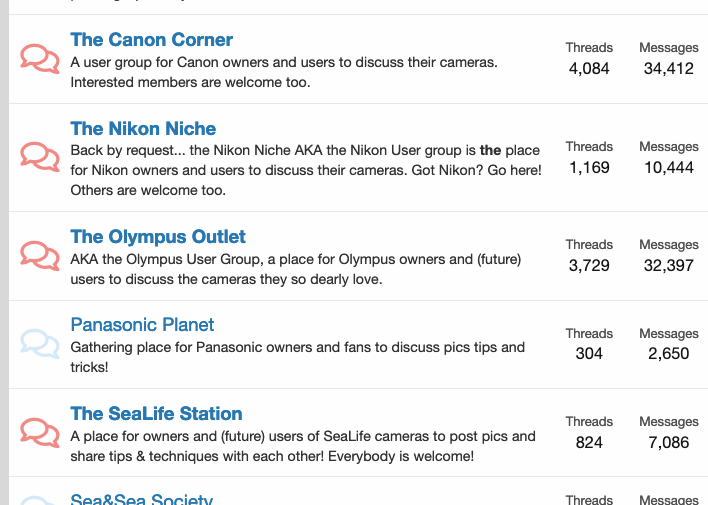
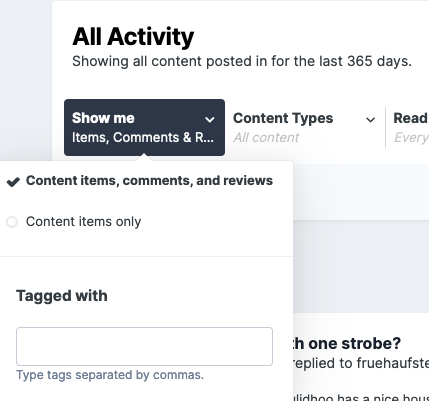
A bit like what scubaboard is doing in their photography forum? I'm neutral on this, but I was maybe if brand tags are added to threads (which they might not be, human variables...), this could be done by the user with a tweak of the stream options?
-
" (...) 2023 is the first year of a potential pair of El Niño years, with the warmest average global surface sea temperature from February to July on record. Since 1997, every instance of these El Niño pairs has led to a global mass coral bleaching event" https://www.theguardian.com/environment/2023/dec/07/unprecedented-mass-coral-bleaching-expected-2024-professor-ove-hoegh-guldberg Bleak perspective - here's to hoping Prof. Ove Hoegh-Guldberg's warnings are overly alarmist...
-
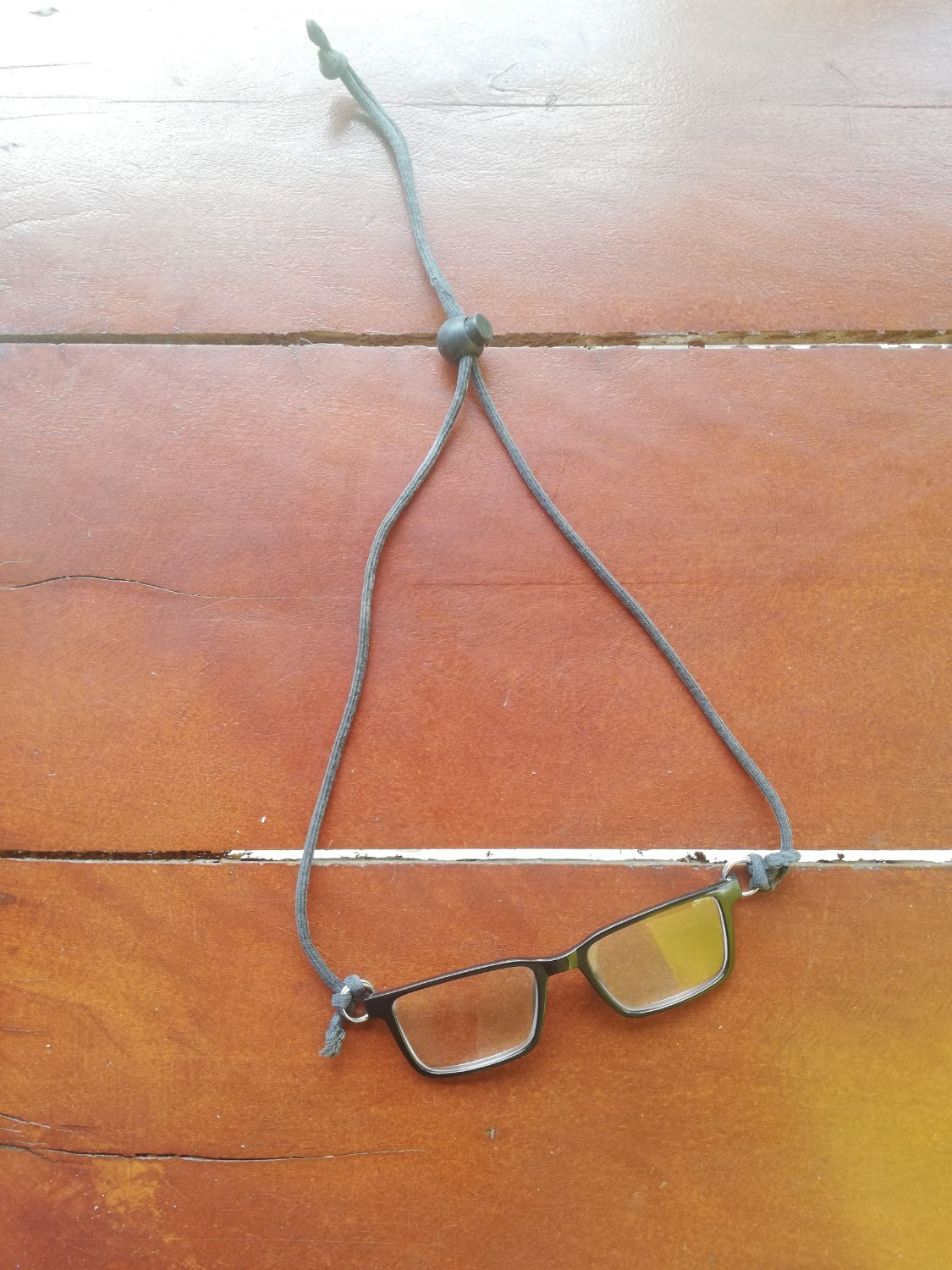
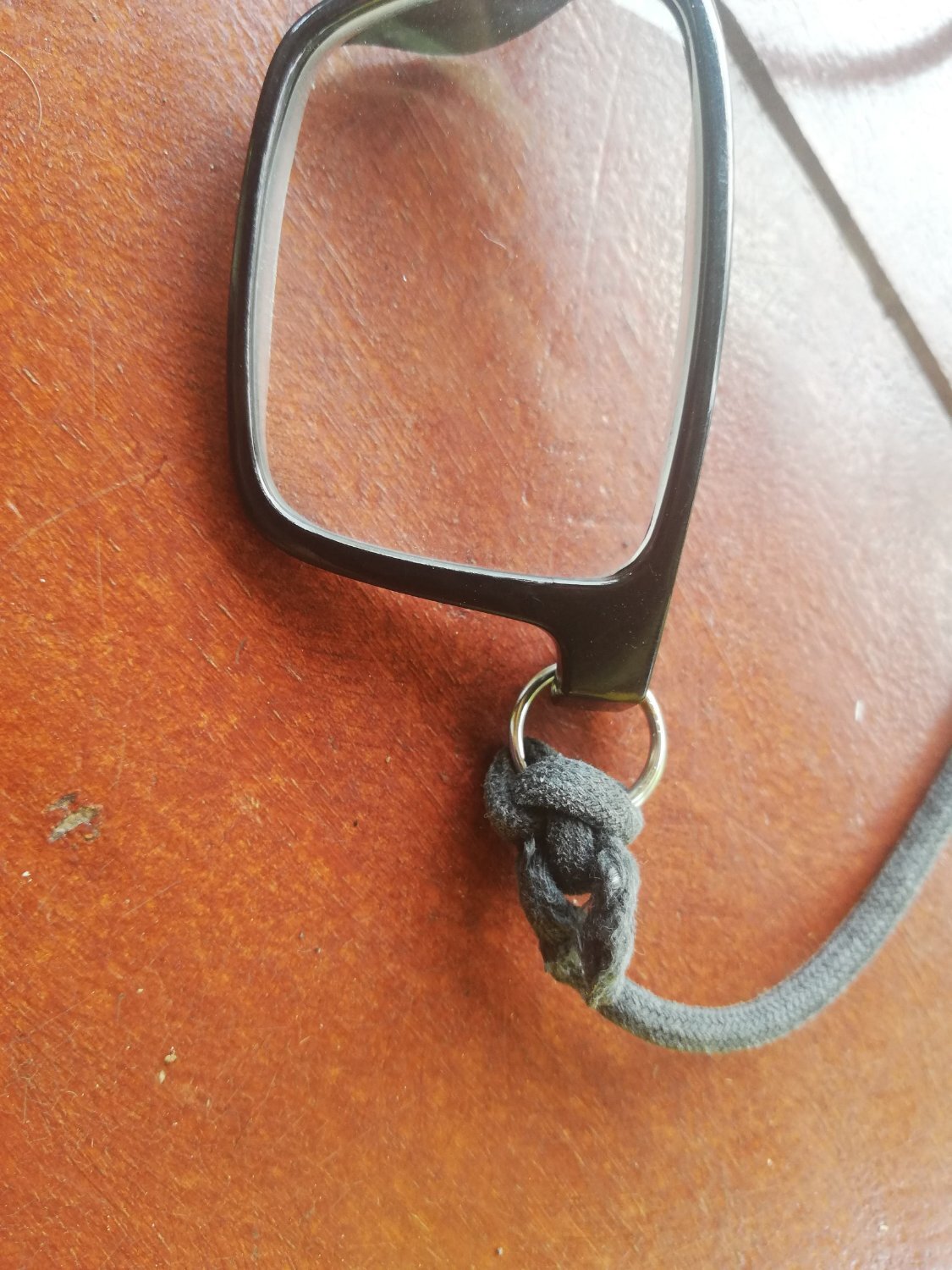
Yes, I can confirm underwater readers in the water work surprisingly well! It’s what I now use all the time for shooting macro, and just couldn’t imagine working without them... If you want to give it a try without the GoPro mask mount first, here’s what you can do: - Get some cheap readers and simply unscrew the arms/temples. The holes where the screw used to sit can be used to fit some sort of attachment (I use small key holder rings). - Then proceed to fit an adjustable landyard to the attachements When you want to use the readers, simply place them onto the glass of the mask (helps to have a nose pocket) and tighten the landyard behind your head nice and snug. This is what the contraption looks like: The landyard I'm using is an old one, as this was my first "prototype", so I'll replace it soon, but otherwise it's a keeper... I just keep them in a small pocket attached to my BC, and just put them on at the start of the dive when I start actively spotting/shooting. The great thing about the landyard system is that reader position can be freely adjusted. When I’m swimming around and spotting, I have them at the bottom of the mask, so I can look around (wide) but also focus on something closeby by looking down. But when I start shooting, the glasses move up to the middle of the mask – this is fantastic because I generally shoot quite low, and having them in the middle of my field of vision means I don’t have to bend my neck when using them… This is actually what I really didn’t like about the reader-integrated mask I tried. Readers where at the bottom of the mask, and it was very difficult to use them efficiently/comfortably when shooting (not to mention magnification was too weak) – I sold the mask after 2 dives. I’d initially tried to place readers inside my single-glass mask, works but it’s cumbersome and not super comfy, you can’t move them around, and there are always water dropplets remaining on the glasses after mask-clearing. Testing them on the outside, in the water but directly on the mask glass turned out to work fine, so I went with this method and never went back. Magnification-wise, I started out with +1.5 but quickly move up to the highest magnification available (usually +3.0 or +4.0), as this much more useful. It’s a great little device, cheap and easy to make, and I really couldn’t see (pun intended?) myself spotting or shooting macro without them now. If underwater style isn’t an concern (it does look slightly ridiculous, but hey...), definitely do give it a try! cheers ben