-
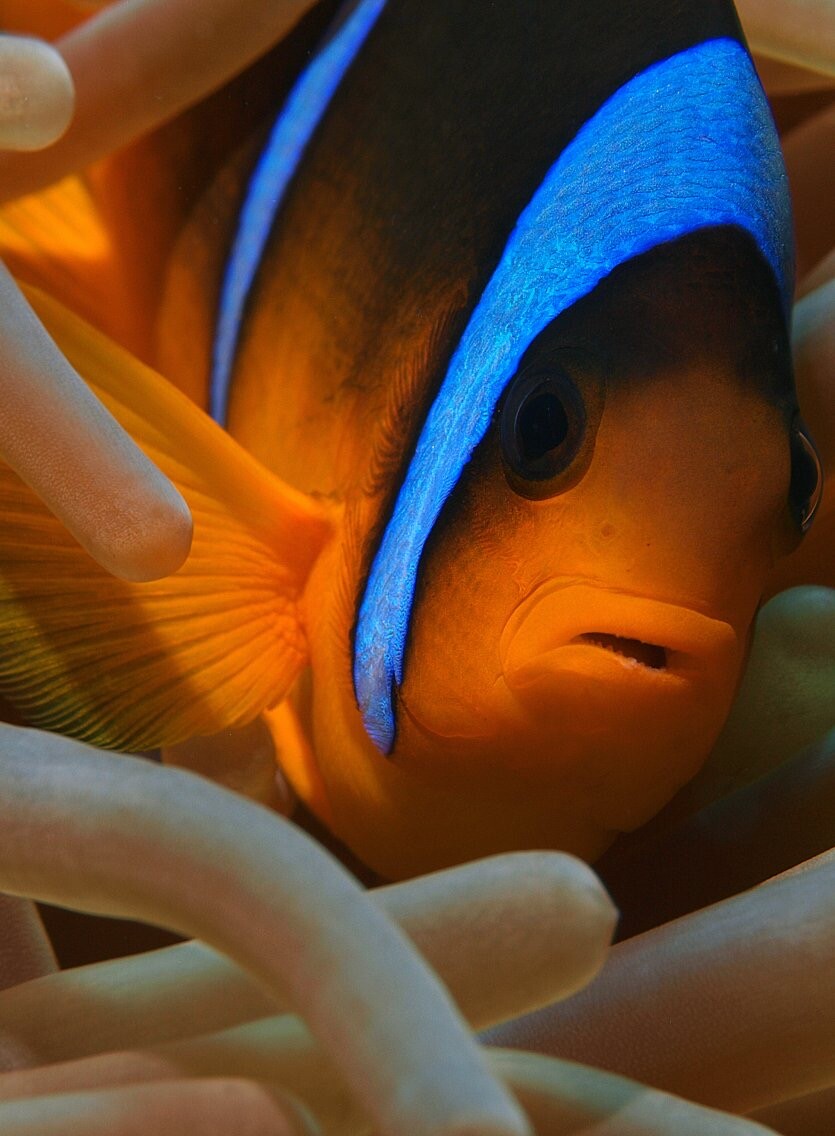
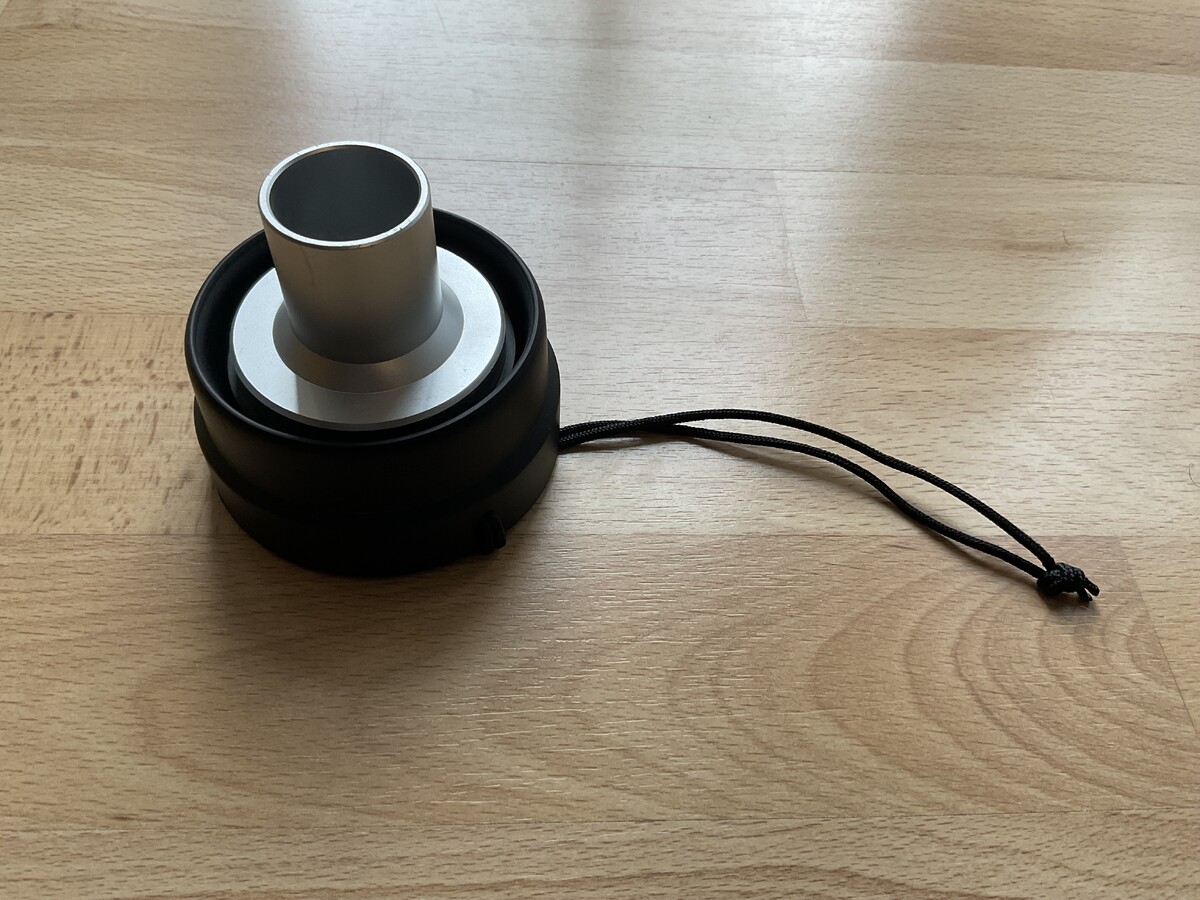
Goodman handle: Orcatorch ZD710MK2 or D710 Mounted on housing: 2 x Wurkkos DL08
-
I have been three times to Southern Ari Atoll, Maldives, and always had several Whale sharks. The Islands around there (Angaga, Vakarufalhi, …) all organise full day trips to the Whale shark spots around Holiday Island and Sun Island. However, this was several years ago, and meanwhile, it seems to be VERY crowded there, lots of boats, snorkelers, mass tourism.
-
My setup for night dives is the same as for dives during the day. I always have a torch with a neoprene Goodman handle on my right hand, as well as two small torches that can be switched between spot, flood, red, and UV modes. The latter are mounted next to the base mount of my strobes (a dual ball mount on each side of the housing: one for the strobe arm, the second for the light). They are used as focus lights and for video. This setup gives me maximum flexibility: I can direct the main light in any direction using the Goodman handle, while at the same time I always have focus lights pointing in the same direction as the camera. The focus lights are only turned on when needed, whereas the light on the Goodman handle is almost always on. Why red light? Some creatures, especially fish, cannot see red light. This allows you to approach them more closely without scaring them away.
-
I am sure that our moderators hate this discussion here, but since the first version of your (now corrected) post contained a strong offense against me, I feel the need to clarify the situation. Your post is full of half-truths and falsehoods. 1) The trigger which was ordered was advertised on the UW technics website exactly as I needed it. Therefore, if it was a "customized" converter, your website must have been wrong at that time. Worth mentioning in this context is that the first version of the TTL board had the wrong pin-out and was not compatible with the isotta bulkhead and you had to re-build it, thats the information I got from you. For me it seems that this converter was the very first of its kind you ever built, not a "customized version". 2) Its not true that the connection of my N5 cords were unreliable. After some discussions, we both agreed that this cannot be the reason since I tested 6 cords (4 from me, 2 from my friend), all showed the same problem, while another converter worked perfectly fine with the same setup and with each of the cords. I dont get it why you bring up this point once again which was already ruled out! 3) I already mentioned that the TTL converter worked with the oldest Subtronic Nova flashes but NOT with the newer ones. Your theory that the age of the strobes is the reason for the problem is therefore not true. 4) At no point was I informed that UW Technics had reimbursed my dealer. That wouldn’t make any sense anyway, since I hadn’t returned the converter. That’s why I don’t understand the procedure described here—and certainly not Pavel’s (now-deleted) comment that this was, in essence, a dirty trick on my part. Such accusations by a dealer against a customer in a forum are, to put it mildly, outrageous—potential customers can form their own opinion on the matter. 5) My messages you mention to be "inadequate" asked you for help to narrow down the problem together with Subtronic. Be honest and don't talk such bullshit. Here are the original messages I sent: "Its a pity that you ignore customers although you made money with them. Mr. Tick from Subtronic is still trying to solve the problem, he is reprogramming the Subtronic software in order to become faster. In other words, he tries to adapt the Subtronic flashes in order to make them york with your converter. It should be the other way round." "lets narrow down the problem. I am still experimenting here and in intensive contact with Subtronic. Mr. Tick currently tries to adapt the software for the flash by removing "pauses" (whatever that means) in order to make the flash faster. He asked me how many pre-flashes Olympus has. As far as I know, 2. But I read somewhere else that it depends on the situation. Do you know? Do you know if the pre-flashes of the old OMD E-M1 have a lower frequency than the preflashes of the new OM-1? Which serial numbers do your Subtronic flashes have? Today I found out that it works a bit more reliable (still far away from perfevt) with program 6 for Inon Z330. Maybe that helps for narrowing wodn the problem. All this information would be helpful." As long as there are no further offensive posts against me and no misrepresentations of the facts, the matter is settled for me. Regards, Jens
-
Only Chuck Norris can start a new thread right after registering in this forum.
-
A warm “welcome to this forum, old man” from one old man to another. I mean, the moment you dropped the word “decades,” you were basically begging for a greeting like that. Jens
-
I agree with you about your take on muck diving. I, too, thought it was similar to diving in a muddy lake—poor visibility and the occasional sighting of a strange creature. But when I visited Bali for the first time, I discovered my love for muck diving. It’s best to always go with a local guide. That way, you get to see the TRULY bizarre creatures that you’d otherwise almost always swim right past. Each dive is different, new creatures you have never seen before at each dive. Just awesome.
-
Next update: It’s disappointing that UW Technics proved to be anything but helpful in this case. After the initial troubleshooting attempts and suggestions all failed to resolve the issue, I pointed out my suspicion that the TTL converter itself might be defective and not functioning properly. Following that, UW Technics blocked me — and since then I have received absolutely no support. What is particularly noteworthy is that, despite their earlier insistence that the converter was fully compatible with Subtronic strobes, Subtronic has meanwhile disappeared from their compatibility list altogether. At no point did I feel that UW Technics was genuinely interested in finding a proper solution. Instead, I was presented with a range of costly and impractical alternatives — from a complex conversion of N5 to S6 connectors (which would not have solved my problem) to purchasing entirely new strobes (which would have cost 3600 Euro). However, the idea of revisiting and potentially improving the converter’s firmware was never considered, as they appeared to regard their product as beyond fault. In the end, it was another manufacturer — one I have trusted for many years — who once again resolved an issue caused by someone else. Therefore, I would like to explicitly commend Subtronic for their commitment and persistence in addressing my problem — and ultimately solving it. It ultimately turned out that the TTL converter was sending inconsistent, noisy signals to the strobe, which had to be electronically smoothed by modifying the strobe itself. A big „Thank you“ to Subtronic!!
-
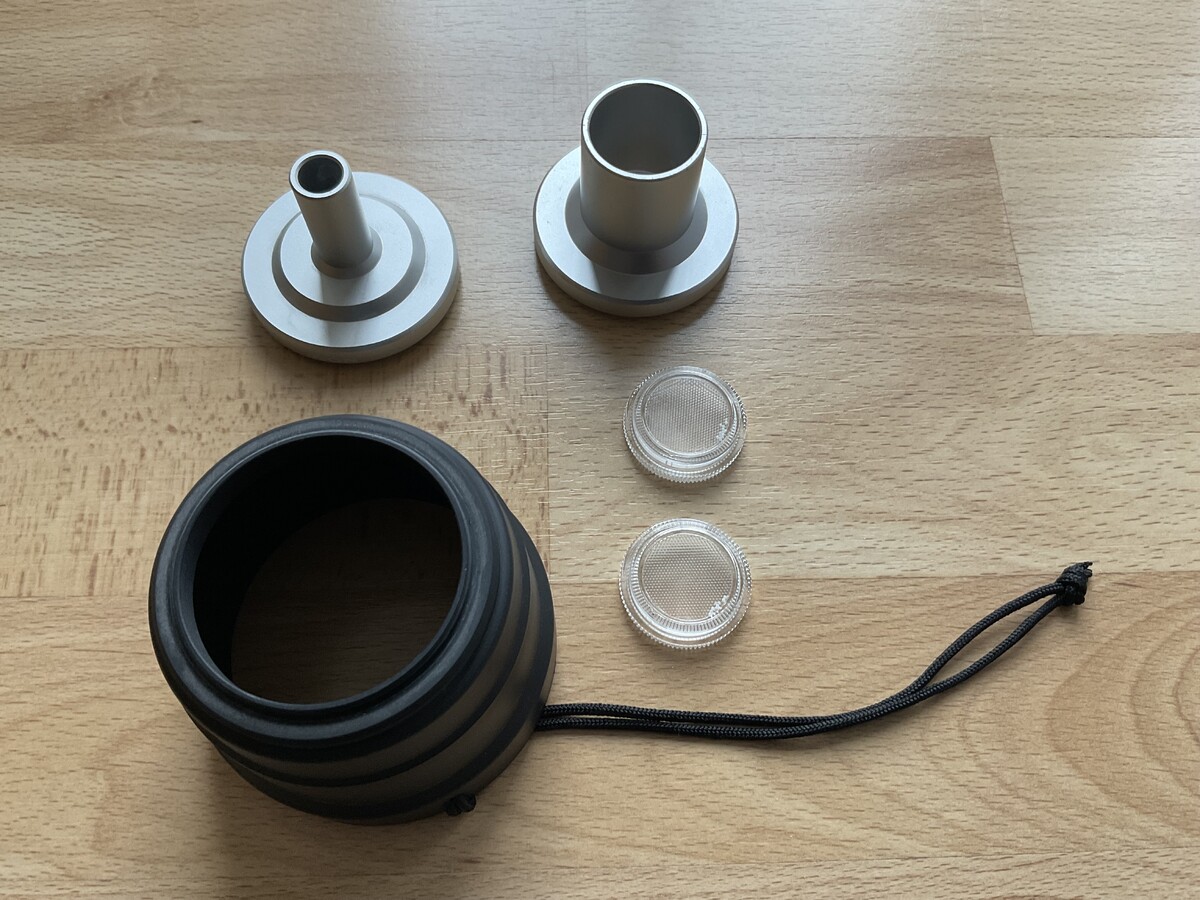
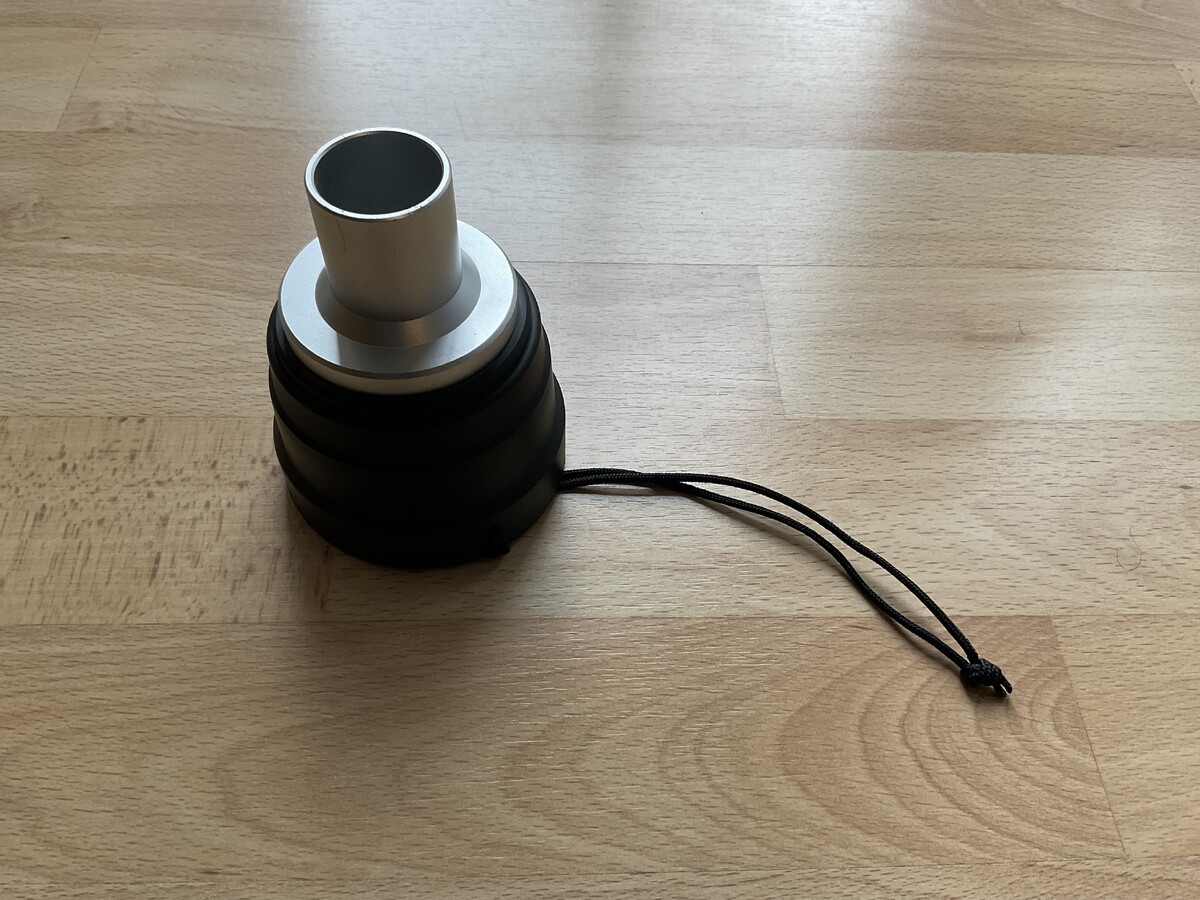
Selling a used INON snoot set as shown below. I bought it exactly from here (linke below) and used it for a couple of dives only. Asking for €50 plus shipping. UnterwasserKamera.atINON Snoot Set for D-2000/Z-240INON Snoot Set for D-2000/Z-240
-
Totally agree to what David wrote. Talking about cinematic videos sounds for me like talking about photographic pictures.
-
From the chemical point of view, there is a huge difference between Cola and Baking Soda. Cola contains an inorganic acid, namely phosphoric acid, and has a pH of ~ 2.5. Bakery Soda is basic, ph of ~11.5. If modern lithium-batteries leak, when combined with water or air humidity, hydrofluoric acid can be formed. This acid cannot be neutralized with another acid (Cola), but with bases. I would, therefore, strongly recommend Baking Soda, followed by alcohol or, as a compromise, distilled water. Don't underestimate the effect of cola, as it can corrode many metals upon contact! Stay dry! Jens
-
Perhaps you could explain why this is important in your case? I take photos with the OM-1 and OM-1 II, but white balance is not important to me as I only shoot in RAW.
-
After maybe thousand of photography-dives, I've never had this problem, and I'm trying to picture it in my mind. As Tim already wrote, a photo of your posture would probably be helpful. After reading your post here, we'll probably all have the same problem on our next dive—we just haven't noticed it yet! 😂
-
The advantage of a focus light is worth the extra weight, which I can easily compensate for in my case with buoyancy aids from Mike-Dive (unfortunately no longer available). It is exactly as Nemrod said: „…now and then…“ and that's exactly when you'll kick yourself if you don't have it with you. Better to have it than need it.
-
I use the Wurkkos DL08 as a red focus light in poor lighting conditions. Almost all fish are unable to see red light, which means you can get closer without scaring them away. I also have the Orcatorch D710 on a neoprene Goodman handle as a diving lamp on one hand. This combination has proven to be the ideal solution for me. The Wurkkos can be switched between cold white spot light and warm white flood light at any time – also ideal for filming with the Osmo Action, which is mounted on my housing, or for additional light during night dives. However, this is just another idea, everyone has to find their own solution that fits perfectly to their needs.