
Everything posted by RVBldr
-
Easy enough to just take a snip and copy into Google Image search. Generally, it's pretty successful and very easy workflow. I just add a key word in Lightroom and tag as needed.
-
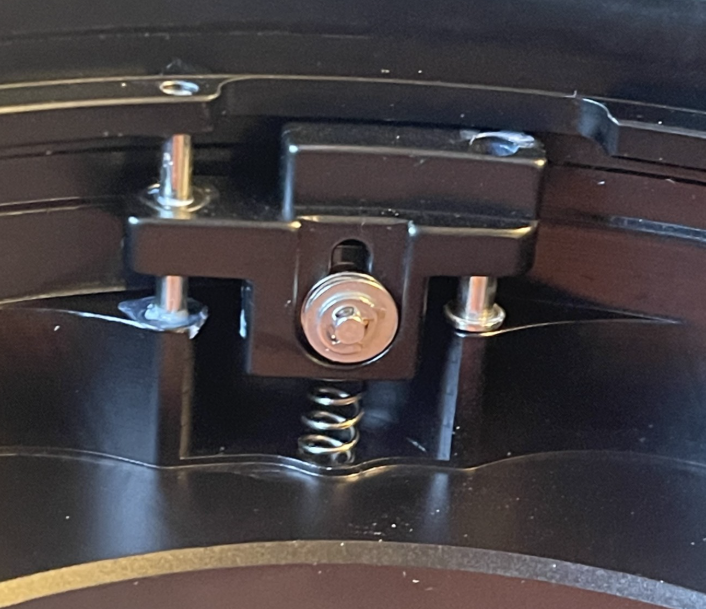
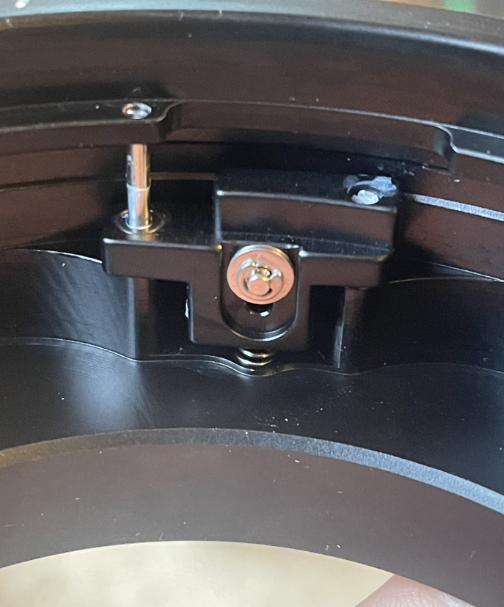
Here ya go Dave: MF-2 and 3 Quick Disconnect Connector - Free 3D Print Model - MakerWorld
-
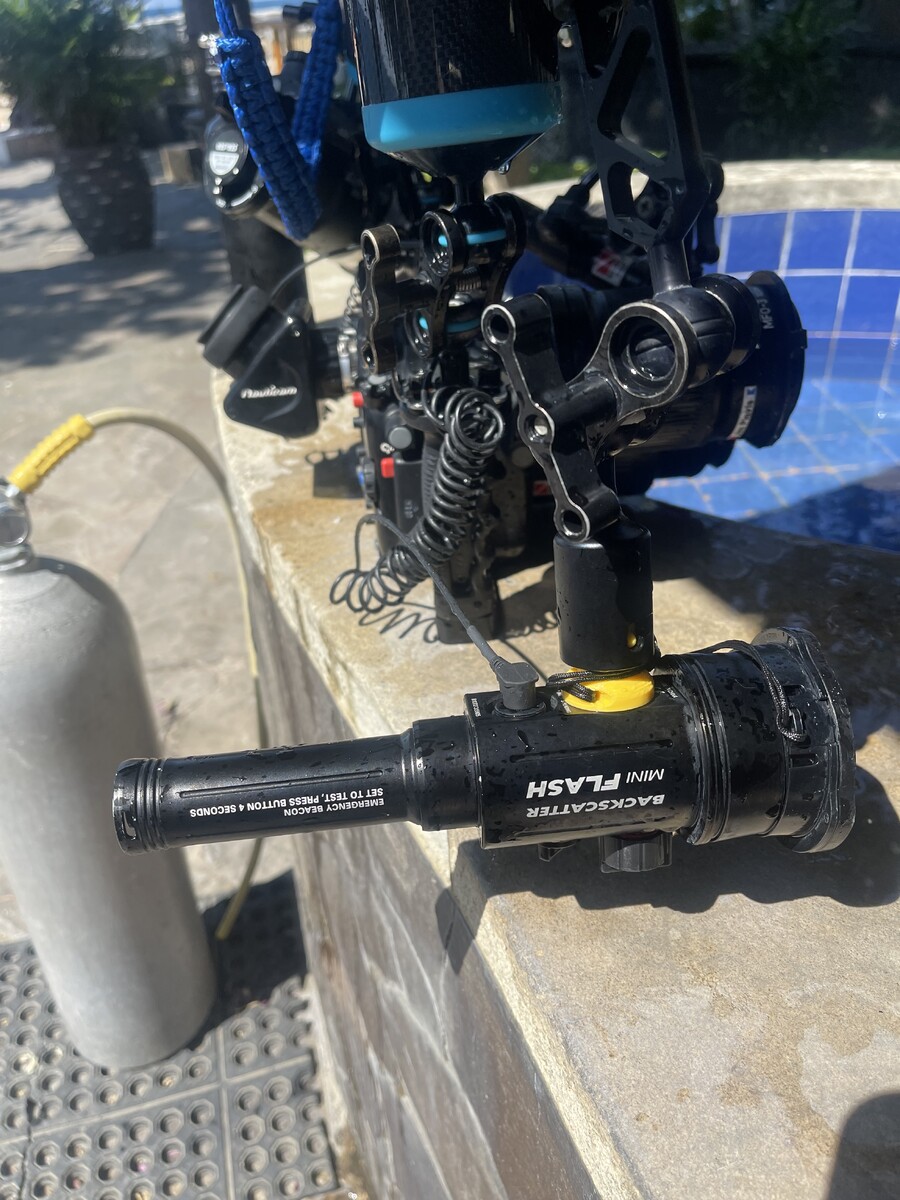
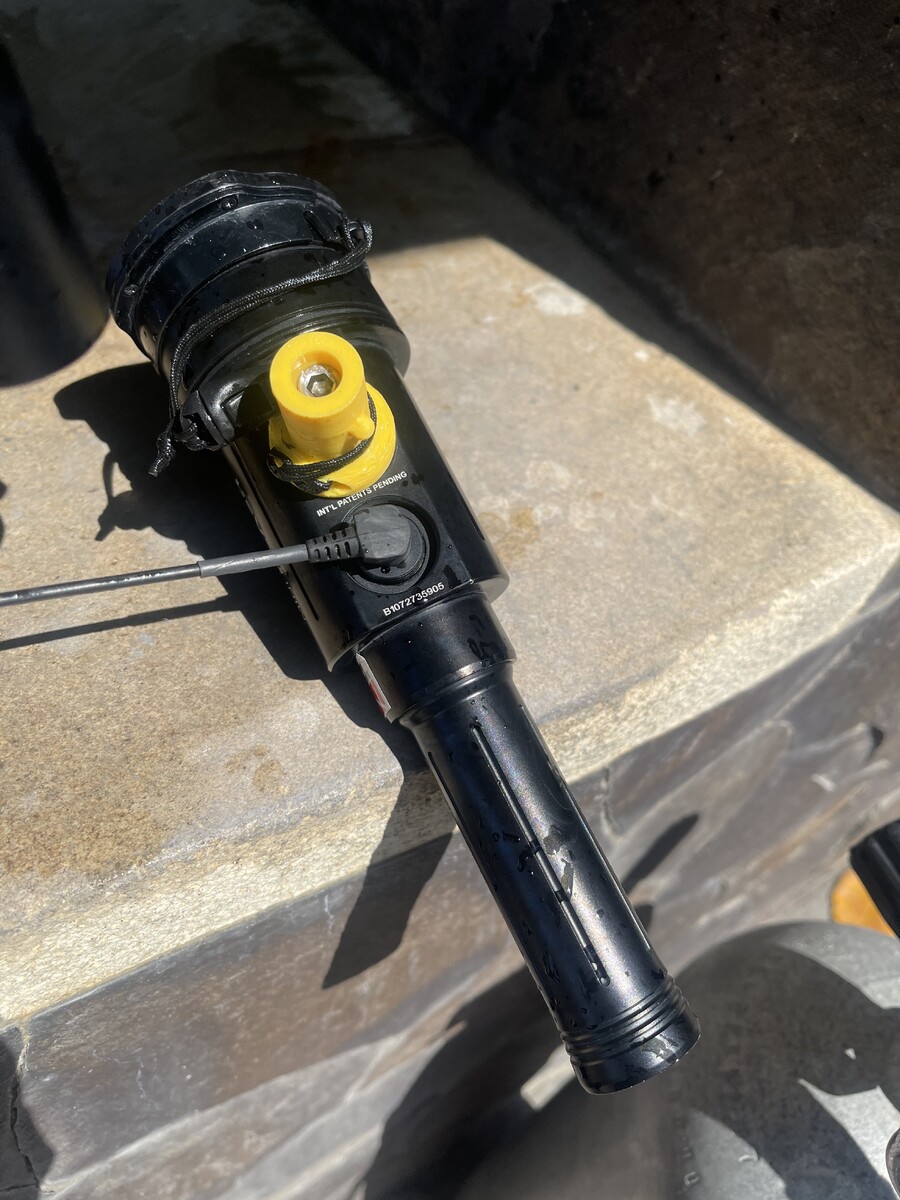
Still working out some minor issues so I haven't yet uploaded the STL file for this MF-2/3 adapter. I was looking for a quick disconnect for the MF-2 strobe so I can easily hand off to a guide for macro work. Kraken has a nice QD adapter, but it requires an additional clamp. Being retired, I figured there was a better way, so after about 10 iterations, I think I have a nice solution, tested recently in Bali. It's a simple push and turn to connect/disconnect. If there's intereste, I'll get this loaded up to MakerWorld.
-
I have both CMC-1 and 2 and use with the 28-60; they work great. Haven't tried the SMC yet as I find the CMCs don't work very well on the 90mm. Hopefully someone has some feedback as I'm in the same boat.
-
I'm finding the newer LR/PS tools are pretty good for some of this work, but only if you're not opposed to the subscription model.
-
LOL. That's my model upload. Yes, you'll need the locking mechanism or download one for use. I used the one from the OEM gear and it works well. I found the OEM gear that used the zoom knob on the 100-120 adapter was a bit clunky and not very smooth as the gears are aligned at 90-degrees, I extended the gear to use the zoom gear in the housing which is linearly aligned and much smoother in operation. Additionally, you can install the entire camera/lens assembly without assembling from both the front and rear.
-
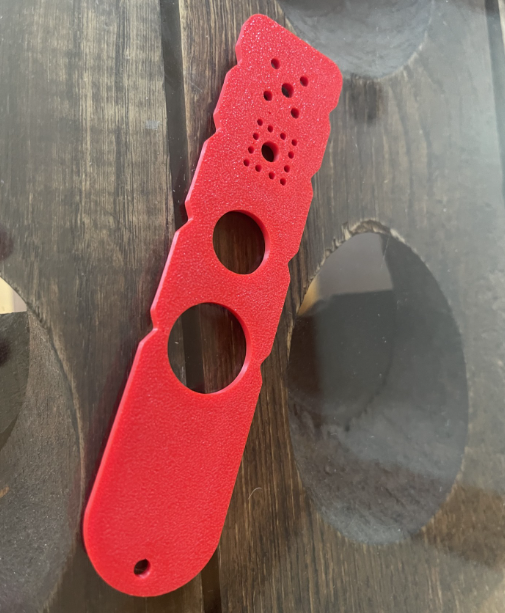
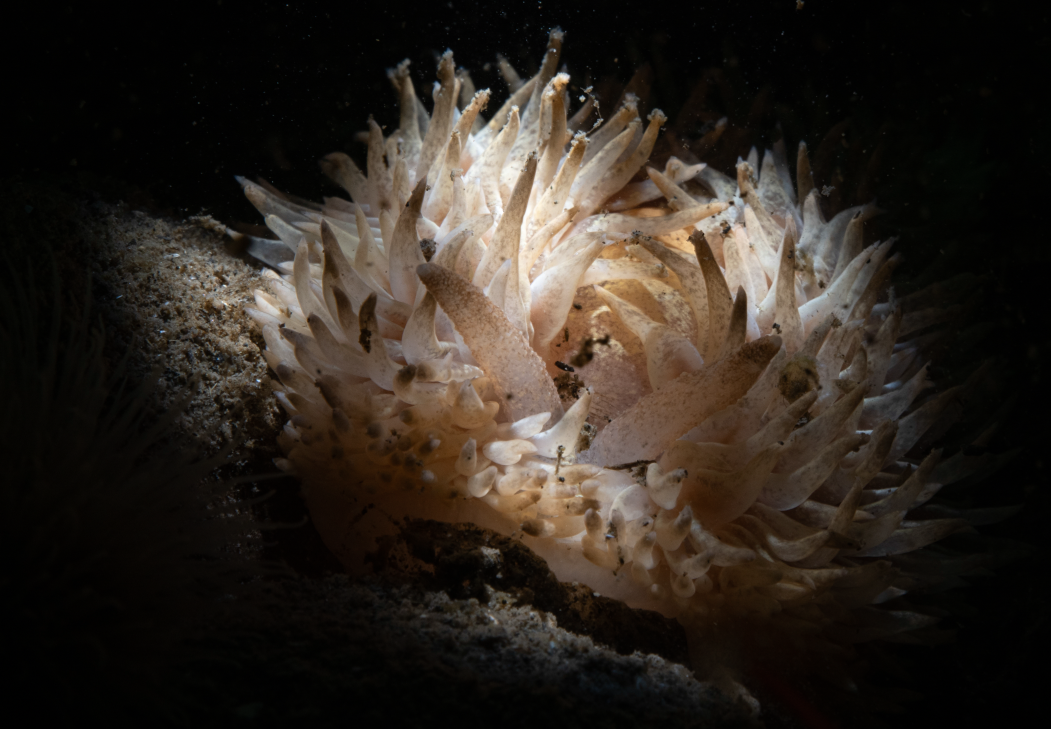
Has anyone done any experiments with the Backscatter Snoot light shaping slider? I started playing around a bit after my original OEM slider got broken and subsequently lost to the depths, but are there any interesting patterns out there? This was done quickly just to see how it worked, and using the 2nd from the top, produced the image of this Shag Rug nudibranch with the mottled light texturing. It took a couple prints to get the thickness right but 2.6mm seems to be optimal. Image taken in Puget Sound Seattle in pretty lousy conditions due to heavy snow and rain runoff.
-
I'm convinced that Nauticam is priced by the pound (or kg).
-
You're going to need a new housing one way or another I suppose, and the A7C II/ R do use the same Nauticam housing which is somewhat cheaper than the A7R V housing, as well as slightly smaller. Not sure about housing compatibility with the A7 V and A7R V.
-
This has a paid course, but does cover all the basics to get you going as well as a couse in Photoshop. I took the Fine Art Landscape course at one time and it was pretty good. Many folks use PS in conjunction with the Adobe Raw product to do edits, so you have some flexibility. Raw is basically the same editing engine behind LR and the UIs are very similar, and if you have the Photo package with Adobe Creative Cloud, you get Raw as part of the monthly subscription in addition to other tools. Photoshop Course for Photographers | Learn Photo Editing Online
-
Last time I was there, I didn't see much that warranted the additional magnification, I would think a good macro and MFO-1/MFO-3 would work just fine. On the other side, the 8-15mm and small dome came in handy at various times. From my last trip to God's Pocket and Browning Pass in OCT '24 and at the time, I didn't yet have the MFO-3: Jim Piavis - Browning Pass (God's Pocket).
-
Dave, I have an MFO-3, we can coordinate at a dive site to confirm sizing. Planning to be at Cove 2 early this Saturday tentatively.
-
I have the 37305 Type II.
-
I think you might be looking for this?
-
Although the MFO-3 is just short of a beer can in size and feels a bit hefty on land, it's very light and almost neutral in the water. And just to add on a data point to OP, here in Puget Sound Washington, for the bulk of the year I use a 90mm Sony macro, and with the MFO-3, it almost negates use of the CMC-1 with the 28-60mm kit lens on a FF mirrorless. It works on everything from a small nudibranch to a Giant Pacific Octopus. My usual configuration used to be the 28-60mm, WWL-1B, and CMC-1, but I've found that the 90mm, MFO-3 seems to be really versatile here in our cold and green water.
-
@ChipBPhoto Thanks Chip, good info. I find that ability to remove the shade while on the dive an upside, but the actual lock of the dome onto the shade needs some engineering. They have the o-ring that prevents the shade from backing off, but in cold water, that o-ring is a non-starter. I see it as more of a hedge against bumping the dome inadvertently. I have some nice pics with the DP-100, but also looking to the future with a higher-res camera.
-
Tried to find some answers in previous posts, but for those that have gone before, will the Nauticam 140mm dome give a substantial uplift in IQ over a Zen DP-100? I'm using a Canon 8-15 with Sony 7AC in a Nauticam housing and have used the Zen for some decent fisheye images, but as usual, edges go soft. Both are glass domes and I'm wondering how much improvement to expect if I move to the 140mm dome. I do like the smaller sizes for travel purposes, so I didn't have much interest in going to a bigger dome.
-
Been diving a D3 for several years and no issues other than a minor flood which I was able to clean out and put a new cap on it. Continues to work as advertised. Also shooting a D1 that I've had since 2013 and it's still working well. Another D1 I had....not so much.
-
Been a bayonet fan for years with a caddy on a strobe arm, as well as mounting a small stub arm off the right post with a triple clamp next to strobe arm. Diving cold water with thick dry gloves has never been a problem swapping between CMC1 and WWL-1B. However, after getting a MFO-3 to use with the 90mm macro, for whatever reason, I found the bayonet a bit clunky and got a single flip holder, which I find works great for quickly adding/removing the MFO-3. Now I'm looking at an MFO-1 and will probably be back to bayonet with two lenses rather than a 2-lens flip holder ($$$$).
-
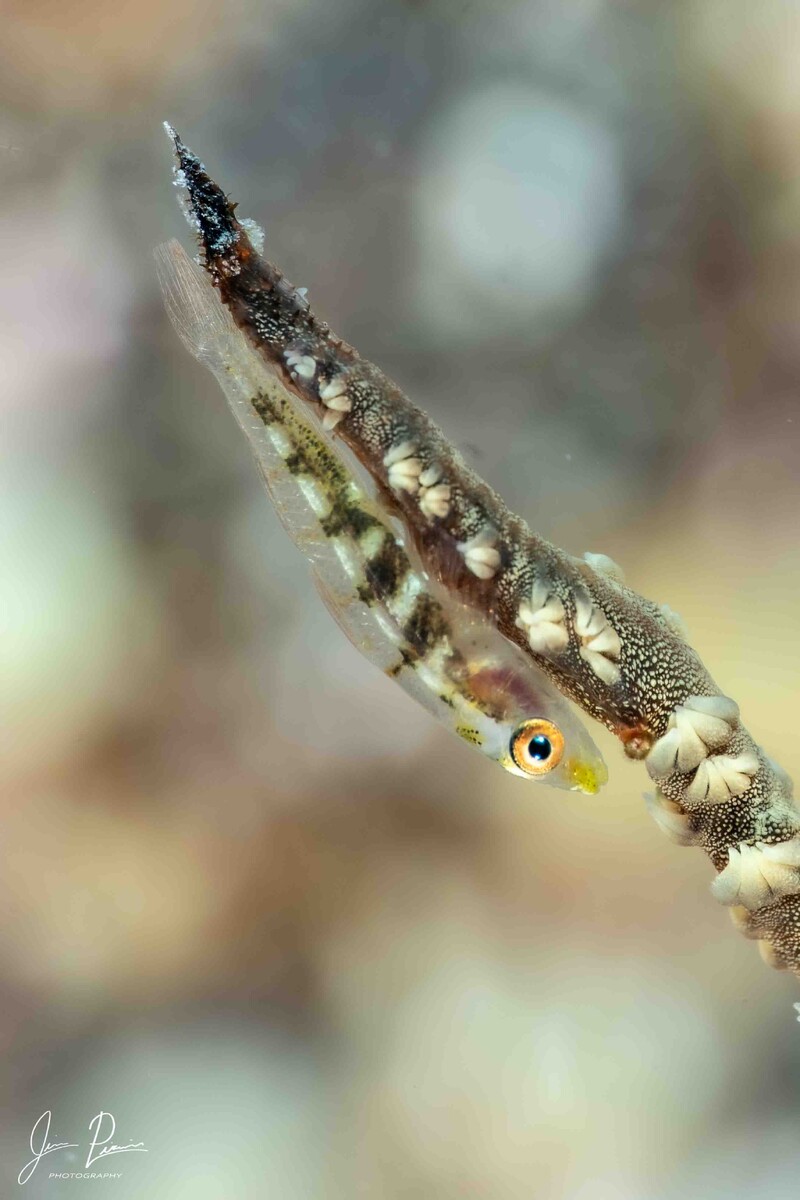
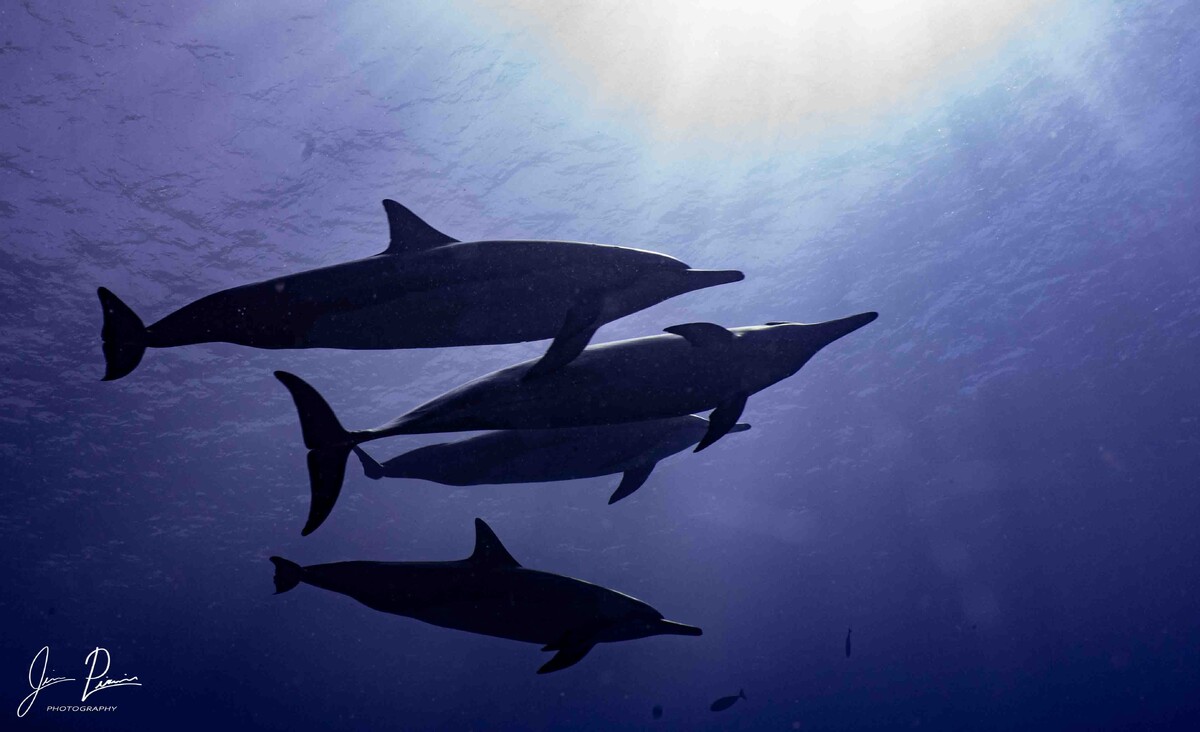
Just my own 2 pence on the Sony side. I've been using my A7C for about 5 years now in a Nauticam housing and YS-D1/D3 strobes. I went that route coming from an RX-100 in Ikelite housing, to keep the overall housing smaller. I basically have three combinations that seem to work, depending on the environment: 1) Most versatile: Kit 28-60mm lens, WWL-1B, and a CMC-1. I've captured Wire Coral goby, then 5 minutes later (attached pics) a porpoise pod, and it all fits in a single travel Pelican Air. 2) Macro: Sony 90mm with MF-2 strobe and OS-1 snoot. Recently added an MFO-3 which adds a sizable amount of versatility to the set-up. For travel, now I'm also stuffing photo gear into another backpack for Macro and WA. 3) WA: Trying to keep things compact, I have the Canon 8-15 with metabones adapter, with the Zen DP100. Good dome for close focus/WA, but I'm kind of thinking about a slightly larger dome like the Nauticam 140mm to improve the IQ on the Zen's softer edges. Anyway, just another opinion. Jim
-
I'd be taking the MFO-1 along and try it on the trip as well. It doesn't take up much room, so why not. Try them both side by side and see what works best for you. Stick it in a pocket and swap it on the adapter as wanted. If you still want to get rid of MFO-1, let me know. Shooting with a Sony 90nn FF and looking to pick one up.
-
I suppose most didn't catch Matthew's comment, but I'd also be interested in how other color-deficient folks handle that defect. I also have a bit of red-green deficiency but rarely have someone tell me my colors are out of whack.
-
Thanks Dave, that's what I was looking for and aligns with my thoughts as well! Where'd you find the sea spider?
-
Thanks Chris, cropping has generally been the practice so far and looking at the general utility. Here in Seattle and our Pacific Northwest, we have our share of the macro critters but there may be more utility in the MFO-1 on a regular basis.
-
Looking to add to the equipment collection and considering either the SMC-3 or MFO-1 (already have the MFO-3!). I know they are designed for different uses, but from your own experience, is one or the other more useful. For macro, I have the Sony 90mm (on A7C) and have CMC-1 and 2 for use with the kit 28-60mm lens (and they work great), but at times getting a little more magnification on the 90mm without a TC would be nice. Otherwise, having extra depth of field and less hunting on the lens make the MFO-1 a good option. Couldn't find a good thread for both of these lens, so I'm just looking for opinions.